Do This To Oregon Fuchsias This Week And They Will Reward You With More Blooms
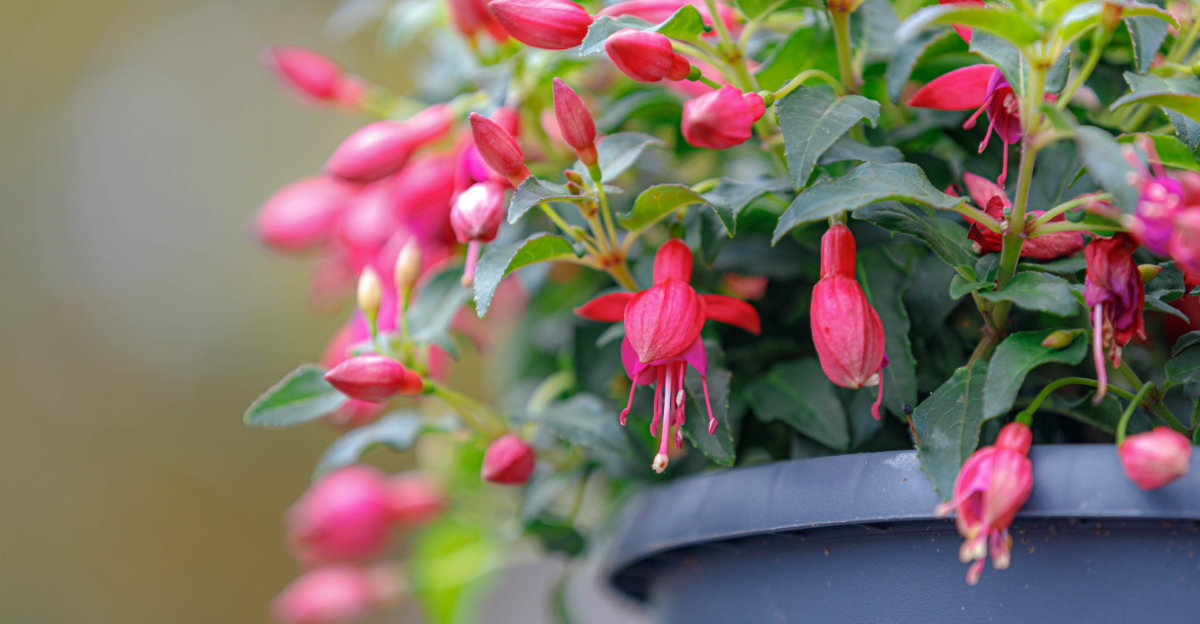
Fuchsias can start to look a little worn by late July. The flowers lose some of their sparkle, stems stretch beyond their neat shape, and the whole plant seems ready for a reset.
This week offers a useful chance to help. One simple task can encourage the plant to put more energy into fresh buds instead of tired growth.
The result may appear sooner than expected.
Oregon’s mild summer weather often gives fuchsias enough time for another strong flower show. The plant just needs the right nudge before August settles in.
No major overhaul is required. A careful touch can tidy the shape and wake up new growth without placing extra stress on the plant.
Give your fuchsia that attention now, then watch what happens over the next few weeks. Those droopy stems may soon carry a fresh round of color.
1. Cut Spent Fuchsia Flowers This Week
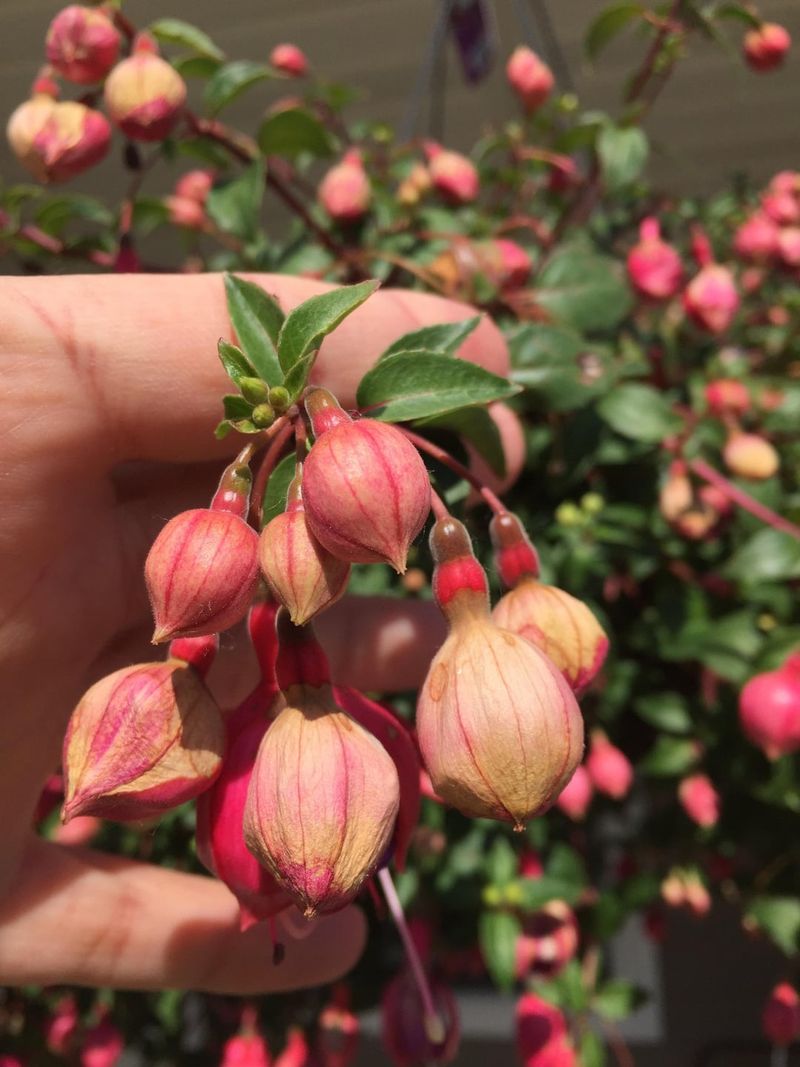
Most gardeners walk past their fuchsias without noticing the old, faded blooms hanging there like tiny forgotten bells. Those spent flowers are quietly draining your plant’s energy every single day.
When you remove them, the plant stops trying to make seeds and puts all its effort into making new flowers instead.
Deadheading is simple. Just pinch or snip off any bloom that looks limp, brown, or shriveled at the base of the flower, not just the petals.
You want to remove the whole flower head, including the small swollen part behind it. That swollen part is where the seed pod forms, and you do not want that.
Try to deadhead at least once a week. On a healthy basket, you might remove dozens of spent blooms in just a few minutes.
It sounds like a lot of work, but it goes fast. And the results show up quickly.
Within a few days, you will notice new buds forming where the old flowers were. The plant feels the signal and responds right away.
Keep up this habit and your fuchsia will stay in full bloom much longer than one that is left untouched. This single task makes a bigger difference than almost anything else you can do for a blooming fuchsia in Oregon this time of year.
2. Remove Seed Pods Before They Steal Energy
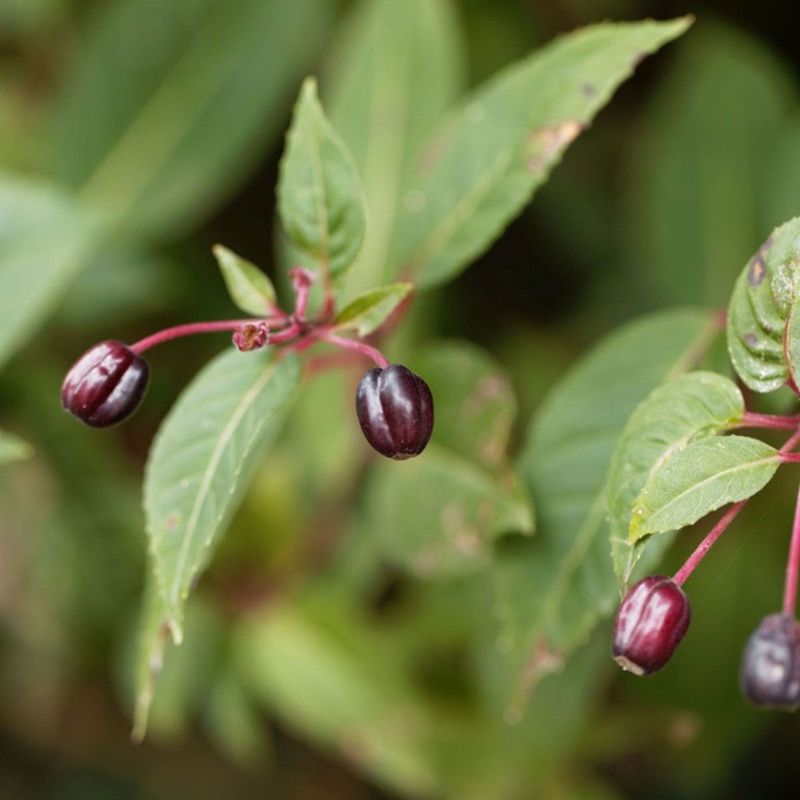
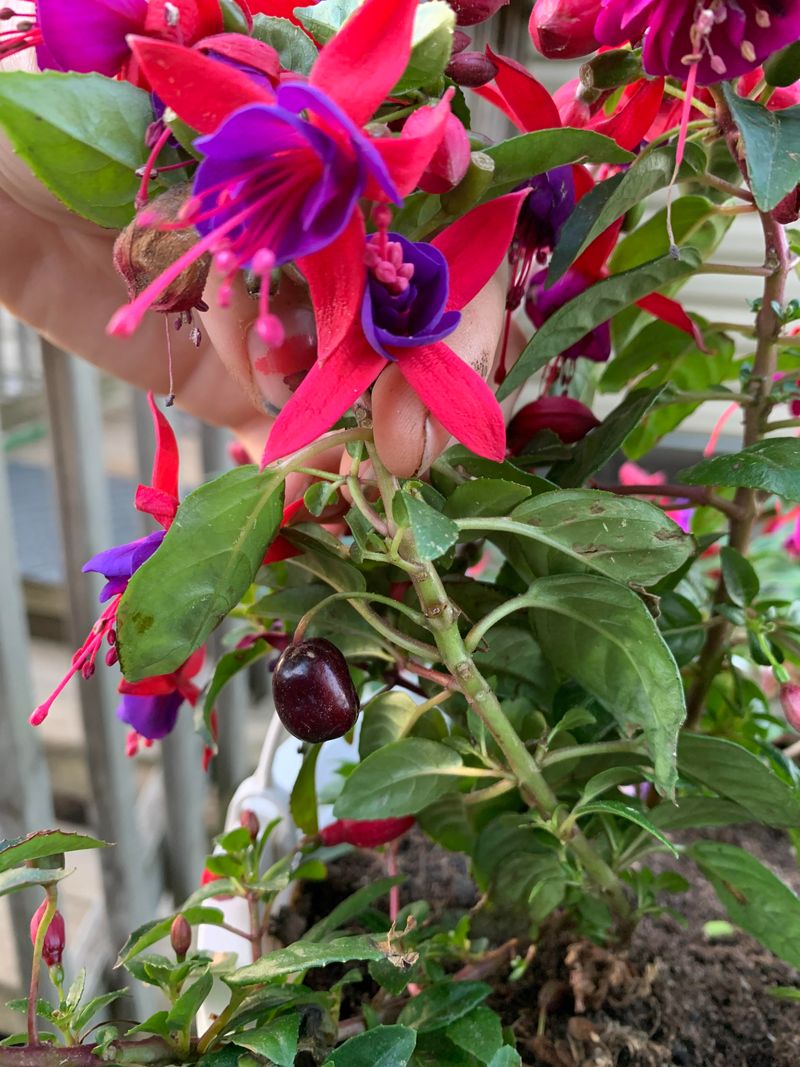
Here is something that surprises a lot of newer gardeners: even after you remove the petals, the plant can still form a seed pod if you leave the base behind. Those little round, berry-like pods look harmless, but they are a serious energy drain.
Your fuchsia is working hard to ripen those seeds, and that work comes at the cost of new blooms.
Seed pods are easy to spot once you know what to look for. They are small, round, and slightly plump, sitting right where the flower was attached to the stem.
They can be green, purple, or dark red depending on the variety. As soon as you see one forming, remove it right away.
Do not wait until it gets bigger.
Some gardeners actually enjoy letting a few pods develop at the end of the season to collect seeds. That is fine as a fall project.
Your Oregon Garden Changes Every Week. Your Plan Should Too.
Gardening in Oregon changes quickly throughout the season. Every Friday you’ll receive a simple weekly plan showing exactly what to plant, prune, fertilize, harvest, and protect so you never miss the right timing.
But during peak bloom season, every pod you allow to grow is a bloom you will not see. Think of it this way: the plant has a limited amount of energy to spend each week.
You get to decide where that energy goes. Redirecting it away from seeds and toward flowers is one of the smartest moves you can make.
Check your plants a couple of times each week and remove any pods you find right away.
3. Snip Tired Tips To Wake Up New Buds
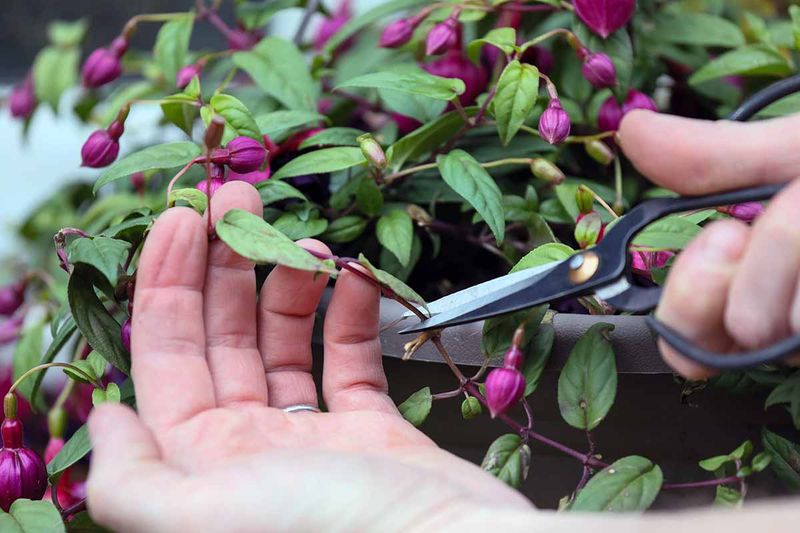
Sometimes a fuchsia stem just gets tired. The tip stretches out, the leaves look small and pale, and no new buds seem to be forming.
That is a sign the stem has run out of steam. A quick snip right above a healthy leaf node is all it takes to fix it.
This technique is called soft pinching, and it works because of how fuchsias grow. When you cut the tip of a stem, the plant sends growth hormones to the nodes below the cut.
Those nodes then push out two new shoots instead of one. More shoots mean more stem tips, and more stem tips mean more flowers. It is a simple trade-off that pays off fast.
You do not need fancy tools for this. A clean pair of small scissors or even your fingernails work fine for soft, young growth.
Just make sure whatever you use is clean so you do not spread any disease between plants. Pinch or snip about a quarter inch above a leaf node, and leave the rest of the stem alone.
Do not cut too far back. You only want to remove the tired top portion, not healthy growth below it.
Do this to a few stems each week rather than all at once. That way your plant keeps blooming in stages while new buds are always forming somewhere on the basket.
4. Clear Yellow Leaves From The Basket
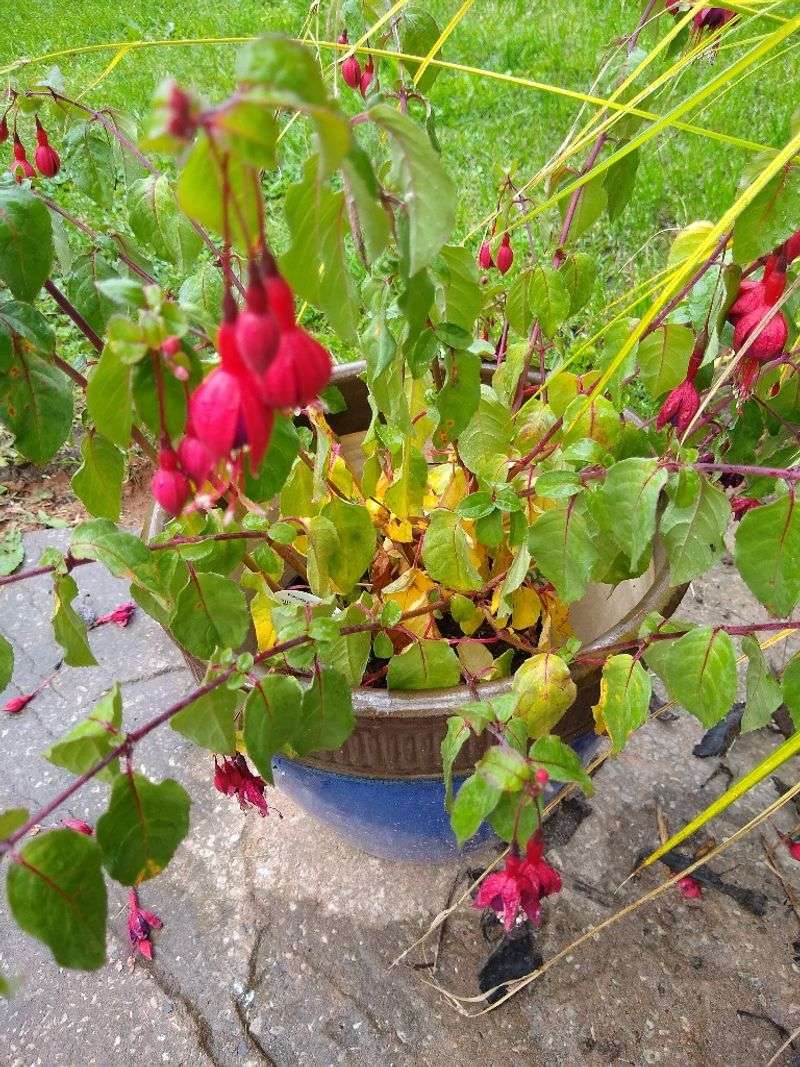
Yellow leaves on a fuchsia are not just an eyesore. They are a signal that something needs attention, and leaving them on the plant is never the right move.
Old yellow leaves do not turn green again. They sit there taking up space, blocking airflow, and sometimes even inviting disease to settle in.
There are a few reasons fuchsia leaves turn yellow. Overwatering is one of the most common.
If the roots stay wet for too long, they struggle to absorb nutrients and the leaves start to yellow from the bottom of the plant upward. Underwatering can cause a similar look.
Nutrient deficiency, especially a lack of nitrogen, is another common cause. So is natural aging, where the lowest leaves simply get old and drop off.
No matter the cause, remove the yellow leaves as soon as you see them. Pull them off gently at the base of the leaf stem, or use scissors for a clean cut.
Check the inside of the basket too, not just the outer edges. Yellow leaves tend to hide in there where you cannot see them unless you look closely.
After clearing them out, check your watering habits and consider whether a light feeding might help.
Keeping the plant clean and tidy is one of the easiest ways to keep it healthy and blooming through the whole growing season here in Oregon.
5. Check Hidden Stems Under The Canopy
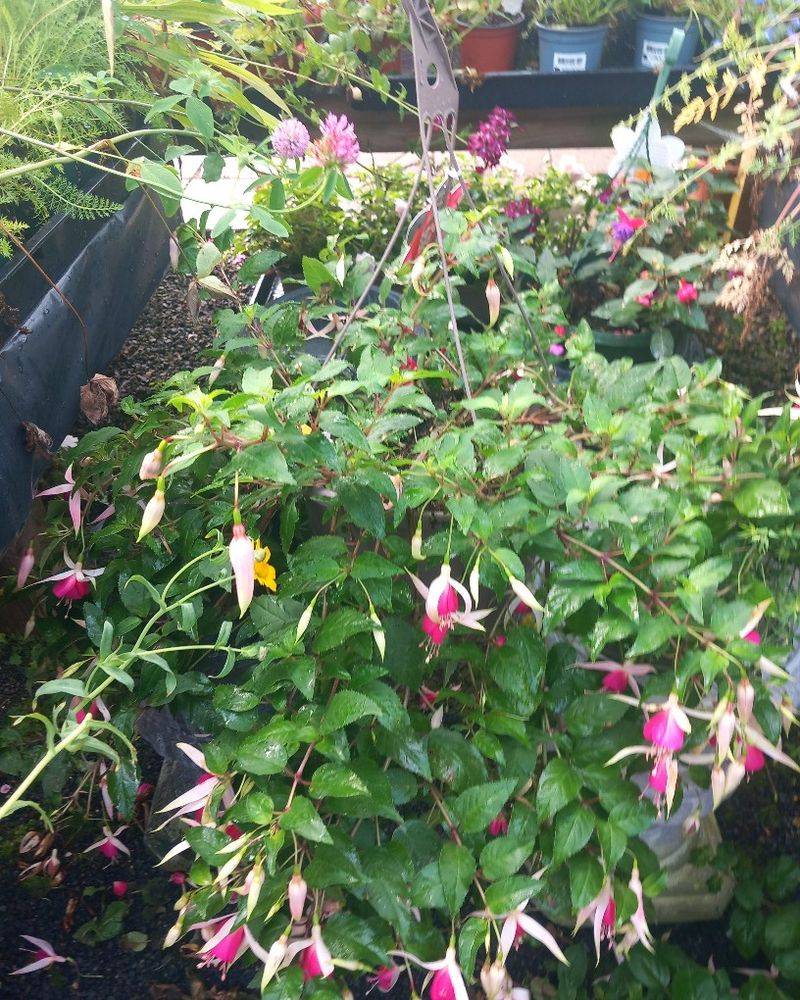
A full, lush fuchsia basket looks beautiful from the outside, but what is happening on the inside matters just as much. Thick outer growth can block sunlight and airflow from reaching the stems underneath.
Those inner stems often have buds that never develop because they are stuck in the shade with no room to breathe.
Take a few minutes this week to gently part the outer foliage and look inside your basket. You might be surprised by what you find.
Tangled stems, old flower bases, yellowing leaves, and even the beginning of disease can all hide in there unseen. Some of those inner stems might be crossing over each other in ways that cause damage over time.
Gently untangle any crossed stems if you can do it without breaking them. Remove any withered material you find tucked inside.
If the inner canopy is really dense, you can remove a few healthy stems to open things up. More airflow inside the plant means a lower risk of fungal problems, which are common in Oregon’s damp spring and fall weather.
It also means more light reaches the inner buds, giving them a real chance to develop. Think of it like tidying up a closet.
Once you clear out the clutter, everything works better. Doing this check once a week takes just a few minutes and makes a real difference in bloom production.
6. Do Not Cut The Plant Back Hard
One of the most common mistakes gardeners make mid-season is cutting their fuchsia back too hard. It seems like a good idea at the time.
The plant looks messy, maybe it has slowed down on blooms, and a big trim feels like a fresh start. But cutting back hard during active growing season can set the plant back by weeks.
Fuchsias bloom on new growth, which means they need healthy stems and leaf nodes to produce flowers. When you cut back hard, you remove most of that potential.
The plant then has to spend all its energy growing new stems from scratch before it can even think about blooming again. In a short growing season, that is a big price to pay.
Hard pruning is best saved for late fall or early spring before new growth begins. During the blooming season, stick to soft pinching and light tip removal only.
If the plant looks scraggly, shape it gently by trimming the longest, wildest stems back by just a few inches. Target stems that are bare at the bottom and leafy only at the very tip.
Removing those will tidy the plant without shocking it. Always cut just above a healthy leaf node and leave plenty of growth behind.
Your fuchsia will look better and keep blooming instead of going silent for weeks while it tries to recover from an overly aggressive trim.
7. Feed Lightly After A Good Watering
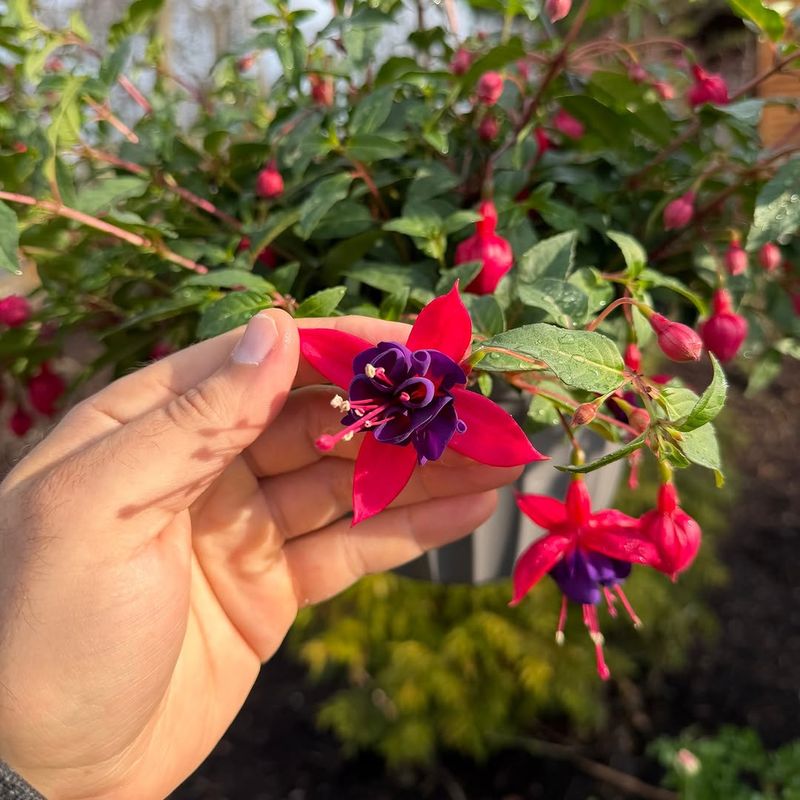
Feeding a fuchsia is a little like feeding a person after a workout. Timing and amount both matter.
Give it too much at once and you cause problems. Give it too little and it runs out of steam.
The sweet spot is a light, regular feeding schedule that keeps nutrients flowing without overwhelming the roots.
Always water your fuchsia before you fertilize. Applying fertilizer to dry soil can burn the roots, which causes more harm than good.
Once the soil is moist, apply a diluted liquid fertilizer. A balanced formula like 20-20-20 works well early in the season, but once blooming is in full swing, switch to a fertilizer that is higher in phosphorus.
Phosphorus supports flower production, which is exactly what you want right now.
Feed once a week during the blooming season, but keep the dose on the lighter side. Half the recommended strength is often plenty for a plant in a hanging basket with limited soil volume.
Too much fertilizer pushes the plant toward leafy green growth instead of flowers. You will end up with a beautiful green bush and not many blooms.
Light and steady is the goal. If you notice the leaves getting very dark green and lush but flowers are sparse, that is a sign you may be overfeeding.
Pull back on the fertilizer for a week or two and let the plant refocus its energy on what you really want: more blooms.
8. Keep Baskets Out Of Harsh Afternoon Sun
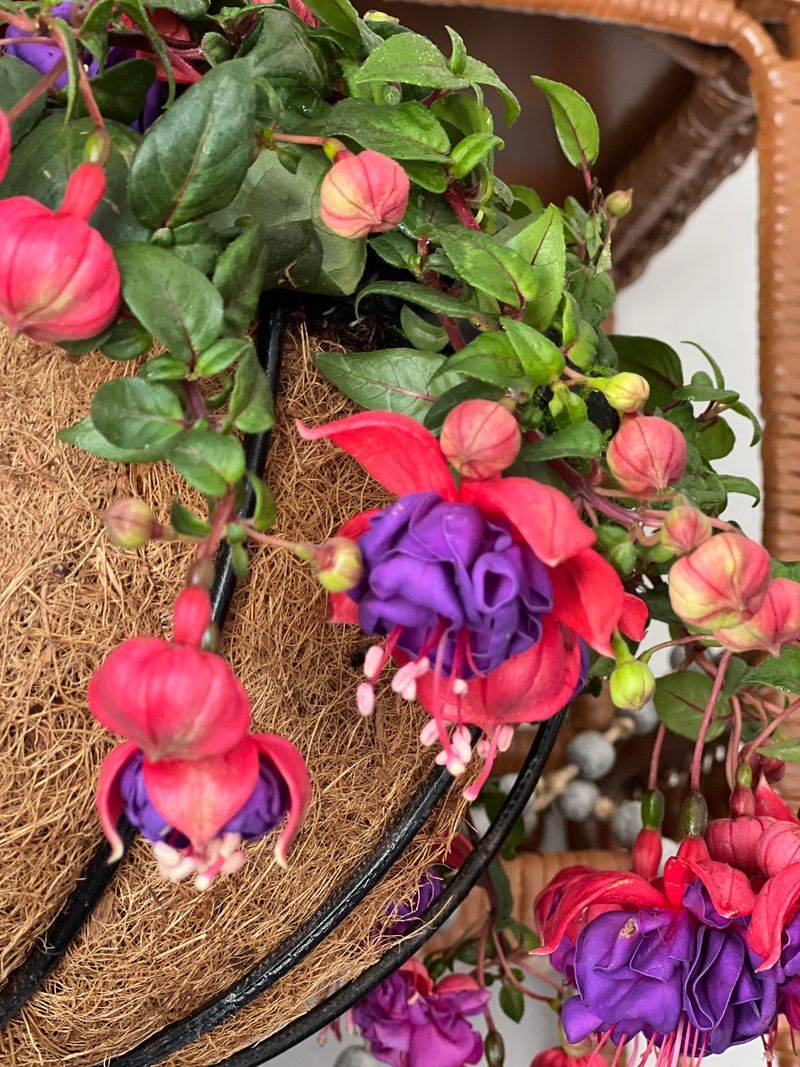
Fuchsias have a reputation for being a little fussy about sunlight, and that reputation is mostly earned. These plants prefer bright but indirect light.
They do well in morning sun, which is gentle and cool. But harsh afternoon sun, especially on hot summer days, can cause real stress fast.
When a fuchsia gets too much direct afternoon sun, the leaves start to curl and look dull. The flowers fade faster than they should.
The soil dries out within hours instead of lasting a full day. The plant goes into a kind of heat stress mode and stops putting energy into new blooms.
In some cases, the whole basket can look wilted and worn out by early evening even if it was watered that morning.
Oregon summer afternoons can still get warm enough to stress a fuchsia. Move hanging baskets to a spot that gets shade from about noon onward.
A covered porch, the north side of a building, or a spot under a tree canopy all work well. If you cannot move the basket, try hanging a light shade cloth to filter the sun during peak hours.
Fuchsias grown in the right light conditions bloom more freely, look healthier, and need less water overall. Getting the placement right is one of the easiest changes you can make this week for a big improvement in bloom count.