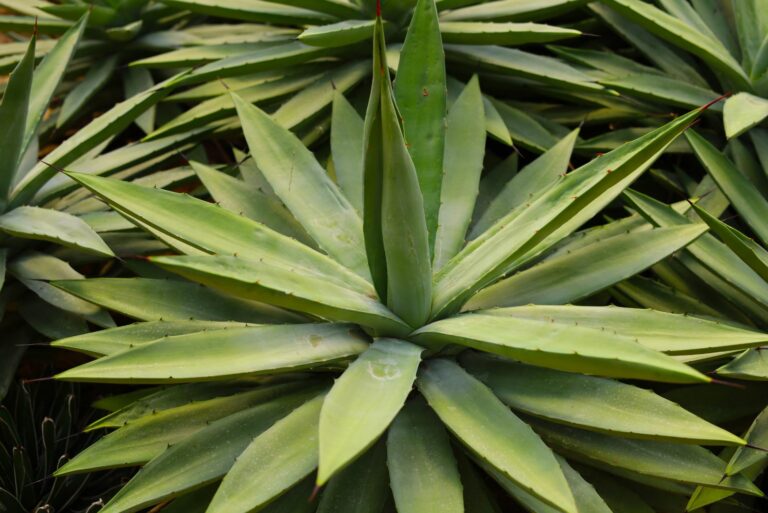
10 Easy Plants That Enhance Backyard Landscaping In Texas
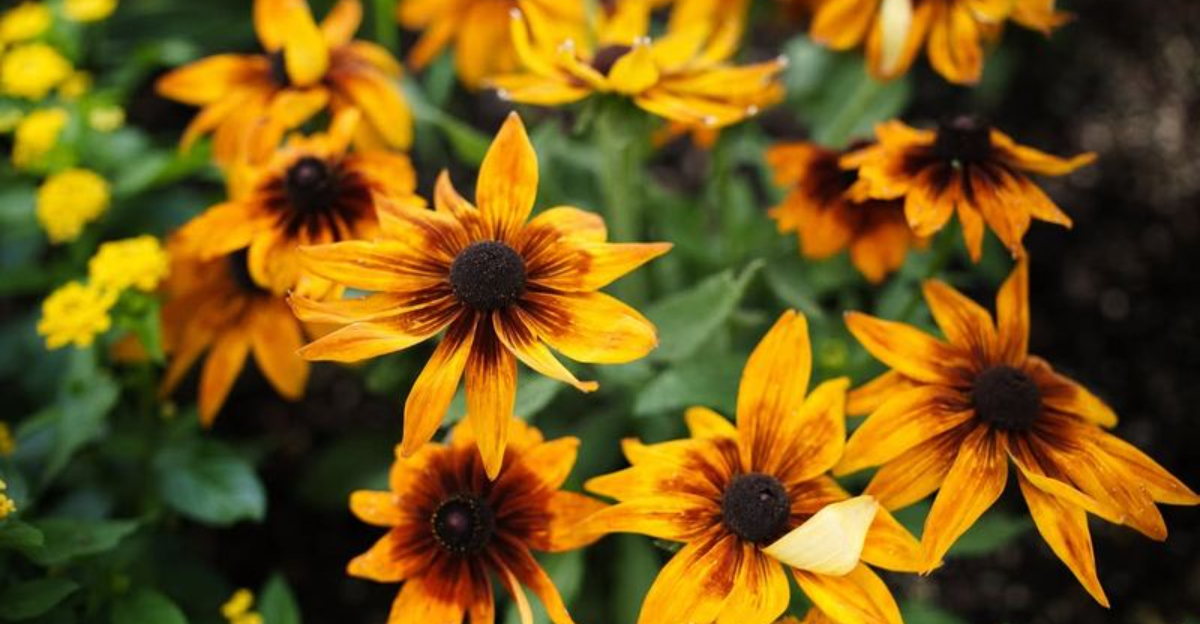
Texas backyards demand plants that can stand up to heat, sun, and occasional drought without demanding constant attention.
The right choices turn ordinary yards into inviting outdoor retreats, adding color, texture, and structure with minimal fuss.
Hardy perennials, low-maintenance shrubs, and sun-loving flowering plants deliver instant curb appeal while keeping care simple.
Strategic placement creates flow, frames outdoor spaces, and draws the eye to focal points like patios, pathways, or water features.
Even small yards benefit when these plants layer height, color, and seasonal interest, making every corner feel deliberate and welcoming.
1. Black-Eyed Susan
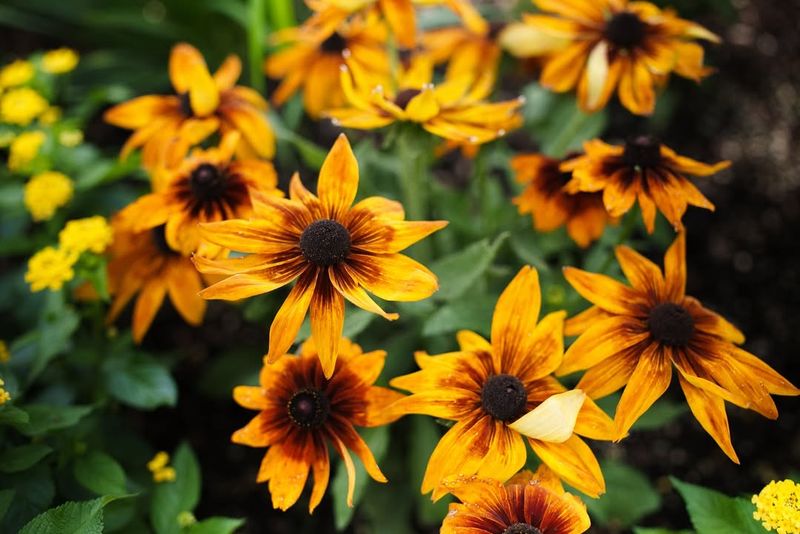
Cheerful golden petals surrounding dark chocolate centers make this native wildflower a backyard favorite across Texas.
Black-Eyed Susans bloom from early summer through fall, creating waves of sunny color that brighten even the hottest days.
Their tough constitution means they can handle full sun exposure and periods without rain, making them ideal for busy homeowners.
Plant them in groups for maximum visual impact, and watch as butterflies and bees flock to their nectar-rich blooms.
These perennials spread gradually, filling in bare spots without becoming invasive nuisances.
Once established, they need watering only during extreme drought conditions.
Their self-seeding habit means new plants pop up each year, expanding your flower display naturally.
Cut back old stems in late winter to encourage fresh spring growth.
Black-Eyed Susans pair beautifully with purple coneflowers and ornamental grasses for a prairie-style garden look.
Their long stems make excellent cut flowers for indoor arrangements that last over a week in water.
Deer typically avoid munching on these tough plants, which is a bonus for rural properties.
Few plants offer such reliable color with so little effort required.
2. Lantana
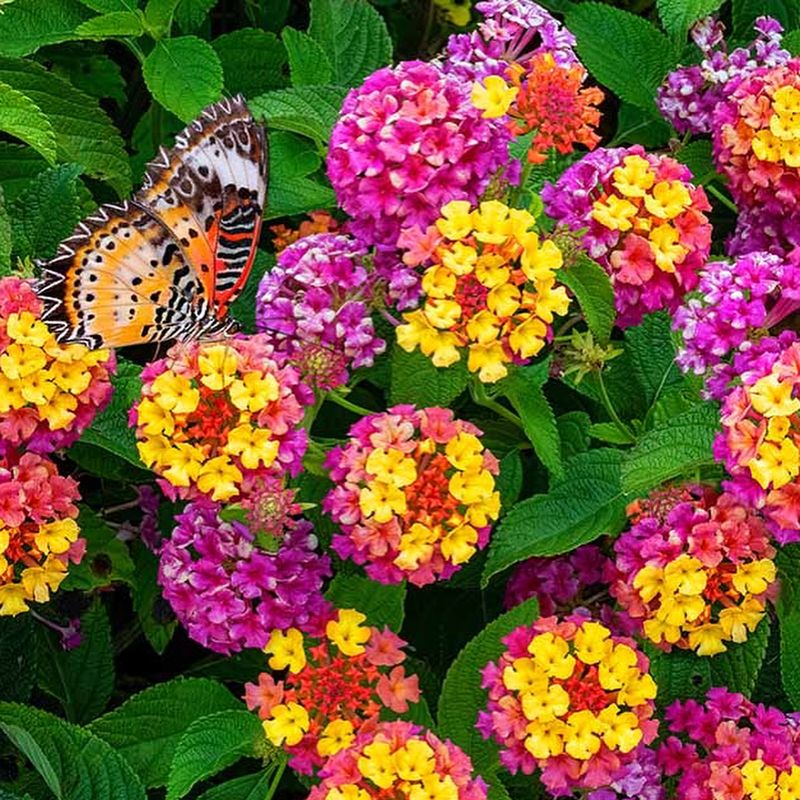
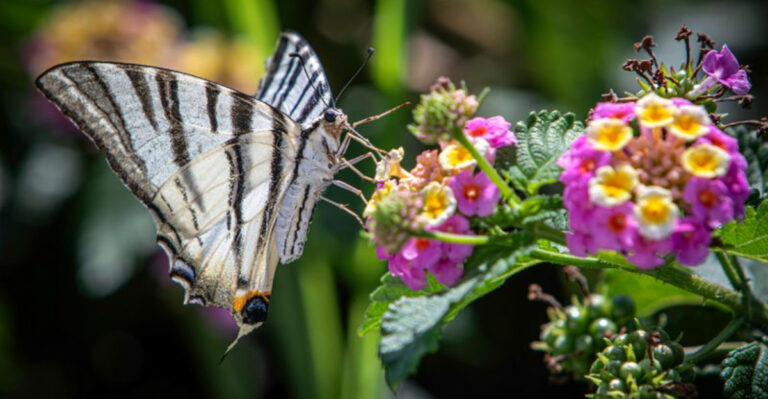
Explosive clusters of tiny flowers in sunset shades transform this tough shrub into a non-stop color machine from spring until the first freeze.
Lantana laughs at Texas heat, actually blooming more profusely as temperatures climb.
Its ability to thrive in poor soil and tolerate drought makes it perfect for neglected corners of your yard.
Hummingbirds and butterflies treat Lantana like an all-day buffet, constantly visiting the nectar-packed blooms.
Choose from varieties that spread as groundcovers or grow upright as rounded shrubs reaching three feet tall.
Color options range from pure white to vibrant combinations of red, orange, yellow, and pink, sometimes all on the same plant.
Prune back frost-damaged stems in early spring, and new growth quickly emerges.
Lantana requires almost no fertilizer and actually prefers lean soil conditions.
Its aromatic foliage deters deer and rabbits from browsing, protecting your garden investment.
Plant in full sun for best flowering, though it tolerates partial shade reasonably well.
Container plantings work wonderfully, bringing color to patios and porches.
This plant proves that low-maintenance and beautiful can absolutely go hand in hand.
3. Texas Sage
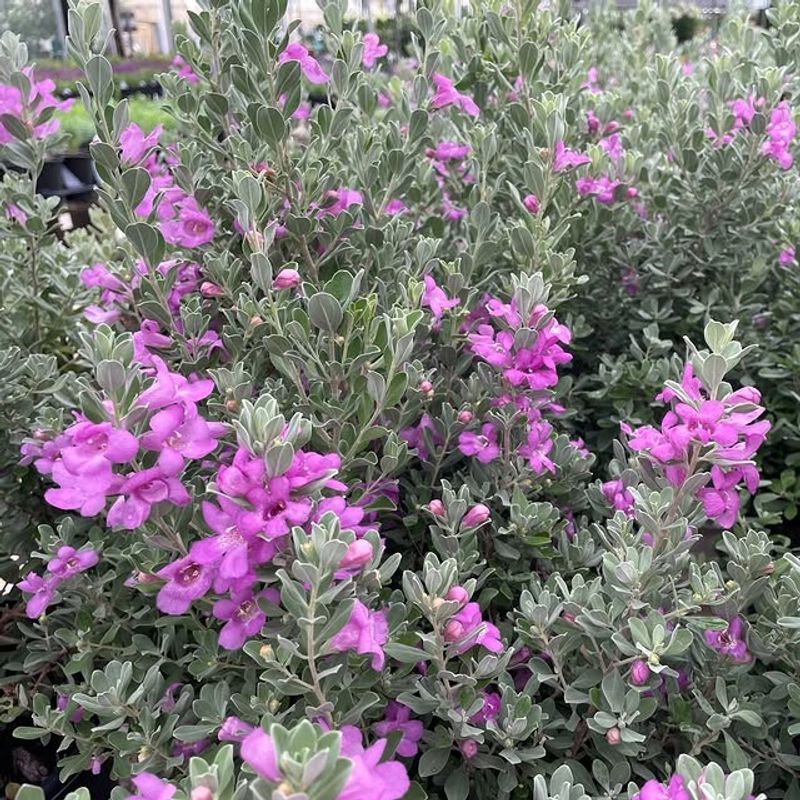
Silvery foliage creates a soft backdrop that suddenly explodes with tubular purple blooms after summer rainstorms, earning this shrub the nickname “barometer bush.”
Native to the Chihuahuan Desert, Texas Sage handles extreme heat and drought better than almost any other flowering shrub.
Its rounded form grows naturally into an attractive shape without constant pruning or shaping.
Several cultivars offer different flower colors, including pink, white, and various purple shades.
The fuzzy gray-green leaves provide year-round visual interest even when flowers take a break.
Plant Texas Sage in full sun and well-draining soil for best results.
Once established, supplemental watering becomes unnecessary except during extended droughts.
This evergreen shrub maintains its foliage through mild Texas winters, providing structure to dormant gardens.
Space plants four to five feet apart for hedges, or use single specimens as focal points.
Deer find the foliage unappetizing, making Texas Sage reliable for rural properties.
Light pruning in early spring maintains compact growth, though the plant looks fine without intervention.
Few plants combine such dramatic flowering with such minimal water requirements.
4. Turk’s Cap
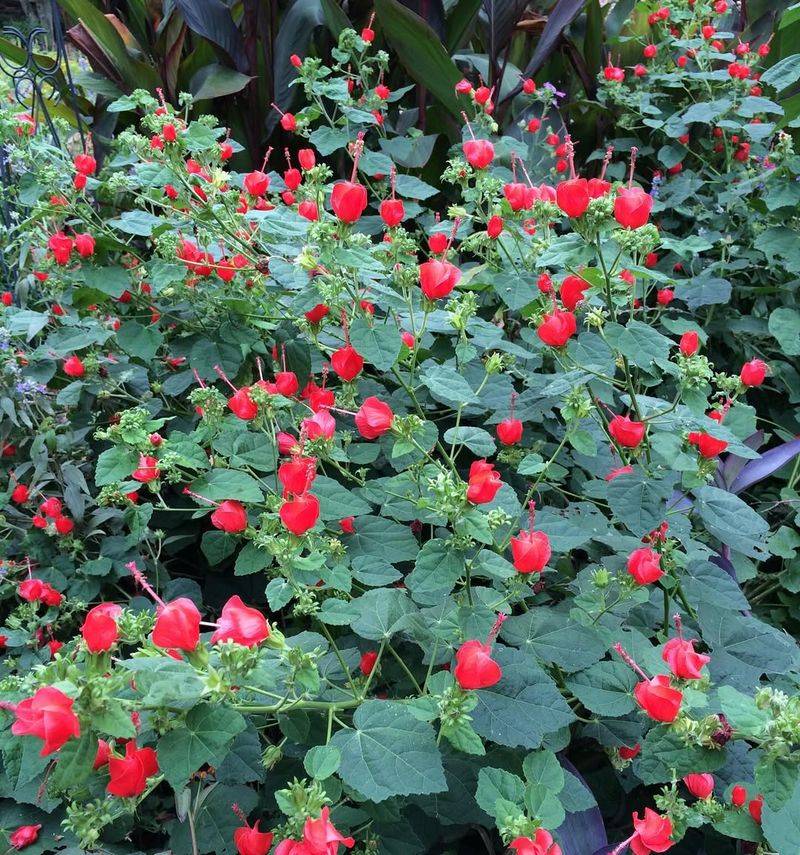
Bright red flowers shaped like tiny Turkish fezzes dangle from arching stems throughout the growing season, creating a whimsical display that hummingbirds cannot resist.
Unlike many flowering plants, Turk’s Cap actually prefers partial shade, making it perfect for those tricky spots under trees.
This Texas native tolerates heavy clay soil and adapts to various moisture levels, from damp to moderately dry.
Its sprawling growth habit fills spaces quickly, reaching three to five feet in height and width.
The distinctive turban-shaped blooms never fully open, maintaining their unique form throughout their bloom period.
After flowers fade, small red fruits appear that birds eagerly consume.
Turk’s Cap dies back to the ground during freezes but rebounds vigorously each spring from its roots.
Cut back old stems in late winter to make room for fresh growth.
Its informal cottage-garden appearance suits relaxed landscape styles beautifully.
Plant near windows or patios where you can watch hummingbirds visit daily.
Turk’s Cap requires no fertilizer and minimal watering once established.
This reliable performer brings color and wildlife activity to shaded areas that frustrate many gardeners.
5. Mexican Feathergrass
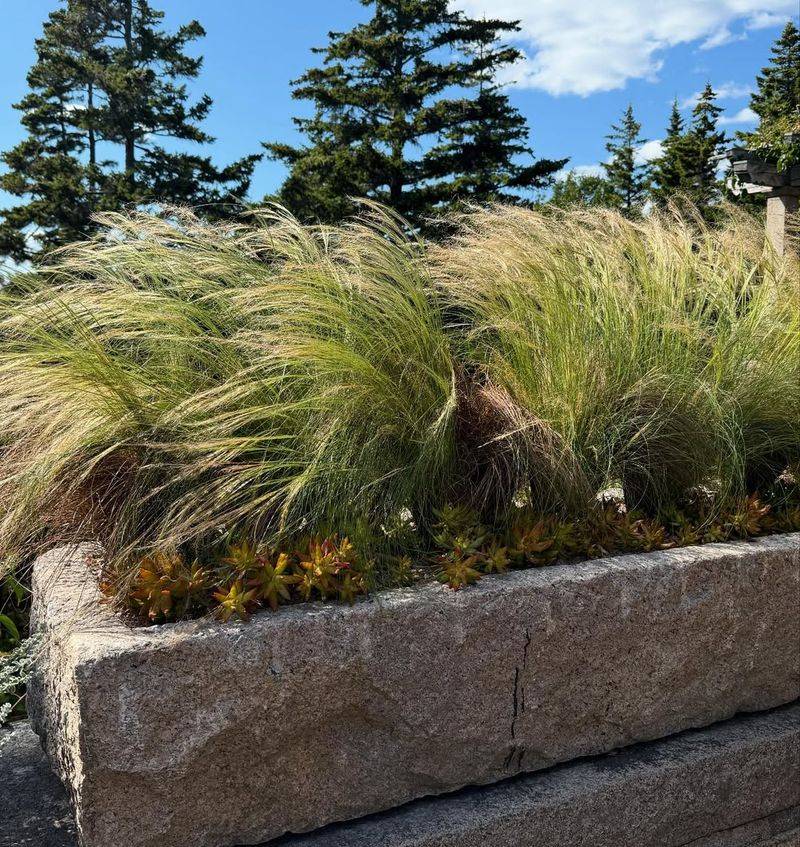
Silky blonde plumes dance in the slightest breeze, creating mesmerizing movement that adds a fourth dimension to static landscapes.
Mexican Feathergrass forms fountain-shaped clumps of fine-textured foliage that remain attractive year-round in Texas.
During late spring and summer, delicate seed heads emerge on arching stems, catching sunlight and creating a glowing effect.
This ornamental grass thrives in Texas heat and requires almost no supplemental water after establishment.
Plant it along pathways where passersby can appreciate its graceful swaying motion.
The fine texture contrasts beautifully with bold-leafed plants like agaves or yuccas.
Mexican Feathergrass self-seeds moderately, creating natural drifts that soften hardscapes.
Simply pull unwanted seedlings if they appear where you prefer them not to grow.
Cut back old foliage in late winter before new growth emerges for the tidiest appearance.
This grass tolerates various soil types, from sandy to clay-based
Its soft appearance belies its toughness against drought, heat, and neglect.
Use Mexican Feathergrass in mass plantings for dramatic effect or as single specimens among perennials.
Few plants offer such elegant movement with such minimal maintenance requirements.
6. Esperanza
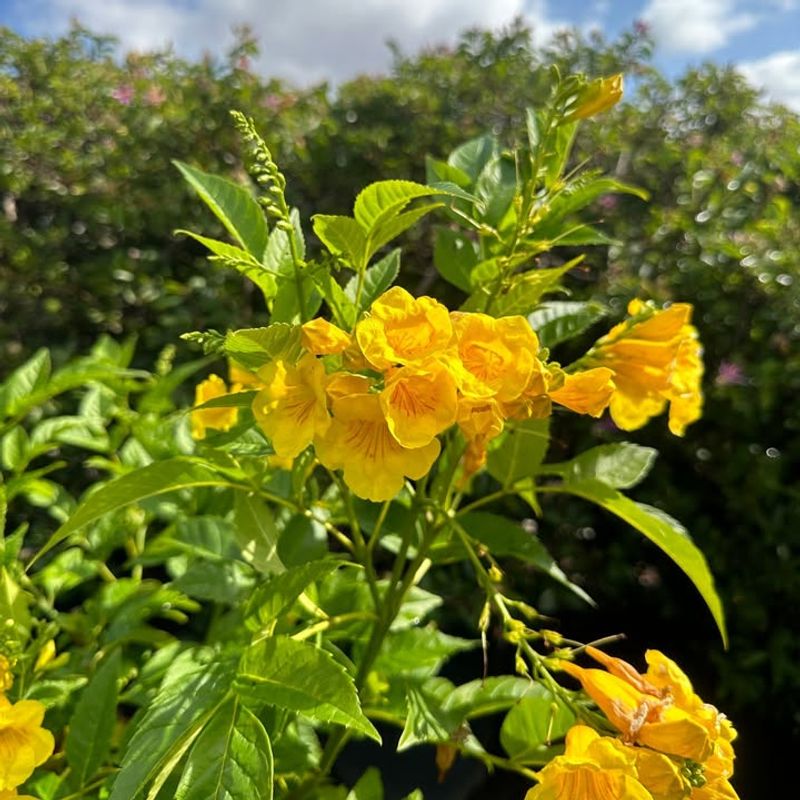
Golden trumpet flowers cascade from glossy green branches in such abundance that the foliage nearly disappears beneath the floral display during peak bloom.
Esperanza, also called Yellow Bells, pumps out flowers from late spring through the first hard freeze.
Its rapid growth fills empty spaces quickly, reaching six feet tall and wide in a single growing season.
Full sun and heat make this tropical-looking shrub happiest, with flowering intensity increasing as temperatures rise.
The glossy compound leaves provide attractive texture even between heavy bloom cycles.
Hummingbirds visit the tubular flowers constantly, providing endless entertainment for observers.
Esperanza freezes back during Texas winters but rebounds from roots once warm weather returns.
Cut back frost-damaged stems to ground level in early spring.
Regular watering during establishment encourages faster growth, but mature plants tolerate short dry periods.
This shrub works beautifully as a seasonal hedge or mixed into perennial borders for vertical interest.
Its bold presence makes a strong statement in contemporary or tropical-themed landscapes.
Fertilize monthly during the growing season for maximum flower production, though plants bloom adequately without supplemental feeding.
7. Autumn Sage
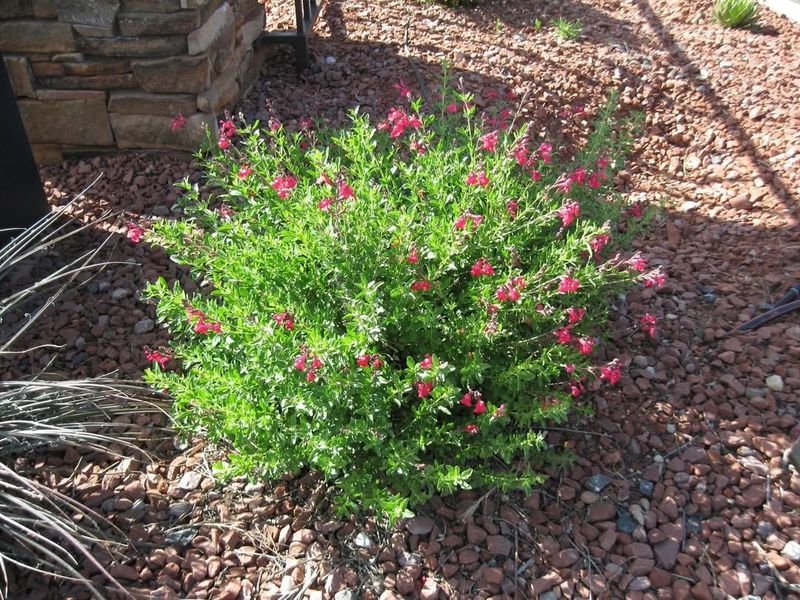
Tubular flowers in shades ranging from coral to crimson appear in waves from spring through fall, with the heaviest displays coinciding with cooler autumn temperatures.
Autumn Sage, botanically known as Salvia greggii, ranks among the most reliable hummingbird magnets for Texas gardens.
This compact shrub maintains a tidy rounded shape reaching two to three feet in both directions.
Besides red, cultivars bloom in pink, white, salmon, and purple, allowing for creative color combinations.
The small aromatic leaves release a pleasant scent when brushed against or crushed.
Plant Autumn Sage in full sun and well-draining soil for best performance.
Established plants need watering only during extended dry spells, making them ideal for water-wise landscapes.
Light shearing after major bloom cycles encourages fresh growth and additional flowering.
Deer typically avoid browsing on the aromatic foliage, protecting your landscape investment.
This native Texas plant tolerates alkaline soils and rocky conditions without complaint.
Use Autumn Sage as edging along pathways, in mass plantings, or mixed into perennial borders.
Its long bloom season and minimal care requirements make it a smart choice for beginners and experienced gardeners alike.
8. Yucca
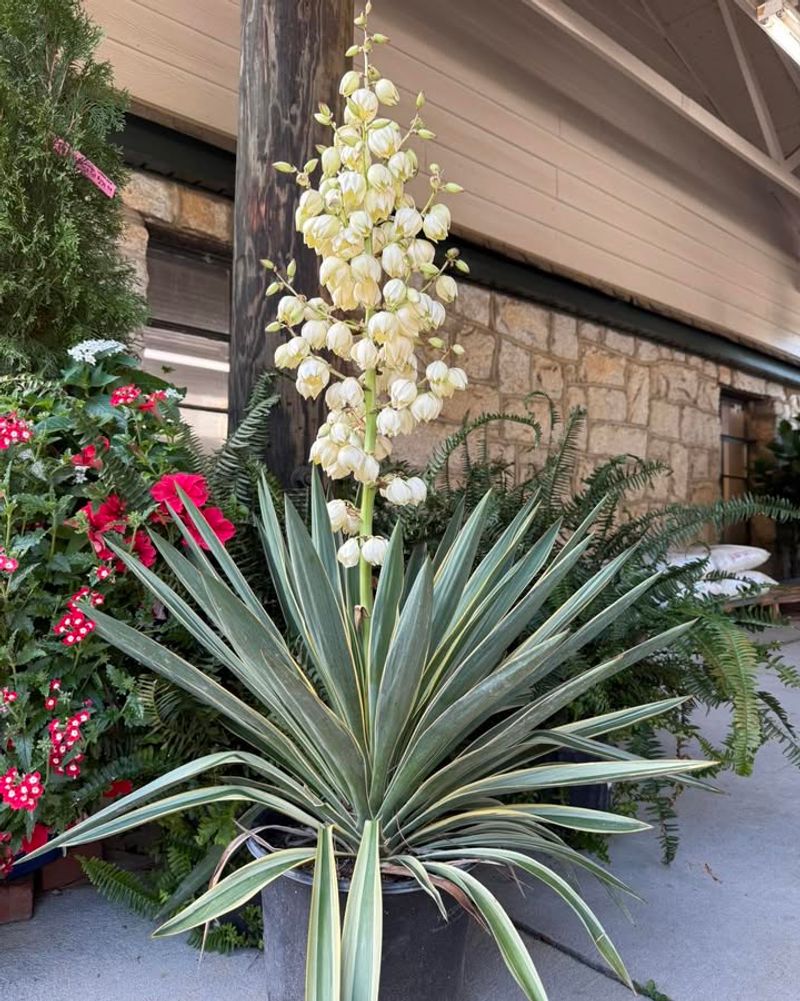
Sword-shaped leaves radiating from a central point create dramatic architectural interest that anchors landscape designs with bold sculptural presence.
Yuccas thrive in Texas conditions that stress many other plants, including intense sun, poor soil, and minimal rainfall.
In late spring, towering flower spikes emerge, bearing hundreds of creamy white bell-shaped blooms that attract yucca moths for pollination.
These evergreen plants maintain their striking form year-round, providing constant visual interest through all seasons.
Several species suit Texas landscapes, from compact varieties to tree-form specimens reaching fifteen feet tall.
The sharp leaf tips demand respectful placement away from high-traffic areas, but their toughness is unmatched.
Yuccas require absolutely no supplemental watering once established, making them perfect for forgotten corners.
They tolerate reflected heat from pavement and buildings better than almost any other plant.
Plant yuccas in full sun and well-draining soil, though they adapt to various soil types.
Remove spent flower stalks after blooming for tidier appearance, though this step remains optional.
Their modern aesthetic suits contemporary landscape designs perfectly.
Yuccas prove that dramatic beauty and extreme toughness can coexist in a single plant.
9. Rosemary
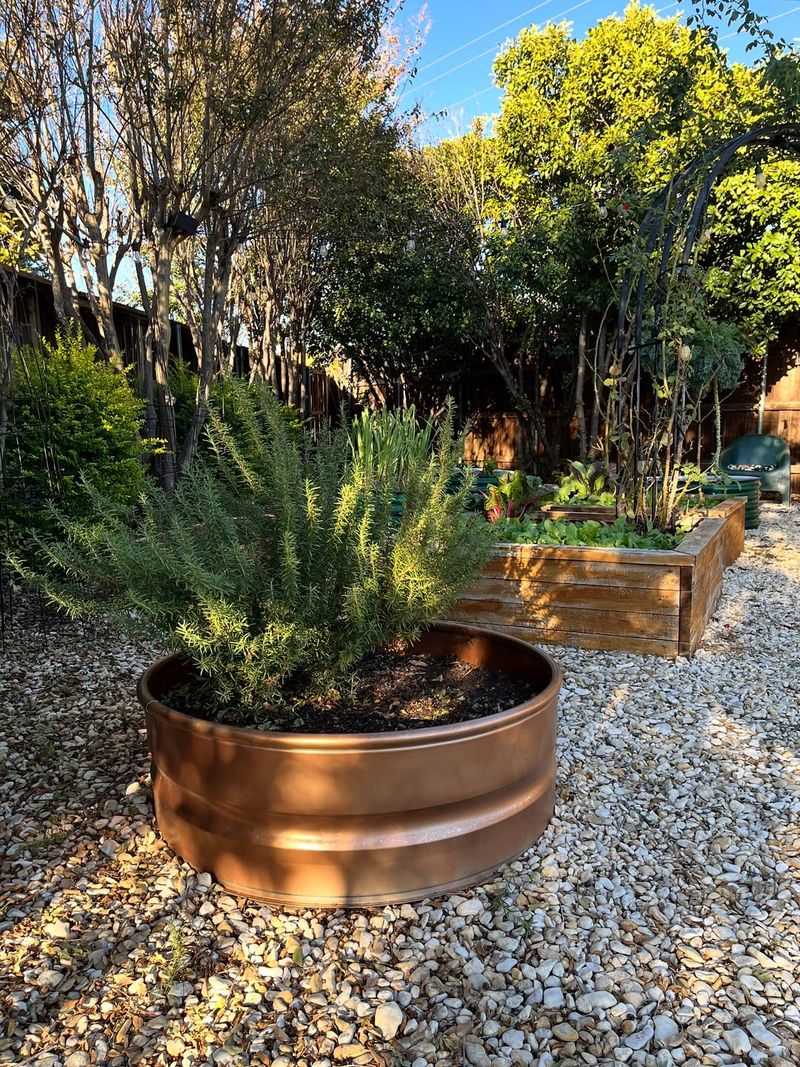
Aromatic needle-like leaves release their distinctive fragrance with every brush, creating a sensory experience while serving double duty as a landscape plant and culinary herb.
Rosemary thrives in Texas heat and drought, actually preferring lean soil and infrequent watering once established.
Small blue, pink, or white flowers appear sporadically throughout the year, with heaviest blooming in spring.
Choose from upright varieties reaching four feet tall or prostrate forms that cascade over walls and containers.
The evergreen foliage provides year-round structure and color to herb gardens and landscape beds alike.
Bees and other pollinators visit the flowers enthusiastically, supporting beneficial insect populations.
Plant rosemary in full sun and well-draining soil for best results.
Avoid overwatering, as soggy roots cause more problems than drought for this Mediterranean native.
Harvest stems regularly for cooking, which simultaneously prunes the plant and encourages bushier growth.
Rosemary tolerates alkaline Texas soils without requiring amendments.
Its informal appearance suits cottage gardens, while formal shearing creates neat hedges or topiaries.
Few plants combine such practical culinary use with such ornamental appeal and minimal maintenance needs.
10. Purple Coneflower
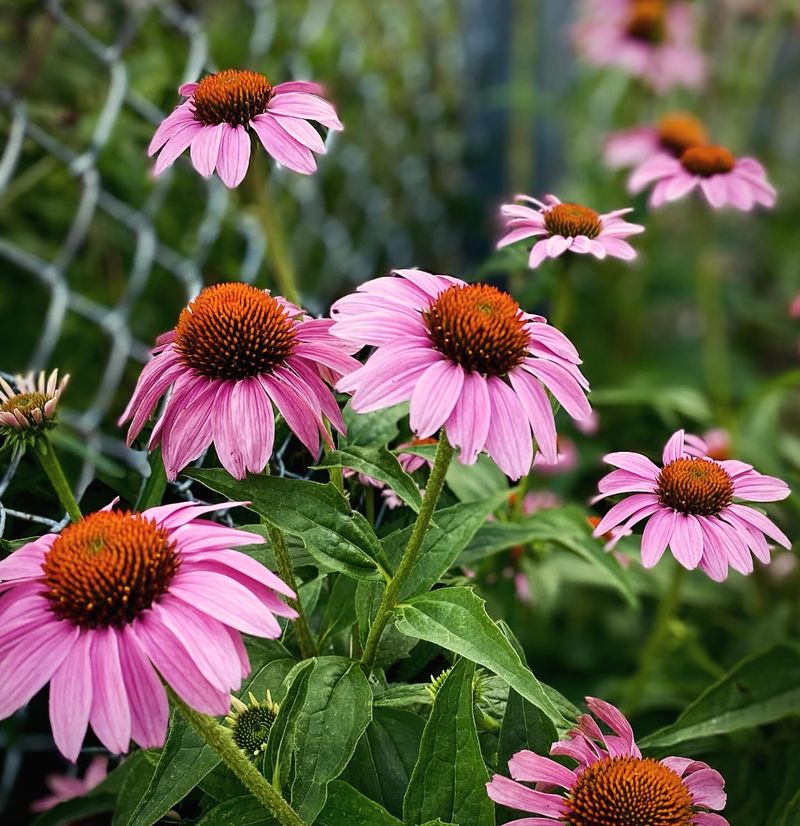
Daisy-like blooms with drooping pink-purple petals surrounding spiky orange cones create a prairie wildflower look that goldfinches and butterflies find irresistible.
Purple Coneflower, or Echinacea, ranks among the toughest native perennials for Texas gardens.
Plants bloom from late spring through summer, with flowers lasting several weeks on sturdy stems.
After petals fade, the seed heads remain attractive through winter, providing food for birds and architectural interest.
Established plants tolerate extended drought and intense heat without wilting or declining.
The deep taproot allows Purple Coneflower to access moisture unavailable to shallow-rooted plants.
Plant in full sun to partial shade, though flowering intensity increases with more light exposure.
These perennials spread slowly, forming larger clumps over time without becoming invasive.
Leave seed heads standing through winter for wildlife value, then cut back old stems in early spring.
Purple Coneflower combines beautifully with ornamental grasses and other prairie natives for naturalistic designs.
Deer usually avoid browsing on the coarse foliage and stems.
This plant proves that native species can match or exceed the performance of exotic imports while supporting local ecosystems.