Easy-To-Grow Flowers To Plant Around Trees In North Carolina
Let’s be honest, that bare patch of dirt and knobby roots under your big oak tree isn’t exactly winning any beauty pageants.
Many North Carolina homeowners treat the space beneath their trees like a “no-grow zone,” but you can actually turn that dusty shade into a vibrant floral retreat.
It is definitely a bit of a neighborhood rivalry down there, since those big trees are basically water hogs that love to hog all the nutrients too! Plus, finding a plant that enjoys living in the dark can feel like a mission.
The great news is that plenty of hardy flowers and leafy stars think a shady North Carolina canopy is the height of luxury.
You can easily find low-maintenance beauties that settle right into that tricky soil without putting up a fight.
These tough plants add a pop of color and texture exactly where you need it most.
1. Impatiens Bring Bright Color To Shade
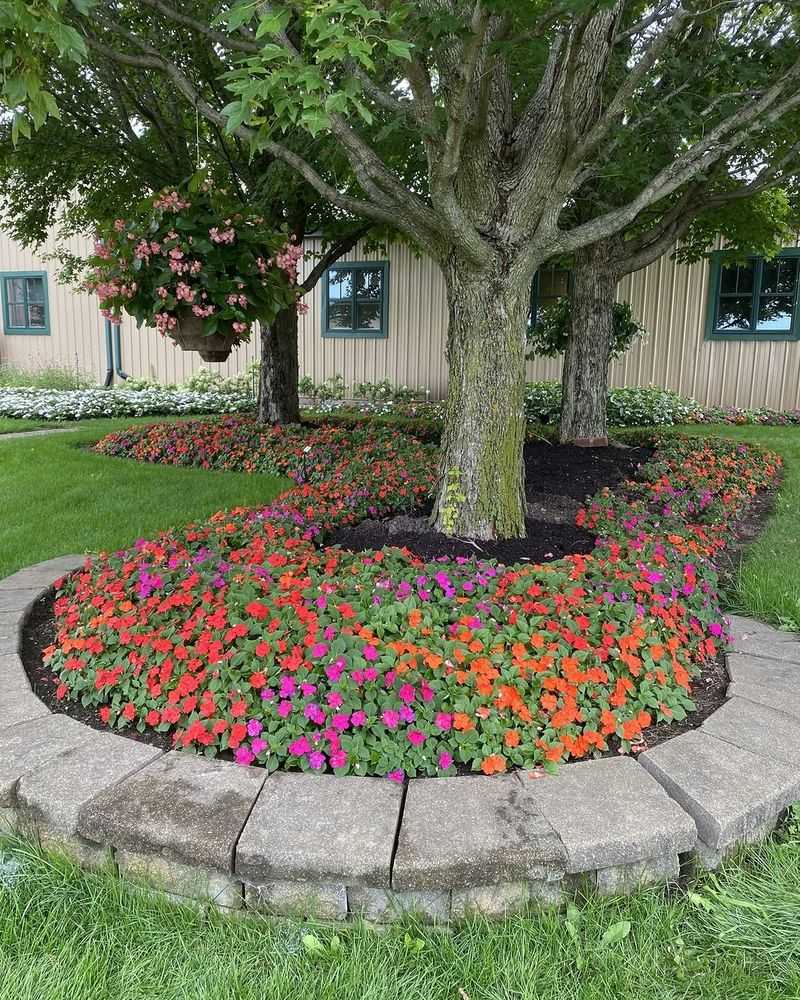
Shade under a large tree can feel like a tough spot to fill with color, but impatiens handle it better than almost any other annual you can find at a North Carolina garden center.
These low-growing plants are practically made for shaded tree rings, producing non-stop blooms in shades of pink, red, coral, white, and lavender from late spring until the first frost arrives in fall.
Impatiens stay compact, usually reaching about six to twelve inches tall, which makes them a natural fit for the ground-level planting space around tree trunks. They work well under dogwoods, maples, and other trees that cast moderate to deep shade.
Because they prefer moist, well-drained soil, they do best when the tree canopy is not completely blocking rainfall and when supplemental watering is available during dry stretches, which are common in North Carolina summers.
When planting impatiens around a tree, avoid digging deeply to protect the roots below the surface. Small transplants can be tucked into the soil with minimal disturbance, and a light layer of mulch helps retain moisture without smothering the plants.
Spacing them about ten to twelve inches apart gives each plant room to fill in.
In North Carolina, impatiens are treated as warm-season annuals and will need to be replanted each year, but the reliable color payoff makes that effort worthwhile for most gardeners.
2. Wax Begonias Add Easy Long-Lasting Color
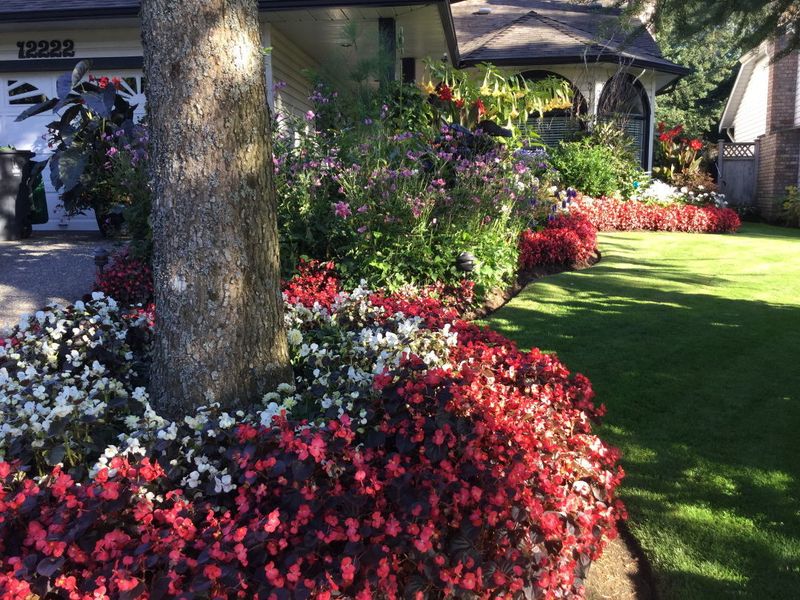
Few annuals deliver as much season-long color with as little fuss as wax begonias.
Walk through almost any established neighborhood in North Carolina during summer, and you will likely spot them tucked around tree bases, lining shaded walkways, or filling in island beds where the light is filtered and the soil stays a little dry.
Wax begonias tolerate a wider range of light conditions than many people expect. They can handle full shade, though they tend to bloom most freely in partial shade, making them a flexible choice for tree beds where light levels shift throughout the day.
Their waxy leaves also help them cope with heat and brief dry spells, which is a real advantage in North Carolina, where summer temperatures can climb well above average and rainfall can be inconsistent.
Your North Carolina Garden Changes Every Week. Your Plan Should Too.
Gardening in North Carolina changes quickly throughout the season. Every Friday you’ll receive a simple weekly plan showing exactly what to plant, prune, fertilize, harvest, and protect so you never miss the right timing.
These plants stay tidy and compact, generally reaching six to twelve inches in height, so they never overwhelm the space around a tree trunk. Foliage comes in green or bronze tones, and blooms appear in red, pink, white, or bicolor combinations.
Like impatiens, wax begonias are warm-season annuals in North Carolina and will not survive frost.
Plant them after the last expected frost date for your region, use small transplants to avoid disturbing tree roots, and add a thin layer of mulch to help the soil hold moisture through the warmer months ahead.
3. Coleus Brings Bold Color Without Flowers
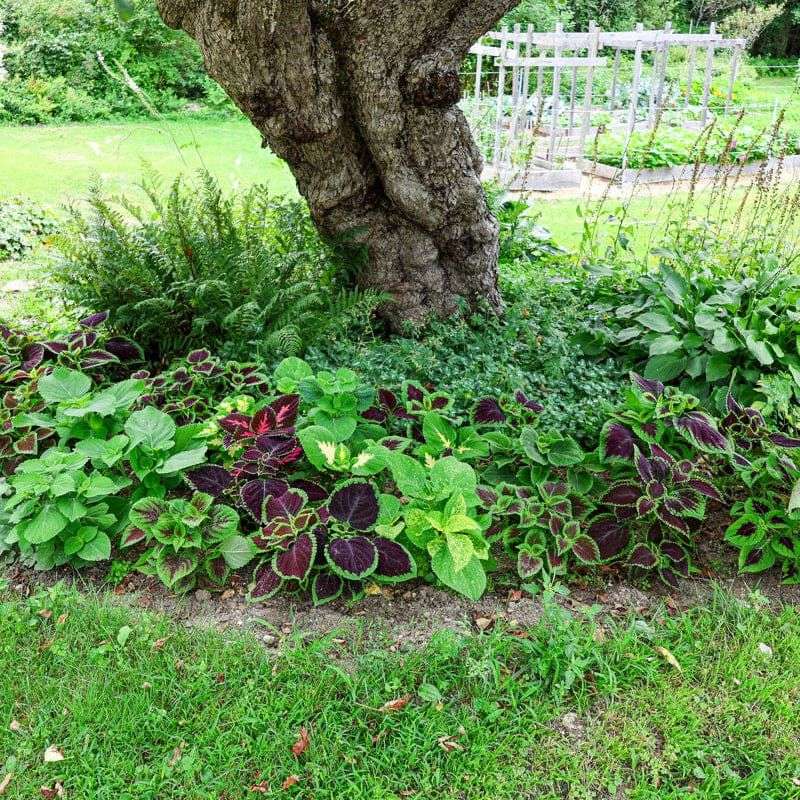
Bold leaf patterns in shades of burgundy, chartreuse, orange, hot pink, and deep purple make coleus one of the most eye-catching plants you can tuck around a tree in a North Carolina yard.
Unlike most of the plants on this list, coleus earns its place entirely through its foliage rather than its flowers, and that makes it a surprisingly reliable performer in spots where blooms might struggle to develop under low light.
Coleus thrives in partial to full shade, which makes it well-suited to the filtered or dense shade cast by large trees like oaks, maples, and pecans. It prefers consistently moist soil but can manage brief dry periods once it is established.
In North Carolina, it is grown as a warm-season annual, performing best from late spring through early fall before cooler temperatures arrive.
One of the practical advantages of coleus around trees is that it does not require deep planting. Small transplants can be placed with minimal soil disturbance, which protects the tree roots below.
Coleus tends to grow anywhere from one to three feet tall depending on the variety, so choosing compact selections works well for lower ground-level beds.
Pinching off any flower spikes that appear helps keep the foliage looking its best and encourages the plant to stay full and bushy.
For gardeners who want strong visual impact in a shaded tree bed, coleus is a reliable and creative choice throughout the growing season.
4. Hostas Add Lush Leaves And Shade Appeal
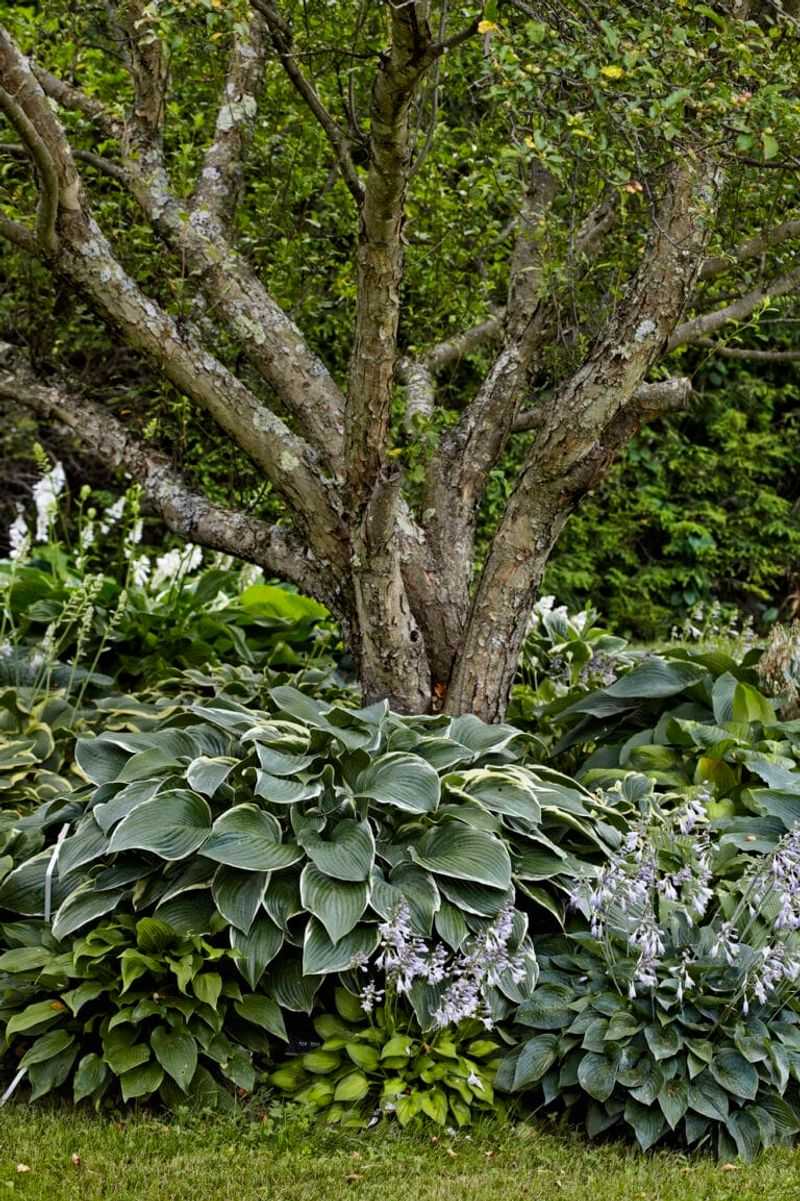
There is a reason hostas show up in shaded yards all across North Carolina.
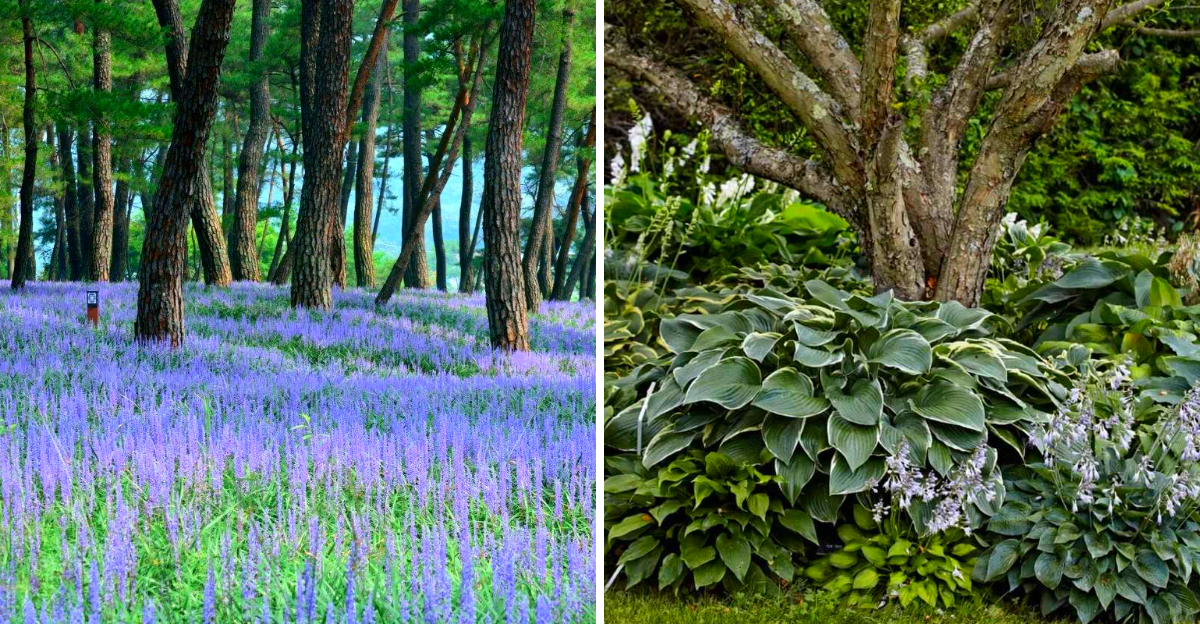
These perennial foliage plants were practically built for the conditions found under large trees, tolerating dense shade, competing root systems, and the kind of dry summer spells that send less resilient plants into decline.
Hostas are grown primarily for their leaves, which come in an impressive range of sizes, textures, and colors. You can find varieties with solid blue-green, bright chartreuse, deep forest green, or variegated leaves edged or striped with white and gold.
The bold, layered look they create around a tree base gives a yard a lush, finished appearance that holds up from spring through fall. They do produce spikes of lavender or white blooms in summer, which adds a subtle seasonal bonus.
Planting hostas around trees in North Carolina works best when you choose small divisions or container plants and disturb the soil as little as possible.
They prefer moist, well-drained soil with good organic matter, but established plants can handle drier conditions reasonably well once their root systems settle in.
Mulching around them helps retain moisture and moderate soil temperature during hot summers. Hostas come back reliably each year, spreading gradually to fill in more space over time.
Slug damage can be an occasional issue in moist conditions, but beyond that, hostas are among the most low-maintenance options available for shaded tree beds in North Carolina landscapes.
5. Astilbe Adds Soft Blooms To Cool Shade
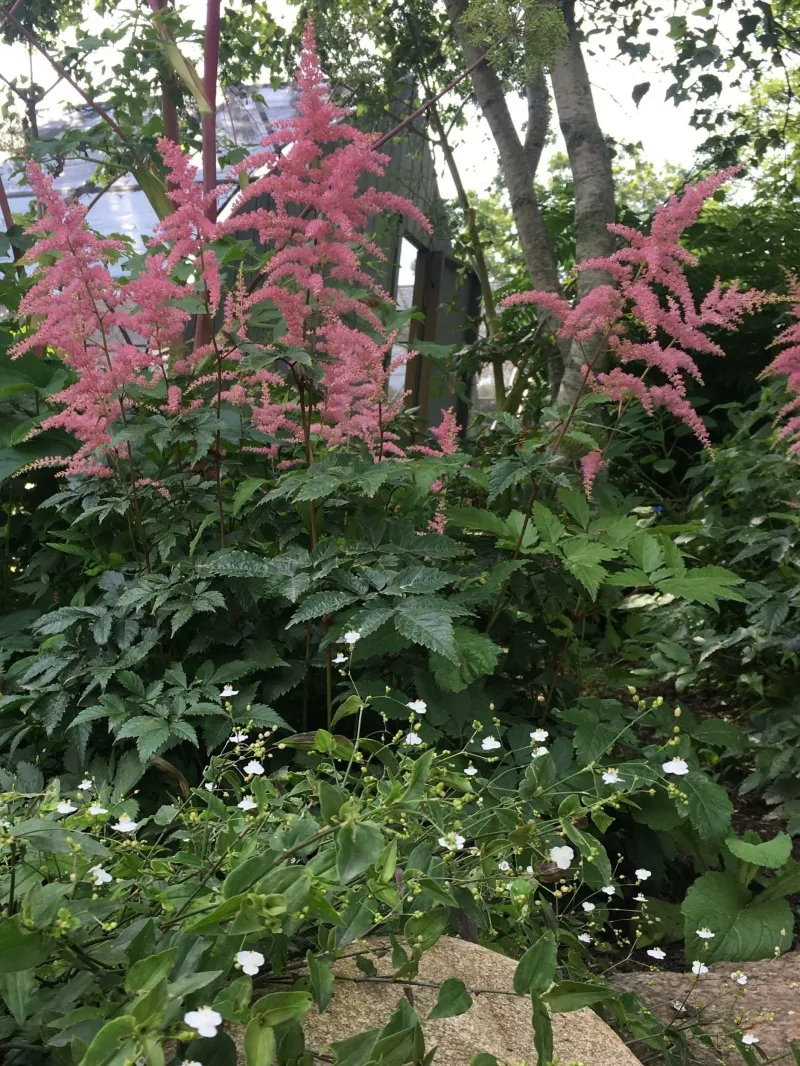
Feathery plumes of pink, red, white, or lavender rising above fern-like foliage make astilbe one of the most elegant choices for shaded tree beds in North Carolina.
It blooms in late spring to midsummer depending on the variety, offering a soft, airy texture that contrasts beautifully with the broader leaves of hostas or the bold patterns of coleus planted nearby.
Astilbe performs best in partial shade and moist, organically rich soil, which means it tends to do better under trees that do not completely block rainfall or in spots where supplemental watering is easy to provide.
In North Carolina, the eastern and piedmont regions can bring hot, dry summers that stress astilbe if moisture runs short, so choosing a location with some access to water and protection from the hottest afternoon sun gives it the best chance to settle in well.
As a perennial, astilbe comes back year after year, gradually expanding into larger clumps that fill in the space around a tree base over several seasons.
The foliage remains attractive even after blooming has finished, giving the bed a tidy, layered appearance through late summer and fall.
When planting around trees, use small divisions and keep soil disturbance minimal to avoid damaging roots. A consistent layer of mulch helps retain the moisture that astilbe prefers.
Varieties range from compact dwarf selections to taller types, so matching the size to your available space is worth considering before planting.
6. Liriope Brings Easy Texture And Structure
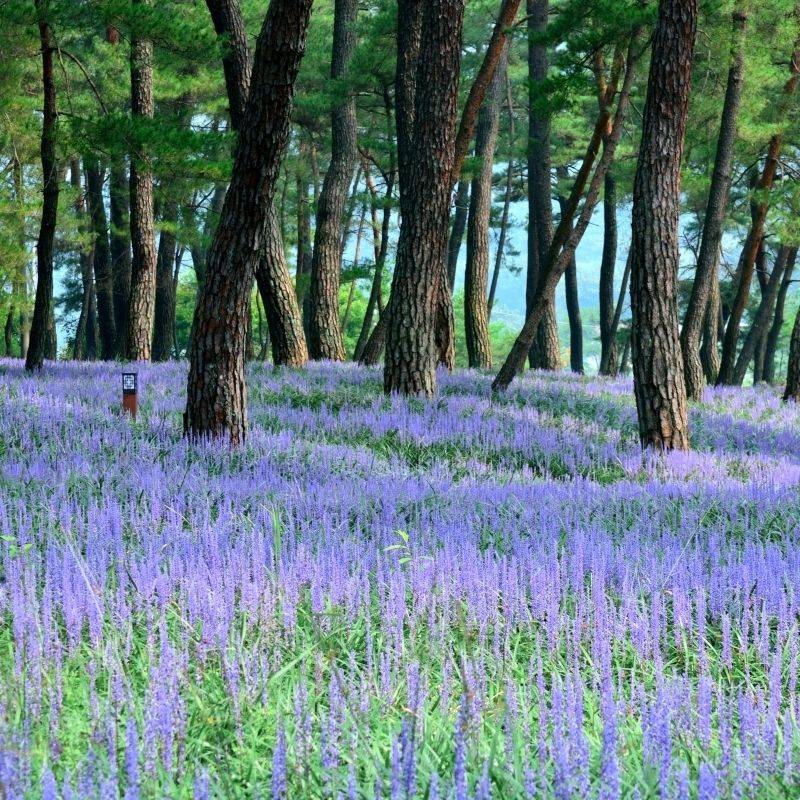
Tough, adaptable, and surprisingly handsome, liriope is one of those plants that earns its place in a North Carolina landscape by simply doing its job without complaint.
Its grass-like mounding foliage creates clean, structured edges around tree bases, and in late summer it sends up spikes of small purple or white flowers that add a welcome touch of seasonal color to otherwise green beds.
Liriope handles a wide range of conditions, including dense shade, dry soil, and root competition from established trees, which makes it especially valuable in spots where other plants might struggle to get established.
It is drought tolerant once settled in, and it holds up well through North Carolina winters without needing much protection.
Varieties like Liriope muscari and Liriope spicata are both commonly used in home landscapes, though spicata spreads more aggressively and may need occasional management to keep it contained around a tree bed.
One of the practical advantages of liriope is that it requires very little ongoing care once it is established. It does not need frequent watering, fertilizing, or deadheading, which makes it a genuinely low-maintenance option for busy gardeners.
In early spring, cutting back the old foliage before new growth emerges helps keep the planting looking tidy.
Liriope works well as a border around the outer edge of a tree ring or as a ground-covering mass beneath the canopy, and it blends naturally into both formal and woodland-style North Carolina landscapes.
7. Creeping Phlox Spreads Color With Ease
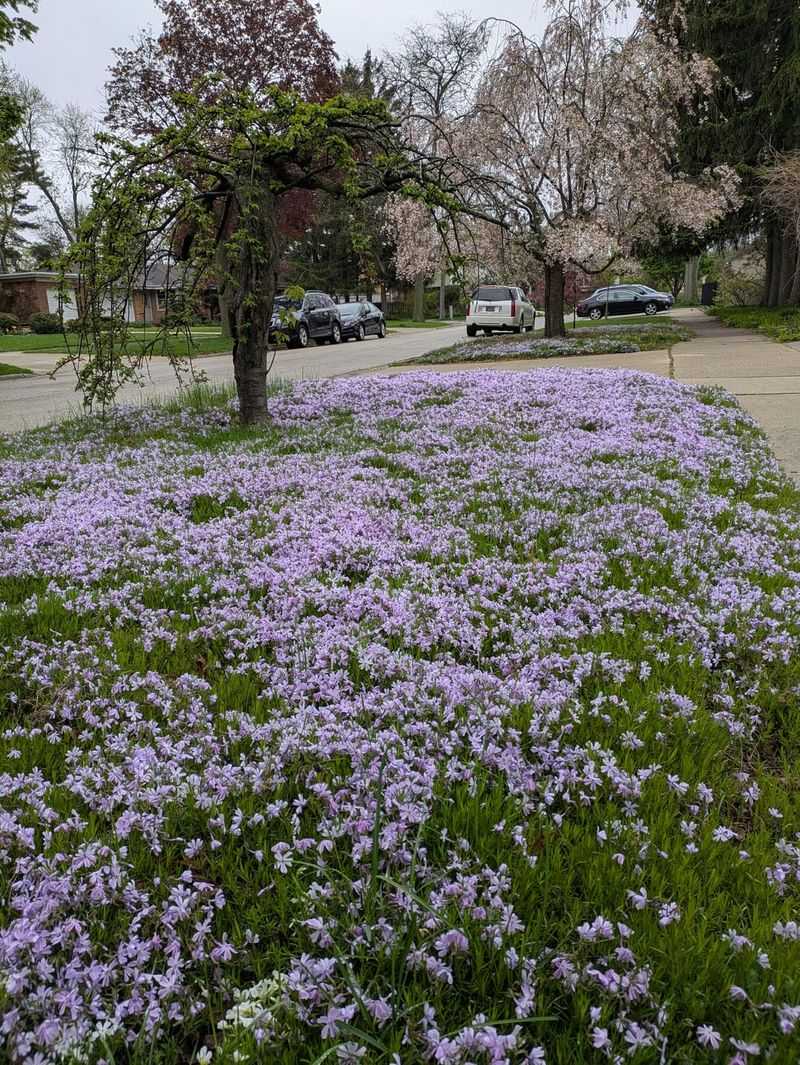
Come spring in North Carolina, few sights are more cheerful than a carpet of creeping phlox in full bloom.
This low-growing perennial spreads along the ground and produces a dense flush of small, five-petaled flowers in shades of pink, purple, white, and lavender, creating a colorful mat that softens the base of a tree beautifully during the cooler weeks of the season.
Creeping phlox, known botanically as Phlox subulata, is most at home in partial shade to full sun, which means it works best at the outer edges of a tree bed where a little more light filters through the canopy.
Under dense shade, it may bloom less freely, so positioning it where it can catch morning sun or dappled afternoon light tends to give the best results.
It also prefers well-drained soil, so spots where water tends to pool around tree roots may not suit it as well as drier, slightly elevated areas.
As a spreading perennial, creeping phlox gradually expands its footprint over several seasons, filling in gaps and creating a tidy ground-covering effect.
It is reasonably drought tolerant once established, which is helpful during North Carolina summers when rainfall can be unpredictable.
After blooming finishes in spring, the needle-like foliage stays green and tidy through the rest of the growing season. Light trimming after flowering can help keep the plant compact and encourage a fuller appearance heading into summer and fall.
8. Native Violets Add A Natural Woodland Look
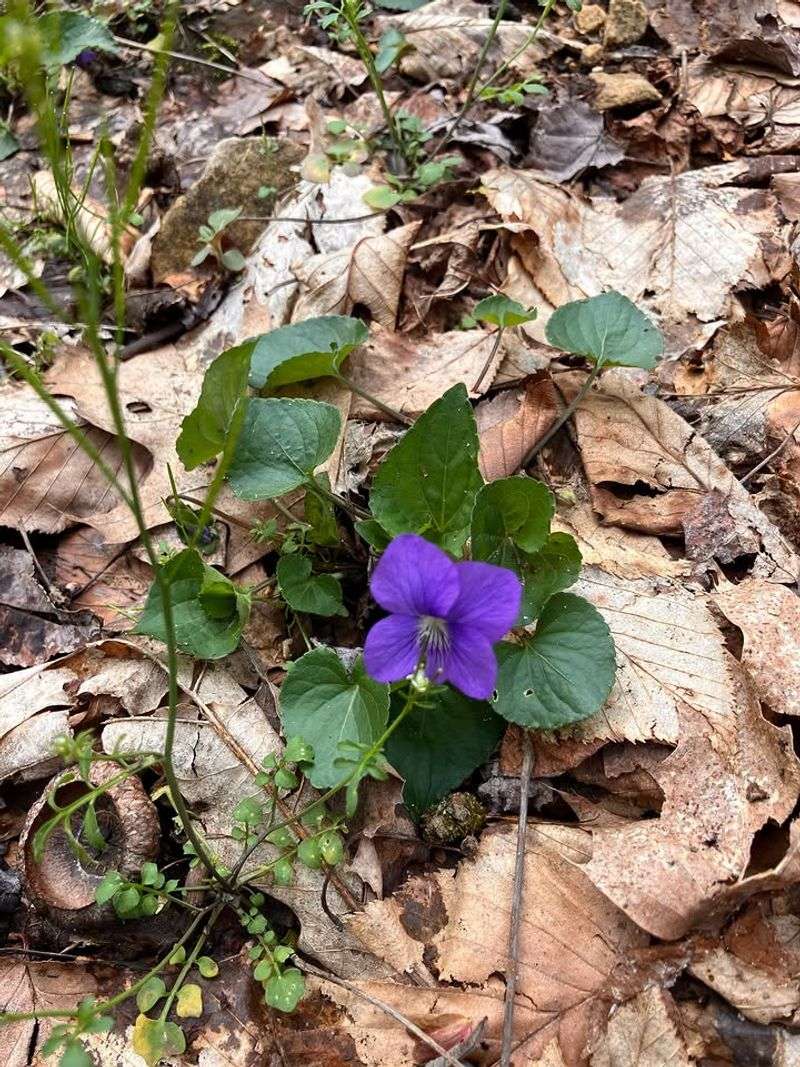
There is something quietly charming about native violets growing at the base of a tree, as though the yard has simply let a little of the surrounding woodland in.
Several violet species are native to North Carolina, including Viola sororia, and they are well adapted to the shaded, root-filled conditions found beneath established trees in home landscapes across the state.
Native violets bloom in early to mid-spring, producing small purple, blue-violet, or white flowers that appear before many other plants have fully woken up for the season.
The heart-shaped foliage that follows remains attractive through summer and fall, creating a soft, layered ground cover that feels natural rather than forced.
They spread gradually through self-seeding, which can help fill in bare areas around a tree base over time, though it also means they may need occasional thinning if they spread into areas where they are not wanted.
One of the real strengths of native violets in a North Carolina yard is their low-maintenance nature.
They are adapted to local soils and climate conditions, require little supplemental watering once established, and generally coexist well with tree roots without needing deep planting.
They also provide value for local wildlife, serving as a host plant for certain native butterfly species.
For gardeners who want a naturalistic, easy-care look under trees, native violets offer seasonal color, ecological benefit, and a relaxed woodland character that fits comfortably into many North Carolina landscapes.