The Texas Plants You Should Never Let Dry Out In May
May in Texas carries a false sense of security that catches a lot of gardeners off guard. The temperatures are still manageable compared to what’s coming, there might even be some decent rainfall early in the month, and it’s easy to assume your plants are doing fine without much intervention.
That assumption is where things start to go wrong for a lot of Texas gardens before summer even officially arrives.
The reality is that May is a critical establishment month for a wide range of plants, and letting the wrong ones dry out during this window causes damage that shows up weeks later when you’re trying to figure out why something that looked perfectly healthy in spring is suddenly struggling in June.
Some plants are far less forgiving about moisture stress during May than their tough reputation suggests.
Knowing which ones need consistent moisture this month, and why it matters so much right now, keeps your garden in strong shape heading into the brutal months ahead.
1. Bigleaf Hydrangea
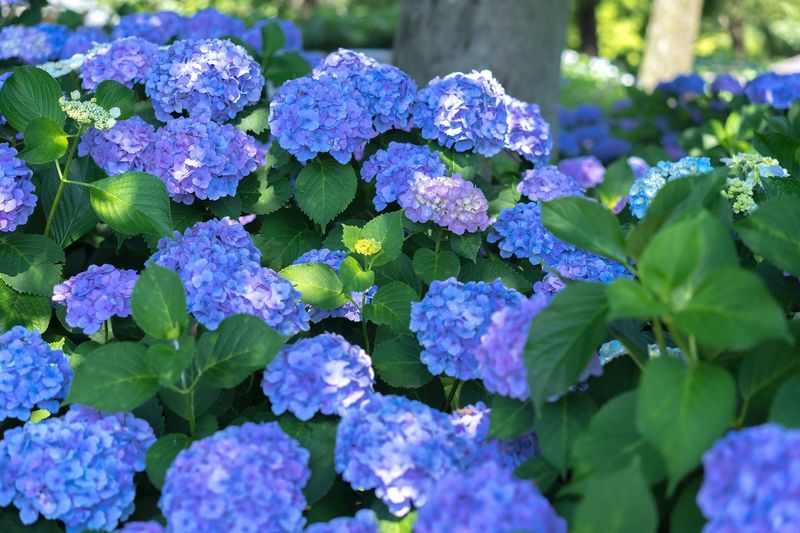
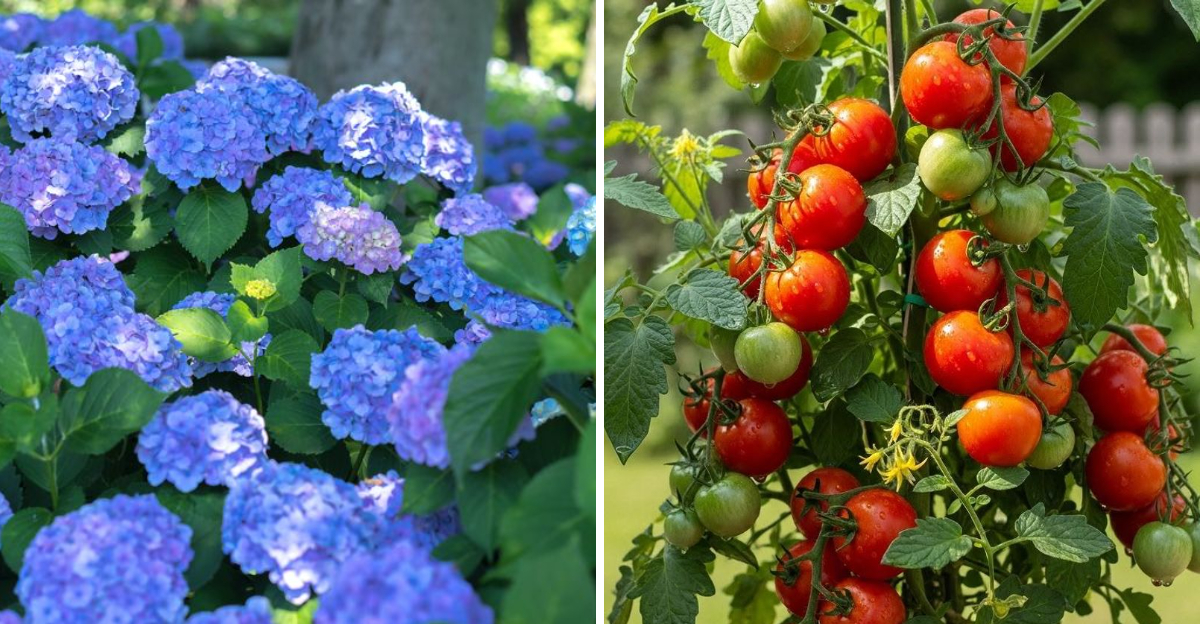
Few plants are as dramatic about thirst as the Bigleaf Hydrangea. One missed watering on a hot Texas afternoon, and those big, beautiful blooms start drooping like they have given up entirely. It is one of the most moisture-sensitive flowering shrubs you can grow in the state.
Bigleaf Hydrangeas are native to Japan, but they have become beloved across Texas for their oversized, globe-shaped flower clusters. They bloom in shades of blue, pink, and purple, and the color actually changes depending on the soil’s pH level.
That is a fun little trick that surprises a lot of first-time growers. In May, Texas heat ramps up quickly, and this plant feels every degree of it. The large leaves lose moisture fast through a process called transpiration.
When the soil dries out, the plant cannot replace that lost water fast enough, causing wilting and bud drop before flowers even fully open.
To keep your Bigleaf Hydrangea happy, water it deeply at least two to three times per week in May. Morning watering is best because it gives the roots time to absorb moisture before the afternoon heat peaks.
Mulching around the base with a thick layer of wood chips or shredded leaves helps the soil hold onto moisture much longer.
Planting it in a spot with morning sun and afternoon shade is a smart move in Texas. That shaded afternoon period reduces water stress significantly and keeps those gorgeous blooms looking full and vibrant all month long.
2. Tomato
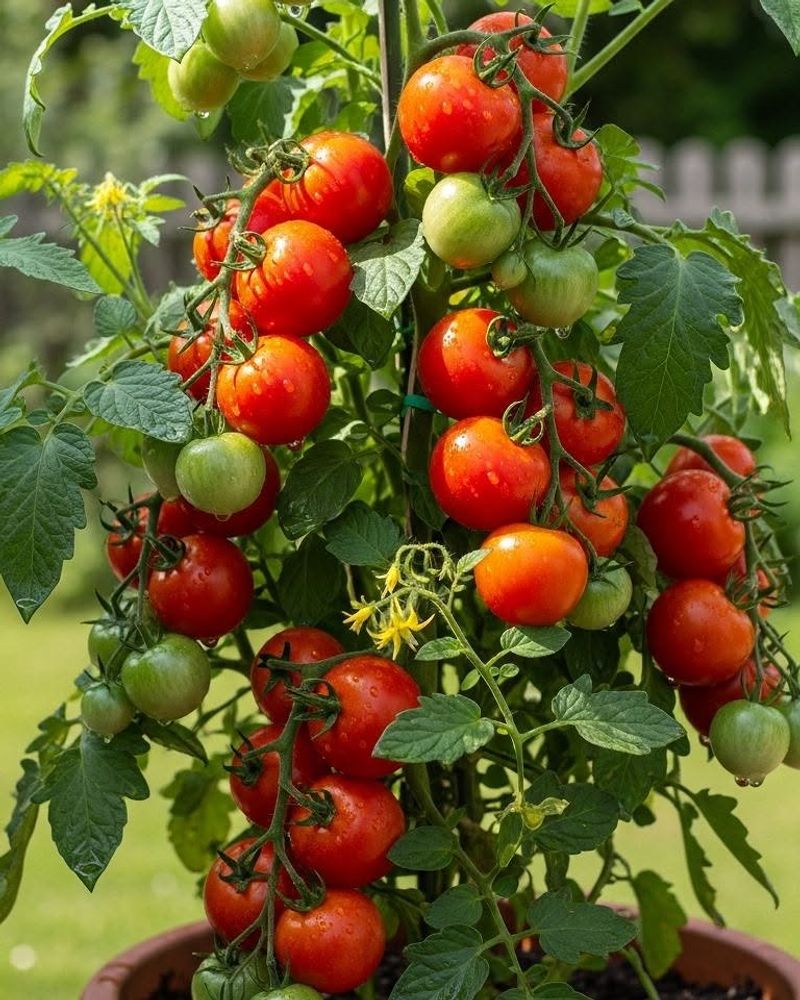
Ask any Texas home gardener what they look forward to most each spring, and there is a good chance tomatoes top the list. Nothing beats a homegrown tomato sliced fresh off the vine.
But getting that perfect harvest in May requires one thing above almost everything else: consistent watering.
Tomato plants are heavy drinkers, especially once they start flowering and setting fruit. When the soil dries out unevenly, the plant struggles to absorb calcium properly.
That leads to a condition called blossom end rot, where the bottom of the fruit turns dark and mushy. It looks terrible and ruins the harvest.
Your Texas Garden Changes Every Week. Your Plan Should Too.
Gardening in Texas changes quickly throughout the season. Every Friday you’ll receive a simple weekly plan showing exactly what to plant, prune, fertilize, harvest, and protect so you never miss the right timing.
Uneven watering also causes the fruit to crack. This happens when a dry spell is followed by a heavy watering session.
The sudden rush of moisture causes the inside of the tomato to grow faster than the skin can stretch. The result is split fruit that spoils quickly and attracts pests.
In Texas, May temperatures can easily push into the 90s. Tomatoes need about one to two inches of water per week, but during hot stretches, they may need even more.
Drip irrigation is one of the most efficient ways to deliver steady moisture directly to the roots without wetting the leaves, which can invite fungal problems.
Mulching is also a must. A good layer of straw or wood chips around your tomato plants keeps the soil cooler and reduces evaporation dramatically.
Water in the morning, check the soil daily, and your tomato plants will reward you generously.
3. Bell Pepper
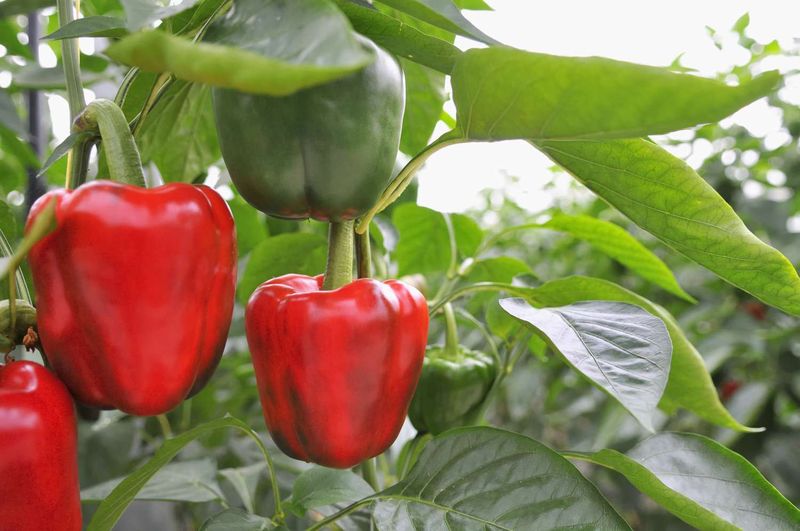
Bell peppers have a reputation for being a little fussy, and honestly, that reputation is earned. Growing them in Texas in May means staying on top of watering with real dedication.
These plants do not forgive neglect easily, especially when temperatures start pushing into the upper 80s and 90s.
Steady soil moisture is critical during two key stages: flowering and fruit development. When the soil dries out during flowering, the plant responds by dropping its blossoms.
No blossoms means no peppers. That is a frustrating outcome after weeks of careful growing, and it happens more often than gardeners expect during dry Texas springs.
Once fruit starts forming, drought stress causes the peppers to develop slowly and unevenly. The skin can become tough and wrinkled, and the overall yield shrinks noticeably.
Consistent watering keeps the fruit plump, smooth, and full-sized, which is exactly what you want when harvest time rolls around.
Bell peppers do best with about one to two inches of water per week. In Texas heat, that might need to increase slightly during the hottest days.
Watering at the base of the plant rather than overhead helps prevent leaf diseases that thrive in humid conditions.
One smart tip for Texas gardeners is to use a soaker hose on a timer. It delivers slow, steady moisture right where the roots need it and takes the guesswork out of your watering schedule.
Pair that with a layer of mulch, and your bell pepper plants will stay productive well into the summer months.
4. Cucumber
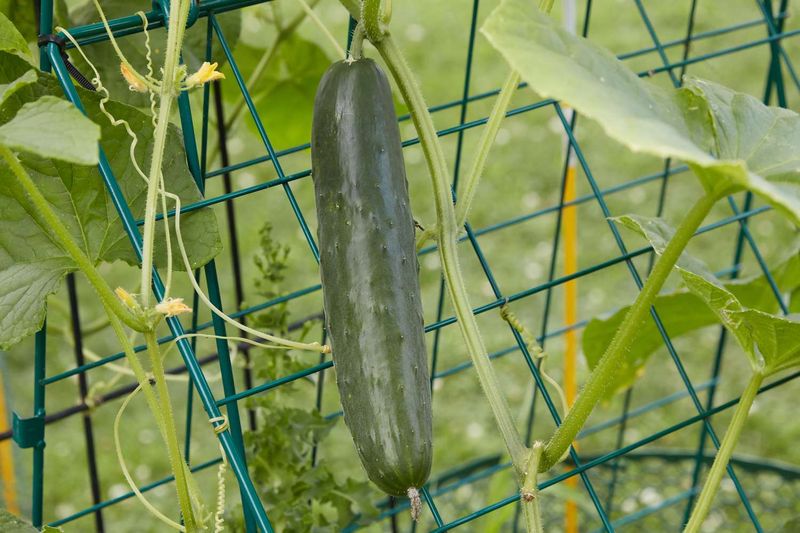
Cucumbers are basically sprinters in the vegetable garden. They grow fast, produce quickly, and need a steady supply of water to keep up with that rapid pace.
In Texas, where May heat can be intense, even a short dry spell can throw the whole plant off track.
Here is something that surprises a lot of gardeners: dry conditions do not just slow cucumber growth, they actually change the flavor of the fruit. When cucumber plants experience drought stress, they produce higher levels of a compound called cucurbitacin.
That compound makes the cucumbers taste bitter and unpleasant, even if they look perfectly fine on the outside.
Inconsistent watering also causes cucumbers to grow in strange shapes. You might end up with fruit that is thick at one end and narrow at the other, or cucumbers that are bulging in odd places.
That happens because the plant cannot distribute nutrients and water evenly when the soil moisture keeps fluctuating.
Cucumber plants in Texas need about one inch of water per week at minimum, but during hot May days, they may need watering every single day. The soil should feel consistently moist about an inch below the surface.
Letting it dry out completely, even once, can affect an entire batch of developing fruit. Growing cucumbers on a trellis helps improve air circulation and makes watering easier. Mulching the soil beneath the vines is also highly recommended.
It keeps moisture locked in and helps the roots stay cool during the warmest parts of the day across Texas.
5. Buttercrunch Lettuce
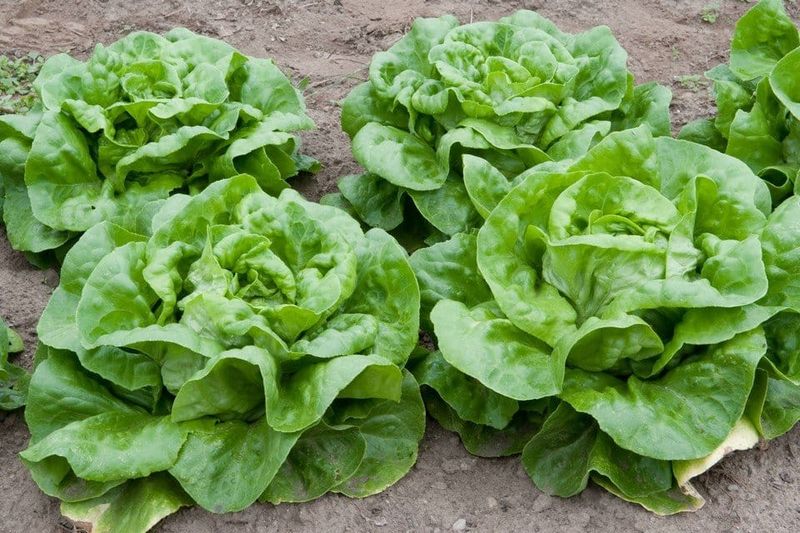
Buttercrunch Lettuce is the kind of plant that rewards attentive gardeners and punishes forgetful ones. It is tender, delicious, and surprisingly productive in Texas during the cooler parts of spring. But by May, the clock is ticking, and keeping the soil moist becomes absolutely essential.
Lettuce is a cool-season crop, which means it naturally wants to wrap things up as summer approaches. When the soil dries out in warm weather, it sends a stress signal to the plant that triggers bolting.
Bolting is when the plant shoots up a tall flower stalk and starts producing seeds instead of leaves. Once that happens, the leaves turn bitter and tough, and the harvest is essentially over.
Consistent moisture slows down that bolting process and keeps the leaves sweet and tender for a longer harvest window. In Texas, where May days can feel more like summer than spring, every extra week of productive lettuce growth is a win worth working for.
Water Buttercrunch Lettuce every day during warm spells, especially if temperatures are climbing above 80 degrees. The shallow roots dry out faster than deeper-rooted plants, so the top inch of soil should never feel completely dry.
Watering in the early morning gives the leaves time to dry before the heat of the day sets in.
Using shade cloth over your lettuce bed is one of the best tricks Texas gardeners have. It lowers the soil temperature, reduces moisture loss, and can extend your harvest by several weeks.
Pair that with consistent watering, and your Buttercrunch will stay productive much longer than expected.
6. Impatiens
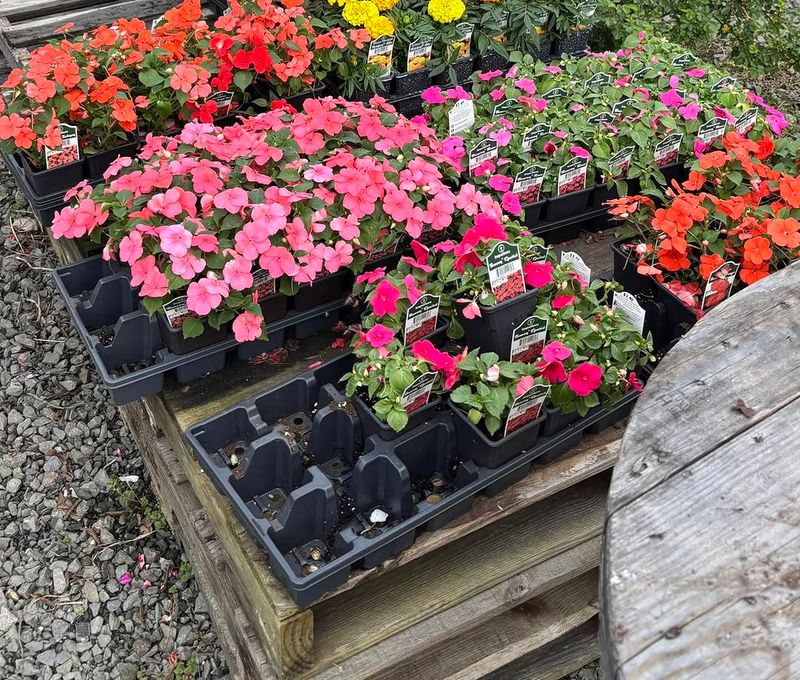
Walk through any garden center in Texas in May, and you will almost certainly spot flats of Impatiens stacked near the entrance. They are one of the most popular shade-loving flowers in the state, and it is easy to see why.
They produce cheerful blooms in almost every color, they fill in garden beds quickly, and they thrive in spots where many other flowers struggle.
But here is the catch: Impatiens are extremely sensitive to dry soil. They do not have deep root systems, which means they cannot pull moisture from far down in the ground.
When the top layer of soil dries out, these plants wilt fast and dramatically. A pot of Impatiens left without water on a hot Texas afternoon can look completely collapsed by evening.
The good news is that Impatiens usually bounce back quickly after watering, as long as the dry period was not too long. But repeated wilting weakens the plant over time, reducing bloom production and making it more vulnerable to pests and disease.
Keeping the soil consistently moist is the simplest way to keep them thriving. In Texas shade gardens, Impatiens need watering every one to two days during May. Container-grown plants dry out even faster and may need daily attention.
Always check the soil before watering rather than following a fixed schedule, since conditions can vary widely from day to day.
Adding a layer of mulch around your Impatiens helps retain soil moisture and keeps the roots cooler. These small steps make a big difference in how long and how beautifully your plants bloom throughout the season.
7. Caladium
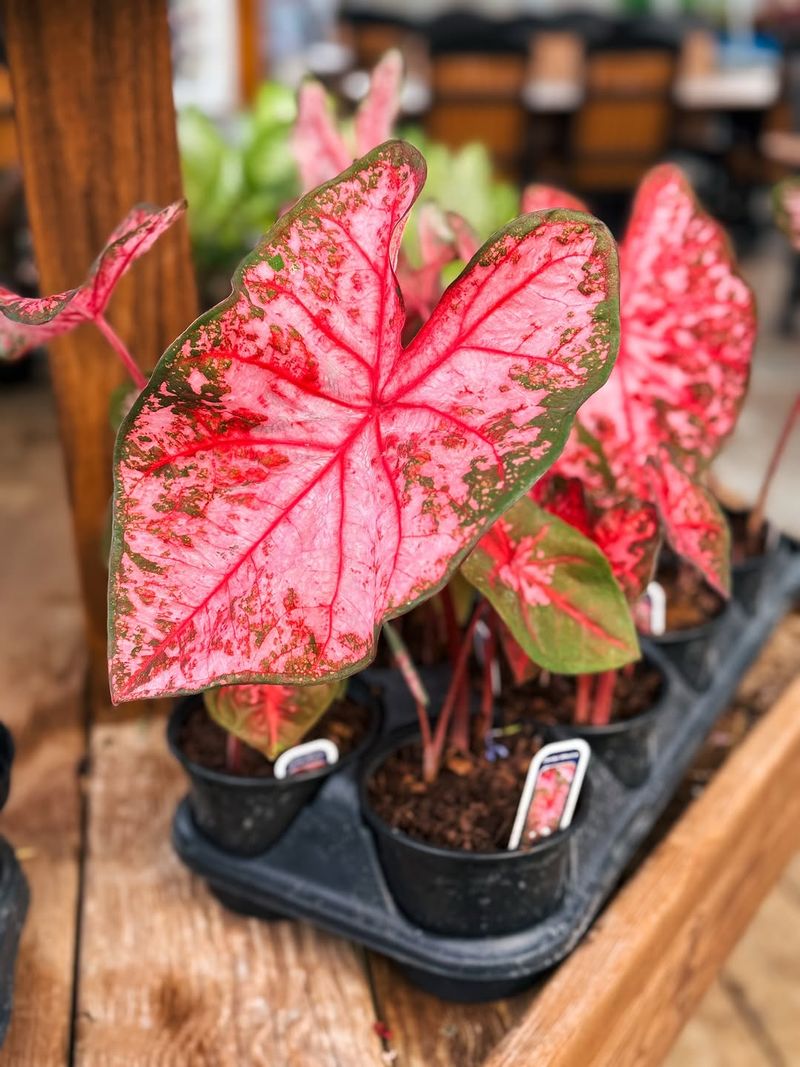
Caladiums are all about the leaves. Unlike flowering plants that steal attention with their blooms, Caladiums put on a show with their foliage, and what a show it is.
Their heart-shaped leaves come in stunning combinations of red, pink, white, and green, often with intricate patterns that look almost painted on.
Texas gardeners love Caladiums for shady spots where colorful flowers refuse to grow. They are a go-to solution for dim corners, covered patios, and areas under large trees.
But to keep those gorgeous leaves looking their best through May and beyond, regular watering is non-negotiable.
Dry soil causes Caladium leaves to develop brown, crispy edges that spread inward over time. The damage is permanent on affected leaves, meaning the only fix is to wait for new growth to replace them.
In a plant grown entirely for its foliage, that kind of damage is a real setback. Caladiums prefer consistently moist but not waterlogged soil. In Texas heat, that usually means watering every two to three days, depending on the shade level and soil type.
Sandy soils dry out faster and need more frequent attention, while clay-heavy soils hold moisture longer but can become compacted.
One thing to keep in mind is that Caladiums grow from tubers, and those tubers are sensitive to extreme dryness. Letting the soil dry out too much can stress the tuber itself, leading to slow regrowth and reduced leaf production.
Mulching generously, watering consistently, and keeping plants in filtered shade will keep your Caladiums thriving all through the warm Texas season.