Everyone in Virginia Knows This Poisonous Plant for Its Messy Berries, but Its Leaves Are the Real Kitchen Surprise
Generations of mountain cooks boiled a poisonous plant two or three times, poured off the water, and then fried it with eggs. A swampy 1969 hit song even made the dish famous.
I spent years grumbling at this plant every August when its inky berries splattered my driveway and my car. The birds loved it, and I mostly just wanted it gone.
Across Virginia, it pops up along fences, under power lines, and anywhere a mockingbird likes to sit. Those reddish stems can shoot taller than your head in one summer, so plenty of folks call it a tree.
Between you and me, the berries turned out to be the least interesting part. The real story starts in early spring, with a handful of small green leaves and a very careful cook.
Would you trust your supper to a plant this sneaky?
That Purple-Berried Giant by the Fence Isn’t Really a Tree
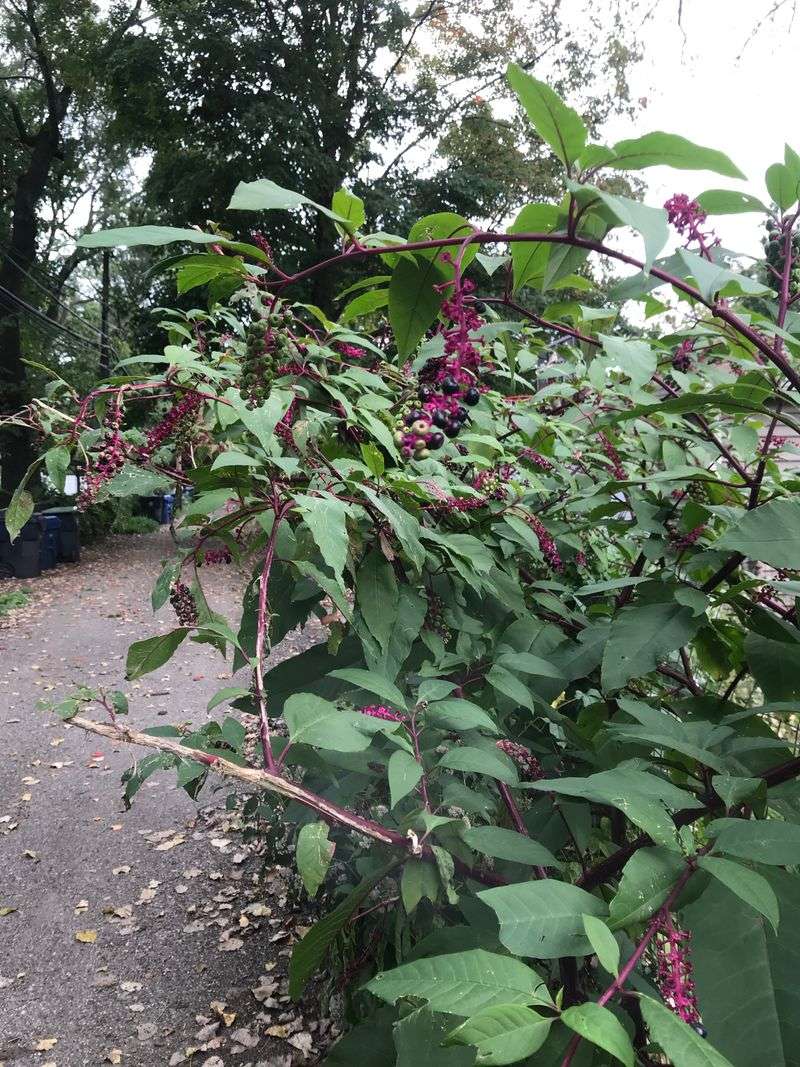
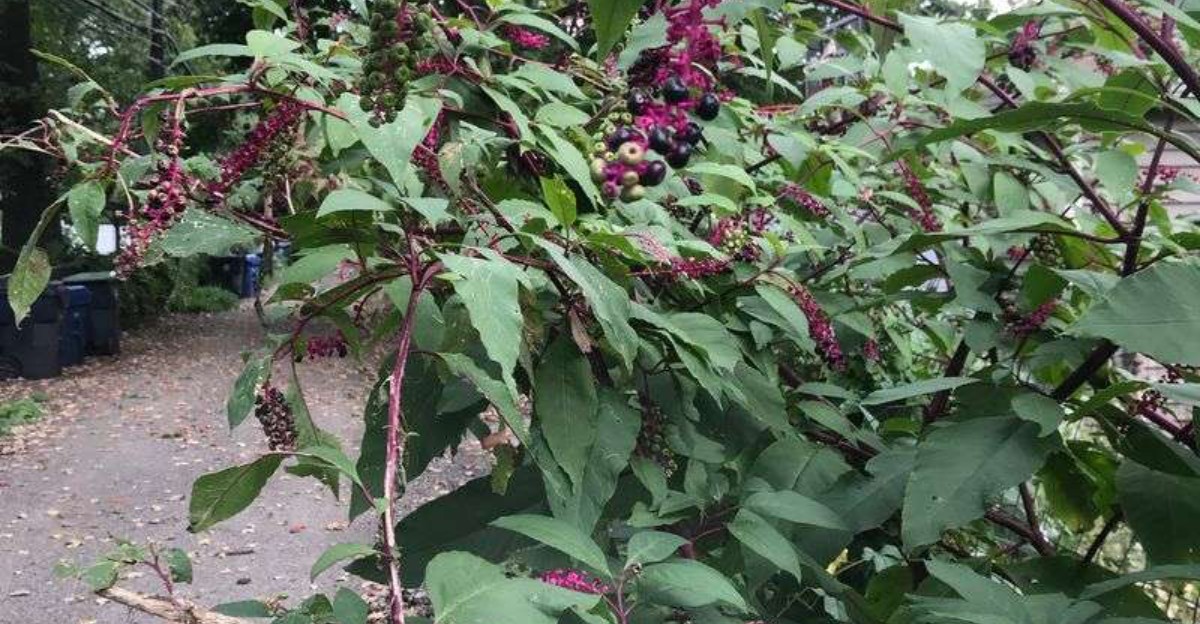
Late summer gives it away. Clusters of dark berries droop from hot-pink stems, and suddenly your sidewalk looks like someone spilled a whole box of purple markers.
That big, berry-loaded plant is American pokeweed, Phytolacca americana. Old-timers also call it poke sallet, pokeberry, inkberry, and pigeonberry.
Now for the twist. Pokeweed is not a tree at all, even though it often reaches 6 to 10 feet tall.
It is a native herbaceous perennial, which means the stems fade back to the ground each winter.
The real secret lives underground. A thick, fleshy taproot stores energy and sends up fresh shoots every spring, and it grows larger and tougher with each passing year.
Those stout, purplish-red stems and large, smooth leaves explain why so many people mistake it for a small tree. By August, a single plant can look like it has been growing for a decade, with every branch holding its own drooping berry chain.
For what it’s worth, I misidentified mine as a weedy sapling for two whole summers. Once you learn the reddish stems and dangling berry clusters, you will spot pokeweed in fencerows, woodland edges, and vacant lots all over Virginia.
Young Pokeweed Shoots Were a Beloved Appalachian Spring Green
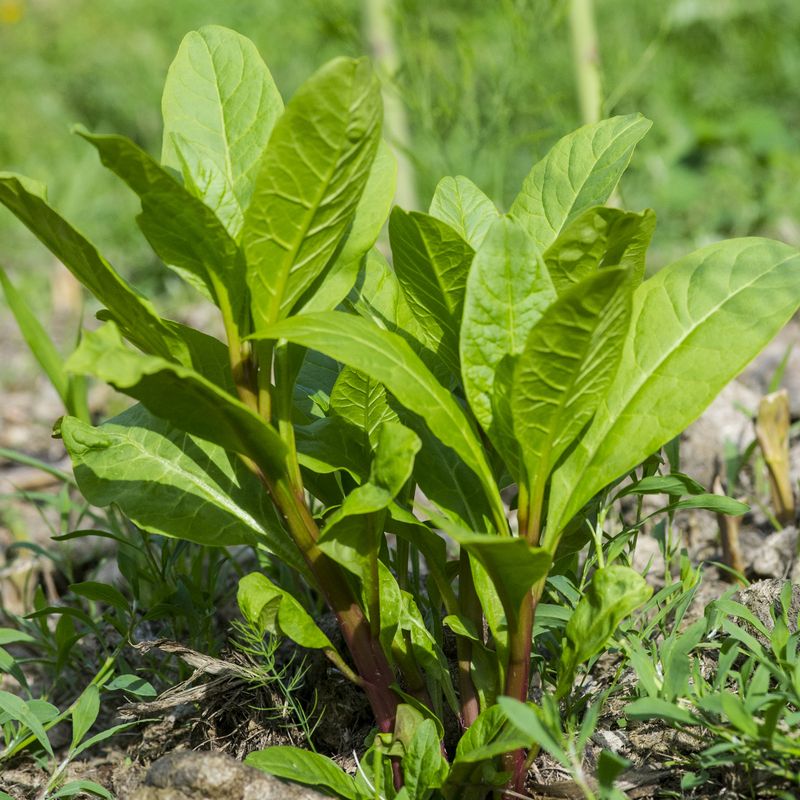
Ask anyone raised in the mountains about poke sallet, and you might get a story along with a recipe. For generations, Southern Appalachian families gathered tender pokeweed shoots as one of the first fresh greens of the year.
That timing mattered. After a long winter of canned and stored food, a mess of spring greens felt like a real treat, and pokeweed showed up early and grew fast.
Cooked properly, the leaves taste a lot like spinach with a slightly earthy edge. Many families sauteed the boiled greens in bacon grease and scrambled eggs right into the pan.
The dish even reached the radio. Tony Joe White’s 1969 song ‘Polk Salad Annie’ told the tale of a Southern girl picking the greens for supper, and Elvis Presley later turned it into a concert favorite.
Church cookbooks and handwritten recipe cards across the region still carry instructions passed down from grandparents. Some small towns even hold spring gatherings that celebrate this humble green.
Take it from someone who grew up thinking poke was just a pest. Learning that my so-called weed had fed families for generations changed how I looked at that whole messy corner of the yard.
Boil Those Poke Leaves, Pour Off the Water, and Boil Them Again
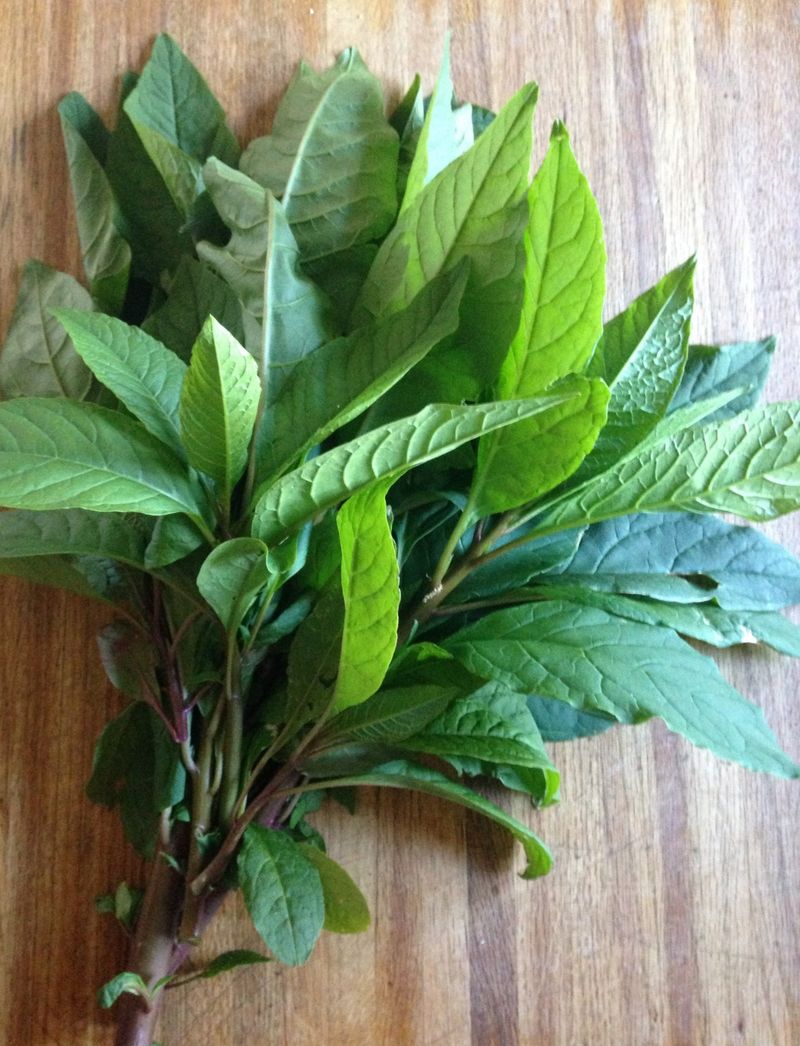
Raw pokeweed leaves are poisonous, full stop. Eating them uncooked can cause burning in the mouth, nausea, vomiting, and diarrhea, so a fresh poke salad is off the table.
Traditional cooks handled the toxins with water and patience. The usual method calls for boiling the young leaves for several minutes, pouring off the water, and repeating with fresh water two or three times.
Once the final batch drains, squeeze the greens to press out extra liquid. Then they go into a skillet for a quick saute, often with onions, a little bacon, or eggs.
Don’t make the mistake of tasting as you go. Wait until the last boiling is finished, and pour every drop of that cooking water down the drain.
Some health experts still advise against eating pokeweed at all, even when cooked. Poison control centers do see cases, often from people who skipped steps or picked the wrong part of the plant.
If you ask me, poke sallet belongs in the hands of someone who has made it before. Learn the process alongside an experienced forager or family cook rather than from a single quick online video.
Small Green Pokeweed Shoots Are the Only Ones Worth Picking
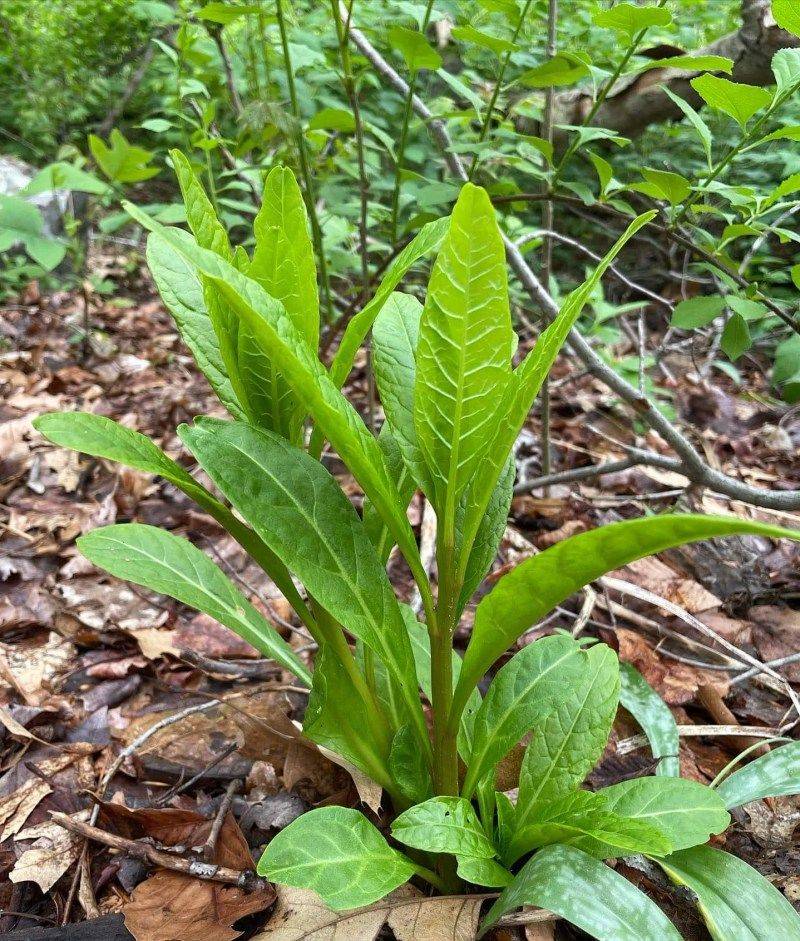
Timing is everything with this plant. The traditional harvest comes from shoots in early spring, usually April into early May in most of Virginia, while they stand roughly 6 to 8 inches tall.
Look for bright, emerald-green stems with soft, tender leaves. Once the stems start blushing red or purple, toxin levels climb, and experienced foragers move on.
Older leaves from summer plants are a different story. Mature leaves and stems carry more of the plant’s toxins, so the big, glossy foliage you see in July is not kitchen material.
Snip shoots a couple of inches above the ground with clean pruners. Avoid pulling, since tugging can drag up bits of the toxic root along with your harvest.
Location matters too. Skip plants along busy roads, railroad tracks, or sprayed fencerows, where runoff and herbicides tend to collect.
Gardens on the Coastal Plain warm up first, so shoots there may appear a few weeks before those in the Blue Ridge and Shenandoah Valley. Jot a simple note on your calendar each spring, and you’ll soon learn exactly when your local patch wakes up.
That Thick White Pokeweed Root Is the Part to Leave Alone
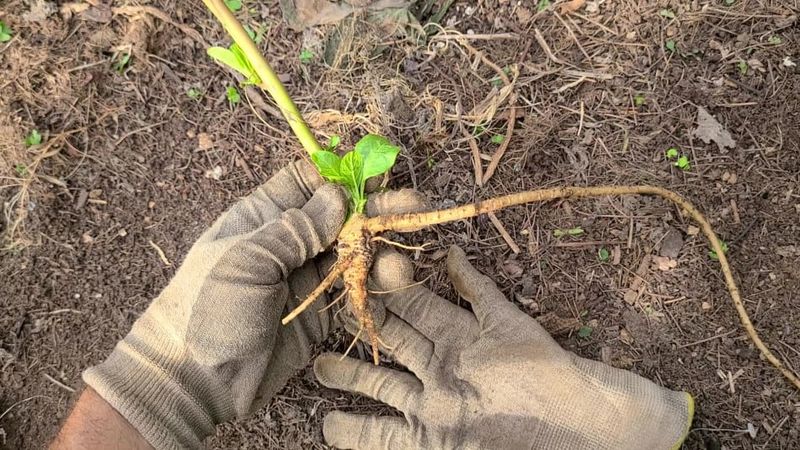
Underneath every pokeweed lies its most dangerous part. The large, white taproot holds the highest concentration of toxins, and it should not be eaten under any circumstances.
Trouble usually starts with mistaken identity. Over the years, people have dug pokeweed roots thinking they found horseradish, parsnip, or wild ginseng, and ended up seriously ill.
Symptoms from roots or large raw doses can go well beyond an upset stomach. Medical sources list severe vomiting, low blood pressure, muscle spasms, and in rare cases seizures or trouble breathing.
Seeds inside the berries carry toxins too. Children face the greatest risk, and eating more than about ten raw berries can cause serious problems for a small child.
Simply touching the plant rarely bothers most people. Still, I wear gloves when I dig or cut large stems, since sap can irritate sensitive skin, especially around cuts or scrapes.
Pets deserve a watchful eye as well, since curious dogs sometimes chew on roots exposed by digging. Keep the national poison control number, 1-800-222-1222, saved in your phone if pokeweed grows near a play area, because experts answer any time of day or night.
Mockingbirds and Catbirds Treat Pokeberries Like a Fall Buffet
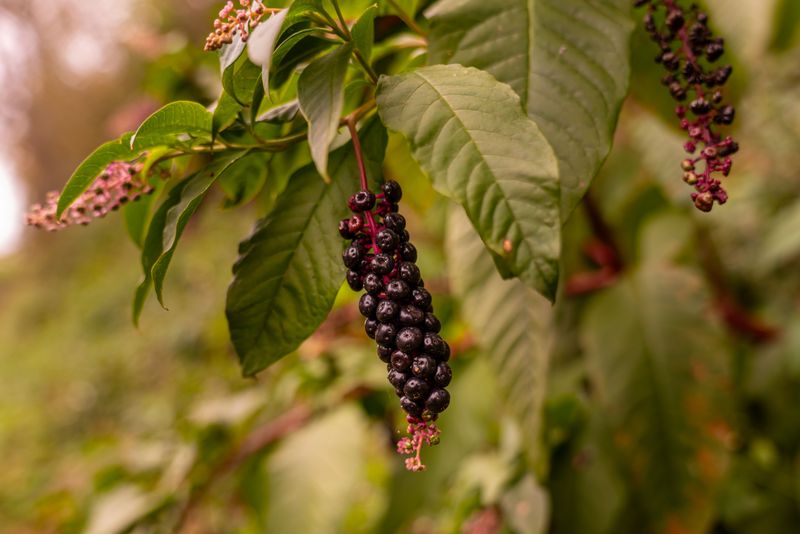
Watch a fruiting pokeweed for ten minutes in September, and you’ll see why it keeps showing up. Mockingbirds, gray catbirds, northern cardinals, and brown thrashers flock to those purple berries.
Birds handle the toxins far better than people do. They gobble the fruit, fly off, and drop the seeds somewhere new, often under a fence, clothesline, or favorite perch.
That explains the mystery plant beneath your bird feeder. Pokeweed seeds can also stay viable in the soil for many years, sprouting whenever the ground gets disturbed.
Migrating songbirds count on this fuel in fall. Berries ripen from late summer into autumn, right as many birds need quick energy for long flights south.
My garden taught me that a single plant left along the back fence can become the busiest bird spot on the property. A pair of binoculars has lived by my kitchen window ever since.
Pollinators get a share too. The small white-to-pinkish flowers draw bees and other insects from early summer onward, and the leaves feed a few native moth caterpillars.
For a plant most people curse, it pulls a surprising amount of weight for local wildlife.
Purple Pokeberry Stains on Your Driveway Have a Colorful Backstory
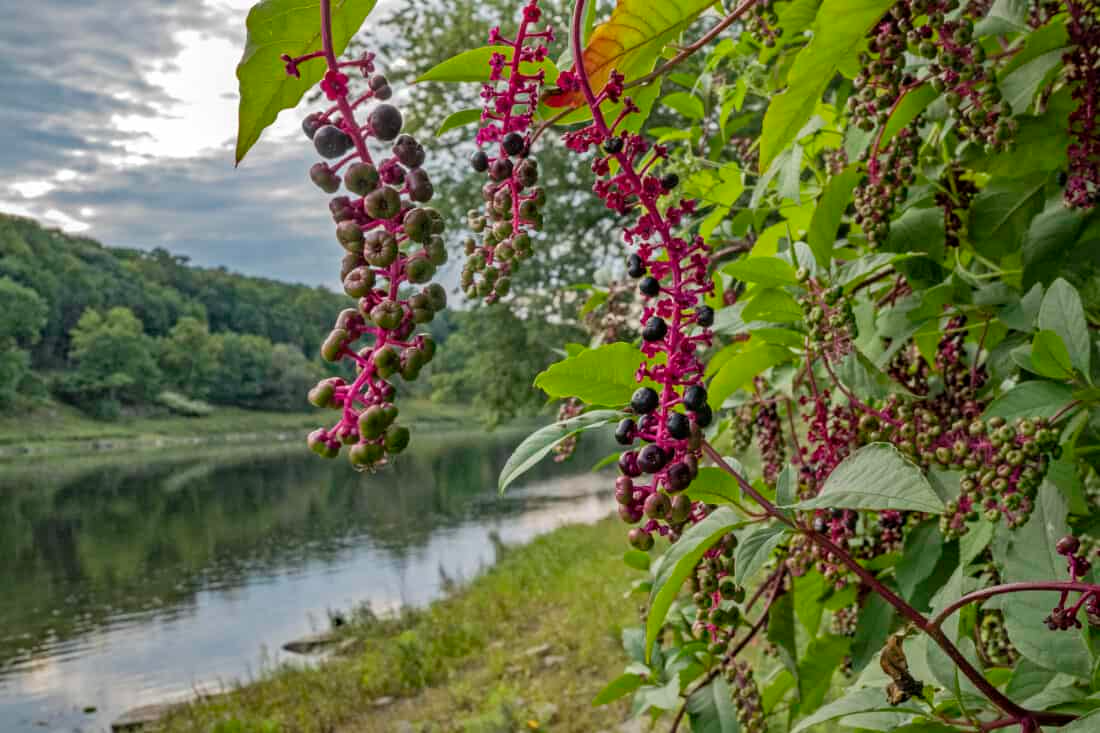
Purple fingers, purple driveway, purple car hood. Anyone who has parked under a loaded pokeweed knows how far that juice can travel.
The color comes from pigments called betalains, the same family that gives beets their deep red hue. That staining power earned the plant nicknames like inkberry.
People once used pokeberry juice as homemade ink for letters and as a dye for fabric. Old documents written with it have often faded to a brownish tone, which shows the color isn’t as lasting as it looks on your sidewalk.
Fresh stains on concrete often fade with sunlight and time. For faster results, scrub with warm water and a little dish soap, or try a diluted oxygen bleach cleaner on light surfaces.
Clothing is trickier. Rinse the back of the fabric with cold water right away, then treat it with a stain remover before washing, and skip the dryer until the spot is gone.
Some folks have tried the berry juice as a natural skin dye or face paint. Please pass on that idea, since reports describe skin reactions, and kids might copy you with a toxic fruit.
Deciding Whether That Backyard Pokeweed Stays or Goes
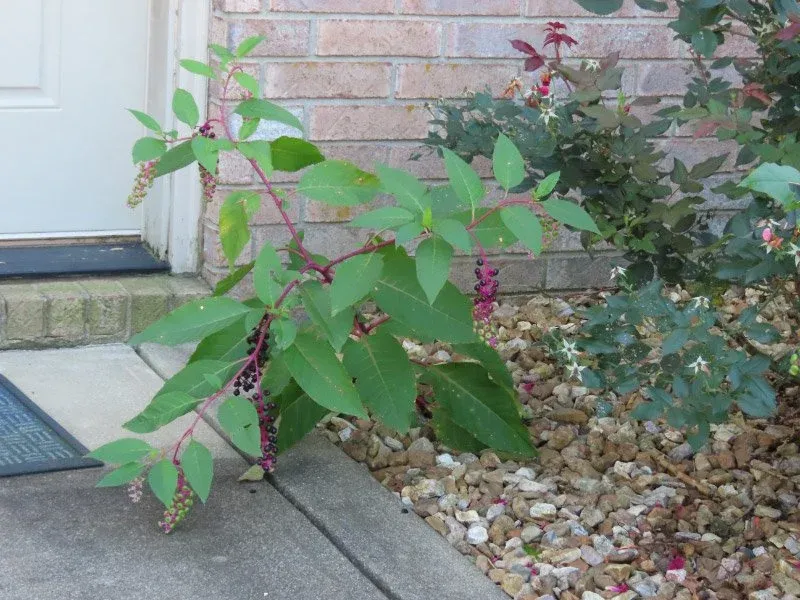
Native plants earn some slack, and pokeweed offers real value for wildlife. Still, it may not belong next to a sandbox or a vegetable bed.
If young children or curious dogs use your yard, removing plants near play areas makes sense. Pull seedlings while they’re small and the soil is moist, because older plants grow taproots that resist even strong tugs.
For larger plants, cut the stems before berries ripen to prevent another round of seedlings. Digging out as much root as possible with a sturdy shovel helps, though leftover pieces may resprout.
Wear gloves, bag the berries, and keep cuttings out of the compost if fruit is attached. A layer of mulch over the cleared area slows new sprouts from the seed bank.
Plenty of Virginia gardeners keep one plant at the back of the property just for the birds. Let’s just say the mockingbirds in my yard have strong opinions on that decision.
Whatever you choose, learn the plant well. Knowing its spring shoots, summer leaves, and fall berries helps you enjoy the wildlife show, stay safe, and appreciate a weed with a surprisingly rich kitchen history.