8 Fast-Growing Trees For Privacy In Florida Yards
Ever notice how quickly a clear backyard view can disappear once new homes go up nearby?
In many Florida neighborhoods, that sense of openness is shrinking, and even a bit of privacy can make a big difference.
The good news is that Florida’s warm temperatures, high humidity, and long growing season make it ideal for creating natural green screens.
The right trees can fill in a bare fence line or open yard edge faster than many people expect.
Choosing species that handle sandy soils, heavy summer rains, and occasional North Florida cold snaps is what helps those screens grow full, healthy, and dense enough to truly block the view.
1. Green Giant Arborvitae Creates Tall, Fast Privacy Screens
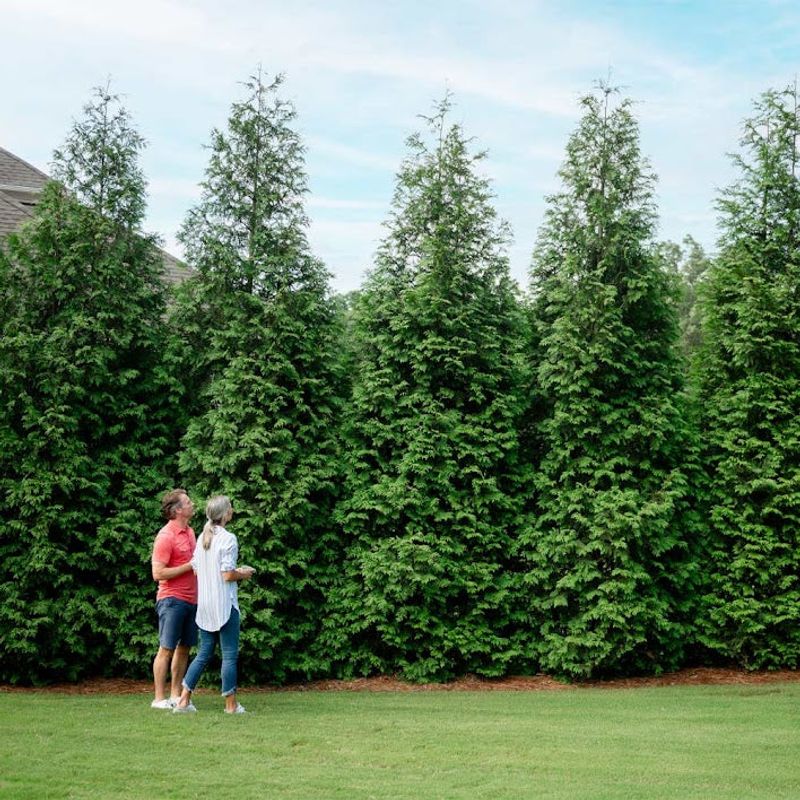
Homeowners across North and Central Florida have relied on Green Giant Arborvitae for years when they need height and density fast.
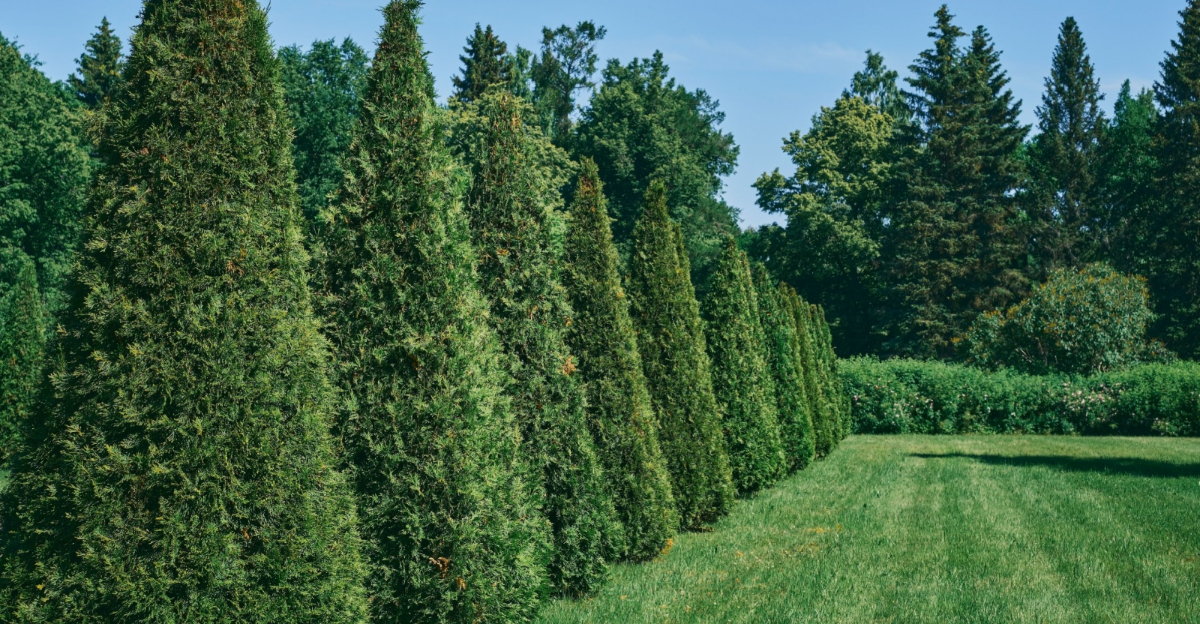
This hybrid conifer is one of the quickest-growing evergreens available, capable of putting on three to five feet of new growth each year under good conditions.
That kind of pace means a young planting can become a solid green wall within just a few growing seasons.
Green Giant Arborvitae can eventually reach 40 to 60 feet tall with a spread of 12 to 20 feet, making it a genuinely impressive privacy screen for larger properties.
The dense, feathery foliage stays rich green year-round, which is a big advantage in Florida yards where curb appeal matters every month.
It performs best in full sun and adapts to a wide range of soil types, including the sandy, well-drained soils common across much of Florida.
For a solid privacy screen, plant these trees about six to eight feet apart on center. Spacing them too far apart leaves gaps that take extra time to fill in.
Regular watering during the first year helps roots establish quickly, and once settled, the trees become fairly drought-tolerant.
This species is best suited for North and Central Florida, where summer heat is intense but winter temperatures stay within its preferred range.
Light shaping keeps the canopy neat without sacrificing density.
2. Southern Red Cedar Forms Dense Native Evergreen Barriers
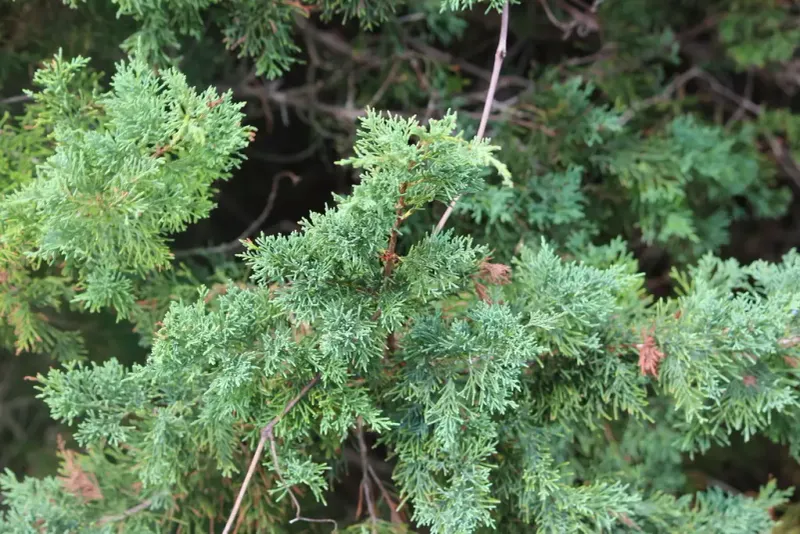
Few trees feel as genuinely at home in a Florida yard as the Southern Red Cedar.
As a Florida native, this tough evergreen is already adapted to the state’s sandy soils, salt air, and unpredictable rainfall patterns, which means it asks for very little once it settles in.
Neighborhoods near the coast or in areas with brackish conditions will find it especially reliable.
Southern Red Cedar grows at a moderate-to-fast rate, typically adding one to two feet per year. Left to grow naturally, it can reach 40 feet or taller with a dense, columnar form that works well for tight spaces along property lines.
The deep green, scale-like foliage stays on year-round, providing consistent coverage through every season. Birds are also drawn to its small blue berries, adding wildlife value to its practical privacy function.
Because it is native to Florida, this cedar supports local ecosystems in ways that non-native species simply cannot match.
It handles both wet and dry spells with resilience, bouncing back from Florida’s summer downpours and dry winter stretches without much fuss.
Plant trees roughly eight to ten feet apart for a connected hedge line. Pruning is optional but can help shape the lower canopy and encourage bushier growth closer to the ground.
This is a reliable, long-lived choice for North and Central Florida privacy plantings.
3. Leyland Cypress Builds Thick Screens In A Short Time
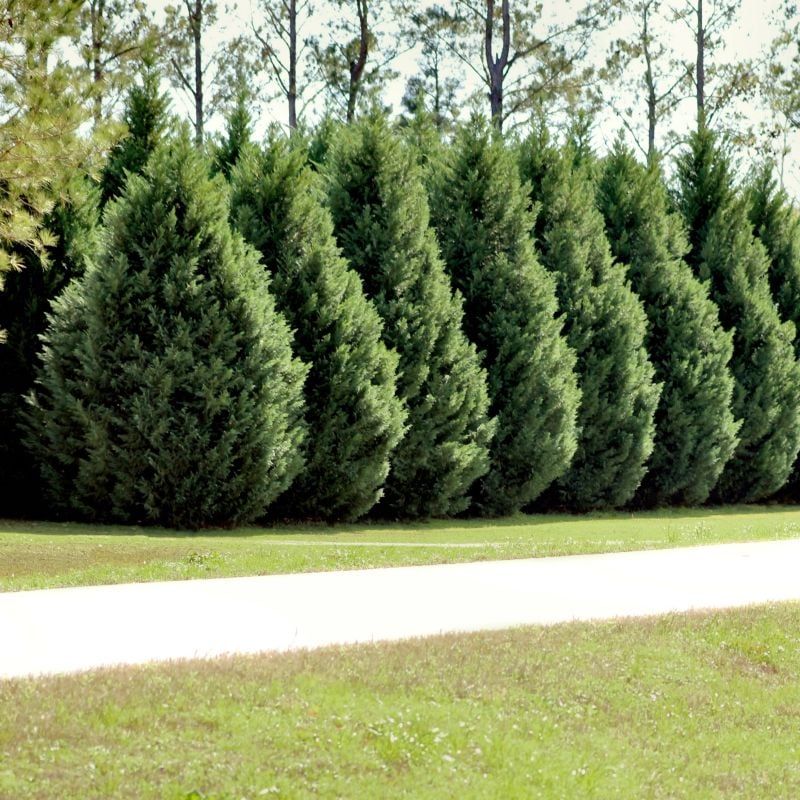
Speed is the main reason so many Florida homeowners reach for Leyland Cypress when they want a privacy screen in a hurry.
This hybrid evergreen is known for pushing out three to four feet of new growth annually under favorable conditions, and it can eventually reach 40 to 60 feet tall if left unpruned.
That combination of speed and height makes it one of the most popular screening trees planted across North and Central Florida.
The soft, feathery foliage forms a thick, overlapping canopy that blocks sightlines effectively from both sides.
Leyland Cypress thrives in full sun and handles Florida’s summer heat reasonably well, though it performs best in areas that receive some relief from the most intense afternoon sun.
It adapts to a range of soil types but prefers well-drained conditions, which suits the sandy soils found throughout much of the state.
For a connected privacy wall, space plants about six to eight feet apart. Keeping up with annual pruning helps manage height and encourages denser branching at lower levels, which is where privacy matters most.
One thing worth knowing is that Leyland Cypress can be susceptible to fungal issues in very humid, poorly ventilated areas, so spacing and air circulation matter.
In North Florida especially, this tree has a strong track record of filling in quickly and providing years of reliable screening with modest care.
4. Dahoon Holly Adds Privacy With A Native Tree Form
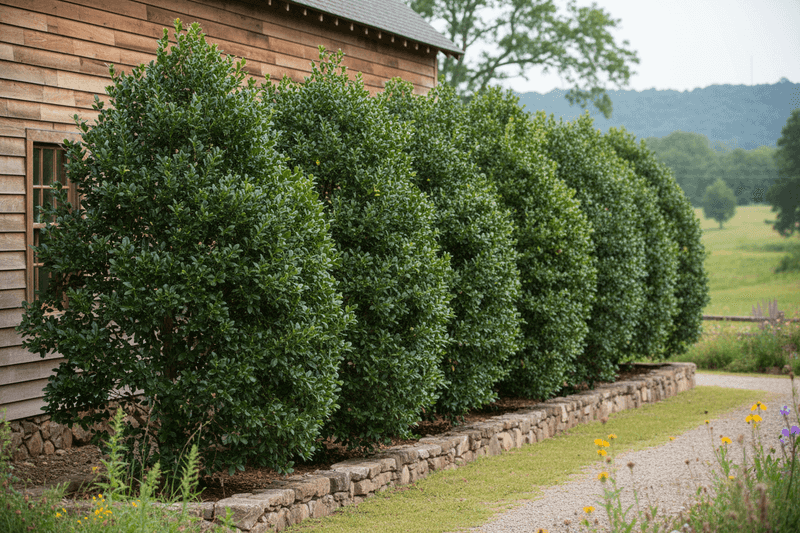
Not every privacy tree needs to look like a clipped hedge, and Dahoon Holly proves that native beauty and practical screening can go together naturally.
This Florida native grows with an upright, multi-branched form that fills in over time into a dense, irregular canopy.
Mature trees can reach 20 to 30 feet tall, offering solid visual coverage from neighbors while also adding genuine character to the yard.
Dahoon Holly is especially useful in wetter parts of Florida since it tolerates poorly drained soils and even occasional flooding, conditions that would stress many other privacy tree options.
It grows at a moderate rate, typically adding one to two feet per year, and it stays evergreen throughout the year in most of Florida.
The glossy, dark green leaves provide a clean backdrop, and clusters of small red berries in fall and winter bring color and attract songbirds to the landscape.
For privacy purposes, planting Dahoon Holly in a staggered double row helps create a fuller screen more quickly. Space individual trees about eight to ten feet apart to give each one room to develop its natural form.
Because it is native to Florida, it supports pollinators and local wildlife in ways that non-native trees often do not. Minimal pruning is needed beyond removing any crossing branches.
This tree suits North, Central, and parts of South Florida equally well.
5. Podocarpus Grows Into Sleek, Upright Privacy Walls
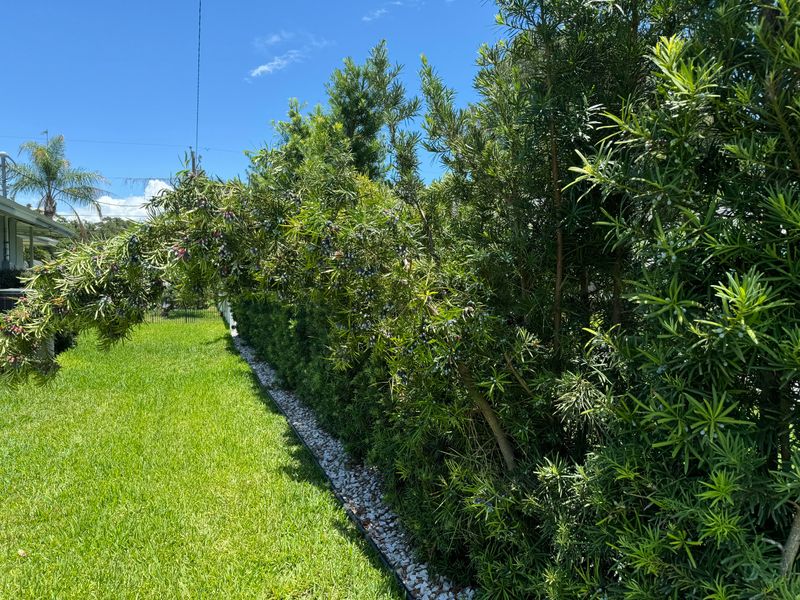
Yards that need a clean, polished look along a property line tend to find Podocarpus hard to beat.
This evergreen has dense, narrow, dark green foliage that takes shaping extremely well, making it a favorite for formal hedges and structured privacy walls across Central and South Florida.
The upright growth habit means it fills vertical space efficiently without spreading too wide into the yard.
Podocarpus typically grows one to two feet per year, which is not the fastest rate on this list but is steady and consistent.
Left unpruned, it can reach 20 to 40 feet tall, but most homeowners keep it trimmed to a preferred height between eight and fifteen feet.
The fine-textured foliage stays dense all the way to the base when plants receive enough sunlight, which is key for maintaining ground-level privacy. Full sun to partial shade works well, and it adapts to Florida’s sandy soils without much trouble.
Space plants four to six feet apart for a tight, connected hedge. Regular trimming two to three times per year keeps the wall dense and tidy, and plants respond well to shaping without losing vigor.
Podocarpus handles Florida’s humidity and heat with solid resilience and rarely suffers from serious pest issues.
For South Florida homeowners especially, this is a dependable, long-lived option that delivers a refined, year-round green screen with consistent maintenance.
6. Sweet Viburnum Forms Lush, Fast-Growing Green Screens
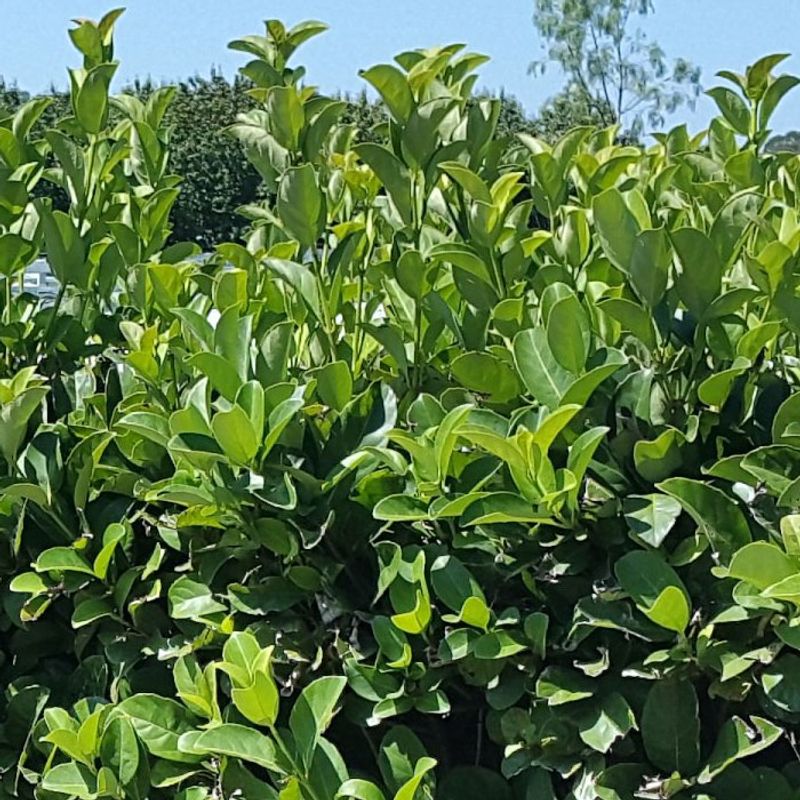
Walk through almost any established Florida neighborhood and you will likely spot Sweet Viburnum growing somewhere along a fence line or property border.
This popular evergreen shrub earns its reputation by growing two to three feet per year under good conditions, which allows a fresh planting to become a solid privacy screen within two to three years.
The large, glossy leaves create a rich, tropical-looking wall of green that works well in both formal and informal landscapes.
Sweet Viburnum can reach 15 to 25 feet tall when left to grow freely, but most homeowners maintain it between eight and twelve feet for practical privacy use.
It adapts well to a wide range of Florida soils and handles both full sun and partial shade, giving it flexibility in different yard layouts.
During spring, fragrant white flower clusters add seasonal interest before the plant settles back into its role as a background screen.
Plant Sweet Viburnum about four to six feet apart for a dense, connected hedge. Consistent watering during the establishment period speeds up early growth, and once rooted in, the shrub becomes fairly tolerant of Florida’s periodic dry spells.
Trimming two to three times per year maintains shape and encourages new growth from the base, keeping the lower portion of the screen full.
This species performs well across North, Central, and South Florida, making it one of the most widely useful privacy plants in the state.
7. Clusia Creates Thick Tropical Hedges In Warm Climates
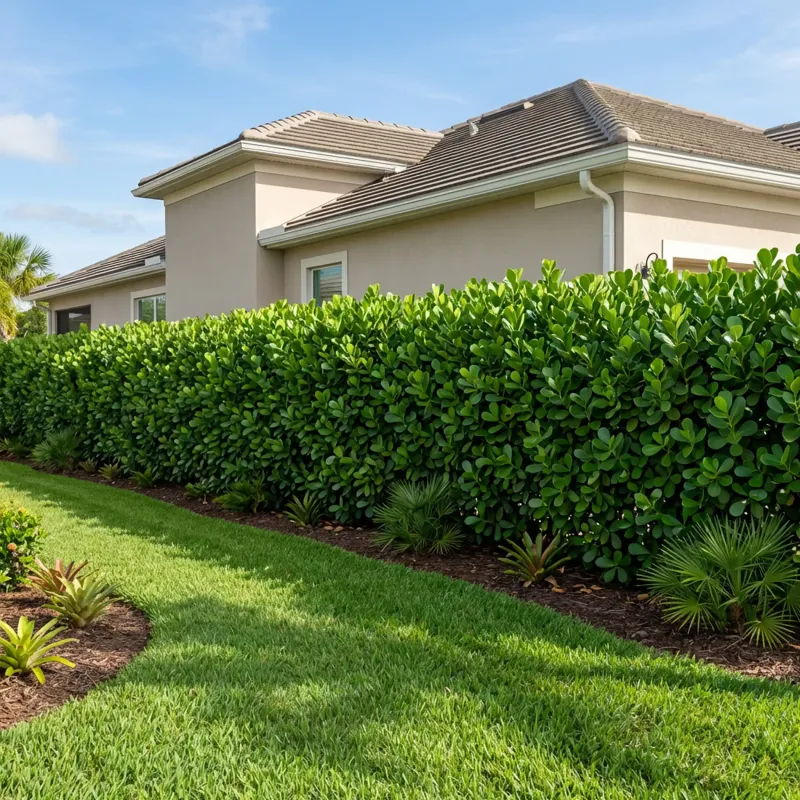
Coastal Florida yards come with a specific set of challenges – salt spray, sandy soil, and relentless summer sun – and Clusia handles all three without complaint.
Also known as the Autograph Tree, Clusia rosea is a tropical evergreen that produces large, thick, leathery leaves that form an almost impenetrable visual barrier when plants are grown close together.
Its rugged foliage is one of the densest of any privacy plant available in South and Central Florida.
Clusia grows at a moderate rate, typically adding one to two feet per year, and can reach 25 to 35 feet tall at maturity.
The plant’s tolerance for heat, humidity, drought once established, and salt air makes it one of the most dependable choices for properties near the coast or in South Florida’s warmer zones.
It thrives in full sun but handles partial shade reasonably well, giving it flexibility in different yard orientations.
For a solid hedge, space Clusia plants about four to six feet apart. Regular pruning two to three times per year shapes the hedge and encourages denser lateral growth, which tightens the screen at eye level.
Clusia also works well as a standalone specimen tree where a bold, tropical statement is needed. Because it is sensitive to freezing temperatures, this plant is best suited for Central and South Florida rather than the northern parts of the state.
In the right location, it is one of the most visually striking privacy options available.
8. Walter’s Viburnum Builds Dense Native Privacy Hedges
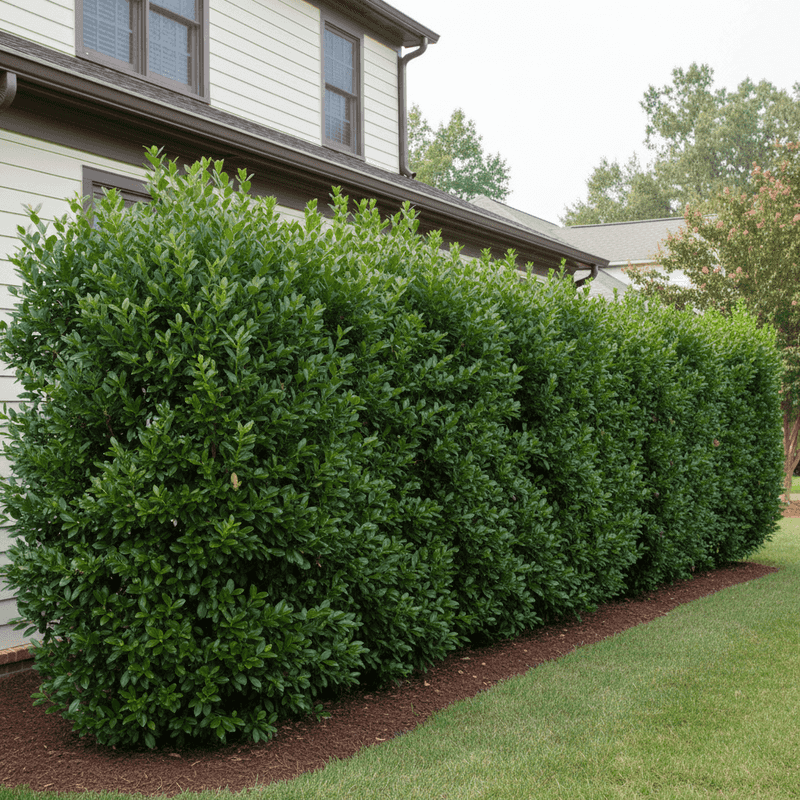
Gardeners looking for a native alternative to Sweet Viburnum often discover Walter’s Viburnum and quickly appreciate what it brings to a Florida landscape.
Viburnum obovatum is a Florida native that grows into a dense, multi-stemmed shrub or small tree, reaching eight to fifteen feet tall with a naturally full form that provides solid coverage along fence lines and property borders.
Its smaller leaf size gives it a finer texture than its cousin, adding a slightly different visual character to the hedge.
Growth rate is moderate to fast, typically one to two feet per year, and the plant stays evergreen throughout most of Florida.
In early spring, Walter’s Viburnum covers itself in clusters of small white flowers that attract pollinators, making it as ecologically valuable as it is practical.
The dense branching pattern fills in well without much prompting, and birds use it for both shelter and food from the small dark fruits that follow flowering.
Space plants four to six feet apart to build a connected privacy hedge efficiently. Walter’s Viburnum tolerates a wide range of soil conditions, from moist lowland soils to drier upland sandy areas, giving it broad versatility across Florida landscapes.
It handles both full sun and partial shade and is naturally drought-tolerant once established. Light pruning after flowering helps maintain a tidy shape without sacrificing the following season’s blooms.
For North and Central Florida homeowners who prefer native plants, this is one of the most rewarding privacy hedges available.