Fix Orchids That Stop Blooming In Florida Homes (And Get More Blooms)
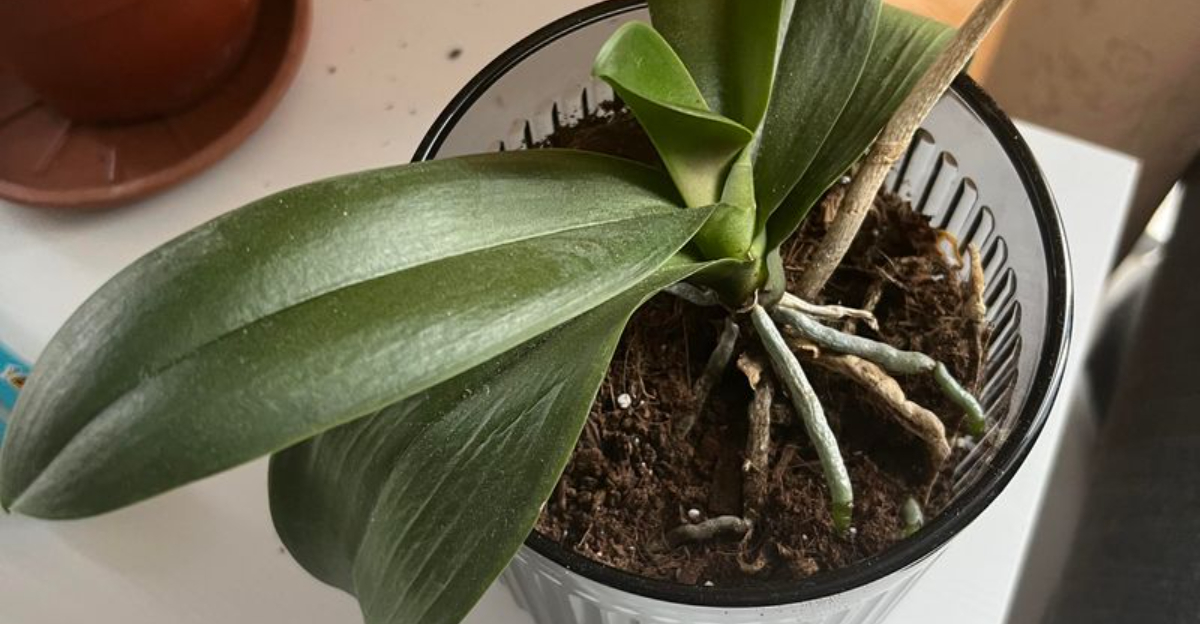
Your orchid looks perfect. Thick green leaves. Strong roots. Plenty of growth.
Yet month after month, not a single flower appears. If this sounds familiar, you are far from alone.
Thousands of Florida homeowners deal with this exact problem every year and assume their orchid is finished blooming for good. The truth is far more encouraging.
Most common house orchids are not failing or finished blooming. They are simply missing a few key environmental signals that tell them it is time to bloom again.
Florida’s warm indoor temperatures, air conditioning, humidity, and lighting conditions often keep orchids stuck in leaf-growing mode instead of flower-producing mode.
With a few small changes to placement, watering habits, temperature patterns, and root care, many orchids can return to regular blooming cycles.
Some people even see new flower spikes within weeks after correcting one overlooked mistake. Keep reading to find out what is stopping your orchid and how to fix it.
1. Why Orchids Stop Blooming In Florida Homes
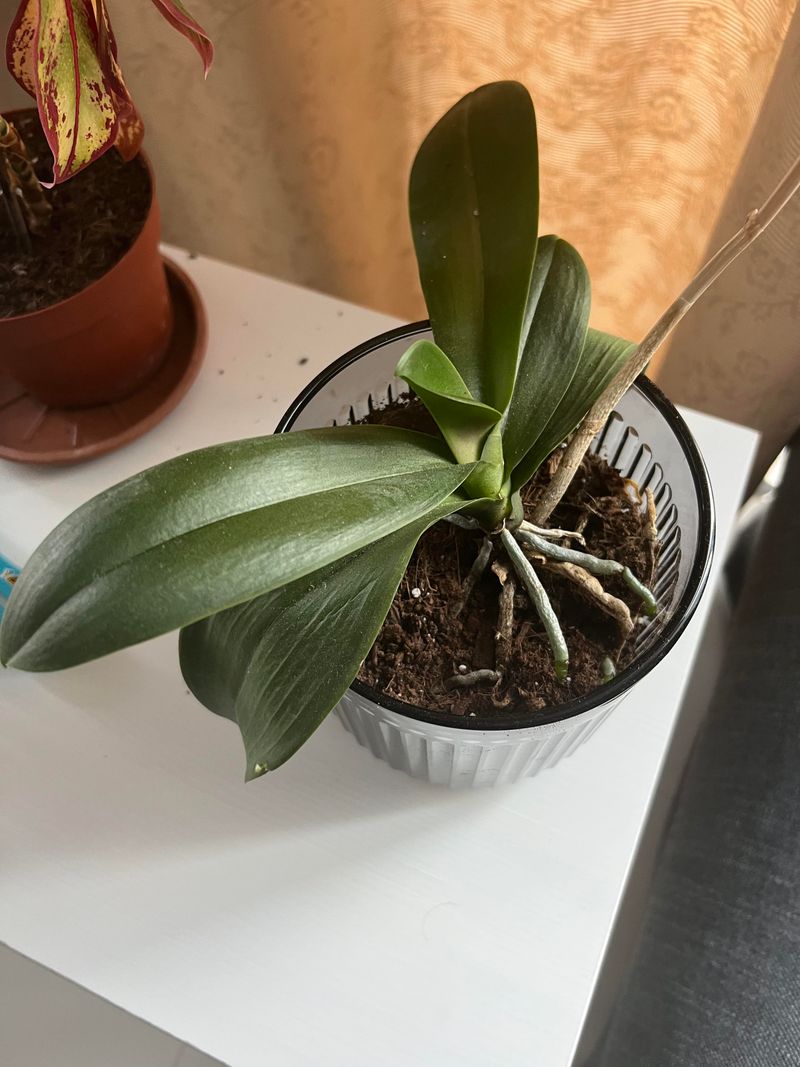
You walk past your orchid every morning and notice the same thing: green leaves looking perfectly fine, but absolutely no sign of flower spikes. This happens more often in Florida homes than you might think, and it usually comes down to our indoor environment being too comfortable year-round.
Many common house orchids need a temperature difference between day and night to trigger blooming. When your air conditioner keeps everything at a steady 72 degrees all day and all night, your orchid simply stays in growth mode without switching to bloom mode.
South Florida homes especially face this challenge because outdoor temperatures rarely drop enough to create natural temperature shifts.
Central Florida residents often see better natural blooming in winter when nights cool down slightly, even indoors. North Florida homeowners might notice blooms after brief cold snaps that create just enough temperature variation.
Your orchid is not refusing to bloom out of stubbornness but rather responding to environmental signals that tell it to keep growing leaves instead of investing energy into flowers.
Understanding this basic biology helps you realize your orchid is healthy and just waiting for the right conditions to bloom again.
2. The Most Common Bloom-Destroying Mistake
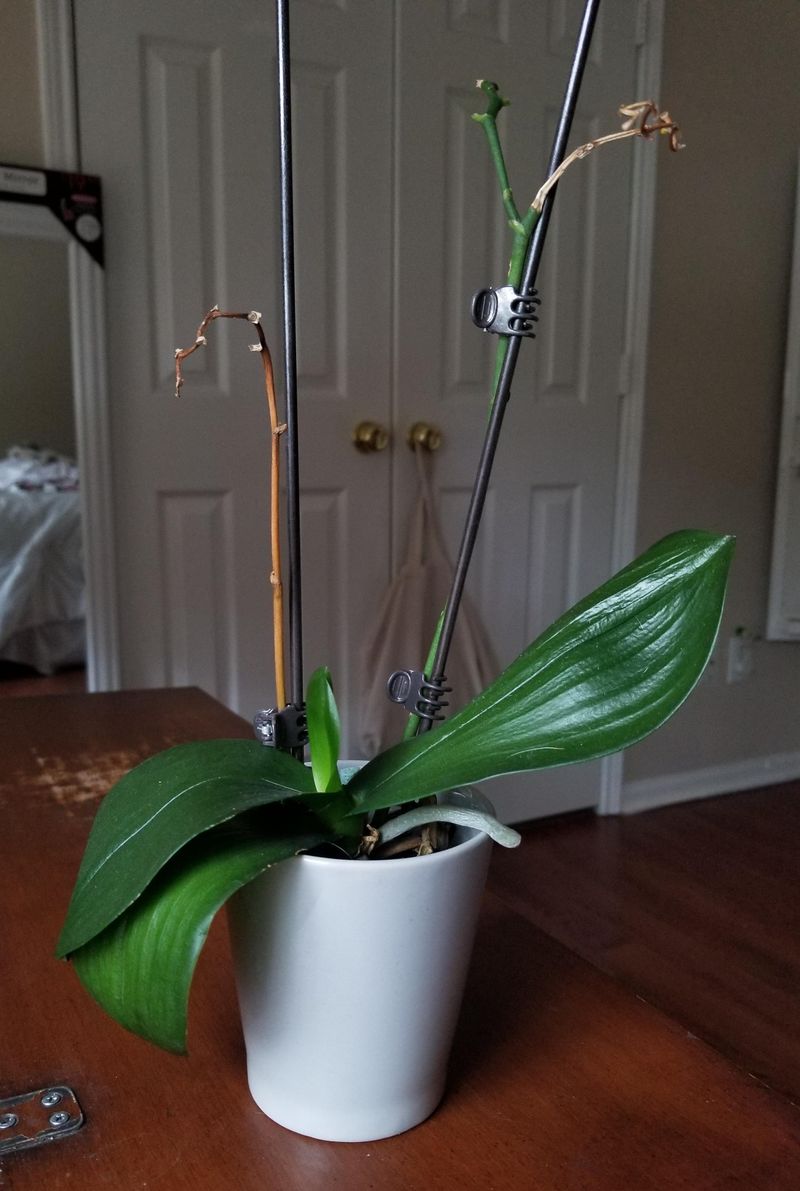
Your orchid sits in the same corner of your living room where it bloomed beautifully two years ago, but now nothing happens. The biggest mistake Florida orchid owners make is keeping their plants in spots with consistent low light, thinking orchids prefer shade because they are tropical.
Orchids actually grow on tree branches in nature where they receive filtered bright light for several hours each day. When placed too far from windows or in rooms with only artificial light, your orchid produces leaves but lacks the energy reserves needed to create flower spikes.
Many homeowners place orchids on coffee tables or bathroom counters where light levels are simply too dim for blooming.
Moving your orchid closer to an east-facing window or within three feet of a south-facing window with sheer curtains makes a dramatic difference. You should see firm leaves and soft, visible shadows on nearby walls or surfaces during the day, which indicates adequate light levels.
Avoid placing orchids directly in hot afternoon sun streaming through west-facing windows, which can burn leaves quickly in Florida heat.
This single adjustment often brings back blooms within three to four months as your orchid builds up enough stored energy.
3. How Much Light Orchids Really Need
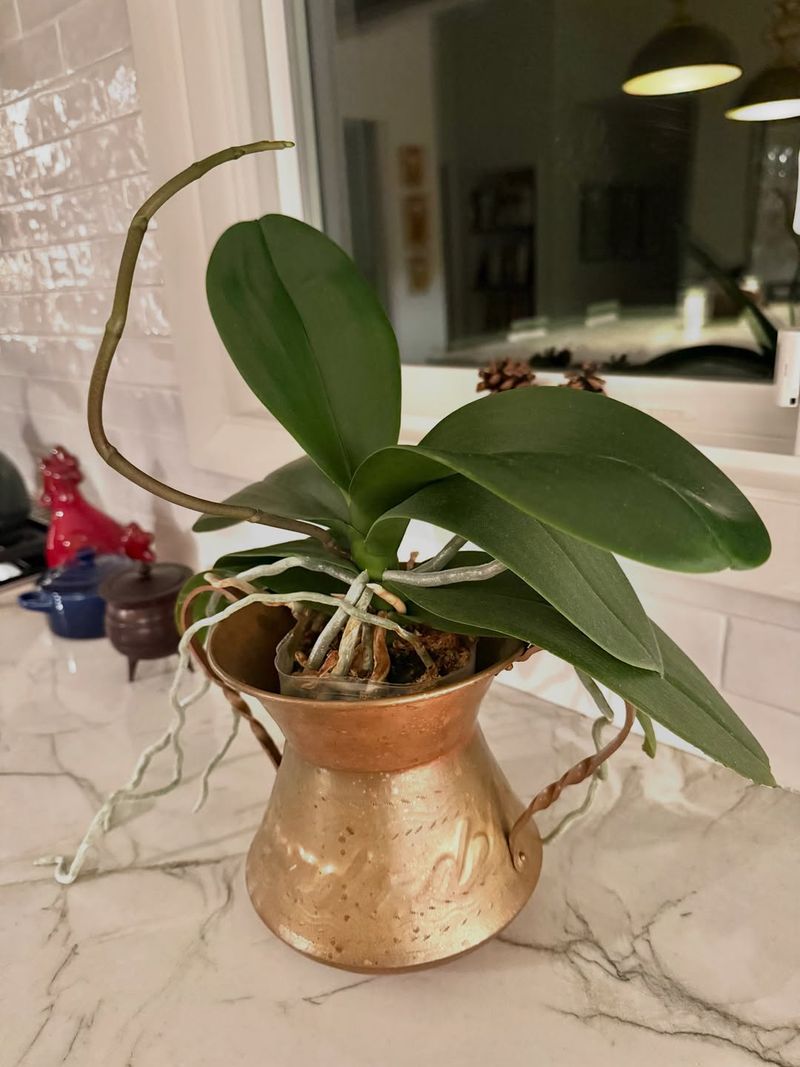
Stand next to your orchid around mid-morning and look at how light falls on the leaves. Orchids need bright indirect light for about six hours daily to produce flower spikes consistently, which means you should see clear shadows but not harsh direct sun burning the foliage.
East-facing windows work beautifully in Florida because morning sun is gentler and less intense than afternoon heat. South-facing windows with sheer curtains or filtered light through trees outside provide excellent conditions throughout the day.
North-facing windows usually offer too little light unless your home has large unobstructed glass areas that bring in significant brightness.
West-facing windows can work during cooler months, but summer afternoon sun often becomes too intense and can scorch leaves within hours.
Check your orchid leaves regularly for color clues: dark green leaves usually mean insufficient light, while light green or slightly yellowish leaves indicate proper light levels.
Reddish or brown spots signal too much direct sun exposure.
According to University of Florida IFAS Extension guidelines, common house orchids such as phalaenopsis thrive with around 1,000 to 1,500 foot-candles of light, which typically translates to bright indirect light near windows in Florida homes.
4. Watering Problems That Prevent Flower Spikes
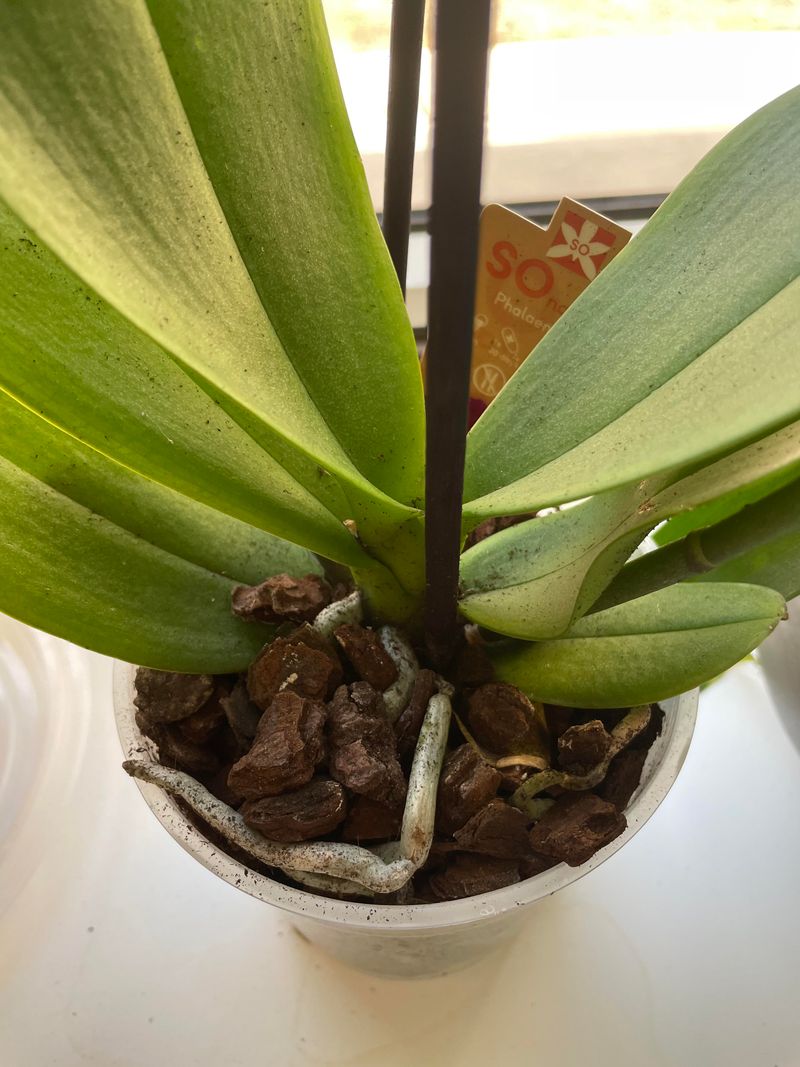
Your orchid looks healthy with plump leaves, but flower spikes never appear because watering habits are slightly off. Overwatering is the most common problem in Florida homes where high humidity already keeps bark mix moist longer than in drier climates.
Many homeowners water orchids on a fixed schedule, like every Sunday, without checking if the bark mix has dried out first. Orchid roots need to dry slightly between waterings to absorb oxygen and stay healthy enough to support blooming.
When roots stay constantly wet, they cannot function properly and your orchid focuses on survival rather than flower production.
Stick your finger into the bark mix about an inch down or lift the pot, and water only when it feels dry and lightweight. This might mean watering about every five days in air-conditioned Central Florida homes or every seven to ten days in naturally humid South Florida environments.
Always water in the morning so excess moisture evaporates during the day, and never let water sit in the crown where leaves meet the stem.
Proper watering also means using room temperature water and allowing it to drain completely through the pot, which mimics natural rainfall patterns orchids experience in their native habitats.
5. The Right Temperature Changes For Reblooming
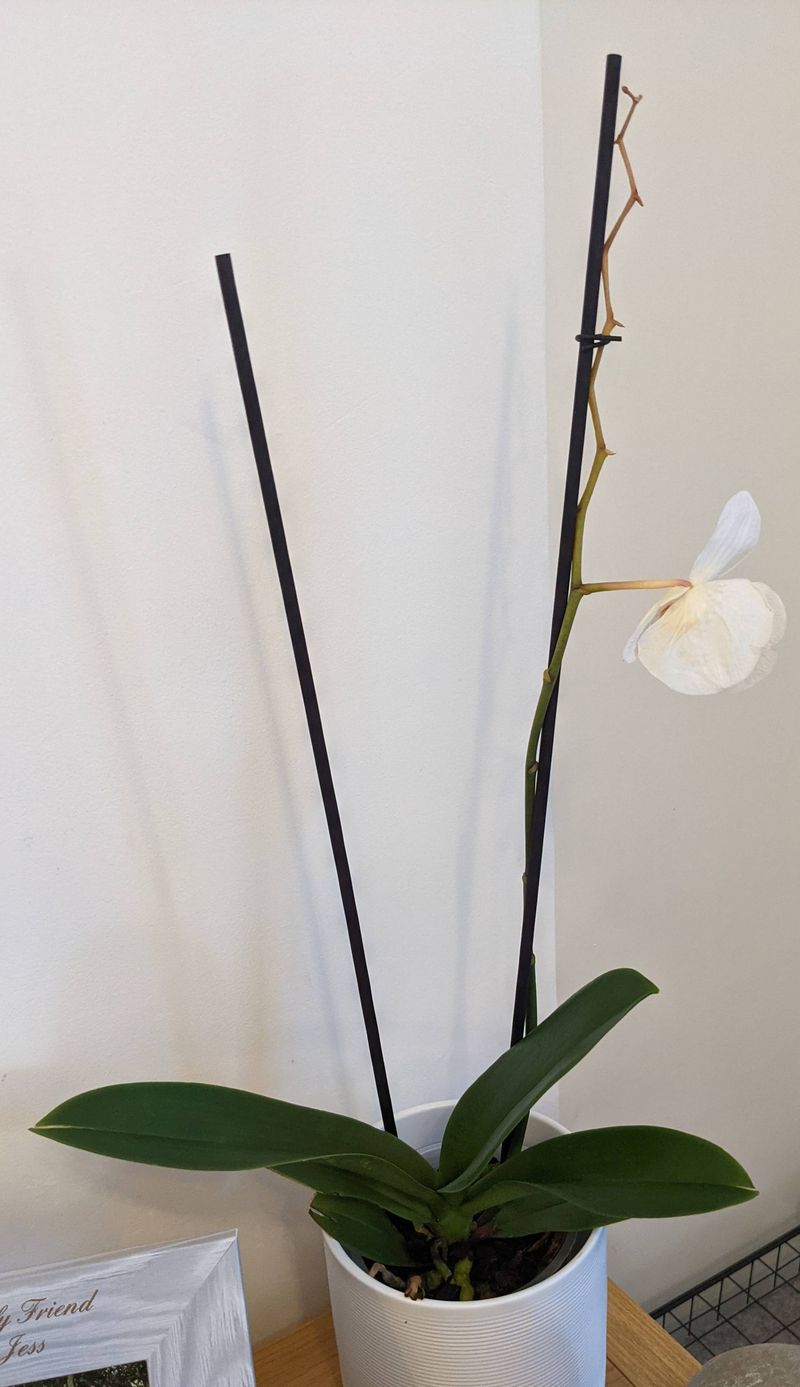
Many common house orchids need a temperature drop of about 5 to 10 degrees between day and night to trigger flower spike development, which can be tricky in climate-controlled Florida homes. Your air conditioner might keep your home at a constant 73 degrees all day and night, which feels comfortable for you but gives your orchid no signal to start blooming.
Try moving your orchid to a spot where nighttime temperatures naturally drop slightly, such as near a window in a guest room where you run the air conditioner less frequently.
North Florida homeowners can take advantage of cooler fall and winter nights by placing orchids in screened porches or near slightly drafty windows.
Central and South Florida residents might need to adjust thermostats to allow a few degrees of temperature variation between day and night.
Some orchid owners successfully trigger blooming by placing their plants outdoors on covered patios during October through February when nighttime temperatures drop into the mid-60s. Always monitor temperatures carefully and bring orchids inside if temperatures approach 55 degrees, which can stress plants.
These temperature changes combined with proper light usually result in new flower spikes appearing within six to eight weeks.
6. Fertilizer Mistakes That Cause Leaf Growth Instead Of Flowers
Your orchid keeps producing new leaves but never develops flower spikes, which often means you are using too much nitrogen-heavy fertilizer.
Many general houseplant fertilizers contain high nitrogen levels designed to promote lush foliage, but orchids perform best with balanced nutrition rather than excessive nitrogen.
Look for orchid-specific fertilizers with balanced ratios such as 20-20-20 or similar formulas formulated for orchids. Apply fertilizer at half the recommended strength every other week during active growth periods, which typically means spring through fall in Florida.
Reduce fertilizing to once monthly during winter when orchids naturally slow down.
Overfertilizing causes salt buildup in bark mix, which damages roots and prevents blooming even when other conditions are perfect. Flush your orchid pot with plain water once monthly to remove accumulated salts, letting water run through the bark for a minute or two.
American Orchid Society recommendations emphasize the phrase “weekly weakly”, meaning dilute fertilizer applied frequently works better than strong doses given occasionally.
Proper fertilizing combined with appropriate light and temperature changes gives your orchid everything needed to produce strong flower spikes with multiple buds.
7. Root Health And Potting Mix Problems That Stop Blooms
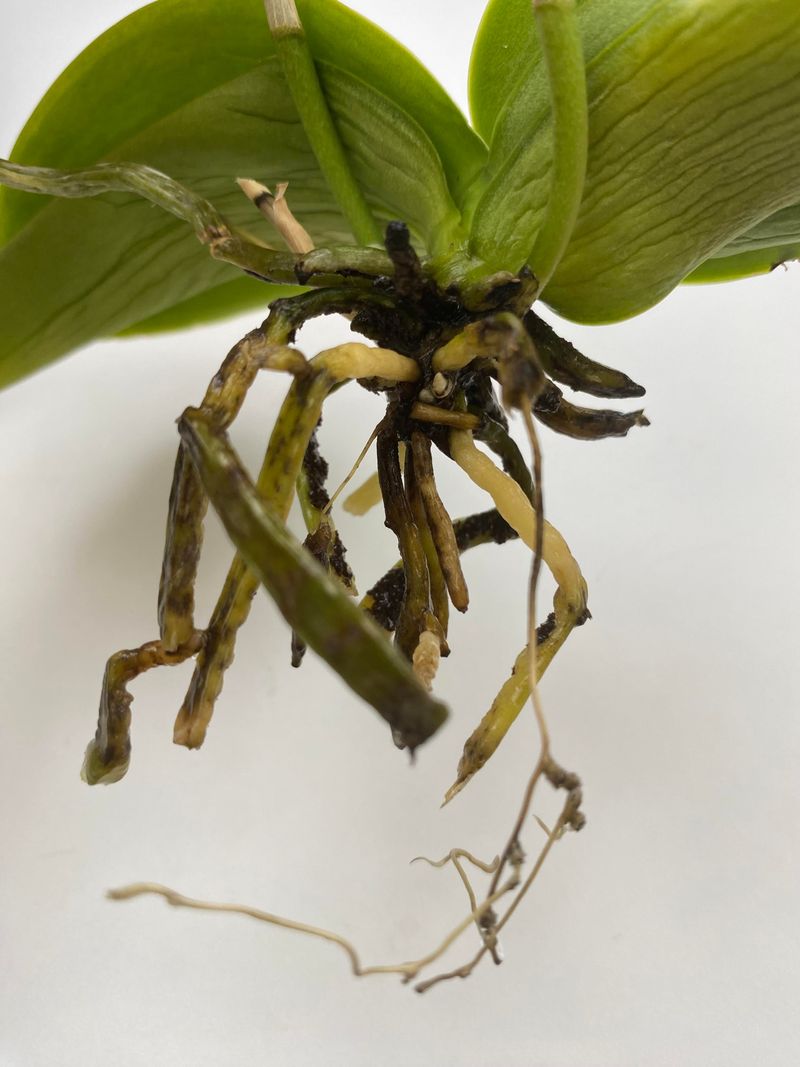
Your orchid might look healthy above the pot, but hidden problems below the surface often prevent flowering in Florida homes. Roots are the engine that fuels blooms, and when they struggle, flowers simply don’t happen.
Florida’s warm, humid indoor air causes orchid bark mix to break down faster than in cooler climates. Over time, the mix becomes compacted, holds too much moisture, and starves roots of oxygen.
When this happens, orchids focus on survival instead of producing flower spikes.
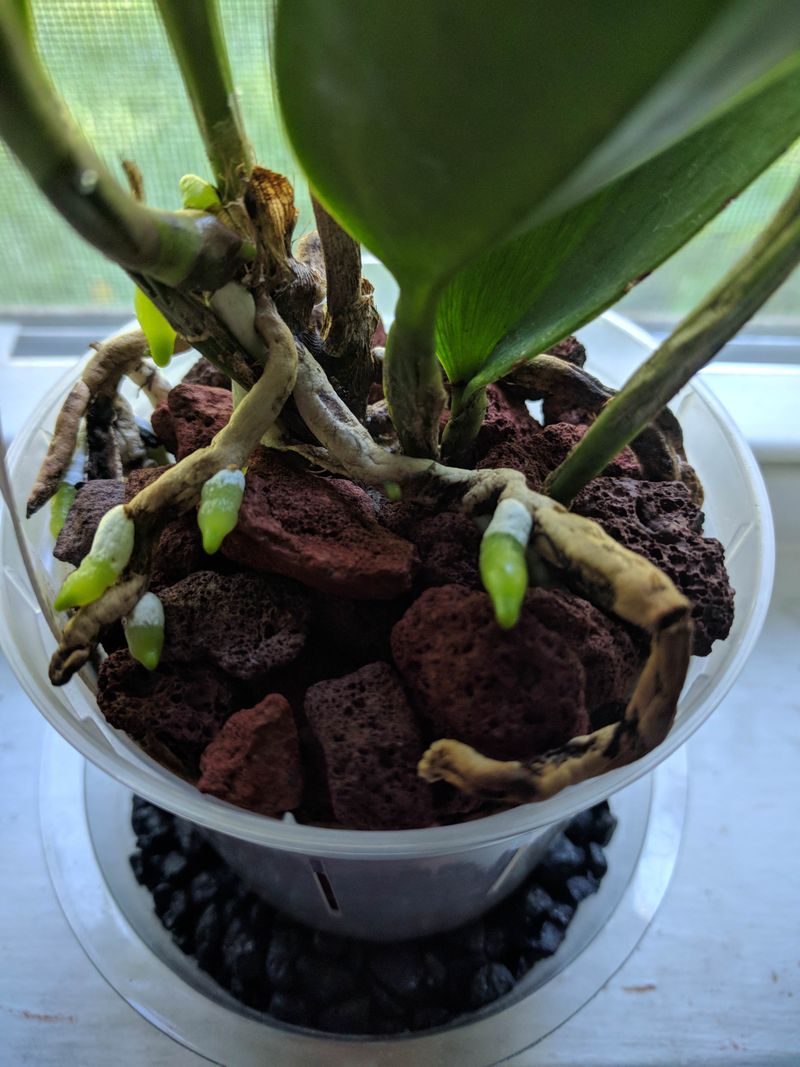
Check your orchid’s roots by gently lifting the plant from its pot or looking through clear containers. Healthy roots should appear firm and silvery-green when dry, turning bright green after watering.
Mushy, brown, or hollow roots signal rot and poor drainage. White fuzzy growth or sour smells from the pot also indicate decomposing bark and root stress.
Most Florida-grown house orchids benefit from repotting every 12 to 18 months, even if the plant does not look crowded. Fresh bark mix restores airflow around roots and dramatically improves blooming potential.
Choose a chunky orchid bark mix rather than regular potting soil, which suffocates orchid roots. Make sure pots have multiple drainage holes so excess water can escape quickly, especially during humid summer months.
After repotting, orchids often pause blooming briefly while roots adjust. This is normal.
Within a few months, stronger root growth usually leads to healthier leaves and reliable flower spike production.
Healthy roots combined with proper light, temperature changes, and feeding create the foundation your orchid needs to bloom again year after year.