Florida Pet Owners Are Switching To These 13 Safe Houseplants
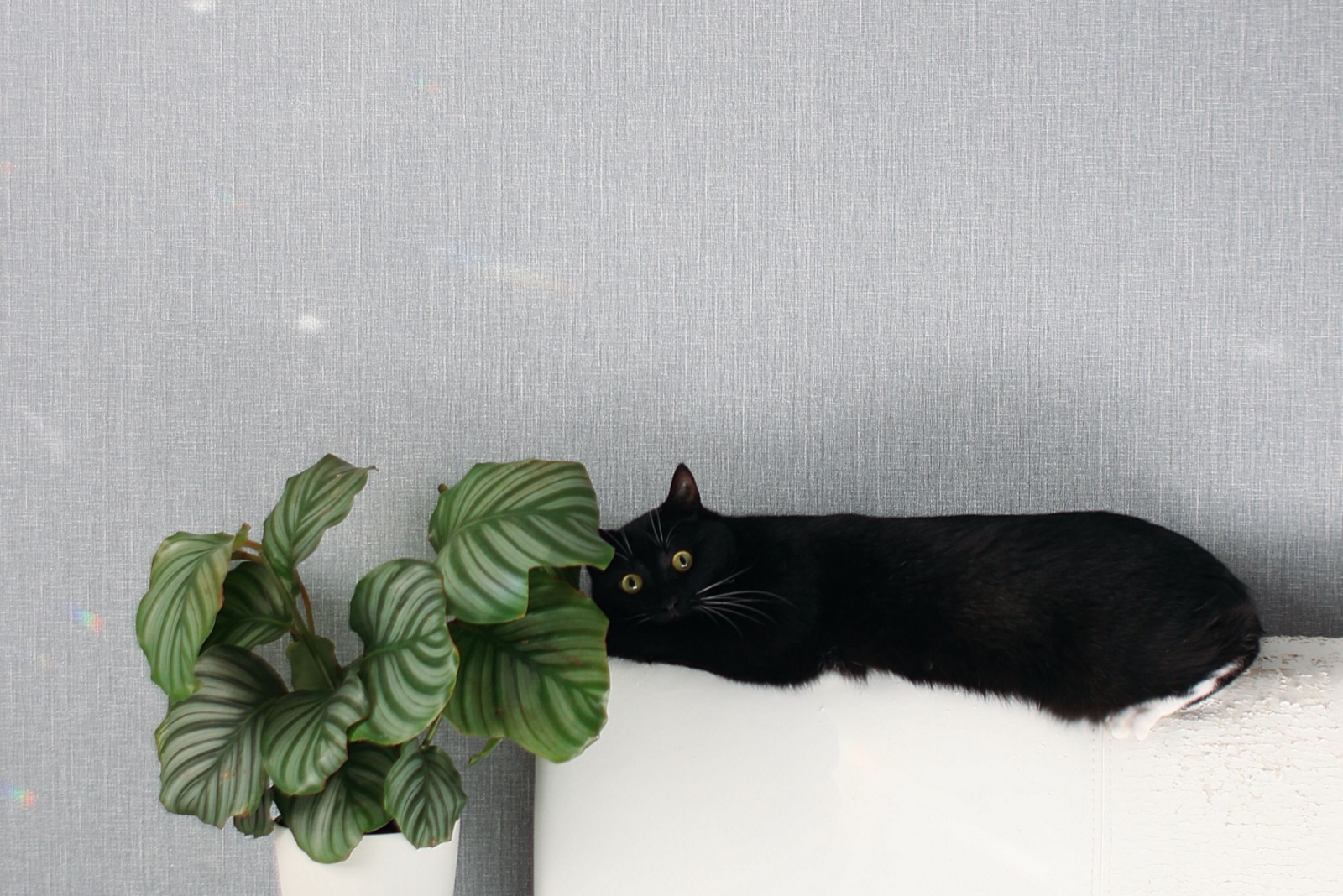
Florida homes are made for greenery, but sharing your space with cats and dogs changes everything.
A beautiful houseplant can turn into a hidden danger the moment a curious pet decides to nibble.
Many of the most popular indoor plants sold across Florida are toxic, even in small amounts, which makes choosing the right ones more important than ever.
The good news is that safe and stunning options exist that thrive in Florida homes and keep pets protected.
This list highlights houseplants that are considered non toxic by veterinary poison control sources and the ASPCA.
These plants will not cause poisoning if chewed, but any plant can still upset a pet’s stomach if too much is eaten.
Always contact a veterinarian if a pet shows signs of illness after chewing on plants.
From lush palms to colorful foliage and flowering favorites, these pet friendly plants allow Florida families to enjoy a vibrant indoor jungle without putting furry companions at risk.
1. Spider Plant
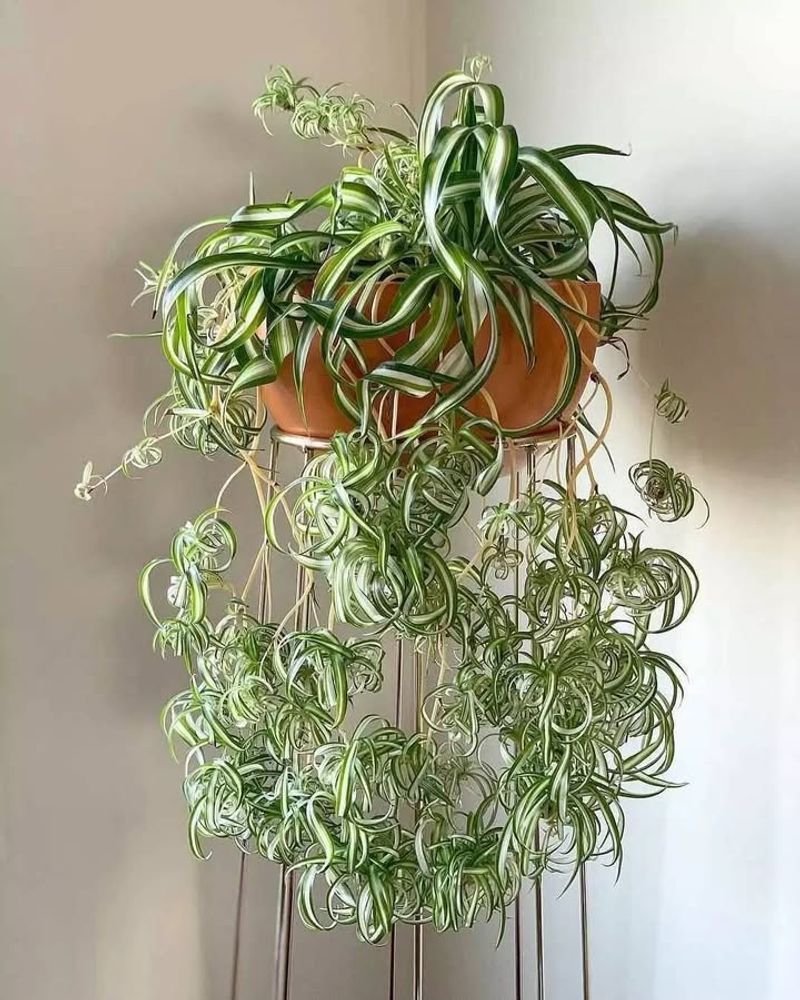
Hanging baskets filled with cascading green and white striped leaves have become a staple in Florida homes, and for good reason.
Spider plants are listed as non-toxic to both cats and dogs by the ASPCA, making them one of the safest choices for pet owners.
Their arching foliage creates a waterfall effect that adds movement and life to any room.
Florida’s natural humidity is a dream come true for spider plants.
They thrive in bright, indirect light and can tolerate the occasional missed watering, which is perfect for busy pet parents.
The plants produce little offshoots called spiderettes that dangle from the mother plant, giving you free baby plants to share with friends.
Place them in hanging planters or on tall shelves where curious paws can’t reach easily.
If your cat does decide to munch on a few leaves, you won’t need to panic.
These plants handle nibbling without causing harm to your pet.
Water them when the soil feels dry to the touch, and watch them flourish in your sunny Florida home.
2. Boston Fern
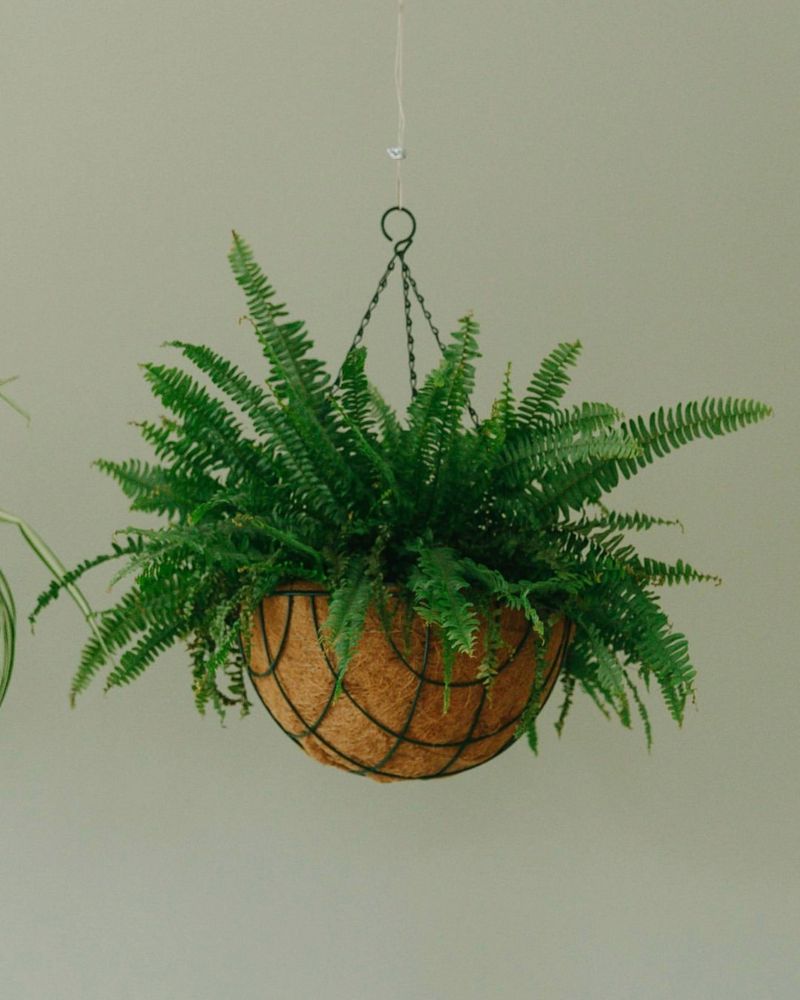
With feathery fronds that soften any corner, Boston ferns bring a touch of tropical elegance indoors.
Pet Poison Helpline confirms these lush beauties are safe for cats and dogs, so you can display them without worry.
Their delicate appearance might suggest they’re fragile, but they’re surprisingly resilient in the right conditions.
Florida’s moisture-rich air is exactly what Boston ferns crave.
They love humidity and indirect light, making them ideal for bathrooms, covered porches, or any room with filtered sunshine.
Keep the soil consistently moist but not waterlogged, and mist the leaves occasionally to keep them looking their best.
These ferns can grow quite large and full, creating a statement piece in your home.
If your dog brushes past the fronds or your cat takes a curious nibble, there’s no cause for alarm.
Boston ferns are completely harmless to pets.
Their vibrant green color and graceful texture make them a favorite among Florida plant lovers who want both beauty and peace of mind for their furry companions.
3. Areca Palm
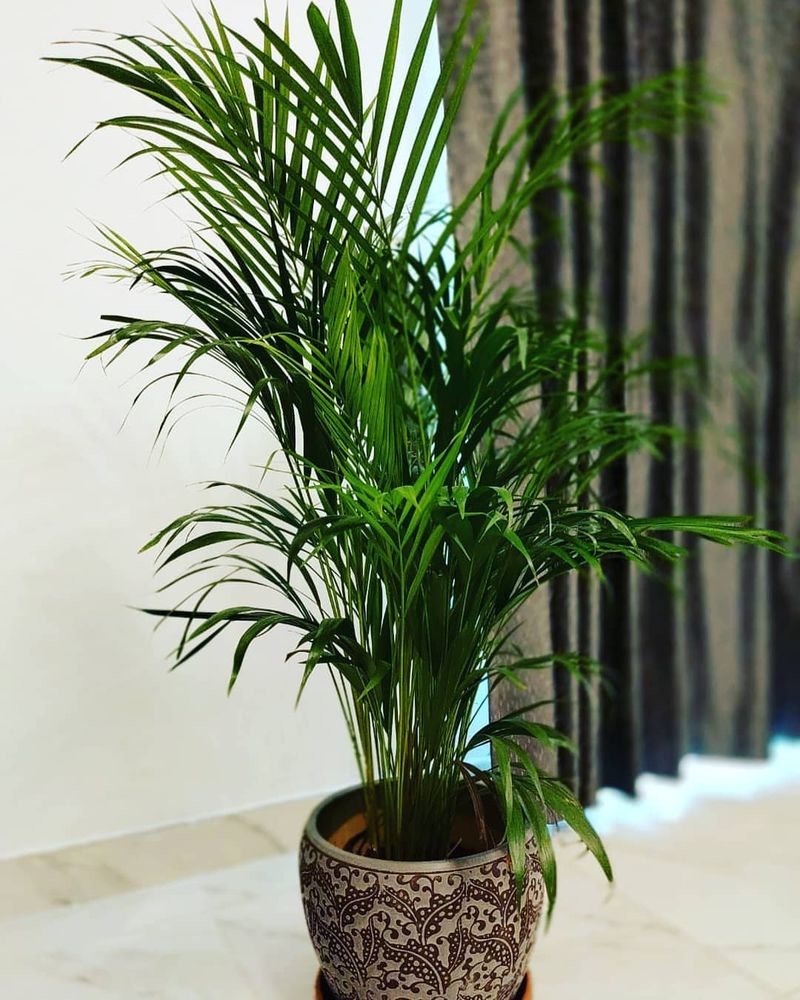
Imagine bringing a slice of paradise right into your living room.
Areca palms, with their graceful arching fronds and golden-green stems, do exactly that.
The ASPCA lists these palms as non-toxic to pets, so you can enjoy their tropical beauty without any safety concerns.
They grow tall and full, creating a natural privacy screen or focal point in larger spaces.
Florida homes are perfect for areca palms because they thrive in warm temperatures and bright, indirect light.
These palms appreciate regular watering during warmer months but don’t like sitting in soggy soil.
The natural humidity in Florida means you won’t need to fuss much with misting or humidifiers.
Place your areca palm in a corner where it has room to spread its fronds.
Even if your curious cat decides to bat at the leaves or your dog sniffs around the base, you can relax knowing the plant poses no danger.
Areca palms can grow several feet tall indoors, adding height and drama to your space while keeping your pets perfectly safe and happy.
4. Bamboo Palm
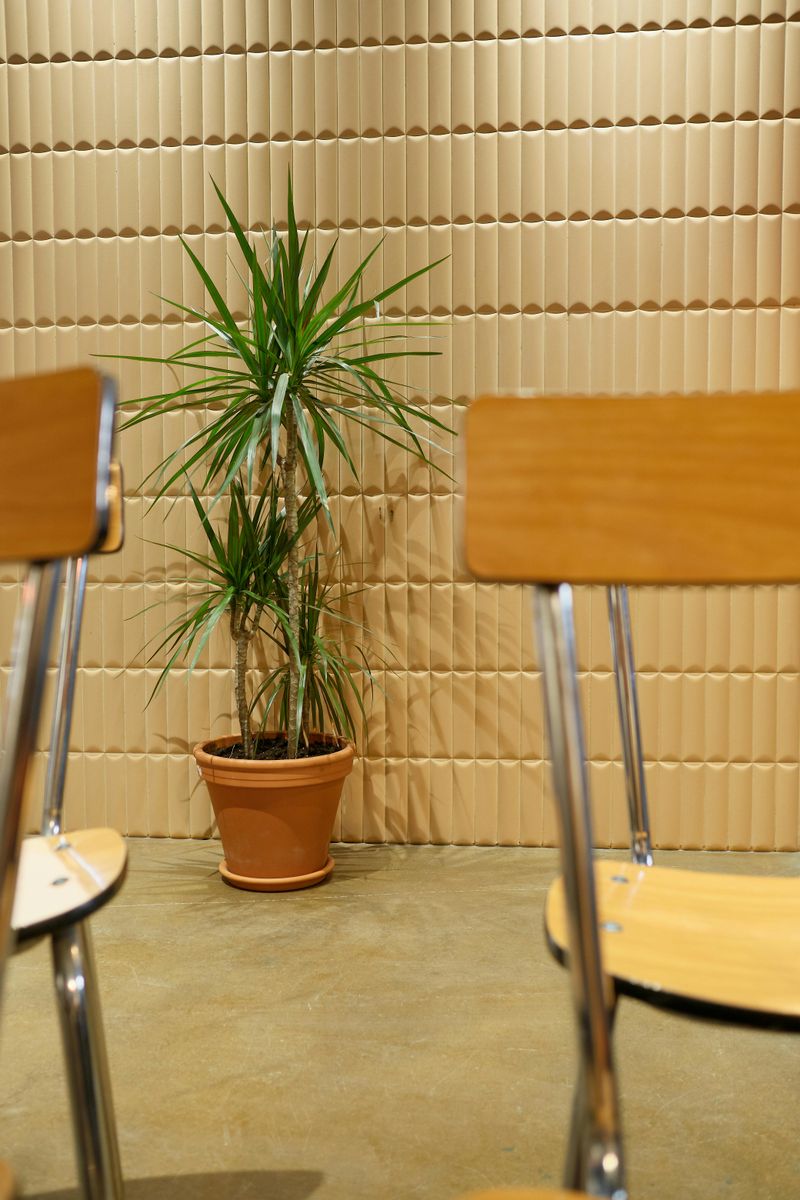
Clusters of slender stems topped with delicate, feathery leaves make bamboo palms a charming addition to any pet-friendly home.
Veterinary references and the ASPCA confirm these palms are safe for cats and dogs, giving you one less thing to worry about.
Their compact growth habit makes them suitable for smaller spaces while still delivering that tropical vibe Florida residents love.
Bamboo palms adapt well to Florida’s indoor conditions, preferring bright, filtered light and consistently moist soil.
They’re excellent air purifiers, helping to remove toxins from your home while looking absolutely stunning.
The plant’s natural resistance to pests means less maintenance and more time enjoying your green space with your pets.
These palms grow in clumps, creating a fuller appearance than single-stemmed varieties.
If your dog’s wagging tail knocks a few fronds or your cat explores the stems, there’s no toxic risk involved.
Water them regularly and keep them away from direct hot sun, which can scorch the leaves.
Bamboo palms bring a peaceful, zen-like quality to your home while keeping your four-legged family members completely out of harm’s way.
5. Parlor Palm
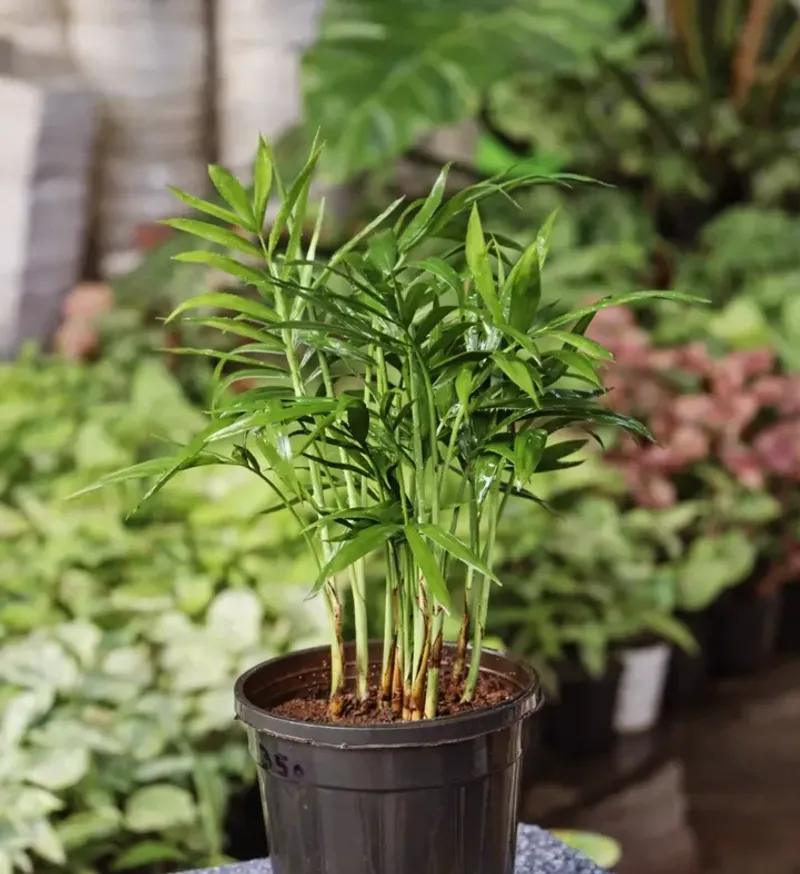
Small but mighty, parlor palms have been gracing homes since Victorian times, and they remain popular for good reason.
The ASPCA classifies them as non-toxic to pets, making them a trusted choice for animal lovers.
Their compact size and elegant appearance make them perfect for tabletops, desks, or small corners that need a touch of green.
Parlor palms are incredibly forgiving, which is great news for Florida pet owners juggling busy schedules.
They tolerate lower light conditions better than most palms and don’t mind if you forget to water them occasionally.
The humid Florida climate helps them stay healthy and vibrant with minimal effort on your part.
These palms grow slowly, reaching about three to four feet indoors over several years.
Their delicate fronds add a soft, tropical touch without overwhelming your space.
Even if your curious kitten decides to investigate or your puppy sniffs around the pot, you can rest easy knowing parlor palms pose zero threat.
Place them in areas with indirect light, water when the top inch of soil feels dry, and enjoy their low-maintenance beauty year-round.
6. Calathea
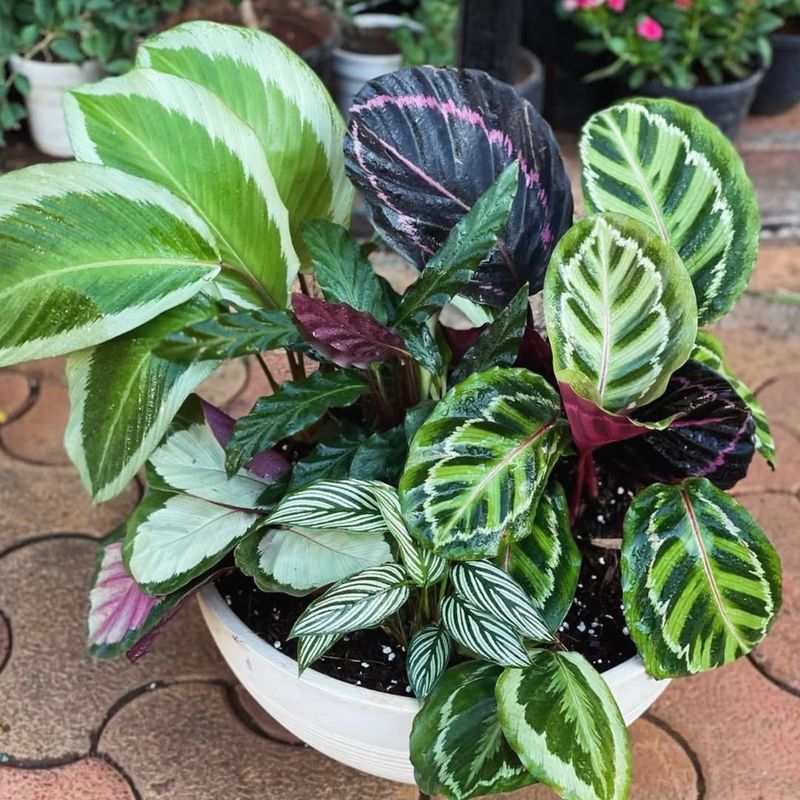
Bold patterns and vibrant colors make calatheas stand out from the crowd.
With leaves that feature stunning stripes, spots, and intricate designs, these plants are living works of art.
Pet Poison Helpline confirms calatheas are safe for cats and dogs, so you can display their beauty without reservation.
Their foliage often has purple undersides that add an extra pop of color when the leaves move.
Florida’s humidity is a blessing for calatheas, which can be finicky in drier climates.
They prefer low to medium indirect light and consistently moist soil.
Many calatheas are known for their nighttime movements, folding their leaves upward in the evening and opening them again in the morning.
This fascinating behavior adds an interactive element that pet owners and plant lovers alike find captivating.
Keep your calathea away from direct sunlight, which can fade its beautiful patterns.
If your cat is drawn to the rustling leaves or your dog investigates the pot, you won’t need to worry about toxicity.
Use filtered or rainwater when possible, as calatheas can be sensitive to chemicals in tap water.
With proper care, these stunning plants will thrive in your Florida home while keeping your pets perfectly safe.
7. Prayer Plant
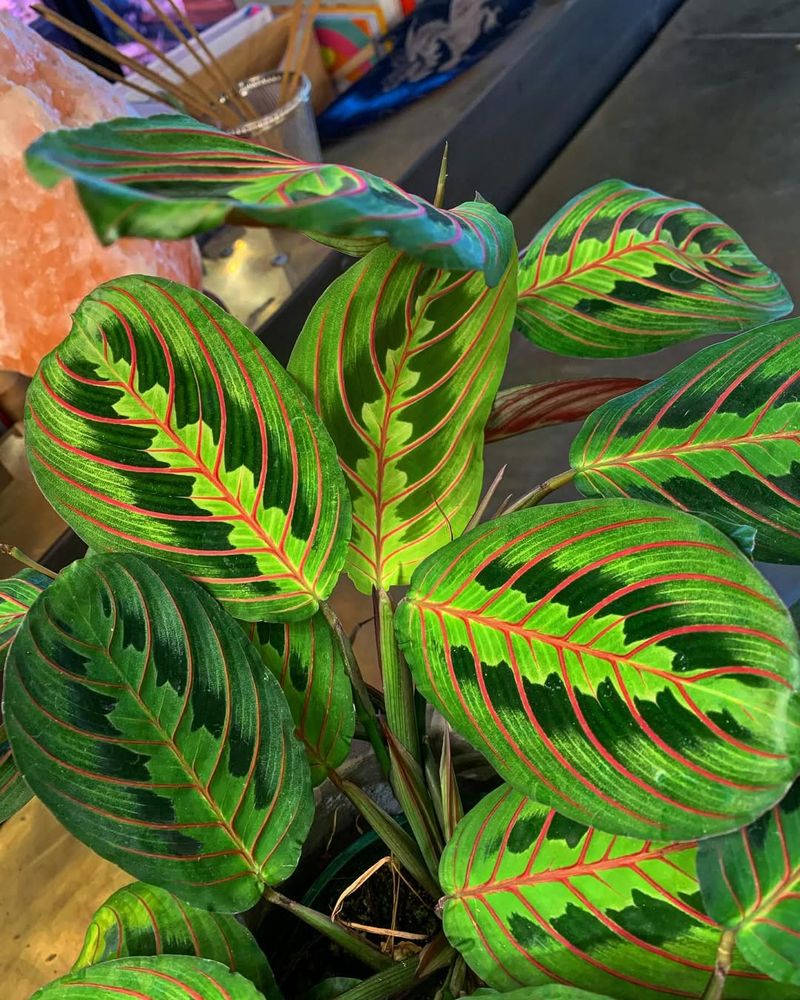
Few houseplants are as interactive as prayer plants, which fold their leaves upward each evening as if in prayer.
This unique characteristic makes them endlessly fascinating to watch.
The ASPCA lists prayer plants as non-toxic to pets, so you can enjoy their nightly ritual without any safety concerns.
Their oval leaves feature beautiful patterns in shades of green, red, and cream.
Prayer plants thrive in Florida’s warm, humid environment.
They prefer indirect light and evenly moist soil, making them perfect for bright bathrooms or kitchens.
The plants stay relatively compact, usually reaching about a foot in height, which makes them easy to fit into smaller spaces.
Their spreading habit creates a full, lush appearance that adds life to any surface.
These plants are forgiving and adapt well to typical household conditions in Florida.
If your pet decides to explore the colorful leaves, you can breathe easy knowing there’s no danger involved.
Prayer plants appreciate regular watering and occasional misting to keep their foliage looking vibrant.
They’re wonderful conversation starters and bring a sense of calm and natural rhythm to your pet-friendly home, changing their appearance from morning to night.
8. Peperomia
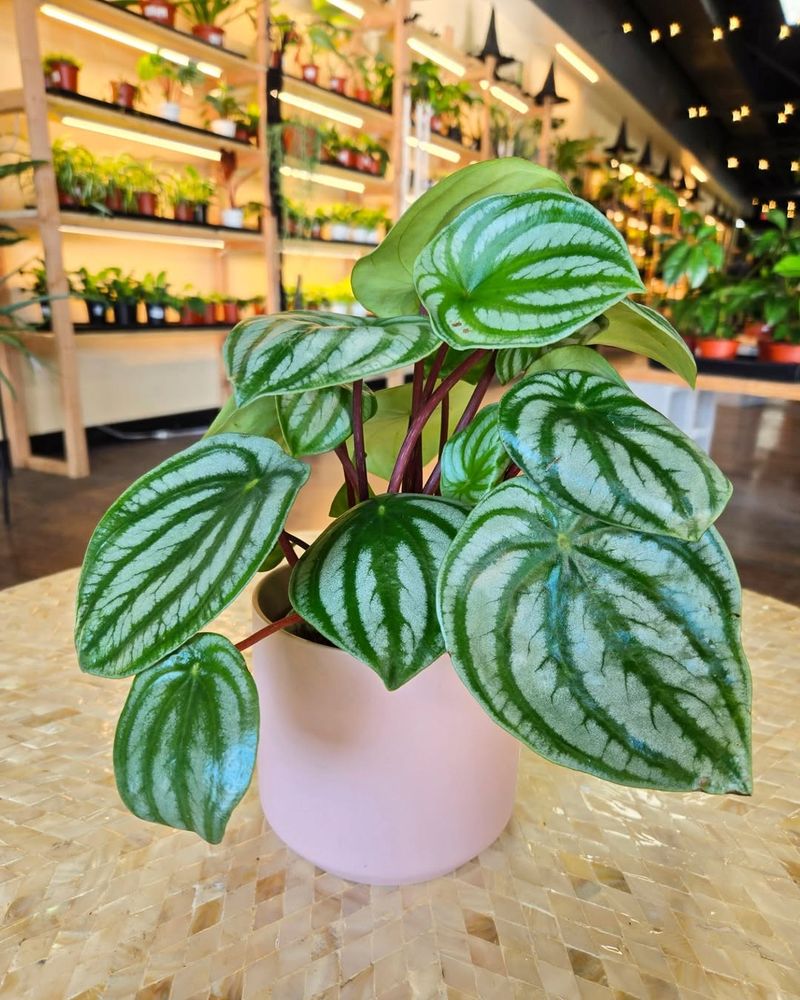
Compact, colorful, and incredibly diverse, peperomias come in hundreds of varieties with different leaf shapes, colors, and textures.
Veterinary sources and the ASPCA confirm these charming plants are safe for cats and dogs.
From rippled leaves to smooth, glossy ones, from solid green to variegated patterns, there’s a peperomia to match every home style and personal taste.
Florida’s climate suits peperomias beautifully.
They prefer bright, indirect light and don’t need frequent watering, making them ideal for pet owners who want low-maintenance greenery.
Their thick, succulent-like leaves store water, so they can handle a bit of neglect.
Most varieties stay small, making them perfect for desks, shelves, or windowsills where space is limited.
Peperomias rarely attract pests and grow slowly, maintaining their neat appearance without constant pruning.
If your curious cat bats at the leaves or your dog sniffs around the pot, there’s absolutely no toxicity risk.
Water them only when the soil has dried out completely, and avoid overwatering, which can lead to root issues.
These delightful little plants pack a lot of personality into a small package while keeping your furry friends completely safe and sound.
9. Ponytail Palm
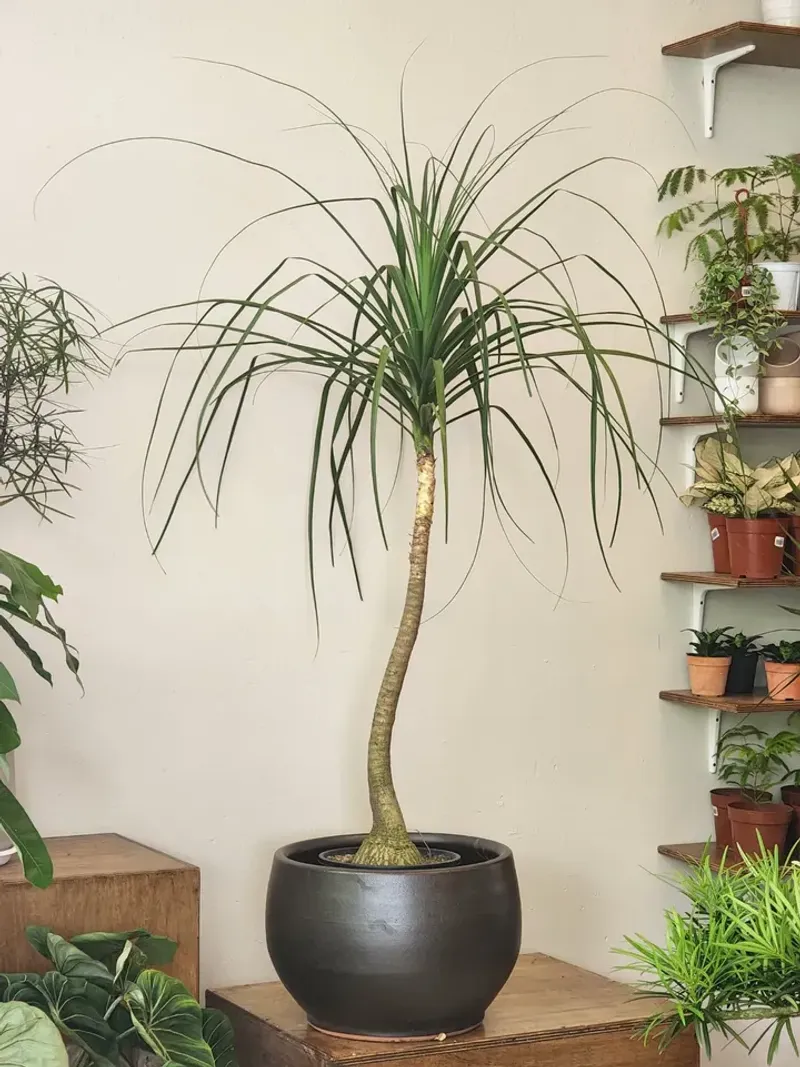
Despite its name, the ponytail palm isn’t actually a palm at all but a succulent with a swollen trunk base and long, cascading leaves that resemble a ponytail.
The ASPCA lists this quirky plant as non-toxic to pets, making it a fun and safe addition to your home.
Its unique appearance makes it a conversation piece that adds character and whimsy to any room.
Ponytail palms are drought-tolerant and thrive in Florida’s bright conditions.
They prefer well-draining soil and infrequent watering, making them perfect for busy pet owners.
The thick trunk stores water, so these plants can go weeks without a drink.
They love sunshine and do well near bright windows where they can soak up the Florida rays.
These plants grow slowly and can live for decades with proper care.
Their sculptural appearance and low-maintenance nature make them popular among both experienced and novice plant enthusiasts.
If your dog’s tail bumps the long leaves or your cat shows interest, you won’t need to worry about any harmful effects.
Water sparingly, allowing the soil to dry out completely between waterings, and enjoy this unique, pet-safe plant that brings a touch of desert charm to your Florida home.
10. African Violet
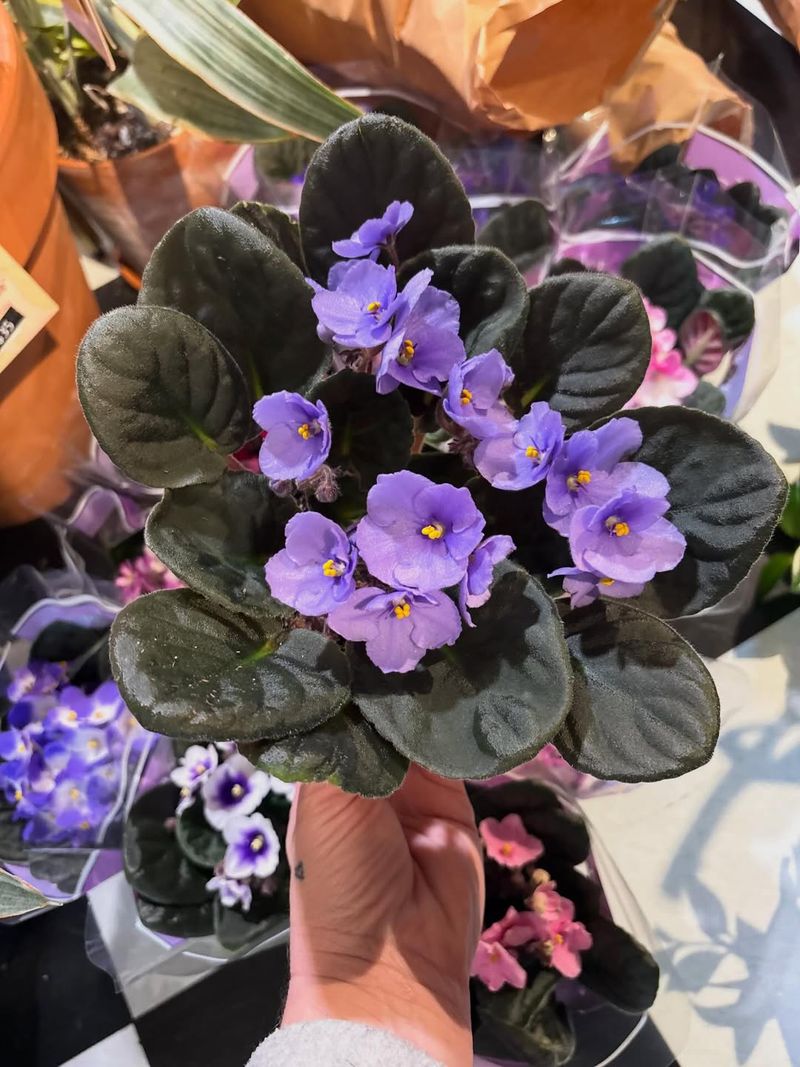
Delicate blooms in shades of purple, pink, white, and blue make African violets beloved by plant enthusiasts everywhere.
Pet Poison Helpline confirms these charming flowering plants are safe for cats and dogs, so you can enjoy their colorful display worry-free.
Their fuzzy leaves and compact size make them perfect for brightening up small spaces like kitchen counters, bedside tables, or bathroom shelves.
African violets thrive in Florida’s warm indoor temperatures and appreciate the natural humidity.
They prefer bright, indirect light and consistent moisture, but be careful not to get water on their leaves, which can cause spotting.
These plants bloom almost continuously when happy, providing months of color throughout the year.
They stay small and neat, rarely exceeding eight inches in height.
Many Florida pet owners keep collections of African violets in different colors, creating a cheerful display that’s completely safe for their animals.
If your cat brushes against the fuzzy leaves or your dog sniffs the flowers, there’s no cause for concern.
Use room-temperature water and fertilize monthly during active growth periods.
African violets bring a touch of old-fashioned charm to modern homes while keeping your beloved pets perfectly safe and your space colorful and inviting.
11. Orchid
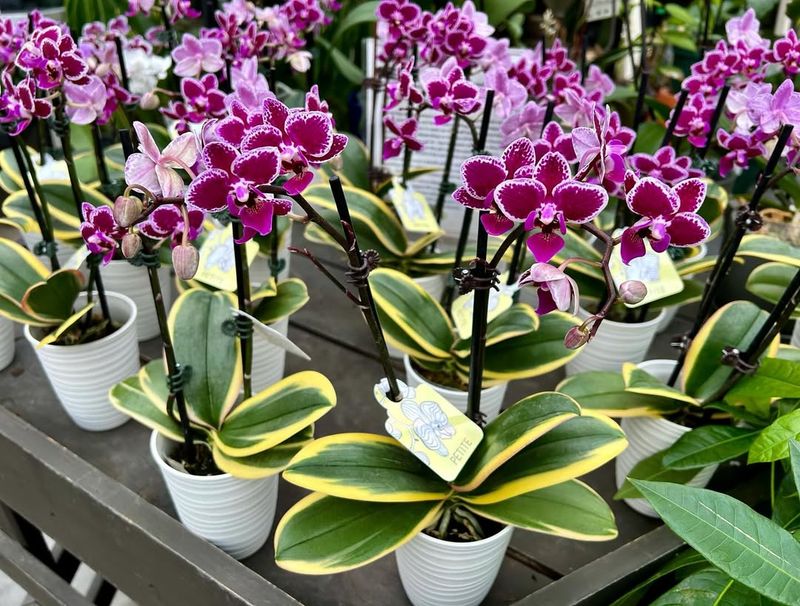
Elegant and exotic, orchids bring sophisticated beauty to any space.
The ASPCA lists orchids as non-toxic to pets, which surprises many people given how delicate and special these flowers appear.
Their blooms can last for months, providing long-lasting color and visual interest.
From classic white phalaenopsis to vibrant purple cattleyas, orchids come in countless varieties to suit every taste.
Florida’s climate is actually similar to the tropical environments where many orchids naturally grow.
They appreciate bright, indirect light and good air circulation.
Contrary to popular belief, orchids aren’t as difficult to care for as their reputation suggests.
Water them once a week, allowing the potting medium to dry slightly between waterings, and they’ll reward you with stunning blooms.
Many Florida pet owners display orchids on tables, counters, or special plant stands where they can be admired up close.
If your curious cat sniffs the flowers or your playful dog investigates the pot, you can relax knowing orchids pose no toxic threat.
They prefer humidity but don’t like sitting in water, so proper drainage is important.
These graceful plants add a touch of elegance to your home while remaining completely safe for your four-legged family members to be around.
12. Polka Dot Plant
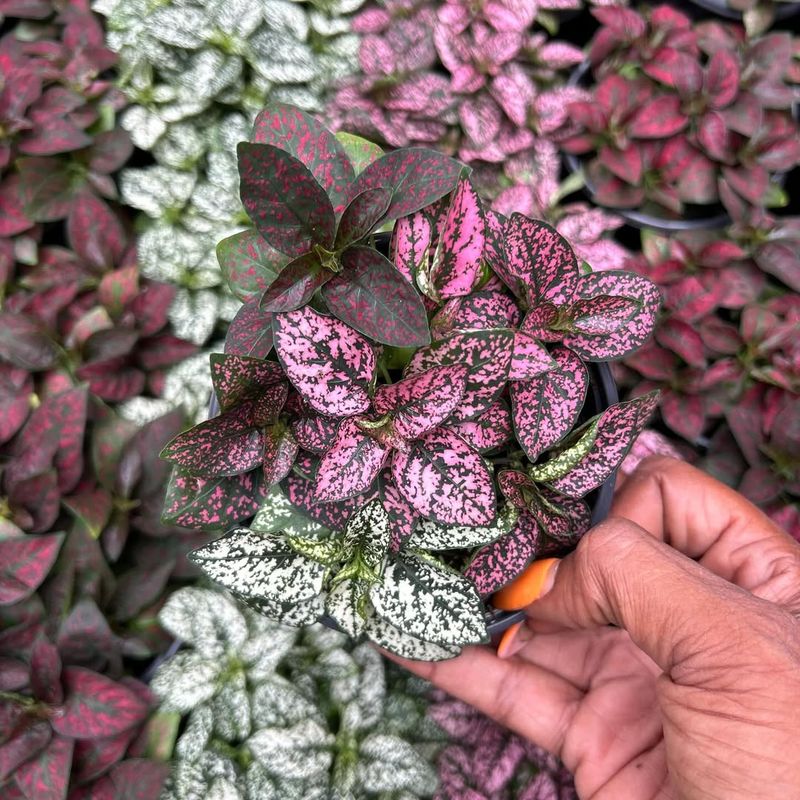
Splashed with pink, red, or white spots against green leaves, polka dot plants are playful and eye-catching.
Veterinary references confirm these colorful beauties are safe for cats and dogs, making them perfect for pet-friendly homes.
Their vibrant patterns add a pop of color to any room, and they stay compact enough to fit on desks, shelves, or small tables.
Polka dot plants love Florida’s warmth and humidity.
They prefer bright, indirect light and consistently moist soil.
The more light they receive, the more vibrant their colors become.
These plants grow quickly and can become leggy if not pinched back occasionally, but regular pruning keeps them bushy and full.
They’re incredibly affordable and easy to find at local garden centers throughout Florida.
Their bold colors make them popular with younger plant enthusiasts and anyone who wants to add personality to their space.
If your pet nibbles on a leaf or two, there’s no danger involved.
Water them regularly, as they don’t like to dry out completely, and mist occasionally to keep the foliage looking its best.
Polka dot plants bring cheerful energy and bright color to your home while staying completely safe for your furry companions to be around and explore.
13. Swedish Ivy
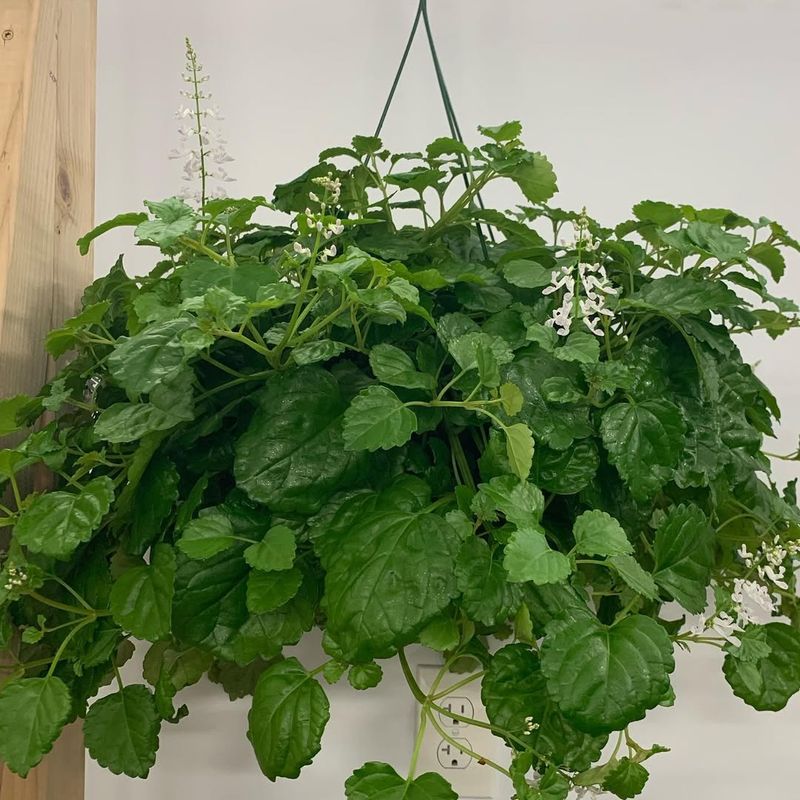
Cascading stems covered in round, scalloped leaves make Swedish ivy a lovely trailing plant for hanging baskets or tall shelves.
The ASPCA confirms this fast-growing beauty is non-toxic to pets, so you can let it drape freely without worry.
Its lush, full appearance creates a green waterfall effect that softens hard edges and adds natural beauty to any space.
Swedish ivy thrives in Florida’s indoor conditions, appreciating bright to medium light and regular watering.
It grows quickly, making it satisfying to watch as it fills out and cascades over the edges of containers.
The plant tolerates occasional pruning well, and the cuttings root easily in water, giving you free plants to share or expand your collection.
It’s forgiving and adapts to various light conditions better than many houseplants.
Many Florida pet owners choose Swedish ivy for its carefree nature and rapid growth.
If your cat is attracted to the dangling stems or your dog brushes past the trailing foliage, there’s no toxicity concern.
Keep the soil evenly moist but not soggy, and pinch back the stems occasionally to encourage bushier growth.
Swedish ivy brings lush, green abundance to your home while keeping your beloved pets safe, healthy, and free to explore their space without restrictions or worries.