8 Fragrant Trees That Fill Georgia Backyards With Strong Scent
Some trees do a lot more than give a backyard shade or spring color. In Georgia, a few can change the whole feel of the space just by the scent they bring into the air.
A warm afternoon, an open window, or a light evening breeze can suddenly make the yard feel softer, richer, and much more memorable without anything flashy happening at all.
That is part of what makes fragrant trees stand out. They are not always the first thing people think about when planning a backyard, but once one starts blooming, it becomes impossible not to notice the difference.
The air feels sweeter, the space feels more alive, and even familiar corners of the yard can seem more inviting.
Georgia gardens already have a long season of growth and color, but scent adds something else entirely. It gives the backyard a presence that lingers, and once it is there, the whole space feels like it offers more than just a nice view.
1. Southern Magnolia Produces Large Highly Fragrant Blooms
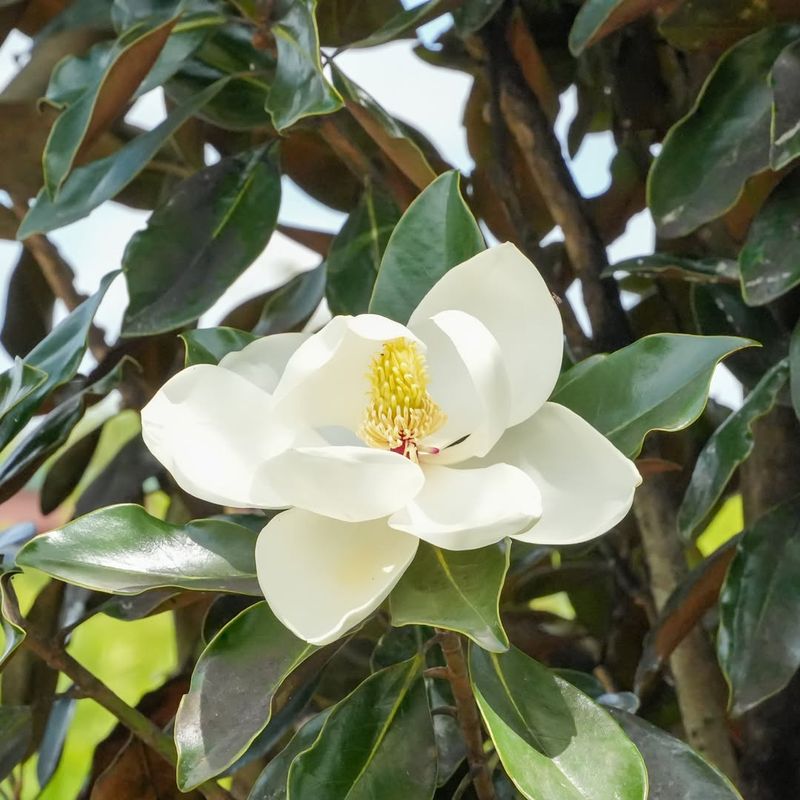
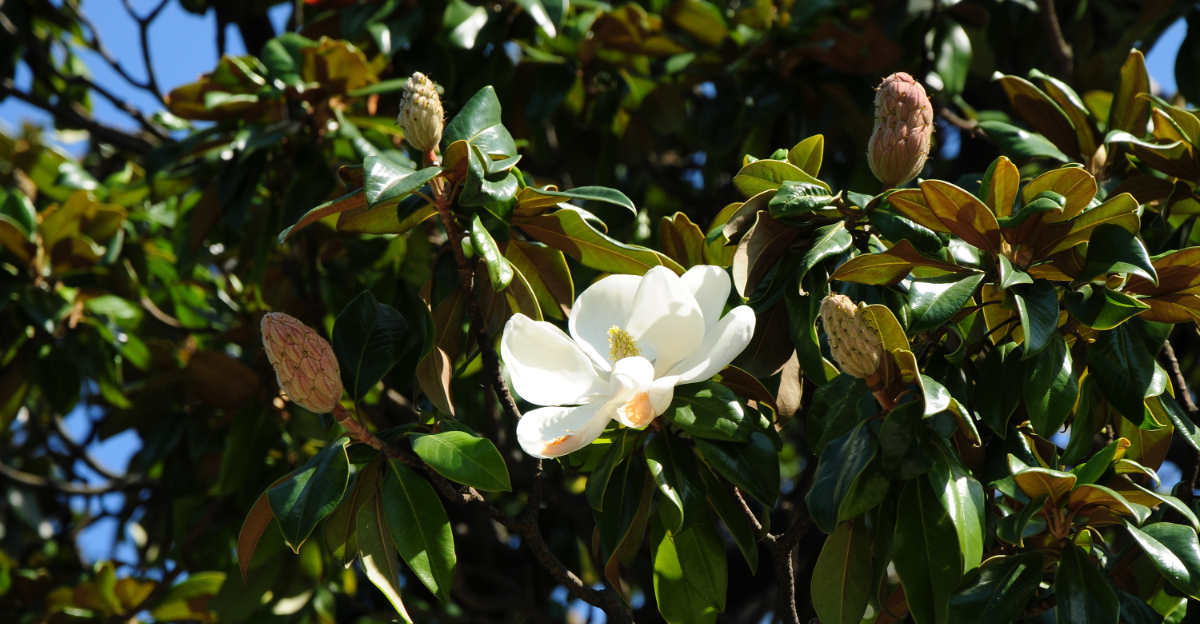
Few trees stop people in their tracks the way a Southern Magnolia does when it is in full bloom. Those enormous creamy white flowers can stretch up to a foot across, and the scent they carry is rich, sweet, and unmistakably powerful.
Stand anywhere near a blooming Southern Magnolia on a warm Georgia afternoon, and the fragrance will find you.
Blooms typically appear from late spring into early summer, with some trees pushing out scattered flowers all the way through August. Each individual flower only lasts a few days, but a mature tree carries so many buds that the display feels continuous.
Up close, the scent has a slight lemony edge underneath all that sweetness, which keeps it from feeling too heavy.
Southern Magnolias grow large, so give yours plenty of room. Compact varieties like Little Gem work well for smaller Georgia yards without sacrificing much of the fragrance experience.
Full sun is ideal, though these trees handle some afternoon shade without complaint.
Fallen leaves and seed pods mean some cleanup, but most Georgia gardeners consider that a fair trade. Planting one near a patio or sitting area lets you enjoy the scent without going out of your way.
A Southern Magnolia is not just a tree. It becomes the centerpiece of your entire yard.
2. Sweetbay Magnolia Releases A Fresh Lemony Scent
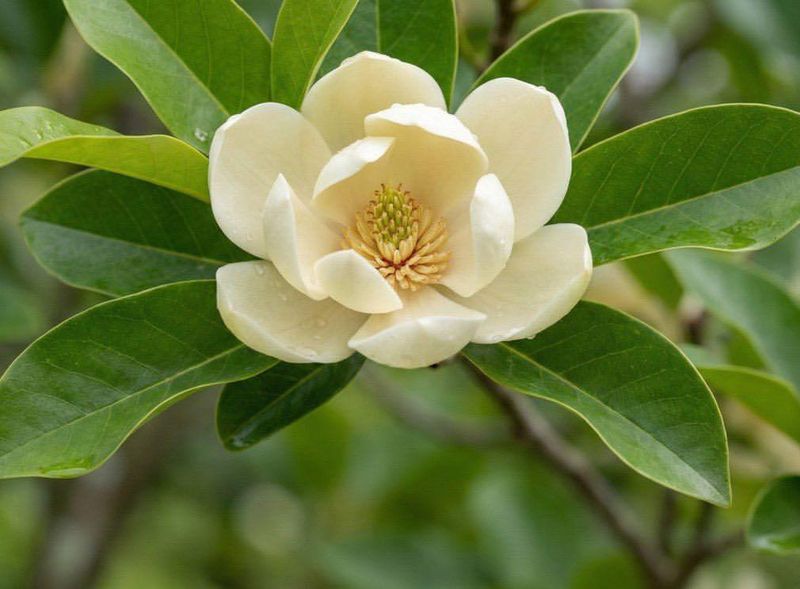
Walk past a Sweetbay Magnolia on a breezy Georgia morning, and you will catch a clean, citrusy fragrance that feels almost like someone squeezed a lemon nearby. It is lighter than the Southern Magnolia, but in a good way.
The scent is refreshing rather than overwhelming, which makes it a strong choice for planting close to windows or outdoor seating areas.
Sweetbay Magnolias stay much smaller than their Southern cousins, typically reaching somewhere between 15 and 25 feet in Georgia’s warmer zones. Creamy white flowers appear in late spring and continue sporadically through summer, giving you weeks of fragrance rather than just a short burst.
Leaves have a silvery underside that catches light beautifully when the wind moves through them.
Wet or poorly drained spots in your yard that other trees struggle with are actually where Sweetbay Magnolias perform well. Stream edges, low spots near downspouts, or areas that stay moist after rain are all fair game.
That kind of flexibility makes it genuinely useful in a Georgia landscape where drainage can be unpredictable.
Partial shade is fine for this tree, which opens up planting spots that full-sun trees cannot fill. Birds are drawn to the bright red seeds that follow the flowers, so you get wildlife activity as a bonus.
It is a quietly impressive tree that earns its spot every single season.
3. American Basswood Fills The Air With A Rich Honey Scent
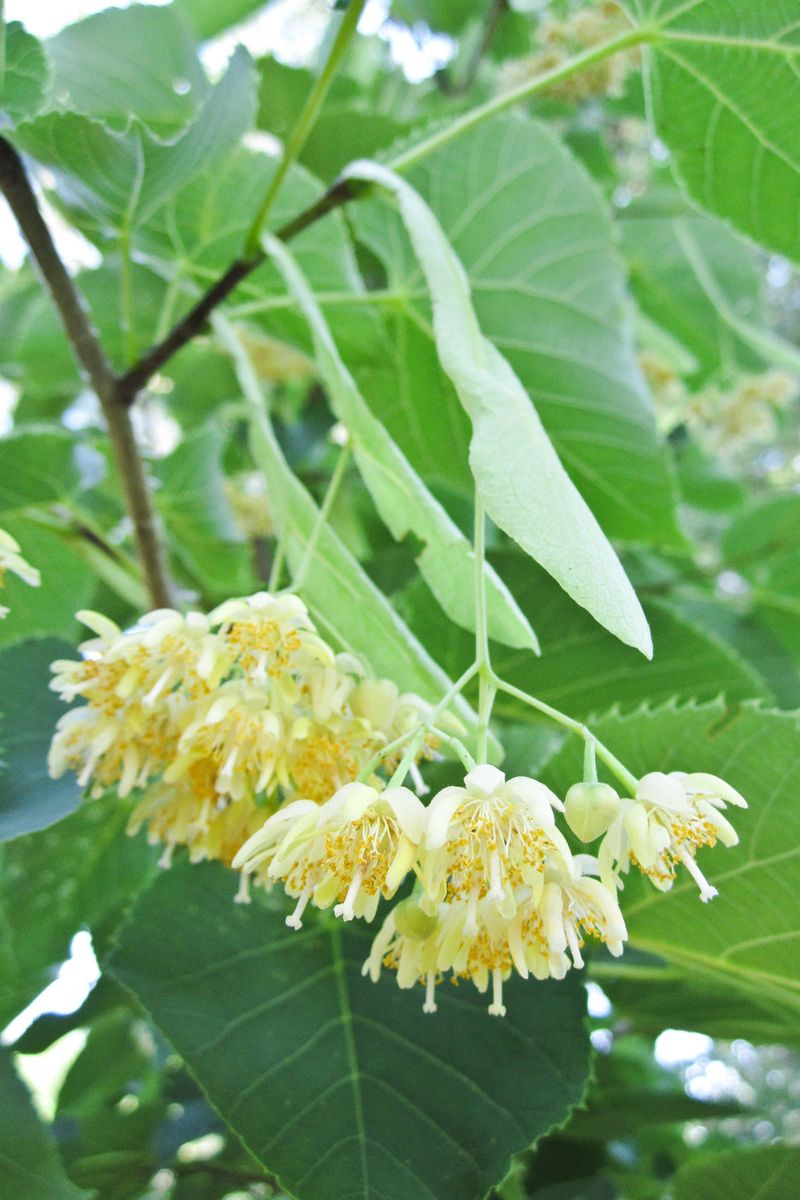
When American Basswood blooms in early summer, the honey scent it releases is so strong that you can smell it from halfway down the street.
Bees absolutely swarm these trees when they are flowering, which tells you everything you need to know about how potent that fragrance really is.
If you keep bees or just want to support pollinators in your Georgia yard, this tree pulls serious weight.
Clusters of small pale yellow flowers dangle beneath the heart-shaped leaves, almost hidden at first glance. Lean in close and the sweetness hits immediately.
Bloom time is relatively short, usually two to three weeks in June, but the intensity of the scent during that window makes it memorable every single year.
American Basswood grows into a large shade tree over time, which means it does double duty in a Georgia backyard. Summers here are brutal, and a mature Basswood can cool down a patio or lawn area significantly.
Planting it on the west or south side of your yard gives you shade right where afternoon sun hits hardest.
Moist, rich soil produces the best growth, and the tree handles both full sun and partial shade reasonably well. Young trees need consistent watering during their first couple of summers in Georgia heat.
Once the root system is established and spreading, the tree becomes much more self-sufficient and rewards your patience with that incredible annual fragrance display.
4. Carolina Allspice Has A Spicy Fruity Clove Like Aroma
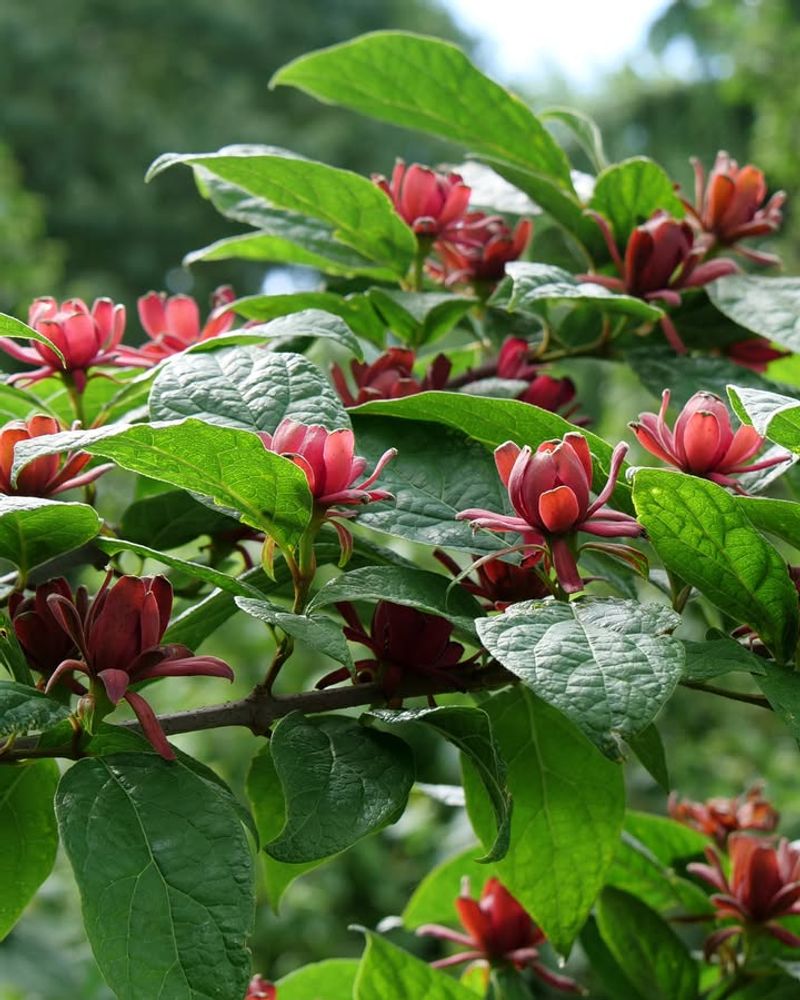
Rub a leaf between your fingers and you will understand exactly why this plant earned the name Allspice. Carolina Allspice carries a warm, spicy, clove-like fragrance in its flowers, bark, and leaves all at once.
It is unlike anything else you can grow in a Georgia backyard, and once you experience it, you will wonder why more people do not plant it.
Flowers are unusual looking, with deep burgundy-brown petals that spiral inward like a small pinecone. They appear in spring and sometimes push out a second round in fall.
The fragrance is strongest on warm days when the sun hits the plant directly. Getting close to an open flower is a genuinely surprising sensory experience, somewhere between cloves and ripe fruit.
Carolina Allspice grows as a large shrub or small multi-stemmed tree depending on how you manage it. Left to its own shape, it spreads outward and creates a dense, layered look that works well along a fence line or at the back of a mixed border.
Georgia’s native woodland edges are actually where this plant grows naturally, so it is already adapted to the climate here.
Partial shade suits it well, especially in Georgia’s hotter inland areas where afternoon sun can be intense. Soil does not need to be perfect.
Average, slightly moist ground is plenty. Deer tend to leave it alone, which is a real bonus for Georgia gardeners dealing with browsing pressure in suburban and rural areas alike.
5. Yellowwood Produces Hanging Blooms With A Mild Sweet Scent
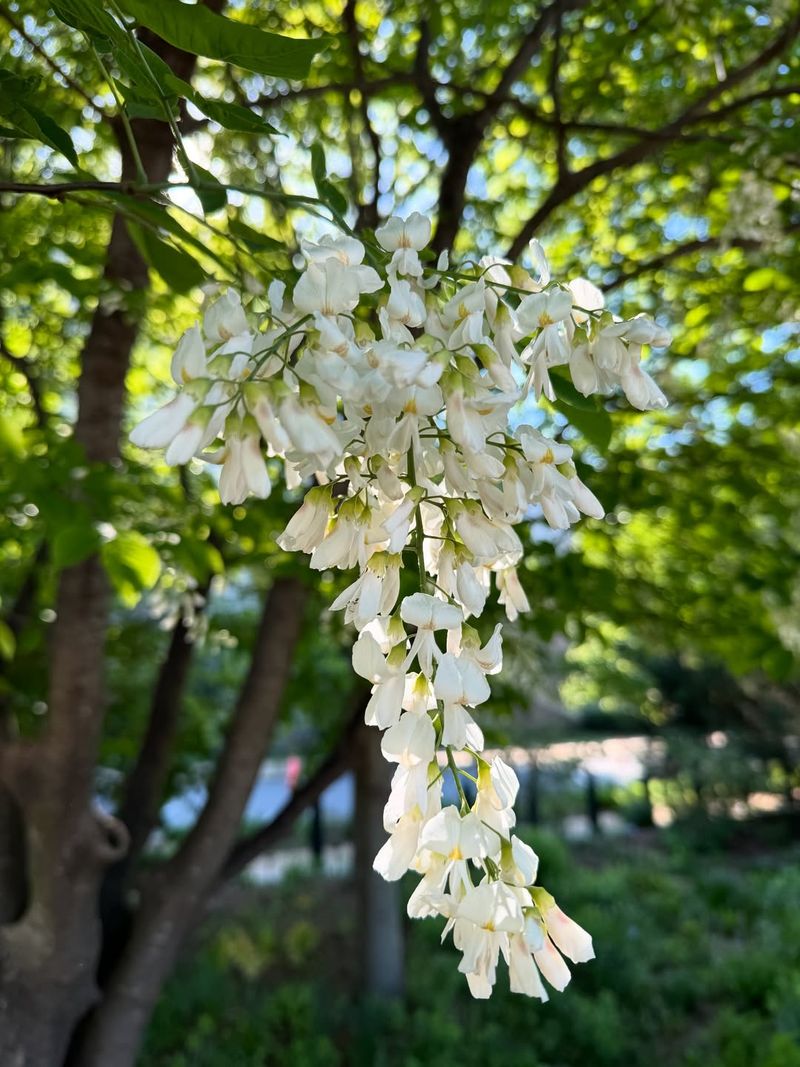
Not many trees can pull off the look of hanging white flower clusters the way a Yellowwood does in full spring bloom.
Long, drooping chains of white blossoms spill from the branches like a softer version of wisteria, and the mild sweet fragrance they carry drifts gently through the yard without being overpowering.
It is the kind of scent that makes outdoor mornings in Georgia feel genuinely peaceful.
Yellowwood tends to bloom heavily every other year rather than every single spring, so when a big bloom year arrives, it is worth paying attention to.
The flowers appear in late spring, usually May in most parts of Georgia, and last for a couple of weeks before dropping.
Even in lighter bloom years, the tree holds interest with its smooth gray bark and bright green compound leaves.
Size is manageable compared to many shade trees, typically reaching 30 to 50 feet at maturity with a rounded, spreading canopy.
That makes it a good fit for average-sized Georgia yards where you want shade and fragrance without a tree that overwhelms the space.
It grows at a moderate pace, so patience is required, but the results are absolutely worth it.
Well-drained soil and full sun bring out the best performance. Yellowwood handles Georgia’s clay-heavy soils better than many ornamental trees, which gives it a practical edge in yards where drainage is not ideal.
Structural pruning should be done in summer to avoid sap bleeding common in early spring cuts.
6. Black Locust Produces Strong Sweet Blossoms Similar To Orange Blossom
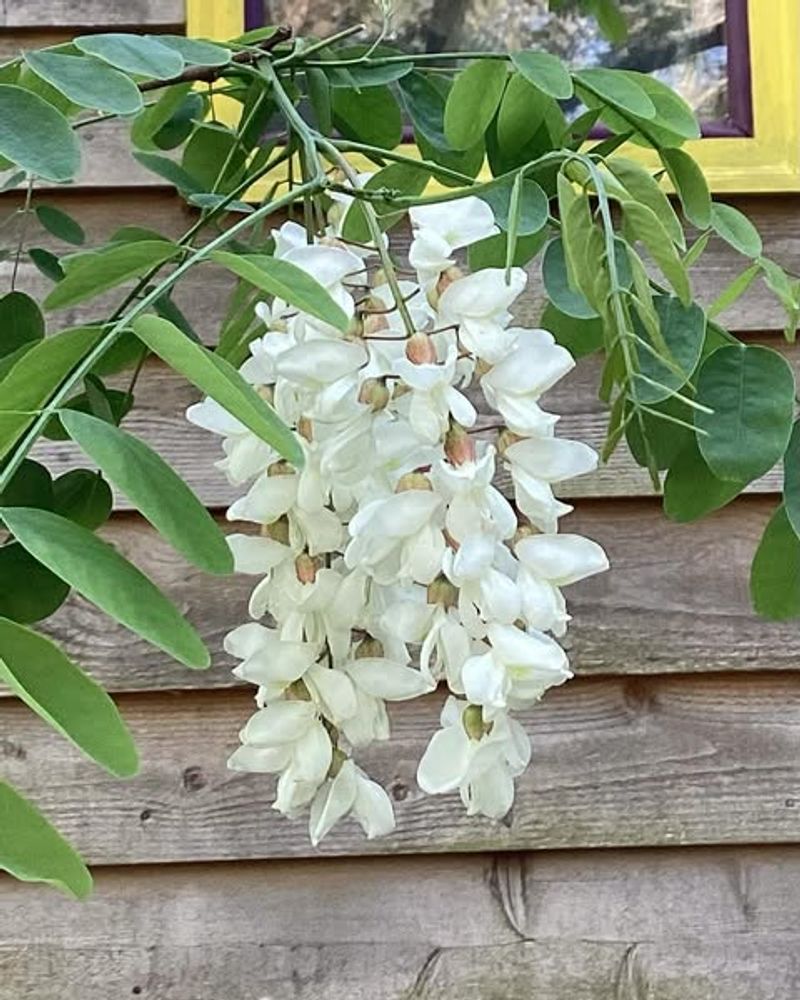
Black Locust blooms hit like a wall of sweetness. When these trees flower in late spring, the fragrance is bold, rich, and remarkably similar to orange blossom, which makes walking past a blooming Black Locust in Georgia feel almost like standing in a citrus grove.
Beekeepers in the South actively seek out areas with Black Locust trees specifically because the honey produced from this nectar is exceptionally prized.
Hanging clusters of white flowers appear in May, covering the tree so heavily that the foliage almost disappears behind the blooms.
Each cluster is packed tightly with small pea-shaped flowers, and the collective fragrance they produce can carry a significant distance on a light breeze.
Open a window facing one of these trees and your whole house fills with the scent.
Black Locust grows fast, which is both a strength and something to plan around. In Georgia, it can shoot up several feet per year under good conditions.
Planting it along a back fence line or property edge gives it room to spread without crowding other plantings. Thorns on younger branches are worth knowing about before you position this tree near a high-traffic area.
Rocky, dry, or nutrient-poor soil is no problem for Black Locust. It actually improves soil over time by fixing nitrogen through its root system.
Georgia yards with difficult growing conditions that leave other trees struggling are exactly where Black Locust tends to thrive most confidently and bloom most heavily each spring.
7. Fringe Tree Produces Lightly Fragrant Spring Blooms
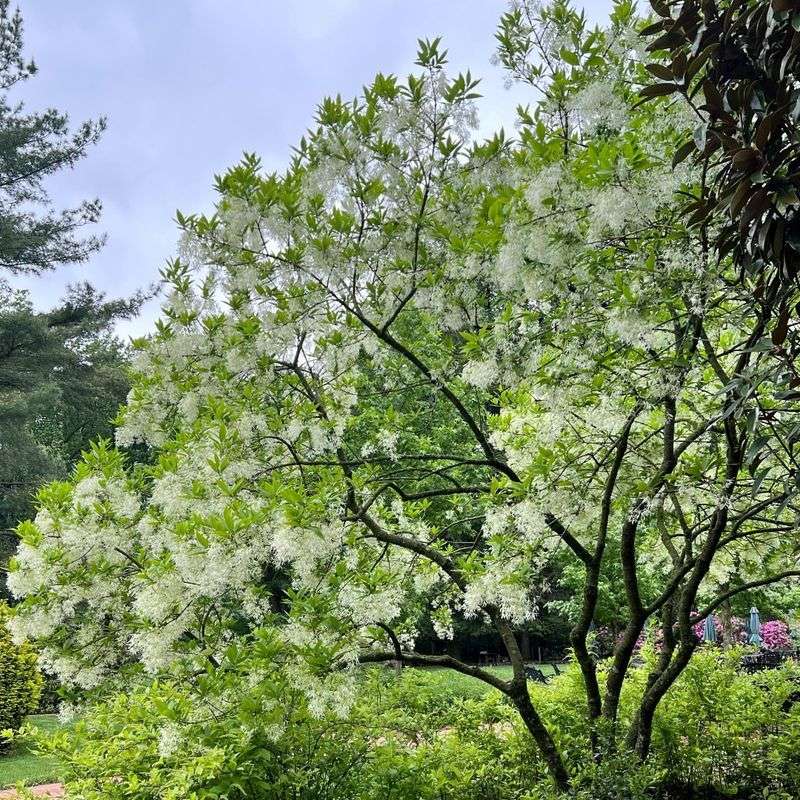
Fringe Tree earns its name the moment it blooms. Clouds of wispy white flower clusters cover the entire tree in mid-spring, giving it an almost ethereal, cloud-like appearance that stops people mid-conversation.
Up close, those feathery blooms carry a light, sweet fragrance, subtle enough to be pleasant rather than intense, which makes it a great choice near seating areas where a heavy scent might become too much.
Native to the eastern United States, Fringe Tree grows naturally across Georgia and is fully adapted to the region’s heat, humidity, and variable rainfall.
Male trees tend to produce heavier, showier bloom clusters, while female trees follow flowering with clusters of dark blue-purple berries that birds find irresistible through fall and winter.
Planting both if you have the space gets you the full experience.
Growth is slow, but the payoff is a tree with outstanding four-season interest. Spring brings the flowers, summer offers clean green foliage, fall turns the leaves yellow, and winter reveals attractive smooth gray bark.
A mature Fringe Tree in a Georgia yard reaches around 12 to 20 feet, keeping it appropriately sized for most residential landscapes.
Partial shade or full sun both work well, and the tree tolerates Georgia clay soils better than many ornamentals. Minimal pruning is needed beyond removing any crossing branches.
Fringe Tree is genuinely one of the most underused native trees in Georgia, and planting one gives your yard something neighbors will absolutely ask about every spring.
8. Mimosa Tree Produces Soft Lightly Fragrant Summer Flowers
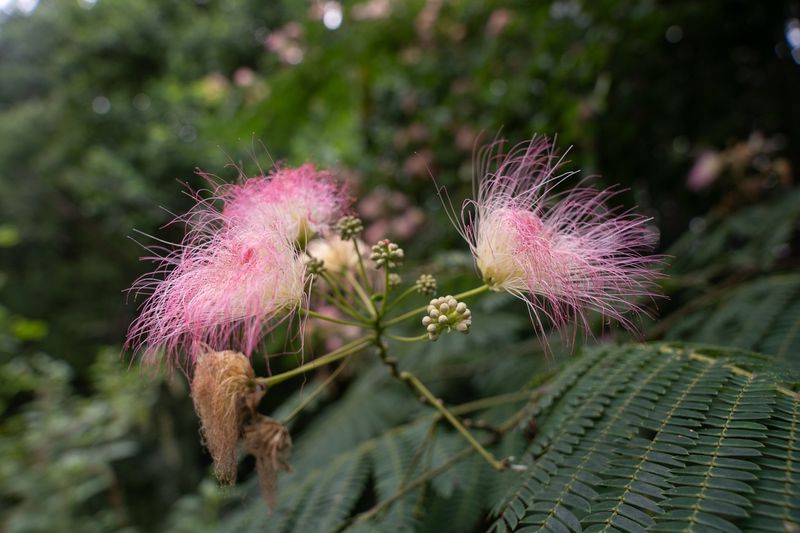
Mimosa trees have a way of making a Georgia summer feel a little more tropical. Those soft, powder-puff pink flowers that cover the branches from June through August carry a light, sweet fragrance that is easy to enjoy without ever becoming overwhelming.
Kids especially love them, and the feathery leaves that fold up when touched add a playful, almost magical quality to the tree.
Bloom time stretches longer than most flowering trees, which is one reason Mimosa has such a loyal following in Georgia despite some debate about its invasive tendencies. Staying on top of seedpods before they scatter is the main management task.
Removing seed clusters as they form keeps the tree from spreading aggressively into areas where you do not want it.
Fast growth is a defining characteristic. A young Mimosa can put on several feet of height in a single Georgia growing season, which means you get shade and flowers relatively quickly compared to slower ornamental trees.
The spreading, umbrella-shaped canopy creates a shady spot beneath that stays surprisingly cool even during peak summer heat.
Full sun is where Mimosa performs best, and it handles dry spells without much trouble once it is settled in. Sandy or average soil suits it fine.
Placing one near a patio where you spend summer evenings lets you enjoy the fragrance and the visual display simultaneously. Few trees deliver that combination as effortlessly as Mimosa does in a Georgia backyard setting.