9 Fruit Trees Florida Gardeners Grow In Pots For Healthy Small-Space Harvests
You don’t need a big yard to grow fresh fruit in Florida. With the right container-grown trees, you can have lemons, limes, figs, guavas, and even bananas right on your patio, balcony, or deck.
These trees fit into small spaces while producing fragrant blossoms, glossy leaves, and harvestable fruit you can enjoy at home.
Florida’s warm climate helps many varieties thrive, and with consistent watering, proper fertilization, and occasional pruning, you can get healthy, productive trees even in limited spaces.
Some trees need extra care during cold snaps, while others grow almost effortlessly, making it easy for you to start small and expand as you go. Pots give you control over soil, drainage, and root health, and moving plants for protection is simple.
You can turn any sunny corner into a miniature orchard and enjoy fresh, flavorful fruits straight from your own containers all year long.
1. Dwarf Citrus (Lemon, Lime, Orange)
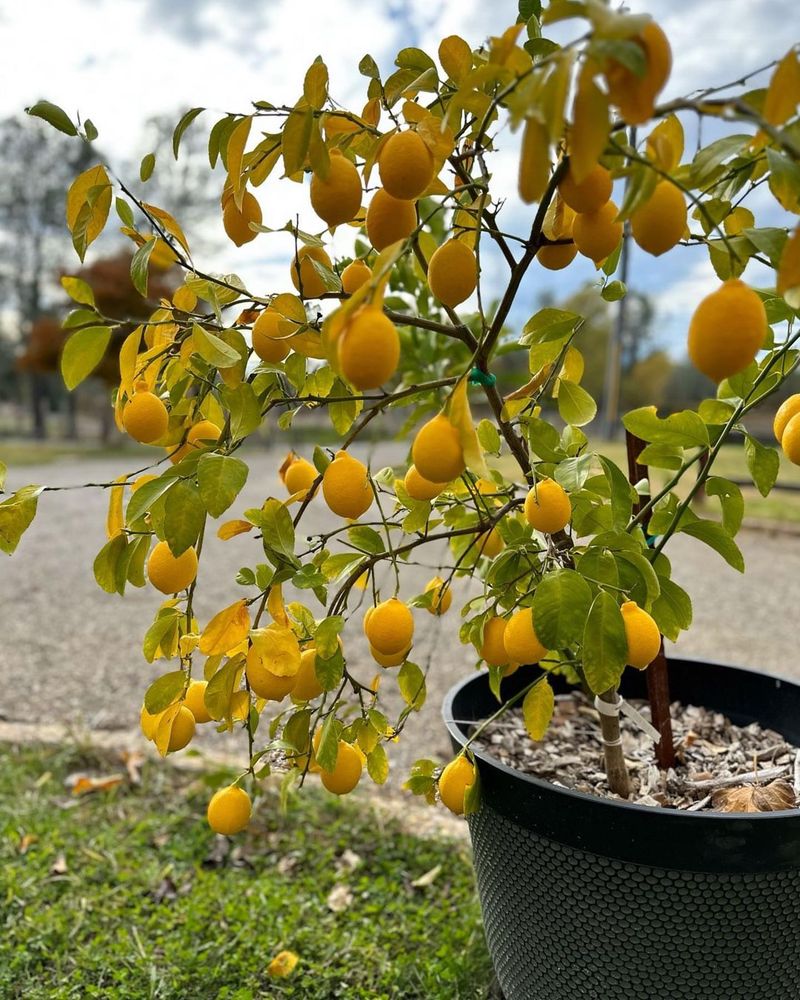
Bright green leaves catching morning sun on a sunny patio signal one of Florida’s most reliable container crops. Dwarf citrus varieties adapt beautifully to pot culture, producing fragrant blooms and juicy fruit without demanding massive root systems.
You can grow Meyer lemons, Key limes, or Hamlin oranges in containers as small as 15 gallons, though 20 to 25 gallons gives roots more room and stability during summer storms.
Florida’s warm climate supports extended citrus growing seasons, though growth slows during winter in North and Central Florida and remains more active year-round in South Florida.
North Florida gardeners should protect containers during occasional freezes by moving them under eaves or wrapping trunks with frost cloth.
Central Florida offers nearly ideal conditions with moderate winters and plenty of sunshine, while South Florida growers enjoy the longest harvest windows and can experiment with more tropical varieties like calamondin and kumquat.
Expect fruit to ripen from late fall through early spring, depending on variety and location. Container citrus needs consistent watering since pots dry out faster than ground soil, especially during hot months.
Fertilize every six to eight weeks with a citrus-specific formula to support flowering and fruit set. Your potted lemon tree might produce 20 to 50 fruits per season once mature, giving you fresh juice and zest whenever recipes call for brightness and tang.
Actual yields vary widely based on container size, tree age, pruning, fertilization, and local growing conditions.
2. Fig
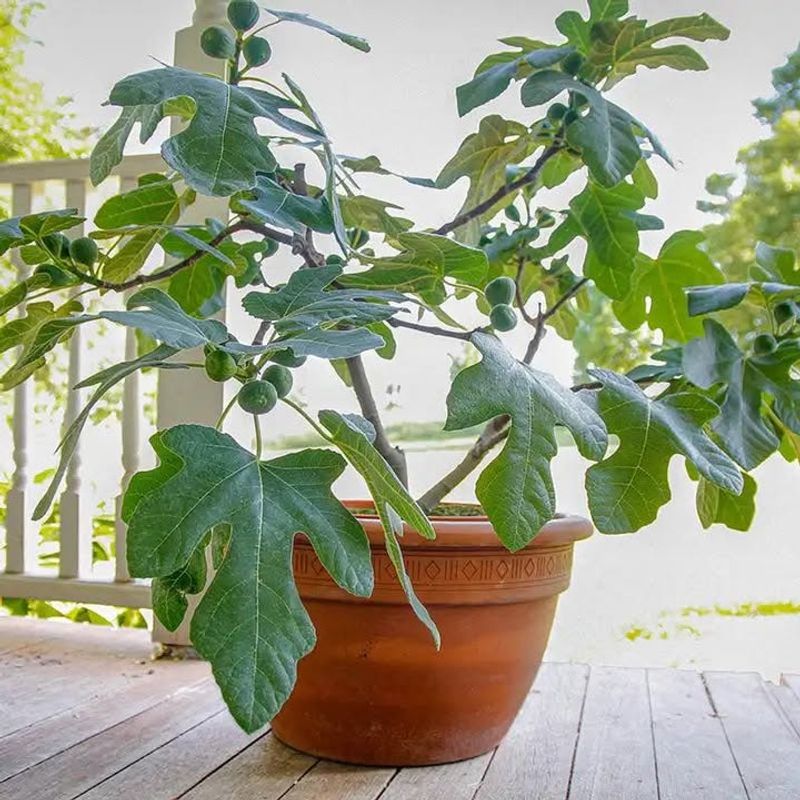
Wide, lobed leaves rustling above a ceramic pot create instant Mediterranean charm on Florida porches. Figs rank among the easiest fruit trees for container culture because they tolerate root restriction naturally and actually fruit better when slightly crowded.
Varieties like Brown Turkey, Celeste, and Chicago Hardy produce two crops annually in many Florida locations, with a light early summer harvest followed by a heavier main crop in late summer and fall.
A 15 to 20 gallon container suits most fig varieties, though larger pots reduce watering frequency and provide better heat buffering.
North Florida gardeners appreciate figs because they handle brief cold snaps and still fruit reliably, while Central and South Florida growers enjoy extended harvest periods stretching into November.
Figs need full sun and consistent moisture during fruit development, but they forgive occasional dry spells better than citrus.
Your potted fig might yield 30 to 60 fruits per season depending on variety and care. Harvest when fruits soften slightly and develop rich color, usually purple-brown or green-yellow based on cultivar.
Container figs benefit from annual root pruning every two to three years, which involves sliding the root ball out, trimming outer roots, and repotting with fresh soil to maintain vigor and prevent the tree from becoming root-bound and stunted.
3. Banana (Dwarf Varieties)
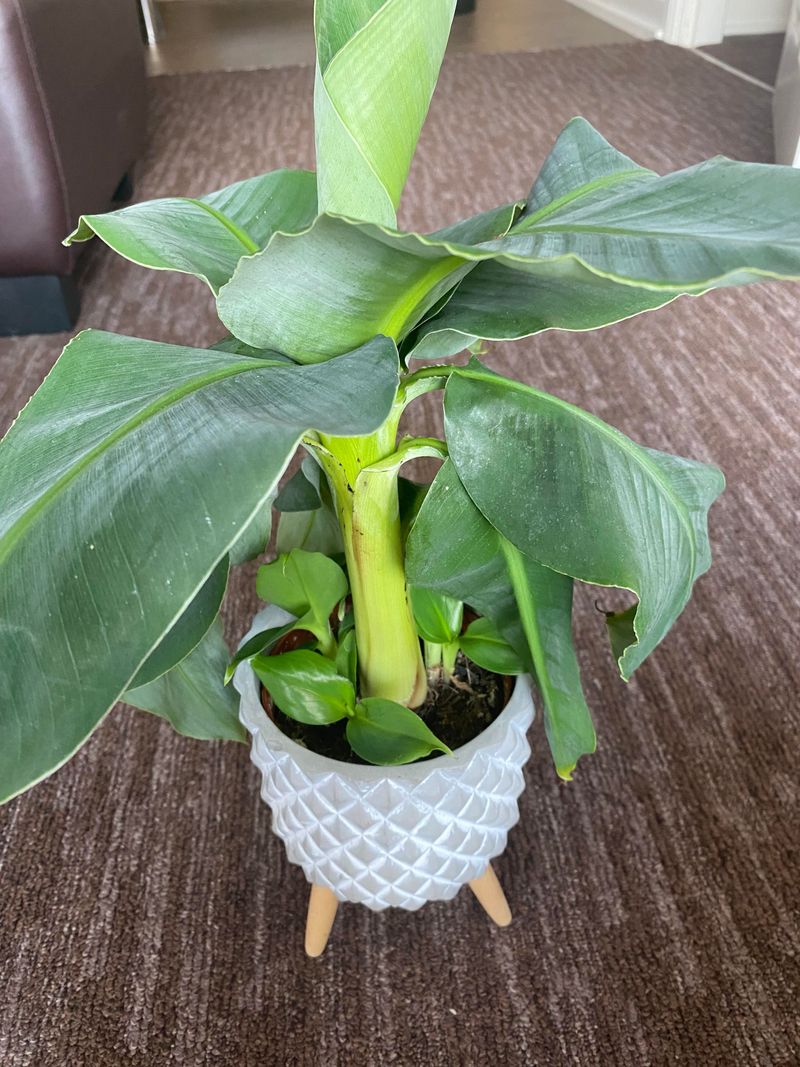
Tropical flair arrives instantly when broad, paddle-shaped leaves unfurl from a container near your pool deck. Dwarf banana varieties like Dwarf Cavendish and Dwarf Red bring authentic island vibes to Florida patios while producing edible fruit in surprisingly compact spaces.
These plants grow from underground rhizomes rather than true woody trunks, making them perfect for large pots that can accommodate spreading root systems.
Plan on a container at least 20 to 30 gallons to support healthy growth and fruiting. South Florida gardeners see the fastest growth and most reliable fruit production since bananas love heat and humidity without worrying about cold damage.
Central Florida growers succeed with dwarf varieties but should protect containers during rare freezes, while North Florida gardeners often treat bananas as seasonal tropicals grown mainly for foliage unless protected from cold, or grow them in movable pots that can be sheltered indoors during freezes.
Bananas fruit once per pseudostem, usually producing a single large bunch containing 50 to 150 small bananas after about 12 to 18 months of growth. After harvest, cut the spent stem to ground level and allow new shoots to grow from the rhizome for next year’s crop.
Container bananas need frequent watering and heavy feeding with balanced fertilizer every four to six weeks during active growth to support their rapid leaf production and fruit development.
4. Guava
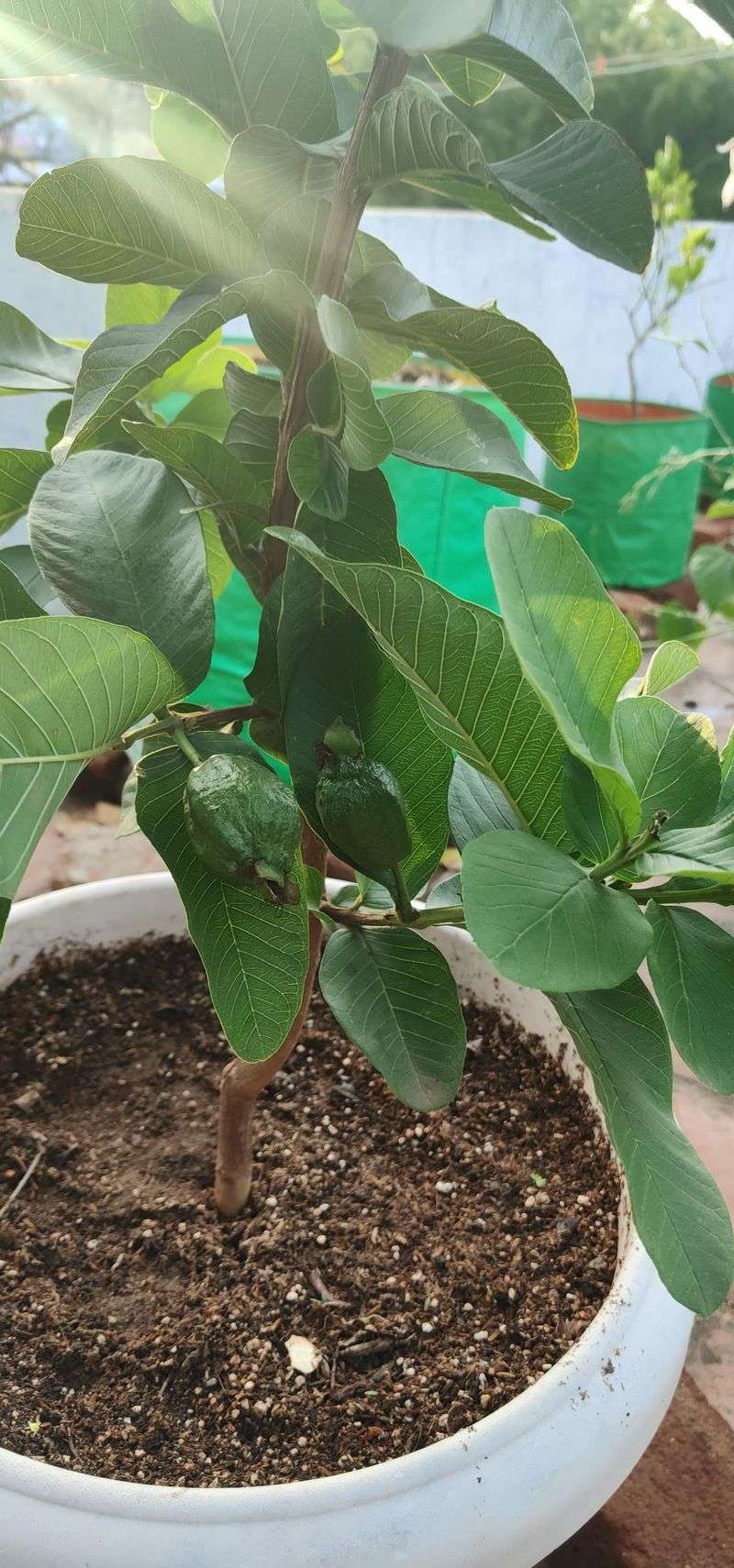
Sweet fragrance drifting from pale pink blossoms announces guava season on Florida patios long before fruit appears. Tropical and pineapple guava varieties both adapt well to container culture, though they offer different flavors and growing requirements.
Tropical guava produces aromatic, pink-fleshed fruits with intense sweetness, while pineapple guava offers gray-green foliage and tangy, aromatic fruits with a unique flavor profile combining pineapple, mint, and strawberry notes.
A 20 gallon container works well for most guava varieties, providing enough root space for steady growth and fruiting. South Florida gardeners may experience multiple guava harvest cycles per year with proper variety selection, while Central Florida growers harvest primarily from summer through fall.
North Florida gardeners should choose cold-hardy pineapple guava varieties and protect containers during hard freezes, or select tropical guava and plan to shelter plants when temperatures threaten to drop below freezing.
Expect 20 to 40 fruits per season from a well-maintained container guava, with harvest timing varying by variety and location. Tropical guava ripens when fruits soften slightly and emit strong fragrance, while pineapple guava drops naturally when ready to eat.
Both types need full sun and regular watering, though pineapple guava tolerates slightly drier conditions. Prune lightly after harvest to maintain compact shape and encourage branching, which increases next season’s flower and fruit production on your patio tree.
5. Loquat
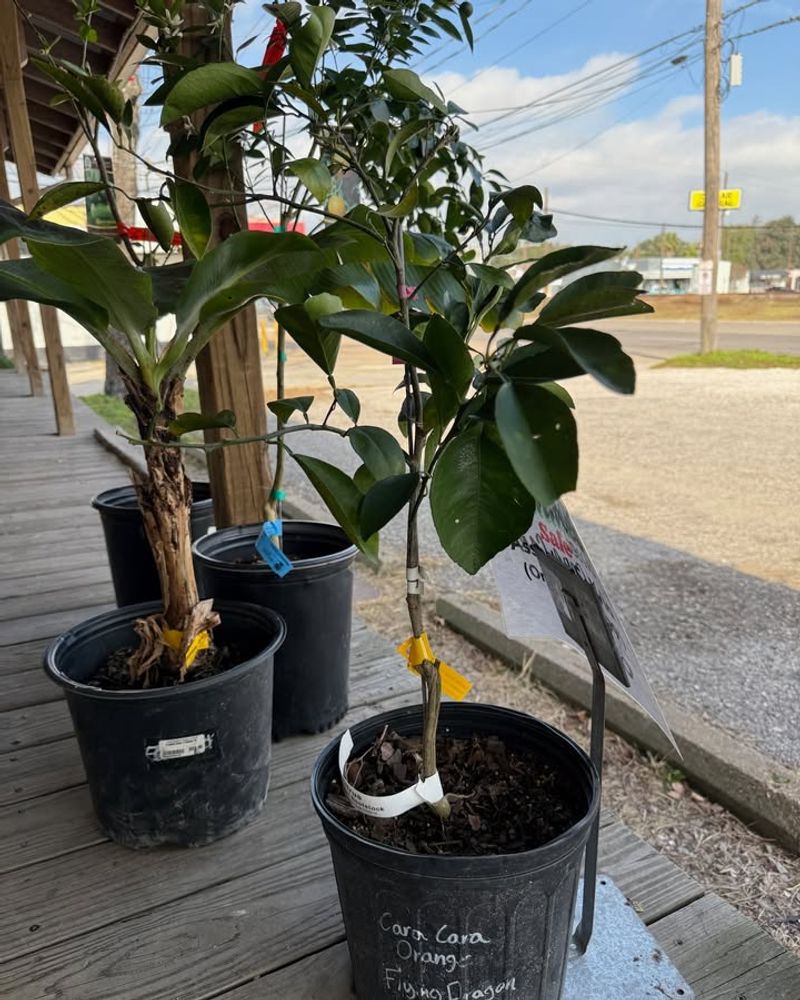
Glossy, dark green leaves with bronze undersides create striking architectural interest in large containers near entryways. Loquats fruit during an unusual window for Florida, producing clusters of golden-orange fruits in late winter and early spring when few other trees offer fresh harvests.
This evergreen tree tolerates container culture well and provides year-round visual appeal with its bold foliage and upright growth habit.
Choose a container at least 20 to 25 gallons to support loquat’s substantial root system and top growth. North and Central Florida gardeners see the best fruit production because loquat needs some winter chill to set fruit properly, and cooler nights trigger better flowering.
South Florida growers can still enjoy loquat’s ornamental qualities and occasional fruit crops, though yields tend to be lighter without adequate chill hours accumulated during winter months.
Your container loquat might produce 30 to 80 fruits per season depending on tree size and growing conditions. Harvest when fruits develop full color and soften slightly, usually between February and April in most Florida regions.
Loquats need consistent moisture during fruit development but tolerate brief dry periods once established.
Fertilize three times yearly with a balanced slow-release formula, applying in early spring, midsummer, and early fall to support growth, flowering, and fruit set without pushing excessive vegetative growth that weakens container trees.
6. Peach (Low-Chill Varieties)
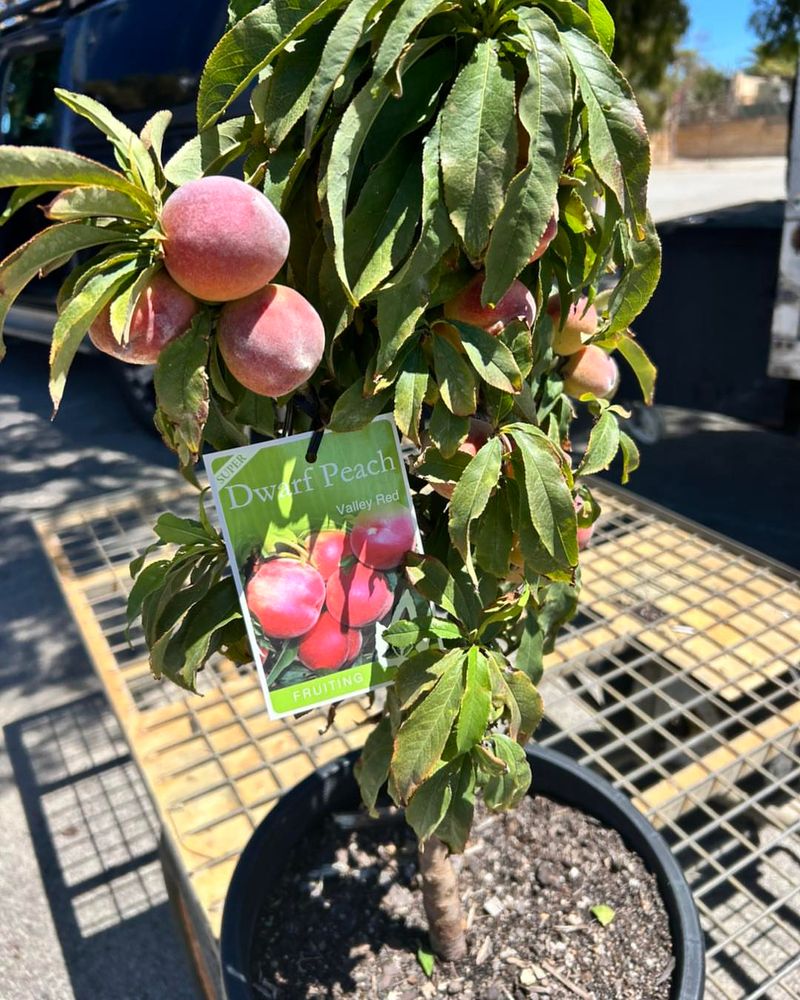
Delicate pink blossoms covering bare branches in late winter create magical moments on North and Central Florida patios. Low-chill peach varieties like Tropic Beauty, Tropic Sweet, and Flordaprince were specifically developed for Florida’s mild winters, requiring only 150 to 300 chill hours to fruit successfully.
These varieties adapt surprisingly well to container culture when grafted onto dwarfing rootstock, producing full-sized fruits on compact trees perfect for pots.
A 20 to 25 gallon container provides adequate root space for container peaches, though larger pots improve heat tolerance during summer. North Florida offers ideal conditions with enough winter chill and moderate summer heat, while Central Florida gardeners succeed with the lowest-chill varieties.
South Florida typically lacks sufficient chill hours for reliable peach production, making peaches better suited for northern two-thirds of the state when grown in containers.
Expect 15 to 40 peaches per season from a well-maintained container tree, with harvest occurring in May and June for most varieties. Container peaches need full sun, consistent watering during fruit development, and annual pruning to maintain open structure and manageable size.
Thin fruits to one peach every four to six inches along branches when they reach marble size to ensure good fruit size and prevent branch breakage.
Fertilize monthly during active growth with balanced fertilizer, reducing frequency after harvest to avoid stimulating late-season growth that reduces cold hardiness.
7. Avocado (Dwarf Or Semi-Dwarf Rootstock)
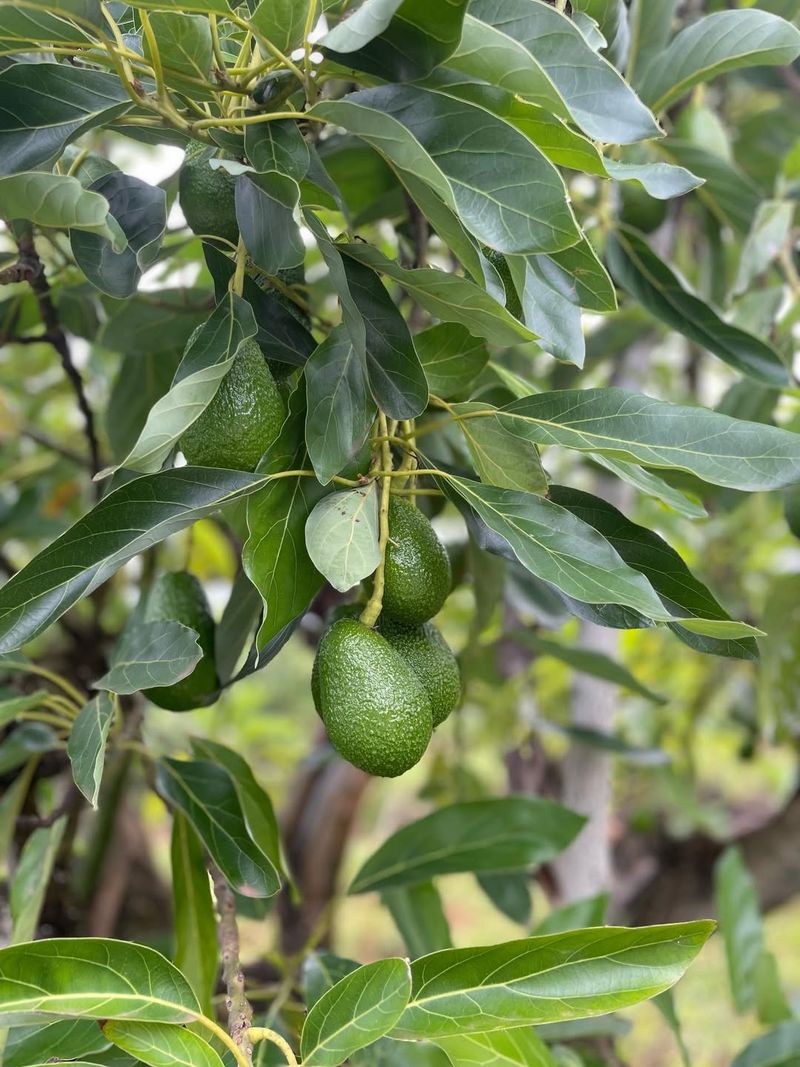
Rich, buttery harvests seem impossible from a patio container until you see avocados hanging from compact trees in large pots. Dwarf avocado varieties grafted onto special rootstock like Wurtz or Holiday grow slowly enough for long-term container culture while still producing genuine avocados.
These trees need patience since they typically take three to four years to begin fruiting, but the reward of homegrown avocados makes the wait worthwhile for dedicated Florida gardeners.
Plan on a substantial container of at least 25 to 30 gallons to accommodate avocado’s root system and provide stability against wind.
South Florida offers ideal conditions for container avocados with warm temperatures year-round and no freeze risk, while Central Florida gardeners succeed with cold-hardy varieties and winter protection.
North Florida presents challenges due to freeze risk, making avocados better suited for southern regions or requiring significant winter protection and willingness to move heavy containers indoors during cold snaps.
Your container avocado might produce 10 to 30 fruits per season once mature, depending on variety and care. Most Florida avocados ripen in summer and fall, though some varieties fruit in winter and spring.
Avocados need excellent drainage, so use quality potting mix and ensure containers have adequate drainage holes. Water deeply but infrequently, allowing soil to dry slightly between waterings to prevent root rot.
Fertilize every six to eight weeks with avocado-specific fertilizer containing micronutrients essential for healthy growth and fruit production.
8. Olive (Florida-Friendly Cultivars)
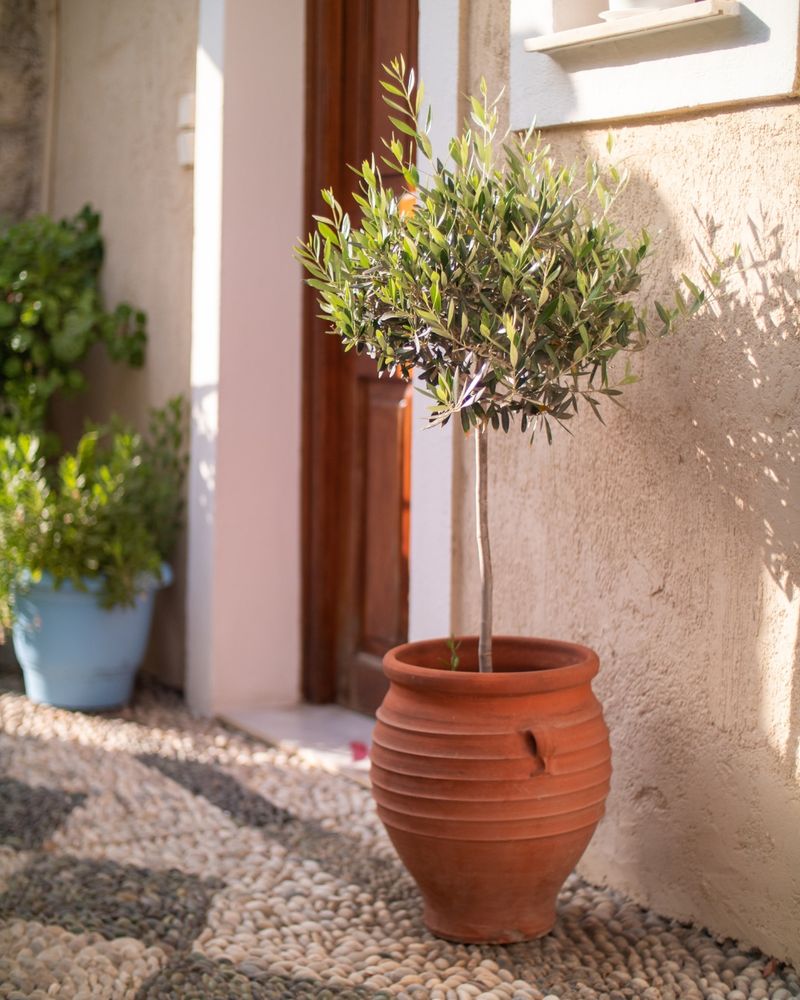
Silvery-gray foliage shimmering in coastal breezes brings Mediterranean elegance to Florida container gardens.
While traditional olive varieties struggle with Florida’s humidity and limited winter chill, newer cultivars like Arbequina can survive in containers in parts of Florida, but consistent fruit production remains unreliable and is still considered experimental outside of North Florida.
These trees offer ornamental value even in years when fruit production is light, with their distinctive foliage and gnarled trunks adding character to patios and pool areas.
A 20 to 25 gallon container suits most olive varieties, providing root space while keeping trees manageable. North Florida offers the best conditions with slightly cooler, drier winters that olives prefer, though protection during hard freezes remains necessary.
Central Florida gardeners succeed with proper variety selection and excellent drainage, while South Florida presents challenges due to high humidity and lack of chill hours, making olives more experimental in southernmost regions.
Container olives may produce a small number of fruits in favorable conditions, though many Florida-grown container olives produce little to no fruit due to humidity and insufficient winter chill compared to Mediterranean climates.
Harvest olives green for brining or allow them to ripen fully to dark purple for oil pressing, typically in fall and early winter.
Olives need full sun, excellent drainage, and relatively infrequent watering once established since they evolved in dry climates. Fertilize sparingly with balanced fertilizer two to three times yearly, avoiding excess nitrogen that promotes leafy growth at the expense of fruit production.
9. Pomegranate
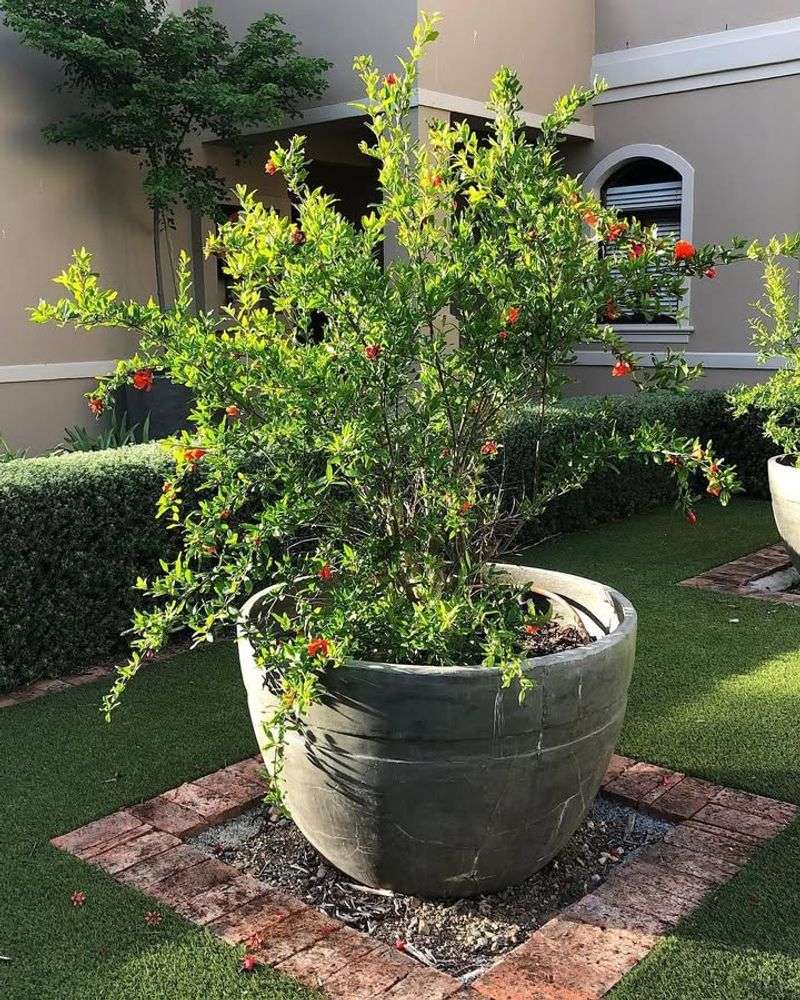
Brilliant orange-red blooms followed by glossy, jewel-toned fruits make pomegranates irresistible for Florida container gardeners.
Dwarf varieties like Nana and compact selections of Wonderful adapt beautifully to pot culture, producing both ornamental beauty and edible harvests from surprisingly small trees.
Pomegranates tolerate heat exceptionally well and actually need Florida’s long, hot summers to develop the sweetest, most flavorful fruits loaded with ruby-red arils.
A 15 to 20 gallon container works well for most pomegranate varieties, with dwarf types succeeding in slightly smaller pots.
North and Central Florida provide ideal conditions with hot summers for fruit development, while South Florida gardeners also enjoy reliable production since pomegranates have very low chill requirements and tolerate Florida’s mild winters well.
All Florida regions succeed with container pomegranates given proper sun exposure and care.
Expect 10 to 25 fruits per season from a container pomegranate, with harvest occurring in late summer through fall when fruits develop deep color and make a metallic sound when tapped.
Pomegranates need full sun and moderate watering, tolerating dry conditions better than most fruit trees once established.
Allow soil to dry between waterings to prevent root rot and encourage concentrated fruit flavor. Fertilize every six to eight weeks during active growth with balanced fertilizer, and prune lightly in late winter to remove crossing branches and maintain attractive shape on your patio showpiece.