8 Garden Plants That Bloom Better Without June Pruning
Every June, well-meaning gardeners grab their shears and start tidying up.
Without realizing it, they accidentally rob themselves of an entire season’s worth of blooms.
It happens to the best of us.
The worst part is that the plants look perfectly fine afterward.
The damage stays invisible until next spring, when you stand in your garden wondering why nothing is flowering.
The culprit is a concept that sounds technical but is actually pretty straightforward.
Some plants bloom on old wood, meaning they form their flower buds on growth from the previous year.
By the time June arrives, those buds are already set and waiting.
Prune them now and you are not tidying things up.
You are cutting off every blossom they had quietly lined up for you.
Learn which plants to leave alone this month, and your garden will reward you with more color than you thought possible.
Lilac
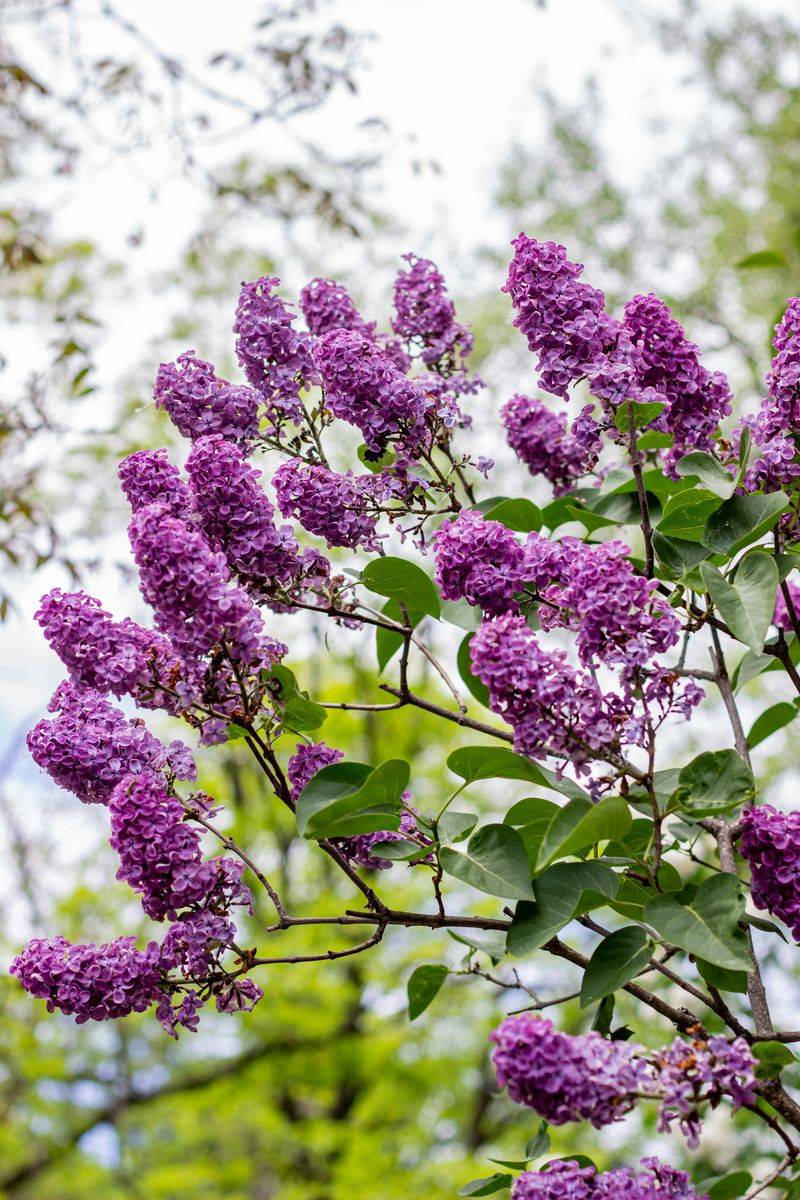
Cutting a lilac in June is like throwing away a wrapped birthday gift before the party starts.
Lilacs bloom on old wood. By the time May blooms fade, the plant is already quietly building next spring’s flower buds on this year’s growth.
If you prune in June, those baby buds are gone, and your shrub will stand silent and flowerless all next season.
The only safe window to prune a lilac is right after it finishes blooming, typically late May.
That gives it the entire summer to build new bud-bearing stems.
Skipping June pruning also protects the plant’s natural shape, which tends to be gracefully arching and full.
Some lilac varieties can live for over a hundred years, and heavy pruning at the wrong time can stress a shrub that has been quietly thriving for decades.
If your lilac is getting leggy or overgrown, tackle it in late spring right after bloom, removing no more than one-third of the oldest canes.
The reward for patience with lilacs is almost embarrassingly generous.
A well-timed, lightly pruned lilac can produce hundreds of fragrant flower clusters the following spring.
Your entire yard fills with that unmistakable sweet scent.
Many gardeners describe fresh lilac blooms as one of the most nostalgic fragrances in nature.
One whiff and you are back in a grandmother’s garden on a slow afternoon.
Leave those shears in the garage come June, and let your lilac do what it was born to do.
Hydrangea
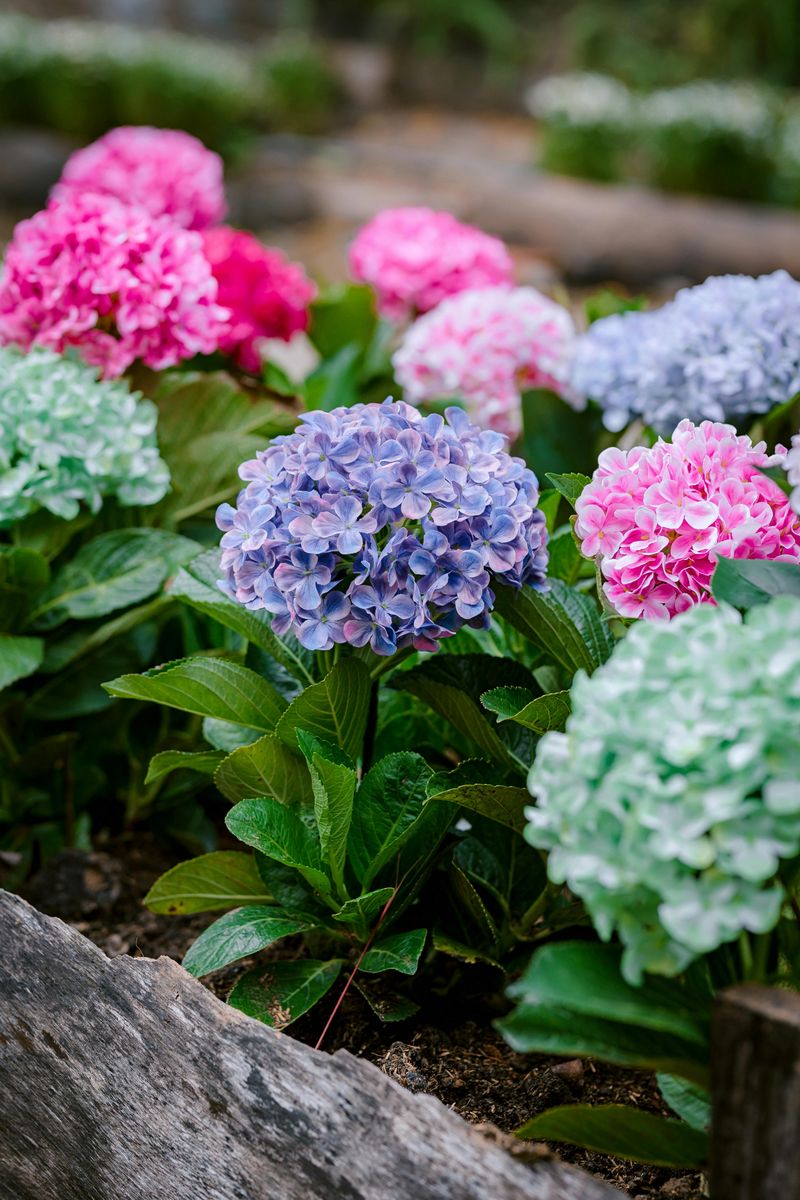
Few plants confuse gardeners more than the hydrangea.
June pruning is the number one reason people end up staring at a green shrub with almost no flowers all summer.
The plant looks healthy. It is just quietly holding a grudge.
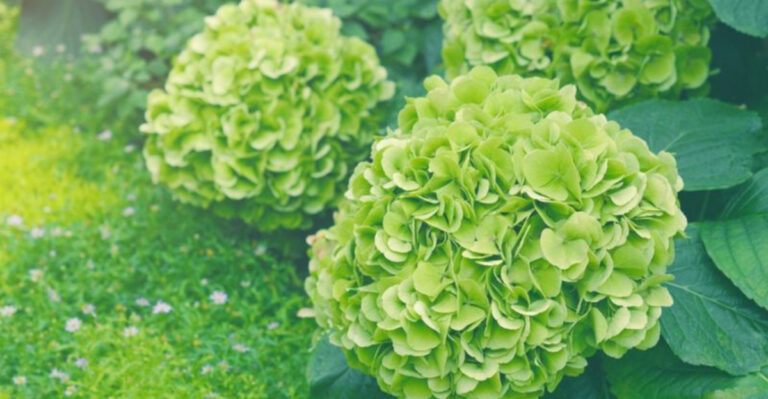
Bigleaf and oakleaf hydrangeas, two of the most popular varieties in home gardens, bloom on old wood.
The flower buds are set in late summer and fall, then spend the entire winter quietly waiting on last year’s canes.
Slicing those canes in June wipes out every single bud in one clean sweep, leaving you with nothing but leafy disappointment.
Panicle and smooth hydrangeas are the exception to this rule since they bloom on new wood and can handle summer pruning.
But if you are not completely sure which type you have growing in your yard, the safest move is to hold off entirely.
A quick look at the bloom time and flower shape can help you identify your variety, and most local nurseries are happy to help you figure it out.
When you do need to tidy up a bigleaf or oakleaf hydrangea, do it immediately after the flowers fade.
Remove only damaged stems and spent blooms, keeping as much healthy old wood intact as possible.
Think of that old wood as a savings account packed with next year’s color.
Withdraw too much in June and the account runs dry.
Leave it alone and you will collect a spectacular floral dividend when summer rolls back around.
Azalea
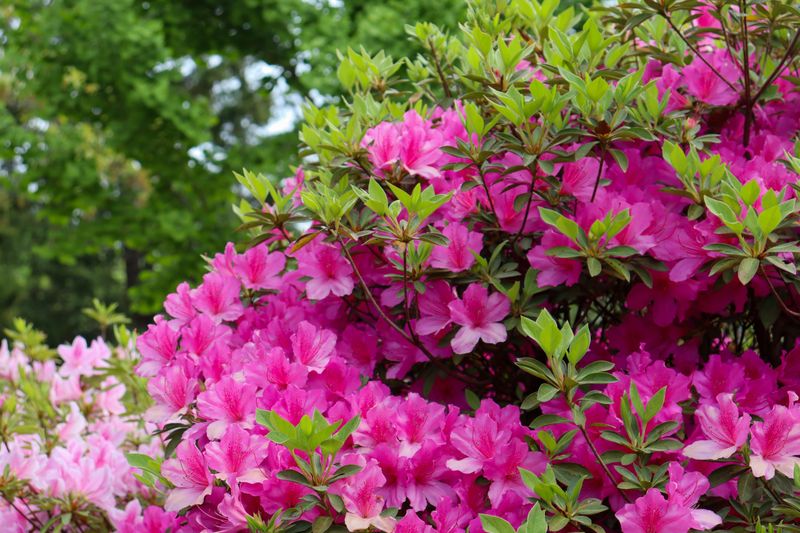
Azaleas are the fireworks of the spring garden, exploding in shades of hot pink, coral, white, and deep red all at once.
Most traditional azalea varieties bloom on old wood. The plant wastes no time, forming next season’s flower buds almost immediately after the current blooms drop off in spring.By the time June arrives, those buds are already in place, tucked just beneath the surface of new growth.
A well-meaning June trim removes exactly what you worked all year to grow.
The correct pruning window for azaleas is tight but manageable.
You have roughly four to six weeks after the last bloom fades.
That window usually falls somewhere between late April and early June, depending on your climate zone.
Anything pruned within that window gives the plant enough time to push new growth and set fresh buds before the season shifts.
Anything cut after that window is borrowed time you cannot get back.
Beyond timing, azaleas actually prefer light shaping over aggressive cutting.
They are naturally mounding shrubs, and heavy pruning can disrupt their form and slow flowering for multiple seasons.
Focus on removing crossing stems and any growth that disrupts the plant’s natural rounded outline.
Azaleas also respond well to removing spent flowers immediately after bloom.
This channels the plant’s energy straight into bud development rather than seed production.
A little restraint in June pays off with a spring display that makes anyone passing by stop and take a second look.
Rhododendron
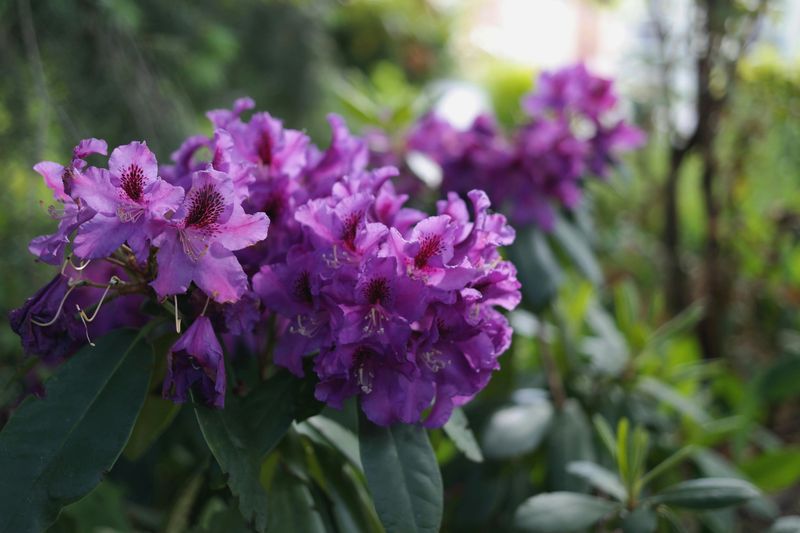
If you have ever seen a rhododendron in full bloom, you already know it is something worth protecting.
These are the gentle giants of the flowering shrub world.
Their flower clusters grow so large and heavy they actually weigh down the branches.
Like their close cousins the azaleas, rhododendrons bloom on old wood.
The buds for next year’s magnificent trusses are set during the summer months.
Pruning in June interrupts that process at the worst possible moment.
You are essentially erasing an entire year of bud development in one afternoon.
The plant will survive.
But your spring bloom display will be dramatically reduced or completely absent the following year.
The ideal time to prune a rhododendron is right after flowering ends.
That typically happens between April and June, depending on the variety and your region.
Removing spent flower trusses is especially important.
It prevents the plant from putting energy into seed production.
Snap or cut the old flower head off just above the new growth buds forming below it.
The shrub will redirect all that stored energy into stronger stems and bigger blooms.
Rhododendrons are slow growers by nature.
Every branch you remove represents years of growth.
Before cutting anything significant, ask yourself two things.
Is it crossing another branch? Is it causing a structural problem?
If the answer to both is no, put the shears down and walk away.
A rhododendron left to grow on its own schedule will draw every passerby to a stop come spring.
That is a show worth waiting for.
Forsythia
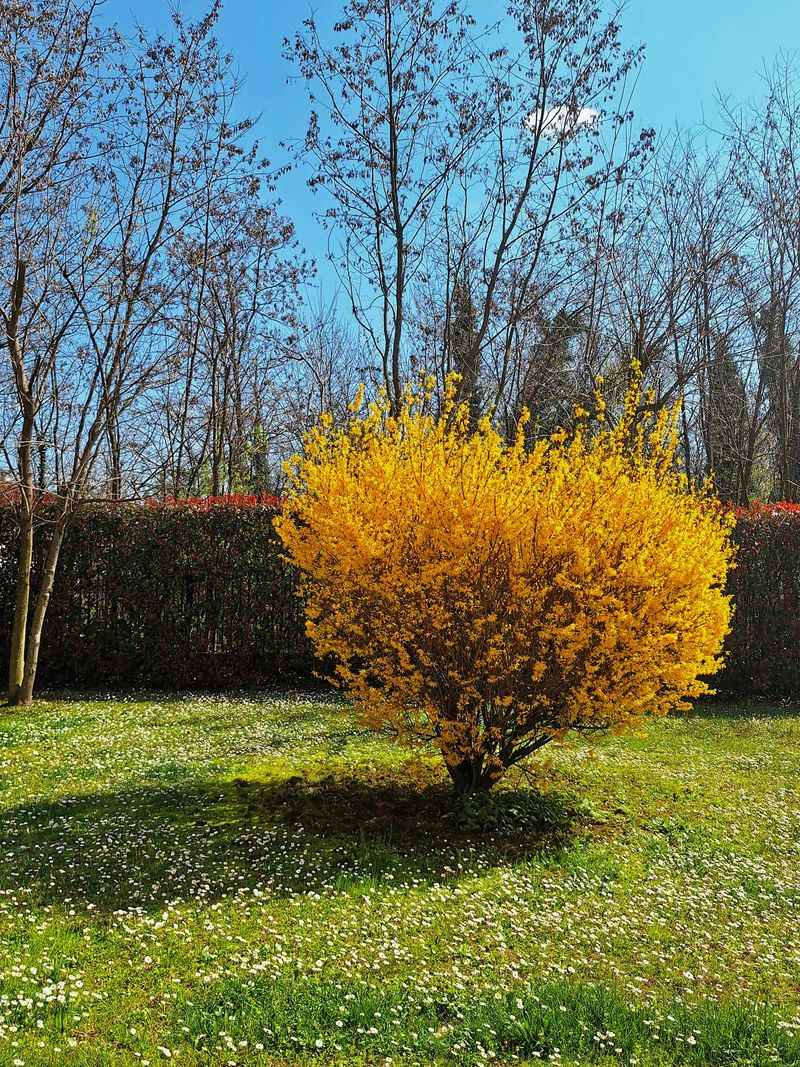
There is no mistaking a forsythia in bloom.
It is the plant that tells the whole neighborhood spring has officially arrived.
It bursts into brilliant yellow weeks before almost anything else dares to bloom.
Those cheerful golden flowers grow on wood that developed during the previous summer and fall.
By the time June rolls around, the shrub has already finished blooming.
It is actively growing the stems that will carry next spring’s flowers.
Prune those stems in June and you are cutting off next year’s show before it even starts.
The best time to shape a forsythia is within a few weeks of bloom.
Catch it while the flowers are fading and before new growth takes off in earnest.
That window usually falls in March or April.
It gives the shrub an entire growing season to develop fresh flowering wood.
If your forsythia has become a tangled, overgrown mass, you can do a more aggressive rejuvenation prune right after bloom.
Cut the oldest, thickest canes down to the ground and let the plant start fresh.
One quirky thing about forsythia is that it blooms most heavily on arching, downward-curving branches rather than stiff upright ones.
When you do prune, resist the urge to shear it into a neat ball shape.
That removes the natural arching form that produces the most flowers.
Instead, thin selectively and allow those graceful arching canes to remain.
Give a forsythia the right timing and a little patience and it will reward you in March with so much yellow it almost seems to glow from across the yard.
That is worth every month of leaving it alone.
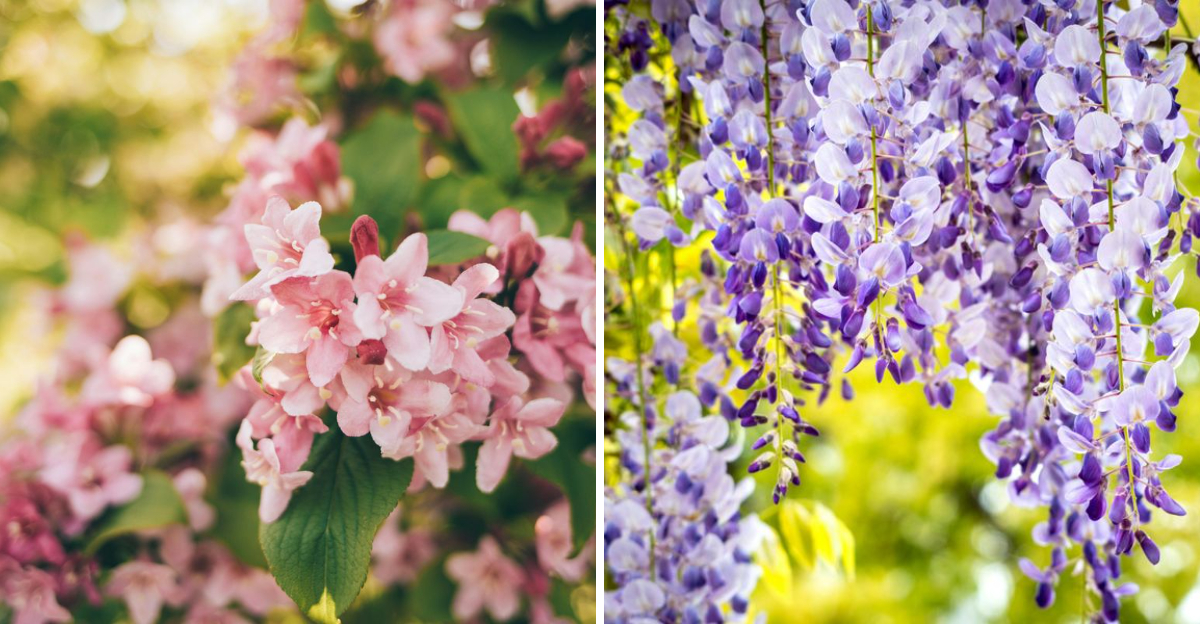
Wisteria
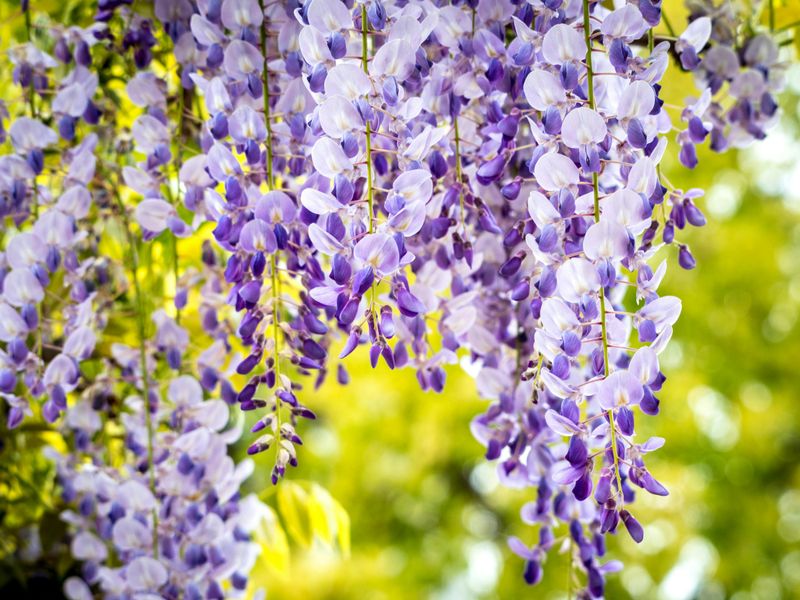
Image Credit: © Teresa Wang / Pexels
Wisteria is the vine that makes grown adults stop mid-sentence and just stare.
Those long cascading flower clusters hang like purple chandeliers from every support the vine can find.
Getting wisteria to bloom reliably is a topic that frustrates many gardeners.
June pruning is one of the main culprits behind a vine that looks spectacular but never flowers.
Wisteria blooms on short spurs that develop on older wood.
Those spurs need time and the right conditions to set flower buds.
Aggressive pruning in June removes the very spurs that would have carried next spring’s blooms.
In some cases, established wisteria benefits from being slightly root-bound.
Wisteria also benefits from two rounds of strategic pruning each year.
Avoid aggressive June pruning; use a species-appropriate pruning schedule.
The first round happens in late winter before new growth begins.
Cut the previous summer’s long shoots back to two or three buds.
The second round happens in August.
Shorten new growth to about five leaves to encourage spur development.
This two-step approach keeps the vine manageable while actively promoting flowering rather than leafy growth.
If your wisteria has been blooming without June pruning, do not change a thing.
Many gardeners discover that the plants they have ignored the most are the ones producing the most flowers.
That is a satisfying twist on conventional garden wisdom.
Soil high in nitrogen and heavy feeding can push the plant toward foliage instead of blooms.
Give it structure, the right pruning schedule, and a little tough love.
A wisteria that gets what it needs will stop traffic every single spring without being asked twice.
Clematis
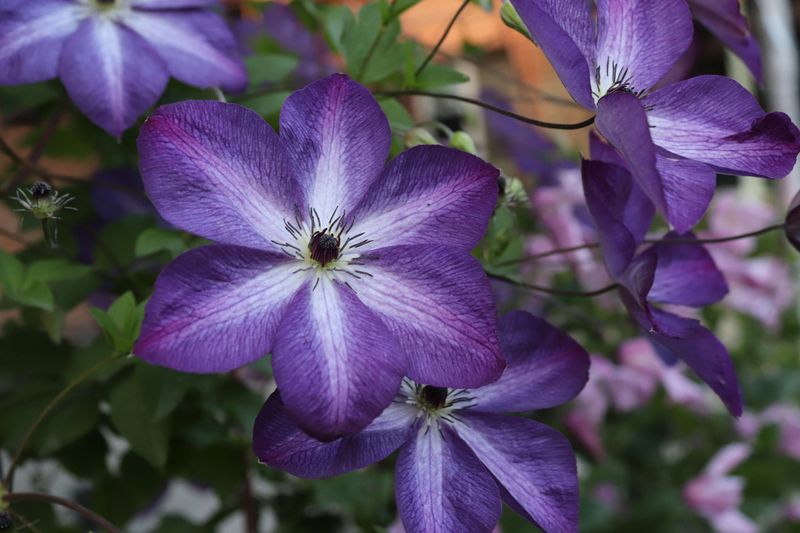
Clematis is one of those plants where knowing your pruning group is the difference between a fence covered in flowers and a fence covered in regret.
The good news is that once you know which group you have, the rest is straightforward.
Group 1 clematis varieties bloom in early spring on old wood from the previous season.
These should never be pruned in June.
The beloved Montana and Alpina types are good examples.
They produce their flowers on mature stems that developed the summer before.
Cutting them back in June removes all of that carefully stored flowering potential.
You will be waiting an entire extra year for the next display.
Group 2 clematis includes many of the large-flowered hybrids like Nelly Moser and The President.
These bloom first on old wood in late spring and then again on new growth in late summer.
Heavy June pruning disrupts the first flush of blooms.
It can also confuse the plant’s natural flowering rhythm.
Light trimming and shaping after the first bloom is all they need before the second wave kicks in.
Group 3 clematis, such as Jackmanii, bloom entirely on new wood.
These can be cut back hard in early spring without any issue.
Many gardeners grow multiple clematis types together on the same trellis.
In that case, the safest rule is to learn your groups before reaching for the shears in June.
A small label or garden tag near each plant saves a season’s worth of blooms.
It eliminates the guesswork entirely.
Knowing your clematis group costs nothing and makes all the difference.
That is about as good a gardening deal as it gets.
Weigela
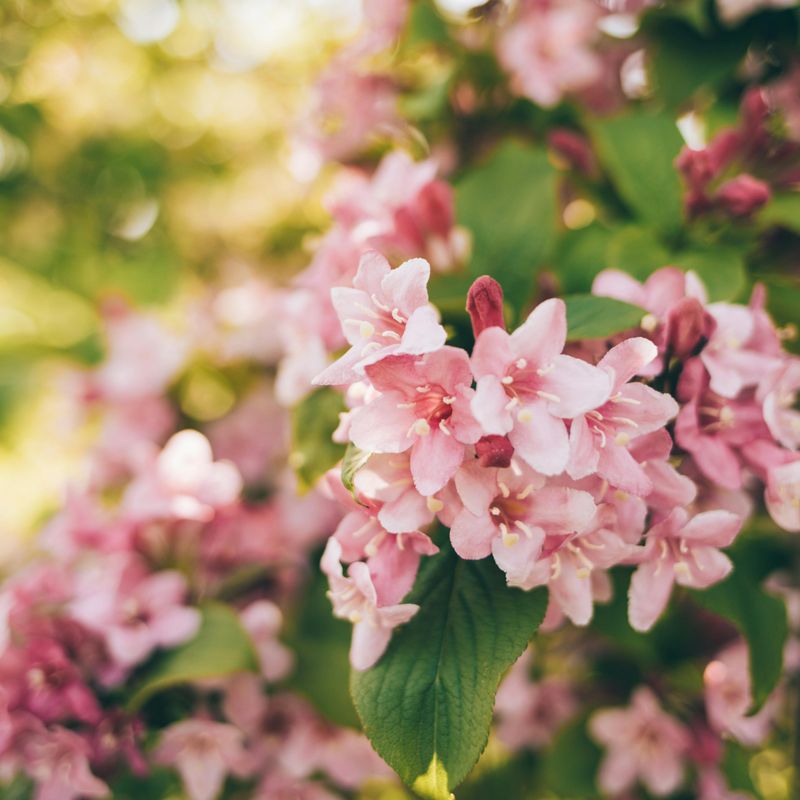
Image Credit: © Ellie Burgin / Pexels
Weigela is one of those shrubs that earns its place in any garden without much fuss.
It bursts into bloom in late spring with clusters of trumpet-shaped flowers in deep pink, red, or white.
Birds love it. Pollinators love it.
And honestly, most gardeners love it too, right up until the moment they prune it in June.
Here is the problem.
Weigela blooms on old wood, meaning the flower buds for this year’s show were already forming on last year’s growth.
By the time June rolls around, those buds have either just opened or are about to.
Reaching for your shears now feels productive.
In reality, you are removing exactly what you were waiting all year to see.
The good news is that Weigela is forgiving if you time it right.
Wait until the flowers have fully faded, usually by late June or early July, and then do your shaping.
You will still have plenty of time for the plant to push out new growth before winter.
That new growth is what carries next year’s blooms.
Give Weigela a little patience in June and it will give you a garden worth stopping to look at every single spring.