Georgia Gardeners Are Using This Fix To Stop Black Spot After Fall Rain
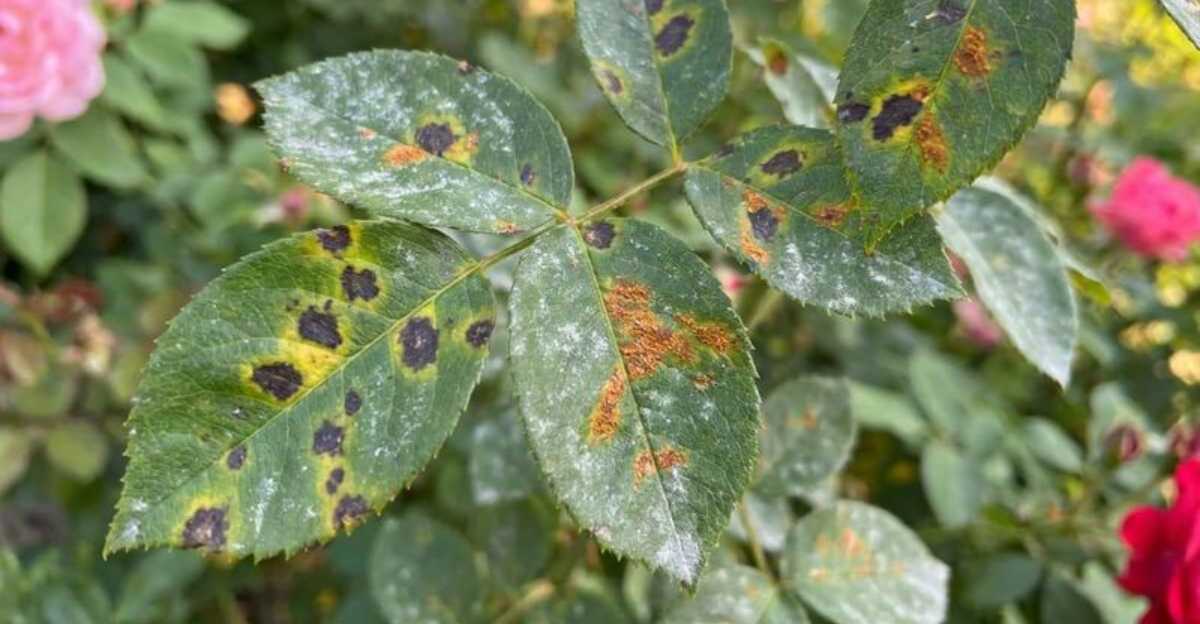
Fall rain can leave rose leaves covered with dark spots just when the garden should be getting easier to manage. Once those marks appear, ignoring them can let the problem continue spreading.
Wet foliage gives black spot the conditions it needs to become much more noticeable.
That is why Georgia gardeners often see trouble after stretches of rainy, humid weather. The smartest response starts with changing the conditions around the plant rather than chasing every spotted leaf.
Good airflow and drier foliage can make a real difference as fall continues.
Pay attention to how crowded your roses have become and how long their leaves stay wet. Small changes can make the area less favorable for black spot.
Handle the problem early, and your roses can head into cooler weather in better shape.
1. Rainy Fall Weather Can Give Black Spot A Fresh Start
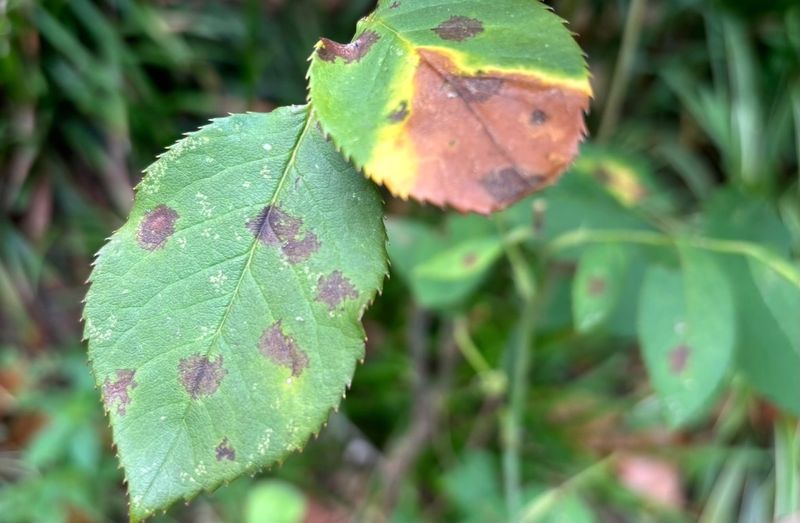
Black spot spores need water sitting on a leaf for several hours before they can take hold. Fall storms in Georgia deliver exactly that, often overnight.
Summer heat usually slows the fungus down.
Once temperatures drop into the seventies and humidity stays high, conditions swing back in its favor.
Warm days followed by heavy dew are the real trouble. Leaves stay damp from evening until mid-morning, which is plenty of time.
Rain also splashes spores upward from the soil onto lower leaves. That is why infection usually shows on the bottom of the plant first and works its way up.
Spores can survive on fallen leaves and on the canes themselves. A wet stretch wakes them right back up.
Gardeners often assume the disease arrived from somewhere new. More often it was already sitting in the bed, waiting for moisture.
Knowing the timing helps you get ahead of it. When a multi-day rain shows up in the forecast, that is your cue to check the roses closely.
Not every rose reacts the same way. Some older garden varieties shrug it off while hybrid teas struggle badly in the same bed.
Weather is the one part you cannot control. Everything else on this list is about limiting how much damage that weather can do.
2. Black Spots And Yellow Leaves Are The First Clues
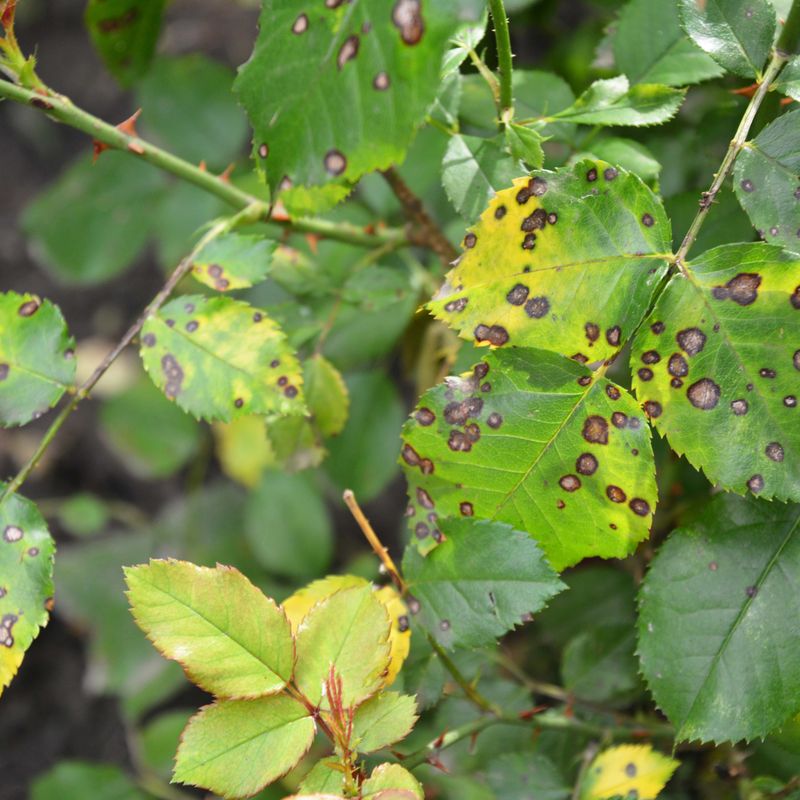
Look for round dark spots with ragged, feathery edges. Smooth-edged spots usually point to something else, like leaf scorch or a different fungus.
Yellowing follows fast. The tissue around each spot turns pale, then the whole leaf goes yellow and drops.
Lower leaves almost always go first because rain splash reaches them easiest. Check the inside of the bush, not just the outer foliage.
Spots can appear on canes too, showing up as small purple or black patches.
Those spots are easy to miss on dark wood.
Bare stems with a few leaves clinging near the top are a late-stage sign. By then, the plant has already lost a lot of leaf surface.
Rose growers around Georgia often spot the first symptoms about a week or two after a long rainy stretch. That lag is normal, since the fungus needs time to develop.
Your Georgia Garden Changes Every Week. Your Plan Should Too.
Gardening in Georgia changes quickly throughout the season. Every Friday you’ll receive a simple weekly plan showing exactly what to plant, prune, fertilize, harvest, and protect so you never miss the right timing.
Catching it early matters more than treating it hard later. Existing spots will not heal, so the goal is protecting the leaves that are still clean.
Take a photo when you first notice damage. Comparing week to week tells you whether the problem is spreading or holding steady.
Defoliation weakens a rose going into winter. A bush that loses most of its leaves in October has less stored energy for spring growth.
3. Remove Infected Leaves Before The Problem Spreads Further
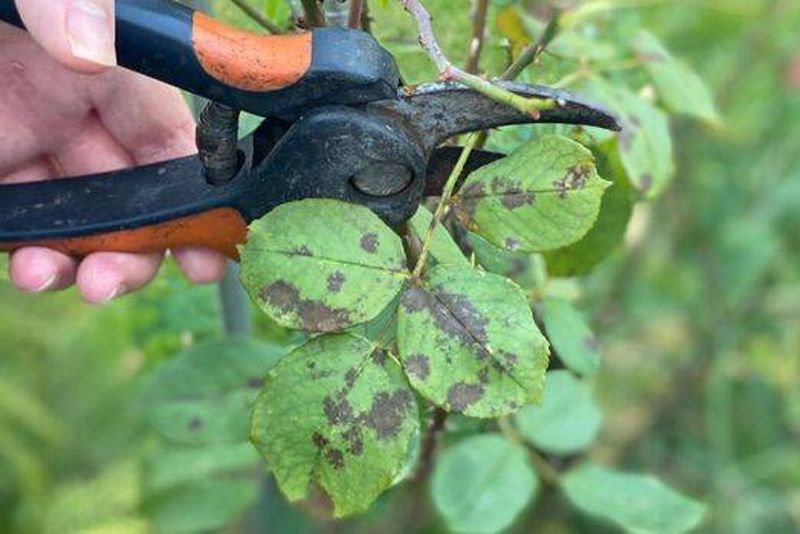
Pulling off spotted leaves is the cheapest thing you can do, and it works. Each infected leaf is producing spores that rain will move to healthy foliage.
Start at the bottom of the plant and work upward. That is where infection concentrates.
Drop the leaves straight into a bag or bucket. Letting them fall to the ground just relocates the problem.
Skip the compost pile with this material. Home compost rarely gets hot enough to reliably break down fungal spores.
Do the picking when foliage is dry if you can.
Handling wet leaves makes it easier to move spores around on your hands and sleeves.
Avoid stripping the bush completely bare. A rose still needs leaves to feed itself, so take the worst ones and leave what is mostly clean.
Wipe your pruners with a disinfecting solution between plants. It takes seconds and cuts down on spreading trouble across the bed.
Repeat the walkthrough every week or so during rainy stretches.
Consistency beats one big cleanup session.
Gardeners across north Georgia often pair leaf removal with light pruning of the weakest canes. Fewer crowded stems means fewer damp hiding spots.
Results vary by variety and weather, but most people see slower spread within a few weeks of steady removal.
4. Clear Fallen Leaves From Around The Base Of Roses
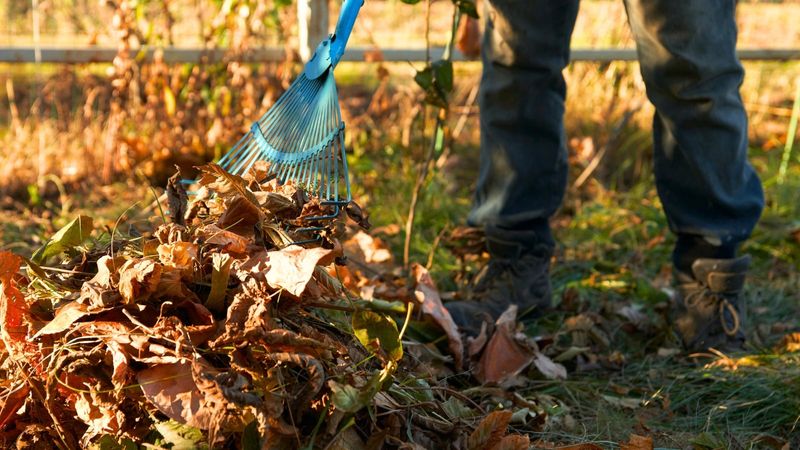
The ground under a rose bush is where black spot overwinters. Leave the debris there and you are stocking next spring’s outbreak.
Rake it clean, all the way to the mulch. Old petals and twigs count too.
Bag the debris and put it out with yard waste.
Burying it under mulch does not solve much, since splashing rain can still reach shallow material.
Once the ground is clear, add a fresh layer of mulch about two inches deep. That barrier reduces how much soil splashes onto lower leaves.
Pine straw works well in Georgia gardens and is easy to find. Shredded bark does the same job.
Keep mulch pulled back an inch or two from the canes. Piling it against the stems traps moisture right where you do not want it.
Fall cleanup pays off in ways you notice months later. Beds that get cleared in November tend to start cleaner in April.
Nearby plants matter too. Wet leaf litter from a neighboring shrub can hold moisture against your rose bed.
Handle cleanup after a dry day or two. Damp leaf mats are heavier and tend to tear apart, leaving pieces behind.
No cleanup routine removes every spore, but reducing the load makes every other step on this list work better.
5. Keep Water Off The Foliage When Roses Need Irrigation
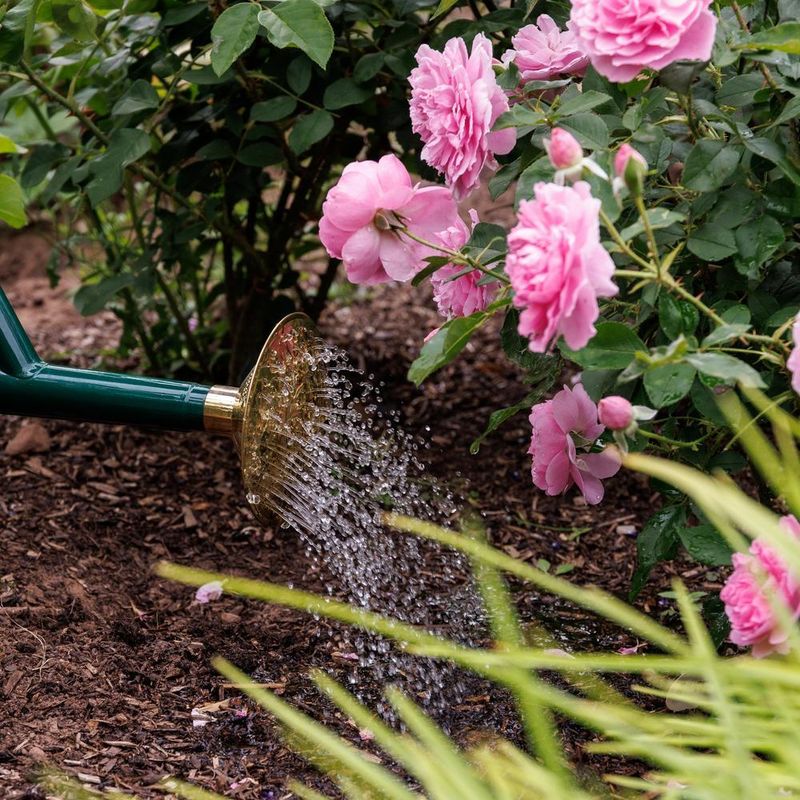
Overhead sprinklers are one of the easiest ways to spread black spot. Every spray session soaks the leaves and resets the clock the fungus needs.
Water the soil instead.
A soaker hose or drip line under the mulch does the job without wetting foliage.
Morning watering beats evening watering by a wide margin. Leaves that do get splashed have all day to dry.
Fall in Georgia can still turn dry between storms, so roses may need supplemental water even in October. Check the soil a few inches down before you turn anything on.
Deep, less frequent watering suits roses better than short daily bursts. Roots go down, and the leaf canopy stays drier.
Adjust any automatic irrigation zones that hit rose beds from above. A quick nozzle change can make a real difference.
Hand watering works fine if you aim low and go slow. Hold the wand near the ground and let water soak in.
Rain will still wet the leaves, and there is nothing to be done about that. The point is not adding extra moisture on top of it.
Container roses dry out faster and need closer attention. Water them at the soil line and empty saucers so they do not sit in standing water.
6. Better Airflow Helps Rose Leaves Dry More Quickly
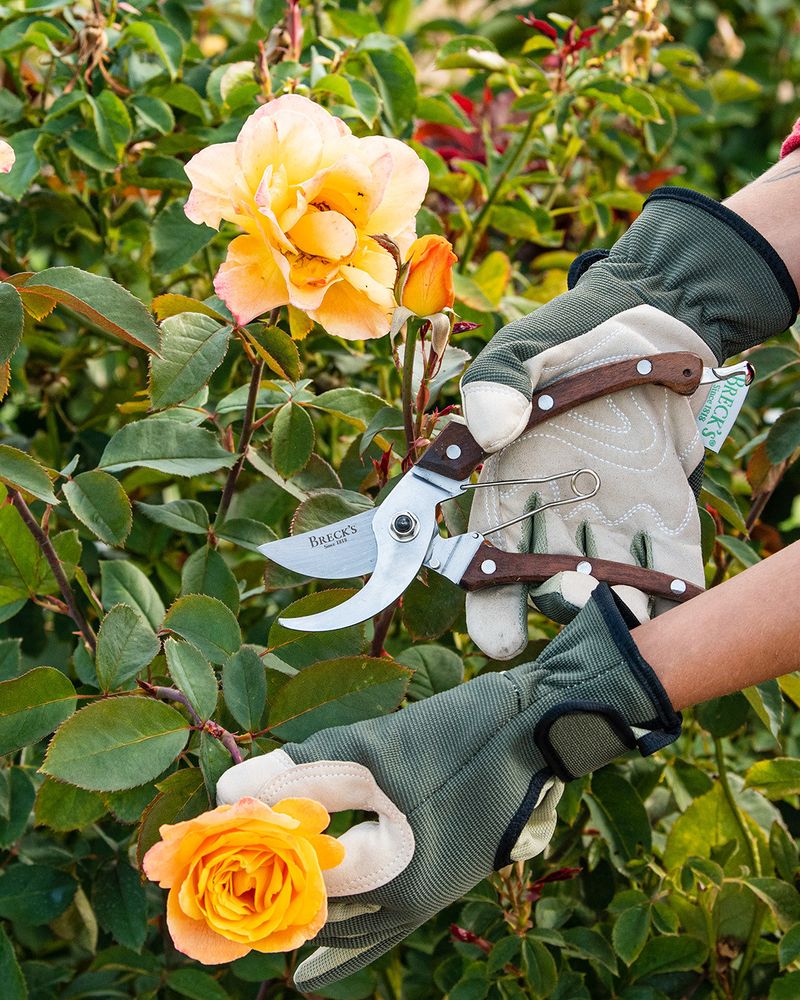
Crowded roses stay wet longer, and wet leaves are what black spot needs. Opening up the plant is a fix that costs nothing.
Thin out crossing canes and any growth crammed through the center. Aim for a shape that lets you see daylight through the middle.
Hold off on hard pruning in late fall. Heavy cuts can push tender growth ahead of the first freeze, so save the big work for late winter.
Spacing matters just as much. Roses planted too close together shade each other and trap humid air between them.
Check what is growing around the bed.
Overgrown boxwoods or tall perennials can block the breeze without you noticing.
Morning sun helps the most. A spot that gets early light dries dew off faster than one shaded until noon.
Gardeners in humid parts of Georgia often move struggling roses to breezier locations rather than fighting the same problem yearly. Transplanting in late fall or winter usually works well here.
Climbers benefit from being tied loosely, not bundled tight against a fence. Air needs a path behind the canes.
Airflow will not stop infection on its own. Combined with cleanup and smart watering, though, it shortens the window when leaves stay damp.
7. Fungicides Can Protect Healthy Growth When Disease Persists
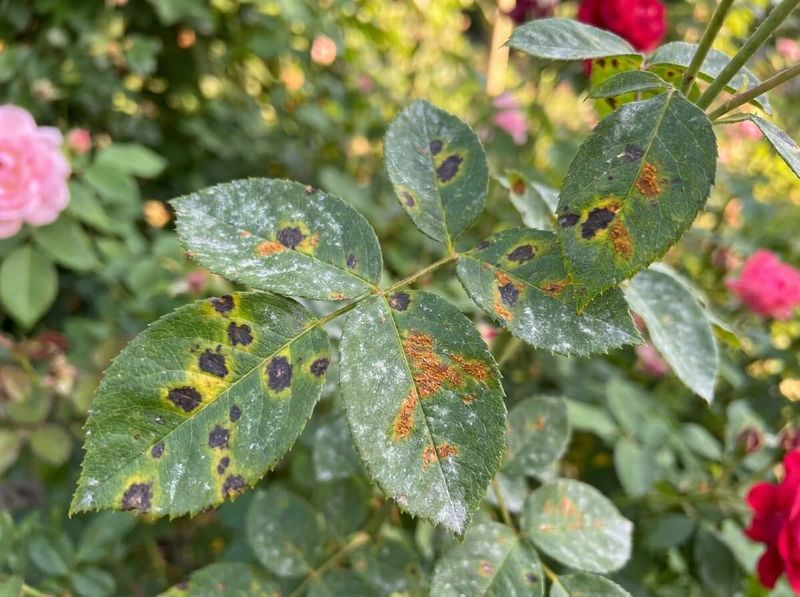
Sprays protect clean leaves. They do not repair spots that already formed, which is why timing decides how well they work.
Start before or right as symptoms appear if your roses have a history of trouble. Waiting until half the bush is spotted limits what any product can do.
Read the label and follow the intervals listed. Most fungicides need reapplication after heavy rain.
Chlorothalonil, myclobutanil, and copper-based products are commonly labeled for black spot on roses. Availability changes, so check what your local garden center carries.
Rotating between different active ingredients helps reduce resistance. Using the same product all season can make it less effective over time.
Spray on a calm morning, covering both the tops and undersides of leaves. Missed spots are where the fungus keeps going.
Skip spraying in high heat or bright midday sun to avoid leaf burn. Cooler, overcast mornings are safer.
The University of Georgia Extension office is a solid resource for current product recommendations in this state.
A quick call can save you money on the wrong purchase.
Some gardeners prefer to skip sprays entirely and plant disease-resistant varieties instead. Knock Out roses and several shrub types handle our humidity with far fewer problems.
Whatever route you pick, cleanup and airflow still do most of the heavy lifting.