Georgia Homeowners Should Think Twice Before Clearing Every Joro Web From Their Yards
One huge web stretched across your yard can send you straight toward the nearest broom. Before tearing it down, consider whether that web is actually causing a problem where it sits.
Joro spiders have become a familiar sight across many parts of Georgia.
Their large webs can cover impressive spaces between trees, shrubs, fences, and other outdoor structures. Some webs become inconvenient, while others sit quietly in corners you rarely use.
That difference matters when you decide which ones truly need to go.
You do not have to leave every web untouched around your home. Still, clearing them simply because they look dramatic may create extra work without giving you much benefit.
Take a moment to judge the location first, because some Joro webs are easier to live with than you might expect.
1. Not Every Giant Web Needs To Come Down
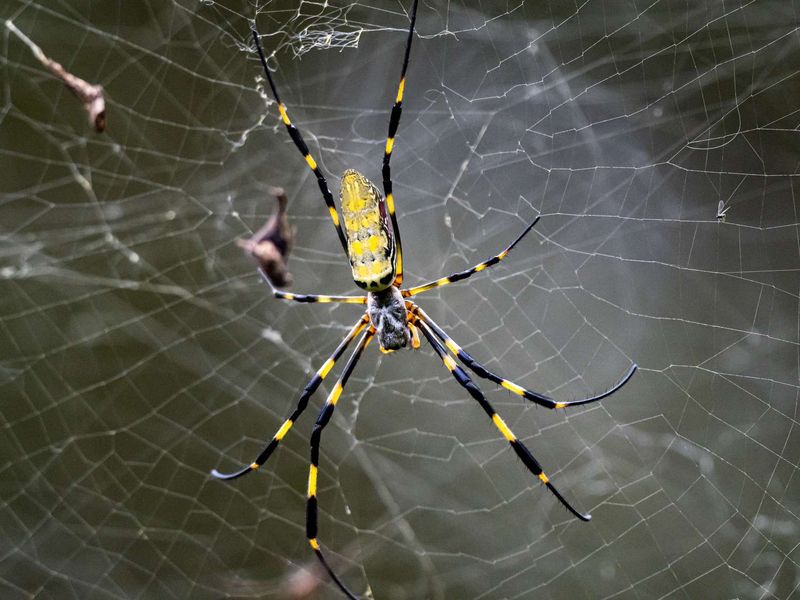
Tucked between two oak trees at the back of the yard, a Joro web might go completely unnoticed for weeks. Webs in low-traffic spots like fence corners, tree lines, and overgrown edges rarely interfere with daily life.
Joro spiders tend to pick locations that suit their hunting, not locations that put them in anyone’s path. A web strung ten feet up between pines is not causing anyone trouble.
Leaving these out-of-the-way webs alone is a reasonable choice for many homeowners.
Removing every web takes time and effort, and webs in remote landscape areas do not pose any real conflict.
Yards with natural buffer zones, wooded edges, or large shrub borders often host Joro webs that sit well outside normal foot traffic. Those spots are genuinely low-concern.
Deciding which webs to address starts with honestly asking whether the web is actually in anyone’s way.
If the answer is no, leaving it alone is a perfectly practical option.
Landscape size matters here. Larger properties with wooded sections or natural areas tend to host more webs in truly remote spots where removal offers little practical benefit to the people living there.
2. These Spiders Catch More Than One Kind Of Insect
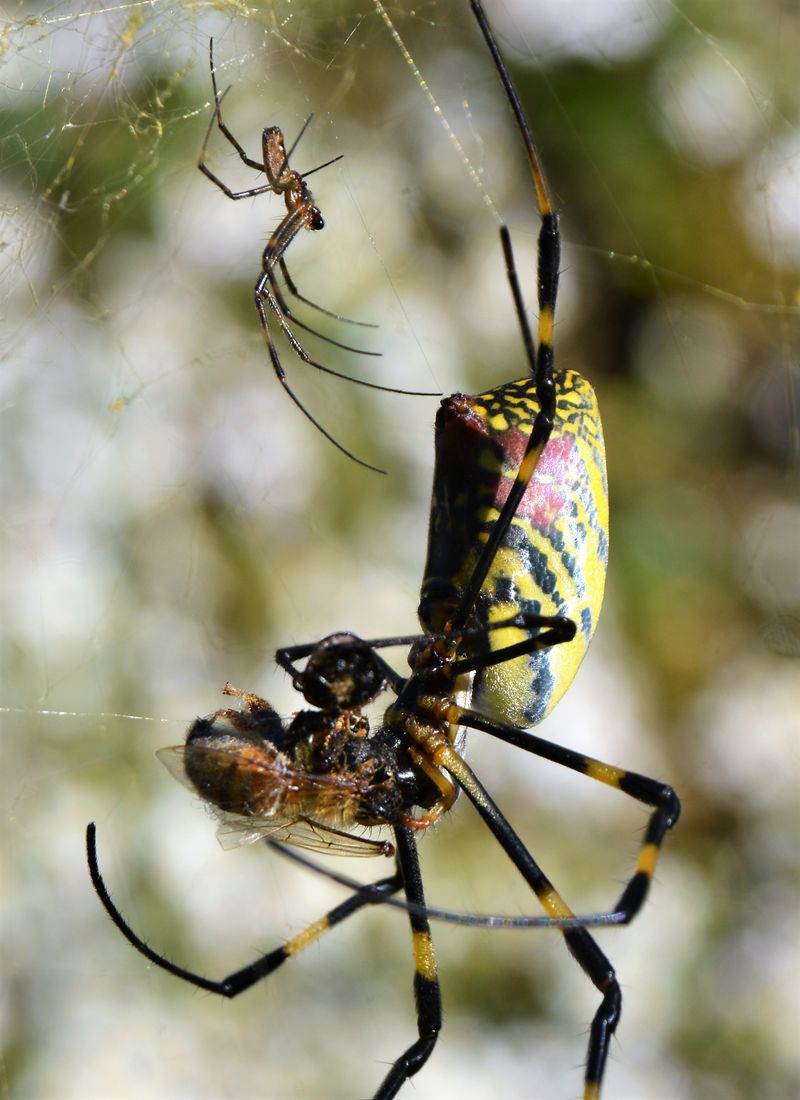
Stink bugs caught in a Joro web are not a rare sight. Joro spiders are opportunistic hunters that take a range of flying and crawling insects that blunder into their silk.
Brown marmorated stink bugs are one documented prey item. Stink bugs are a known agricultural and garden pest, so their capture in Joro webs is at least worth acknowledging.
Joros also catch moths, flies, mosquitoes, and other small insects depending on what happens to cross their web.
Prey variety depends largely on the web’s location and what insects are active nearby.
Calling Joros a solution to pest problems would be an overstatement.
Pest populations are shaped by many factors, and one spider species does not meaningfully control them on its own.
Still, a Joro sitting at the edge of a garden is catching something. Whether that matters to a specific yard depends on what insect pressure that yard actually has.
Recognizing that Joros consume a range of insects adds useful context before deciding to remove every web on sight. It does not mean every web should stay, but it does make the choice more informed.
Your Georgia Garden Changes Every Week. Your Plan Should Too.
Gardening in Georgia changes quickly throughout the season. Every Friday you’ll receive a simple weekly plan showing exactly what to plant, prune, fertilize, harvest, and protect so you never miss the right timing.
Each homeowner can weigh that based on their own yard situation.
3. Their Size Looks More Threatening Than Their Behavior
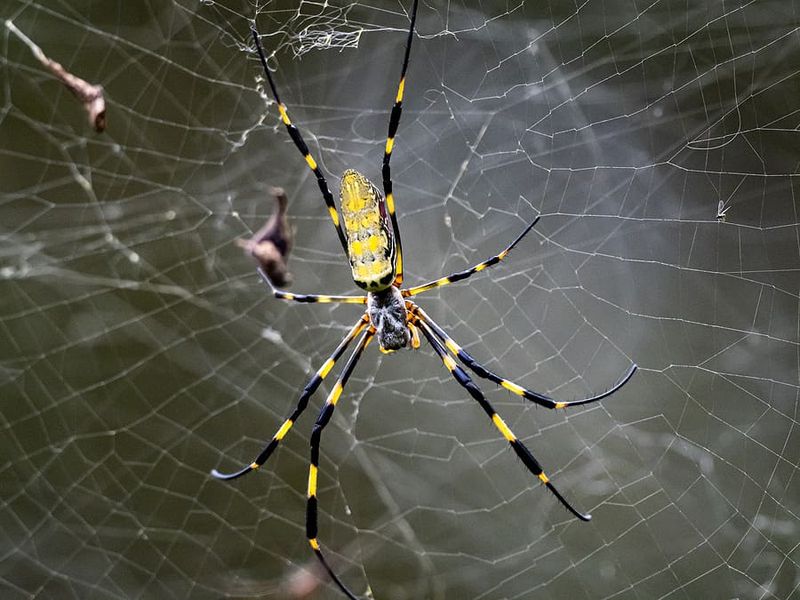
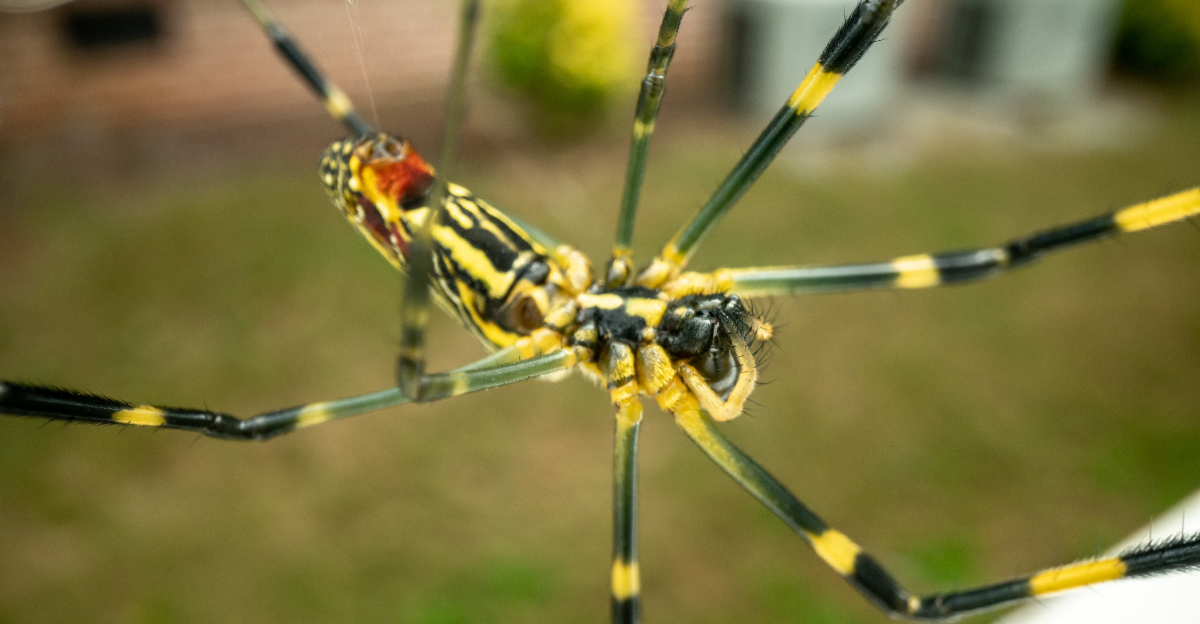
Seeing a spider the size of your palm hanging in the yard is genuinely startling. Joro spiders are large, brightly colored, and hard to ignore, which makes them feel more dangerous than they actually are.
Around people, Joros tend to retreat rather than engage.
When a web is disturbed, the spider typically pulls back or drops rather than moving toward the person who bumped it.
Biting is uncommon and generally only happens if the spider is physically handled or pressed against skin. Even then, Joro bites are considered mild and not medically significant for most healthy adults.
Their coloring, leg span, and web size all contribute to a threatening appearance. Appearance and behavior are two very different things with this species.
Joros are not aggressive in the way some people assume.
Spending time near their webs while gardening or walking through a yard is not the kind of close contact that typically triggers a defensive response.
Knowing this does not mean everyone has to be comfortable with them nearby. Personal comfort is valid.
But understanding that the visual impact far exceeds the actual behavioral risk helps put the spider in a more accurate context for most people encountering them outdoors.
4. Some Web Locations Really Do Cause Problems
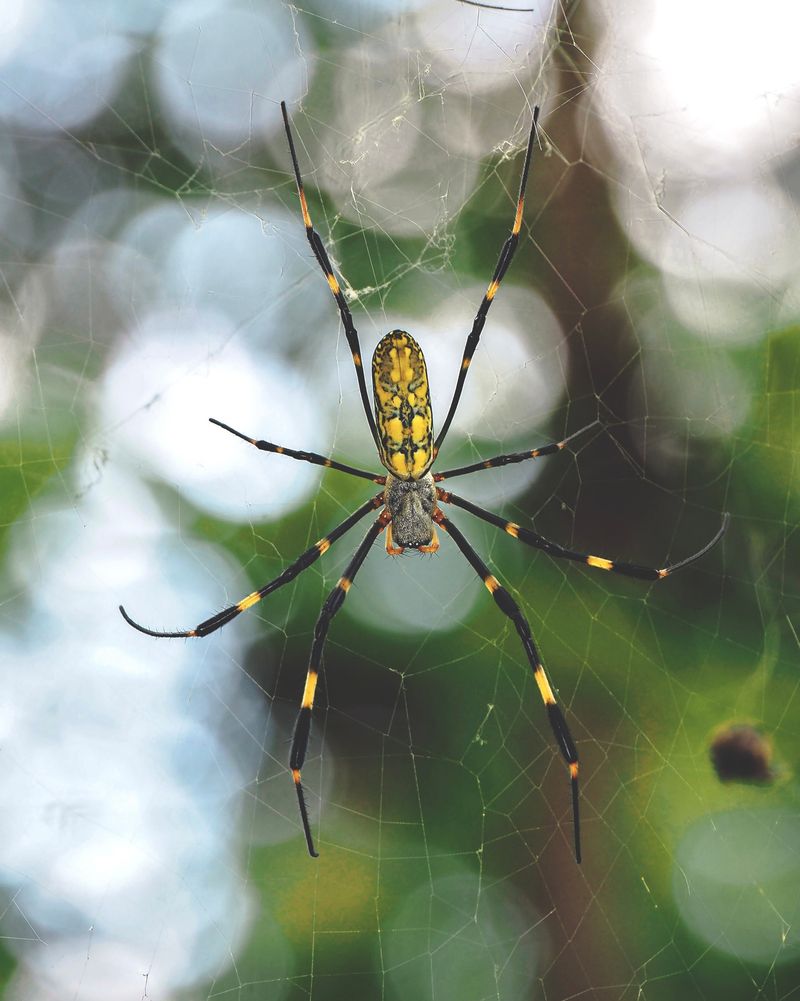
Walking face-first into a Joro web across the front door is not a pleasant start to the morning. Some web locations genuinely create problems, and those are the ones worth addressing without hesitation.
Porches, decks, doorways, and walkways are high-contact zones. Webs built across these paths put both the homeowner and the spider in an uncomfortable situation repeatedly.
Webs near outdoor seating areas or grills also qualify. If a space is used regularly, a large web crossing through it creates ongoing conflict that is not worth tolerating.
Children’s play areas are another clear case.
Webs at face or head height in spaces where kids run and play should be removed regardless of how the spider behaves in theory.
Entry points to the home, garage doors, and side gates that get daily use fall into the same category. Frequency of contact is the deciding factor, not the spider’s temperament.
Removing webs in these spots is straightforward and makes practical sense. A long stick or broom handles the job quickly.
Focusing removal efforts on genuinely high-traffic locations keeps the process manageable and targets the webs that actually affect daily comfort rather than every web across the entire property.
5. Pollinator Gardens Need A Different Approach
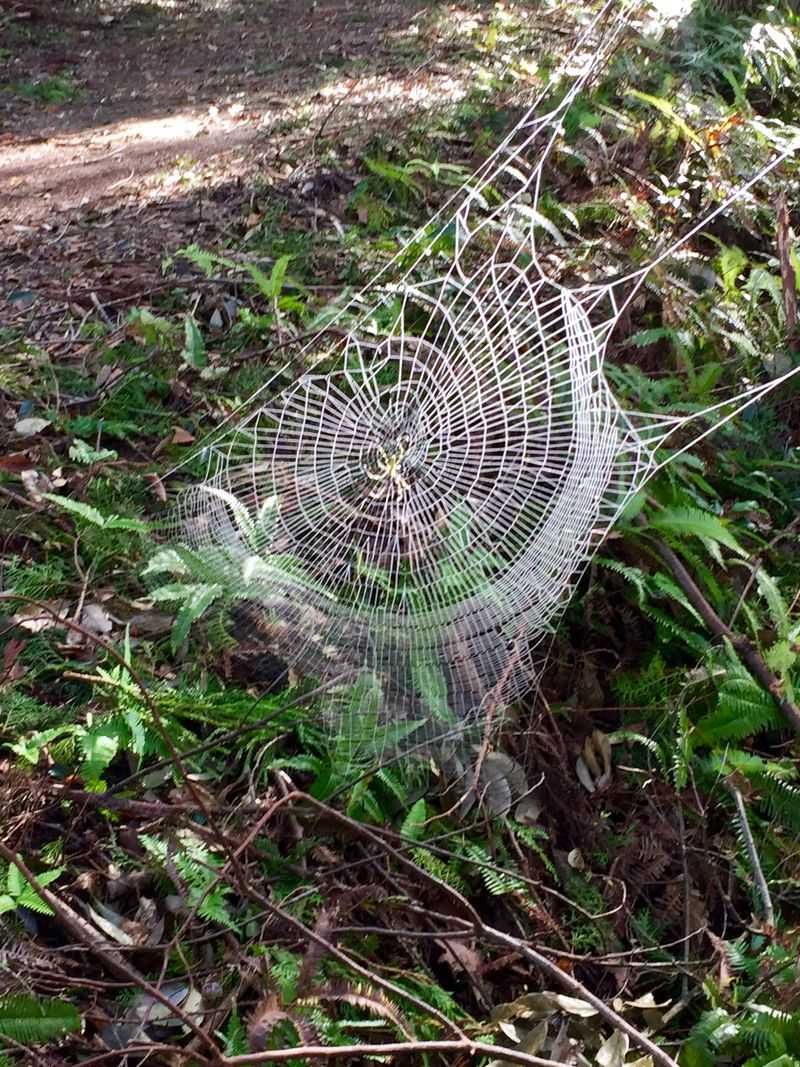
Pollinator gardens attract exactly the kinds of insects Joro spiders want to catch. Bees, butterflies, and other beneficial insects visiting flowers are potential prey once a web is positioned nearby.
The University of Georgia recommends removing Joro spiders and their webs from areas around flower gardens, pollinator plantings, and beehives because beneficial pollinators can become caught in their webs.
A web strung near a beehive entrance is a specific concern.
Worker bees entering and leaving regularly are at genuine risk of web contact, and repeated losses of foragers can affect hive activity over time.
Butterfly gardens and native plant areas designed to support pollinators face a similar issue. Webs near dense plantings can intercept insects that the garden was specifically meant to support.
Removing Joros from these zones does not require treating the entire yard. Targeting the areas immediately surrounding pollinator-focused plantings keeps the response proportional and practical.
Monitoring these spots through the late summer and fall, when Joro populations peak, helps catch new webs before they become established near sensitive garden areas.
Staying consistent with checks around beehives and pollinator beds is more effective than a single removal effort done once and forgotten for the rest of the season.
6. Breaking The Web Alone May Not Solve Much
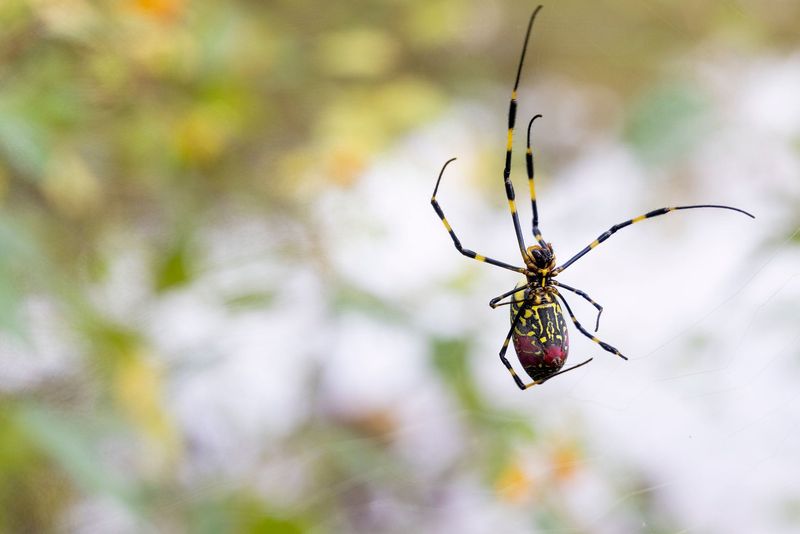
Knocking down a Joro web and calling it done often leads to the same web reappearing within a day or two. Joro spiders are capable rebuilders, and a cleared web does not mean a relocated spider.
After a web is destroyed, the spider frequently stays in the immediate area. It may rebuild in nearly the same spot or shift only slightly to a nearby anchor point.
This pattern means that simply breaking the web without also removing or relocating the spider may not resolve the issue in high-traffic locations. The web comes back, and so does the frustration.
Repeated removal over several days can sometimes encourage a spider to move on, but results vary. Persistence matters more than a single effort if the goal is keeping a specific spot clear.
For out-of-the-way areas, this rebuilding behavior is largely irrelevant. Web removal only becomes a cycle worth managing when the location genuinely matters to daily use of the yard.
Understanding this helps set realistic expectations. Homeowners who knock down one web and expect the problem to be resolved may be surprised when the web returns quickly.
Planning for follow-up removal in problem spots is a more practical approach than expecting one sweep to handle it permanently.
7. Location Should Decide Which Webs Stay
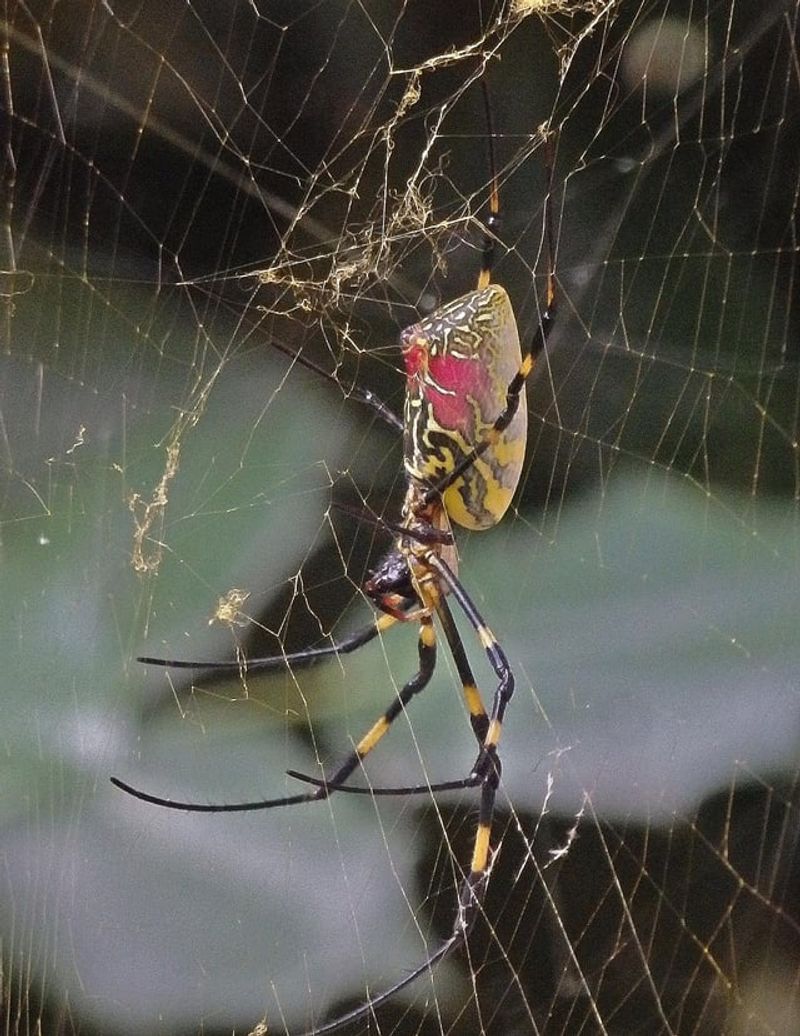
Yard management does not have to be all-or-nothing with Joro spiders. Location is the most practical guide for deciding which webs to leave and which ones to address.
Webs in remote corners, high up in tree lines, or along fence edges far from foot traffic are genuinely low-conflict. Leaving those alone saves time and avoids unnecessary effort.
Webs across doorways, porches, walkways, or anywhere people and pets move through regularly are worth removing. Webs near pollinator gardens or beehives also fall into the remove category based on UGA guidance.
Across much of Georgia, Joro populations have grown large enough that trying to clear every web on a property is not realistic for most people. Focusing on locations that actually matter is a more sensible use of time.
A quick walk around the yard with fresh eyes helps sort webs into two groups. Webs that create conflict get addressed.
Webs that sit harmlessly in unused areas can be left without concern.
Seasonal awareness helps too. Joro activity peaks in late summer through fall, so checking problem spots more frequently during those months keeps high-traffic areas manageable.
Treating each web situation based on its actual location makes the whole process less overwhelming and more effective for real daily life in the yard.