Georgia’s Only Migratory Woodpecker Is Back And It Came For Your Trees’ Sap
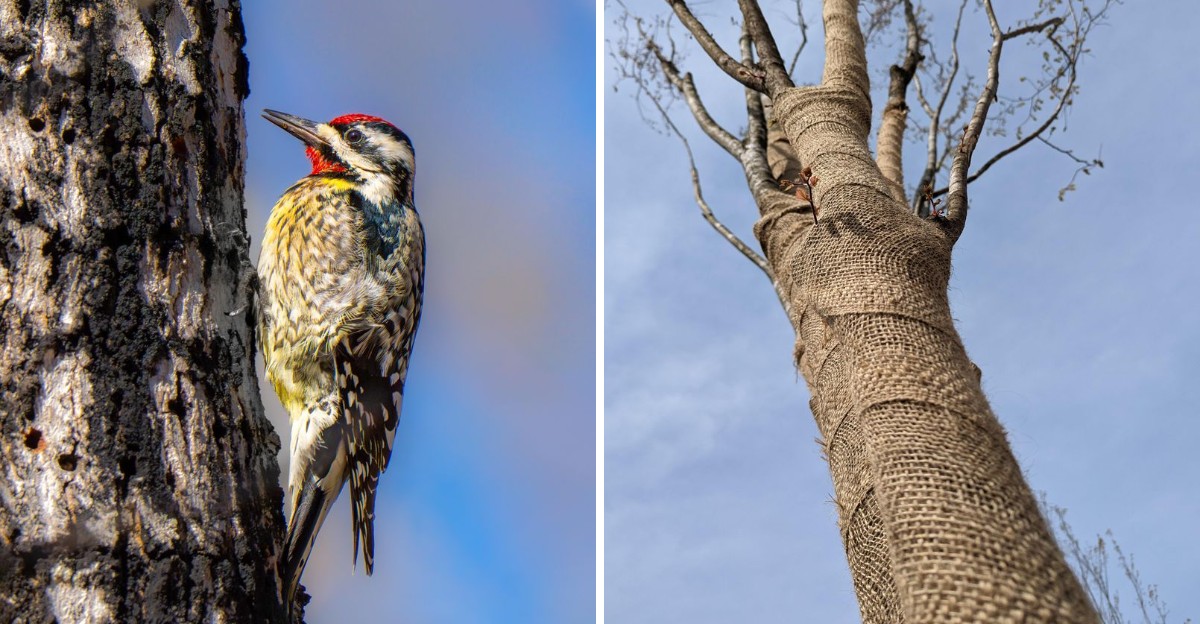
Neat rows of small holes circling a tree trunk can look like someone drilled them with a power tool. Sap seeping from those holes often draws bees, wasps, and even hummingbirds.
Such tidy rows are the work of a woodpecker that migrates south and spends the winter across much of the Southeast. Unlike most woodpeckers, it feeds heavily on sap and the insects drawn to it.
Fall is when these birds return, and many settle into Georgia yards until spring.
Many come back to the same trees year after year, which is why the holes keep appearing.
Most trees handle the damage without lasting harm, though heavy feeding can occasionally cause problems.
Maples, birches, and fruit trees deserve a close look this fall, since those tend to be favorite targets.
1. Neat Rows Of Tiny Holes In Tree Bark Have A Feathered Explanation
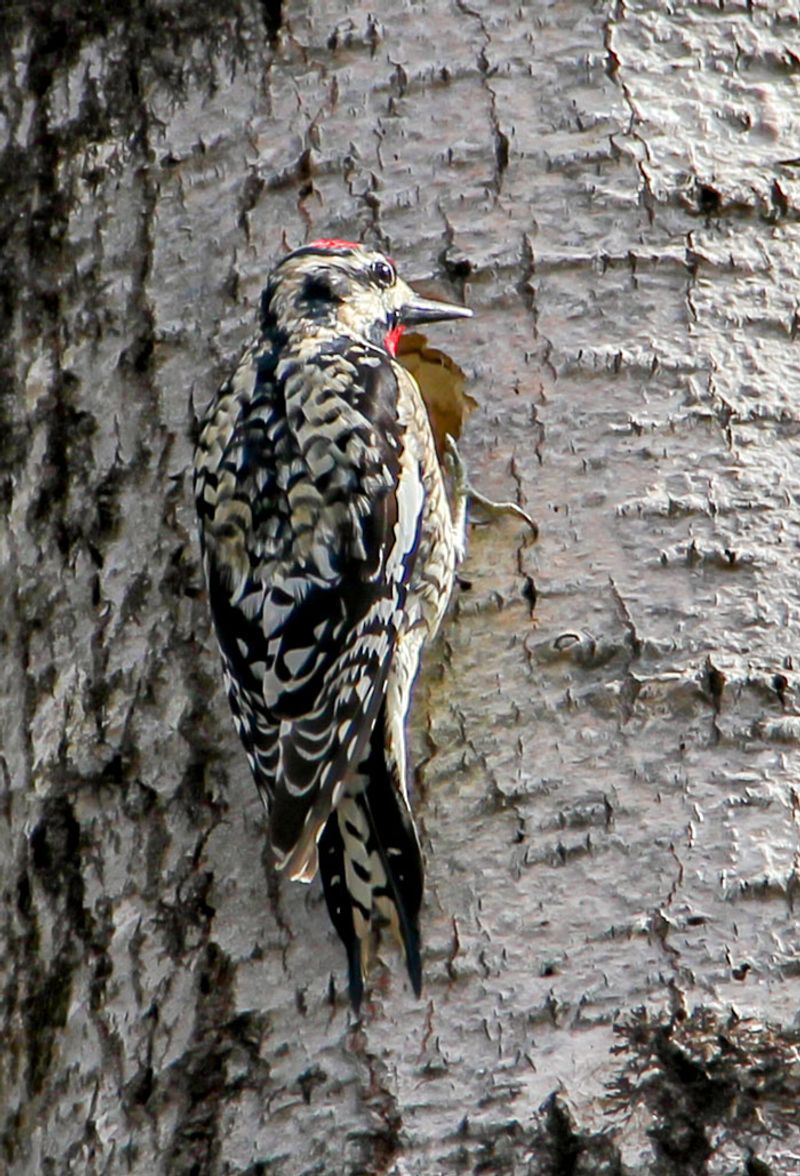
Those holes did not come from a drill or a strange insect. A bird called the yellow-bellied sapsucker made them, one careful peck at a time.
It is a medium-small woodpecker with a black and white body and a bright red forehead. Males also have a red throat, while females have a white one.
Look closely and you may notice a faint yellow wash on the belly, which gives the bird its name.
Its work is easy to recognize once you know the pattern. The holes are small and usually lined up in tidy horizontal rows, sometimes stacked into a grid.
Other woodpeckers tend to leave larger, scattered, or deeper holes while hunting for insects in wood.
Here in Georgia, the yellow-bellied sapsucker is the only woodpecker that migrates in and out each year. Other woodpeckers, like the red-bellied and downy, stay put through every season.
Spotting the bird itself can take patience, since it often clings quietly to a trunk for long stretches.
Listen for a soft, uneven tapping, a bit like someone slowly typing Morse code. You might also hear a whiny, catlike call coming from the trees.
Once you catch sight of one, those mystery rows will suddenly make perfect sense.
2. Winter Visitors Arrive In Fall And Head North By Spring
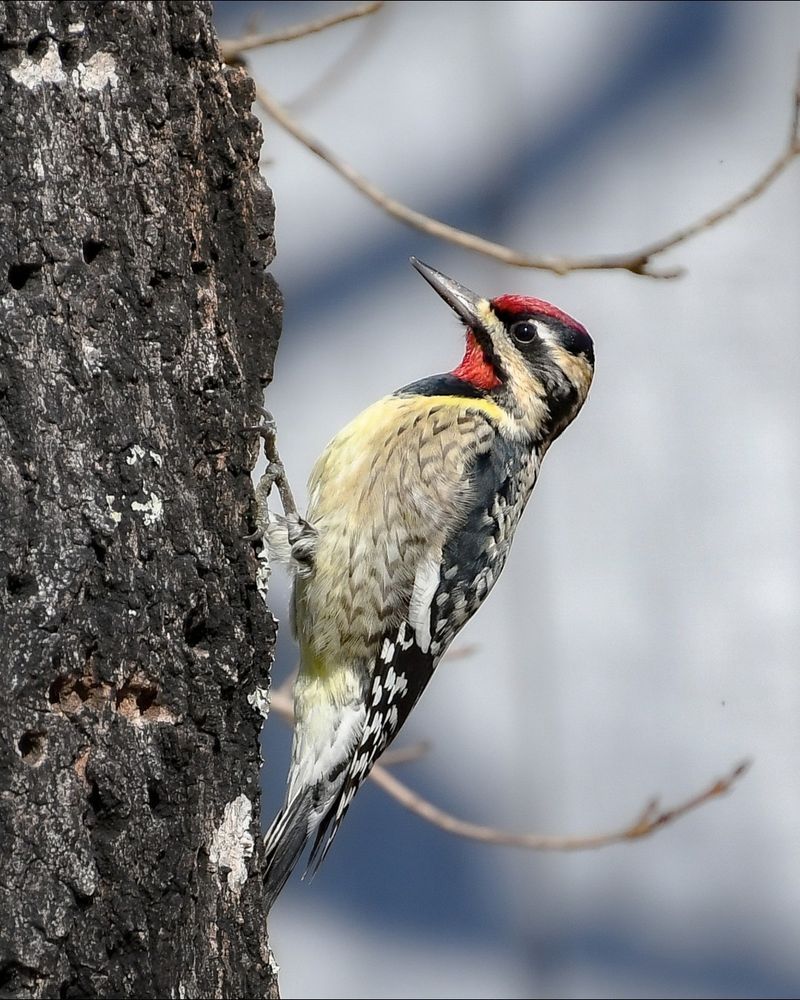
Timing is everything with this bird. Sapsuckers nest far to the north, in places like Canada, New England, and the upper Midwest.
When cold weather moves in up there, many of them fly south to find steady food and milder temperatures.
Most arrive across Georgia in fall, often around October. They tend to settle in for the season, sometimes returning to the same trees year after year.
Exact arrival dates can shift with weather and location, so some years they may show up a bit earlier or later.
By spring, they usually head back north to breed. You may notice fewer fresh holes as the weather warms and the birds move on.
A few breeding records exist in the high mountains of North Carolina and nearby areas, but nesting this far south is uncommon. For most backyards here, the bird is strictly a cold-season guest.
Your Georgia Garden Changes Every Week. Your Plan Should Too.
Gardening in Georgia changes quickly throughout the season. Every Friday you’ll receive a simple weekly plan showing exactly what to plant, prune, fertilize, harvest, and protect so you never miss the right timing.
That schedule matters if you are tracking tree damage. Fresh, oozing holes in winter point to a sapsucker, while older healed rows may be from past seasons.
Keeping a simple yard notebook can help you see the pattern from year to year.
3. Shallow Sap Wells Supply Both Sugary Sap And Trapped Insects
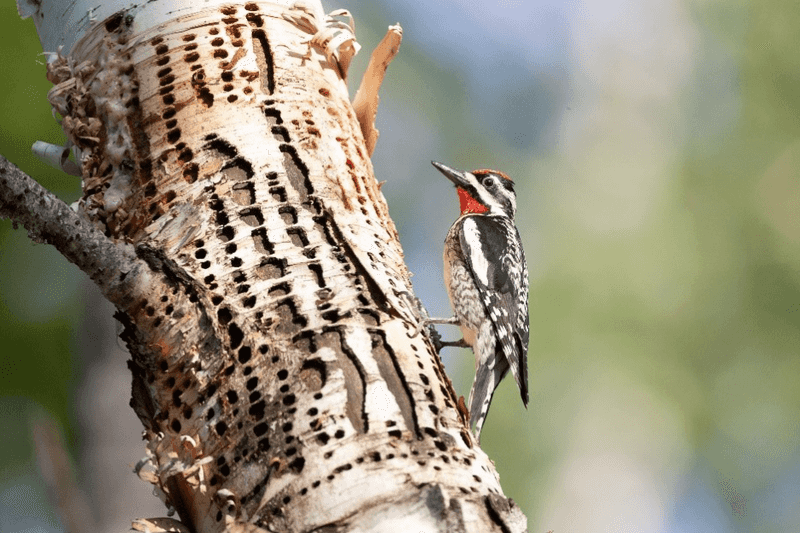
Think of each hole as a tiny self-serve drink station. The sapsucker drills shallow wells through the bark, just deep enough to reach the layers where sap moves.
Sap slowly seeps out, and the bird comes back to lap it up with a brushy-tipped tongue.
Sweet sap is only part of the meal. Small insects get drawn to the sugary liquid and sometimes get stuck, which gives the bird an easy protein snack.
Sapsuckers also eat some fruit and berries, especially in colder months when insects are harder to find.
Well upkeep is a big part of their routine. A bird will often revisit the same tree, reopening old holes and adding new ones to keep sap flowing.
That steady care explains why you may see a bird on one trunk again and again through a Georgia winter.
Some people mistake the wet, darkened bark below the wells for a disease. Sap stains can look alarming, but they are often just leftover drips from feeding.
If you see oozing paired with tidy rows of holes, a sapsucker is a likely cause. Other problems can look similar, though, so check with your county Extension office if you are unsure.
4. Pecans, Maples, And Fruit Trees Are Common Feeding Targets
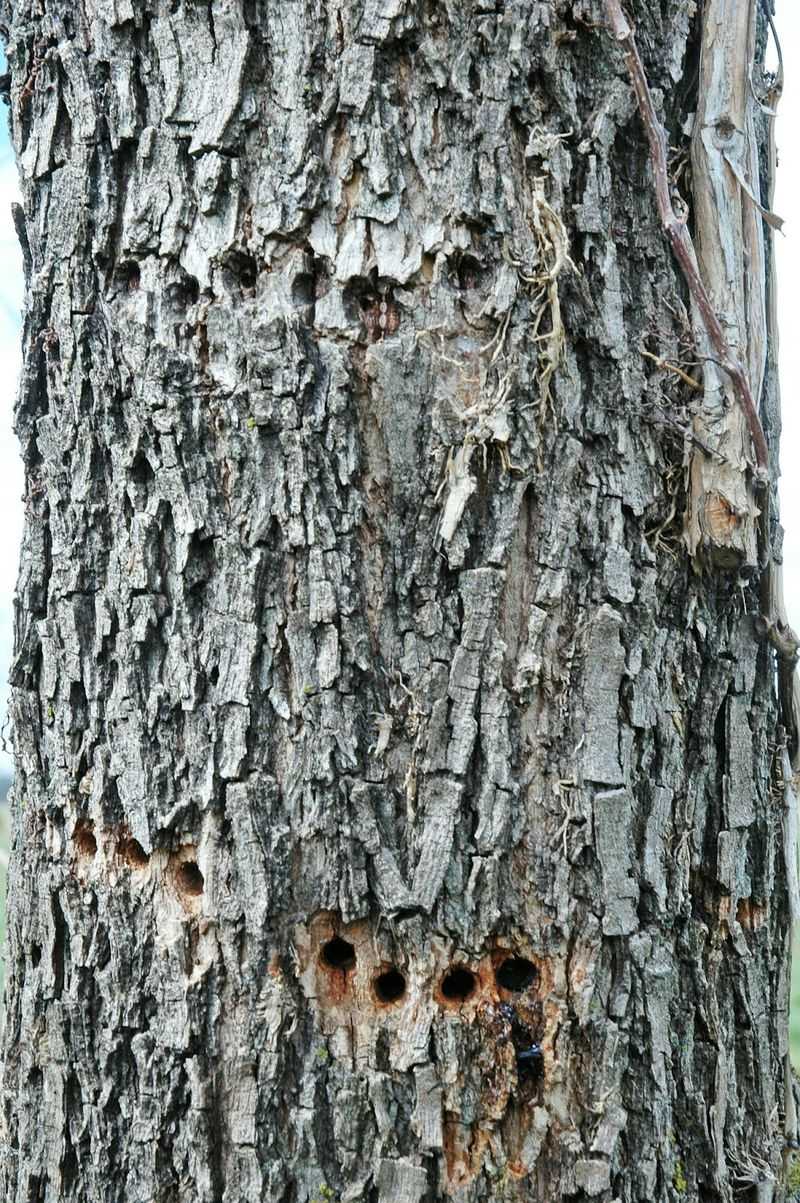
Your prized pecan might be the most popular tree on the block, at least to a sapsucker. These birds have favorite trees, and some kinds get chosen far more often than others.
Maples, birches, pecans, hickories, and fruit trees like apples and pears are frequent picks.
Pecans deserve special mention since they are so common in Georgia yards and orchards. Many growers notice sapsucker rows on their trees each winter.
Ornamentals such as magnolias and some pines may get visited too, though tastes can vary from bird to bird.
Why one tree gets hit while its neighbor is ignored is not fully understood. Sap flow and sugar content likely play a role, but there may be other reasons.
It often seems that a single favorite tree takes most of the attention while nearby trees go untouched.
Watch for that pattern in your own yard. If one tree keeps getting fresh holes, it may be the bird’s preferred spot for the season.
Knowing which tree is the favorite helps you focus protection where it counts.
A quick walk around your property in early winter can reveal new wells before they spread.
5. Light Feeding Seldom Harms A Healthy Tree
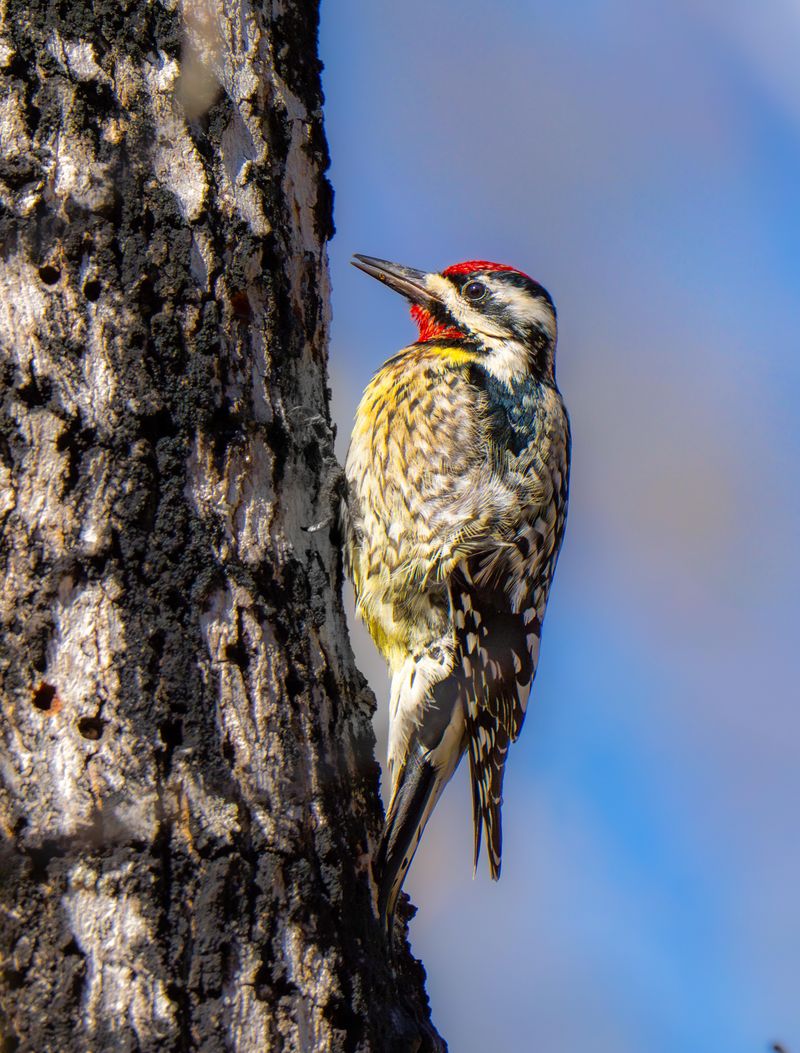
Take a breath before you panic over those holes. In most cases, a healthy tree handles light sapsucker feeding without lasting harm.
The wells are shallow, and many trees seal them over as they grow.
Old, healed rows are common on mature trees across Georgia. They can stay visible in the bark for years, a bit like old scars on skin.
Heavy, repeated feeding is a different story. When a bird drills many rings of holes around a trunk or limb, the tree may weaken in that area.
Young trees, thin-barked trees, and trees already stressed by drought or poor soil may struggle more with heavy feeding.
Openings in the bark can also let in fungi or insects. Wood quality in timber trees may be affected too, which matters more to growers than homeowners.
Overall tree care helps more than worry does. Water during long dry spells, avoid mower and trimmer wounds, and mulch the root zone without piling it against the trunk.
If a tree looks seriously stressed, a certified arborist can take a closer look.
Sapsuckers are also protected under the federal Migratory Bird Treaty Act, so harming them is illegal.
6. Hummingbirds And Other Birds Sometimes Sip From The Same Wells
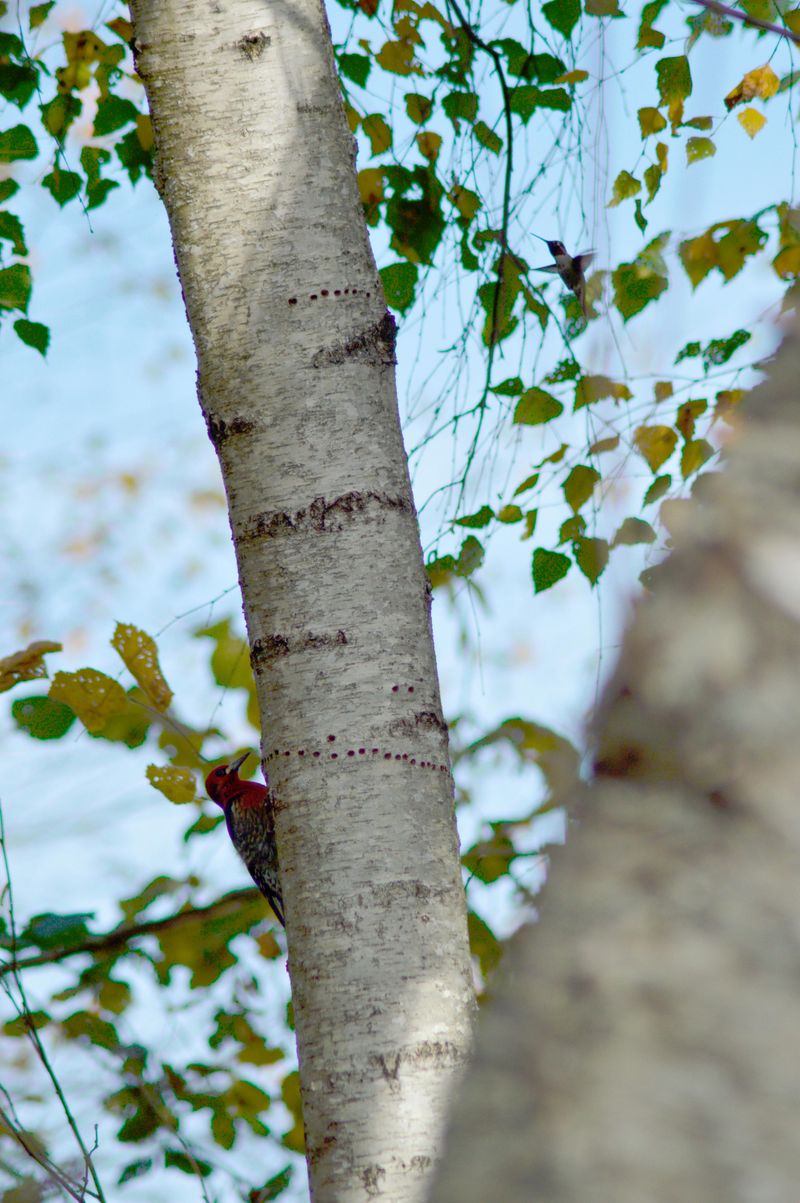
Sapsuckers rarely eat alone. Other creatures notice the sweet sap and drop by for a free sip.
Warblers, kinglets, and some woodpeckers have been seen visiting active wells.
Squirrels, bats, butterflies, and wasps may also take advantage of the flowing sap, depending on the season and the area.
Hummingbirds are a well-known example, though mostly farther north. In the sapsuckers’ breeding range, ruby-throated hummingbirds often use these wells in early spring when few flowers are open.
In Georgia, overlap is more limited because most hummingbirds head south while sapsuckers spend winter here.
Still, a few hummingbirds do linger through cold months in the Southeast. If one finds an active sap well, it may stop for a drink, though that is an occasional sight rather than a common one.
Watching an active tree can be surprisingly rewarding. Set up a chair at a respectful distance, bring binoculars, and give it some quiet time on a mild afternoon.
You may notice the sapsucker chasing away smaller visitors, since it can be protective of its wells.
Seeing these small moments up close turns a damaged trunk into a busy little wildlife hub.
7. Burlap Or Hardware Cloth Can Protect A Favorite Tree
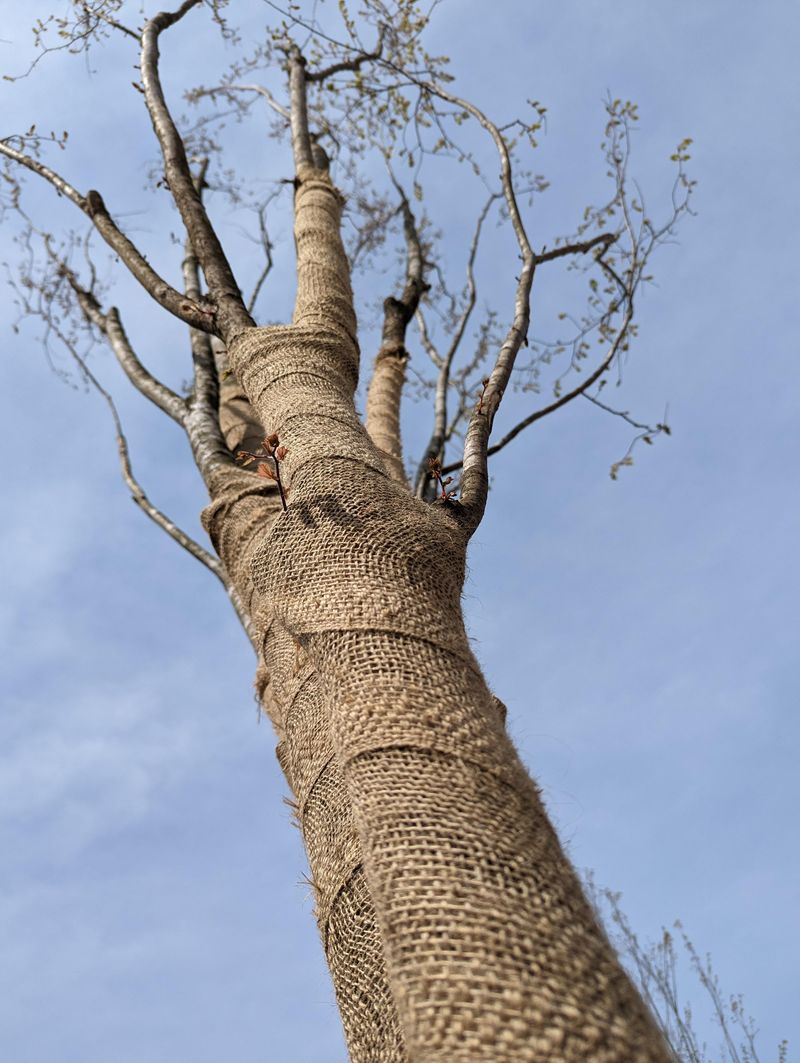
Sometimes a simple wrap does the trick. If a sapsucker keeps hammering a young or special tree, a physical barrier is one of the most practical options.
Burlap or hardware cloth wrapped around the area being drilled can block access to the bark.
Wrap the trunk loosely so it does not dig into the bark. Secure it with twine or soft ties, and check it now and then for rubbing or trapped moisture.
Hardware cloth with small openings holds up well and lets air move around the trunk.
Remove barriers once the birds head north in spring. Leaving them on through the growing season can rub bark or hide insect problems.
Results can vary. A determined bird may simply move higher on the trunk or switch to a nearby tree, so watch for new holes after wrapping.
Some Georgia gardeners also try shiny tape or hanging reflective objects, but these scare tactics often work for only a short time.
Avoid sticky repellents meant for other pests, since they can coat feathers and hurt birds. Gentle barriers are a safer, legal way to share your yard with this winter visitor while keeping a favorite tree in good shape.