Heat-Tolerant Flowers To Plant In North Carolina Pots Before Summer
Keeping potted flowers looking fresh through a North Carolina summer is honestly a sport. Once that signature heat settles in, sunny patios and porch containers turn into little ovens, and container soil can go bone dry faster than you would ever expect.
And if your pots are sitting on concrete, brick, or anywhere near siding, congratulations: the reflected heat is making things even spicier than the actual air temperature.
Plants that were not built for those conditions will let you know pretty quickly, and it is never a fun conversation.
The great news is that some flowers genuinely thrive in full-sun North Carolina containers when the heat gets serious.
Picking the right ones before summer hits can mean the difference between a gorgeous porch all season and a pot full of regrets.
1. Lantana Brings Color That Loves Heat
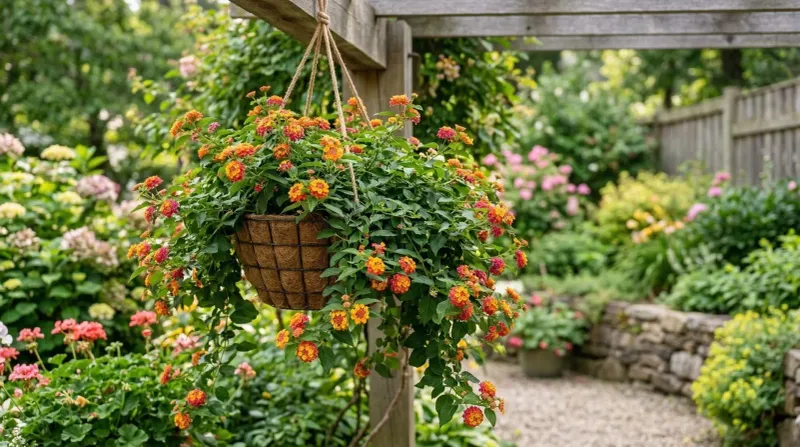
Few flowers earn their place on a hot North Carolina patio quite like lantana. Once the temperatures climb and the sun starts beating down on container soil, lantana responds by blooming harder rather than fading out.
That kind of resilience is exactly what gardeners need when managing porch pots and deck planters through a long, humid Carolina summer.
Lantana thrives in full sun and handles heat that would stress many other flowering plants. Its clusters of tiny blooms come in warm mixes of orange, yellow, pink, red, and white, offering bold color that holds up week after week without much fuss.
The more sun it gets, the better it tends to perform, which makes it a natural fit for bright entry containers and south-facing patio spots.
In containers, lantana does best in well-draining potting mix with consistent but moderate watering.
Containers dry out quickly in summer heat, so checking soil moisture regularly matters, though lantana can tolerate some dryness between waterings better than many other options.
Overwatering in poorly drained pots can cause more problems than dry spells.
Planting lantana before peak summer heat gives it time to establish roots and settle into the container before conditions get intense. Trailing varieties work well in hanging baskets and mixed planters, while upright types fill larger patio containers with color.
Removing spent flower clusters can encourage fresh blooms and keep the plant looking tidy through the season.
2. Angelonia Keeps Blooming Through Hot Weather
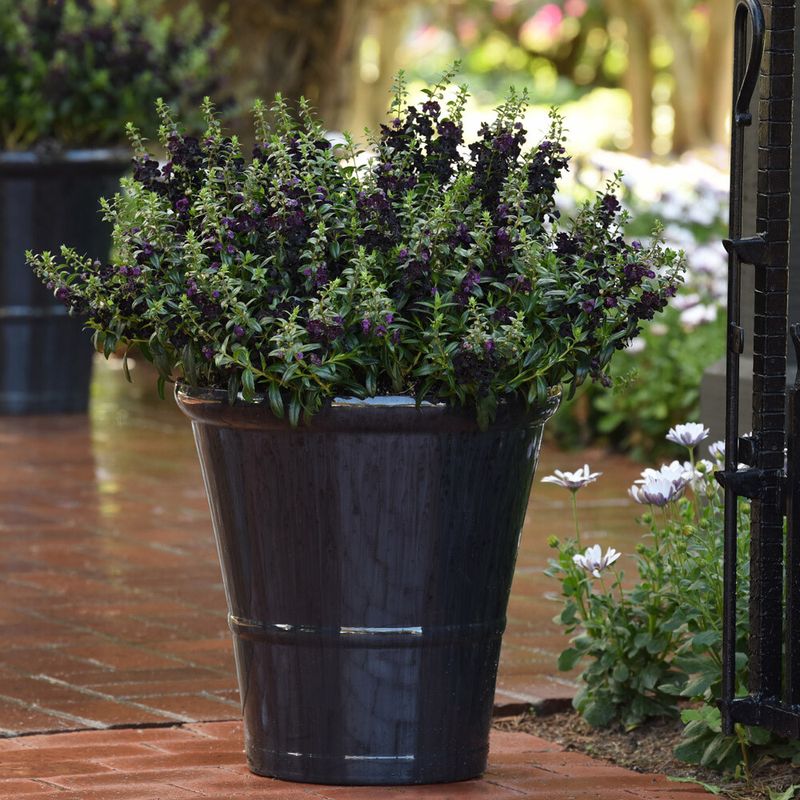
Sometimes called summer snapdragon, angelonia brings a graceful, upright presence to containers without demanding constant attention through the hottest months.
On a North Carolina porch where afternoon sun and reflected heat can wear down less resilient plants, angelonia tends to keep its composure and continue pushing out fresh flower spikes with minimal complaint.
The blooms appear along tall, slender stems in shades of purple, lavender, pink, white, and bicolor combinations. They carry a faint, pleasant fragrance that adds a subtle sensory layer to a patio or entryway planter.
Unlike some summer flowers that slow down once temperatures peak, angelonia tends to bloom steadily through warm and humid North Carolina conditions when given the right care.
Angelonia performs best in full sun and prefers well-draining potting mix that does not stay soggy. In containers, it appreciates consistent moisture but handles short dry periods reasonably well once established.
Your North Carolina Garden Changes Every Week. Your Plan Should Too.
Gardening in North Carolina changes quickly throughout the season. Every Friday you’ll receive a simple weekly plan showing exactly what to plant, prune, fertilize, harvest, and protect so you never miss the right timing.
Good drainage is important because sitting in wet soil during humidity can create problems that reduce the plant’s overall health and bloom production.
Getting angelonia into containers before summer heat peaks gives it a chance to build a strong root system. Taller varieties work well as vertical accents in mixed patio planters, while compact selections fill smaller pots nicely on their own.
Light trimming of spent stems can encourage bushier growth and fresh blooms, helping the plant look its best from late spring well into the summer season.
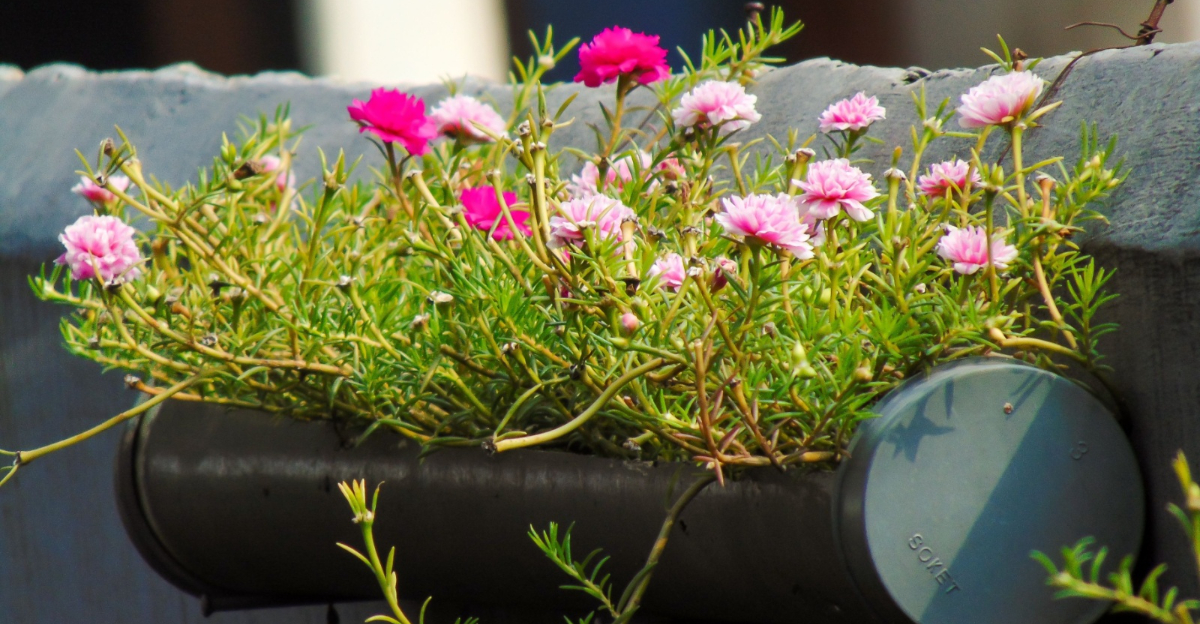
3. Moss Rose Thrives In Sunny Containers
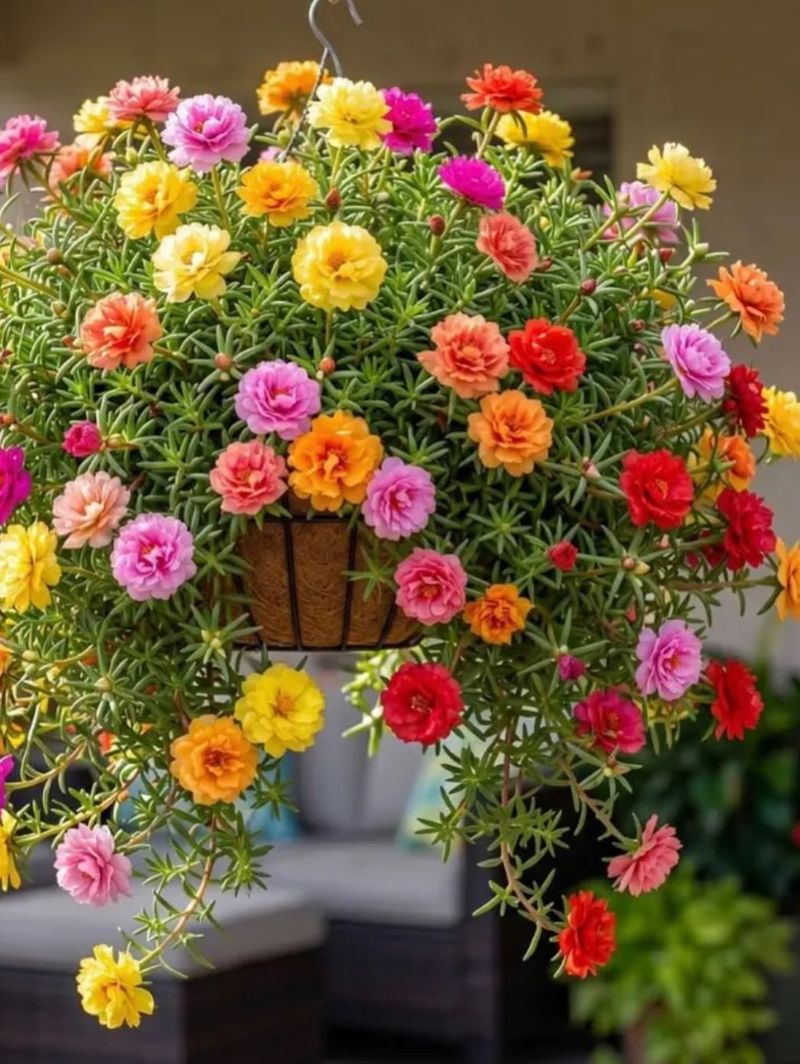
Hot, dry, and relentlessly sunny spots on a North Carolina patio or balcony can challenge even the toughest plants, but moss rose seems almost built for those conditions.
Portulaca grandiflora, as it is formally known, stores moisture in its thick, succulent-like leaves and stems, giving it a natural advantage when container soil dries out quickly between waterings.
The flowers are cheerful and jewel-bright, coming in shades of magenta, orange, yellow, red, white, and soft pink.
They open wide in full sun and tend to close in low light or on overcast days, which gives the plant a lively, responsive quality that many gardeners find charming.
In North Carolina, where summer sun can be intense and consistent, moss rose often puts on a reliable show from early summer onward.
Shallow containers work well for moss rose because it does not need deep root space. A gritty, fast-draining potting mix suited to succulents or cactus can help prevent moisture from lingering too long around the roots.
This matters in North Carolina where summer humidity is already high, and overly wet soil in a container can cause more stress than heat alone.
Planting moss rose before summer gets fully underway gives it time to spread and fill a container before peak heat arrives. It works especially well in window boxes, low deck planters, and hanging baskets where drainage is easy to manage.
Minimal fertilizing and light watering are usually enough to keep it blooming confidently through the season.
4. Celosia Adds Bold Heat-Loving Color
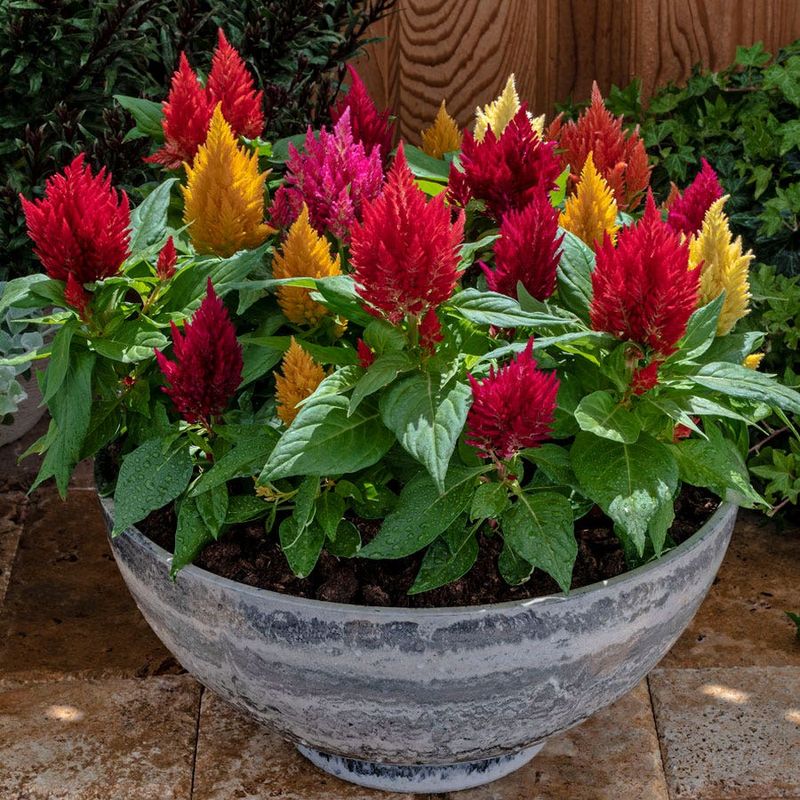
Bold, almost sculptural, and surprisingly tough, celosia brings a level of visual drama to containers that few other summer flowers can match.
The plumed and crested varieties offer textures that look more like velvet flames or coral formations than typical flower heads, making them a memorable choice for porch pots and patio planters where you want something that genuinely stands out.
Celosia thrives in full sun and warm temperatures, which aligns well with what summers naturally deliver. It handles heat and humidity with more ease than many flowering annuals, continuing to push out color even when conditions feel oppressive.
The blooms come in vivid shades of red, orange, yellow, pink, and purple, offering rich, saturated color that holds up without fading quickly in bright light.
In containers, celosia does best in well-draining potting mix with regular watering. It does not appreciate sitting in waterlogged soil, so good drainage in the pot is worth paying attention to.
North Carolina humidity can sometimes create fungal concerns if foliage stays wet, so watering at soil level rather than overhead can help keep the plant healthier through the season.
Starting celosia in containers before summer heat peaks allows the roots to establish before conditions intensify.
Taller plume varieties work as eye-catching focal points in larger pots, while compact dwarf selections fit neatly into smaller containers or mixed arrangements.
Removing older bloom heads can sometimes encourage new growth, though celosia generally maintains a strong presence through much of the summer with basic care.
5. Gomphrena Holds Up In Summer Pots
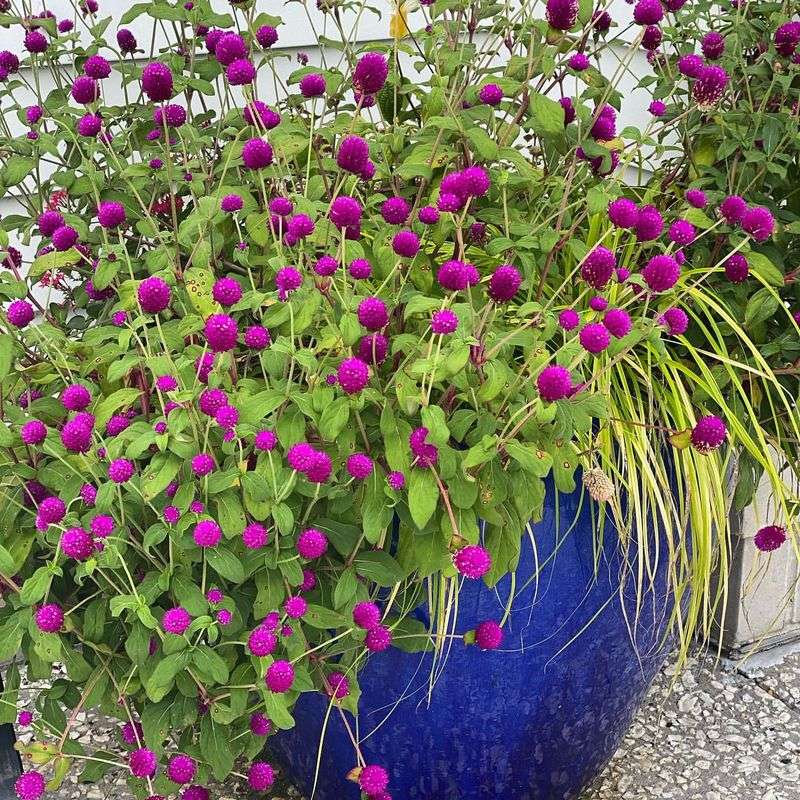
Rounded, clover-like blooms that hold their color even in intense heat make gomphrena one of the more underrated choices for North Carolina container gardening.
While flashier flowers sometimes steal attention at the garden center, gomphrena quietly delivers consistent color from early summer into fall without the drama of wilting, fading, or needing constant rescue watering on hot afternoons.
Gomphrena is genuinely drought-tolerant once established, which is a meaningful quality when patio containers in North Carolina can dry out within a day or two during a heat wave.
The globe-shaped blooms come in magenta, purple, pink, white, and orange, and they maintain a fresh, papery appearance that resists the bleached-out look that affects some flowers in strong summer sun.
Pollinators tend to visit regularly, adding extra life to a patio or deck planter.
Full sun is where gomphrena performs best, and well-draining potting mix helps it stay healthy through humid summers.
It does not need heavy fertilizing and can actually perform well in leaner soil conditions, which makes it a forgiving choice for gardeners who do not want to fuss with a complicated feeding schedule.
Planting gomphrena in containers before summer arrives gives it time to root in and prepare for peak heat. It works well as a standalone pot specimen or as a mid-height filler in mixed containers alongside trailing plants.
Deadheading spent blooms can encourage fresh flower production, though gomphrena tends to rebloom reasonably well even with minimal intervention through the growing season.
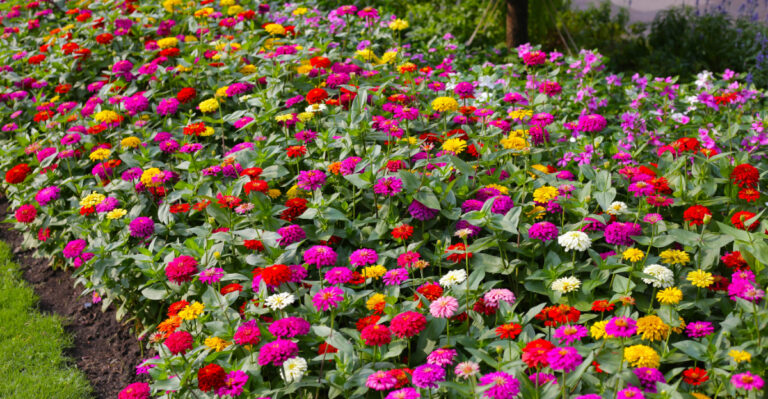
6. Heat-Tolerant Zinnias Brighten Containers Fast
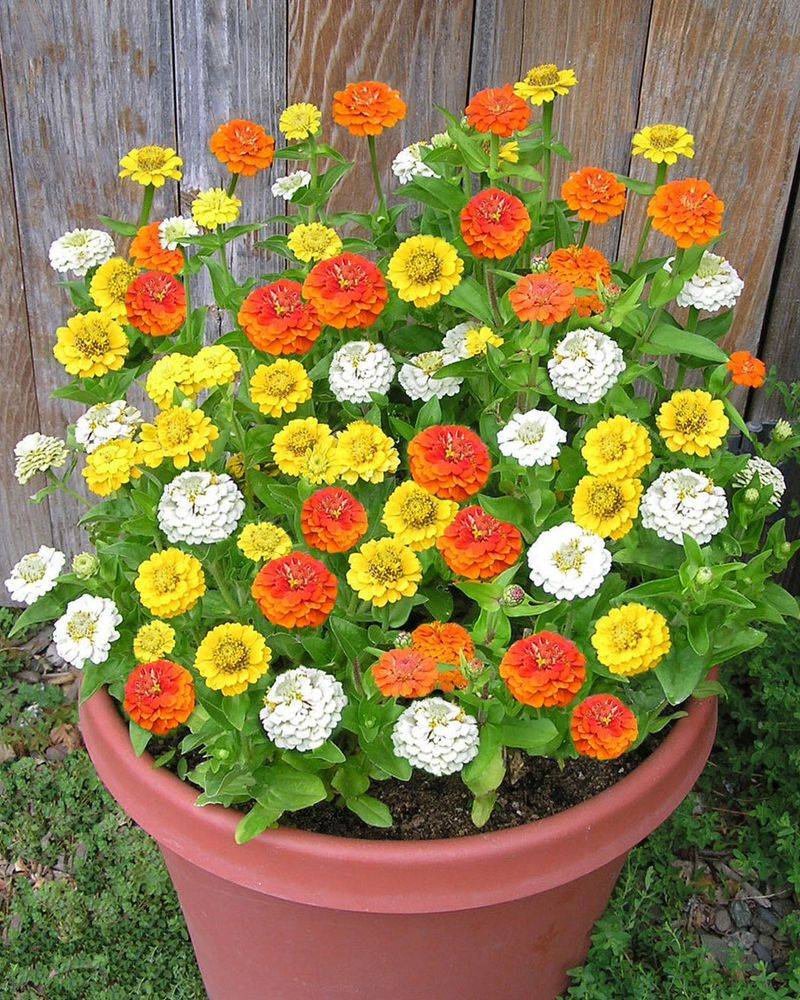
Zinnias have a reputation for growing quickly and producing cheerful, generous color, and in containers, that reputation holds up well when the right varieties are chosen.
Not every zinnia performs equally in pots, but selections bred for compact growth and heat tolerance can deliver an impressive display on a sunny porch or patio from early summer onward.
The flowers come in nearly every warm color imaginable, from deep red and burnt orange to soft coral, yellow, and bright white. They attract butterflies reliably, which adds movement and life to a container garden on a warm North Carolina afternoon.
Zinnias are sun-loving plants that respond well to heat, making them a natural fit for spots where other flowers might struggle with intense afternoon exposure.
Container zinnias do best in well-draining potting mix and appreciate consistent watering, though allowing the soil to dry slightly between waterings can reduce the risk of fungal issues.
Overhead watering should be avoided when possible in humid summers because wet foliage can invite powdery mildew, which is a common concern for zinnias in humid conditions.
Good air circulation around the pot helps as well.
Getting zinnias established in containers before summer heat fully arrives gives them a head start on root development.
Compact varieties like Profusion zinnias are especially well-suited to pot culture because they branch freely, resist disease reasonably well, and stay tidy without extensive pruning.
Regular deadheading encourages continuous bloom production and keeps containers looking colorful and well-maintained through the summer.
7. Vinca Stays Vibrant In Hot Pots
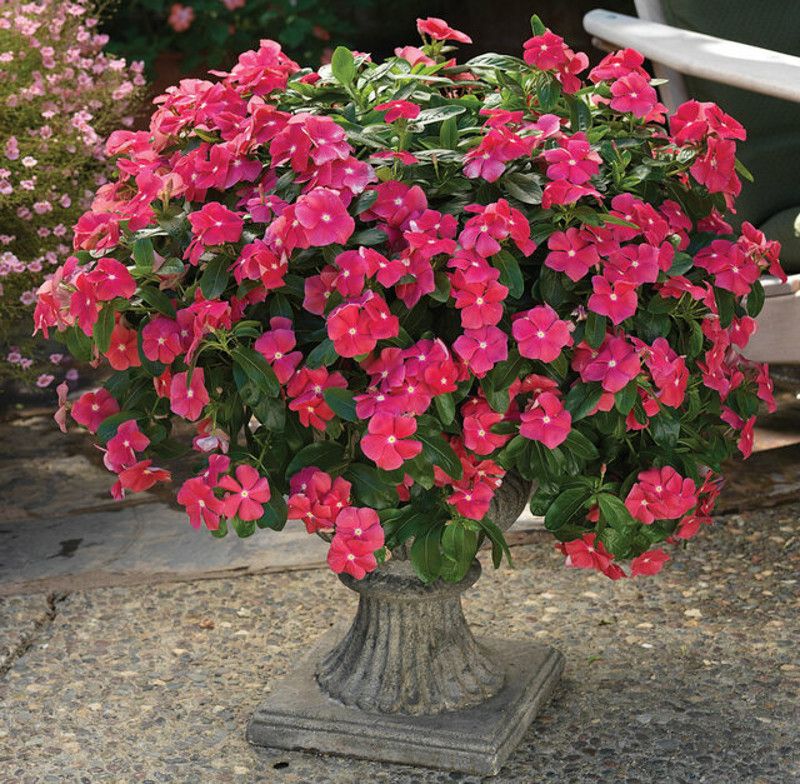
When a North Carolina summer turns relentless and most flowering annuals start to look tired, vinca often just keeps going.
Also known as catharanthus or annual vinca, this plant has built a strong reputation among Southern gardeners for handling heat, humidity, and dry container soil with remarkable toughness.
It earns a spot on patios and porches where other flowers have given up by July.
The blooms are simple, five-petaled, and available in shades of pink, red, coral, white, and lavender, often with a contrasting center eye that gives each flower a clean, bright look.
Vinca tends to branch and spread naturally, filling a container with a neat mound of color that does not require constant deadheading to stay presentable.
That low-maintenance quality makes it especially practical for busy households managing multiple pots through a long summer.
Full sun is where vinca performs most reliably, and it appreciates well-draining potting mix with moderate watering. Overwatering is a more common mistake than underwatering with vinca, and soggy container soil in humid conditions can cause root stress.
Allowing the top layer of soil to dry before watering again tends to suit this plant well.
Planting vinca in containers before summer heat peaks gives it time to settle roots and begin branching before conditions become intense. It pairs well with trailing plants in mixed containers or works confidently as a standalone pot specimen.
Consistent sun exposure, sensible watering, and occasional light fertilizing can keep vinca blooming reliably from late spring through the end of the North Carolina summer season.