How Much Light Geraniums Actually Need Indoors During a North Carolina Winter
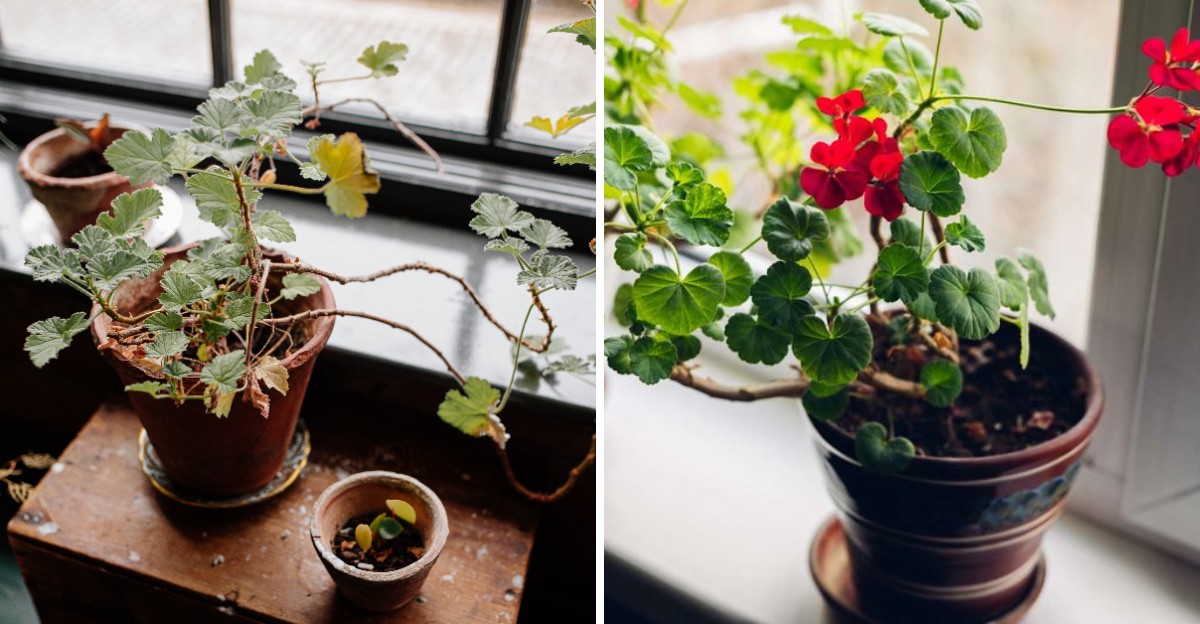
Your sunniest winter windowsill delivers only a small fraction of the light a summer patio gets. That gap surprised me the first time I learned about it, and it explained a lot about my sad, stretched-out pots.
The plants in question come from South Africa, where sunshine is generous and steady. They are not true frost-hardy perennials, so most gardeners carry them inside before the first hard freeze.
Here in North Carolina, December days shrink to under ten hours of daylight. I can’t imagine sitting by a dim window for months and still looking cheerful, yet we ask our plants to do just that. You need to know what they are really up against.
So how much light keeps them compact, green, and maybe even blooming until spring? The answer is more specific than most of us expect, and a few simple tricks make a real difference.
1. That Bright Window Is Dimmer Than Your Geraniums Think
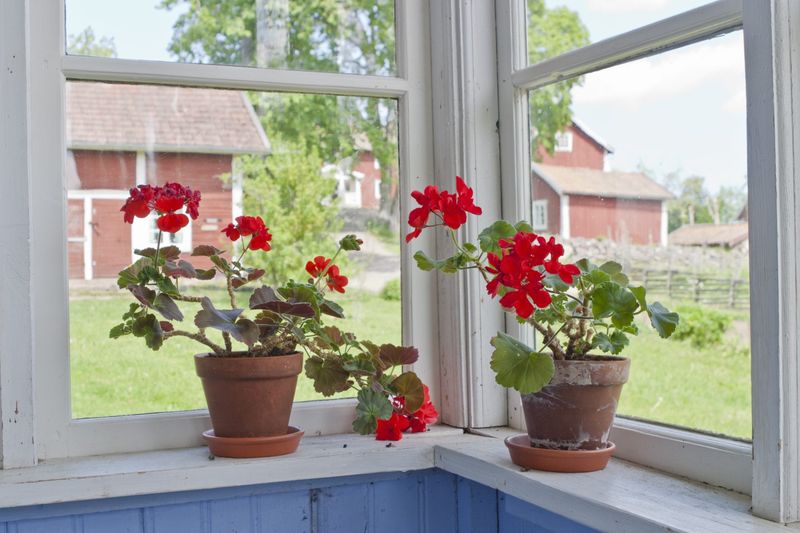
Our eyes are great at fooling us. A room that feels bright to you might offer a geranium only a sliver of the light it soaked up outdoors in July.
Window glass, screens, roof overhangs, and the low winter sun angle all cut light before it reaches the leaves.
Researchers often note that indoor light near a window can be many times weaker than full outdoor sun. Move a pot just a few feet back into the room, and the drop gets even steeper.
Garden geraniums, which are really Pelargoniums, evolved in sunny South Africa. Those roots explain why they handle heat and dry soil well but sulk in shade. They rely on strong light to make the sugars that fuel new leaves and flower buds.
Winter in the Piedmont and mountains also brings gray, cloudy stretches. A string of overcast days can leave your windowsill even darker than usual.
Personally, I started paying attention after my plants leaned hard toward the glass every single week.
That lean is a clue worth respecting. Once you see your home through a geranium’s eyes, you start choosing spots based on actual sunlight instead of how cozy a room feels.
2. Aim for Six Hours of Direct Sun on Those Geranium Leaves
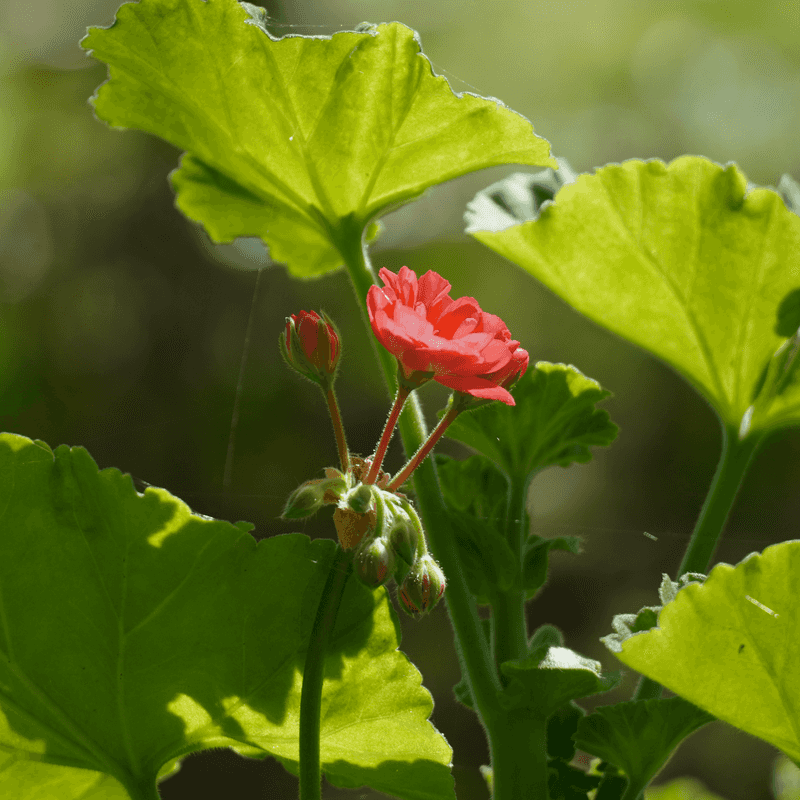
Six hours is the magic number. Extension experts, including those at Clemson and NC State, recommend that geraniums get at least six hours of direct sun daily to flower freely.
Indoors in winter, that goal is tough but worth chasing. A geranium getting four to six hours of direct light will usually stay compact and green, even if blooms slow down. Fewer than four hours often leads to weak, floppy growth.
Bright indirect light alone keeps the plant alive for a while. Still, expect pale leaves and few flowers if direct rays rarely touch the foliage.
A simple test helps. Hold your hand a foot above the plant around noon on a sunny day. A crisp, dark shadow means strong light, while a fuzzy, faint one signals the spot is too dim.
Your North Carolina Garden Changes Every Week. Your Plan Should Too.
Gardening in North Carolina changes quickly throughout the season. Every Friday you’ll receive a simple weekly plan showing exactly what to plant, prune, fertilize, harvest, and protect so you never miss the right timing.
Check a few times through the day, too. Sun shifts as the hours pass, and a sill that glows at 10 a.m. might sit in shadow by 1 p.m.
Jot down how many hours each window gets. That little note becomes your winter roadmap and takes most of the guesswork out of placement.
3. South-Facing Windowsills Are Prime Real Estate for Pelargoniums
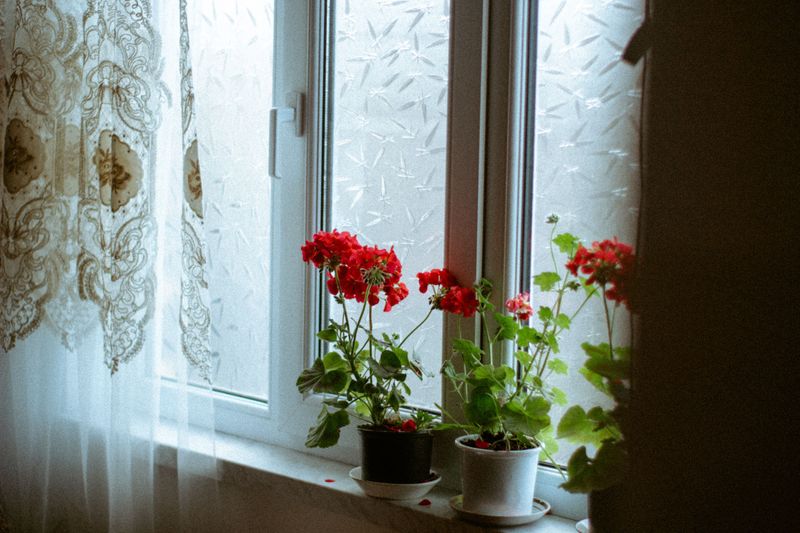
Real estate agents say location matters, and so do geraniums. A south-facing window gets the most sun in winter across the Northern Hemisphere, so claim that spot first.
West-facing windows come in second place. They deliver strong afternoon light, which works nicely for most varieties. East windows offer gentler morning sun and can work for ivy geraniums, though zonal types may stretch a bit.
North windows are the weakest choice. Unless you add a grow light, plants there rarely get enough energy to stay sturdy.
Distance matters as much as direction. Keep pots right against the glass or within a foot of it, since light fades quickly as you move away. A few easy tweaks help a lot:
Wash the windows inside and out, because grime blocks light. Pull sheer curtains fully open during the day. Turn each pot a quarter turn every week so stems grow evenly instead of leaning.
On very cold nights, glass can chill leaves that touch it. Slide pots back a few inches after sunset if temperatures dip hard, then return them in the morning.
4. Leggy Geranium Stems Are Begging for More Light
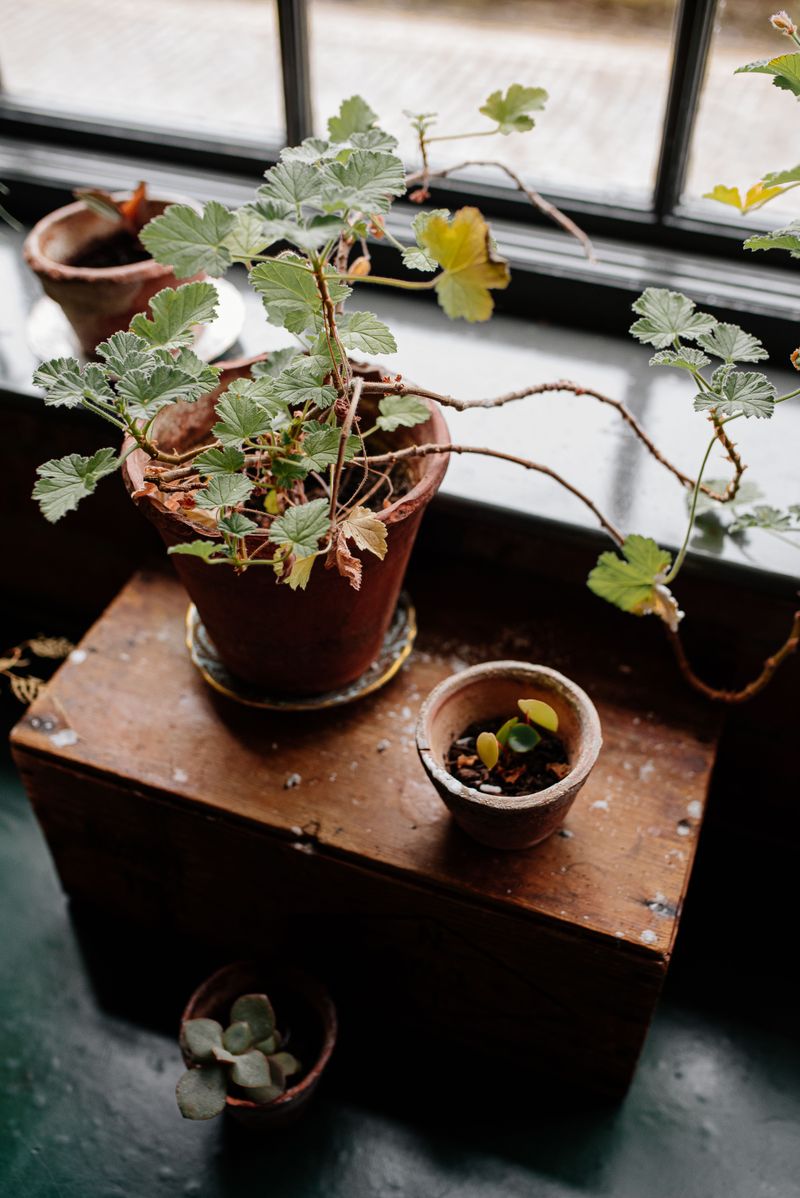
Long, skinny stems with big gaps between leaves tell a clear story. Your geranium is reaching for light it cannot find.
Gardeners call this legginess, and scientists call it etiolation. The plant pours energy into stretching upward instead of building leaves and flower buds. It looks awkward, but it is a normal survival response.
Watch for other clues as well. Leaves may turn pale, small, or soft. On zonal geraniums, the dark horseshoe-shaped band on each leaf can fade noticeably.
Flowering often slows or stops in low light. Sometimes buds form but shrivel and drop before opening, which can be frustrating after weeks of waiting.
Yellowing lower leaves can mean low light, but they can also signal overwatering. Check the soil before blaming the window. If it stays soggy, cut back on water first.
I like to snap a quick phone photo of my plants each week. Comparing pictures makes slow stretching much easier to spot than relying on memory.
Catching these signs early lets you move the pot or add light before the plant gets too lanky to look its best.
5. A Simple Grow Light Can Rescue Winter Geraniums
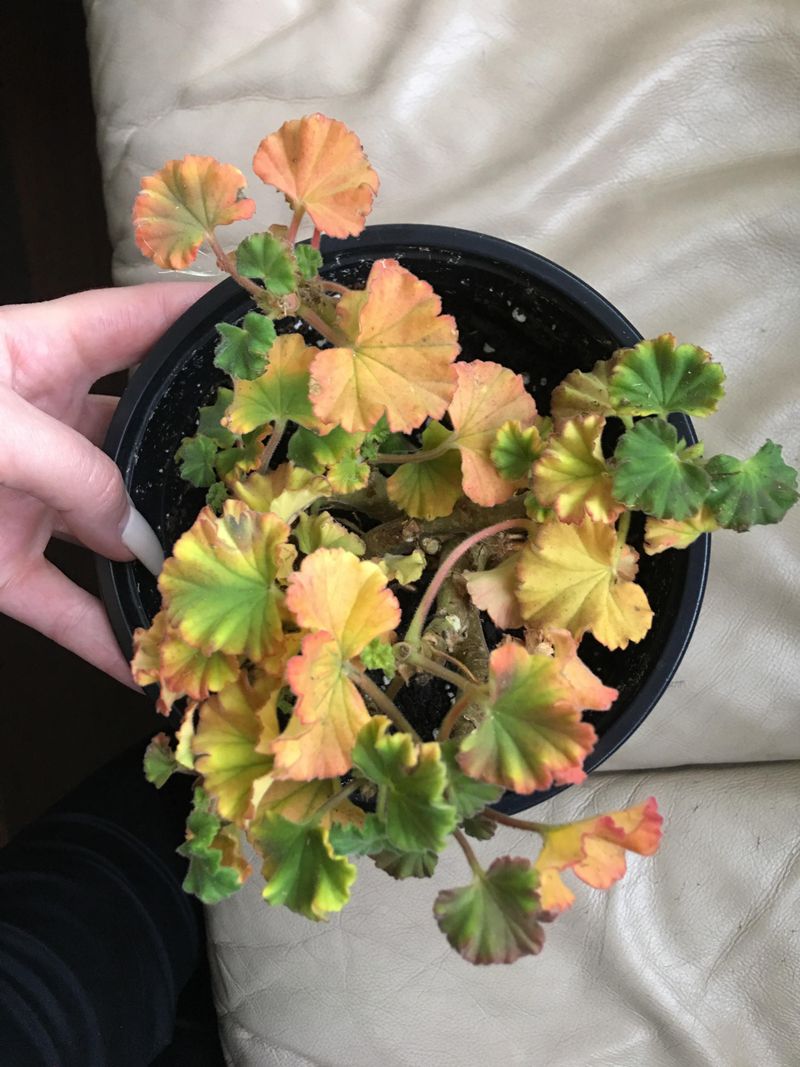
Short on sunny windows? You are not stuck. Artificial light can fill the gap nicely and keep geraniums looking sharp until spring.
University of Minnesota Extension notes that geraniums do well under fluorescent lights placed close above the plants. A common setup uses cool daylight tubes about 12 inches overhead, running roughly 14 to 16 hours a day.
Modern LED grow lights work even better for many home gardeners. They run cool, use little electricity, and last for years. Full-spectrum white LEDs suit both leafy growth and flowering, so you do not need special red or blue bulbs.
Keep the light close. Most shop lights and LED panels lose strength fast with distance, so hanging one three feet up wastes much of its power. Check the product directions for the recommended height.
A plug-in timer makes life easier. Set it once, and your plants get the same steady day length every day, even when you forget.
Give them darkness too. Plants need a nightly rest period, so avoid leaving lights on around the clock. You can also use lights to boost a dim window on cloudy days.
6. Cool Rooms Help Geraniums Make the Most of Weak Light
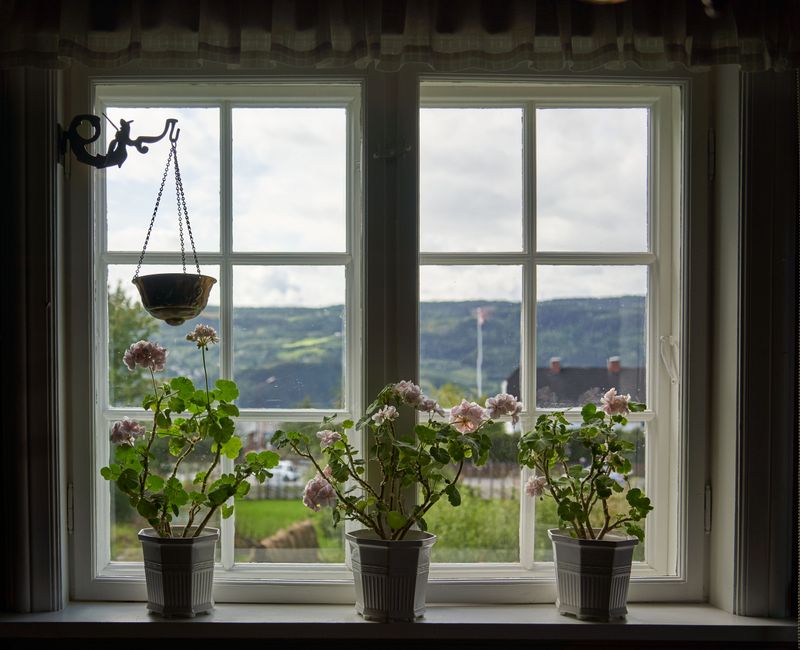
Temperature and light work as a team. A warm room paired with dim light pushes geraniums to grow fast and weak, which means more stretching.
Cooler conditions slow things down in a helpful way. Many extension guides suggest daytime temperatures around 60 to 65 degrees and nights near 50 to 55 degrees for overwintering geraniums.
At those levels, plants grow slowly and stay more compact. An unheated sunroom, a bright spare bedroom, or an enclosed porch that stays above freezing can be ideal. Many homes in the coastal plain and Piedmont have mild spots like these.
Keep pots away from heating vents, radiators, and wood stoves. Hot, dry air stresses leaves and dries soil quickly. Cold drafts from doors that open often can be rough too.
Frost is the real limit. Geraniums handle cool air but suffer below freezing, so avoid garages or porches that drop under 32 degrees.
Try a cheap indoor thermometer near your plants. You might discover your favorite windowsill swings much colder at night than the rest of the house. Finding the sweet spot of cool and bright gives you sturdier stems all winter.
7. Lighter Watering and a Spring Trim Bring Geraniums Back Strong
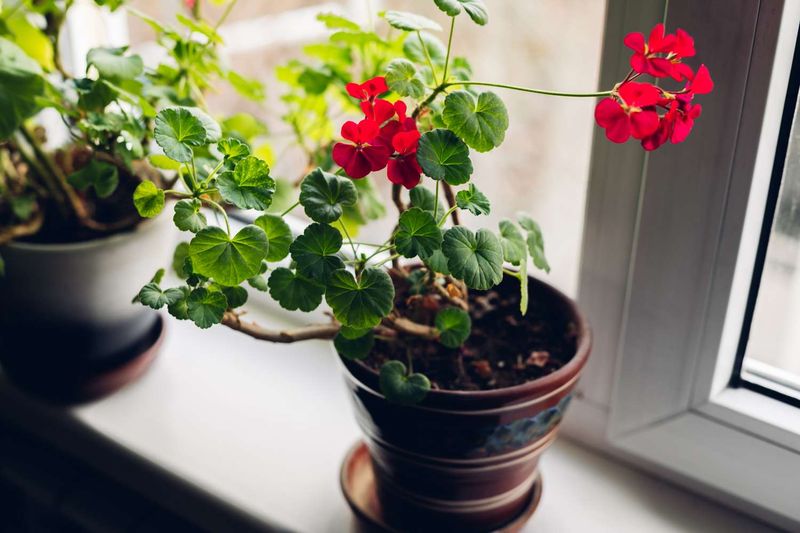
Less light means less thirst. With growth slowing in winter, geraniums need far less water than they did on a hot summer patio.
Let the top inch or so of soil dry before watering. Soggy roots in a cool, dim room can lead to rot, and swelling bumps on leaves called oedema often show up when soil stays too wet.
Skip fertilizer through the darkest months. Feeding a plant that cannot use the nutrients only encourages more weak growth. Start again with a diluted feed once days lengthen and fresh leaves appear.
Pruning ties everything together. Many gardeners cut plants back by about one-third to one-half before bringing them indoors, which reduces how much foliage the limited light must support.
By late February or March, give leggy stems another trim just above a leaf node. New shoots will branch out, creating a bushier shape. Those trimmings make easy cuttings, so you can root a few extra plants for free.
Once frost danger passes, usually April in much of North Carolina, ease pots outdoors gradually. A week in partial shade first helps leaves adjust before full sun returns.