How Oregon Gardeners Should Water Fruit Trees During Dry August Weeks
Dry August weeks can test even well-established fruit trees. The soil loses moisture fast, leaves may curl by afternoon, and a quick splash with the hose can feel like enough. Often, it is not.
Fruit trees need water that reaches deep roots rather than the dusty surface. A shallow routine may keep the topsoil damp while the tree remains thirsty below.
That mismatch can affect fruit size and place extra stress on branches that already carry a heavy crop.
Oregon weather adds another wrinkle. Cool mornings can hide how much moisture disappears once afternoon heat takes over.
The tree may look fine at breakfast and desperate by dinner. Dramatic, but fair.
A better approach starts with patience and a closer look at the soil. The right amount depends on the tree’s age and location.
Get the rhythm right, and the tree can handle August with far less stress while the fruit continues to develop.
1. Water Deeply Instead Of Lightly
Shallow watering might seem like enough, but fruit trees need water that reaches deep into the soil.
A quick sprinkle barely wets the top few inches, and roots that only find moisture near the surface will stay shallow.
Shallow roots make trees less stable and less able to handle dry spells.
Deep watering encourages roots to grow downward, where soil stays cooler and holds moisture longer. A good rule of thumb is to water slowly for 30 to 45 minutes in one spot, then move around the tree.
This lets water soak in rather than run off the surface.
During dry August weeks, fruit trees in Oregon typically need around 10 to 15 gallons of water per week for every inch of trunk diameter.
A mature apple tree with a 4-inch trunk might need 40 to 60 gallons weekly. That sounds like a lot, but a slow trickle over a long time gets the job done well.
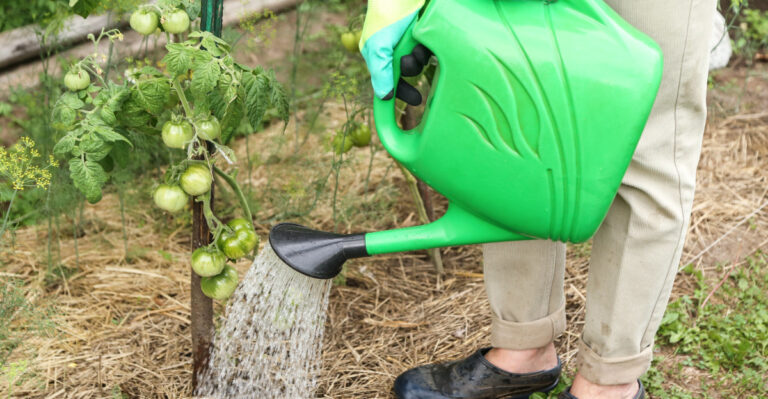
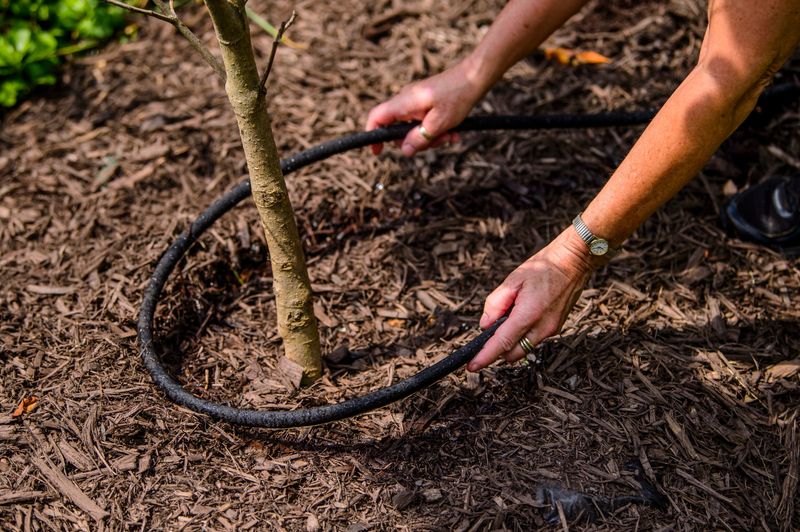
Soaker hoses and drip systems are great tools for deep watering. They release water slowly right at ground level, giving the soil time to absorb every drop.
Using one of these systems for an hour or two, two to three times per week, will do far more good than a quick daily spray from a sprinkler. Consistency matters just as much as volume when summer heat is at its peak.
2. The Drip Line Is The Target
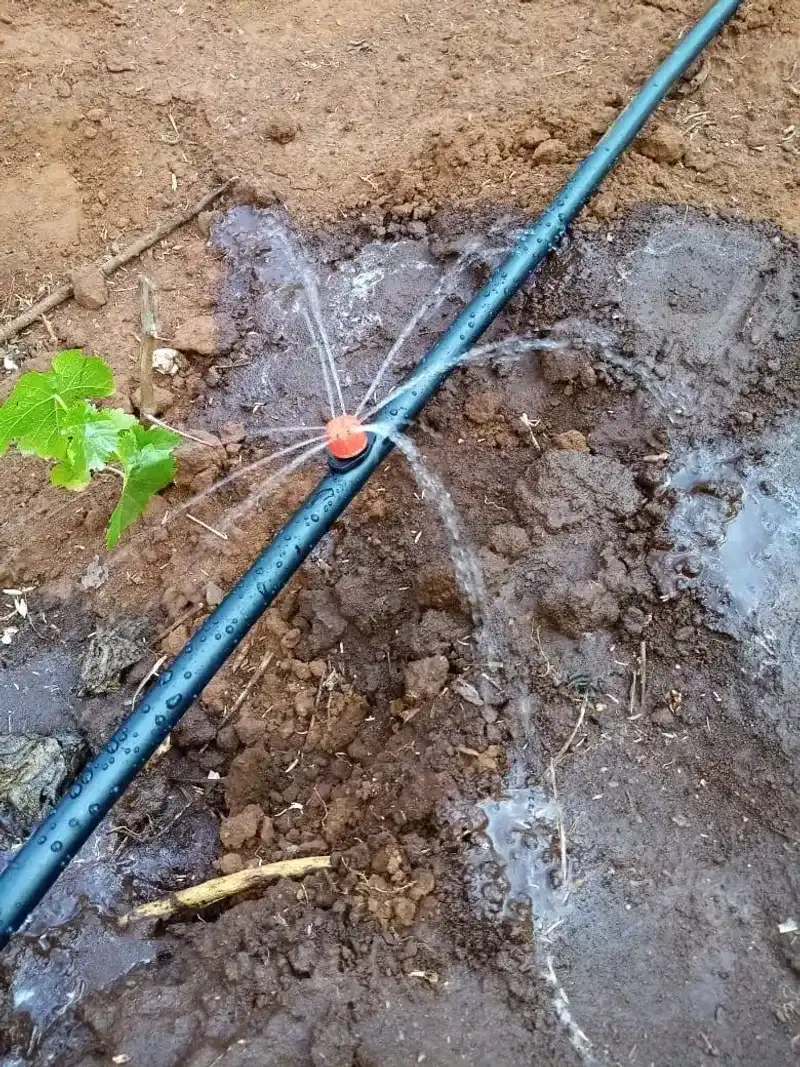
Oregon gardeners water right at the base of the trunk, but that is not where most of the roots drink from. The best place to water a fruit tree is along the drip line.
The drip line is the outer edge of the tree’s canopy, the circle on the ground directly below where the branches end.
Feeder roots, which are the small roots that actually absorb water and nutrients, grow mostly near the drip line. These fine roots spread outward in search of resources.
Watering at the drip line puts moisture exactly where the tree can use it most efficiently.
To find the drip line, stand back and look at the full spread of the tree’s branches. Then trace an imaginary circle on the ground below the outermost tips.
Your Oregon Garden Changes Every Week. Your Plan Should Too.
Gardening in Oregon changes quickly throughout the season. Every Friday you’ll receive a simple weekly plan showing exactly what to plant, prune, fertilize, harvest, and protect so you never miss the right timing.
That circle is your target zone. You can use a soaker hose, drip emitters, or even a slow-moving hose to water along this ring.
For larger trees, the drip line can be several feet away from the trunk. Do not skip the area between the trunk and the drip line entirely, but put most of your watering effort at the outer zone.
During August dry spells, making sure the drip line zone stays consistently moist will help the tree take up enough water to support ripening fruit. A little attention to placement goes a long way in hot weather.
3. Keep Water Away From The Trunk
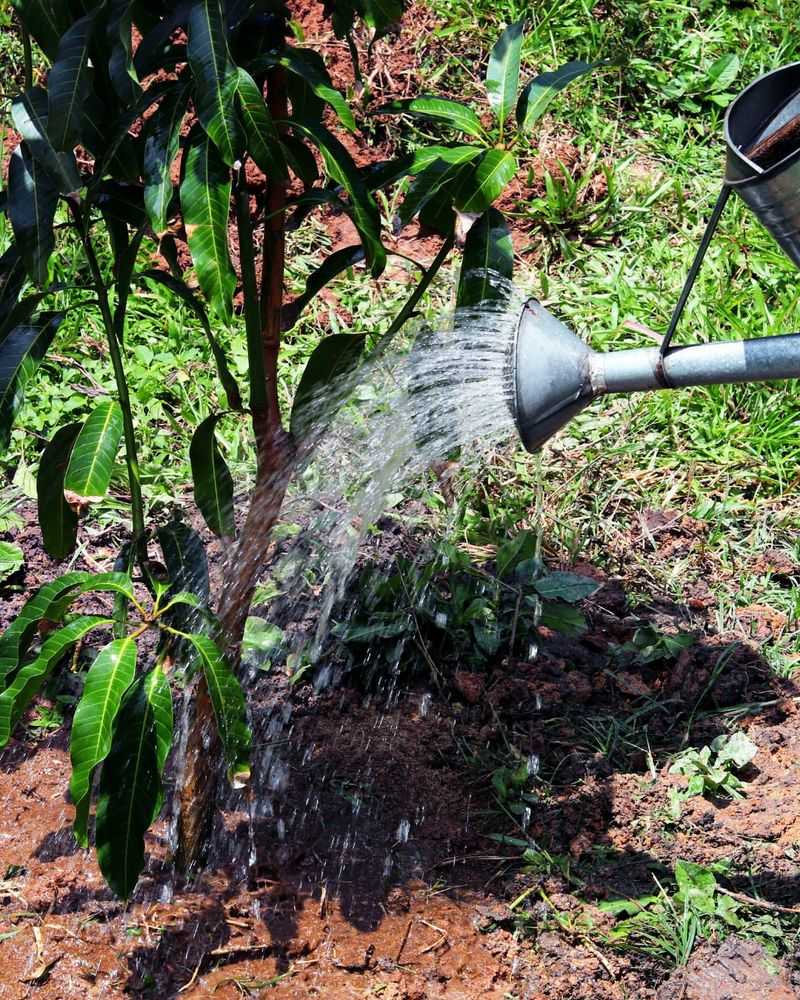
Wet bark at the base of a fruit tree is a recipe for trouble. When water sits against the trunk for long periods, it softens the bark and creates the perfect conditions for fungal growth and rot.
Keeping the trunk dry is a simple habit that protects the tree’s long-term health.
When setting up a drip system or soaker hose, leave at least 6 to 12 inches of space between the water source and the trunk. For mature trees, you can move the water source even farther out.
The goal is to wet the root zone without soaking the crown, which is the area where the roots meet the trunk.
Crown rot is one of the most common problems fruit trees face in home gardens. It often starts when mulch or soil piles up around the base, trapping moisture.
Keeping both water and mulch a few inches away from the trunk creates a dry buffer zone that helps prevent this issue.
During rainy seasons, nature does a decent job of spreading water evenly. But in August, when gardeners are actively irrigating, it is easy to accidentally direct water toward the trunk.
Take a moment to check where your water is actually landing before you walk away. A small adjustment in hose placement can protect your tree from unnecessary stress during the driest weeks of the year.
4. Young Fruit Trees Need Closer Checks
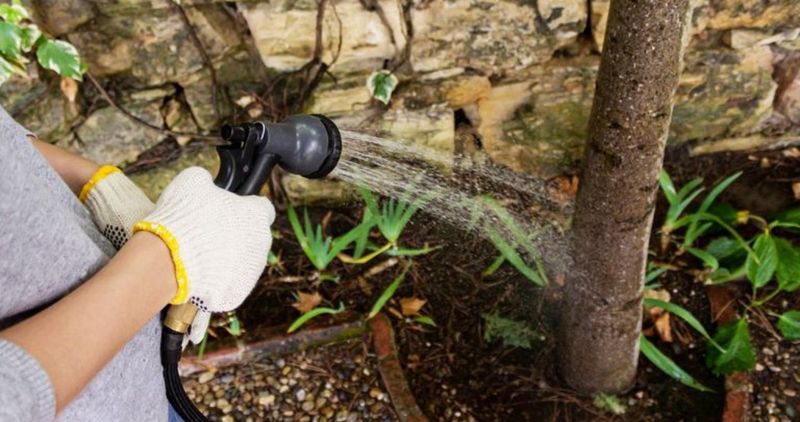
Newly planted and young fruit trees are far more vulnerable to dry spells than established ones. A mature tree has an extensive root system that can reach moisture deeper in the soil.
A young tree, planted within the last one to three years, has a much smaller root zone and dries out faster.
During August, young trees may need watering every two to three days, especially during heat waves. The soil around them should stay consistently moist but never waterlogged.
Checking the soil by hand is one of the simplest and most reliable methods. Push a finger or a wooden dowel about 3 to 4 inches into the ground near the tree.
If it comes out dry, it is time to water.
Young trees also benefit from a slow, deep watering approach rather than a quick surface soak. Using a 5-gallon bucket with a small hole drilled in the bottom is a handy trick.
Set it near the drip line and let it drain slowly over an hour. This delivers water right where it is needed without waste.
Watching for early signs of drought stress in young trees is especially helpful. Slightly curled or dull-looking leaves can signal that the tree needs water before things get serious.
Catching these signs early and responding with a good deep watering can help a young tree stay on track for healthy growth through the rest of the season.
5. Fruit-Heavy Branches Need Steady Moisture
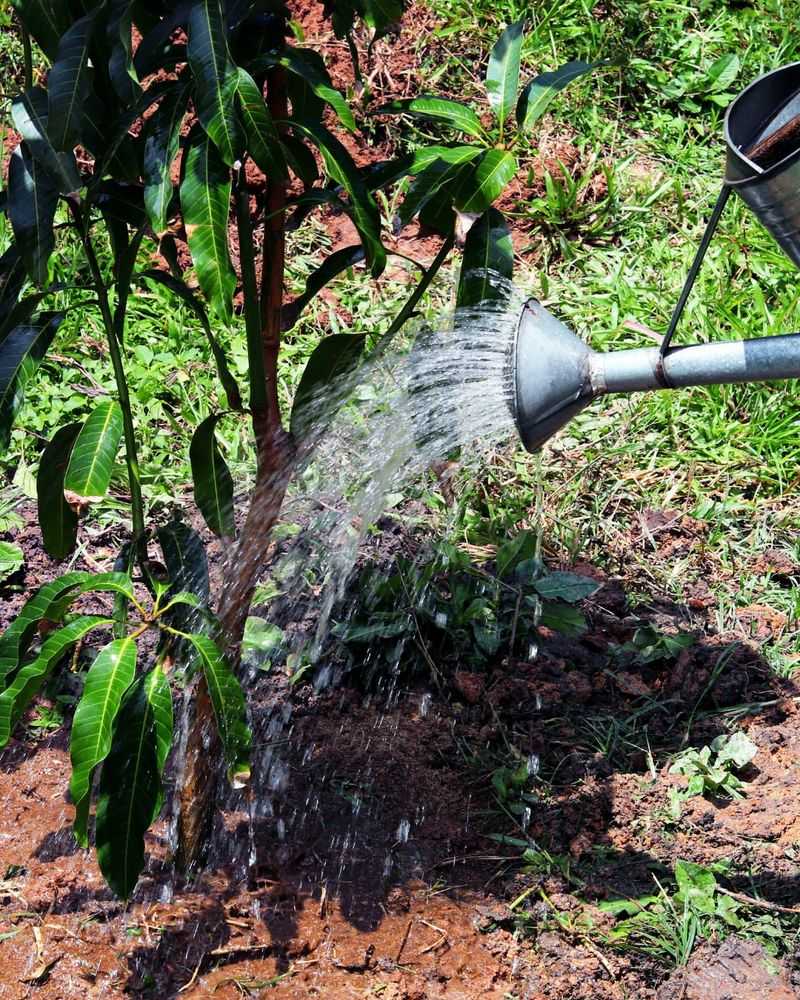
When a fruit tree is loaded with developing fruit, its water needs go up significantly. Fruit is mostly made of water, so a tree carrying a heavy crop is working extra hard to keep everything hydrated.
Inconsistent watering during this critical period can lead to cracked fruit, early drop, and poor flavor.
One of the most common problems caused by uneven watering is a condition called blossom end rot or fruit splitting. When trees get too dry and then receive a sudden large amount of water, the fruit swells too quickly.
The skin cannot keep up and it cracks. Keeping moisture levels steady prevents these sudden swings.
For trees with a heavy fruit load, try to water on a consistent schedule rather than waiting until the soil is bone dry. Aim to keep the root zone evenly moist throughout August.
Checking the soil every couple of days and watering before it gets completely dry is a smart approach.
Fruit size and sweetness are directly connected to consistent water supply. Trees that get enough steady moisture during the final weeks before harvest tend to produce larger, juicier fruit.
On the other hand, trees that go through repeated dry and wet cycles often produce smaller fruit with tougher skins.
Paying close attention to watering when branches are bending under the weight of fruit is one of the best investments a gardener can make in late summer.
6. Mulch Slows August Soil Drying
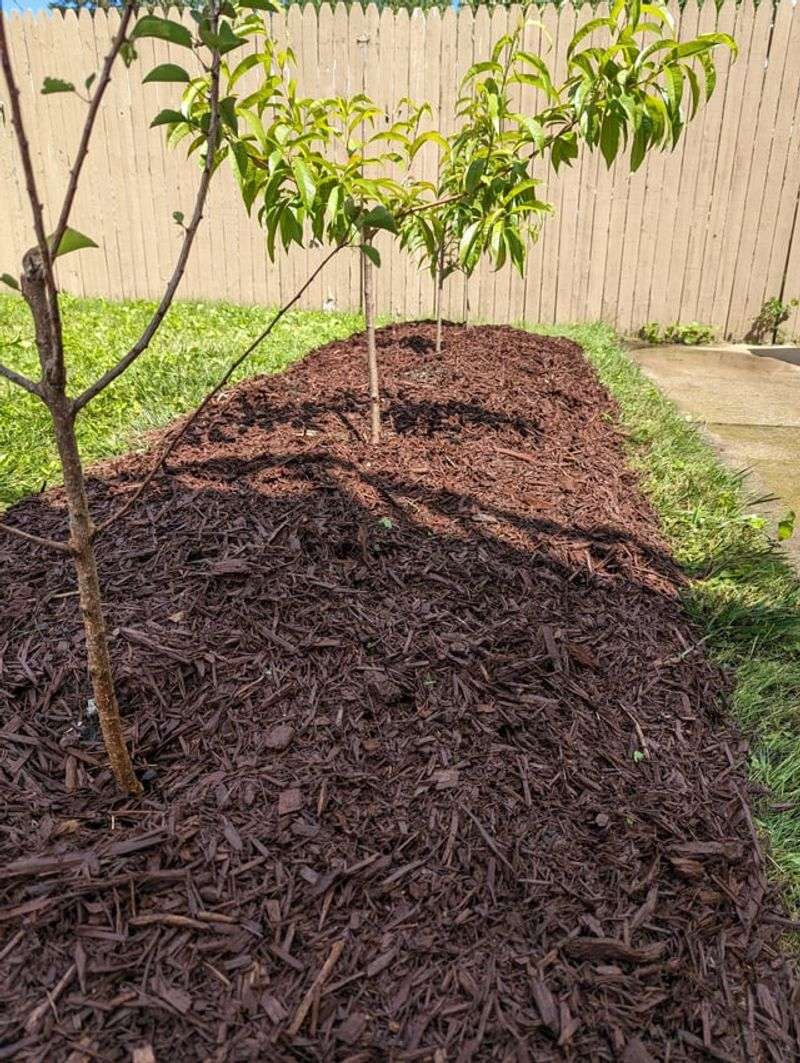
Mulch is one of the most underrated tools in a summer garden. A thick layer of organic material spread around a fruit tree does several helpful things at once.
It blocks direct sunlight from hitting the soil, which keeps temperatures lower. It also slows evaporation, which means the soil holds onto moisture much longer between waterings.
Wood chips, straw, and shredded leaves all work well as mulch for fruit trees. Aim for a layer that is 3 to 4 inches deep.
Spread it out to the drip line or even a bit beyond, covering as much of the root zone as possible. Just remember to keep the mulch a few inches away from the trunk to avoid trapping moisture against the bark.
In the heat of August, bare soil can lose a large amount of moisture to evaporation within just a few hours of watering. Mulch acts like a blanket, holding that moisture in place so roots can access it throughout the day.
Studies have shown that mulched soil can stay moist up to twice as long as unmulched soil during hot weather.
Applying or refreshing mulch at the start of the dry season is a simple task that pays off all summer long. If the mulch layer has thinned out from earlier in the year, add more before the hottest weeks arrive.
A well-mulched tree needs less frequent watering and handles heat stress with much greater ease than one planted in bare, dry ground.
7. Check Soil Before Leaves Wilt
Waiting until leaves wilt before watering is waiting too long. By the time a fruit tree shows visible wilting, it has already been stressed for some time.
Catching dryness early, before the tree shows symptoms, leads to much better outcomes for both the tree and the fruit it is carrying.
Getting into the habit of checking soil moisture every two to three days during August is a smart move. You do not need any fancy equipment.
Push a finger 3 to 4 inches into the soil near the drip line. If it feels dry at that depth, water the tree.
If it still feels slightly cool and damp, you can wait another day.
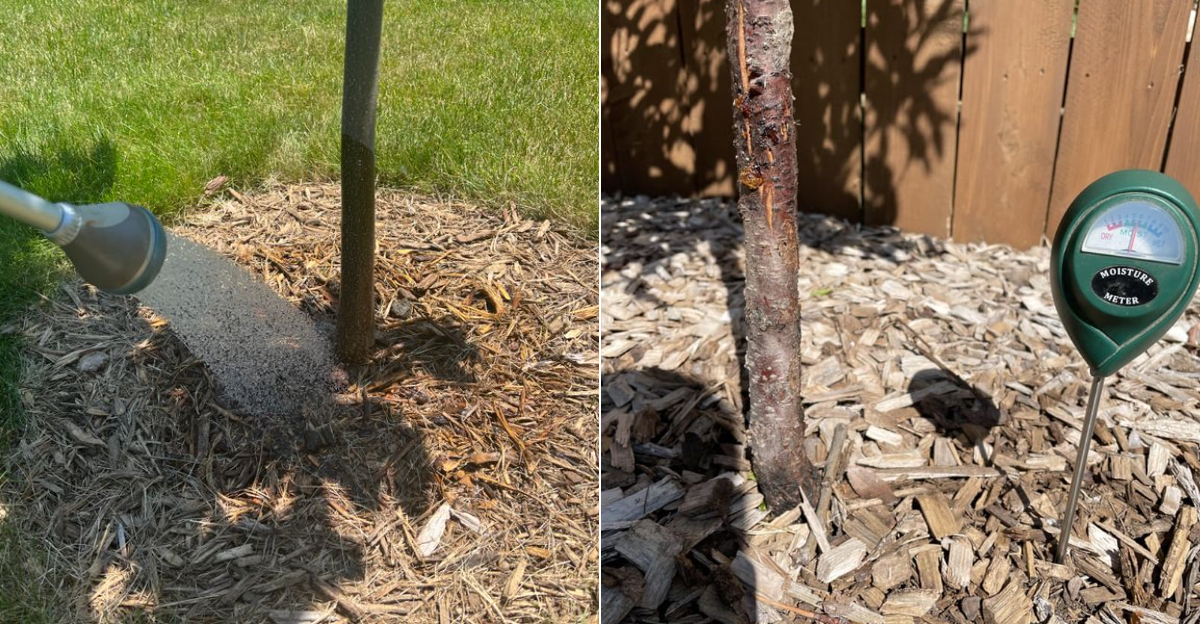
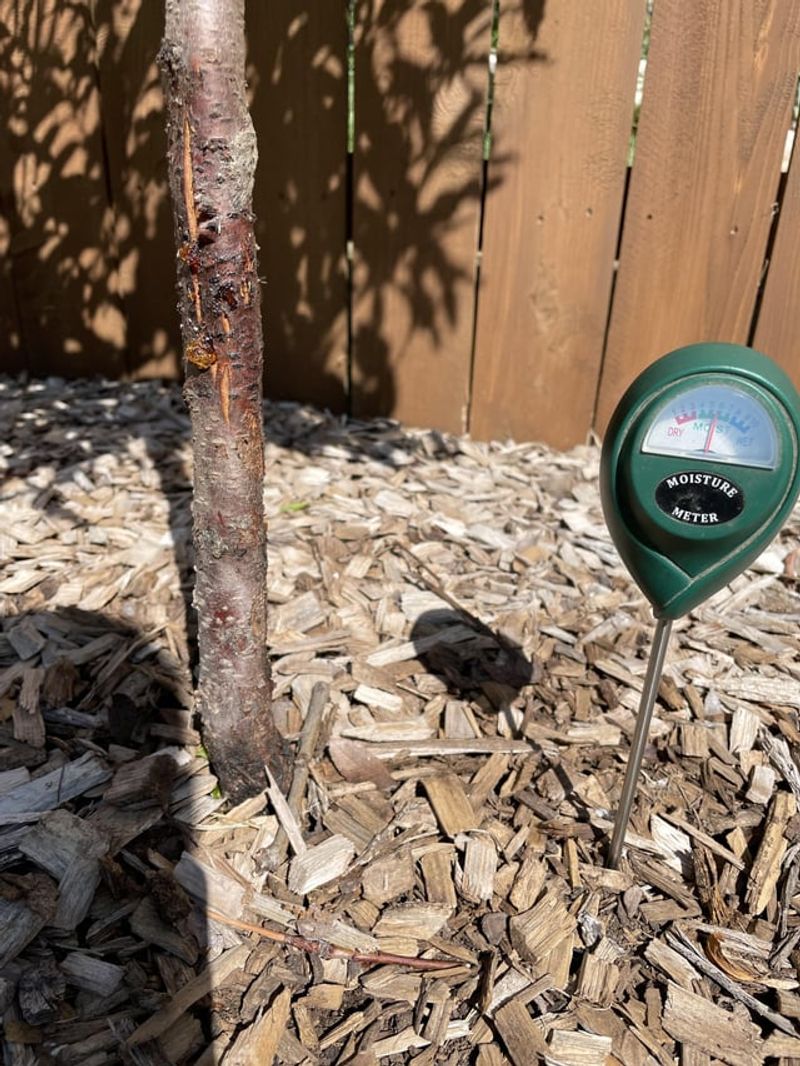
A soil moisture meter is another useful option. These simple tools cost around 10 to 20 dollars and give you a quick reading without any guesswork.
Insert the probe near the drip line and check the reading. Most fruit trees do best when the soil moisture stays in the medium to moist range throughout August.
Leaves that look slightly dull, curl at the edges, or feel papery are early warning signs of drought stress. These signs show up before full wilting and give you a chance to act quickly.
Responding to these early signals with a thorough deep watering often brings a tree back to full health within a day or two.
Building a regular soil-checking routine takes only a few minutes but can protect months of growing effort.
8. Morning Watering Reduces Stress
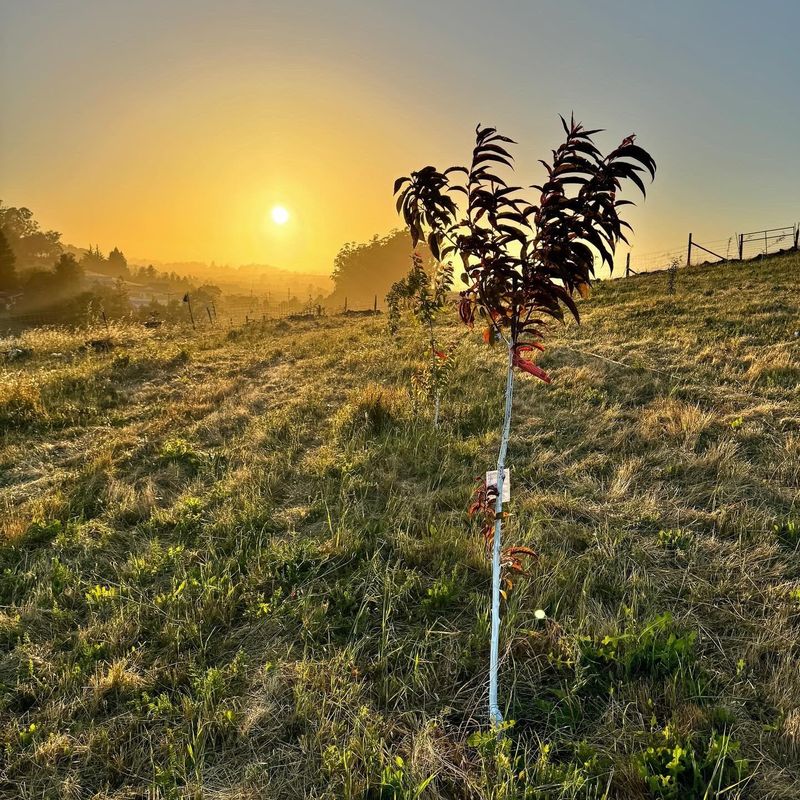
The time of day you water matters more than most people realize. Watering in Oregon morning gives trees the moisture they need right before the hottest part of the day begins.
Roots can absorb water steadily through the morning hours, and the tree is better prepared to handle afternoon heat.
Watering in the evening might seem convenient, but it comes with a downside. When leaves and soil stay wet overnight, fungal problems become more likely.
Cooler nighttime temperatures slow evaporation, which means moisture lingers on leaves and at the soil surface longer than it should. Morning watering allows excess moisture to evaporate naturally as the day warms up.
Midday watering is the least efficient option. Water evaporates quickly from hot soil, and little of it reaches the roots before it is lost to the air.
If you use a sprinkler system, the heat can also cause water droplets on leaves to act like tiny magnifying glasses, which can lead to leaf scorch.
Setting up a drip system or soaker hose on a timer is one of the easiest ways to make sure morning watering happens consistently. Many timers can be found at garden centers for under 30 dollars.
Set it to run in the early morning hours, between 5 and 8 a.m., for the best results. A consistent morning watering schedule throughout August keeps fruit trees calmer, healthier, and more productive all the way to harvest day.