How Snowbirds Can Set Up an Arizona Drip System Before Heading Back North
Your yard cannot call you when an emitter pops off in April. A drip system waters quietly, so small problems can run for weeks before anyone notices.
Snowbirds in Arizona face this puzzle every spring when the northern thaw starts calling. A careful check before you leave can save plants, water, and a lot of worry.
Match the Checklist to Your Departure Season
Most snowbirds head north when a winter stay ends, often in spring. That is the moment this checklist was built for.
The Arizona Department of Transportation describes snowbirds as seasonal visitors escaping northern winters, with activity running from October to April.
October fits a different job. Think of it as getting the yard ready for cooler weather, or for your arrival, rather than a departure task.
So grab a notebook as your stay winds down. Walk the yard, list what needs attention, and start working through the steps below.
Giving yourself a few extra days before the car is packed makes the whole process far less rushed.
Group Plants by Water Needs
Before you touch the controller, map your yard on paper. Mark which plants drink little and which ones want regular water.
Plants with similar water needs should share a valve when possible, while groups with different needs should sit on separate valves when possible.
A desert shrub bed and a citrus tree are a good example. They rarely want the same schedule, so giving each its own valve makes later changes much simpler.
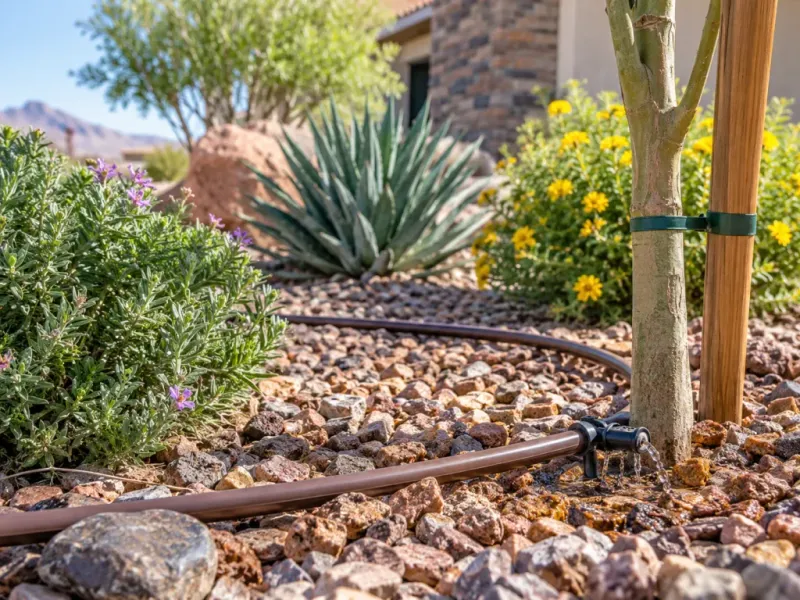
Next, look at where the emitters sit. University of Arizona Extension guidance calls for emitters near the active root zone, then moving them outward as plants grow.
Young plants may have emitters tucked close to the trunk. Older ones often need them shifted farther out, so spend a few minutes adjusting before you go.
Clean the Filter Before Testing the System
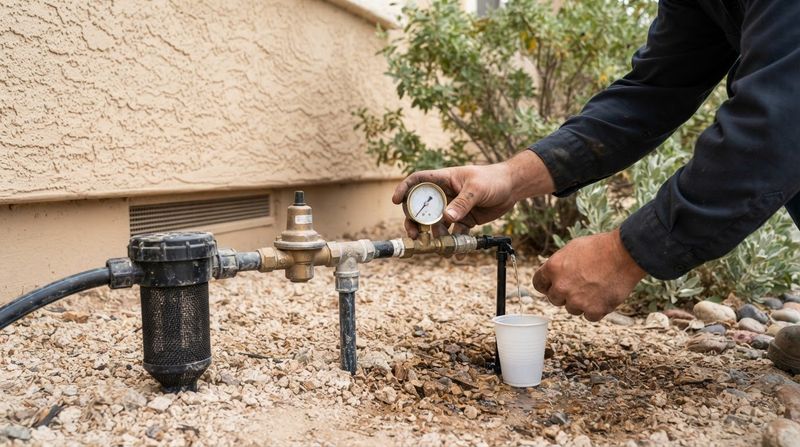
A dirty filter is the quiet troublemaker of drip systems. Pull the screen, rinse it clean, and put it back following the maker’s instructions.
Then flush the main line and the lateral lines so grit does not clog emitters.
Pressure matters too. A suitable regulator protects tubing and emitters, and University of Arizona Extension gives about 20 to 30 psi as a typical range.
Your own system may differ, so check what the manufacturer says.
Keep your work to simple jobs like these. Backflow preventers are pressurized, and local codes apply, so call a qualified professional rather than opening or repairing one yourself.
What Does Each Zone Do While It Runs?
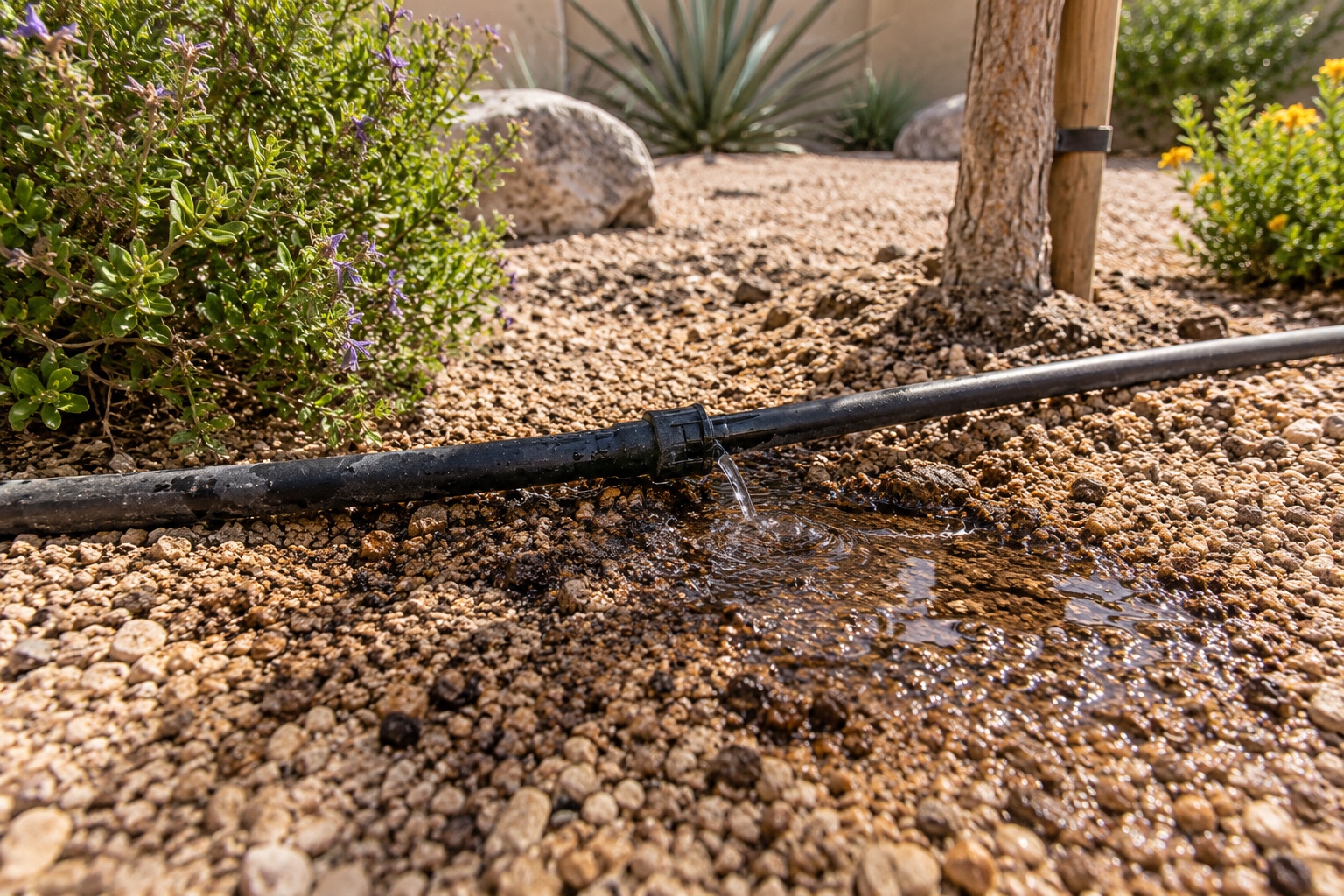
Now for the fun part, watching your system work. Run every zone, one at a time, and walk each line while the water flows.
Look for broken or missing emitters, cracked tubing, soggy ground, and leaks near valves.
Dry spots matter just as much as wet ones. Dig down a little to see whether water reaches the root area you meant to feed, rather than trusting minutes on a timer.
Both City of Phoenix leak guidance and extension advice point to regular inspections while systems are running.
Fix what you find, then run the zone again. Remember that a good test today is a snapshot, not a promise for next month.
Set a Schedule for the Season and the Site
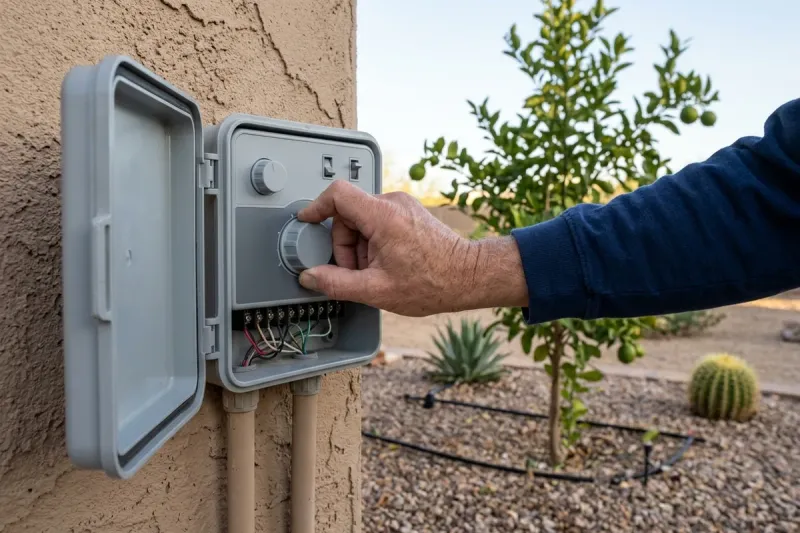
Copying one timer schedule across the whole state is a recipe for trouble. Needs change with plant type, soil, sun exposure, weather, and elevation.
Established desert trees and shrubs usually want something different from citrus, flowers, vegetables, containers, and new plantings.
Regional charts are good starting points, not rules for every property. The AMWUA watering schedules suggest adjusting seasonally and watching for signs of too much or too little water.
University of Arizona charts show that some established low-desert plants may need no winter irrigation, while colder areas may call for a little supplemental water in dry spells. Newly planted items often need much more frequent water while they settle in.
Pick settings that match your plants and your town, and write them down for whoever checks the yard.
Will Exposed Pipes Need Cold-Weather Protection?

Whether you need freeze protection depends on where you live. A low-desert yard in Phoenix faces different risks than a high-elevation property.
Exposed pipes and fixtures can still be damaged by an unexpected frost, so look at what sits above ground.
Winterizing a drip system may be necessary in colder areas, and there is no single statewide procedure. Check the University of Arizona Extension basics and ask neighbors or a local irrigation pro what works at your elevation.
Backflow components deserve extra care. Local codes govern them, and qualified professionals should handle any repair.
Who Can Check the Yard After You Leave?
Automation does not replace eyes on the yard. Ask a trusted neighbor, friend, or landscaper to look things over on a regular basis.
A person can spot a soggy patch, a popped emitter, or a wilting plant that a timer will never report.
Leave them a simple note with your zone map, your schedule, and your contact details. Spell out what to do if they find a leak.
Some systems add a flow sensor paired with a compatible controller and master valve. The Arizona Department of Water Resources describes this as a useful safety net that can shut a station off when flow falls outside programmed limits, though it is not common in homes.
Treat any sensor as a backup, never a substitute for a real visit.
Leave With a Checked System, Not a Promise
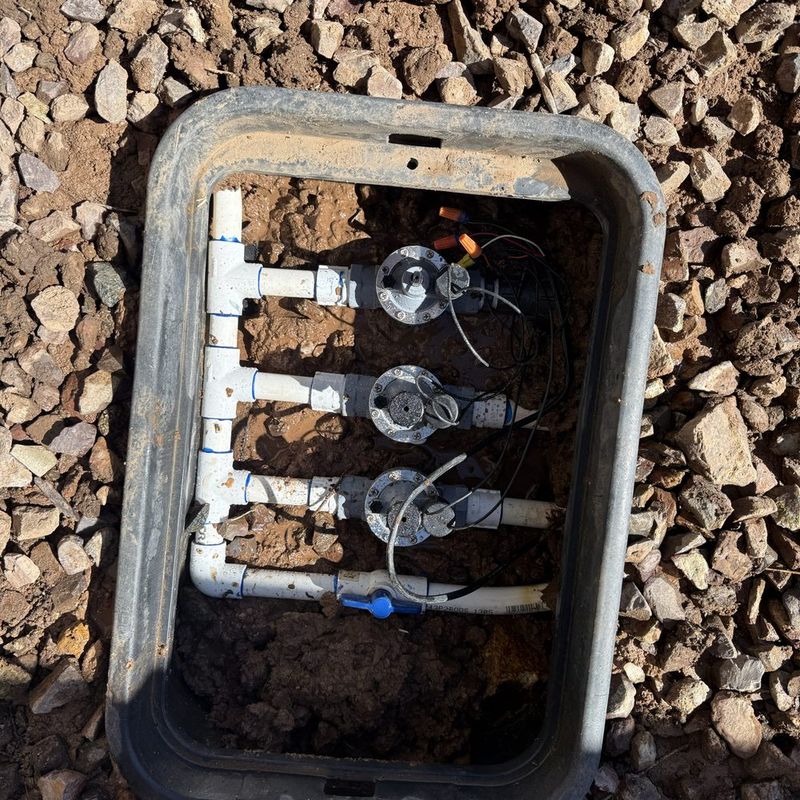
Before the car pulls out, confirm that you cleaned, ran, fixed, and scheduled. Then line up someone to look in on things.
The University of Arizona Extension guidance on regular visual checks is the thread running through every step.
No setup guarantees a trouble-free yard while you are gone. A checked system and a friendly pair of eyes come close, though.
Good gardens are tended by people, not just timers.