How Texas Gardeners Prune Basil So It Keeps Growing Back Fuller
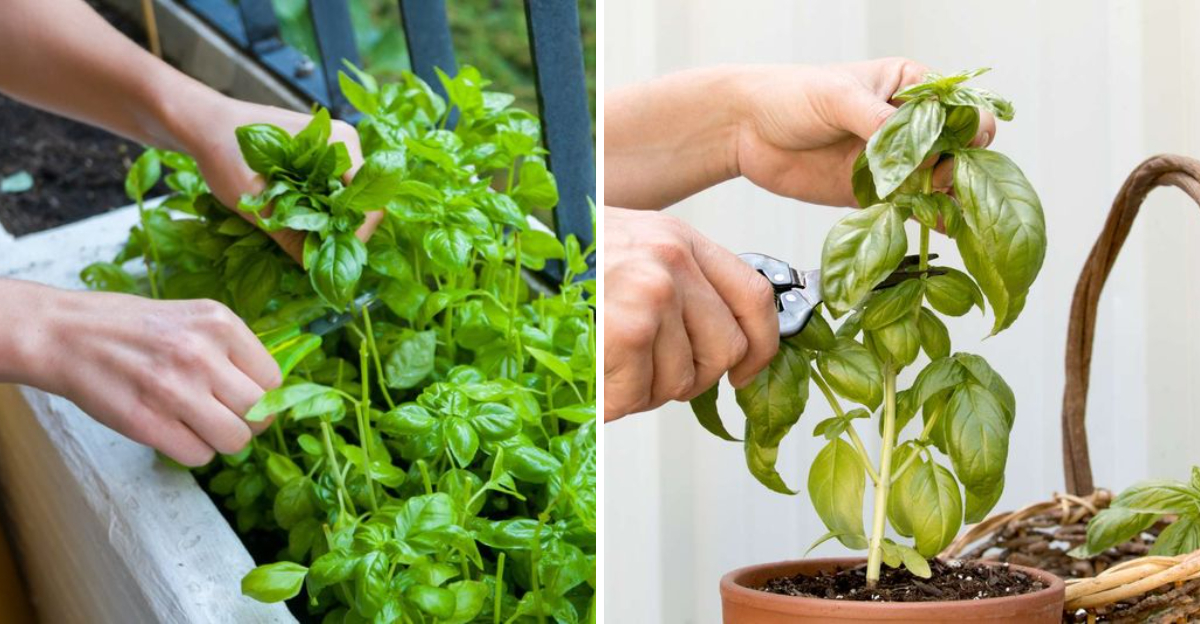
Growing basil in Texas is a little bit like trying to win a race where the finish line keeps moving.
Spring warmth gets these plants fired up fast, and before you’ve even planned your first big batch of pesto, those stems are shooting upward and flower stalks are already forming at the top.
Suddenly your once-promising basil plant looks tall, leggy, and suspiciously light on actual leaves. Frustrating, right?
Here’s the thing though: a little hands-on attention goes a long way with basil. Regular pinching, quick tip removal, and staying on top of flowering can completely transform how this herb performs through the Texas growing season.
We’re talking bushy, leafy, wildly productive plants across herb beds, raised beds, patio pots, and kitchen gardens. All it takes is knowing exactly where and when to pinch.
1. Pinch Basil Early, Not Just After It Gets Tall
Young basil plants look so promising when they first fill out in spring, but waiting too long before the first pinch is one of the most common habits that leads to tall, bloom-focused plants instead of full, leafy ones.
In Texas, warm temperatures arrive quickly, and basil responds by growing upward fast. Getting ahead of that upward push early makes a real difference.
When a basil plant reaches about six inches tall and has at least two or three sets of leaves, that is a reasonable time to start pinching.
Removing the very top growth at that point encourages the plant to redirect its energy into side branches rather than continuing to stretch upward.
Each stem tip that gets pinched can eventually produce two new shoots below the cut.
Gardeners who wait until basil looks leggy often find the plant harder to manage later in the season. Early pinching in herb gardens and container pots tends to produce shorter, more compact plants with more branching points.
More branching points mean more leaf-producing stems, which translates directly into more frequent and more generous harvests throughout the growing season.
Starting early really is the key difference between a plant that sprawls and one that stays productive.
2. Cut Just Above A Leaf Node Or Leaf Pair
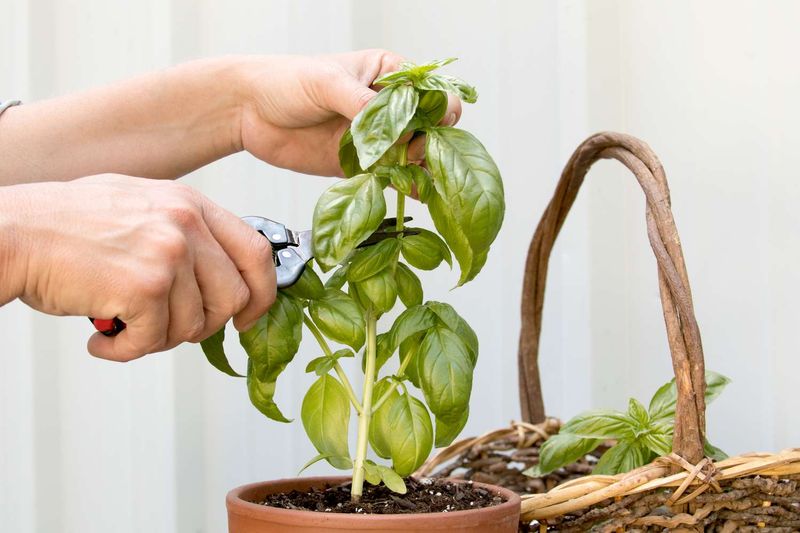
Knowing exactly where to make a cut is what separates a productive prune from one that leaves a plant looking ragged and slow to recover. The spot that matters most is just above a leaf node, which is the point on the stem where a set of leaves attaches.
Cutting there gives the plant a clear signal to push new growth from those leaf axils below the cut.
When you cut too far above a node, a short stub of bare stem is left behind. That stub does not produce new leaves and can sometimes slow the plant’s recovery.
Cutting just above the node, leaving only a small amount of stem above the leaf pair, helps the plant branch out cleanly and quickly. In Texas summer heat, basil appreciates a clean, precise cut that lets it bounce back without wasted effort.
Your Texas Garden Changes Every Week. Your Plan Should Too.
Gardening in Texas changes quickly throughout the season. Every Friday you’ll receive a simple weekly plan showing exactly what to plant, prune, fertilize, harvest, and protect so you never miss the right timing.
Container-grown basil on porches and patios benefits especially from this technique because the plants are often in smaller volumes of soil and need every advantage to stay productive.
Once you get comfortable finding the nodes on your basil stems, the whole process becomes quick and almost intuitive.
Over time, a plant that receives these careful cuts will develop a noticeably fuller shape with multiple strong stems branching outward rather than one tall central stalk reaching for the sky.
3. Remove The Top Inch Or So Of Tender Growth
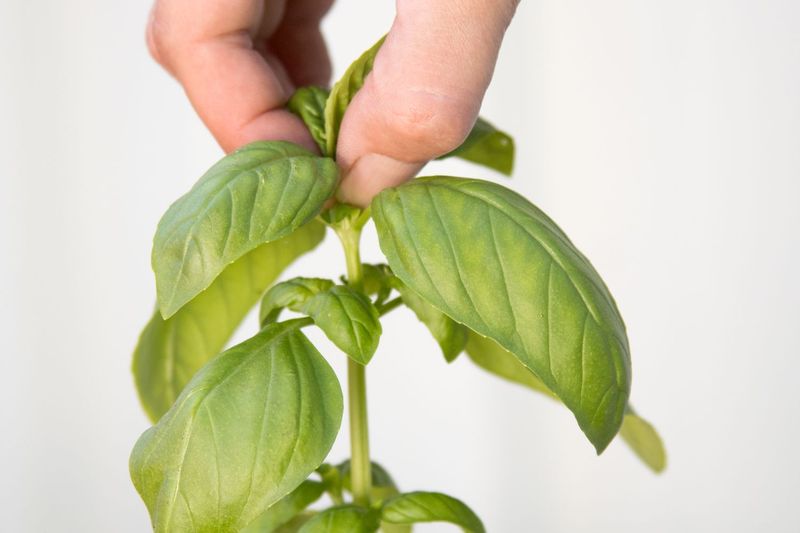
Soft, pale green stem tips are some of the most useful parts of a basil plant when it comes to keeping growth full and bushy.
Removing just the top inch or so of new, tender growth is a light touch that can have a surprisingly strong effect on how the rest of the plant develops.
It does not take much to encourage a basil stem to branch.
In Texas, where spring warmth can quickly give way to intense summer heat, basil tends to put on tender new growth rapidly. That fresh growth at the top of each stem is where the plant is most actively pushing upward.
Pinching it off redirects that energy sideways rather than straight up, which is exactly the direction most home gardeners want their herb plants to grow.
This technique works well for both in-ground herb beds and container gardens on patios and porches. A light pinch of the top inch does not stress the plant the way a large cutback might.
Basil in pots and raised beds that receives this kind of gentle, repeated tip removal tends to develop a rounder, more compact form over time.
Gardeners often notice that after a few rounds of tip pinching, their plants look noticeably fuller than basil that was left to grow without any guidance.
Small adjustments made consistently lead to big changes in plant shape.
4. Keep Harvesting Or Pinching Through The Growing Season
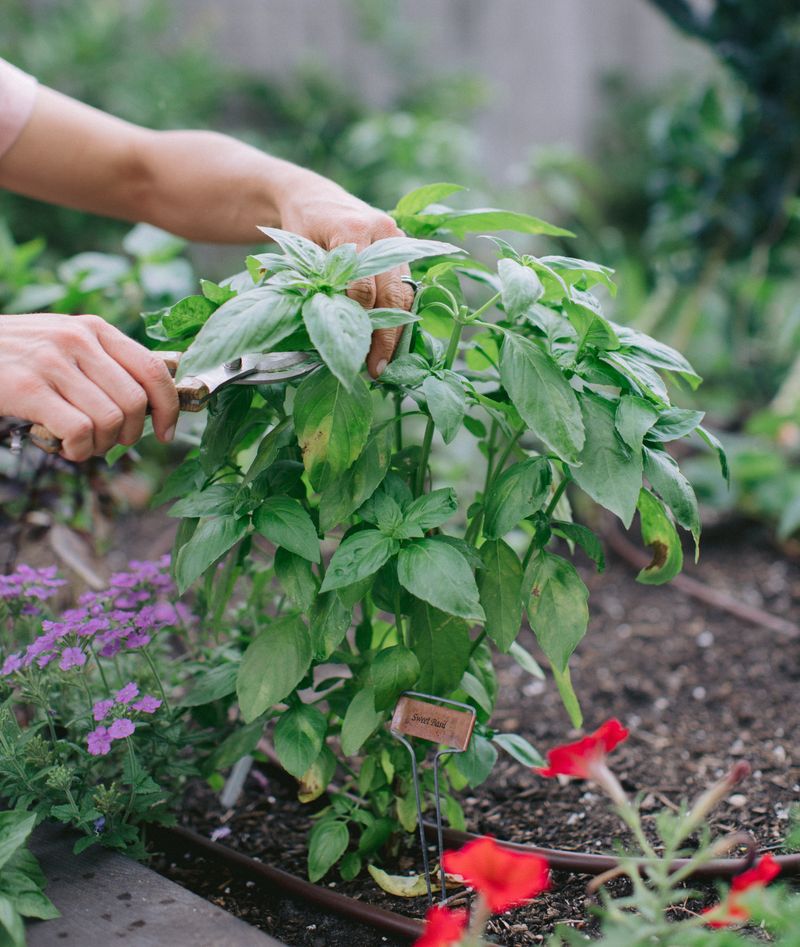
Basil is one of those herbs that genuinely rewards regular attention. Leaving a plant untouched for weeks at a time in a Texas garden often means coming back to find it has stretched upward and started forming flower buds.
Consistent harvesting and pinching through the growing season keeps the plant in a leafy, productive phase longer than it would stay on its own.
Every time a stem tip is removed, whether for cooking or just for the sake of shaping the plant, the plant responds by pushing out new side growth. That cycle of removing and regrowing is what builds a full, multi-stemmed basil plant over time.
Gardeners who visit their herb beds and patio pots every week or so and take a little from each plant tend to end up with far more basil overall than those who harvest in large amounts only occasionally.
Texas summers are long, and basil can remain productive well into fall if it is kept from going fully to flower. Regular harvesting through June, July, and into August gives gardeners the best chance of stretching the harvest window.
Even during the hottest weeks, taking a few stem tips each time you walk through the garden helps maintain the plant’s shape and keeps new leaf growth coming.
Treating each harvest as a pruning session makes the whole process feel more intentional and rewarding.
5. Pinch Off Flower Buds And Flower Stalks Promptly
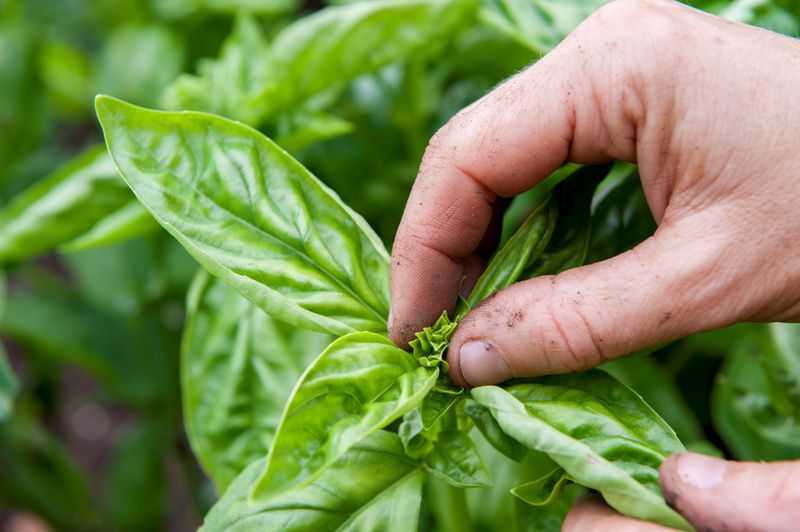
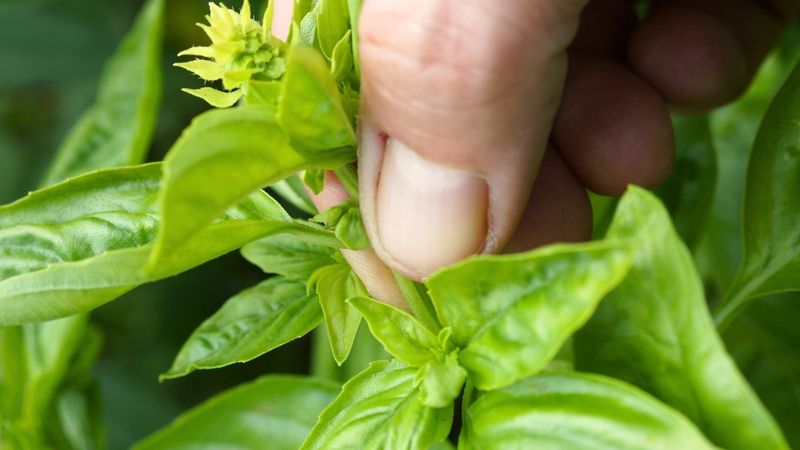
Flower buds forming at the top of basil stems are a sign that the plant is shifting its focus away from leaf production and toward reproduction.
In Texas, that shift can happen earlier in the season than many gardeners expect, especially during warm springs or in containers that heat up quickly in direct sun.
Catching and removing those buds early helps keep the plant producing flavorful leaves longer.
Once basil begins to flower, the leaves often become smaller, less tender, and sometimes slightly more bitter in flavor.
Removing flower buds and flower stalks before they open interrupts that transition and encourages the plant to redirect its energy back into leafy growth.
It does not stop flowering permanently, but it does buy more time in the productive, leafy phase that most home cooks prefer.
In herb beds and kitchen gardens, checking plants every week or so for emerging flower buds is a practical habit that pays off in longer harvests.
The buds are easy to spot once you know what to look for, appearing as small clusters at the very top of the central stem or at the tips of side branches.
Pinching them off takes only a few seconds per plant. Over the course of a Texas growing season, that small habit can mean weeks of additional leafy growth before the plant naturally winds down its productive cycle.
6. Avoid Taking Random Single Leaves One At A Time
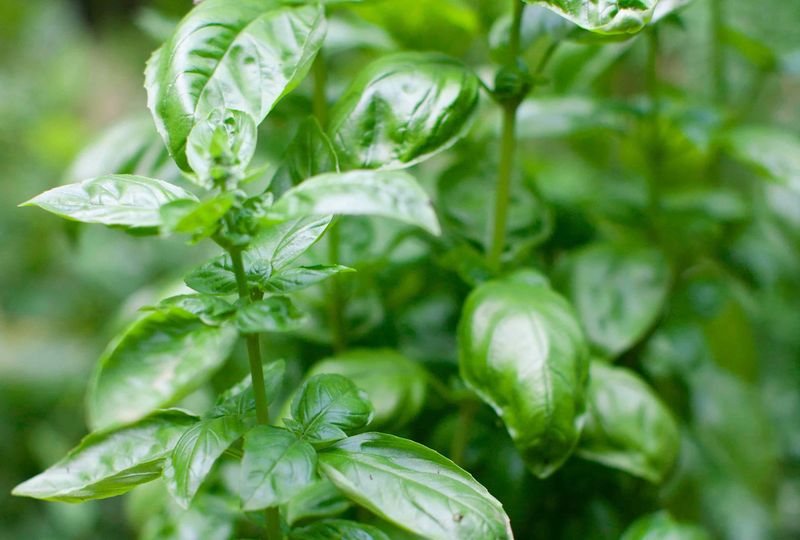
Pulling individual leaves off a basil plant one at a time feels like the gentlest way to harvest, but it actually does very little to shape the plant or encourage new branching.
When leaves are removed without also cutting back the stem tip, the plant continues growing upward in the same direction.
Over time, this habit leads to tall, bare-stemmed plants with a small cluster of leaves at the very top.
Stem tips are where the plant’s upward growth signal comes from. Removing leaves without touching those tips leaves the growth pattern unchanged.
In Texas, where basil can shoot up quickly during warm months, relying on single-leaf harvesting alone tends to produce plants that outgrow their containers or become difficult to manage in raised beds within just a few weeks.
A more effective approach combines occasional single-leaf harvests when you need just a small amount for cooking with regular stem-tip pinching to maintain the plant’s shape.
Focusing harvests on the upper portions of stems, removing a few inches of growth along with the attached leaves, gives you usable basil while also doing the shaping work the plant needs.
Texas home gardeners who shift from random leaf-picking to intentional stem harvesting often notice a clear improvement in how full and productive their plants remain through the heat of summer and into early fall.
Small changes in harvesting habits can reshape the whole plant over time.
7. Use Clean Fingers Or Clean Snips
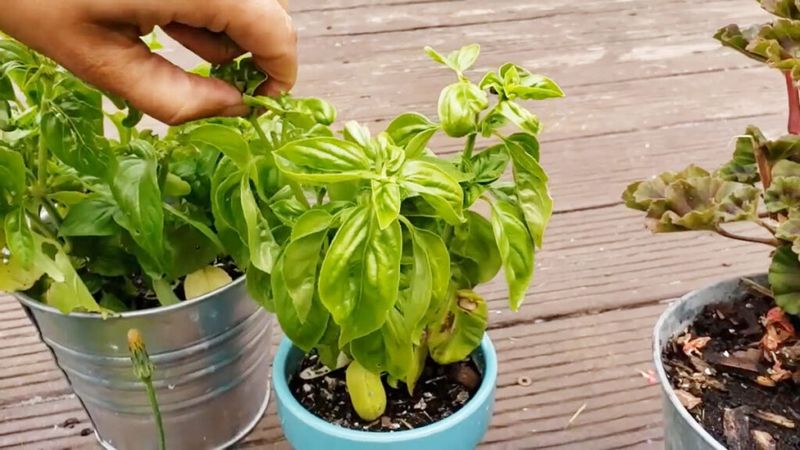
Sharp, clean tools and clean fingernails make a difference when pruning herbs, even though basil is a fairly forgiving plant. Dirty or dull cutting edges can bruise stem tissue and make clean cuts harder to achieve.
In Texas heat, where plants are already working hard to manage temperature stress, a clean cut heals more smoothly than a torn or crushed stem.
Fingers work well for pinching soft, tender basil tips because the pressure is easy to control. For thicker stems or for gardeners who prefer more precision, small herb snips or sharp kitchen scissors do a reliable job.
Wiping blades with a clean cloth between uses is a simple habit that reduces the chance of transferring anything unwanted from one plant to another in the garden.
Container gardens on patios and porches often hold several herb plants close together, so keeping tools reasonably clean is a practical consideration even in a casual home garden setting. You do not need specialized equipment to prune basil well.
A pair of scissors kept in the kitchen or on the porch near the herb pots is often all that is needed for regular pinching sessions.
The most important thing is that whatever tool you use is sharp enough to make a clean cut rather than tearing or mashing the soft basil stem.
Clean cuts support faster, healthier regrowth throughout the season.
8. Focus On Repeated Light Pinching Instead Of One Hard Cutback
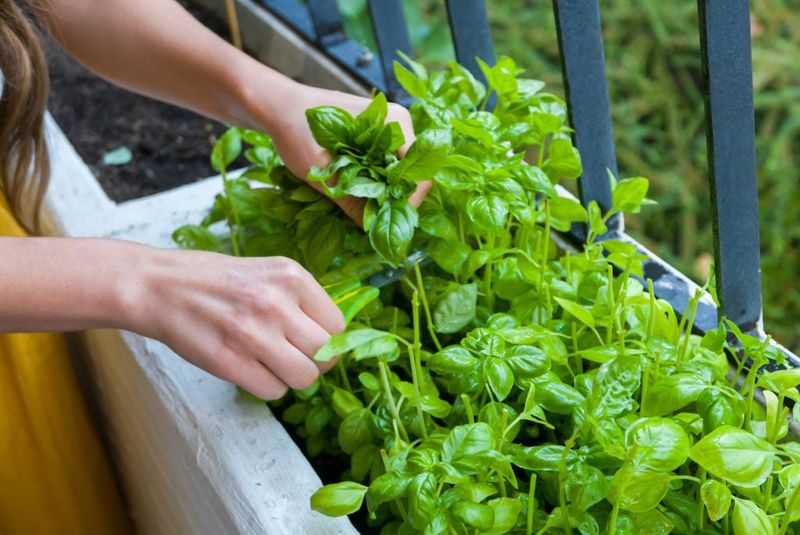
One of the most useful shifts a Texas basil grower can make is moving away from the idea of a single dramatic cutback and toward a habit of frequent, light pinching.
Cutting a plant back hard all at once can work in some situations, but it tends to stress the plant more than a series of smaller, gentler removals made regularly throughout the season.
Light pinching done every week or two keeps the plant in a steady cycle of removing tips and pushing out new side growth. That rhythm builds a bushier plant gradually rather than trying to reshape it all at once.
In Texas, where summer heat arrives fast and stays long, keeping the plant’s stress level low through gentle, consistent pruning is a practical strategy that tends to produce better results than waiting and cutting back hard.
Gardeners who visit their herb beds and patio containers regularly and take a little from each plant at each visit often end up with the fullest, most productive basil of the season.
The plant has time to branch and fill out between each light pinch without being set back significantly.
Over the course of a growing season, that consistent approach builds plants with more stems, more leaf surface area, and a longer productive life.
That outcome is a big step up from plants that were left alone and then cut back sharply when they finally looked too tall or too leggy to ignore any longer.