How Texas Residents Choose Desert Landscaping To Save Thousands On Water Bills

Texas homeowners face a tough challenge every summer.
Water bills can skyrocket when lawns and gardens need constant watering under the blazing sun.
Many families spend hundreds or even thousands of dollars each year just to keep their yards green.
Desert landscaping offers a smart solution that saves money and looks beautiful.
This approach uses plants that naturally thrive in hot, dry conditions.
Cacti, succulents, and native Texas plants need very little water to survive. Rocks, gravel, and decorative stones replace thirsty grass that demands daily watering.
More Texas residents discover the benefits of xeriscaping every year.
This water-wise landscaping style can reduce outdoor water use by 50 to 75 percent.
Families save significant money on their monthly bills while creating unique, attractive yards.
The initial investment in desert landscaping often pays for itself within just a few years.
Beyond the financial savings, these drought-tolerant gardens require less maintenance.
Homeowners spend less time mowing, watering, and fertilizing.
Desert landscapes also support local wildlife like butterflies, hummingbirds, and beneficial insects. The choice to go desert-style makes sense for both your wallet and the environment.
Texas communities increasingly embrace this practical approach to outdoor spaces.
Native Texas Plants Require Minimal Watering
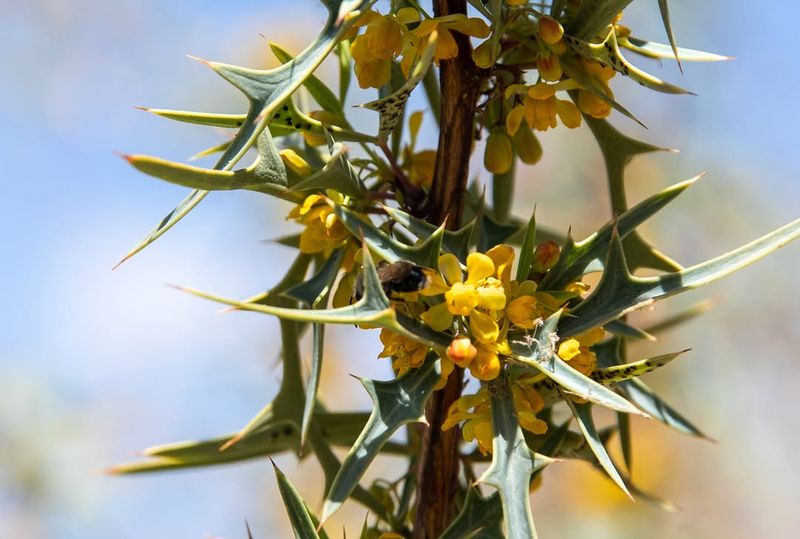
Plants that naturally grow in Texas have adapted to survive long periods without rain.
Species like Texas sage, cenizo, and yucca evolved over thousands of years to handle extreme heat and drought.
Once established in your yard, these tough natives need watering only during the most severe dry spells.
Traditional grass lawns demand about one inch of water per week during summer months.
Native desert plants need just a fraction of that amount.
Some varieties can go weeks or even months without any supplemental watering once their root systems mature.
Homeowners report cutting their outdoor water usage by more than half after switching to native plants.
A typical Texas family using 10,000 gallons monthly on landscaping might reduce that to just 3,000 or 4,000 gallons.
At average water rates, this translates to savings of $50 to $100 every single month.
Beyond water savings, native plants resist local pests and diseases better than imported species.
You spend less money on pesticides, fungicides, and plant replacements.
These hardy plants also tolerate temperature swings that would stress or damage non-native varieties.
Your landscape stays healthy and attractive year-round with minimal intervention or expense.
Drip Irrigation Systems Deliver Water Efficiently
Did you know that traditional sprinkler systems waste up to 50 percent of the water they spray?
Wind carries water away, hot surfaces cause rapid evaporation, and overspray hits sidewalks instead of plants.
Drip irrigation solves all these problems by delivering water directly to plant roots.
These efficient systems use small tubes with tiny emitters placed near each plant.
Water slowly drips exactly where plants need it most, with almost zero waste.
The moisture goes straight into the soil rather than evaporating in the air or running off onto pavement.
Installation costs for drip systems range from $500 to $2,000 depending on yard size.
Most Texas homeowners recover this investment within two to three years through lower water bills.
The systems also connect easily to timers and smart controllers that adjust watering based on weather conditions.
Drip irrigation works particularly well with desert landscaping because it targets individual plants.
You can customize water delivery for different plant types in the same yard.
Cacti might receive water once weekly while flowering perennials get watered twice.
This precision prevents overwatering and keeps every plant healthy without wasted resources.
Decomposed Granite And Rock Mulch Replace Thirsty Grass
Grass lawns are the biggest water consumers in most Texas yards.
A typical 1,000-square-foot lawn requires roughly 600 gallons of water each week during hot months.
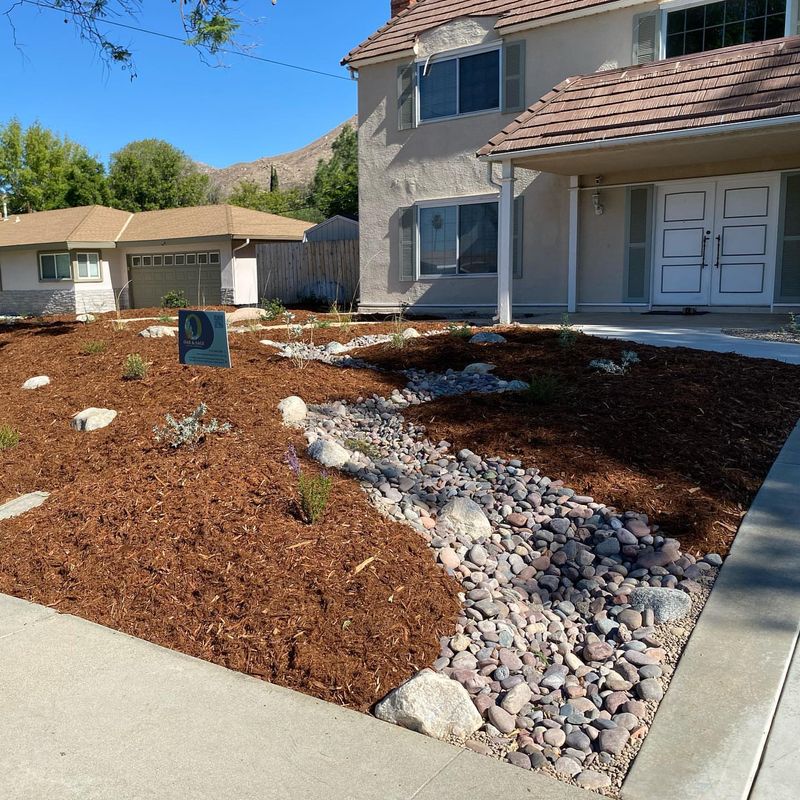
Replacing even part of your grass with decorative rocks or decomposed granite eliminates this massive water demand entirely.
Decomposed granite creates attractive, walkable surfaces in earth tones that complement desert plants beautifully.
River rocks, crushed stone, and decorative pebbles add texture and visual interest to your landscape.
These materials never need watering, mowing, fertilizing, or any maintenance beyond occasional raking.
The upfront cost for rock landscaping runs about $2 to $6 per square foot installed.
Compare this to the ongoing expenses of maintaining grass: water, fertilizer, weed control, mower fuel, and equipment repairs.
Most families spend $100 to $200 monthly maintaining traditional lawns.
Rock landscapes pay for themselves within one to two years through eliminated maintenance costs.
Rock mulch also helps surrounding plants by reducing soil temperature and preventing moisture evaporation.
A two to three inch layer of decorative stone keeps plant roots cooler and retains whatever water you do apply.
This double benefit means healthier plants and even more water savings throughout the year.
Rainwater Harvesting Provides Free Irrigation
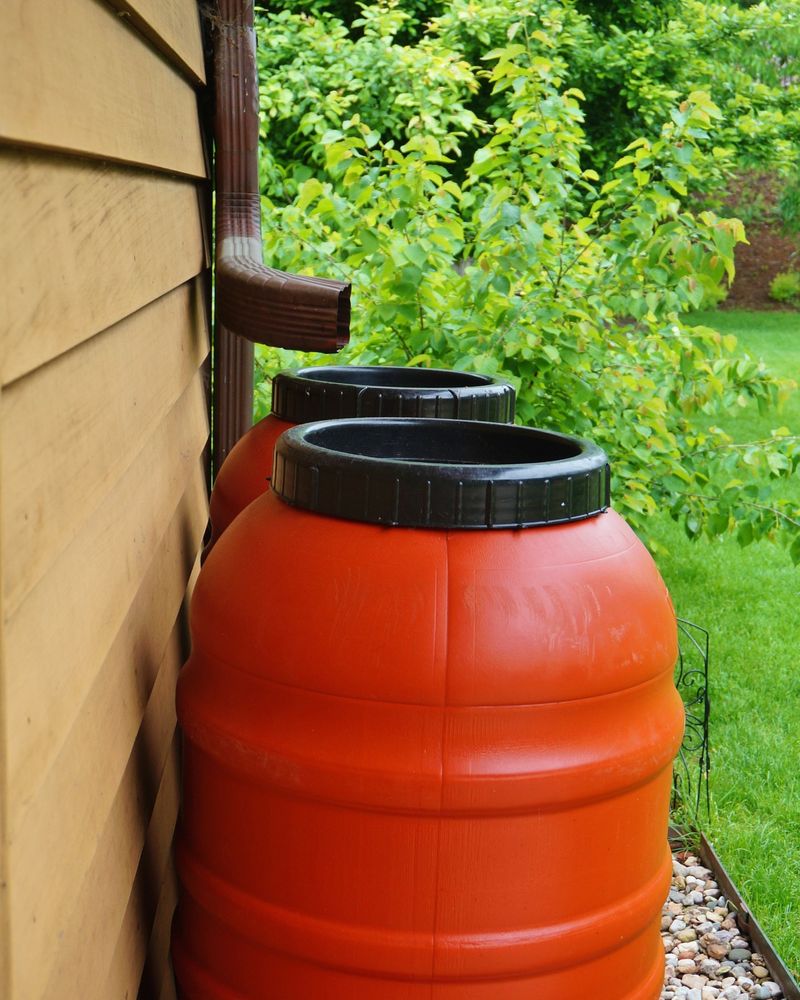
Even though Texas experiences droughts, the state still receives 20 to 40 inches of rain annually in most regions.
A single inch of rainfall on a 1,000-square-foot roof produces about 600 gallons of water.
Capturing this free resource through rain barrels or cisterns can supply much of your landscape irrigation needs.
Basic rain barrel systems cost between $100 and $300 and connect directly to your home’s downspouts.
Larger cistern installations that hold 500 to 5,000 gallons range from $1,000 to $5,000.
Many Texas municipalities offer rebates of $50 to $500 for installing rainwater collection systems, reducing your initial investment.
The collected water works perfectly for desert landscaping since most drought-tolerant plants prefer natural rainwater over treated tap water.
You avoid chlorine and other chemicals that can stress sensitive desert species.
During rainy periods, you fill your storage containers for free, then use that water during dry weeks.
Some Texas homeowners collect enough rainwater to eliminate landscape watering bills completely during spring and fall.
Even modest collection systems can provide 30 to 50 percent of your annual landscape water needs.
Combined with drought-tolerant plants, rainwater harvesting creates a nearly self-sufficient landscape that costs almost nothing to maintain.
Strategic Shade Trees Lower Water Needs
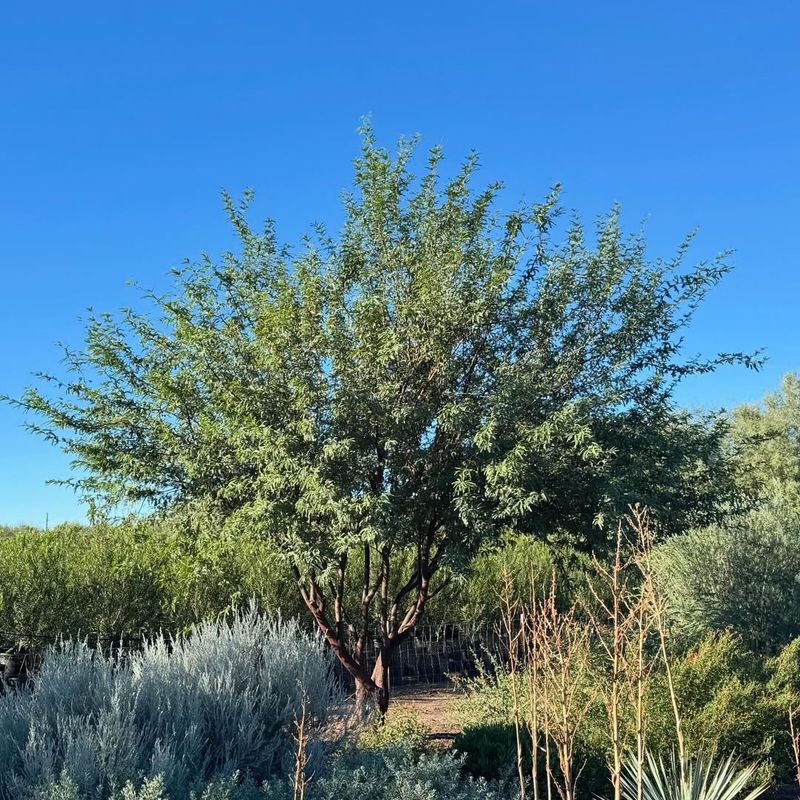
Shade dramatically reduces water evaporation from soil and decreases plant stress during extreme heat.
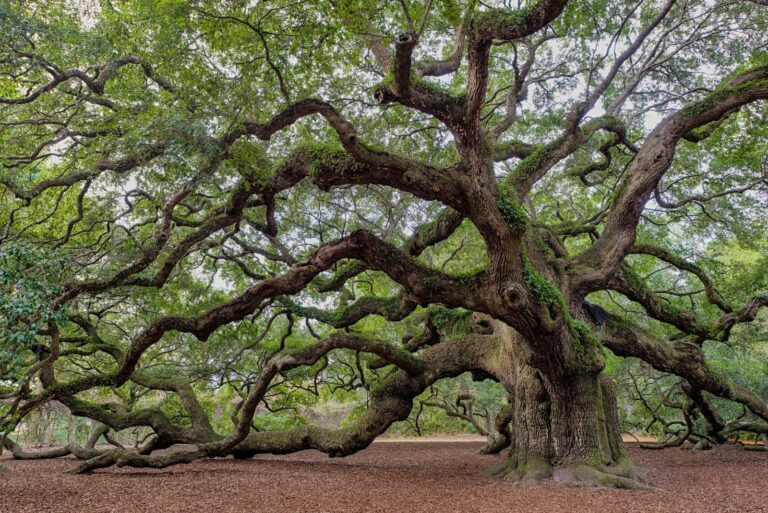
Texas native shade trees like mesquite, desert willow, and live oak provide cooling canopy coverage while requiring minimal water themselves.
Plants growing in shaded areas need 25 to 50 percent less water than those in full sun.
Strategically placed trees also shade your home, reducing indoor cooling costs by 15 to 35 percent.
A well-positioned tree on the west or south side of your house blocks intense afternoon sun.
This double benefit saves money on both water bills and electricity costs throughout brutal Texas summers.
Young trees need regular watering for the first two to three years while establishing deep root systems.
After this period, native Texas trees typically survive on natural rainfall alone.
Some species like mesquite actually prefer dry conditions and can suffer from overwatering.
Mature shade trees increase property values by $1,000 to $10,000 depending on size and species.
They create comfortable outdoor living spaces and make your entire landscape more sustainable.
The initial investment in quality shade trees pays dividends for decades through reduced utility bills, increased home value, and a more pleasant yard that requires less maintenance and water.
Zoned Landscape Design Optimizes Water Use
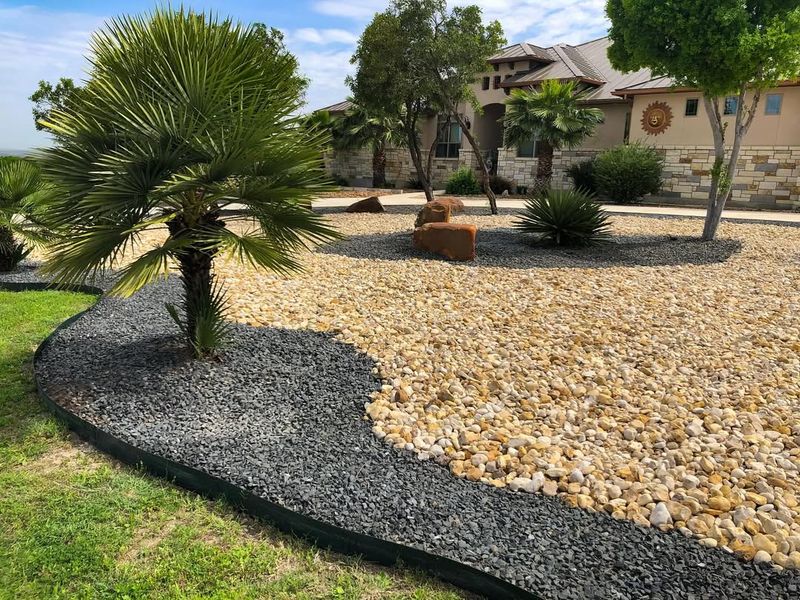
Smart landscape design groups plants according to their water requirements.
High-water plants cluster near the house where you can easily maintain them and enjoy their beauty.
Medium-water zones occupy transitional spaces, while drought-tolerant plants and hardscaping dominate outer areas.
This hydrozone approach prevents the wasteful practice of watering your entire yard uniformly.
Traditional sprinkler systems apply the same amount of water everywhere, overwatering some plants while underwatering others.
Zoned designs let you customize irrigation schedules and methods for each area based on actual plant needs.
Families who implement hydrozoning report water savings of 30 to 60 percent compared to traditional landscapes.
You can keep a small patch of grass or flower garden near your patio for aesthetics and function.
Meanwhile, the larger portions of your yard feature desert plants and rocks that need little or no supplemental water.
Professional landscape designers charge $500 to $2,000 for hydrozone planning services.
Many homeowners recoup this cost within the first year through reduced water bills.
The design also increases property appeal and functionality while making landscape maintenance much simpler.
You spend time and money only on the high-impact areas that matter most to your family.
Permeable Hardscaping Reduces Runoff And Watering
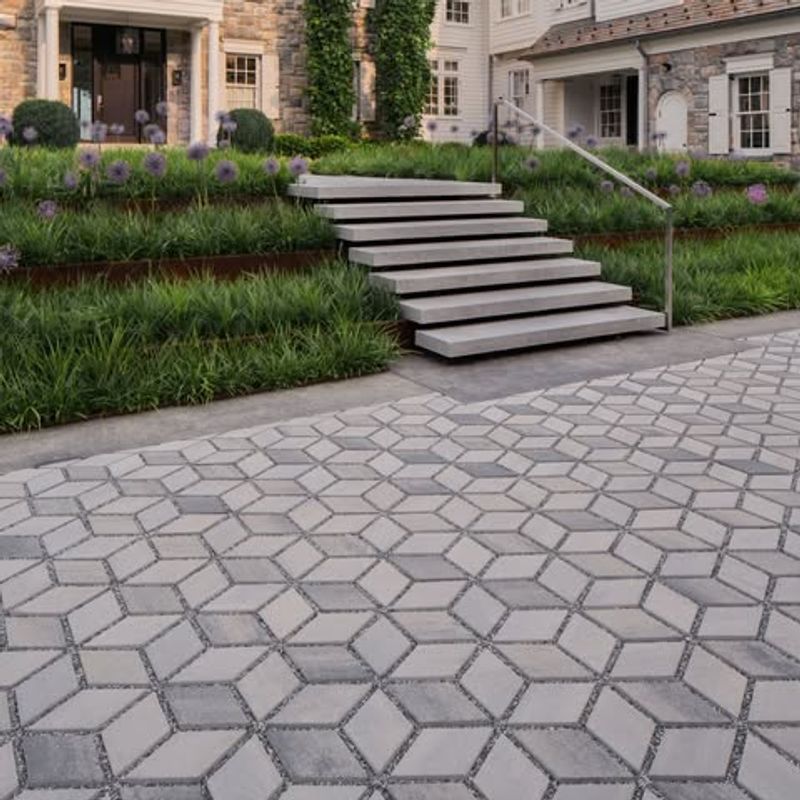
Traditional concrete patios and walkways create impermeable surfaces that prevent rainwater from reaching plant roots.
Storm runoff rushes away instead of soaking into the ground where your landscape could use it.
Permeable pavers, flagstone with gaps, and porous concrete allow water to filter through into the soil below.
When rain falls on permeable hardscaping, it slowly infiltrates the ground and recharges the water table.
This natural irrigation benefits nearby plants without any effort or expense on your part.
The moisture stays in your yard rather than flowing into storm drains and being wasted.
Permeable materials cost slightly more upfront than solid concrete, typically $10 to $25 per square foot installed.
However, they reduce the need for additional drainage systems and help prevent flooding problems.
Many Texas cities offer incentives or reduced stormwater fees for properties with permeable surfaces.
These eco-friendly hardscapes also stay cooler than solid concrete, reducing the heat island effect in your yard.
Lower surface temperatures mean less water evaporation from surrounding soil and plants.
Combined with desert landscaping, permeable hardscaping creates a sustainable outdoor environment that manages water naturally.
Your yard becomes more functional and beautiful while requiring less supplemental irrigation throughout the year.
Smart Controllers Adjust Watering to Weather Conditions

Old-fashioned irrigation timers water your landscape on a fixed schedule regardless of actual conditions.
They run even during rainstorms or after heavy rainfall when plants need no additional water.
Smart controllers use local weather data, soil moisture sensors, and plant type information to adjust watering automatically.
These intelligent devices connect to WiFi and access real-time weather forecasts and rainfall measurements.
When rain is predicted or has recently occurred, the controller skips unnecessary watering cycles.
During hot, windy conditions that increase evaporation, it extends watering times slightly to compensate.
Smart controllers cost between $100 and $300, and many Texas water utilities offer rebates that cover half the purchase price.
Homeowners typically see 20 to 40 percent reductions in landscape water use after installing these devices.
For a family spending $150 monthly on landscape water, this means savings of $30 to $60 each month.
The controllers also send alerts to your smartphone about system problems like broken sprinkler heads or leaks.
Early detection prevents water waste and expensive damage to your property.
When combined with desert landscaping and efficient irrigation methods, smart controllers maximize your water savings.
You maintain a healthy, attractive landscape while spending the absolute minimum on water bills throughout the year.