How To Design A Diverse Arizona Landscape That Stands Out
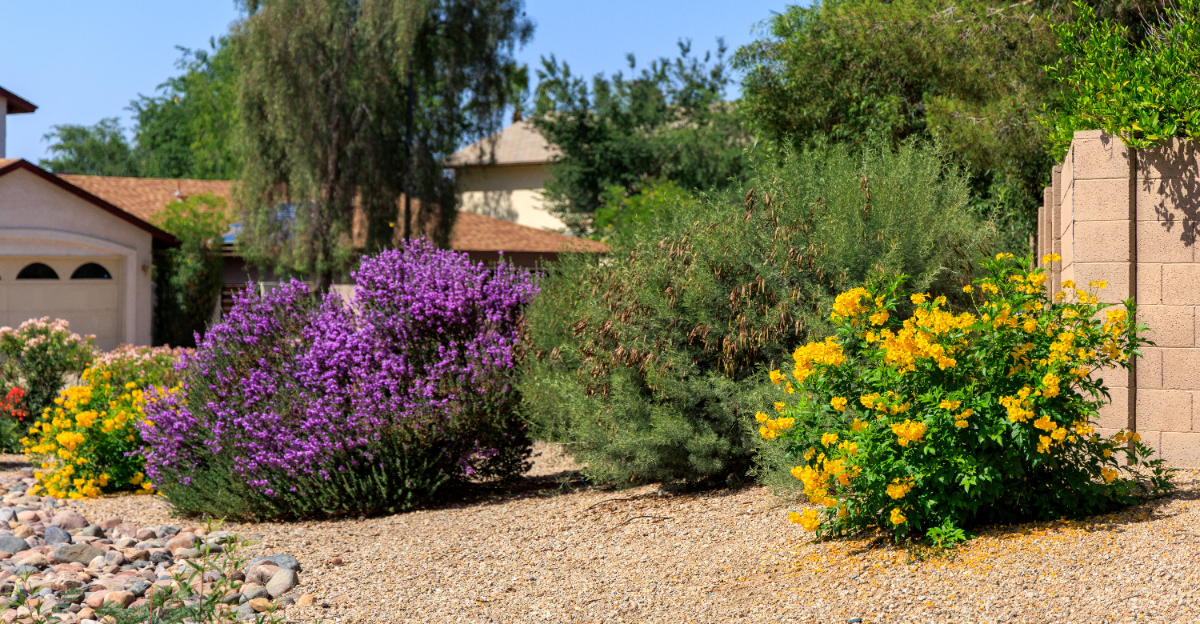
If your Arizona yard feels like it’s missing something, it’s usually not more plants you need, it’s more variety in how they work together.
A landscape that relies on the same shapes and colors can survive the heat, but it rarely feels layered or memorable.
Designing with diversity in mind changes the entire look and rhythm of your space. Mixing trees, flowering shrubs, perennials, and ground covers creates height, texture, and movement that keeps your eye engaged.
Different leaf shapes and staggered bloom times bring contrast without fighting the desert climate.
When you choose plants that truly handle Arizona conditions while offering visual variety, your yard stops looking ordinary and starts feeling intentional, balanced, and built to stand out year after year.
1. Start With A Mix Of Native And Desert-Adapted Plants
Native plants are your foundation, but don’t stop there. Pairing Arizona natives like brittlebush and fairy duster with desert-adapted species from similar climates gives you more options without sacrificing toughness.
Plants from South Africa, Australia, and parts of South America often handle Arizona heat just as well as local species.
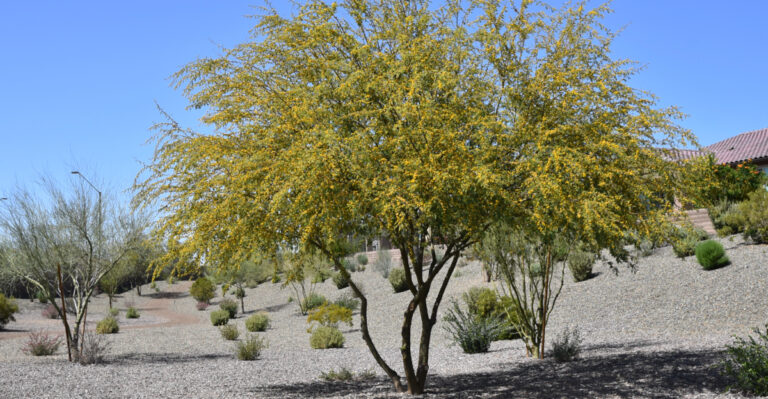
Palo verde trees provide filtered shade that many smaller plants appreciate during brutal summer afternoons. Underneath them, you might tuck in red yucca or desert marigold, which bloom at different times and add layers of interest.
Mixing heights and growth habits prevents that flat, monotonous look some desert yards fall into.
Don’t plant everything at once if you’re new to desert gardening. Start with a few proven performers and watch how they respond to your specific microclimate.
Some spots in your yard might stay cooler or collect more water runoff than others, which changes what will thrive there.
Grouping plants with similar water needs makes irrigation simpler and more efficient. You won’t waste water on drought-tolerant species that don’t need it, and you won’t stress out plants that need occasional deep soaking.
This approach, called hydrozoning, is standard practice across Arizona for good reason.
Variety doesn’t mean chaos. Select plants that share a similar aesthetic or color range so your landscape feels cohesive even with multiple species.
Too many different textures and colors competing for attention can look messy rather than diverse.
2. Layer Heights To Create Depth And Visual Movement
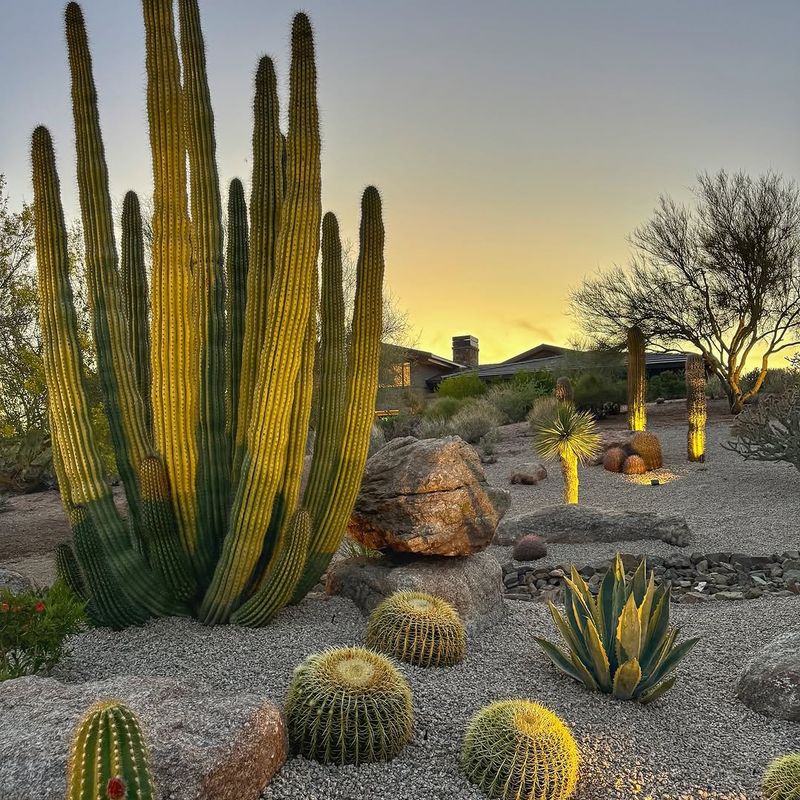
Flat landscapes bore the eye quickly. Building your garden in layers forces the viewer to look deeper into the space, which makes even small yards feel larger and more interesting.
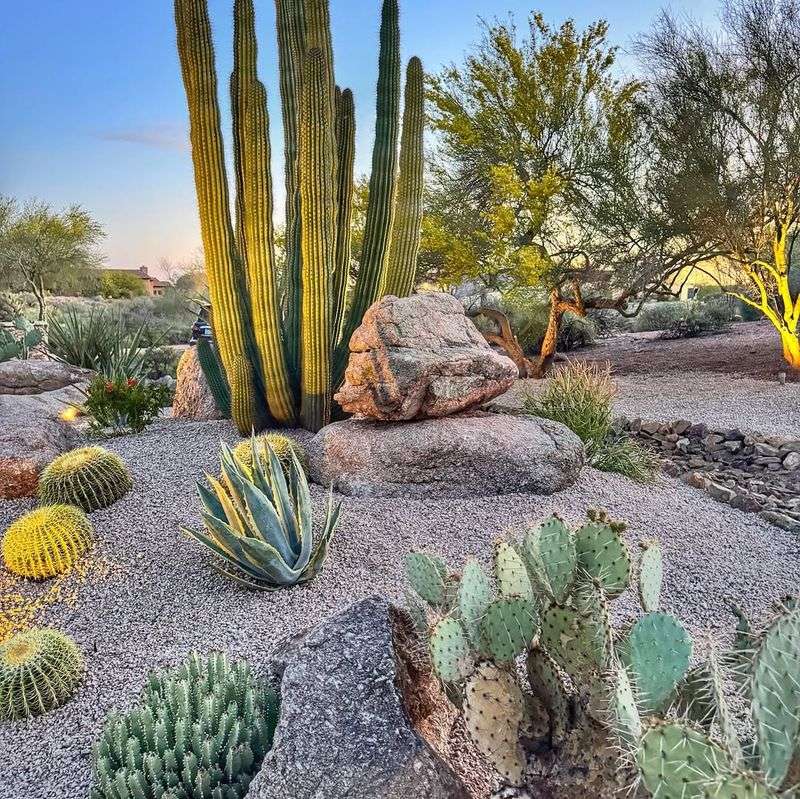
Think about how natural desert environments work, with towering saguaros, mid-sized mesquite, and low spreading creosote all occupying different vertical zones.
Tall focal points like ocotillo or desert spoon anchor the back of planting beds. Their height draws attention upward and creates a backdrop for everything planted in front.
These vertical elements also cast shadows that change throughout the day, adding another dimension to your landscape.
Medium-height shrubs like Texas ranger or globe mallow fill the middle layer. They bridge the gap between your tall specimens and ground-level plants, preventing awkward empty spaces that make designs feel unfinished.
These plants often produce the most flowers, so placing them at eye level maximizes their impact.
Ground covers and low-growing succulents complete the front layer. Species like trailing lantana or desert zinnia spread horizontally and soften the edges of pathways and borders.
They also help suppress weeds once established, reducing maintenance time.
Vary the spacing between layers to avoid a rigid, tiered look. Some plants can overlap slightly, while others stand more isolated.
This creates a natural, unplanned feeling even though you’ve carefully considered every placement. Arizona landscapes look best when they echo the random beauty of wild desert rather than formal garden traditions.
3. Combine Bold Textures With Soft Foliage
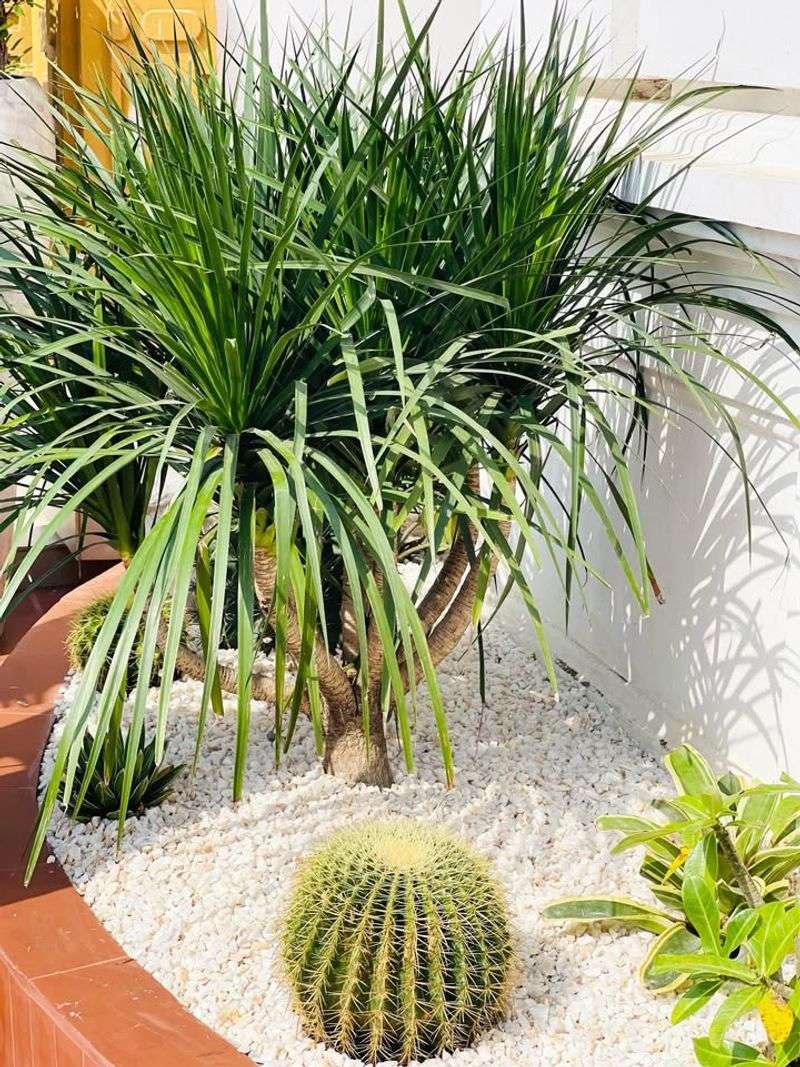
Texture matters just as much as color in desert landscapes. Sharp, architectural plants like agave create drama and catch light in striking ways.
Their rigid, geometric forms provide strong visual anchors that define spaces and create focal points. But too many spiky plants together can feel hostile and unwelcoming.
Balance those bold textures with softer elements. Desert marigold has delicate, feathery foliage that seems to float above the ground.
Damianita forms neat mounds of fine-textured leaves that contrast beautifully with chunky barrel cactus or sculptural yucca. This interplay between rough and refined keeps your landscape from feeling one-dimensional.
Consider how textures appear from different distances. Spiky plants read clearly from across the street, making them perfect near entryways or along front borders.
Finer textures get lost at a distance but reward close inspection, so place them near patios or along paths where people walk slowly.
Seasonal changes affect texture too. Some Arizona plants look lush during cooler months but pull back during summer heat.
Pairing evergreen structural plants with seasonal soft textures ensures your landscape maintains interest year-round without looking bare during stress periods.
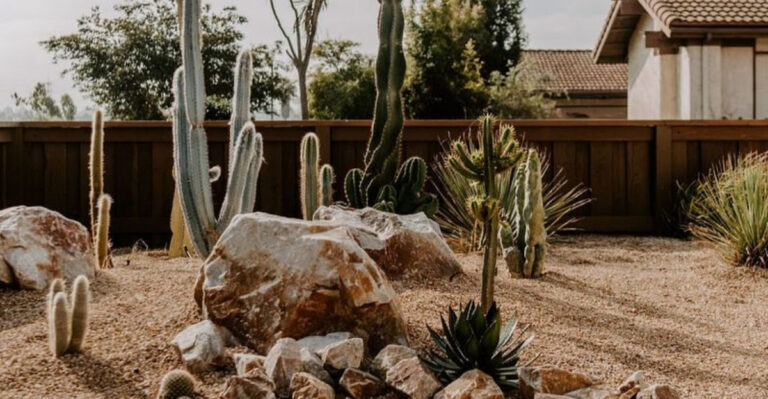
Hardscape materials add another textural layer. Rough boulders emphasize the smoothness of prickly pear pads, while fine gravel makes coarse-leaved plants stand out.
Mixing these elements thoughtfully creates complexity that holds attention much longer than single-texture designs.
Arizona’s intense sunlight highlights these contrasts beautifully, especially during early morning and late afternoon hours.
4. Use Seasonal Bloom Cycles For Year-Round Interest
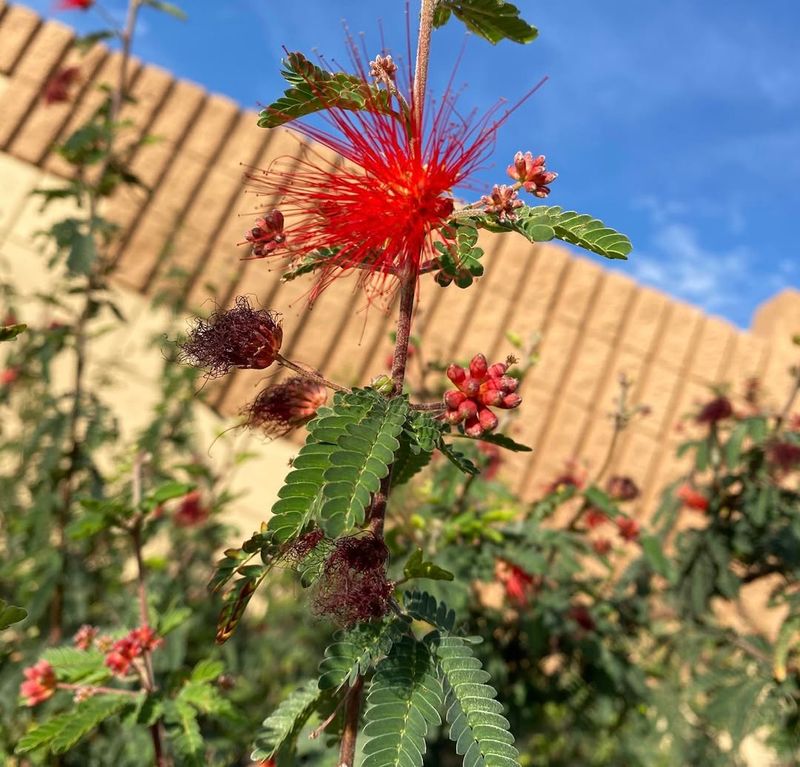
Arizona doesn’t have traditional four-season changes, but desert plants definitely follow bloom cycles that shift throughout the year. Planning for this keeps your landscape from looking dull during any particular month.
Spring brings the most dramatic show, but every season offers something if you plant strategically.
Spring bloomers like penstemon and lupine explode with color after winter rains. These cool-season performers put on their show before summer heat arrives, creating carpets of purple, red, and blue that rival any traditional garden.
They rest during hot months but return reliably each year.
Desert willow produces orchid-like flowers throughout the hottest months when little else blooms. Baja fairy duster keeps pushing out red puffball flowers even when temperatures top 110 degrees.
Fall brings a second bloom period for many species as temperatures moderate. Autumn sage and trailing lantana hit their stride again, and desert marigold produces waves of yellow flowers that last into winter.
This season often surprises newcomers who expect everything to shut down after summer.
Winter in Arizona stays mild enough that many plants keep their foliage and some even bloom. Aloe and some agave species flower during cooler months, attracting hummingbirds when other food sources disappear.
Evergreen shrubs maintain structure and greenery that prevents winter landscapes from looking completely dormant. Staggering bloom times across species means you always have something catching the eye.
5. Add Structural Elements Like Boulders And Pathways
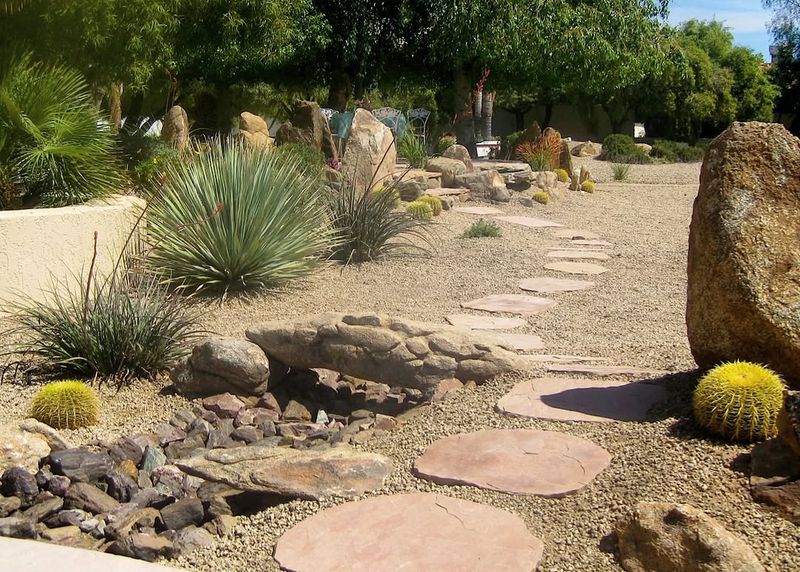
Plants alone don’t make a complete landscape. Boulders add instant age and permanence that young plants can’t provide yet.
Large rocks create elevation changes in flat yards and provide thermal mass that moderates soil temperature around plant roots. They also give your design visual weight that anchors everything else.
Choose boulders that match local geology for the most natural look. Arizona has incredible stone variety, from rust-colored sandstone to gray granite, depending on your region.
Using stone that occurs naturally nearby makes your landscape feel like it belongs rather than looking imported and artificial.
Pathways define circulation and protect plants from foot traffic. Decomposed granite is popular across Arizona because it compacts well, drains quickly, and comes in colors that complement desert plants.
Flagstone creates a more formal look and stays cooler underfoot during summer, though it costs more and requires more installation work.
Don’t make paths perfectly straight unless your home’s architecture demands formality. Gentle curves feel more inviting and create opportunities to place plants along the edges where they soften the hardscape.
Paths should lead somewhere specific, whether to a seating area, garden feature, or side yard, rather than wandering aimlessly.
Combining boulders with pathways creates natural-looking transitions between planted areas. Tuck smaller rocks along path edges to define boundaries without rigid borders.
This technique mimics how stones accumulate naturally in desert washes, making your designed landscape feel less contrived. These structural elements also reduce the total planted area, which cuts down on water use and maintenance time.
6. Balance Gravel Areas With Living Ground Covers
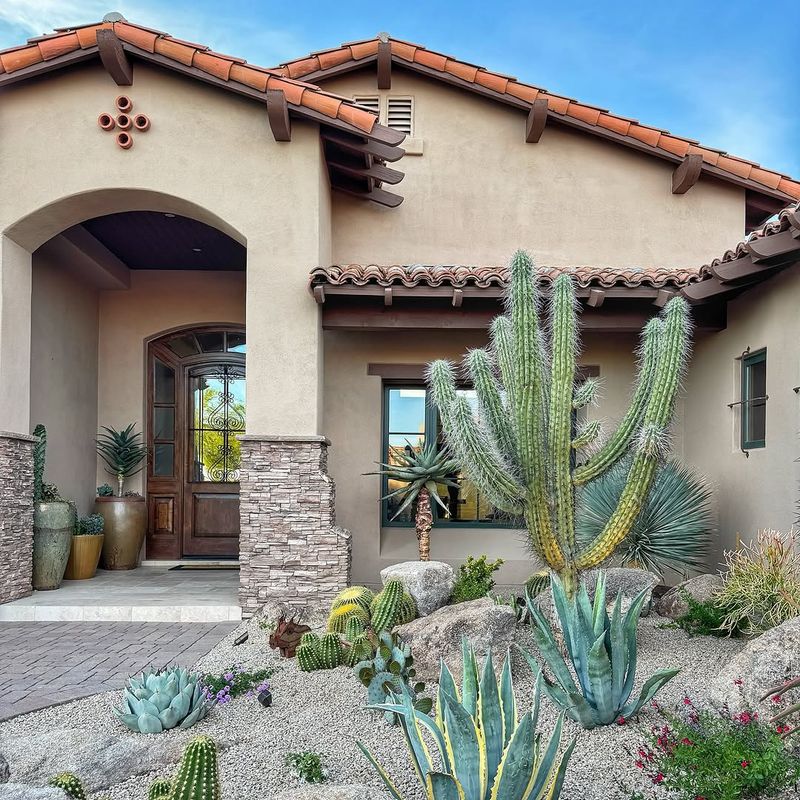
Gravel dominates many Arizona landscapes because it’s practical and cheap. But too much bare gravel creates heat islands and looks sterile.
Breaking up those expanses with living ground covers adds life without returning to water-hungry grass lawns that make no sense in the desert.
Low-growing perennials like verbena or trailing indigo bush spread horizontally and fill spaces between larger plants. They need far less water than turf grass once their roots establish, and they actually improve soil quality over time instead of depleting it.
Many also bloom repeatedly, adding color to areas that would otherwise sit empty.
Ground covers reduce reflected heat from gravel surfaces. Bare rock absorbs solar energy all day and radiates it back at night, keeping your yard uncomfortably warm long after sunset.
Living plants moderate this effect through transpiration, making outdoor spaces more pleasant during summer evenings.
Don’t expect ground covers to spread instantly. Most take a full year to fill in properly, and some need occasional trimming to keep them contained.
Start with plants spaced according to their mature spread, then mulch between them until they grow together. This prevents weeds while plants establish.
Strategic placement matters more than total coverage. Ground covers work best along pathway edges, around boulder clusters, and in high-visibility areas near patios or entryways.
You don’t need to eliminate all gravel, just break it up enough that your landscape feels alive rather than paved. The contrast between living and non-living surfaces creates visual interest that pure gravel or pure planting can’t achieve alone.
7. Choose A Cohesive Color Palette That Fits The Desert
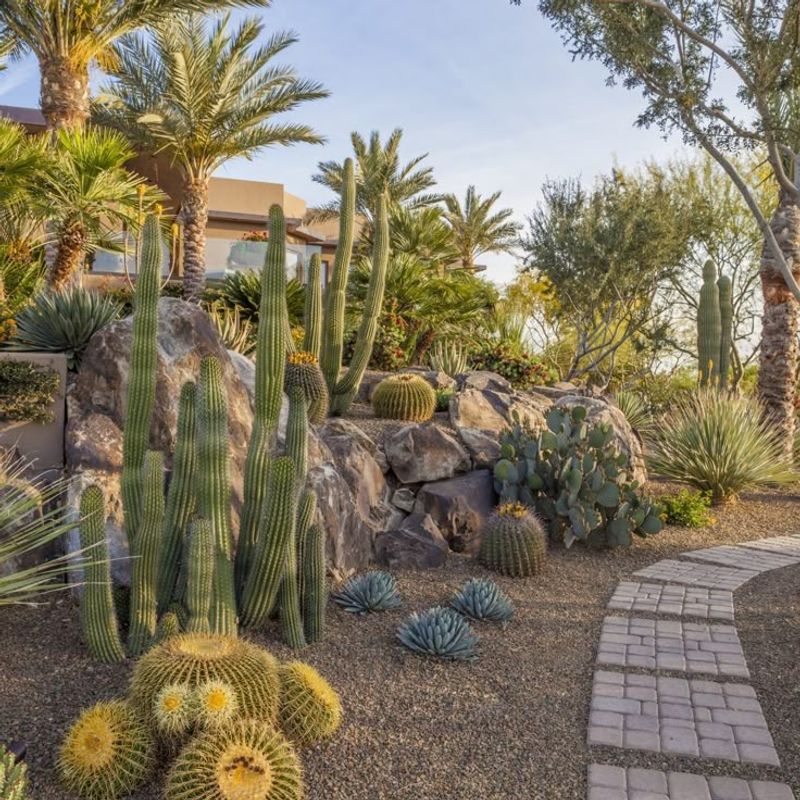
Color choices can make or break your landscape’s visual impact. Desert environments naturally lean toward warm tones, earth colors, and silvery foliage.
Working with this existing palette rather than fighting it produces landscapes that feel harmonious and grounded in place.
Silver and gray-green foliage dominates many drought-adapted plants. These colors reflect sunlight and reduce water loss, which is why desert plants evolved them.
Embracing these tones as your foundation creates a sophisticated backdrop that makes flower colors pop without overwhelming the eye.
Warm flower colors like red, orange, yellow, and coral complement Arizona’s natural tones better than cool purples and pinks. That said, purple blooms from Texas ranger or trailing lantana provide beautiful contrast against warm rocks and soil.
The key is using cooler colors as accents rather than dominant features.
Hardscape colors should coordinate with your plant palette. Rust-colored flagstone or warm tan decomposed granite enhances red and orange flowers while complementing silver foliage.
Avoid stark white rock or very dark mulch, which look artificial against natural desert colors and create harsh contrasts that fight your planting scheme.
Limit your color palette to three or four main tones plus neutrals. Too many competing colors create visual chaos that distracts rather than delights.
A landscape built around warm earth tones, silver foliage, and pops of red or orange feels cohesive even with diverse plant species. This restraint paradoxically makes your landscape more memorable than trying to include every color possible.