How To Fix A Leaning Palm Tree In Florida Yards Before It Falls
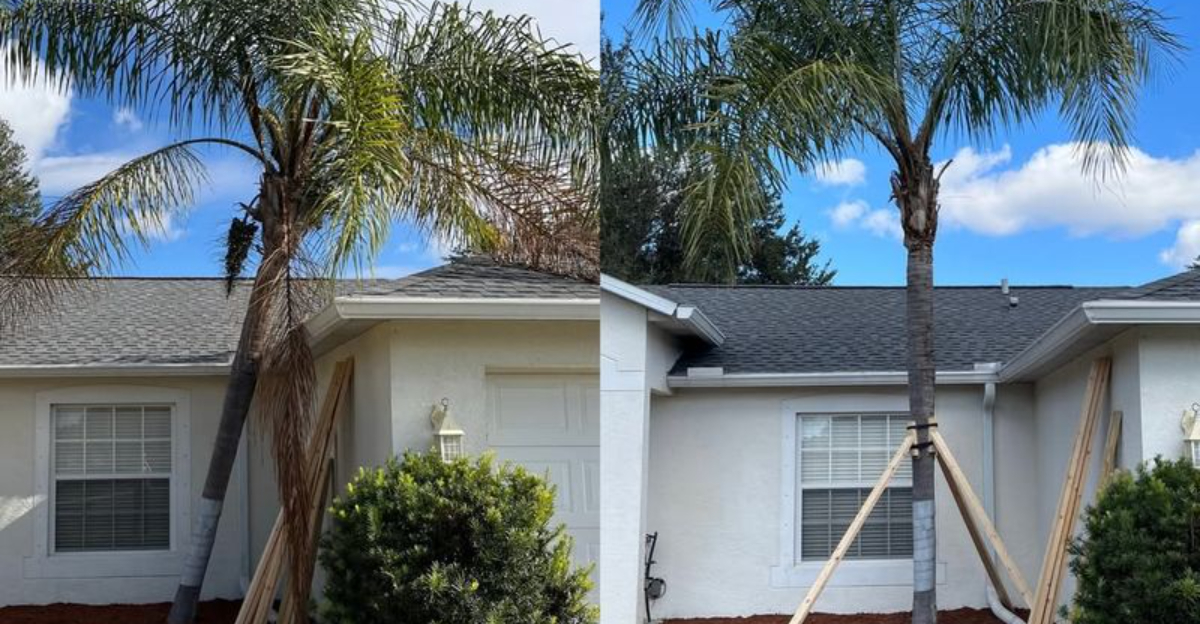
You step outside after a storm and freeze. Your palm tree, the one shading your porch and framing your yard, is leaning at an angle you’ve never seen before.
Your heart races as you imagine it falling onto your car, fence, or roof. In Florida, almost every homeowner goes through this at some point.
Sandy soil, shallow roots, and frequent tropical storms make palms vulnerable, but a lean doesn’t always mean the tree is doomed. Check the roots and the soil around the base, watch for cracks or lifted roots, and take careful steps to support the tree.
If something doesn’t feel right, get help before it’s too late. With the right approach, your tree can regain its upright stance, stay healthy, and continue to shelter your yard through Florida’s wild weather.
You can protect both your tree and your home, one step at a time.
1. When A Leaning Palm Is Dangerous (And When It’s Still Fixable)
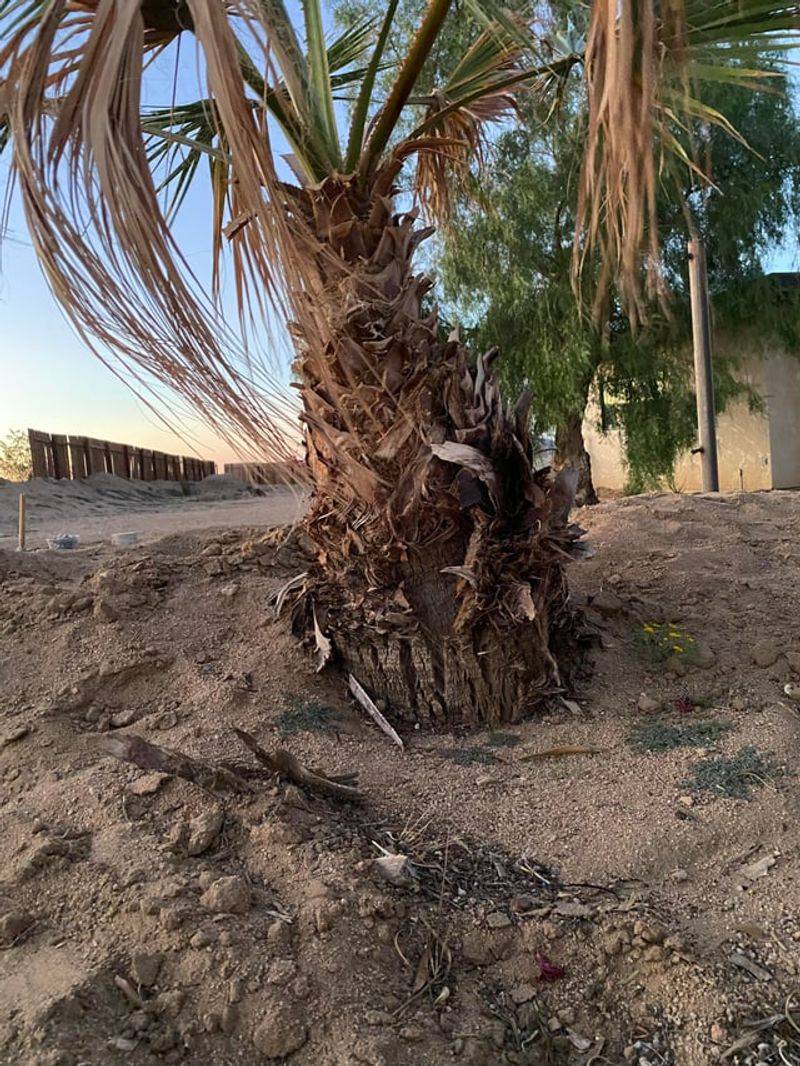
You notice your Sabal Palm tilting after a windy afternoon, and your first thought is whether it’s about to fall. Not every leaning palm is a safety hazard, but knowing the difference could save you from property damage or injury.
If the roots are lifting, soil is cracking, or the trunk shows damage, the tree may be unsafe. Minor tilts where roots remain in soil are often stabilizable.
If you see large cracks in the ground around the base or exposed roots lifting up, the tree is unstable.
A palm that has only recently begun to tilt, with roots mostly in the soil and trunk healthy, may be stabilized with supports and time. You’ll want to act quickly before the next storm makes things worse.
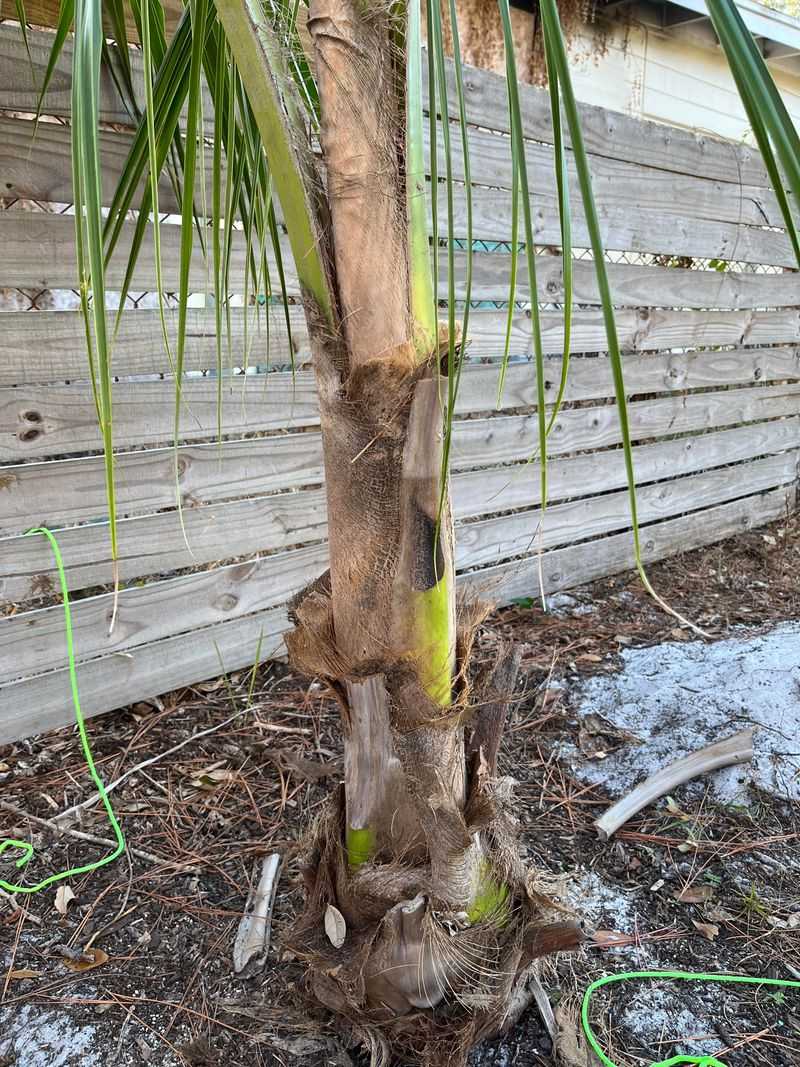
Check the trunk for soft spots, splits, or dark oozing areas. These are signs of internal damage or disease, and a leaning palm with trunk damage is much harder to save.
If the fronds are turning brown rapidly or falling off, the tree may already be compromised.
Never stand directly under a leaning palm while inspecting it. Even a slight shift in wind or soil movement can cause it to fall without warning.
2. The Biggest Mistake Homeowners Make With Tilting Palms
You see your palm leaning and your first instinct is to tie it to something solid and pull it upright as fast as possible. That’s exactly what most Florida homeowners do, and it’s also the fastest way to make things worse.
Palms don’t respond well to sudden force. If you yank a leaning tree upright without giving the roots time to adjust, you can snap the root ball completely or damage the trunk internally.
The tree might look straight for a day or two, then collapse because the roots never had a chance to re-anchor.
Another common mistake is using supports tied too tightly against the trunk. Stakes should allow the palm to sway slightly, which strengthens roots and trunk.
Palms need to sway slightly in the wind to develop strength, so locking the tree in place with hard materials can create weak spots.
Homeowners also tend to ignore soil conditions. If the ground is still soaked from rain, trying to straighten the palm will just cause it to shift again as soon as you remove the supports.
You need to wait until the soil firms up a bit.
Patience is your best tool here. Stabilization takes time, and rushing the process usually results in a tree that leans again or worse.
3. How To Straighten A Leaning Palm Tree Step By Step
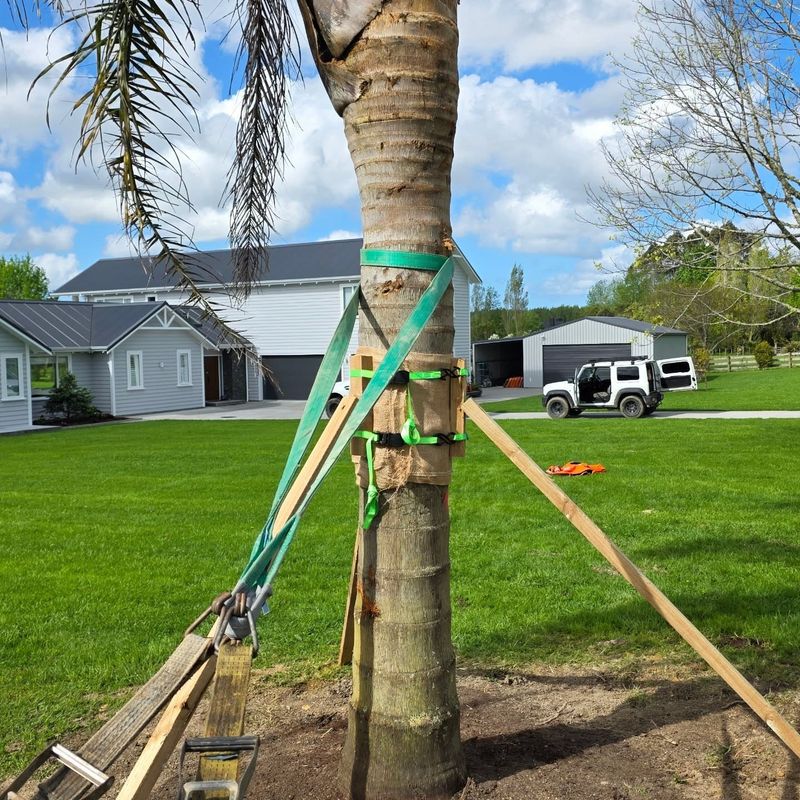
Your palm has recently begun to tilt after last week’s storm, and you’ve decided it’s safe to fix it yourself.
Here’s exactly how to do it without causing more damage.
Start by clearing debris and checking the root zone. Remove any fallen fronds, branches, or mulch piled against the base so you can see the soil clearly.
Look for cracks or lifted roots that indicate instability. Inspect the root ball carefully.
Look for cracks, exposed roots, or lifted soil. If roots appear torn or soil unstable, do not attempt to push the tree — call a professional.
Gently guide the palm toward vertical over several minutes. Stop immediately if you hear cracking or resistance.
If the tree resists or you hear cracking sounds, stop immediately and call a professional. You’re trying to guide it back, not force it.
Install three support stakes in a triangular pattern outside the root zone. Use wooden, fiberglass, or metal stakes, and attach soft ties that allow slight movement.
Tighten the straps just enough to stabilize the palm, leaving slight movement so roots can re-anchor naturally. This movement helps the roots re-establish themselves.
Water the base thoroughly to help the soil settle around the roots.
4. Tools And Materials You’ll Need Before You Start
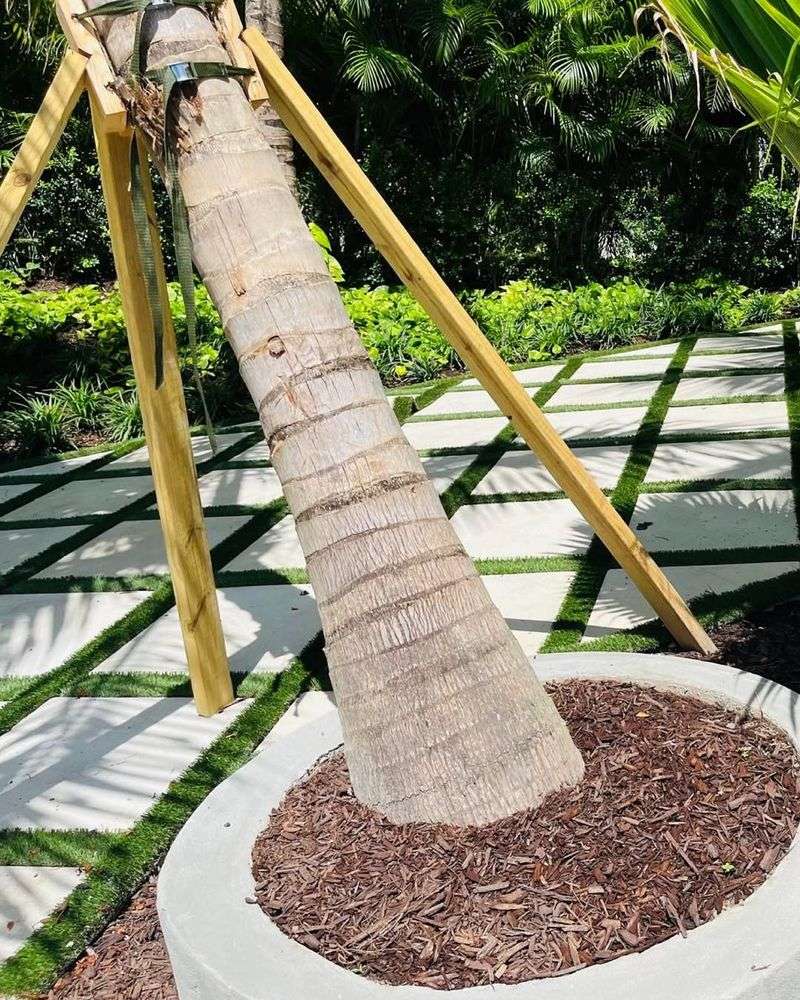
Before you head out to straighten your leaning palm, make sure you have everything on hand. Missing a key tool halfway through the job can leave your tree unsupported and vulnerable.
You’ll need three sturdy stakes, wooden, fiberglass, or metal, each long enough to reach stable soil. Always use soft ties to prevent trunk damage.
Fiberglass stakes work well too and hold up better in Florida’s humidity.
Get wide, soft tree straps or fabric strips. Never use rope, wire, or chains, as these can cut into the bark and harm the palm.
You want something that distributes pressure evenly and won’t slice through the trunk over time.
A rubber mallet or small sledgehammer helps drive the stakes into the ground without splitting them. If your soil is especially sandy, you might need longer stakes to reach stable ground below the surface.
Bring a shovel to clear soil around the base if needed, and a garden hose for watering after you finish. Gloves and safety glasses are non-negotiable, especially if you’re working near fronds or in areas where debris is still scattered from the storm.
A level or plumb line can help you check if the palm is truly vertical before you secure it.
5. How To Prevent Your Palm From Leaning Again
Your palm is finally standing straight again, and you don’t want to go through this process a second time. Prevention starts with understanding what caused the lean in the first place and making adjustments to your yard.
First, improve drainage around the base. If water pools near the trunk after heavy rain, the soil will stay soft and unstable.
Add a gentle slope to direct water away, or install a French drain if your yard has chronic flooding issues. Keep mulch at least 6 inches from the trunk to prevent root-zone moisture buildup and decay.
Fertilize your palm regularly with a slow-release formula designed for Florida palms. Healthy, well-fed palms grow stronger roots and are better able to withstand wind and rain.
University of Florida IFAS Extension recommends feeding palms three to four times per year with a balanced fertilizer that includes micronutrients like manganese and magnesium.
Prune damaged fronds carefully, but don’t overdo it. Palms need their fronds to produce energy, and removing too many can stress the tree and slow root growth.
Only cut off fronds that are completely brown and hanging down.
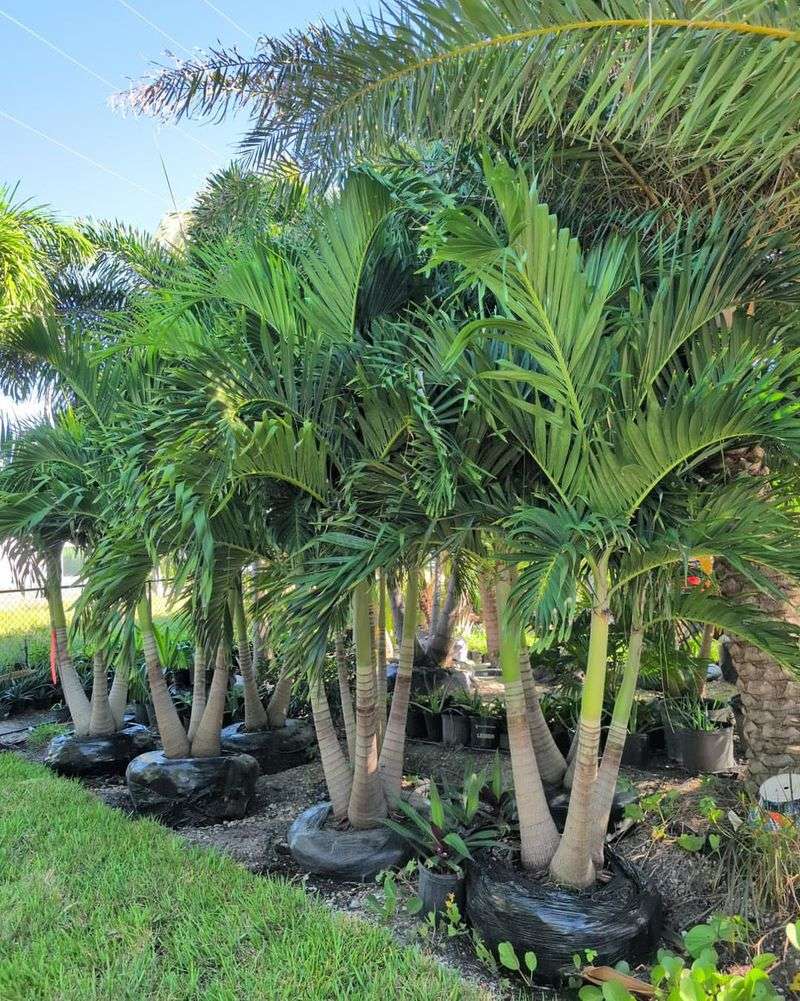
If you’re in a hurricane-prone area, consider planting palms in groups or near windbreaks like fences or other trees. This reduces direct wind exposure and gives each palm a better chance of staying upright during storms.
6. When You Should Call A Professional Instead
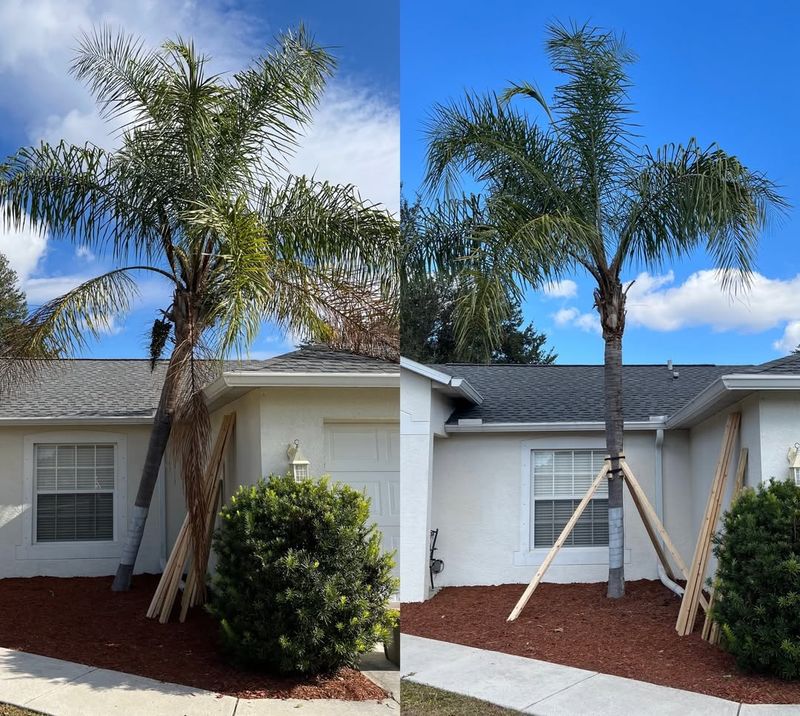
You’ve assessed your leaning palm and something doesn’t feel right. Maybe the tree is too tall, the lean is too severe, or you’re just not confident handling it alone.
Knowing when to call a professional can save you from injury and prevent further damage to the tree.
Call a certified arborist if roots are lifting, the trunk is damaged, the tree is tall, or it is near structures, power lines, or valuable landscaping. Trees at that height and angle require specialized equipment like cranes, pulleys, and professional-grade bracing systems.
Trying to move a large palm by hand is dangerous and rarely works.
Call for help if you see large cracks radiating out from the base or if the root ball is visibly lifting out of the ground. These are signs the tree is close to falling, and only a trained professional should approach it.
Never work under or near a palm in this condition.
If the tree is near power lines, structures, or other valuable landscaping, don’t risk it. A mistake could cause thousands of dollars in damage or create a safety hazard.
Florida-licensed arborists carry insurance and have the training to handle complex situations safely.
Professionals also have access to tools like root stimulators and soil amendments that can speed up recovery. If you’ve tried DIY stabilization and the palm hasn’t improved after a few months, it’s time to bring in an expert.
7. Watering And Fertilizing During The Recovery Period
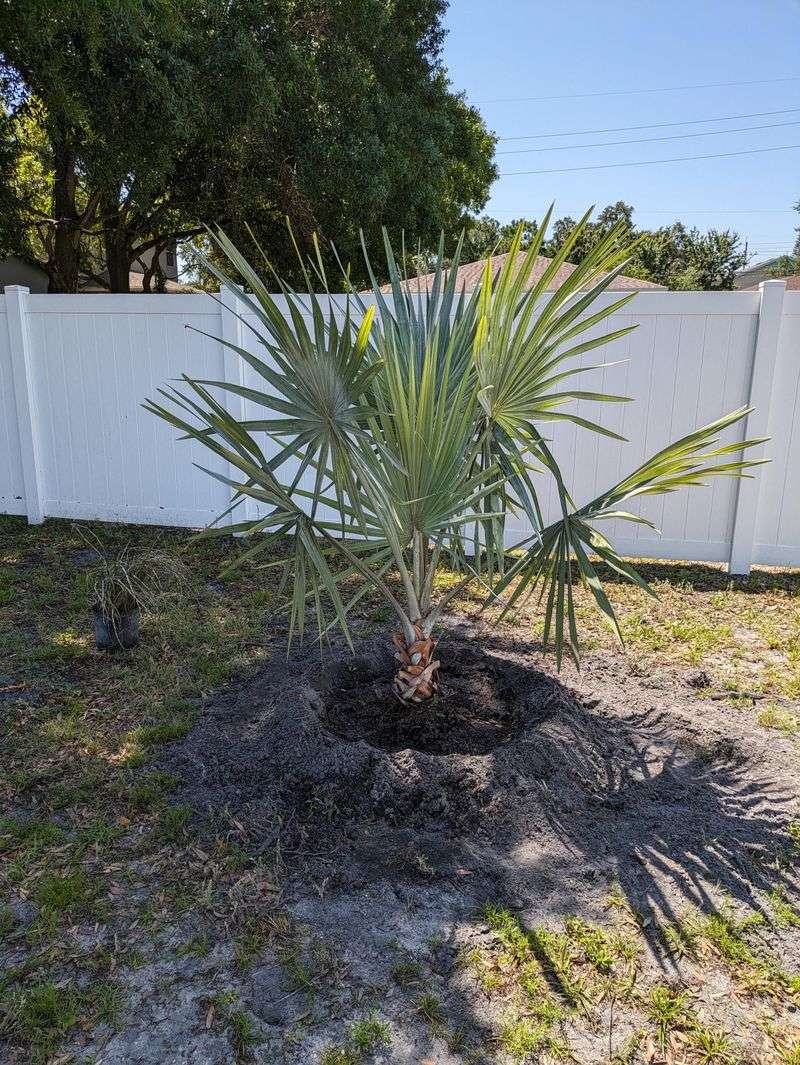
Your palm is staked and straightening slowly, but it still needs proper care to rebuild its root system and regain strength. How you water and feed the tree during recovery makes a huge difference in how quickly it stabilizes.
Water deeply but infrequently. You want to encourage roots to grow outward and downward, searching for moisture.
Water deeply but infrequently to encourage roots to grow outward and downward. Avoid keeping the soil soggy, which can lead to root rot.
Check 2–3 inches deep; if soggy, skip watering to prevent root rot.
Avoid overwatering, especially in Florida’s rainy season. If the soil stays soggy, roots can rot and the tree will struggle to re-anchor.
Fertilize with a slow-release palm formula that includes nitrogen, potassium, and magnesium. Use a slow-release palm fertilizer recommended by UF/IFAS to maintain overall health and support root growth during recovery.
Apply fertilizer around the drip line, not right against the trunk, and water it in thoroughly.
During the first few months of recovery, avoid heavy doses of fertilizer. Too much nitrogen can push the tree to grow fronds faster than the roots can support, which adds weight and stress to a tree that’s still stabilizing.