How To Grow Poinsettias Outdoors In California After The Holidays
Glowing porch lights can delay or even block the famous red color on a certain holiday shrub. Its leaves only turn bright when fall nights stay long and dark.
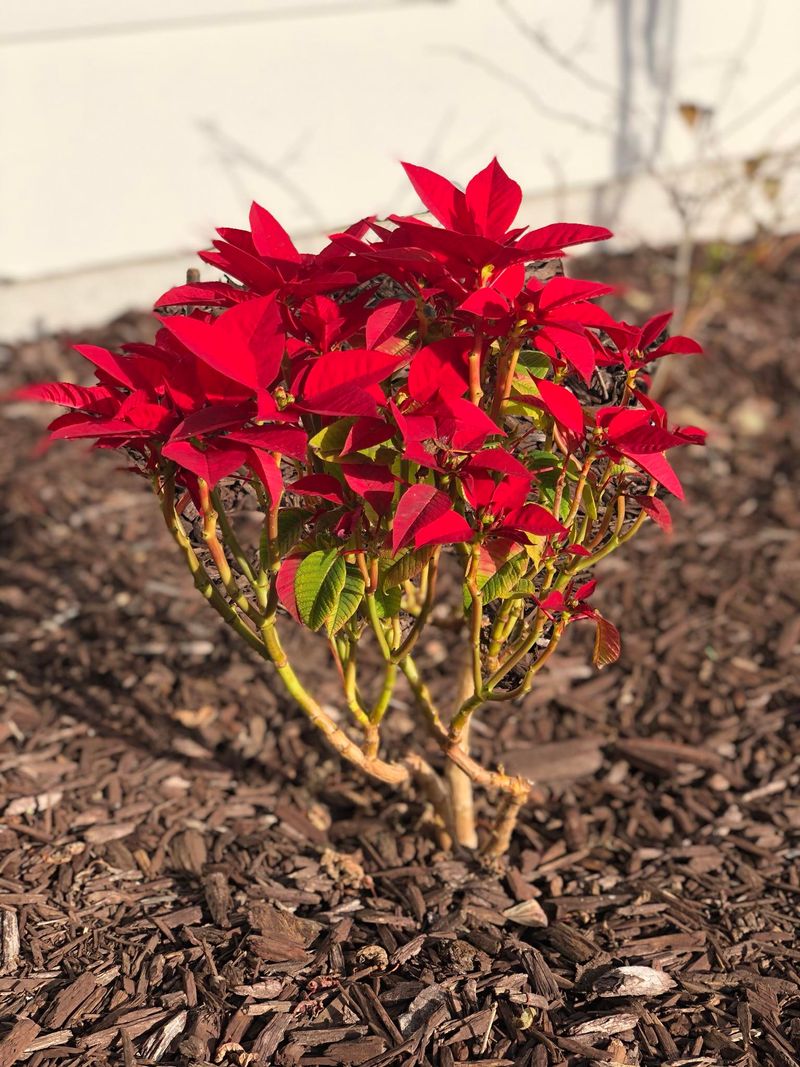
That shrub part surprises many people. Store pots are bred to stay compact, yet in mild coastal gardens the same plant can stretch four to ten feet tall. Frost-free spots around San Diego, Los Angeles, and sheltered pockets of the Bay Area suit it best.
Foil-wrapped pots are already piling up by grocery store doors. I’ll never forget spotting bright red on my backyard shrub in mid-January, long after the potted ones had faded. It felt like the holidays decided to stay longer, and honestly, I didn’t mind one bit.
That holiday pot you bring home this season might have a second act waiting outdoors. Which sunny corner, far from the porch lights, could host the show next winter?
That Faded Holiday Poinsettia Still Has a Bright Future
Plenty of folks feel a little guilty tossing their poinsettia in January. I used to do it too, until I learned these plants are woody shrubs from the Pacific slopes of Mexico.
In their homeland, poinsettias can reach 10 to 15 feet tall. Garden plants in mild coastal areas often settle at 4 to 10 feet, which is still impressive for something that came home in a 6-inch pot.
The key is your climate. Poinsettias grow best outdoors in USDA zones 10 and 11, with zone 9b possible in protected spots. That includes much of coastal Southern California, the Los Angeles basin, San Diego, and sheltered parts of the Bay Area.
Colder inland valleys, the high desert, and mountain towns get frosts that hurt these plants. If you live there, keep yours in a pot you can move indoors when the weather turns.
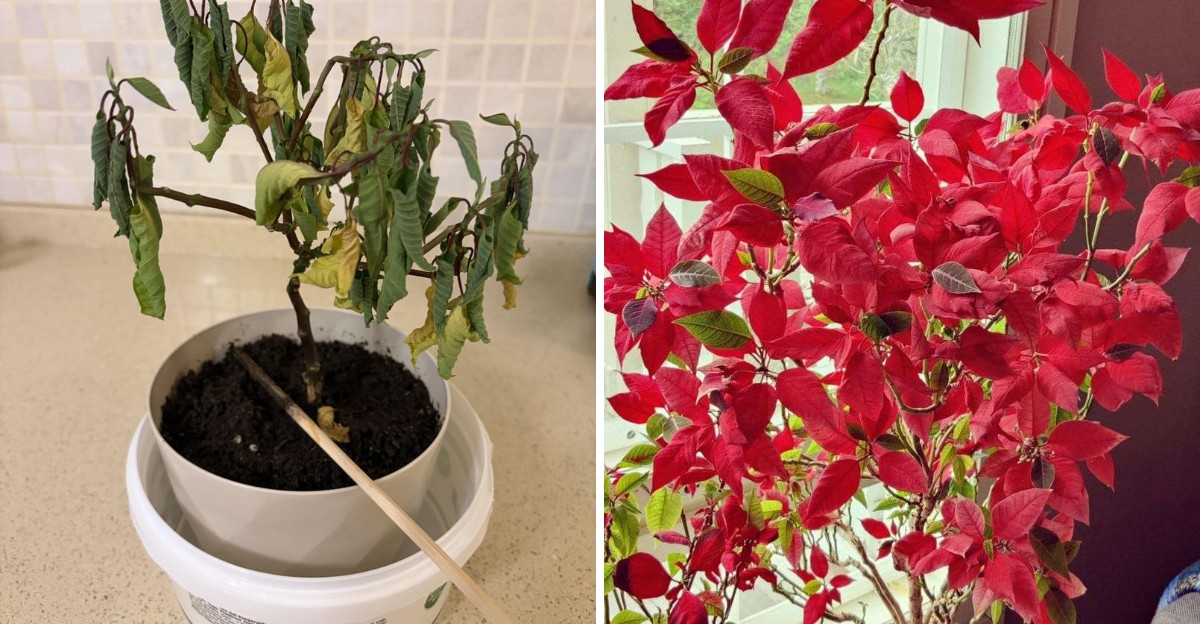
Your plant does not need to look perfect right now. Dropping leaves after the holidays is normal and often comes from a warm, dry house with low light.
Fun fact: the plant is named after Joel Poinsett, the first U.S. minister to Mexico. He sent cuttings home to South Carolina in the 1820s.
Cutting Poinsettia Stems Back Sets Up a Bushier Plant
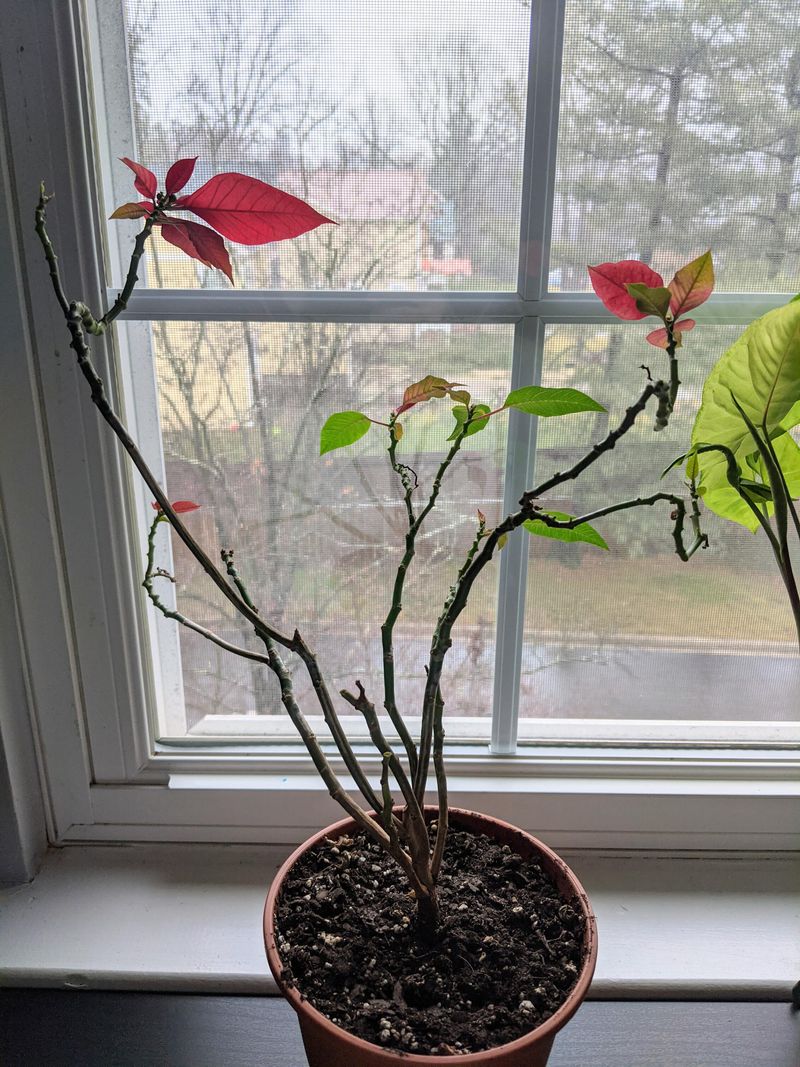
Snip, snip, and suddenly your plant looks like a bundle of sticks. Trust me, that bare look is part of the plan.
Keep your poinsettia indoors in bright light through winter while the bracts hang on. Once they fade, often in March, cut each stem back to about 6 to 8 inches tall. Leave a few buds or leaves on every stem, since new shoots grow from those spots.
Wear gloves for this job. The milky white sap can irritate skin and eyes, especially for people with latex allergies.
While you wait for new growth, ease up on watering. Let the top inch of soil dry out between drinks, and skip fertilizer until fresh leaves appear.
If the plant is still in its original nursery pot, peel off the decorative foil. That shiny wrapper traps water and leaves roots sitting in a puddle.
You can also move the plant into a container one or two sizes bigger. Fresh, fast-draining potting mix gives the roots a healthy boost before their big move outside.
Within a few weeks, small green shoots should pop up along the stems. That is your signal the plant is ready for its next chapter.
Warm Spring Nights Tell You When to Plant Poinsettias Outside
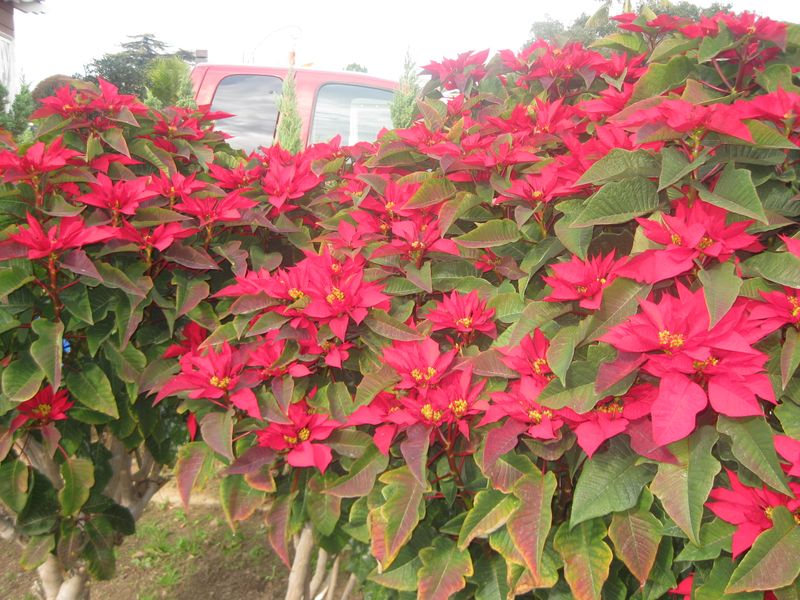
Timing is the quiet hero of this whole project. Move your poinsettia outside too early, and a chilly night can set it back for weeks.
Wait until nighttime temperatures stay above about 50 degrees Fahrenheit. In coastal Southern California, that might be April. In cooler or northern areas, May is often safer.
Harden the plant off first. Set it outside in light shade for a few hours, then add more sun each day over about a week. This keeps tender leaves from scorching.
Pick a spot with at least six hours of sun. Poinsettias love morning light, and in hot inland areas they appreciate some afternoon shade.
A spot near a south or east facing wall works well. The wall holds warmth and blocks wind, which helps a lot on cool nights.
Dig a hole about twice as wide as the root ball and the same depth. Set the plant at the same level it sat in the pot.
Mix some compost into the native soil if it is heavy clay. Then water deeply and add a few inches of mulch, keeping it away from the stems.
Soggy Soil Around Poinsettia Roots Spells Trouble
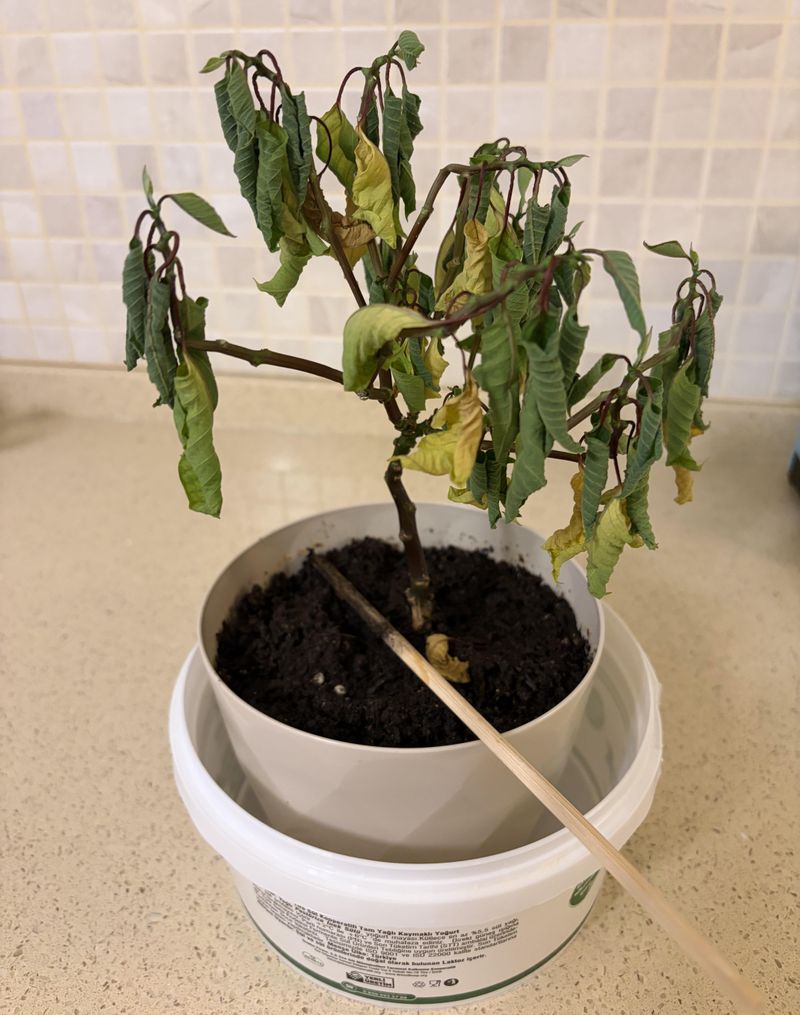
Here is a confession. My first outdoor poinsettia sulked all summer because I loved it a little too much with the hose.
Poinsettias like soil that is evenly moist but never waterlogged. Wet, airless soil invites root rot, and that shows up as yellow, droopy leaves that look a lot like thirst.
The easiest test is your finger. Push it into the soil about an inch, and water only when that layer feels dry.
When you do water, go deep. A slow, thorough soak encourages roots to grow downward, where the soil stays cooler during summer heat.
Plants in the ground may need water once or twice a week in warm, dry stretches. Potted plants dry faster, so check them more often in July and August.
Drip irrigation works nicely for poinsettias. It puts water at the roots and keeps leaves dry, which helps prevent fungal problems.
Drainage matters as much as frequency. If water pools in your bed after watering, consider a raised bed or a mound of amended soil.
In winter, California rains often handle much of the watering for you. Skip the hose when the soil is already damp.
Pinching Poinsettia Tips in Summer Builds More Colorful Branches
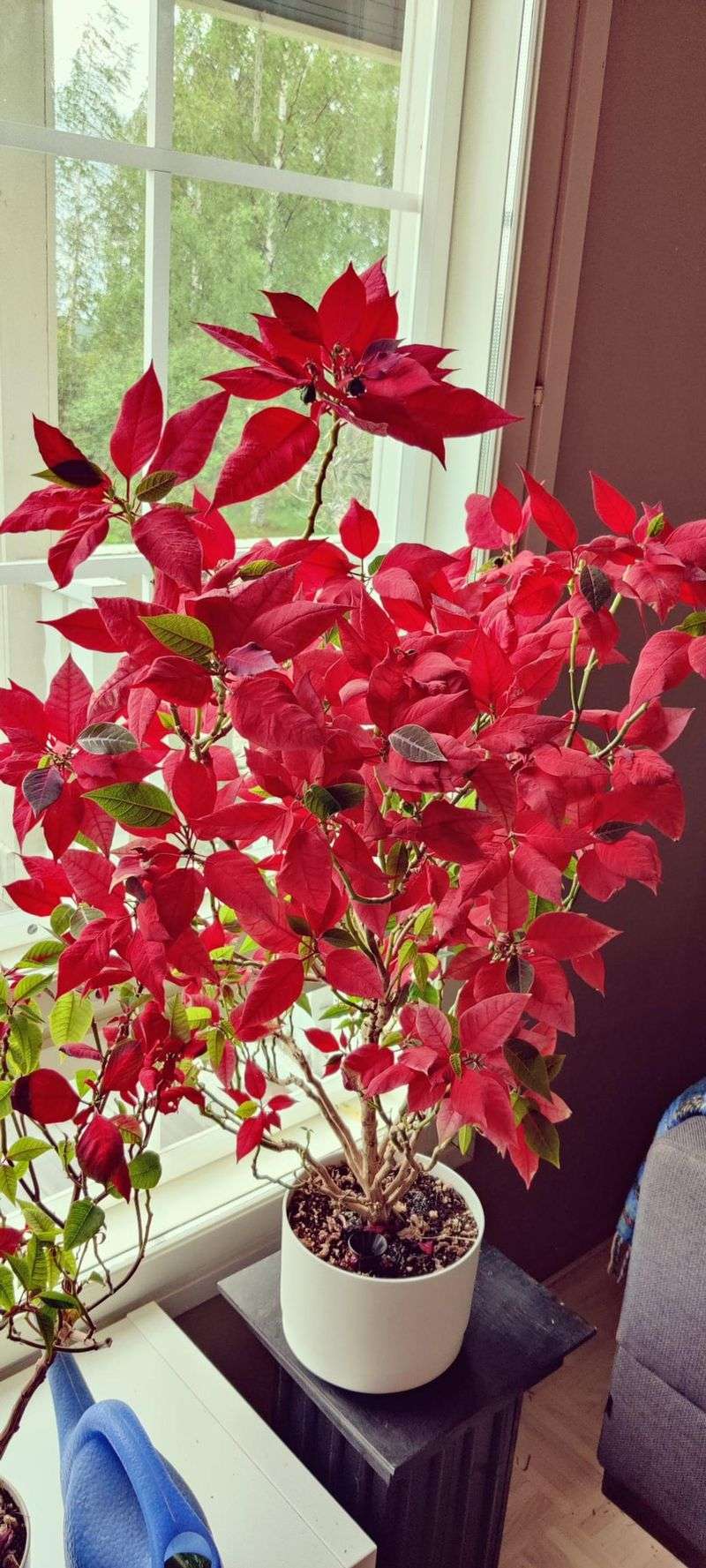
More branches mean more color. That simple rule is why pinching is one of my favorite summer chores.
Each stem tip can produce a cluster of colored bracts in winter. Pinch off the top inch of each new shoot, and the plant sends out two or more side branches in its place.
Start pinching once new growth is about 6 inches long. Repeat every few weeks through summer to keep the plant compact and full.
Stop by late summer. Many gardeners use mid to late August as the cutoff, giving new shoots time to mature before the color show begins.
Without pinching, outdoor poinsettias often grow tall and leggy. You end up with a few lanky stems topped with color instead of a full, rounded shrub.
Feed your plant during this growth period too. A balanced fertilizer every two to four weeks from spring through summer keeps leaves green and stems strong.
Ease off fertilizer in fall. Pushing lots of leafy growth late in the season can work against the bract display.
Bonus: those pinched tips can root as cuttings. Stick them in moist potting mix and share new plants with friends.
Long Dark Nights Bring Back Those Red Poinsettia Bracts
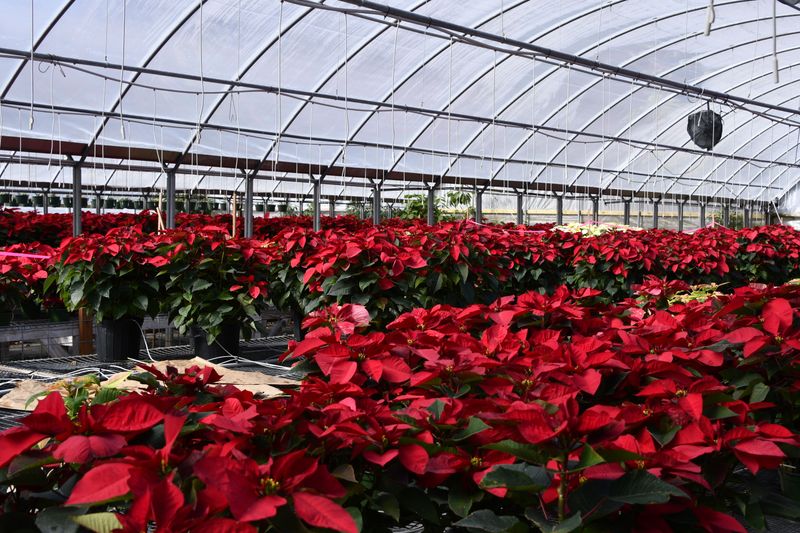
Darkness is the magic ingredient. Poinsettias are short-day plants, which means long nights tell them it is time to turn color.
Starting around early October, the plant needs about 14 hours of uninterrupted darkness each night for roughly eight to ten weeks. Outdoors, nature handles much of this as fall nights grow longer.
Here is the catch. Porch lights, streetlights, and security lamps can confuse the plant and delay or prevent color.
Look around your planting spot after dark. If a bright light shines on it, consider a different location or shield the light.
Potted poinsettias give you more control. Some gardeners move them into a dark closet or cover them with a box every evening, then bring them back into sun each morning.
In the ground, choose your spot with this in mind from the start. A quiet corner away from house lights usually works best.
Outdoor plants in California often color up later than store plants. Expect bracts around December or even January, depending on your area.
That later timing is part of the fun. Your shrub keeps the holiday feeling going well into the new year.