This Is Who’s Responsible When A Neighbor’s Tree Hangs Over Your New York Property
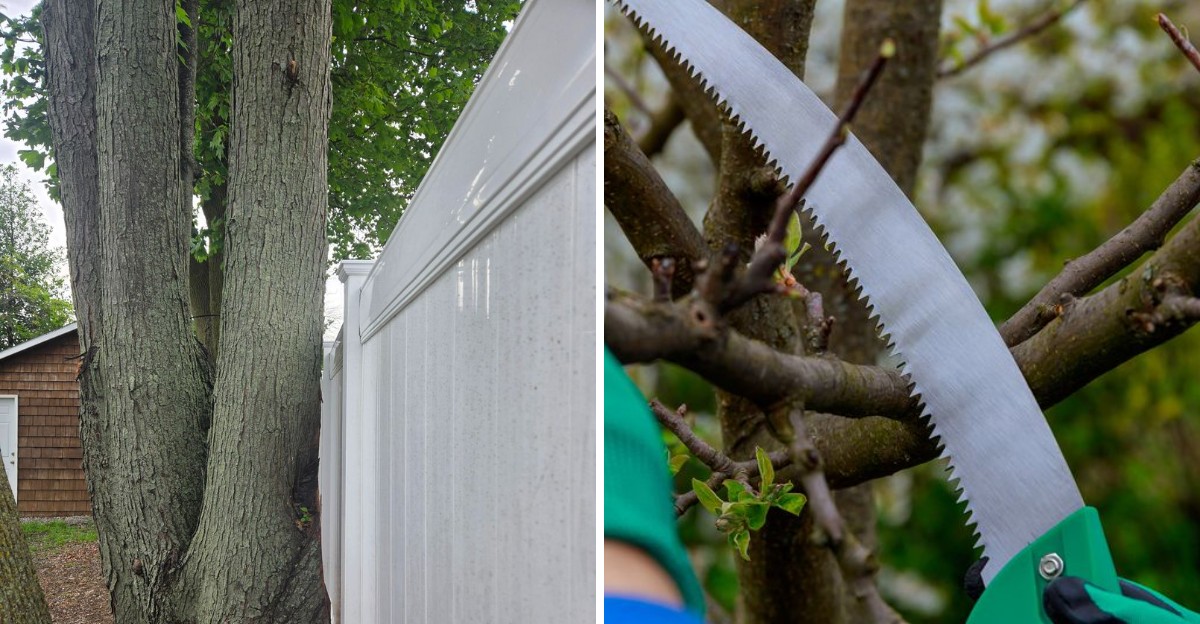
A tree can be rooted in your neighbor’s yard and still hand you the pruning bill. That surprised me more than any frost date ever has.
For years I assumed the owner of a tree paid for every branch that drifted over my fence. In New York, the usual rule works the other way, and plenty of homeowners learn it the hard way.
The law gives you a surprising amount of freedom with those wandering limbs. It also sets a few traps that can turn a simple trim into a costly mistake. One rule even triples the bill for getting it wrong.
Between you and me, most backyard tree fights start with a guess rather than a fact. Take it from someone who guessed wrong.
So who really reaches for the wallet when the shade, the leaves, and the worries come from next door?
Those Overhanging Maple Branches Come With A Surprise Price Tag

Most folks expect the tree owner to pay for trimming. In practice, the cost usually lands on you, the person whose garden sits under those branches.
New York follows what lawyers call the self-help rule. If a healthy tree on your neighbor’s land reaches over the property line, you are generally allowed to trim the overhanging limbs back to that line.
The catch is that you pay for the work yourself.
Courts in the state have treated this as a right, not a duty for the neighbor. Your neighbor typically has no legal obligation to trim a healthy tree just because it shades your tomatoes or drops twigs on your patio.
That surprises a lot of people who have been waiting months for next door to call a tree service.
For what it’s worth, this rule can work in your favor. You get to decide when and how the trimming happens, instead of hoping someone else gets around to it.
You also skip the frustration of arguing over a bill.
Many neighbors will still chip in if you ask politely. Just remember that offer is a kindness, not a requirement, so treat it like one and say thank you.
Grab Your Pruning Saw, But Stay On Your Side Of The Fence
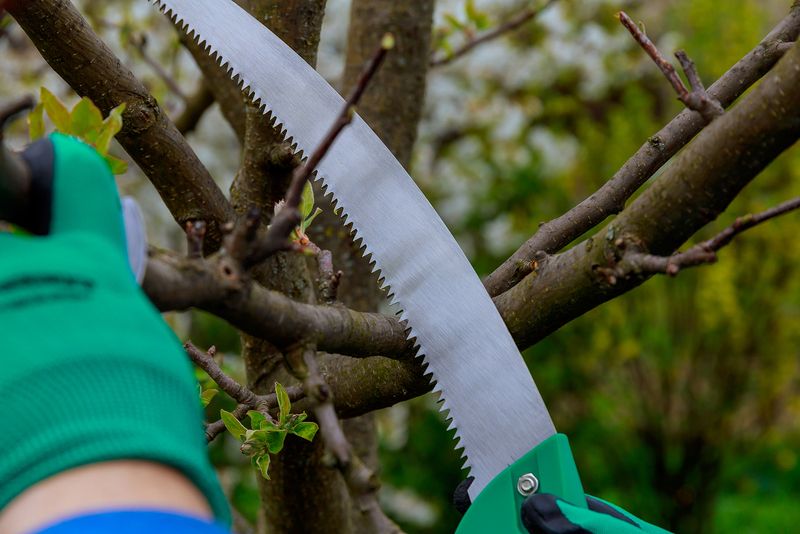
Take it from someone who once leaned a ladder against the wrong fence post. Where you stand while trimming matters just as much as what you cut.
The self-help right covers branches that cross into your airspace. It does not give you permission to walk onto your neighbor’s lawn, climb their tree, or set a ladder on their side.
Doing any of that without permission can count as trespassing.
Pole saws and long-reach pruners are handy here. They let you reach overhanging limbs while your feet stay firmly on your own grass.
For bigger branches, a licensed tree service can work from your yard with the right equipment.
Ask for written permission if the job truly requires stepping next door. A quick text saying yes is far better than a vague memory of a hallway chat.
A few smart habits help:
Cut back only to the property line, not beyond it. Make clean cuts just outside the branch collar so the tree can seal the wound.
Clean up debris on your side rather than tossing it over the fence.
Late winter is often a good window for many deciduous trees, since bare branches are easier to see and the tree is dormant.
Cutting Too Deep Into A Neighbor’s Oak Can Triple Your Bill
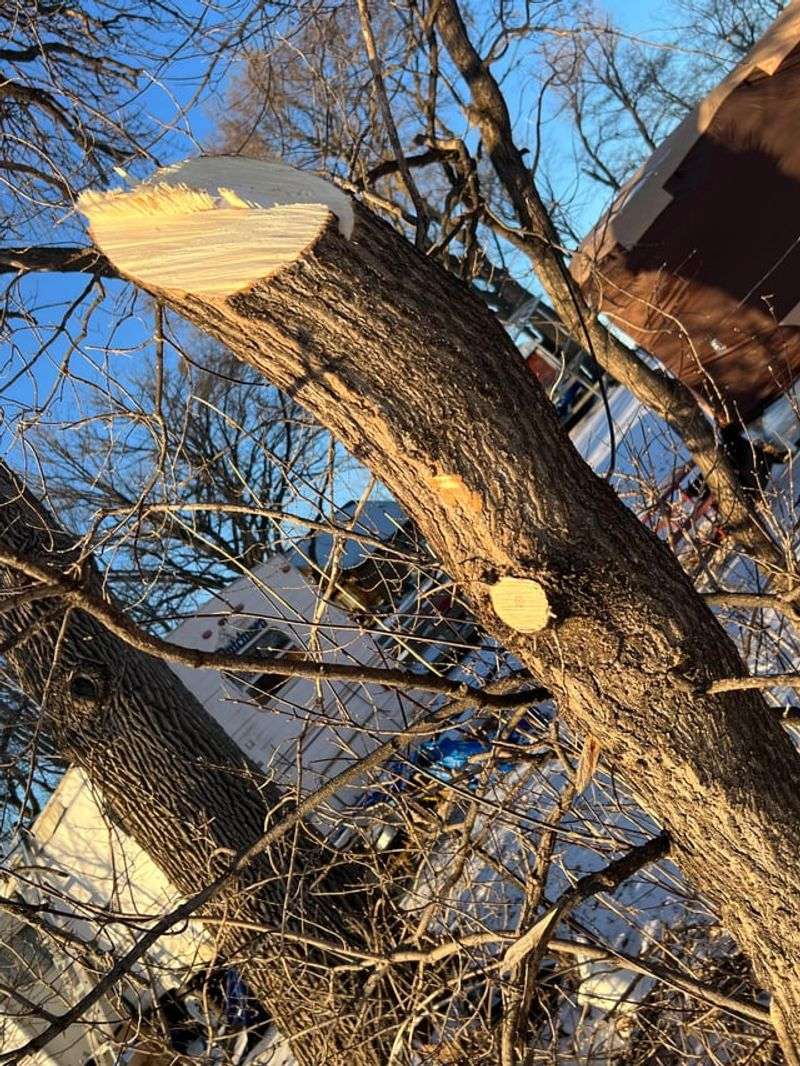
Here is the part that makes my stomach flip. One overeager afternoon with a chainsaw could cost three times the value of your neighbor’s tree.
New York’s Real Property Actions and Proceedings Law, Section 861, covers people who cut, remove, or injure trees on someone else’s land without permission. The owner can sue for treble damages, meaning three times the tree’s value.
If the person acted in good faith, believing they had a right to cut, damages may be reduced to the tree’s actual value plus restoration costs.
Trimming your side of a branch is usually fine. Trouble starts when the pruning is so heavy that the tree declines, becomes unstable, or has to be removed.
Mature trees can be appraised at thousands of dollars, so the math adds up fast.
Arborists often warn against removing more than about a quarter of a tree’s canopy in one season. Lopping off a huge one-sided chunk can leave a tree lopsided and stressed.
My garden taught me that patience beats speed. If the overhang is massive, trim in stages over a couple of years, or get an arborist’s opinion before the first cut.
A Cracked, Leaning Tree Next Door Changes Who Pays
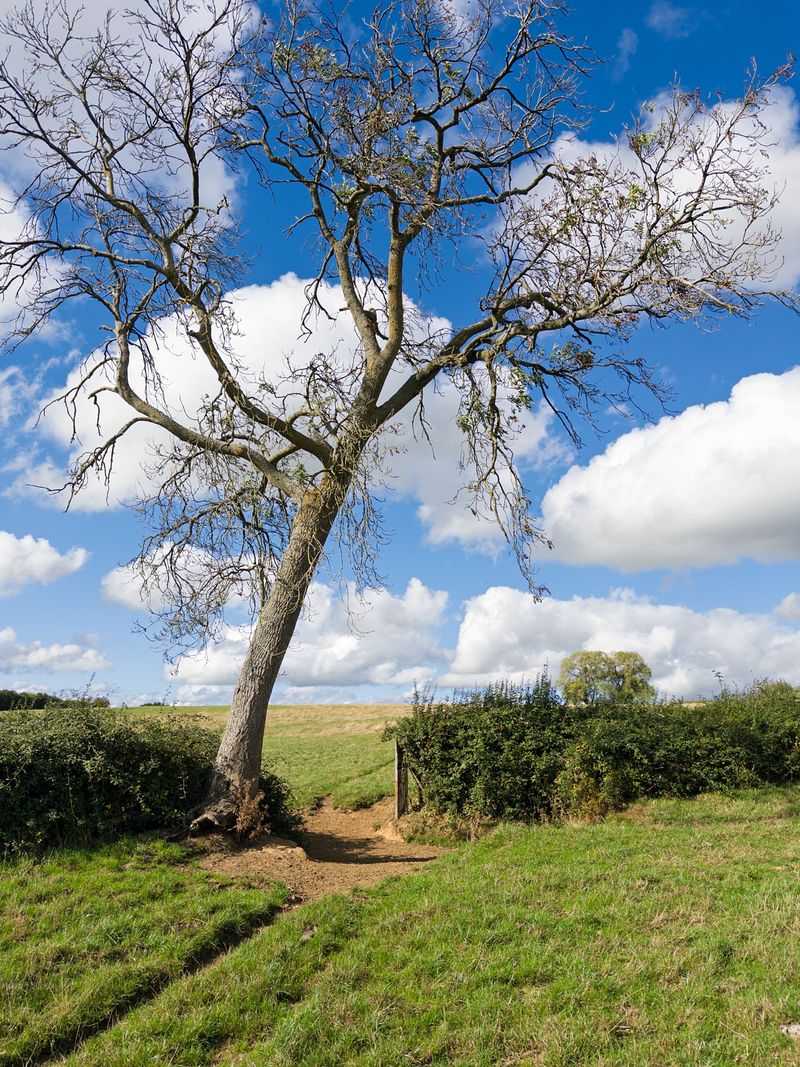
Some trees just look like trouble. A deep trunk crack, mushrooms sprouting at the base, or a lean that gets worse every year should catch your eye.
When a tree is hazardous, the rules shift. Under New York negligence law, an owner can be responsible for damage if they knew, or reasonably should have known, about the dangerous condition and did nothing.
Lawyers call the second part constructive knowledge.
Obvious warning signs help establish that knowledge. Large hollow or broken limbs, peeling bark over decay, fungal growth, and heaving soil around the roots are the kinds of clues a reasonable person would notice.
So what should you do? Start documenting.
Take dated photos from your own yard. Send your neighbor a polite written note describing what you see and asking them to have it checked.
Keep a copy for yourself.
That paper trail matters if a limb later crashes onto your shed or car. It shows the owner was put on notice.
It also gives your neighbor a fair chance to fix the problem, which is the outcome everyone wants. If the tree stands near a street, your town or village may also want to hear about it.
When A Storm Drops A Healthy Tree On Your Roof, Call Your Own Insurer
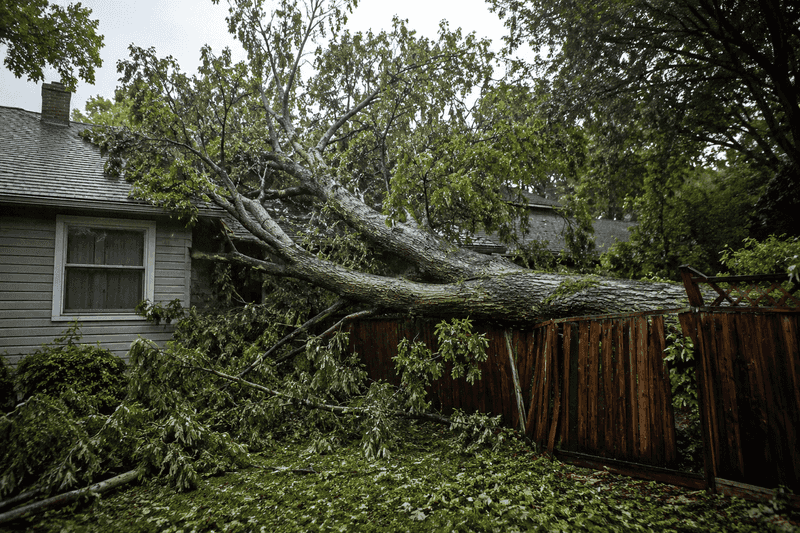
Nobody wants that crack of splintering wood at two in the morning. Once the shock wears off, the money question arrives fast.
If a healthy tree from next door falls during a storm, it is usually treated as an act of nature. In that case, your own homeowners policy typically covers damage to your house and other insured structures, minus your deductible.
Your neighbor generally is not on the hook.
That flips only when negligence enters the picture. If you can show the tree was visibly decayed or hazardous before it fell, and the owner ignored it, their insurer may end up paying.
Your earlier photos and notes become very useful here.
Many insurers also cover tree removal when a fallen tree hits a covered structure, often with a set dollar limit. A tree that lands only on the lawn may not be covered at all.
Before storm season, pull out your policy and read the section on trees. Look for removal limits, debris coverage, and your deductible amount.
Call your agent with questions while skies are clear. Ten minutes on the phone now is far easier than deciphering fine print with a trunk resting on your gutter.
Falling Leaves And Sneaky Roots Rarely Land In Court
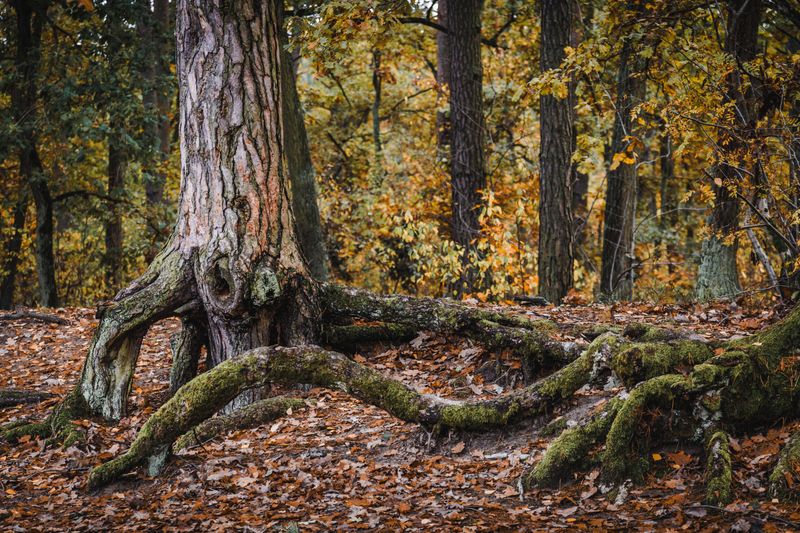
Every October, my rake and I have the same conversation about the neighbor’s sugar maple. It is beautiful, generous, and very messy.
Courts in New York have generally said that leaves, seeds, twigs, and fruit dropping from a healthy tree are a normal part of living near trees. You usually cannot sue over a lawn full of acorns.
Cleanup on your side is your job.
Roots work a little differently. You can typically trim roots that cross onto your property, just like branches.
If they cause real physical harm, such as cracking a foundation, lifting a driveway, or breaking a sewer line, a nuisance claim may be possible in some cases.
Even then, courts often expect you to try self-help first. That means dealing with the roots on your own land.
Be careful, though. Cutting large structural roots close to the trunk can make a tree unstable and push it toward decline.
That could expose you to the same liability as over-pruning branches.
Bring in a certified arborist before slicing anything thicker than your wrist. A root barrier installed along the line may solve the problem without harming the tree at all.
That Trunk Sitting Right On The Property Line Belongs To Both Of You
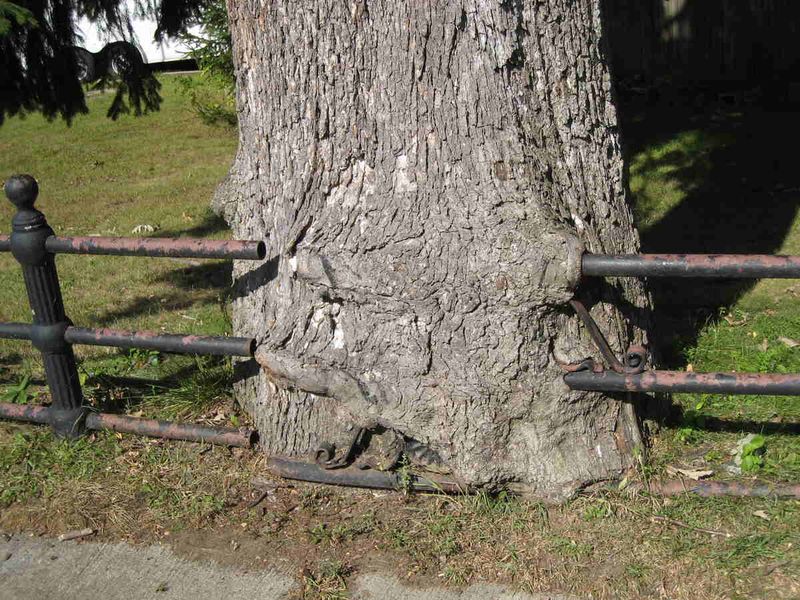
Picture-perfect shade trees sometimes grow right on the line. When the trunk straddles two yards, the rules get cozy.
A boundary tree, meaning one whose trunk sits across the property line, is generally treated as jointly owned in New York. Neither neighbor can remove it or seriously harm it without the other’s consent.
Doing so could trigger a damages claim, including the Section 861 treble damages rule mentioned earlier.
Shared ownership usually means shared decisions. Routine trimming of your own side is often fine, but big moves like removal, heavy pruning, or root work need a real agreement.
Not sure where the line actually runs? Fences are not reliable markers, and many were installed a few feet off.
A licensed land survey can settle the question. Your deed and any existing survey from your home purchase are good places to start.
If you both agree on work, put it in writing. Note who pays, how costs are split, and which company does the job.
A simple signed page protects the friendship as much as the tree. Shared trees can outlast several owners, so clear records help whoever lives there next.
A Friendly Chat And A Certified Arborist Save Money
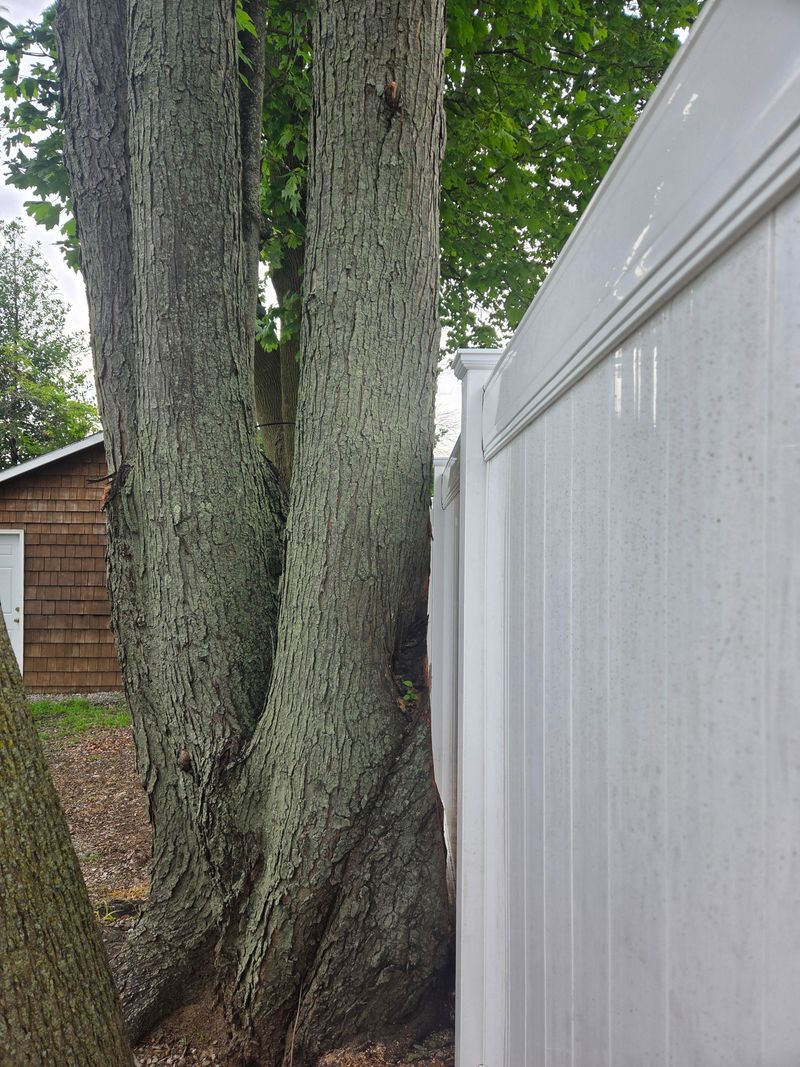
Looking back, I should have knocked on the door first. Most tree headaches shrink once two neighbors actually talk.
Plenty of people simply do not notice what their tree is doing to the yard next door. A relaxed conversation over the fence often leads to shared trimming, split costs, or at least a heads-up before you start cutting.
Next, check local rules. Some towns and villages require permits for certain tree work, and New York City’s street trees belong to NYC Parks, so homeowners cannot prune them without permission.
A quick call to your municipal office can prevent fines.
For hazards or big pruning jobs, hire an ISA Certified Arborist. They can judge the tree’s health, recommend safe cuts, and provide a written report.
That report can be valuable if there is ever a dispute or insurance claim.
If things escalate or damage has already happened, a local real estate attorney can explain your specific rights. Laws and court decisions vary with the facts, so general guides like this one only go so far.
The real takeaway is simple. Trim your side at your cost, stay off their land, document hazards, and keep the conversation friendly.