How To Grow Strong Mandevilla Vines In Pots In Georgia With Less Effort
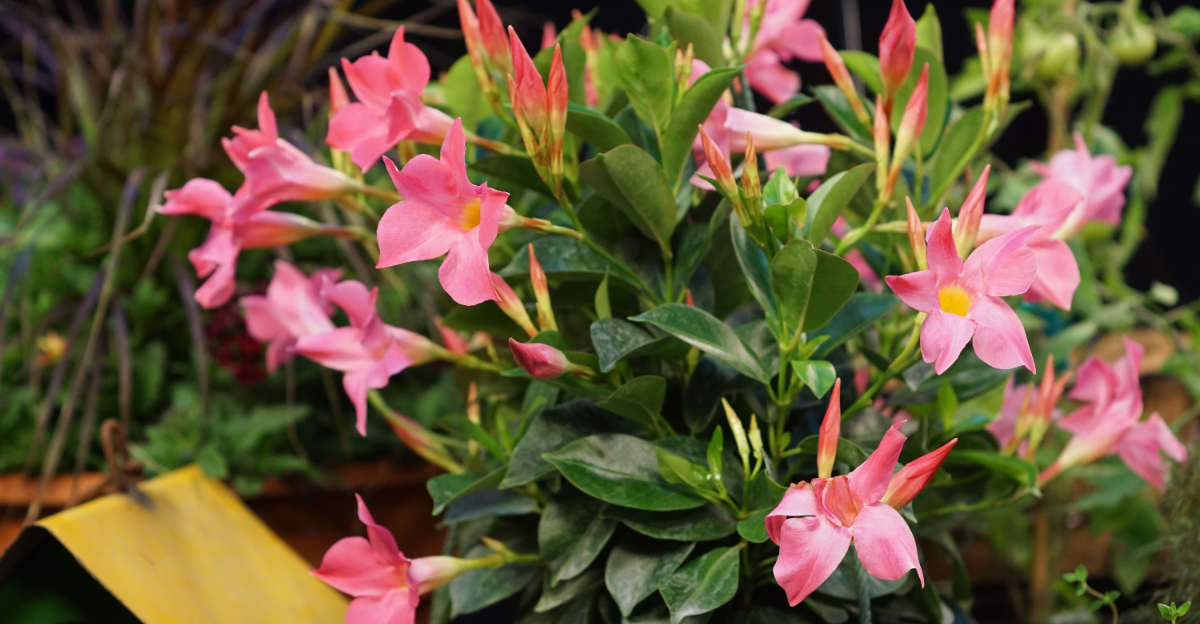
Mandevilla has a way of making any porch, patio, or fence look like something straight out of a garden magazine.
Those bold trumpet shaped flowers and rich green leaves climbing up a trellis create exactly the kind of lush, tropical feel most gardeners are going for.
Georgia’s warm, humid summers turn out to be surprisingly well suited for growing mandevilla in containers.
But there’s a difference between a vine that just gets by and one that grows strong, blooms heavily, and keeps looking great without constant attention.
Container growing adds its own set of considerations. Soil, pot size, watering, and feeding all work a little differently when roots are confined to a pot rather than spreading freely in the ground.
Many gardeners put in more effort than they actually need to and still end up with disappointing results. Others make a few simple adjustments early on and watch their mandevilla take off with very little fuss from that point forward.
1. Choose A Large Pot To Support Strong Root Growth
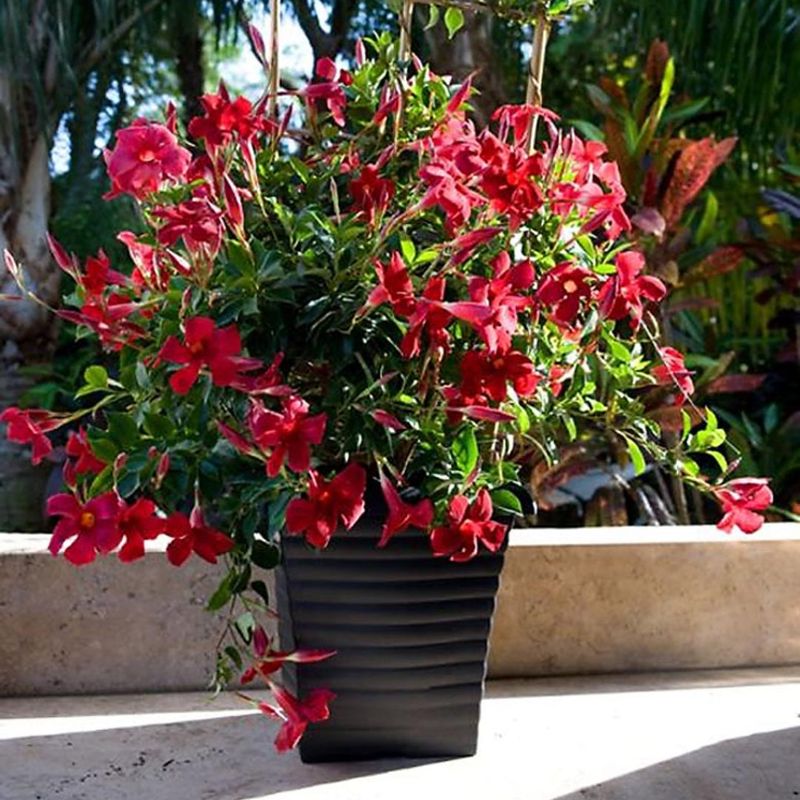
Root space makes or breaks a mandevilla vine in a container. When the roots get cramped, the plant slows down, blooms less, and struggles to pull in water and nutrients efficiently.
Starting with a pot that gives those roots room to spread means less work for you down the road.
Look for a container that is at least 12 to 14 inches wide and equally deep. Bigger is generally better here, especially in Georgia where summer heat causes soil to dry out faster in smaller pots.
A larger volume of soil holds moisture longer and stays more temperature-stable during those brutal July and August afternoons.
Material matters too. Terracotta pots look great but dry out quickly in the Georgia heat, so you will need to water more often.
Plastic or resin containers hold moisture longer and are lighter to move when cold weather rolls in. Glazed ceramic pots offer a good middle ground between looks and moisture retention.
Make sure whatever pot you choose has at least two or three drainage holes at the bottom. Without proper drainage, water sits around the roots and causes rot, which is one of the most common problems container gardeners in Georgia face.
Elevating the pot slightly on feet or a stand helps air circulate under the container and keeps drainage flowing freely.
2. Use Well-Draining Soil To Prevent Root Problems
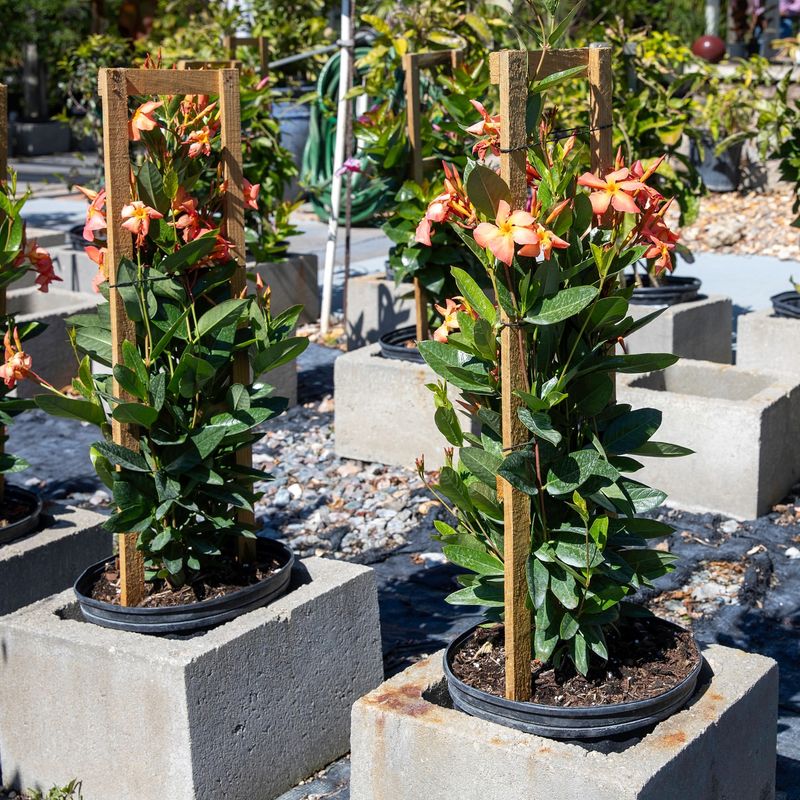
Soil quality is one of the most underestimated parts of growing mandevilla in a pot. Plain garden soil pulled from your yard is too dense for containers.
It compacts over time, blocks airflow around roots, and holds way too much moisture, especially during Georgia’s rainy spring and summer months.
A quality potting mix designed for containers is your best starting point. Look for one that feels light and slightly gritty rather than heavy and clumpy.
Brands that include perlite or bark already mixed in are a solid choice because those materials create small air pockets that let excess water drain through quickly.
Your Georgia Garden Changes Every Week. Your Plan Should Too.
Gardening in Georgia changes quickly throughout the season. Every Friday you’ll receive a simple weekly plan showing exactly what to plant, prune, fertilize, harvest, and protect so you never miss the right timing.
Boosting drainage even further is easy. Mix in about 20 to 25 percent additional perlite or coarse horticultural sand by volume.
That simple adjustment makes a noticeable difference in how fast water moves through the pot, which protects roots from sitting in soggy conditions between waterings.
Mandevilla vines prefer a slightly acidic soil pH, somewhere between 6.0 and 6.5. Most quality potting mixes fall within that range naturally, but if you notice yellowing leaves despite good care, a quick soil pH test can rule out nutrient availability issues tied to pH being off.
Refresh the top layer of soil each spring by removing the first inch or two and replacing it with fresh potting mix.
3. Place In Full Sun For Consistent Blooming
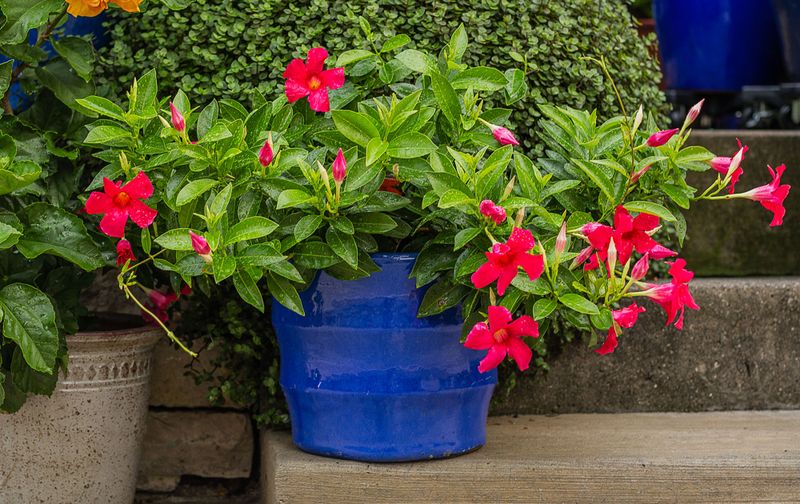
Sunlight is the engine behind every mandevilla bloom. Without enough direct sun, the plant puts its energy into growing leaves rather than producing flowers.
Georgia gardeners have a real advantage here because the state gets plenty of intense sunshine from spring straight through fall.
Aim for at least six hours of direct sunlight daily, though eight hours produces the most consistent flowering. South-facing and west-facing patios in Georgia tend to hit that sweet spot naturally.
East-facing spots work reasonably well too, offering strong morning sun with some afternoon shade that can actually reduce heat stress during the hottest weeks of summer.
North-facing locations are the one placement to avoid. Even in Georgia, a north-facing spot rarely delivers enough direct light to keep a mandevilla blooming at full strength.
Plants placed there tend to grow long and leggy as they stretch toward light, producing fewer flowers and looking less full overall.
During Georgia’s intense July and August heat waves, some afternoon shade between 2 p.m. and 4 p.m. can prevent leaf scorch without hurting bloom production significantly. If you notice pale, bleached-looking leaves combined with wilting even after watering, the plant may be getting too much harsh afternoon sun and would benefit from a slightly sheltered spot.
4. Water When The Top Layer Starts To Dry
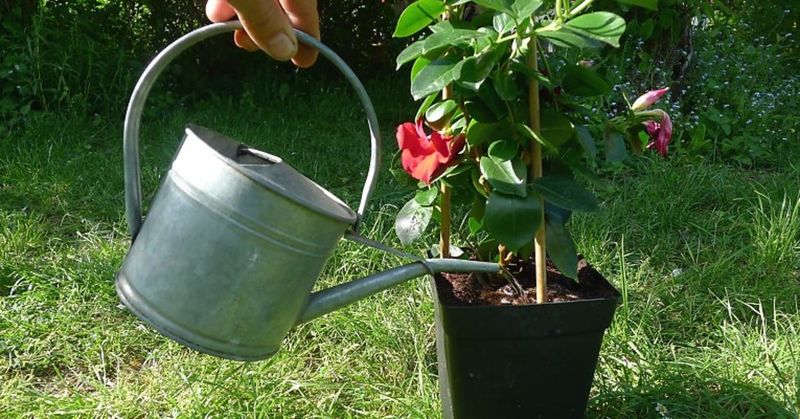
Watering a mandevilla in a container comes down to reading the soil, not following a fixed schedule. Georgia summers can swing between heavy rain and dry stretches within the same week, so checking the soil before reaching for the watering can saves you from both overwatering and underwatering.
Push your finger about an inch into the soil near the center of the pot. If the top inch feels dry, water thoroughly until it runs freely from the drainage holes.
If the soil still feels cool and slightly damp, wait another day and check again. That simple test takes five seconds and prevents most watering mistakes.
When you do water, soak the entire root zone rather than giving a light splash on the surface. Shallow watering encourages roots to stay near the top of the pot where they are more vulnerable to heat and drought.
Deep, thorough watering trains roots to grow downward, which helps the plant handle Georgia’s intense summer heat more effectively.
Morning watering is ideal. It gives foliage time to dry before evening, which reduces the risk of fungal issues that can develop in Georgia’s humid conditions.
Watering late in the day leaves moisture sitting on leaves overnight, creating conditions where powdery mildew and other surface problems can take hold.
5. Feed Regularly During Active Growth
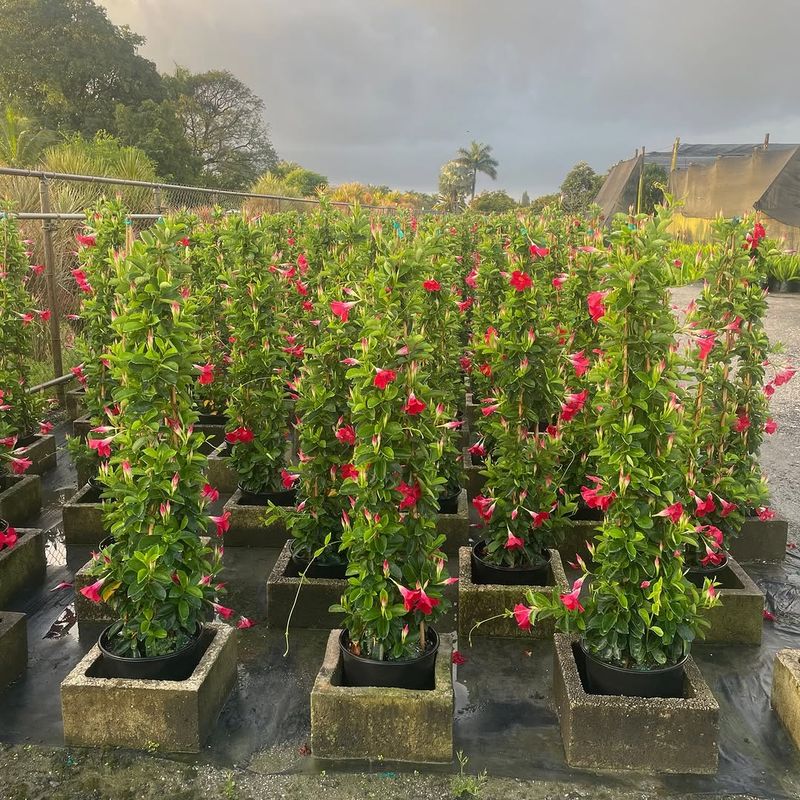
Mandevilla vines in pots are heavy feeders during their active growing season, and Georgia’s long warm season means that period stretches from roughly March all the way through October. Container plants rely entirely on what you add to the soil because nutrients wash out with every watering cycle.
A fertilizer with a higher middle number, meaning higher phosphorus content, encourages strong flower production. Look for a balanced bloom-booster formula like a 10-30-10 or a similar ratio.
Liquid fertilizers work faster than granular ones and are easy to apply right when you water, which makes keeping up with the feeding schedule much more manageable.
Feed every two weeks during the peak growing months of spring and summer. As Georgia temperatures cool down in late September and October, stretch the feeding interval to once a month.
Stop fertilizing entirely once the plant goes dormant or nearly dormant in winter, since feeding during that period pushes weak, soft growth that the plant cannot sustain.
Avoid using fertilizers that are extremely high in nitrogen. Too much nitrogen pushes lush, fast leaf growth at the expense of flowers.
You might end up with a very green, leafy vine that barely blooms, which defeats the whole purpose of growing mandevilla in the first place.
6. Provide A Trellis For Strong Vertical Support
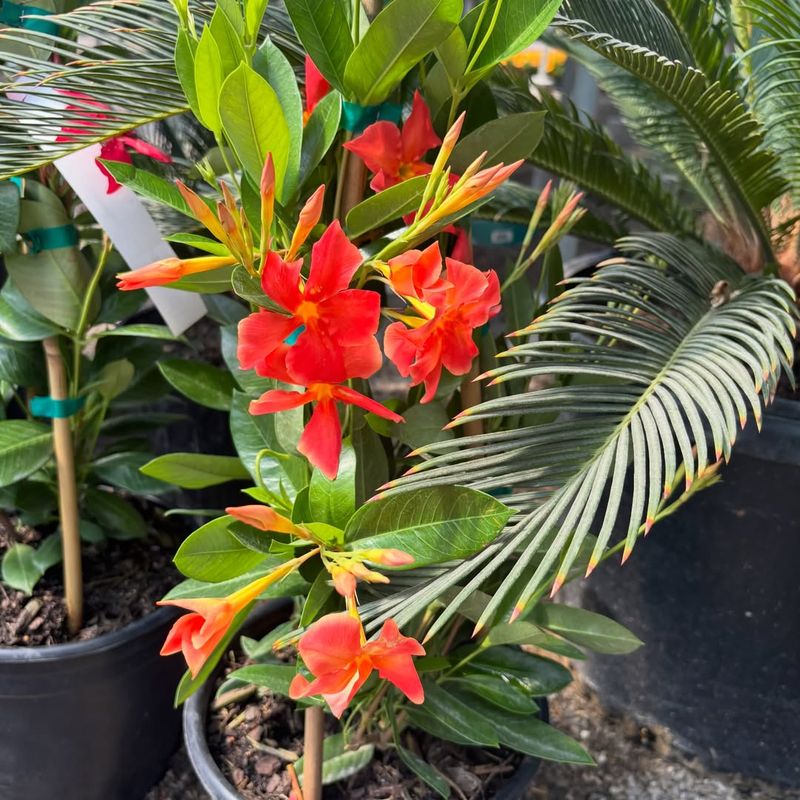
Mandevilla vines are natural climbers, and without something to grab onto, they sprawl, tangle, and grow unevenly. A trellis does more than keep things looking tidy.
It actually helps the plant grow stronger by allowing stems to distribute their weight properly instead of bending under their own length.
Plenty of trellis styles work well in containers. Simple bamboo stakes tied together in a fan or teepee shape get the job done without spending much money.
Metal obelisk-style trellises add visual interest and hold up well in Georgia’s windy spring storms. Decorative wire forms shaped like spirals or arches work especially well for smaller pots on porches and patios.
When you first plant or repot your mandevilla, push the trellis stakes firmly into the soil before the roots get established. Trying to add support later risks damaging roots that have spread through the pot.
Getting the structure in place early means the vine can start climbing immediately without you having to redirect it later.
Guide new vines gently toward the trellis as they grow. Mandevilla tendrils will wrap around supports on their own once they make contact, but giving them a little direction in the early weeks encourages an even, full shape rather than a lopsided one.
Soft plant ties or strips of fabric work better than wire or zip ties, which can cut into stems as they thicken.
7. Protect From Cold To Keep Plants Healthy
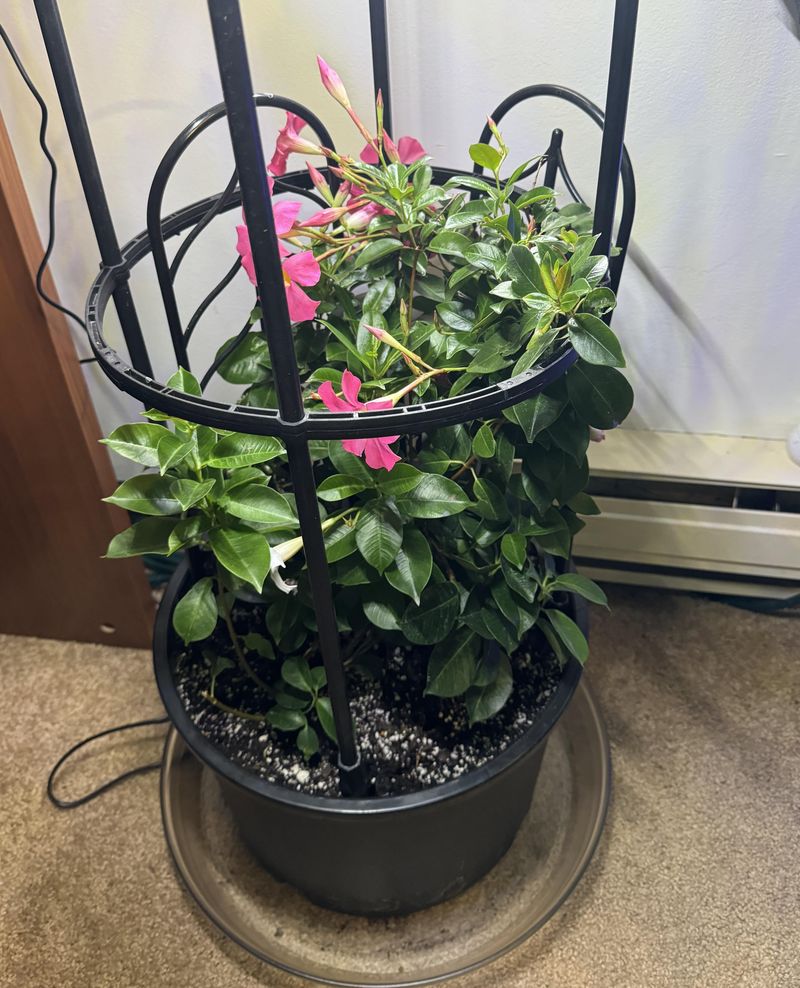
Georgia winters are mild compared to most of the country, but that does not mean mandevilla is safe outdoors year-round. Temperatures dropping below 50 degrees Fahrenheit slow the plant down significantly, and anything below 40 degrees can cause real damage to leaves, stems, and roots, especially in an exposed container above ground.
Watch the forecast closely starting in late October. When overnight lows consistently drop into the low 50s, it is time to start thinking about protection.
Moving the pot indoors before the first cold snap hits is much easier than trying to nurse a cold-stressed plant back to health once damage has already occurred.
A bright indoor spot near a south-facing window works well for overwintering mandevilla in Georgia. The plant will likely lose most of its leaves and slow way down, but that is completely normal.
Reduce watering to just enough to keep the soil from drying out completely, and skip fertilizer entirely until spring growth resumes.
If bringing the pot indoors is not practical, a sheltered spot like a covered porch or garage can work for Georgia’s mildest winters. Wrapping the pot in burlap or frost cloth adds a layer of insulation that can make the difference during brief cold snaps.
The roots in a container are far more exposed to temperature swings than in-ground plants, so protecting the pot itself matters just as much as protecting the foliage.