How To Grow Zucchini Vertically In Georgia For Bigger Harvests
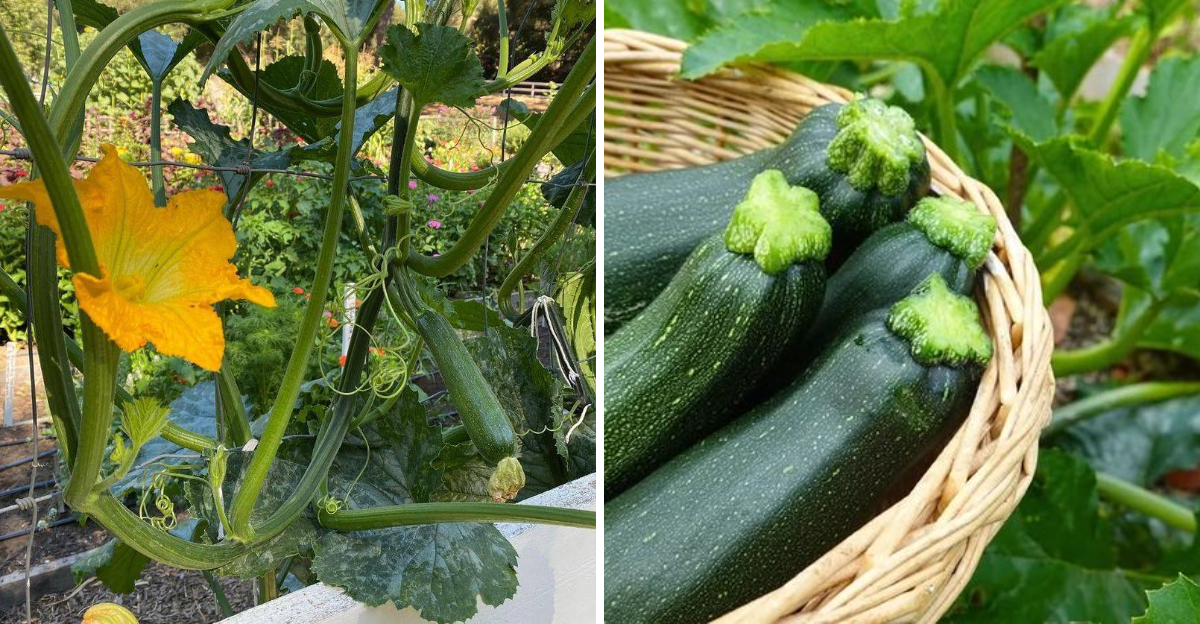
Zucchini in Georgia can take over a garden fast, and once the leaves spread out, space starts to disappear quicker than expected. Beds can feel crowded, airflow drops, and fruit can end up hidden or harder to manage as the plant expands.
That is where a different approach starts to make sense. Changing how the plant grows can open up space, improve exposure, and make the entire setup easier to handle through the season.
Not every method works the same way, though. Some keep plants controlled and productive, while others lead to more work without better results.
Getting it right can change how much zucchini you harvest and how manageable the plant stays as it continues to grow in Georgia conditions.
1. Choose A Strong Vertical Support Before Plants Start Vining
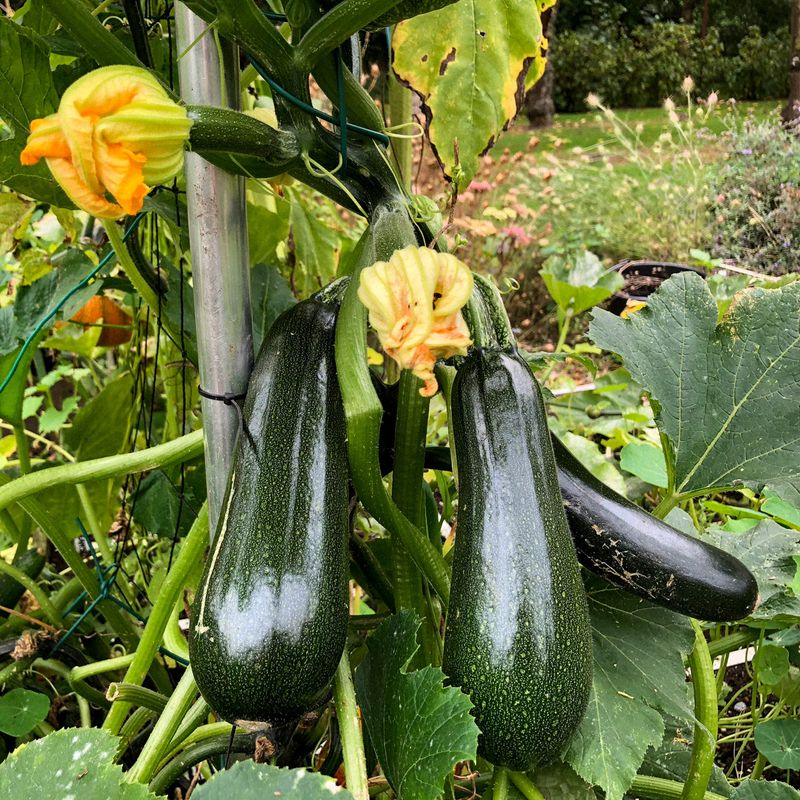
A flimsy support will fail you mid-season, and Georgia summers do not leave room for do-overs. Before your zucchini seedlings even go in the ground, pick a structure that can actually hold the weight of multiple fruits and a full canopy of large leaves.
Zucchini plants get heavy — faster than most people expect.
A-frame trellises made from wood or heavy-gauge metal are solid choices. Panel trellises work well too, especially if you are growing along a fence line or raised bed edge.
Whatever you choose, it needs to stand at least five to six feet tall to give your vines enough vertical room to grow through Georgia’s long warm season.
Drive stakes or anchor posts at least eighteen inches into the ground. Georgia soil can shift during heavy summer rains, and a support that tips over will damage your plants and set back your harvest by weeks.
Stability matters more than appearance here.
Square tomato cages are fine for bush-type zucchini, but vining varieties need something more substantial. If you go the cage route, choose the heavy-duty steel kind — not the lightweight wire ones that bend under pressure.
2. Train Young Vines Early To Prevent Stem Damage Later
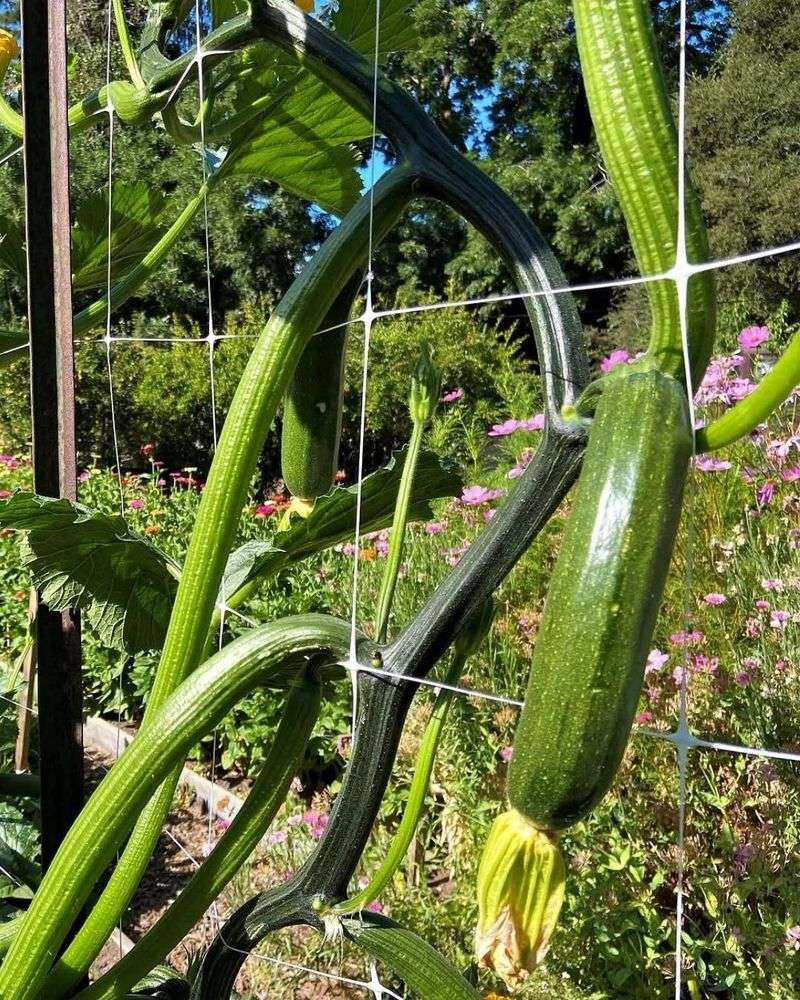
Young zucchini vines are surprisingly flexible, but that window does not stay open long. Once stems start to thicken and set in a direction, bending them toward your trellis becomes risky.
Start guiding the main stem when it is still short — usually within the first week or two after the plant establishes itself in the ground.
In Georgia, the heat kicks in early and plants grow fast. By the time July arrives, an untrained vine can already be sprawling across your garden bed with no intention of going vertical.
Getting ahead of that growth early saves you a lot of frustration later in the season.
Gently press the main stem toward the trellis and loosely secure it at the lowest rung or tie point. Do not force the stem into an awkward angle — if it resists, give it a day or two and try again.
Stems that get bent too sharply can crack internally, which cuts off water and nutrient flow to the rest of the plant.
Check your vines every few days during peak growing season. New growth can move quickly in Georgia’s heat and humidity, and lateral shoots will reach out in all directions if you are not paying attention.
Your Georgia Garden Changes Every Week. Your Plan Should Too.
Gardening in Georgia changes quickly throughout the season. Every Friday you’ll receive a simple weekly plan showing exactly what to plant, prune, fertilize, harvest, and protect so you never miss the right timing.
3. Use Soft Ties To Guide Growth Without Cutting Into Stems
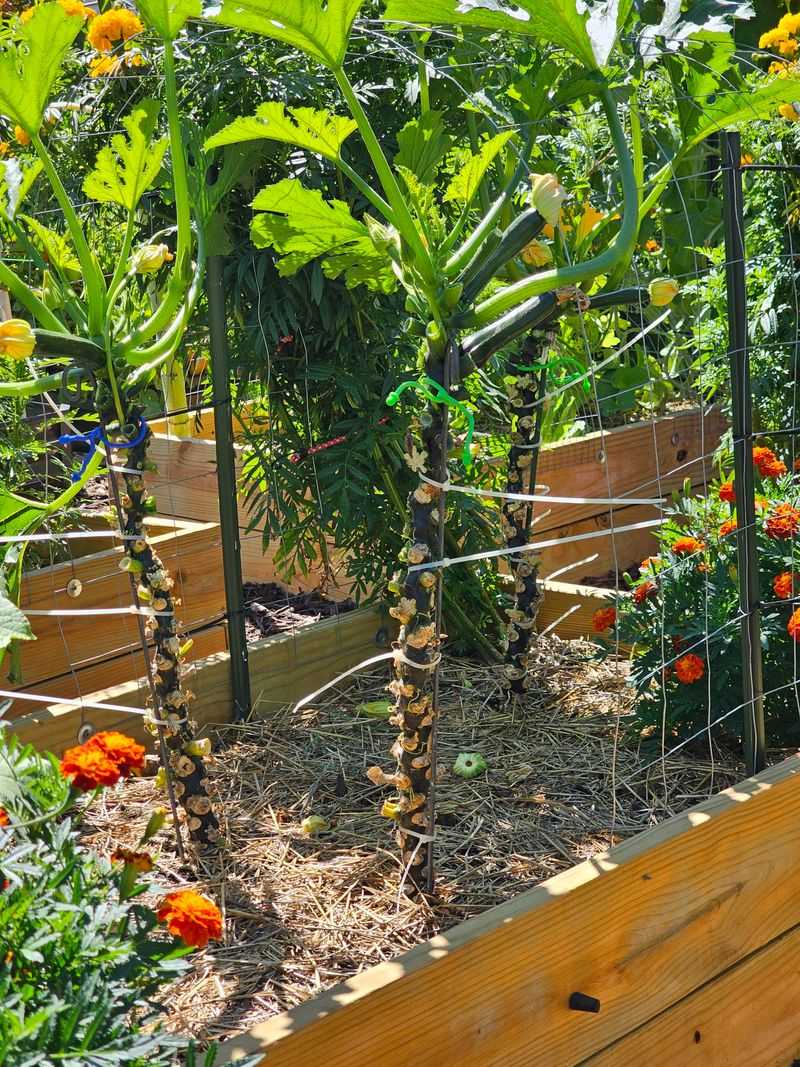
Zucchini stems are thick but surprisingly easy to damage with the wrong tie material. Wire, zip ties, or anything rigid can cut into the stem as the plant grows, which restricts the flow of water and nutrients right when the plant needs them most.
In Georgia’s heat, that kind of damage can show up fast as wilting or stunted fruit development.
Soft jute twine is one of the most reliable options. It is affordable, biodegradable, and gentle enough that it gives a little as the stem expands.
Silicone plant ties and stretchy fabric strips work well too. The goal is to hold the stem close to the support without squeezing it.
Always tie in a loose figure-eight shape — one loop around the stem, one loop around the trellis, with a knot in between. That gap in the middle keeps the stem from pressing directly against the support, which can also cause abrasion damage over time.
Tight ties are one of the most common mistakes home gardeners make with vertical growing.
As your plant climbs, add new ties every six to eight inches along the main stem. Do not rely on one or two ties to hold the whole vine — distribute the support evenly so no single point carries all the weight, especially once fruit starts forming.
4. Keep Leaves Off The Ground To Reduce Disease Pressure
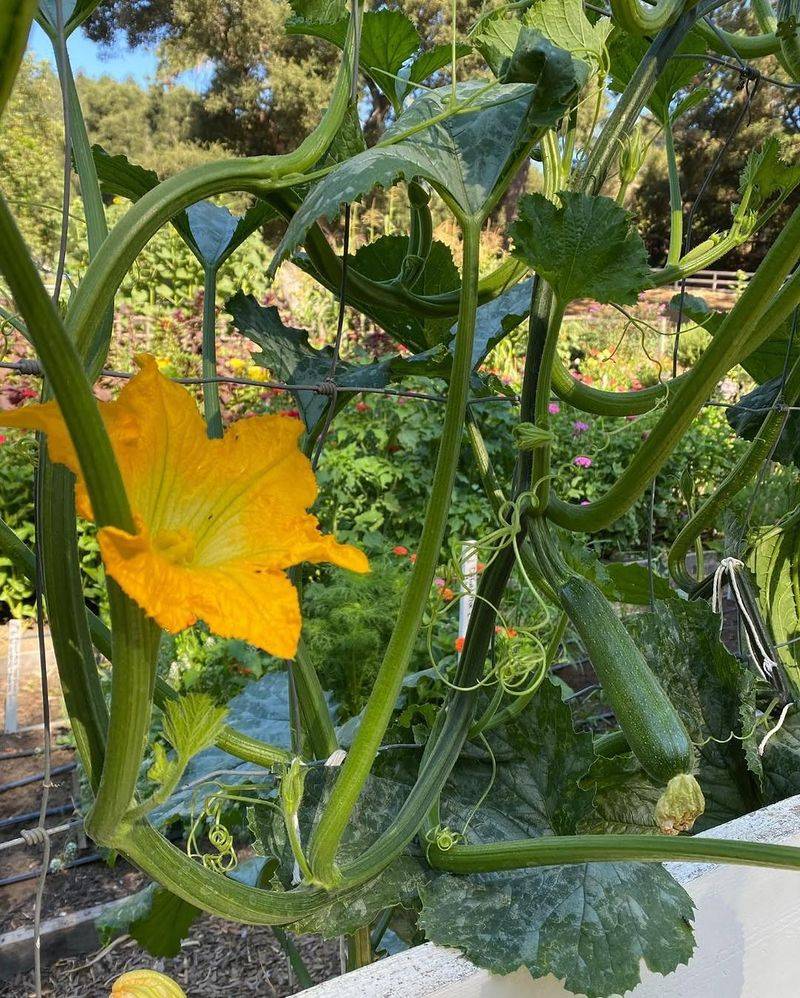
Soil contact is where a lot of zucchini problems begin. When leaves sit directly on the ground, they stay damp longer, and damp leaves in Georgia’s humid summer air are practically an invitation for fungal issues.
Powdery mildew and other leaf diseases spread quickly once they get a foothold, especially during the stretch from late June through August.
As your plant grows up the trellis, remove any leaves that droop down and touch the soil. You do not need to strip the plant bare — just clear the lowest six to twelve inches of the stem so there is open air between the plant and the ground.
That small change improves airflow significantly and keeps moisture from pooling around the base of the stem.
Pruning lower leaves also lets you see what is happening at the base of the plant more clearly. Pest activity, rot at the soil line, and early signs of disease are much easier to spot when you are not looking through a dense layer of foliage.
Georgia’s afternoon thunderstorms are great for moisture but rough on garden plants. Rainwater splashing up from the soil onto leaves carries soil-borne pathogens directly onto the plant.
Keeping leaves elevated reduces how much of that splash contact actually reaches your zucchini foliage.
5. Water Deeply At The Base To Avoid Powdery Mildew Issues
Powdery mildew is practically a rite of passage for Georgia zucchini growers. That chalky white coating shows up on leaves during humid stretches and spreads fast if conditions stay warm and moist.
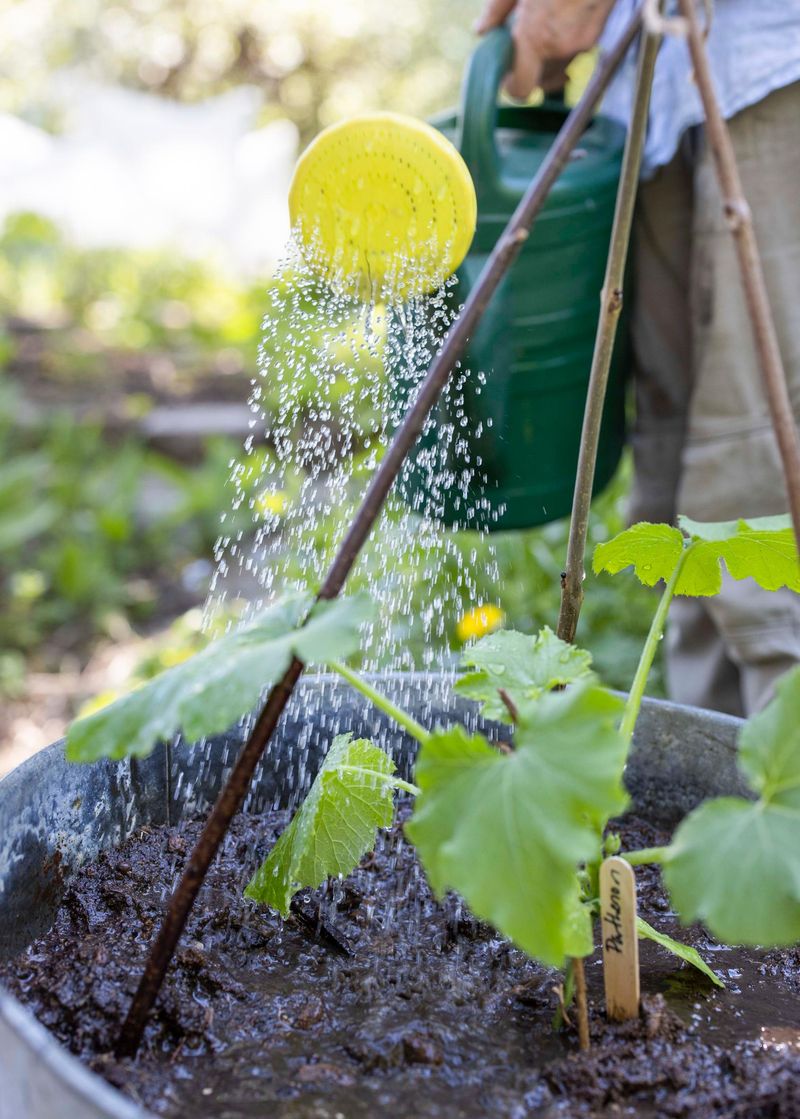
One of the simplest ways to slow it down is to change how you water — specifically, keeping water off the leaves entirely.
Overhead watering with a sprinkler or hose sprayer might feel efficient, but it coats your foliage in moisture that takes hours to dry in Georgia’s humid air. Wet leaves plus warm nights create exactly the conditions that powdery mildew thrives in.
Switching to drip irrigation or soaker hoses delivers water directly to the root zone without touching the plant above ground.
Water deeply and less frequently rather than giving plants a light drink every day. Zucchini roots can reach down twelve to eighteen inches when they have access to consistent moisture.
Deep watering encourages roots to grow down into cooler soil, which helps plants handle Georgia’s intense summer heat better than shallow-watered plants typically do.
Morning is the best time to water if you are using any method that wets the soil surface. Whatever moisture does splash up has the full day to evaporate before nighttime temperatures drop and humidity rises again.
Avoid watering in the late afternoon or evening whenever possible.
6. Harvest Frequently To Keep Plants Producing Longer
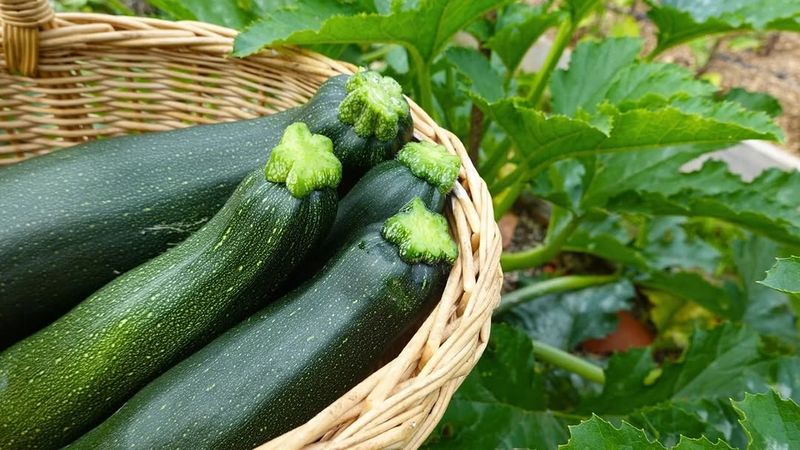
Leaving a zucchini on the vine too long is one of the fastest ways to slow down your harvest. When a single fruit gets oversized, the plant shifts most of its energy into maturing that one zucchini instead of setting new flowers and developing more fruit.
In Georgia’s growing season, that energy shift can stall production for several days at a time.
Pick zucchini when they are somewhere between six and eight inches long. At that size they are tender, flavorful, and not yet heavy enough to put serious strain on your vertical support.
Letting them grow to twelve inches or more adds weight that can pull ties loose or bend stems — especially on a plant that is already carrying multiple fruits at once.
Check your plants every day or every other day once they start producing. Zucchini can go from the right size to oversized in less than forty-eight hours during a Georgia heat wave.
A quick daily walkthrough takes two minutes and keeps you from missing the harvest window on multiple fruits at once.
Use a clean pair of garden scissors or pruning shears to cut the stem about an inch above the fruit. Twisting or pulling can stress the vine and occasionally tear the stem in a way that opens the plant up to pest entry or disease.
7. Give Each Plant Enough Space For Airflow And Light
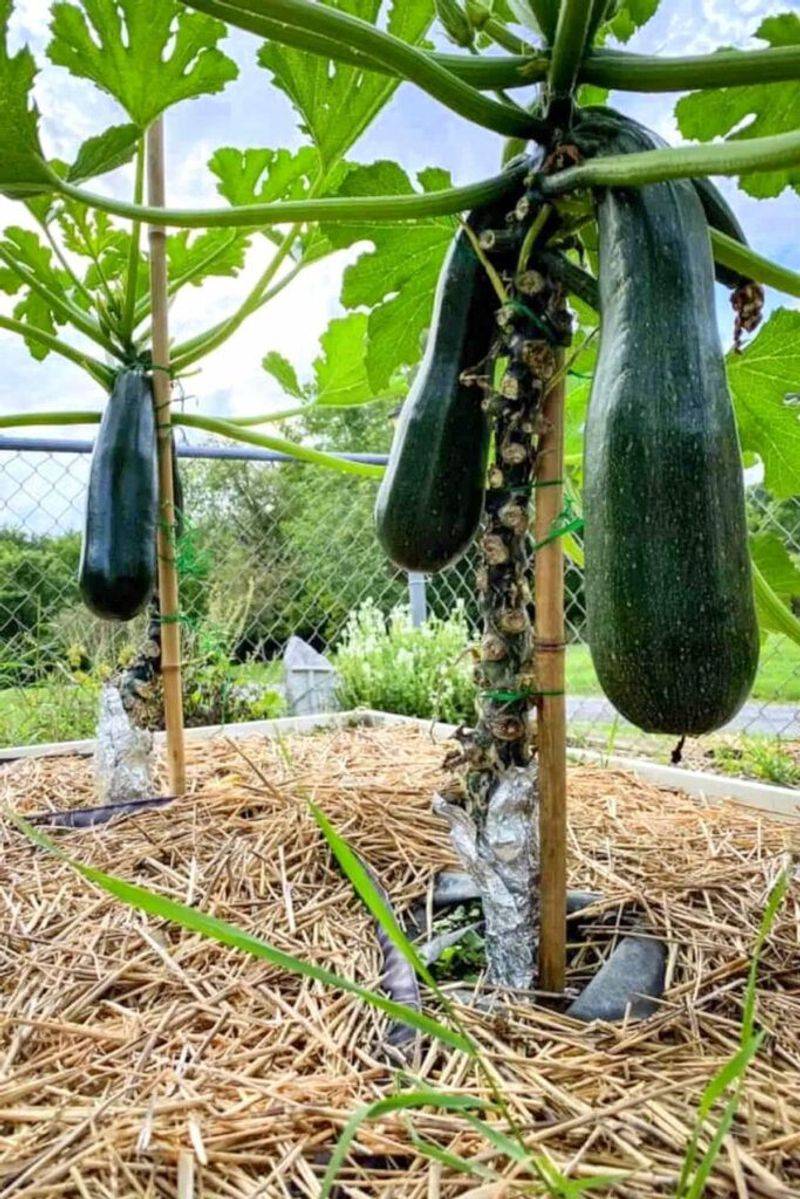
Crowding zucchini plants is a mistake that shows up slowly at first and then all at once. When plants are too close together, their leaves overlap and create shaded, still pockets of air that hold humidity and block sunlight from reaching lower parts of the plant.
In Georgia summers, that combination speeds up disease and slows fruit development noticeably.
Space your plants eighteen to twenty-four inches apart along your trellis line. That gap might look wide when plants are small, but zucchini leaves can span twelve inches or more across, and a mature plant in full production takes up more room than most people plan for.
Giving each plant its own zone of airflow makes a measurable difference in how healthy the foliage stays through the season.
Sunlight matters just as much as airflow. Zucchini needs at least six to eight hours of direct sun each day to produce reliably.
In Georgia, that is not usually a problem during summer, but shade from nearby plants or structures can cut into productivity.
Position your trellis so it runs north to south when possible, which allows both sides to receive sun throughout the day without one side shading the other.