How To Keep A Holiday Anthurium Blooming Through A Michigan Winter
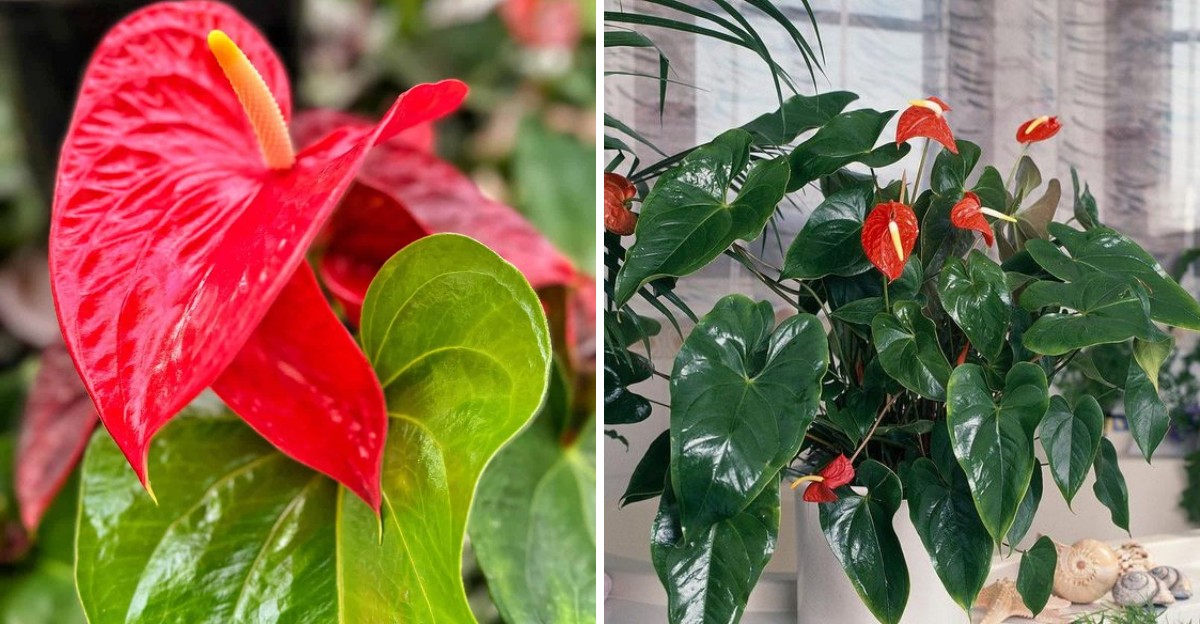
That glossy red flower on your windowsill is not actually a flower. The shiny heart is a modified leaf called a spathe, and the real blooms are hundreds of tiny dots packed onto the little spike in the middle.
I find it fascinating that a plant from the rainforests of Central and South America ends up on so many holiday tables. It grows on tree branches in its native home, soaking up warm, damp air most of the year.
Now drop that plant into a Michigan house in January. The furnace is roaring, the windows are frosty, and the indoor air can feel drier than many deserts.
You might be surprised by how long those waxy hearts can last with a little help, often two months or more per spathe.
What does a jungle plant really need to keep the color coming while the snow keeps piling up?
1. Those Red Anthurium Hearts Are Begging For The Right Window
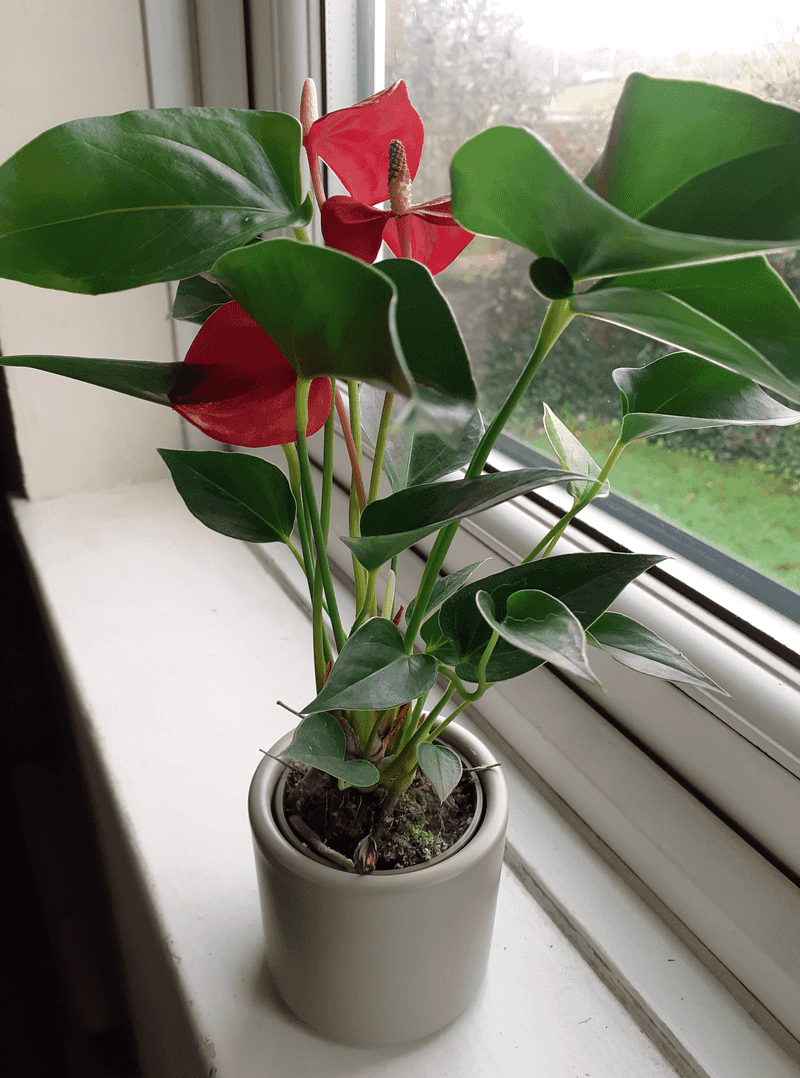
Light is the biggest reason a holiday anthurium keeps blooming or quietly stops. Without enough of it, the plant happily grows leaves and skips the colorful spathes you bought it for.
Bright, indirect light is the sweet spot. University extension guides describe anthurium as a plant that likes plenty of light but not harsh, hot rays beating down on its leaves.
In summer, a south window can scorch them, but winter changes the picture.
Here in the north, December sun sits low and weak. An east or south window that might be too intense in July often turns into the best seat in the house from November through February.
Just keep leaves from pressing against cold glass.
Days are short, too, with only around nine hours of daylight near the winter solstice in much of the state. Many growers aim for roughly eight to ten hours of good light for steady flowering.
If your home faces north or sits under big evergreens, a simple LED grow light can fill the gap. Set it about a foot above the plant and run it on a timer for ten to twelve hours.
Watch the new growth. Pale, stretched stems usually mean the plant wants more brightness.
2. Furnace Air Can Leave Anthurium Leaves Thirsty For Humidity
Forced-air heat is great for people in a cold snap, but it can be rough on a rainforest plant. Indoor humidity in heated homes often drops to 20 or 30 percent during winter.
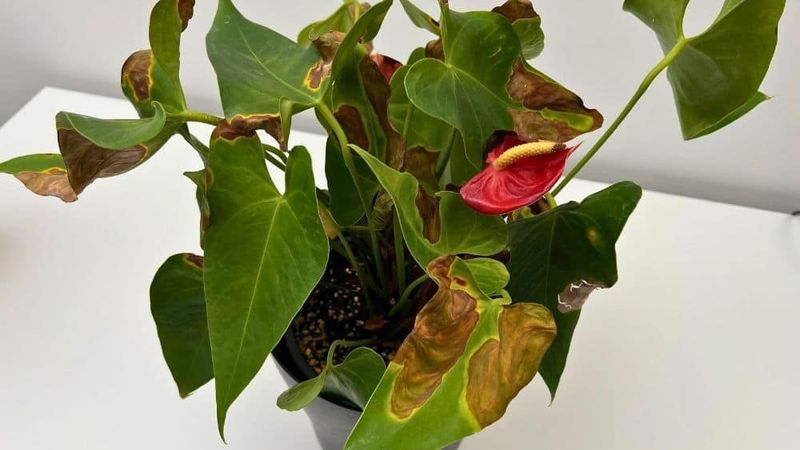
Anthuriums prefer far more moisture in the air, ideally 50 percent or higher. When the air gets too dry, leaf edges turn brown and crispy, and new spathes may open small or twisted.
A cheap hygrometer tells you exactly where you stand. Many cost less than a bag of potting mix, and the number can be eye-opening.
Several easy fixes help. A cool-mist humidifier near your plant works best, especially in a bedroom or living room you already use daily.
Grouping houseplants together also helps, since each one releases a bit of moisture. A pebble tray adds a small boost, as long as the pot sits on the stones and not in the water.
Misting feels nice, but the effect fades within minutes. I treat it as a bonus rather than a real plan.
Bathrooms with a bright window can make surprisingly happy winter homes too. Steam from daily showers gives these plants a taste of the tropics.
3. Keep Your Anthurium Away From Drafty Doors And Heat Vents
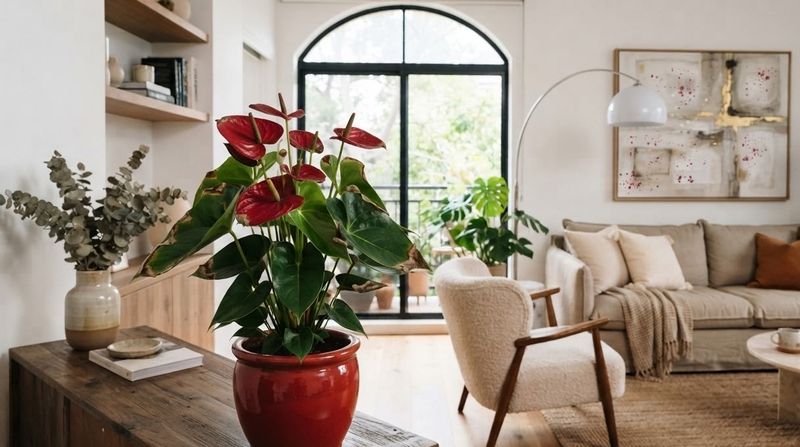
A single blast of January air can set a tropical plant back for weeks. Anthuriums are sensitive to cold, and leaves may show dark patches after a chilly shock.
Most care guides recommend daytime temperatures between about 65 and 80 degrees. Nights should stay above 60 degrees for steady growth and blooming.
Spots near entry doors are risky in a snowy state. Every time someone comes in from the driveway, icy air rushes across the floor and onto whatever sits nearby.
Windows can be tricky after dark. Glass gets very cold on a zero-degree night, so slide the pot back a few inches or close the curtains behind it in the evening.
Heat vents cause the opposite problem. Hot, dry air blowing directly on the plant dries the soil fast and scorches tender leaves.
Sudden swings matter too. A plant that bounces from a toasty 78 to a chilly 58 every night may hold off on new flowers.
Bringing a new plant home from the store? Wrap it in a paper sleeve or bag for the trip to the car.
Even a short walk through freezing air can damage the leaves.
4. Check The Anthurium Soil Before You Reach For The Watering Can
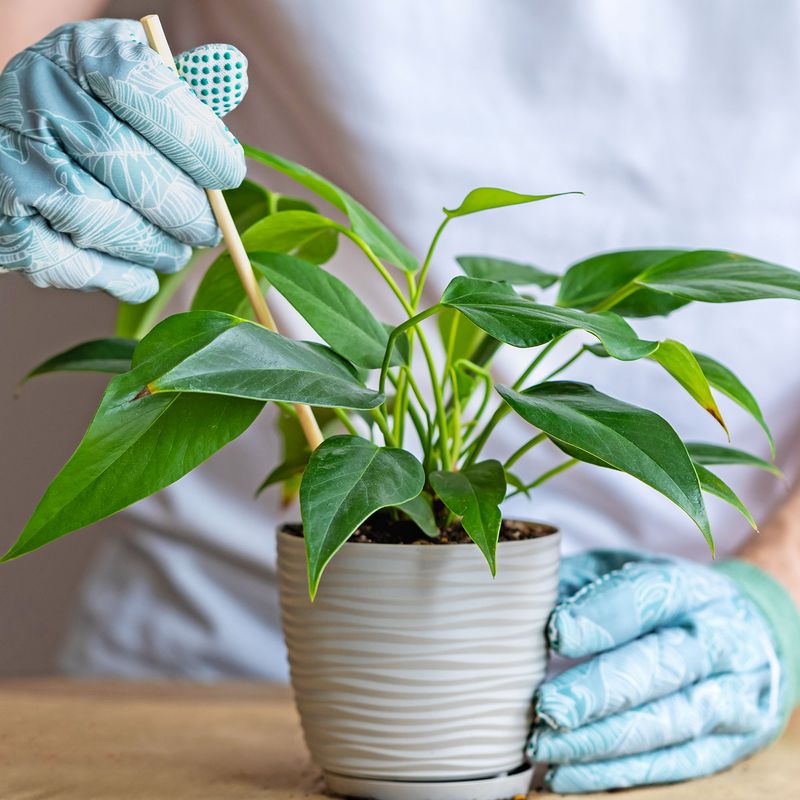
More holiday anthuriums struggle from too much water than too little. Their thick roots need air, and soggy soil quickly leads to rot.
My rule is simple. Push a finger into the mix, and water only when the top inch or two feels dry.
In winter, that timing usually stretches out. Shorter days and slower growth mean many plants need water every 10 to 14 days instead of weekly, though dry furnace air can speed things up.
When you do water, do it well. Pour slowly until water runs out the drainage holes, then dump the saucer within about 15 minutes.
Those decorative foil wraps from the store deserve a second look. They trap water at the bottom, so poke holes in them or remove them before the first watering.
Room-temperature water is kinder than an icy splash from the tap. I fill a jug and let it sit overnight.
Yellowing lower leaves, a sour smell, or mushy stems often point to overwatering. Crispy, drooping leaves on bone-dry soil mean the opposite.
Your plant gives plenty of clues if you take a moment to look.
5. A Chunky Orchid Bark Mix Lets Anthurium Roots Breathe
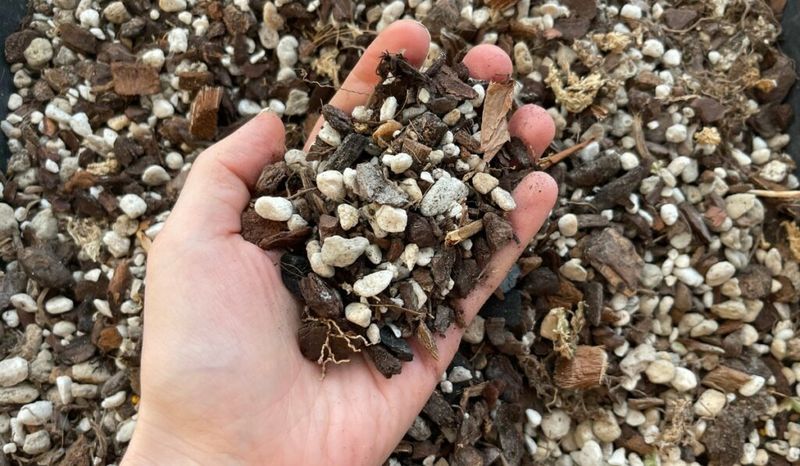
In the wild, many anthuriums cling to tree trunks with roots wrapped around bark and leaf litter. That background explains why they dislike heavy, dense potting soil.
A loose, airy mix works best. Popular blends combine regular potting mix with orchid bark and perlite in roughly equal parts, which drains fast but still holds some moisture.
Holiday plants often arrive in tight, peat-heavy soil meant for the shipping season. That mix stays wet a long time, especially in cool winter rooms.
Resist the urge to repot right away, though. Moving a stressed plant in midwinter can slow it down, so wait for spring when growth picks up.
When the time comes, size up only one or two inches. A huge pot holds extra wet soil, and anthuriums tend to bloom better when slightly snug.
Drainage holes are a must. A pretty ceramic pot without holes works best as a cover, with a plastic nursery pot tucked inside.
Roots poking above the soil line are normal for this plant. Cover them with a little fresh mix or moss when you repot, and they’ll keep supporting those shiny leaves.
6. Light Feedings Help Your Anthurium Push Out New Spathes
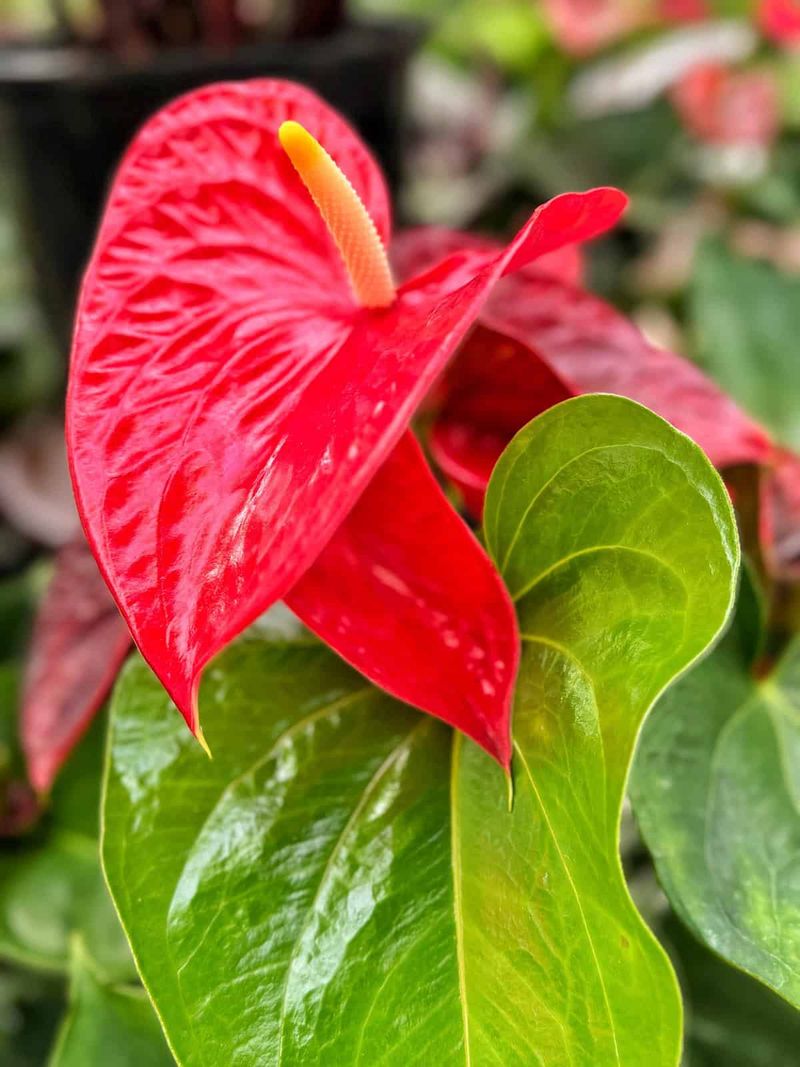
Anthuriums are light eaters. A little food encourages fresh spathes, but too much burns roots and leaves salty crust on the soil.
A balanced water-soluble fertilizer mixed at half strength works for most growers. Some prefer a bloom formula with a slightly higher middle number, which is phosphorus.
Winter calls for a lighter hand. If your plant sits in a dim spot and growth has slowed, skip feeding until days lengthen in late February or March.
Plants under grow lights are a different story. When new leaves and buds keep appearing, a diluted feeding every four to six weeks supports that steady growth.
Always water first, then feed. Fertilizer poured onto dry roots is far more likely to cause damage.
White crust on the soil or pot rim means salts are building up. Flush the pot by running plain water through it a few times in the sink.
Fun fact for curious gardeners. Commercial growers in places like the Netherlands and Hawaii produce millions of these plants each year, carefully tuning their nutrients for nonstop color.
At home, a gentle approach works just fine.
7. Snip Faded Anthurium Flowers To Make Room For Fresh Ones
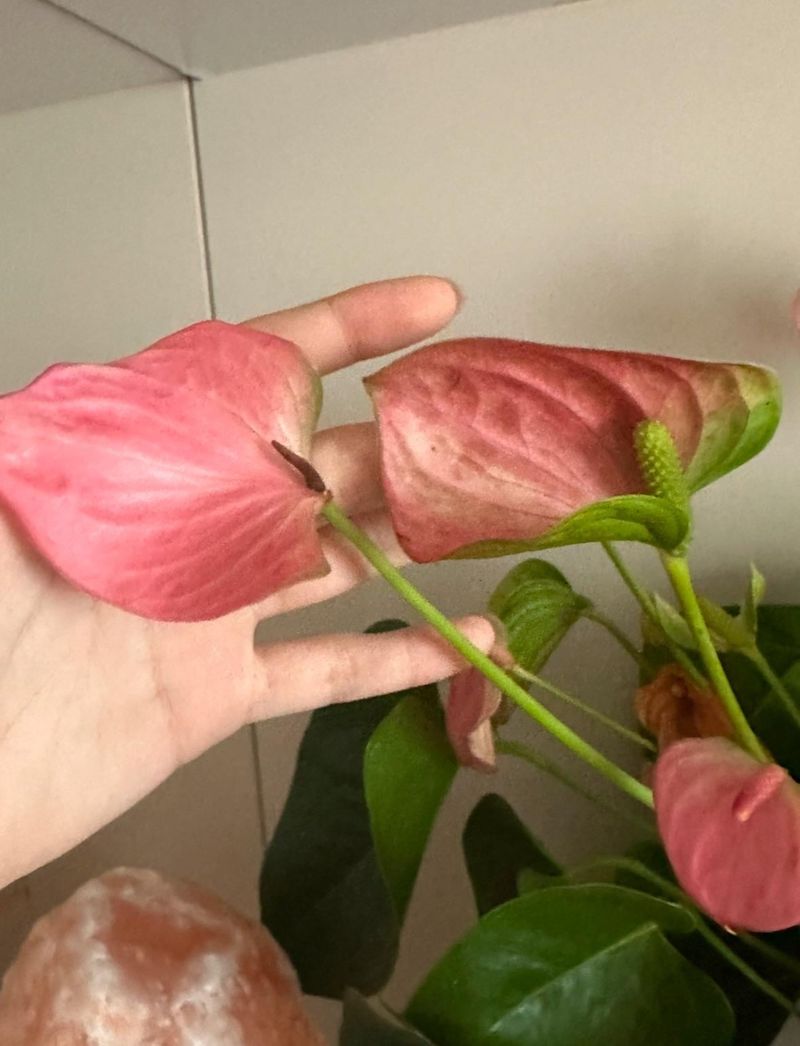
Old spathes don’t drop off on their own. They slowly fade to green or brown and hang around long after their best days.
Removing them keeps the plant tidy and lets it focus energy on new growth. Follow the spent flower stalk down to its base and cut it close to where it meets the main stem.
Yellow or damaged leaves can go too. Trim them at the base with clean, sharp snips, and wipe the blades with rubbing alcohol between plants to limit disease spread.
A spathe turning green isn’t a sign of trouble. That color change is a normal part of aging, often after several weeks of bright display.
Healthy plants often send up a new flower with each new leaf. Keeping the plant clean and well lit helps that cycle continue.
Dust is worth a quick mention while you’re at it. A Michigan house sealed up for winter collects plenty, and a soft damp cloth wipe every few weeks helps leaves soak up more light.
Wear gloves if your skin is sensitive. The sap contains calcium oxalate crystals that can irritate skin and mouths.
8. Your Anthurium Can Keep Blooming Long After The Holidays
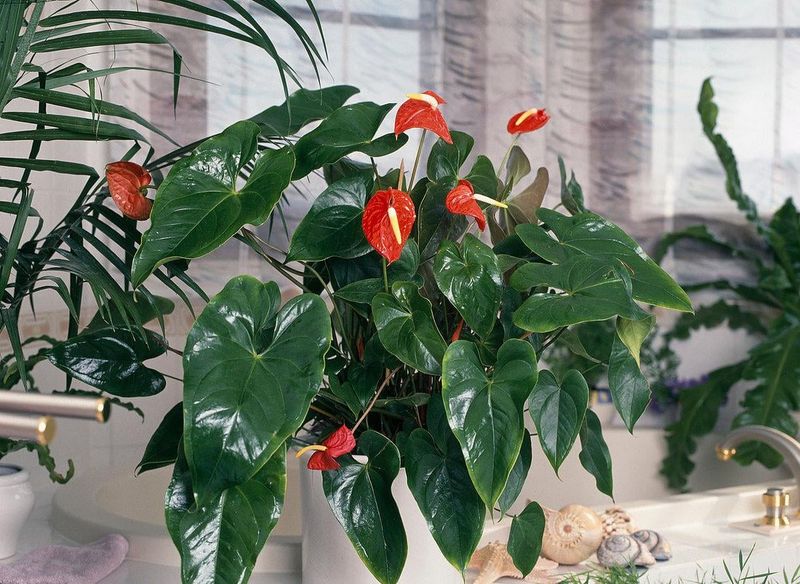
Plenty of people toss their anthurium once the tree comes down. That habit seems like a waste, because these plants can bloom on and off for years.
Think of winter care as a short checklist. Bright indirect light, warm steady temperatures, extra humidity, careful watering, and loose soil cover most of what this plant needs.
Safety matters in homes with pets and kids. The ASPCA lists anthurium as toxic to cats and dogs, since chewing causes mouth irritation and drooling, so place it on a high shelf.
Watch for pests that love dry indoor air. Spider mites, mealybugs, and scale often show up in winter, and early wiping or insecticidal soap keeps them under control.
Spring brings the next chance to help. Repot if needed, increase feedings as growth speeds up, and enjoy the stronger sunlight from late March onward.
Keep the plant indoors until nights stay above 60 degrees, which often means June across much of Michigan. Even then, a shady porch beats a sunny deck.
Stick with these habits, and that cheerful red heart could greet you again next December, maybe with a few new friends.