How To Prune Forsythia In Oregon After Bloom For More Flowers Next Year
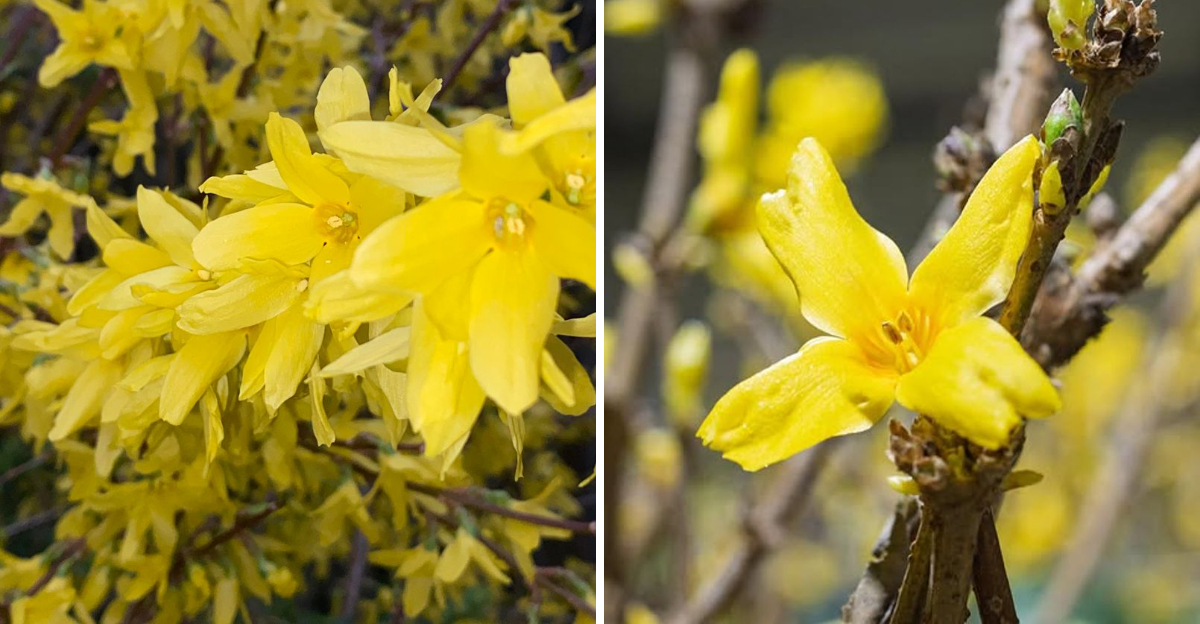
Every spring, forsythia explodes into a riot of yellow blooms that can stop a neighbor in their tracks. It happens fast, lasts only a few weeks, and then the show is over until next year.
Many Oregon gardeners enjoy that brief burst of color without ever wondering what comes next, or what their own actions in the weeks that follow might be quietly setting up for the following spring.
Here is the secret many Oregon gardeners never hear: what you do with your shears in the weeks right after those flowers fade decides whether next spring looks just as brilliant or disappointingly bare.
Pruning forsythia is not complicated, but the timing and technique matter more than people realize, and getting either one wrong can erase an entire year of bloom potential without you even noticing until April arrives empty-handed.
Get it right, and your shrub will reward you with a jaw-dropping display of golden flowers year after year.
Oregon’s mild, wet winters and cool springs create the perfect conditions for forsythia to thrive. However, that same climate means the shrub sets its flower buds earlier than you might expect, which changes the entire calculus of when to cut.
Now, here’s exactly what to do, step by step, so your forsythia looks its absolute best next April.
1. Prune As Soon As Flowers Fade
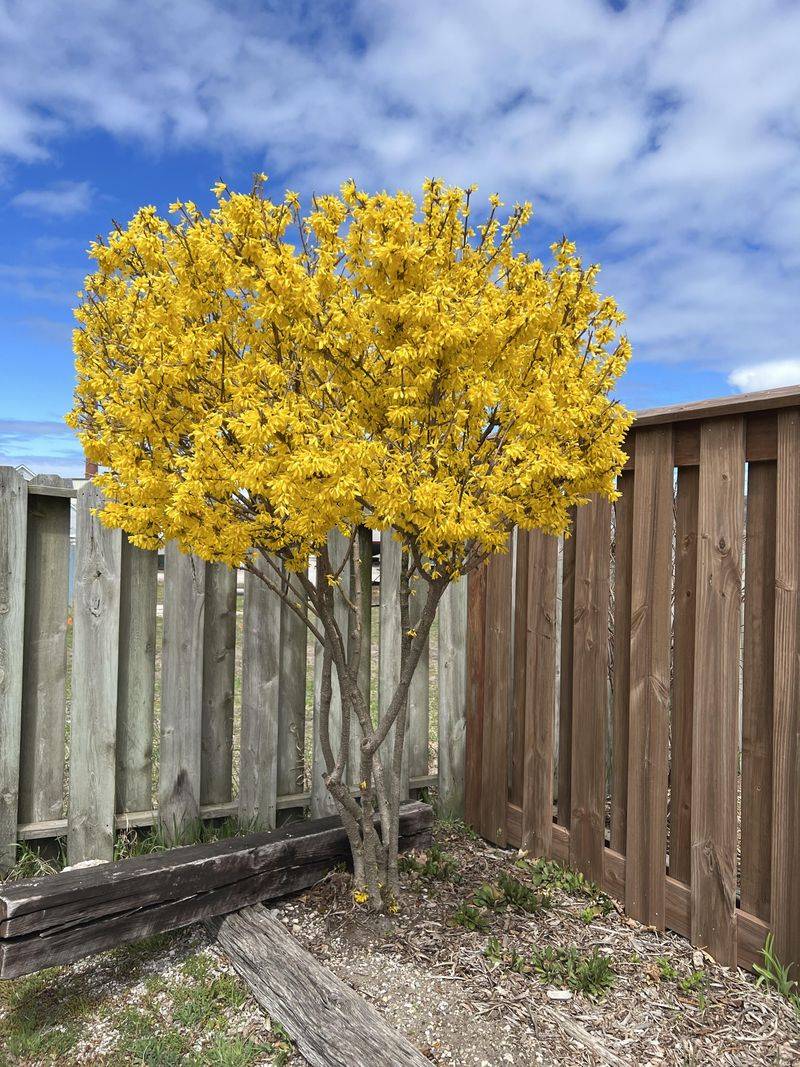
There is a small but mighty window that opens the moment your forsythia drops its last yellow petal.
That window does not stay open long, and what you do inside it shapes everything that happens next spring. Timing is truly everything with this shrub, more than with almost any other flowering plant in an Oregon yard.
Forsythia blooms on old wood, meaning the flower buds for next year begin forming on this year’s new growth shortly after bloom.
If you wait too long to prune, you start cutting off those freshly forming buds without even knowing it.
Oregon State University Extension recommends pruning forsythia immediately after flowering, ideally within two to three weeks of petal drop, before that bud-setting process gets fully underway.
In Oregon’s Willamette Valley, that window usually falls somewhere between late March and mid-April, depending on the year.
The Pacific Northwest climate can push bloom timing earlier some years, so pay attention to your specific shrub rather than the calendar alone. Watch the flowers, not the date, since every yard’s microclimate behaves a little differently.
Waiting until May or June feels harmless, but by then the shrub has already started investing energy into next year’s buds.
Every cut you make after that point removes bloom potential that the plant has already committed resources toward building.
Set a reminder on your phone the moment you notice your forsythia starting to bloom. When those last petals fall, grab your pruners.
Acting fast keeps next spring’s flower show fully intact and gives your shrub the longest possible growing season to recover and set new buds.
2. Remove Old Canes At The Base
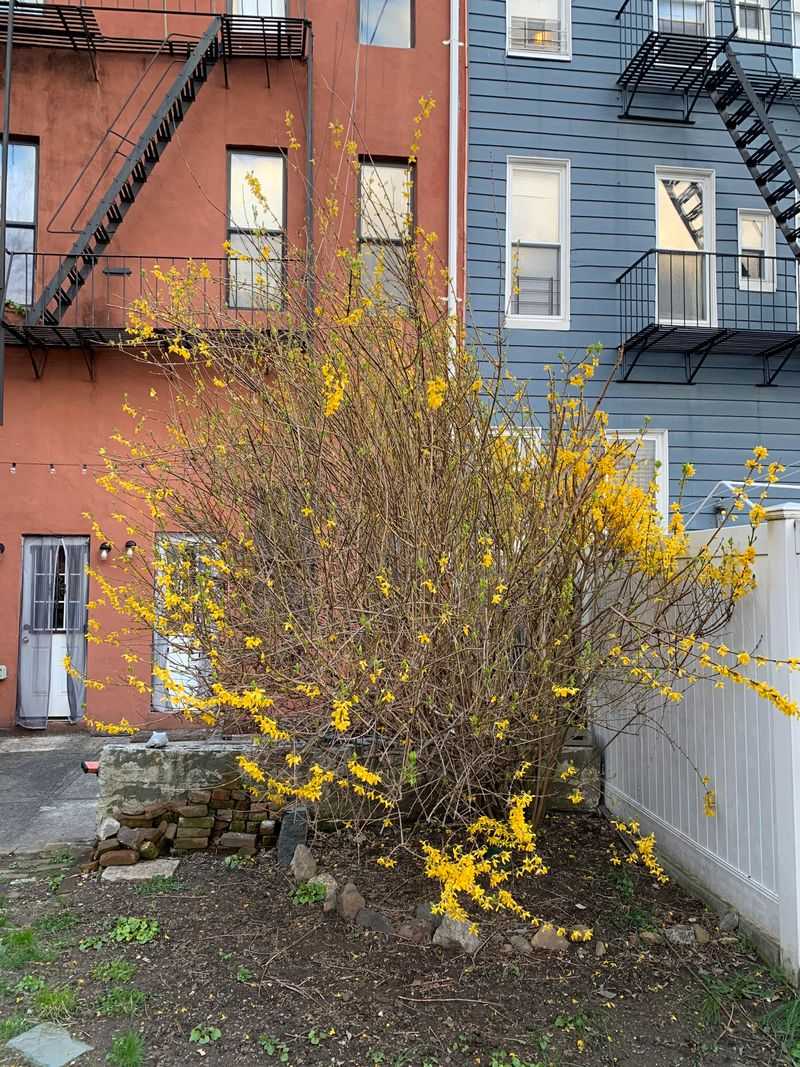
Renewal pruning sounds fancy, but the idea behind it is beautifully simple.
Your Oregon Garden Changes Every Week. Your Plan Should Too.
Gardening in Oregon changes quickly throughout the season. Every Friday you’ll receive a simple weekly plan showing exactly what to plant, prune, fertilize, harvest, and protect so you never miss the right timing.
Instead of trimming the tips of every branch, you go straight to the source and remove entire old canes from the ground up. This approach transforms an aging forsythia from the inside out rather than just tidying the surface.
Forsythia canes older than four or five years gradually lose their ability to produce abundant blooms.
They become thick, woody, and stubborn, hogging space and light without contributing much flower power. Cutting them out at the base sends a clear message to the shrub: grow fresh and bloom harder this season.
Aim to remove about one-third of the oldest, thickest canes each year after bloom.
Use loppers or a pruning saw for canes that are too thick for hand pruners. Make your cut as close to the ground as possible, leaving no stubby stubs that could invite pests or fungal issues common in Oregon’s damp climate.
You do not need to remove every old cane in one season.
Spreading the renewal process over three years keeps the shrub healthy and full while gradually replacing tired wood with vigorous new growth.
Patience here pays off in a big way, and the shrub never goes through a season of looking stripped or shocked.
After a few seasons of this approach, your forsythia will have a mostly young, flexible framework that blooms enthusiastically from top to bottom.
Renewal pruning is the single most effective technique for turning a blooming underachiever into a spring showstopper.
3. Keep The Fountain Shape Loose
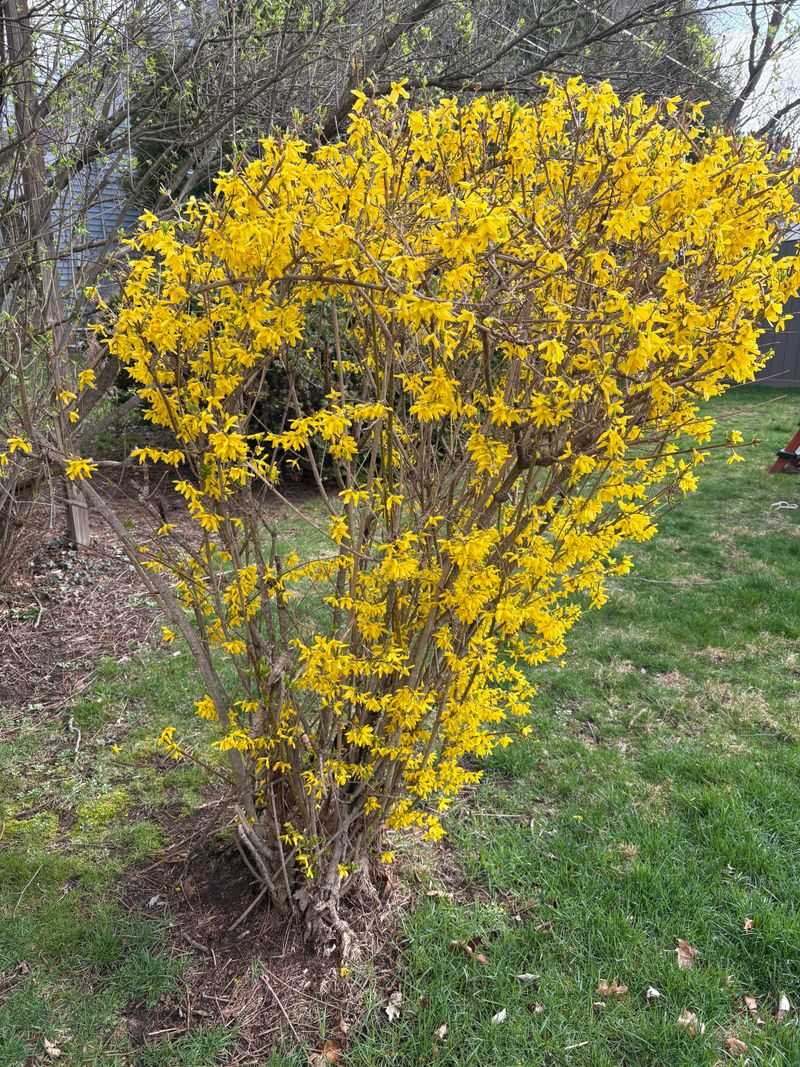
Forsythia has a natural personality, and that personality is all about the arc.
Left to its own devices, the shrub throws long, flexible canes upward and then lets them sweep outward and downward in a graceful fountain. That arching form is not just pretty; it is also how the plant thrives and channels its energy.
When you prune, the goal is to work with that natural shape rather than fight it.
Avoid cutting canes back to a uniform height across the whole shrub. Instead, selectively remove canes that disrupt the flowing silhouette while leaving the ones that contribute to the overall graceful structure the plant is already building toward.
A loose, fountain-shaped forsythia also performs better in Oregon’s frequent spring rains.
Water sheds more easily off arching canes than off tightly packed, upright growth. Good airflow through an open, arching canopy reduces the chance of fungal problems that thrive in the region’s cool, wet conditions throughout the growing season.
Visualize the finished shape before you make a single cut.
Step back from the shrub, study its natural lines, and identify which canes are pulling the overall look in the right direction. Keep those.
Target the ones that are growing straight up, crossing awkwardly, or pushing the shrub into a boxy silhouette it was never meant to hold.
Think of yourself less as a sculptor and more as an editor, simply clarifying the beautiful, flowing shape the forsythia already wants to be.
4. Skip The Flat Topped Hedge Look
Grab a hedge trimmer and run it across the top of your forsythia, and you will get a tidy flat surface that looks neat from the street.
You will also get a shrub that barely blooms the following spring. That trade-off is almost never worth it, no matter how appealing the instant tidiness looks in the moment.
Shearing cuts indiscriminately through stems at whatever height you set the trimmer. It does not distinguish between old wood, new growth, or developing flower buds.
The result is a dense outer shell of short, stubby stems that cluster together and block light from reaching the interior of the shrub where future blooms need room to develop.
Over time, a repeatedly sheared forsythia becomes a woody, hollow shell.
Blooms appear only on the outermost tips if they appear at all, and the inside of the shrub becomes a tangle of bare, unproductive wood. Restoring a heavily sheared forsythia can take years of careful corrective pruning to undo.
Oregon gardeners sometimes reach for the hedge trimmer because the shrub gets large fast in the region’s fertile, moist soil.
The better solution is renewal pruning at the base combined with selective thinning, which controls size without sacrificing the bloom-producing wood that makes forsythia worth growing in the first place.
If you want a formal hedge effect in your yard, forsythia is honestly the wrong plant for that job. Let it be what it wants to be, and it will cover itself in yellow flowers every single spring.
5. Thin Crowded Stems For Light
Sunlight is the currency forsythia spends on flowers.
A shrub packed with too many crowded stems ends up shading itself from the inside, and that lack of interior light directly reduces bloom production across the entire plant, not just in the shadiest sections.
Thinning is the fix, and it works beautifully when done right.
After removing old canes from the base, step back and look at what remains. If the interior of the shrub still looks like a tangled mess with little visible light reaching through, more thinning is needed.
Target stems that are growing too close together or pointing inward toward the center of the plant.
Remove stems entirely rather than cutting them halfway. A half-removed stem just pushes out a cluster of new shoots right below the cut, making the crowding problem worse instead of better.
Clean removal at the base keeps the interior open and airy for the rest of the season.
Good airflow matters especially in Oregon, where the combination of cool temperatures and persistent moisture creates ideal conditions for fungal diseases like crown gall and leaf spot.
A shrub with open, well-spaced stems dries out faster after rain, reducing the risk of these common regional problems considerably.
A useful test is to crouch down and look up through the center of the shrub after thinning. If you can see patches of sky through the canopy, you are in good shape. If not, remove a few more stems and check again.
6. Save Young Canes For Next Spring
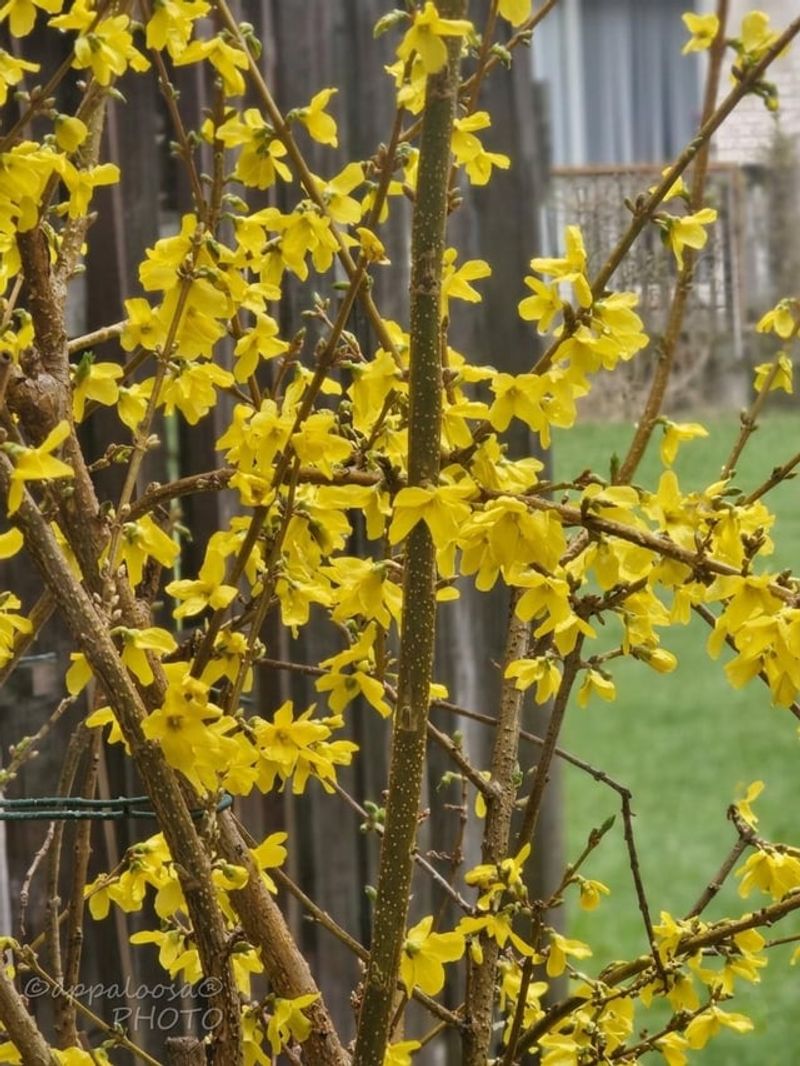
Not every cane you see is a candidate for removal.
The younger, thinner, more flexible stems are the ones your forsythia is counting on to carry next spring’s blooms, and protecting them is just as important as removing the old ones.
Knowing the difference changes everything about how successful your pruning turns out to be.
Young forsythia canes are typically smooth, greenish or reddish-brown, and noticeably more pliable than older wood.
They may look like they need trimming because they are long and arching, but those are exactly the stems you want to keep. They formed this season and will set flower buds along their length before summer ends.
One of the most common pruning mistakes Oregon gardeners make is removing young canes along with old ones because they all look similar at a glance.
Slow down and examine each cane before cutting. Older canes are thicker, rougher in texture, and often have a grayer or darker bark compared to younger growth that still has some flexibility to it.
If a young cane is growing in a useful direction and contributing to the shrub’s overall shape, leave it alone.
Even if it seems a little long or awkward, resist the urge to shorten it. Cutting the tip of a young cane removes the portion most likely to carry flower buds next spring.
Think of young canes as next spring’s investment portfolio. The more healthy young canes you preserve now, the richer your bloom display will be in the months ahead.
7. Cut Out Weak Crossing Growth
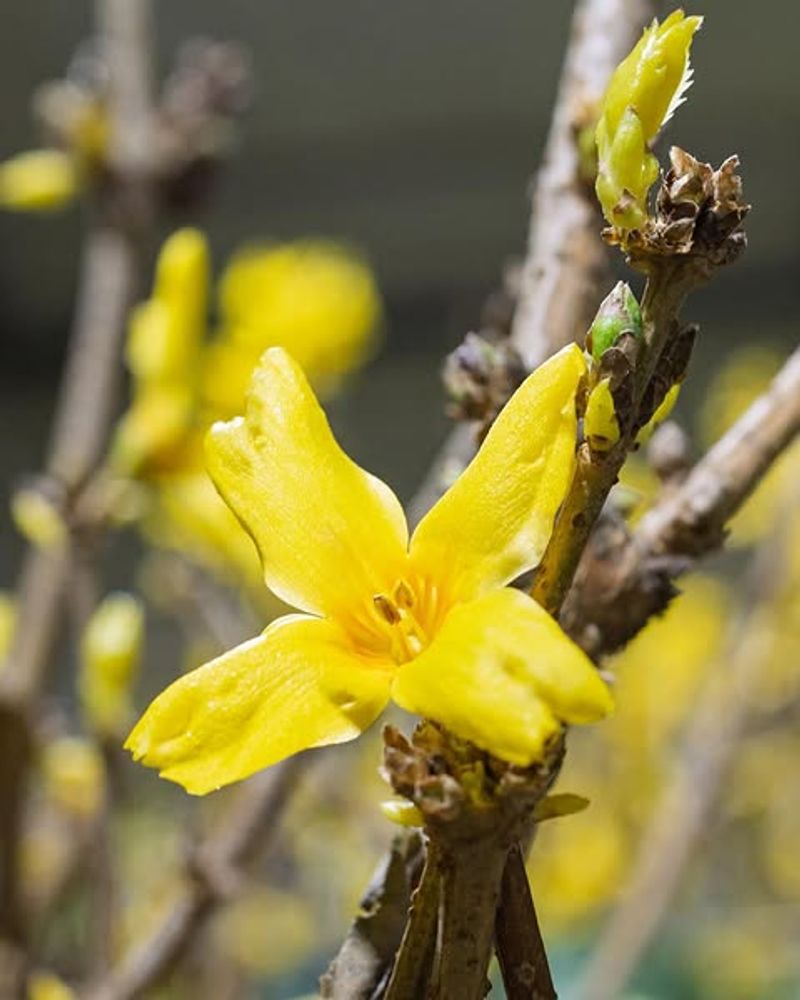
Crossing stems are troublemakers. They rub against stronger canes, create wounds that invite pests and disease, and waste the shrub’s energy on growth that goes nowhere useful.
Removing them is a small task with a surprisingly big payoff for the overall health of the plant going forward.
Look for stems that grow across the natural flow of the shrub rather than following its outward arching pattern.
These crossing stems often originate deep inside the canopy and push inward or diagonally through other growth.
They rarely produce strong blooms and almost always cause friction damage where they contact neighboring canes throughout the growing season.
Weak stems are another priority for removal.
A weak forsythia cane is thin, spindly, and often growing in low light near the base or interior of the shrub.
These stems lack the vigor to produce meaningful blooms and tend to flop or break under Oregon’s heavy spring rains. Removing them redirects the plant’s resources toward stronger, more productive wood.
While you are at it, check for any stems that show signs of damage from winter cold, pest activity, or mechanical injury.
Oregon winters are generally mild, but occasional hard freezes can leave some canes looking dull and lifeless. Remove anything that looks compromised all the way back to healthy wood or to the base.
After clearing out crossing and weak growth, the shrub should feel noticeably lighter and more organized, with a real improvement in how it channels energy toward productive wood.
8. Stop Before Summer Buds Form
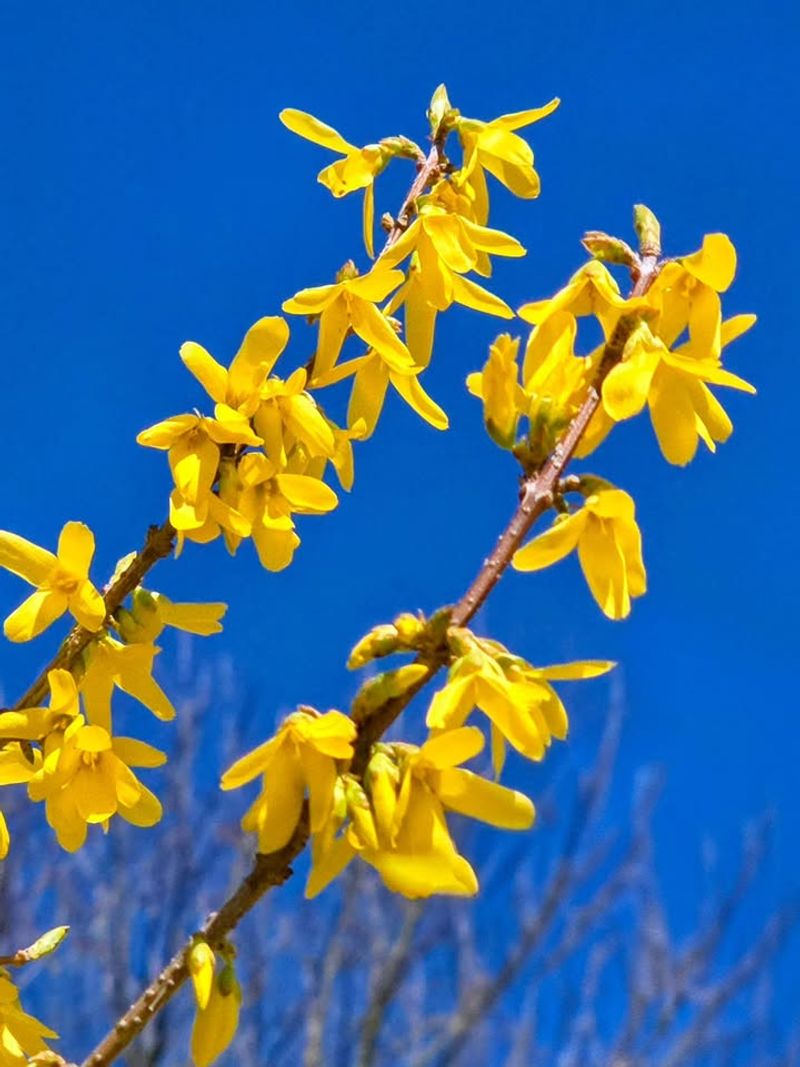
There is a point each year when the pruning window officially closes, and crossing that line costs you next spring’s blooms just as surely as not pruning at all.
Knowing when to put the shears away is one of the most underrated skills in shrub care, and it matters just as much as knowing when to start.
Forsythia sets its flower buds for the following spring during the summer months, typically from late June through August in Oregon.
By the time July arrives, those buds are already forming along the length of new canes.
Any pruning done after mid-June risks removing bud tissue that has not yet become visible to the naked eye, undoing months of careful work in a single afternoon.
Oregon State University Extension guidance consistently points to the period immediately after bloom as the correct pruning window, with late May as a reasonable outer limit for light corrective work.
Beyond that point, the shrub has moved on, and so should you. The shears go back on the hook until after next year’s bloom arrives and fades again.
If you missed the post-bloom window entirely this year, the best move is patience.
Wait until after next spring’s flowers fade and start fresh. One season of overgrown growth is far less costly than losing an entire year of blooms by pruning at the wrong time.
Mark your pruning window on the calendar right now, in pen if you have to. Forsythia is generous with its flowers when you respect its schedule, and stingy when you do not.