How To Prune Frost Damaged Oleander In Early Spring In Florida
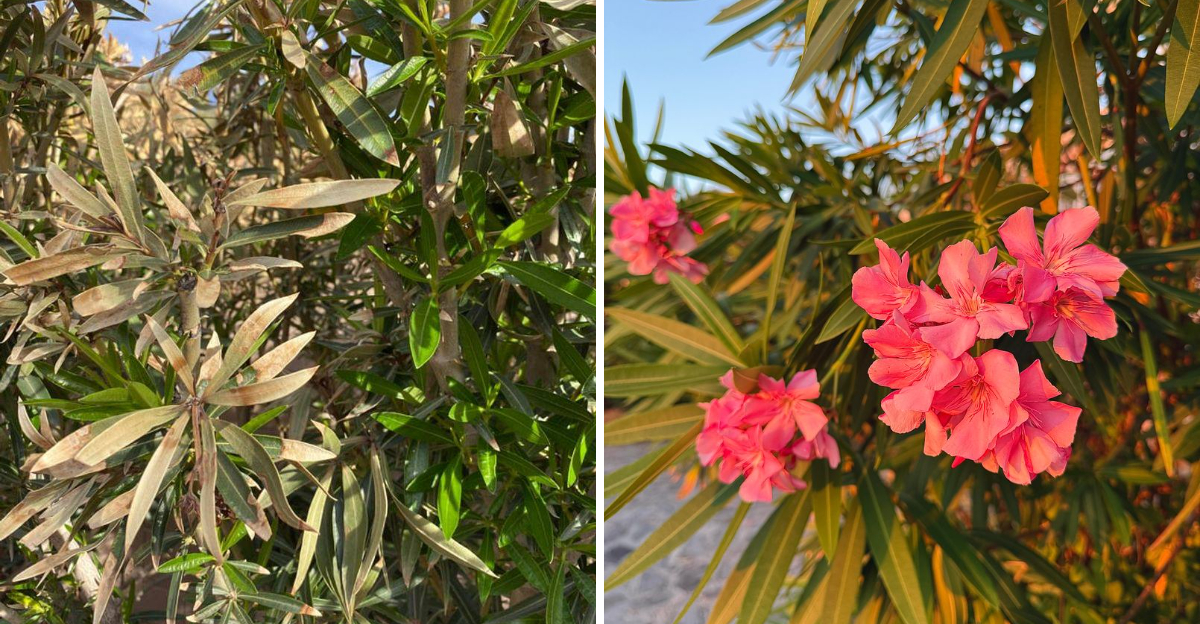
A cold night passes through Florida and the next morning tells a different story in the yard. Oleander leaves look wilted, stems appear scorched, and the once vibrant shrub suddenly looks rough around the edges.
For many gardeners, that moment brings the same question. Can the plant recover?
Oleanders are tougher than they look. Even after a surprising Florida cold snap, many shrubs bounce back once spring temperatures return.
The key lies in how gardeners respond during the weeks that follow. Early spring offers the perfect chance to step in and help the plant reset.
With the right pruning approach, damaged growth can give way to fresh shoots and a healthier shape for the season ahead. Before grabbing the pruners, though, it helps to understand what the plant is actually telling you after a freeze.
1. Wait For New Growth Before Pruning Frost Damage
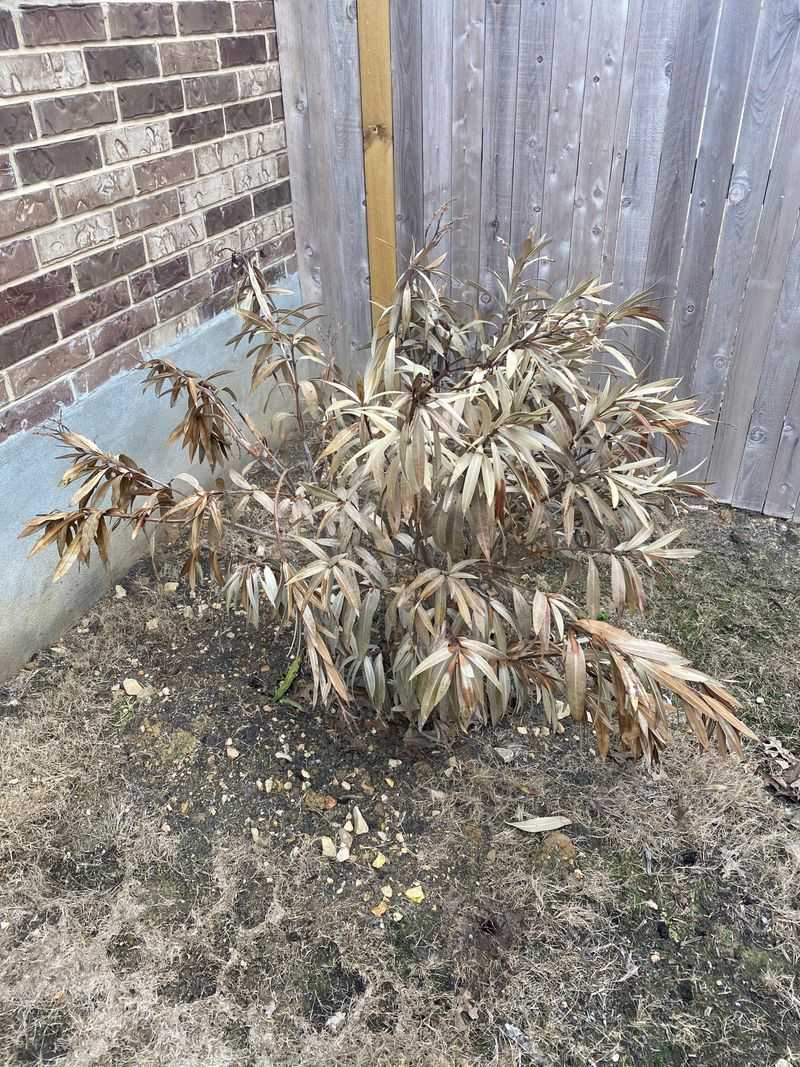
Patience is genuinely one of the most powerful tools a Florida gardener can bring to the yard after a cold snap. When frost hits oleander, the instinct is often to grab the pruners right away and start cutting.
Resist that urge. Pruning too soon after a frost can cause more harm than good, and it also makes it much harder to tell which parts of the plant are truly gone and which ones are just temporarily stressed.
The University of Florida IFAS Extension recommends waiting until late February or early March before making any pruning decisions. By that point, daytime temperatures in Florida have usually warmed up enough to trigger new growth on surviving branches.
Those tiny green buds pushing out from the stems are your best guide. They show you exactly where the plant is still alive and thriving.
Leaving the frost-burned foliage in place through January and early February actually provides a small buffer of insulation for the healthy tissue underneath. Once you spot consistent new growth emerging, that is your green light to begin.
Rushing the process only leads to confusion about which wood to keep, and your oleander deserves a thoughtful, well-timed approach to recovery.
2. Identify Withered And Frost Injured Oleander Stems
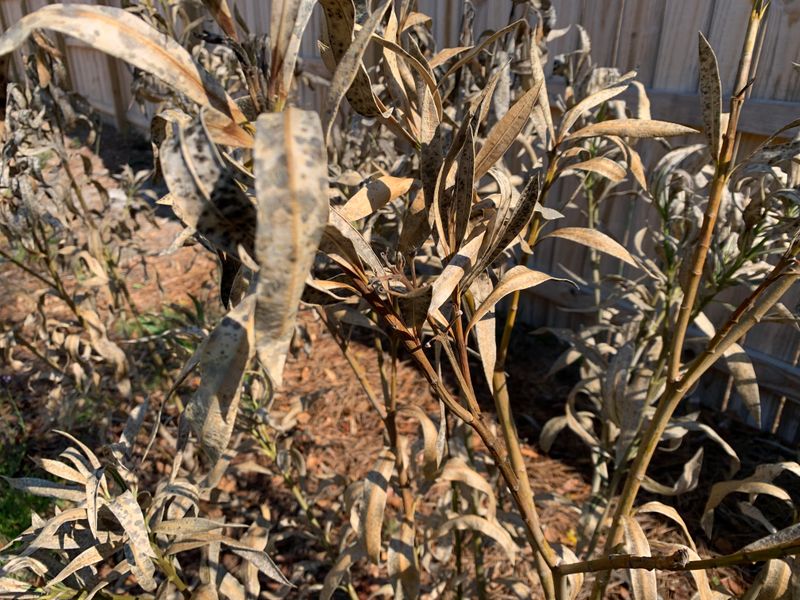
Before any cutting begins, take a slow walk around your oleander and look carefully at each branch. Frost-injured stems have a pretty distinct look once you know what to watch for.
Leaves that once stood firm and glossy will appear limp, darkened, or papery. Stems may look blackened, shriveled, or have a dry, hollow feel when you gently squeeze them.
A quick and reliable test is the scratch test. Use your fingernail or a small pocket knife to lightly scrape away a thin layer of bark on a stem.
Healthy wood underneath will show bright green tissue, which means the branch survived the cold. Wood that shows brown, tan, or black tissue beneath the bark has been damaged and will not produce new growth.
Work your way from the branch tips inward toward the main trunk. Frost damage almost always starts at the outermost tips and moves inward, so the base of the plant is usually the healthiest part.
In Florida, even a mild frost can cause significant tip damage while leaving the lower framework perfectly intact. Checking multiple stems gives you a complete picture before you make your first cut, and that information is worth taking the time to gather carefully.
3. Cut Back Damaged Branches To Healthy Wood
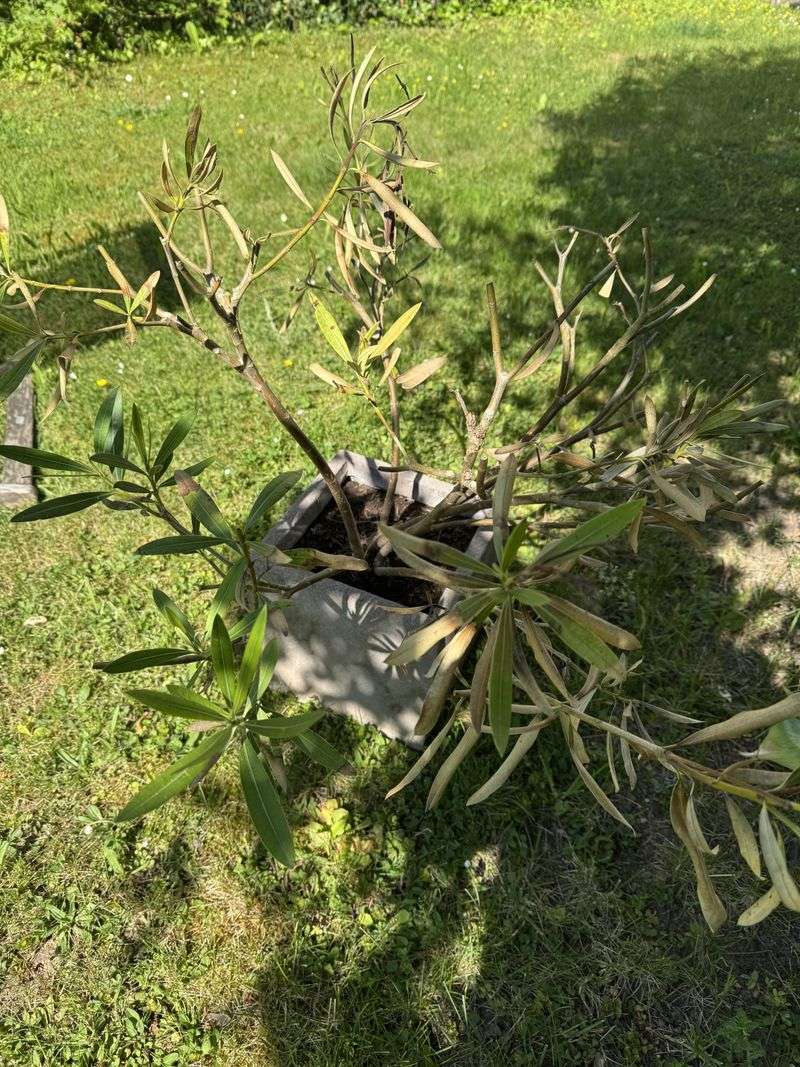
Once you have identified which stems are damaged and located the healthy green tissue beneath, it is time to make your cuts. Sharp, clean bypass pruners work best for branches up to about three-quarters of an inch thick.
For thicker stems, a pruning saw gives you a cleaner cut without tearing the bark, which matters a lot for how well the wound heals.
Position your cut just above a healthy bud or a point where you can see green tissue, leaving about a quarter inch of stem above the bud. Cutting too close can stress the bud, and cutting too far above leaves a stub that may rot over time.
The goal is a smooth, angled cut that sheds water and sits just close enough to the healthy tissue to encourage clean regrowth.
University of Florida IFAS Extension guidelines suggest avoiding the removal of more than one-third of the plant’s overall size in a single pruning session. Taking off too much at once puts unnecessary stress on the plant during recovery.
If the damage is extensive, spread your pruning over two or three sessions spaced a few weeks apart. Florida’s warming spring temperatures will work in your favor, encouraging fresh new shoots to emerge quickly after each round of cuts.
4. Remove Weak Or Split Stems After Cold Injury
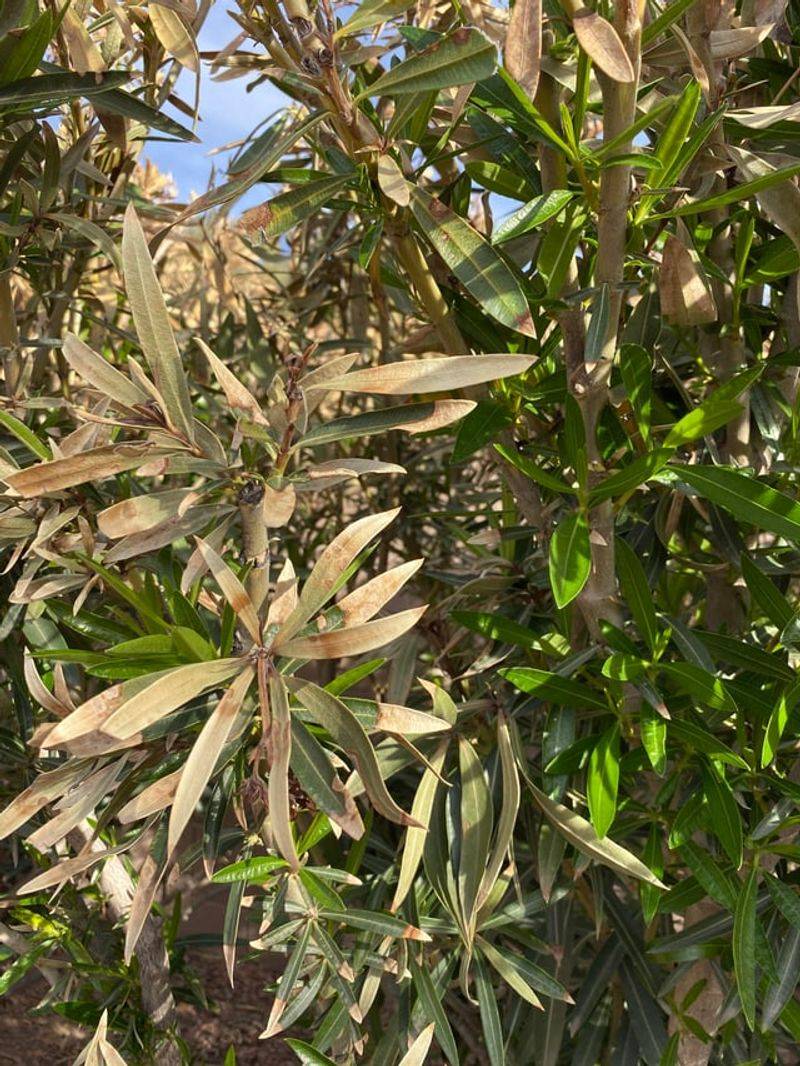
Cold temperatures do not just brown the leaves and tips of oleander. A hard freeze can also cause the moisture inside stems to expand and contract rapidly, leaving behind splits, cracks, and structurally weak branches that may not be obvious at first glance.
These compromised stems are worth removing even if they still show a faint hint of green, because they rarely recover fully and can drag down the health of the whole shrub.
Run your fingers along each stem and look for bark that is lifting, cracking lengthwise, or peeling away from the wood underneath. A stem that bends too easily or feels mushy at the center has been weakened beyond repair.
Removing these branches improves the overall structure of the plant and opens up airflow through the canopy, which helps reduce the risk of fungal problems during Florida’s humid spring and summer months.
When removing weak or split stems, trace each one back to a healthy side branch or to the main trunk and make your cut there. Avoid leaving short stubs, which can become entry points for pests and pathogens.
Cleaning up these structurally compromised branches early in the season sets your oleander up with a stronger, more balanced framework that supports vigorous regrowth throughout the warmer months ahead.
5. Shape The Shrub After Frost Damaged Growth
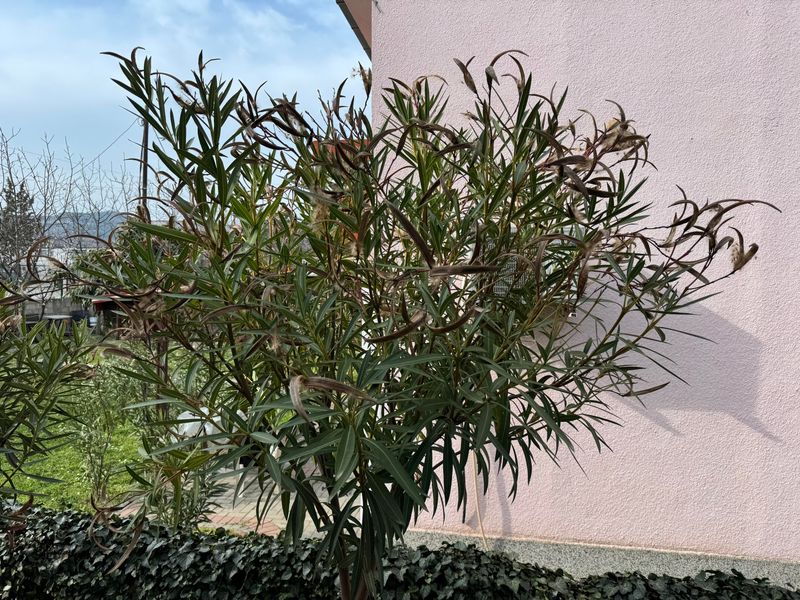
After removing all the clearly damaged and weakened wood, step back and take a look at the overall shape of your oleander. Frost damage rarely strikes a shrub evenly, so one side may look fuller than the other, or the plant may have an awkward gap where a large branch was removed.
Light shaping at this stage helps restore a balanced, natural appearance without putting extra stress on the recovering plant.
Focus on thinning out any branches that are crossing over each other or growing inward toward the center of the shrub. These crossing branches rub together over time, creating wounds that invite disease.
Removing them improves air circulation and allows sunlight to reach the inner parts of the plant, both of which support stronger, healthier regrowth during Florida’s warm spring season.
Aim for a gently rounded, open form rather than a tight, clipped hedge shape. Oleanders naturally grow in a loose, arching habit, and working with that form rather than against it produces the best long-term results.
Keep shaping cuts light at this stage, since the plant is still in recovery mode. Heavier structural pruning can always be done later in the season once the oleander has fully bounced back and shown strong new growth across the entire shrub.
6. Disinfect Pruners To Prevent Plant Diseases
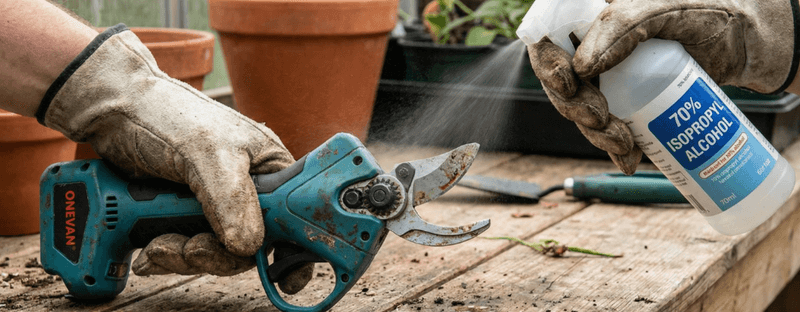
Clean tools are not optional when it comes to pruning oleander, especially after frost damage has left the plant in a vulnerable state. Open pruning wounds are easy entry points for bacteria and fungi, and a pair of dirty pruners can transfer pathogens from one branch to another without you ever realizing it.
Taking a few extra minutes to sanitize your tools is one of the simplest ways to protect your plant during recovery.
A solution of 70 percent isopropyl rubbing alcohol works well for disinfecting pruner blades. Wipe the blades down thoroughly before you start pruning and again between cuts when moving from a clearly diseased or heavily damaged stem to a healthier section of the plant.
Some gardeners keep a small spray bottle of diluted bleach solution nearby as an alternative, using one part bleach to nine parts water, though alcohol tends to be gentler on metal tool surfaces over time.
After you finish pruning, clean and dry your tools completely before storing them. Residual sap and moisture left on blades can cause rust and reduce the sharpness of the cutting edge.
Sharp pruners make cleaner cuts, and cleaner cuts heal faster on the plant. Florida’s high humidity means tools left damp after use deteriorate quickly, so a quick wipe-down and light oiling after each use keeps your gear in top condition all season long.
7. Encourage Fresh Spring Growth With Light Feeding
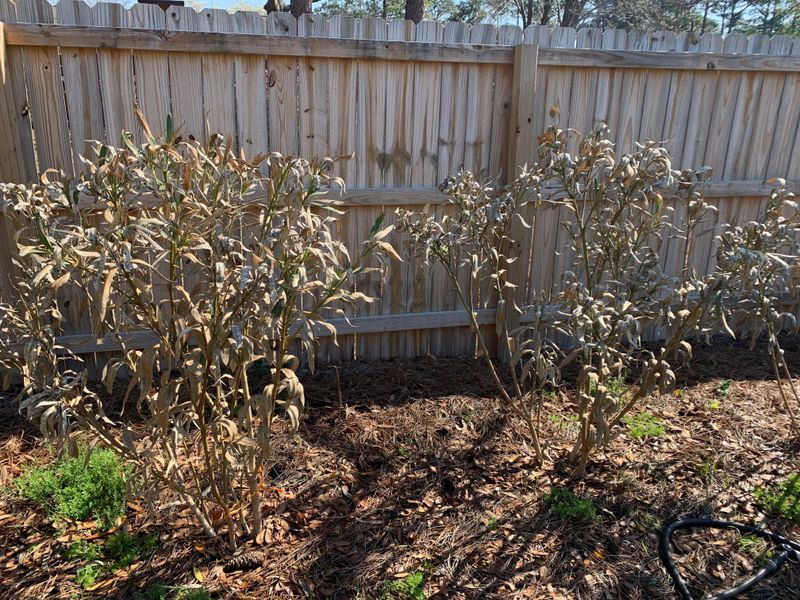
Once your oleander has been pruned and is showing signs of new growth, a gentle boost of nutrition can help it recover more quickly and push out strong, healthy shoots. The key word here is gentle.
A plant that has just come through frost stress and heavy pruning does not need an aggressive dose of fertilizer. Too much too soon can actually overstimulate tender new growth, making it more susceptible to damage from any lingering cool nights in early spring.
A balanced, slow-release granular fertilizer works well for oleanders during the recovery phase. Look for a product with roughly equal amounts of nitrogen, phosphorus, and potassium, something like a 10-10-10 formulation.
Sprinkle it around the drip line of the shrub, which is the outer edge of the canopy, rather than right up against the base of the stems. Water it in thoroughly after applying so the nutrients begin moving down into the root zone.
University of Florida IFAS Extension recommends avoiding heavy fertilizer applications until a plant has clearly resumed active growth. In Florida, that typically means waiting until you see several inches of fresh new shoots before feeding.
Repeating a light application every six to eight weeks through the growing season keeps the plant nourished steadily without the boom-and-bust cycle that heavy single doses can create.
8. Protect New Shoots From Late Cold Snaps
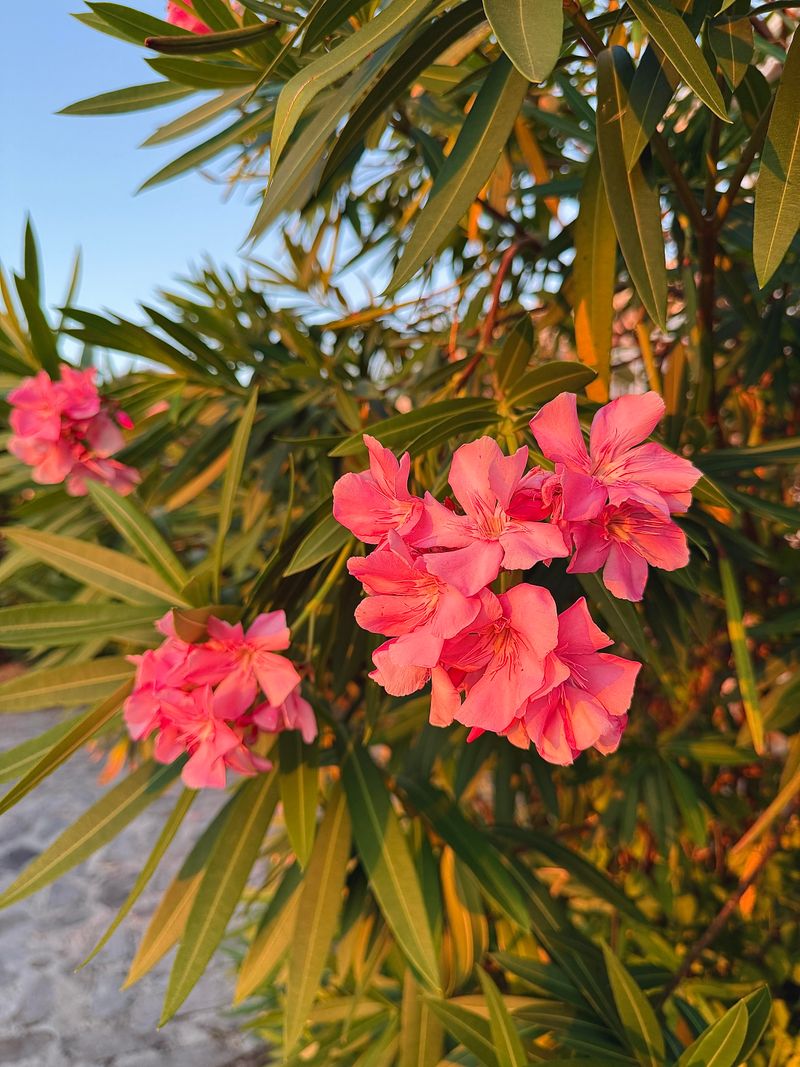
Florida springs can be wonderfully warm and encouraging for garden plants, but late cold fronts have a way of sneaking in through March and occasionally into early April. Fresh new growth on a recently pruned oleander is far more tender and cold-sensitive than established mature stems, which means a surprise cold snap can set back a recovering plant significantly.
Keeping an eye on the forecast during early spring is simply smart gardening in Florida.
When temperatures are expected to drop below 32 degrees Fahrenheit, cover your oleander with a lightweight frost cloth or old bedsheet the evening before. Drape the material loosely over the entire plant and secure the edges at ground level to trap warmth rising from the soil.
Remove the covering the following morning once temperatures climb back above freezing so the plant can get full sunlight and air circulation during the day.
Avoid using plastic sheeting directly against the foliage, since plastic can trap moisture and cause more harm than the cold itself in some situations. Watering the soil around the base of the plant the afternoon before a predicted frost also helps, because moist soil retains heat better than dry soil overnight.
With a little preparation and attention to the weather, your freshly pruned oleander can sail through any late cold surprise and keep building strength throughout Florida’s bright and beautiful spring season.