How To Stake Tomatoes On A Round Post Without Snapping A Stem
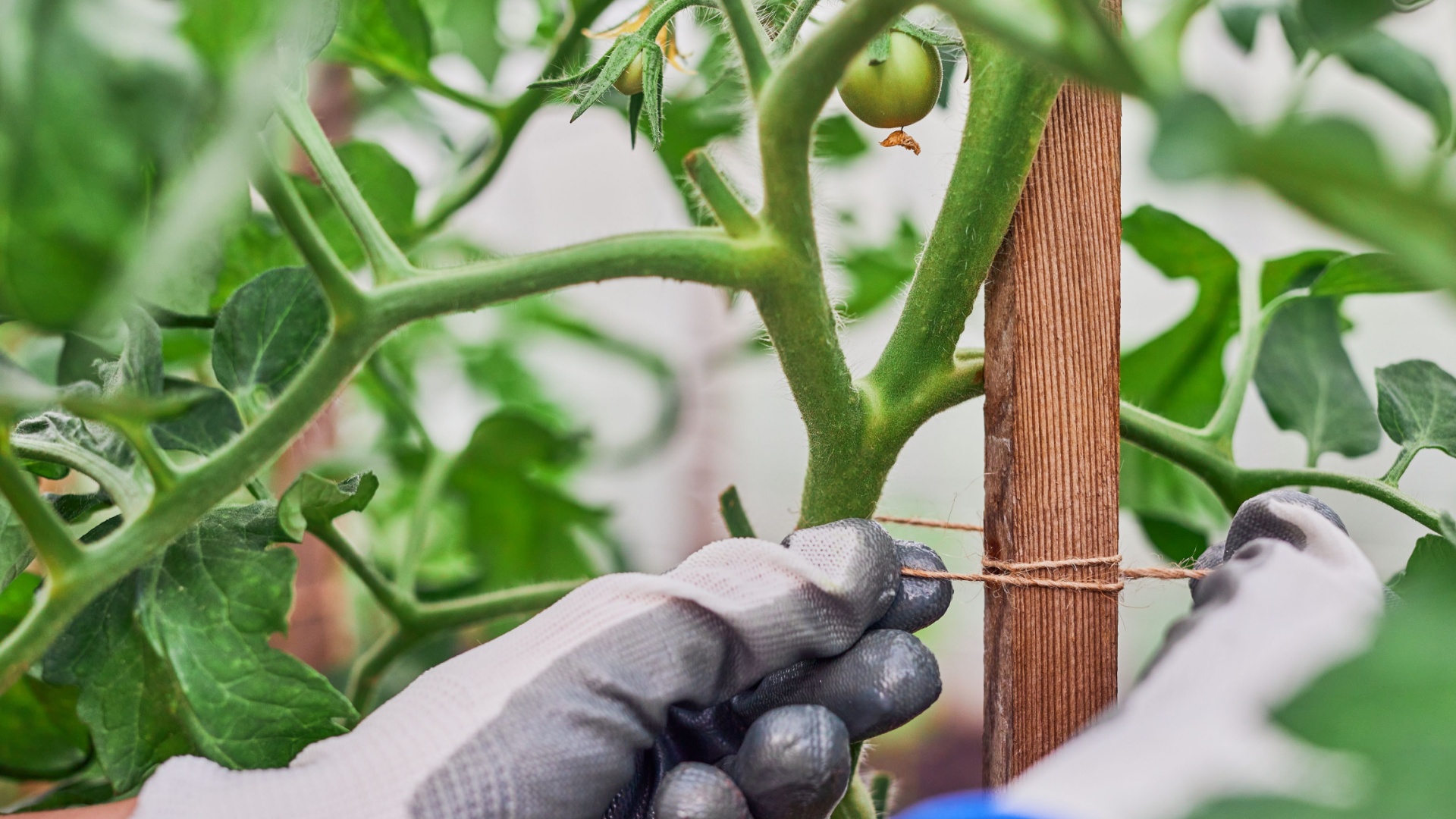
Tired of floppy tomato plants or snapped stems? Staking with a round post is a great solution—but only if you do it right. With the proper tying method and gentle support, you can keep your tomatoes upright, healthy, and producing like champs.
This guide shows you exactly how to stake your tomatoes on a round post without causing damage.
1. Choose the Right Materials
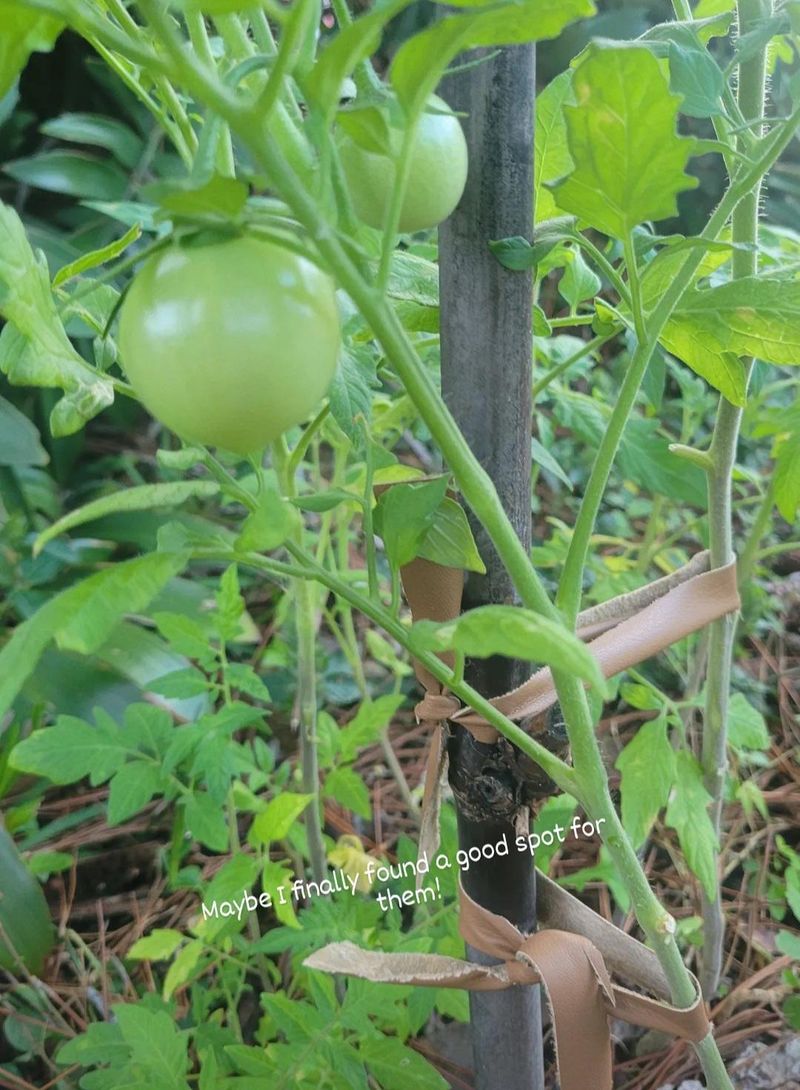
Garden centers offer many tying options, but not all are created equal. Soft materials like strips of old t-shirts, pantyhose, or specialized plant ties work best because they expand as the stem grows.
Avoid using wire, fishing line, or string which can cut into the delicate stems as they thicken. The ideal tie material should be gentle yet sturdy enough to withstand summer storms and heavy fruit loads.
2. Master the Figure-Eight Technique
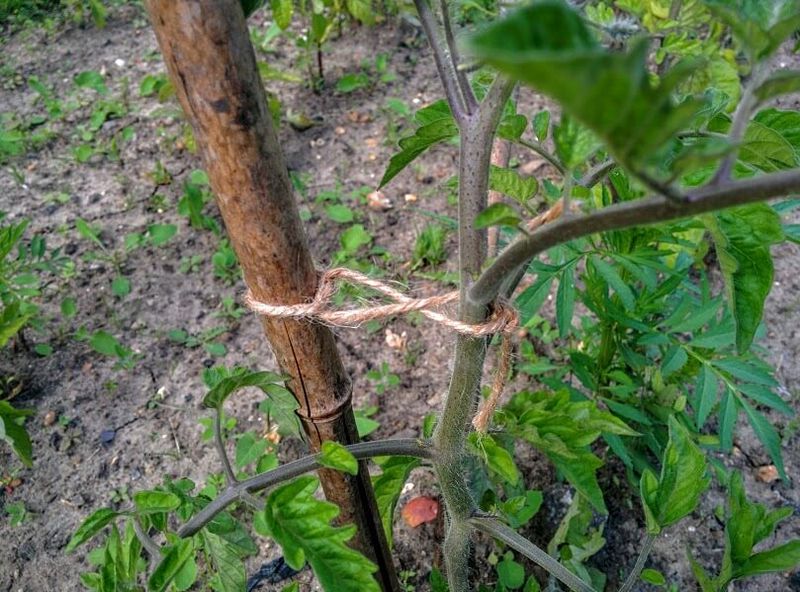
The figure-eight method creates a cushion between the plant stem and the hard surface of your stake. Loop your tie material around the stem once, cross it over itself, then around the stake before securing with a loose knot.
This technique prevents stem damage by avoiding direct contact with the post. The figure-eight naturally allows some movement while still providing crucial support as your tomato plant reaches upward.
3. Space Ties Properly
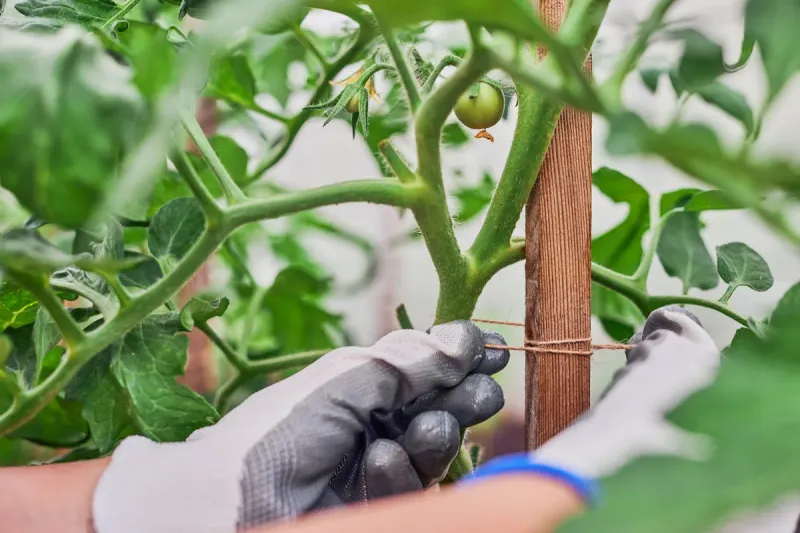
Strategic tie placement makes all the difference for healthy growth. Place your first tie about 3-4 inches above soil level, then add additional ties every 8-10 inches as the plant grows taller.
Never bunch multiple stems together with one tie. Each main stem deserves its own support connection. Proper spacing prevents top-heavy plants from breaking during windy days or after heavy rainfalls when water weight adds extra strain.
4. Allow Room for Growth
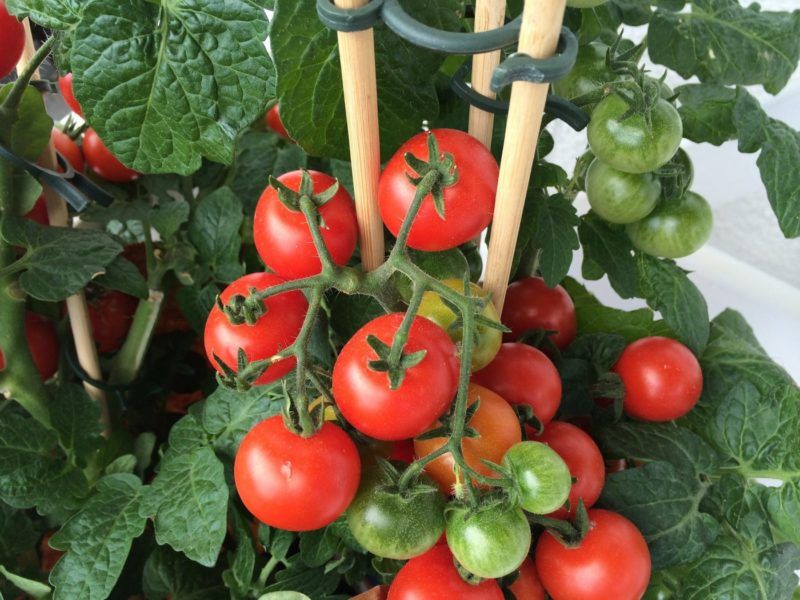
Rookie gardeners often tie stems too tightly, strangling their plants. Leave about one finger’s width of space between the tie and stem to accommodate growth. The loop should be snug enough to provide support but loose enough to allow the stem to expand.
Think of it like a comfortable bracelet rather than a tight handcuff. This breathing room prevents stem damage and allows nutrients to flow freely throughout the entire plant.
5. Time Your Tying Strategically
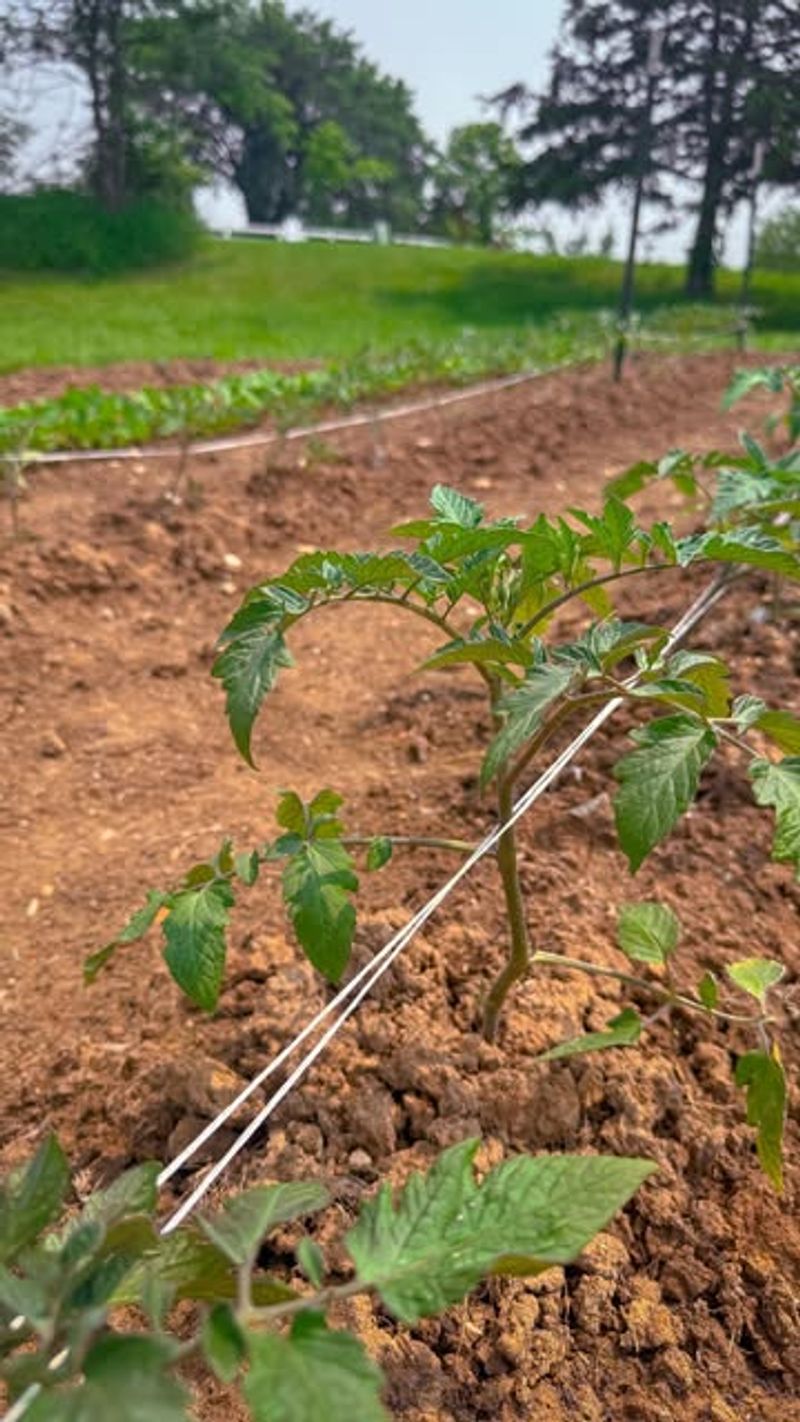
Morning hours make for perfect tying time. Plants are less stressed, more flexible, and not wilted from afternoon heat. Handling tomato plants during cooler parts of the day reduces the risk of accidentally snapping stems.
Avoid tying immediately after watering when stems are heavy and fragile. Wait until midweek after transplanting seedlings before adding the first ties, giving roots time to establish and stems to strengthen.
6. Focus on Main Stems Only
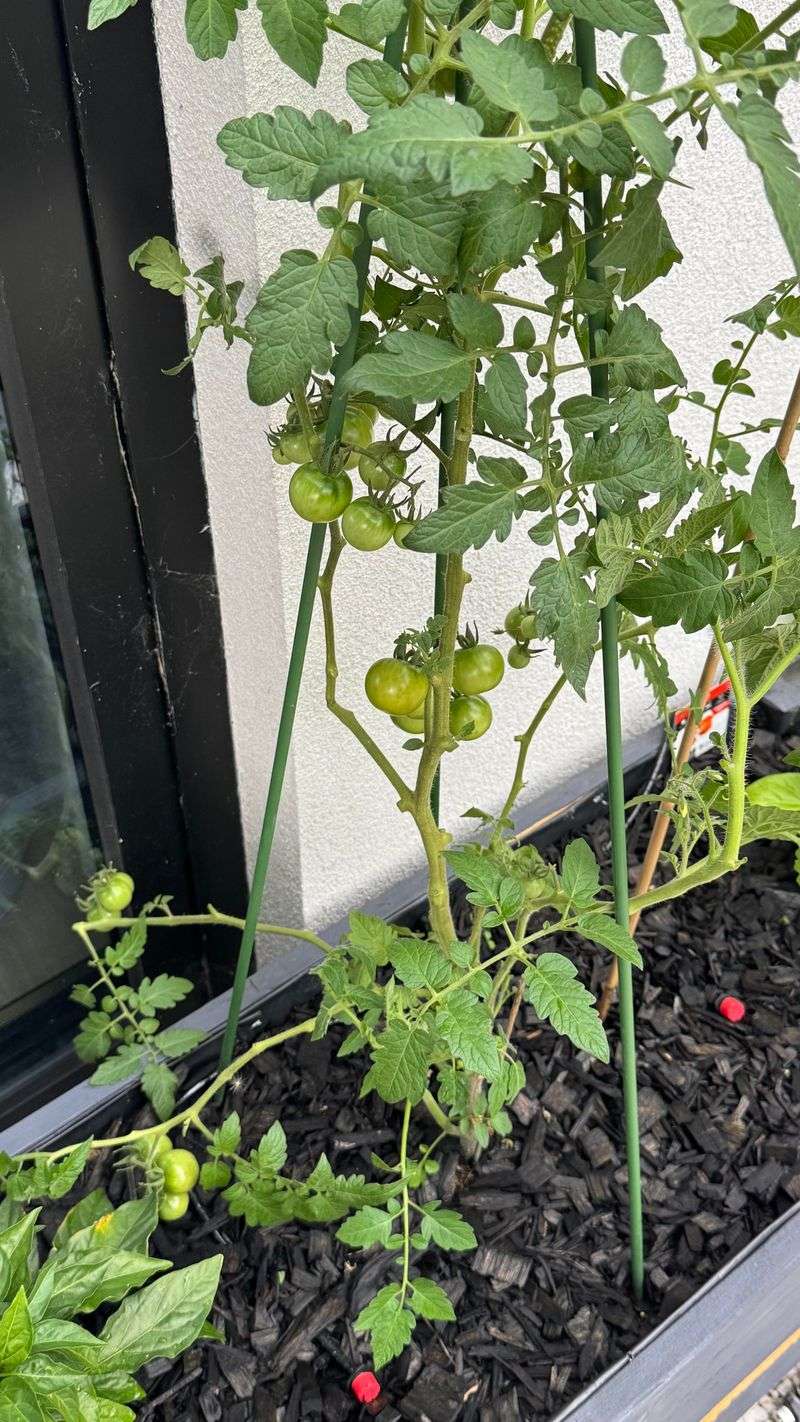
Not every part of your tomato plant needs tying. Concentrate on supporting the main stems and branches bearing fruit clusters. Small side shoots and leaves don’t require individual ties and can move freely in the breeze.
Over-tying creates unnecessary work and can restrict natural growth patterns. By focusing on structural stems, you’ll save time and materials while still providing essential support where the plant truly needs it.
7. Adjust for Indeterminate Varieties
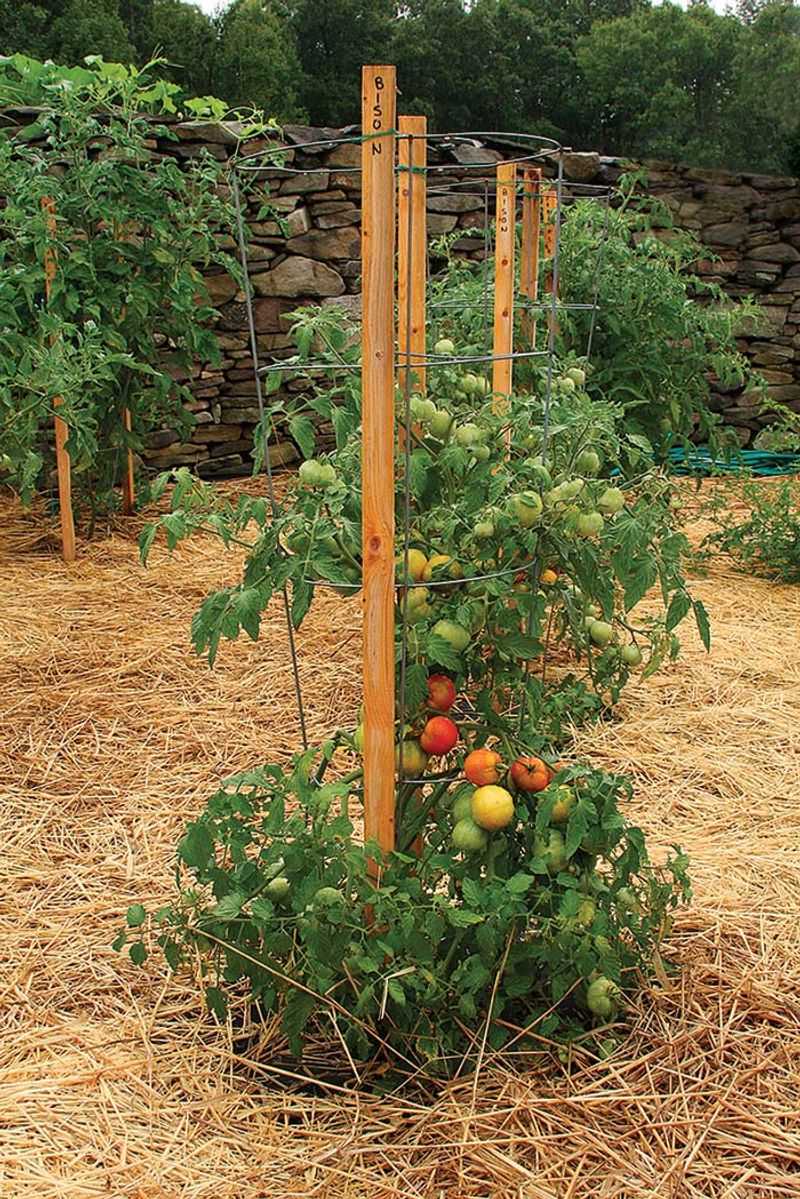
Indeterminate tomatoes grow continuously throughout the season, requiring special tying approaches. These vigorous vines need taller stakes (at least 6-8 feet) and regular tie additions as they stretch skyward.
Check indeterminate varieties weekly for new growth needing support. Unlike determinate types that reach a set height, these ambitious climbers will keep producing new stems all summer long. Plan for ongoing maintenance rather than one-time tying.
8. Remove Lower Leaves Before Tying
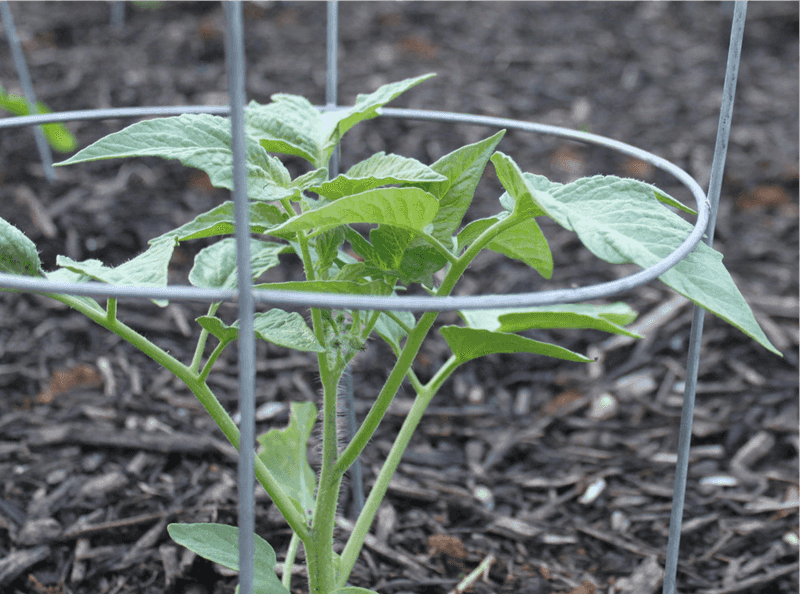
Stripping away leaves that touch the soil creates cleaner tying points and improves plant health. Remove all foliage from the bottom 6-8 inches of your tomato plant before securing to your stake.
This practice improves air circulation, reduces disease risk, and gives you clear access to the main stem. Lower leaves often yellow first anyway, so removing them early redirects energy to fruit production while making your tying job much easier.
9. Create a Spiral Pattern
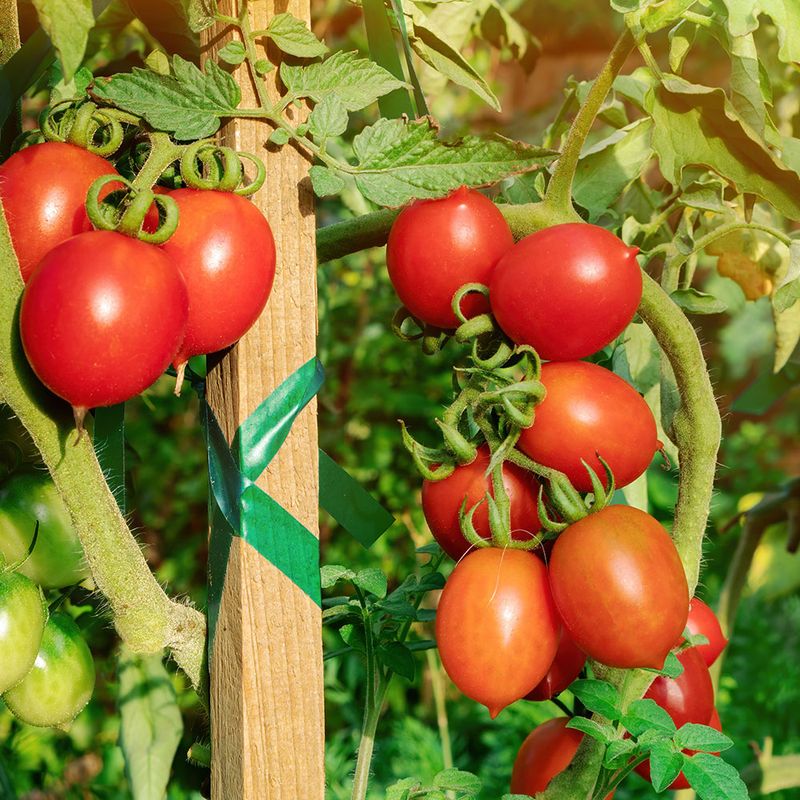
Spiraling works wonderfully with round posts! Guide your tomato’s main stem in a gentle spiral around the stake as it grows, securing with ties every 8-10 inches. This mimics the plant’s natural climbing tendency.
The spiral method maximizes your stake’s surface area and distributes weight evenly. Unlike straight-up tying, spiraling reduces the stress on any single attachment point when heavy fruit clusters develop, preventing potential breakage during summer storms.
10. Inspect and Replace Ties Regularly
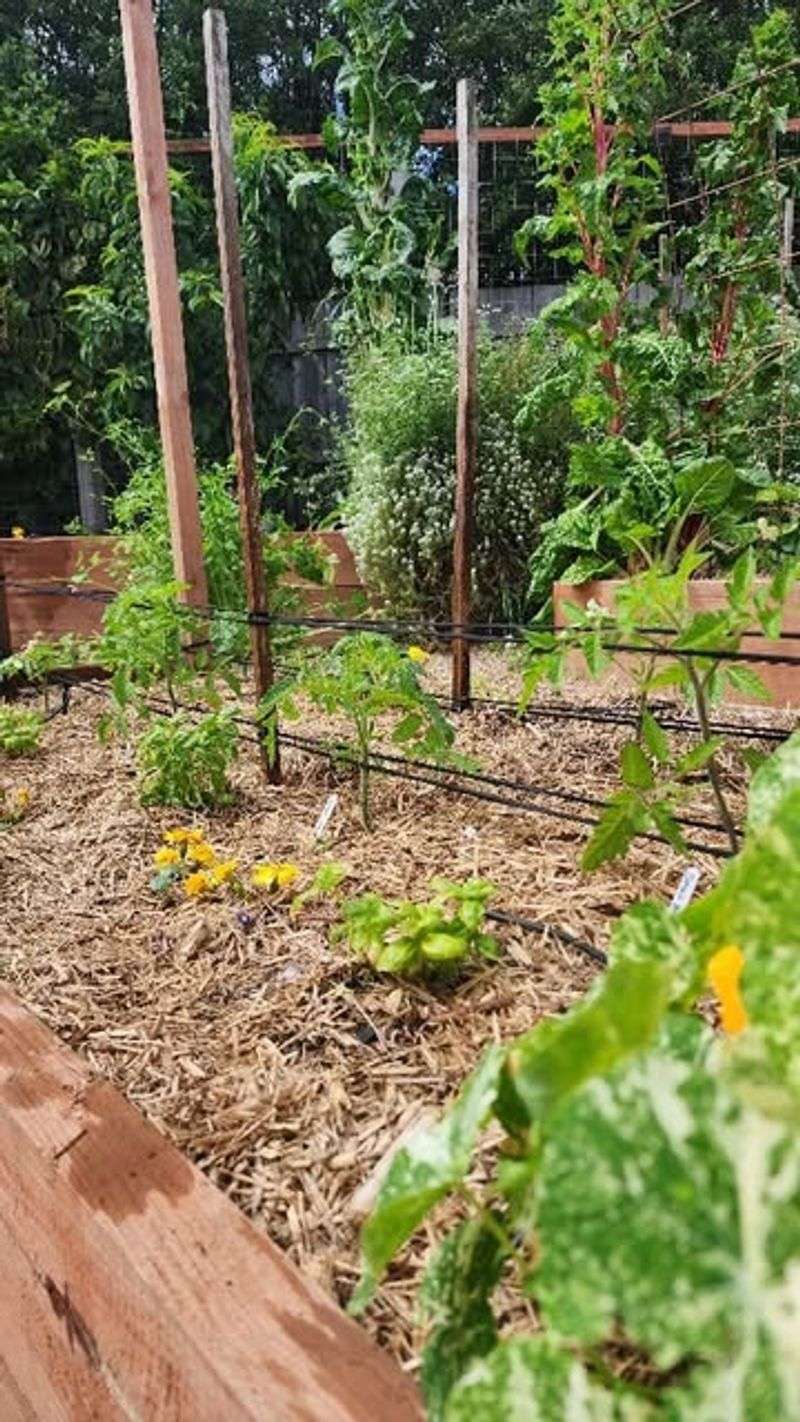
Garden maintenance includes checking your tomato ties every week or two. Look for signs of strain, weathering, or ties becoming too tight as stems thicken. Replace damaged ties immediately to prevent stem injury.
Weather takes a toll on even the best materials. Sunlight breaks down fabric ties, while rain can cause some materials to shrink. Regular inspection prevents the heartbreak of finding a snapped main stem just as your plants begin producing fruit.
11. Use Adjustable Loops for Heavy Fruit Clusters
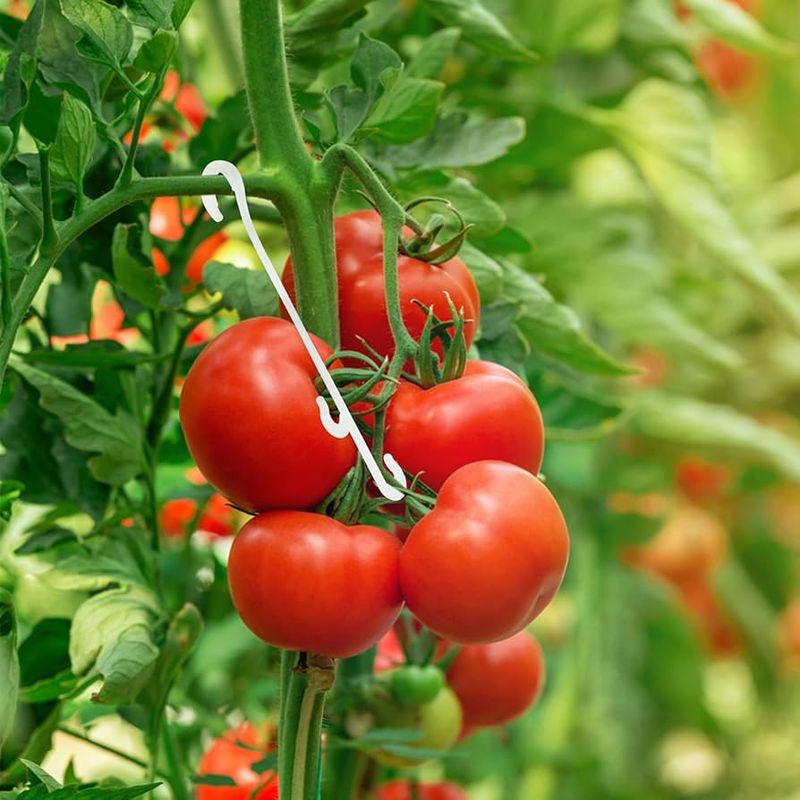
Fruit-laden branches need special attention. Create adjustable support loops that cradle heavy fruit clusters without putting stress on the stem attachment points. These specialized supports distribute weight across a wider area.
Simply make a loose loop around the branch just below a fruit cluster, then attach to the stake. As fruits grow larger, you can easily adjust the support. This technique prevents branch breakage and keeps your precious tomatoes safely attached to the plant.
12. Combine Staking with Pruning
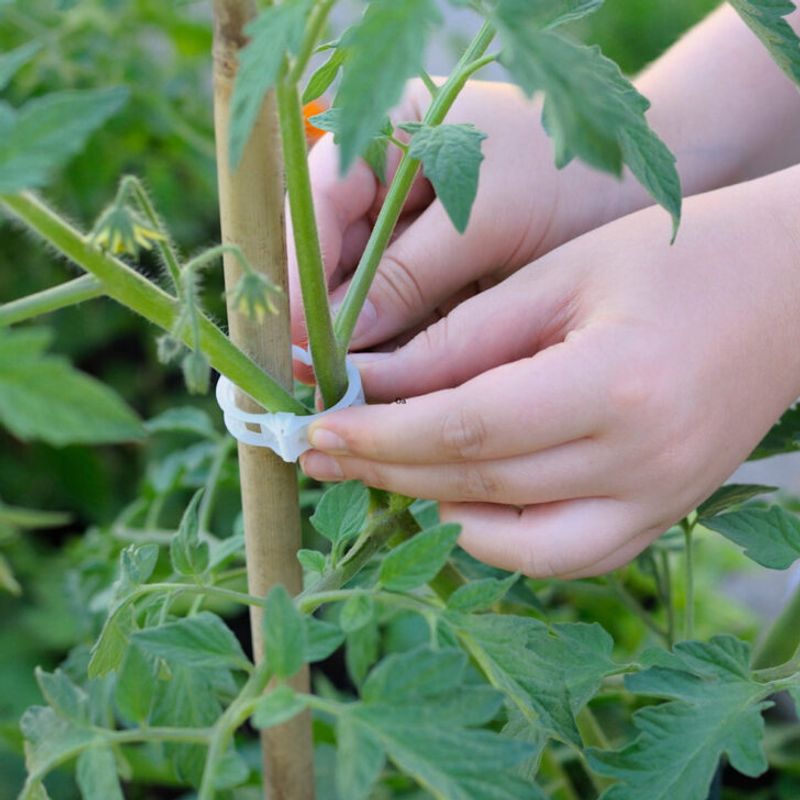
Effective tying works hand-in-hand with strategic pruning. Remove suckers (the shoots that form in the crotch between main stem and branches) when they’re small to focus plant energy and simplify your tying system.
Pruned plants require fewer ties and produce larger, earlier fruits. Always use clean scissors or pruners for this task to prevent disease spread. The combination of proper pruning and thoughtful tying creates stronger plants that are easier to manage throughout the growing season.