Hydrangeas Ohio Gardeners Should Prune In Spring For Better Blooms
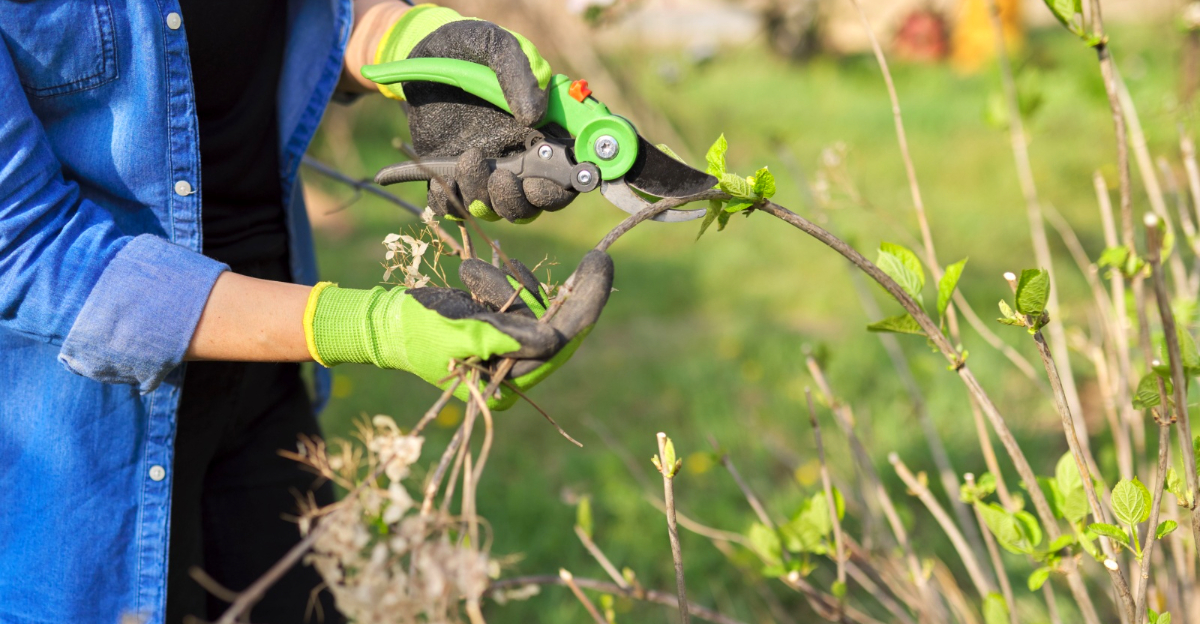
Ohio gardeners know that timing is everything when it comes to hydrangeas.
Cold winters and unpredictable late frosts mean that choosing the right variety and pruning at the right moment can be the difference between a season full of blooms and a season full of disappointment.
Fortunately, several popular hydrangea varieties bloom on new wood, meaning they form their flower buds on fresh growth that emerges each spring.
For Ohio gardeners, that’s great news, because these varieties respond beautifully to spring pruning, producing fuller plants, stronger stems, and more reliable blooms throughout the summer months.
1. Annabelle Produces Large Blooms On New Spring Growth
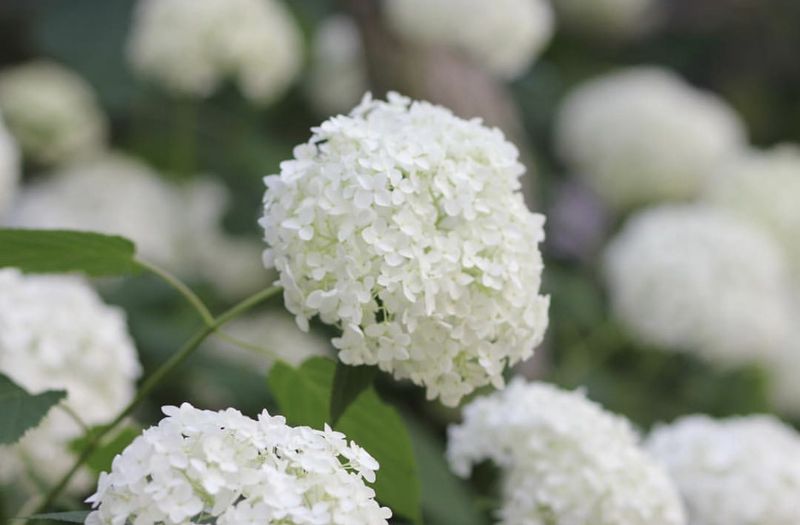
Walk through any Ohio neighborhood in July and you will likely spot Annabelle hydrangeas showing off their signature dinner-plate-sized white blooms.
This smooth hydrangea variety, known scientifically as Hydrangea arborescens, is a true Ohio garden favorite because it blooms on new wood every single season.
That means spring pruning does not remove next season’s buds – it actually encourages more vigorous, fresh growth that supports those oversized flower clusters.
In late winter or early spring, once the threat of heavy frost begins to ease, Ohio gardeners can cut Annabelle stems back to about 12 to 18 inches above the ground.
Pruning at this height encourages strong new shoots to push up from the base, which ultimately carry the large blooms that make this variety so beloved.
Cutting too low can sometimes result in weaker stems that struggle to hold up those heavy flower heads.
Annabelle thrives in full sun to partial shade, and Ohio’s spring rainfall typically gives it a helpful boost right after pruning.
Spacing plants about 4 to 5 feet apart allows good air circulation, which keeps foliage healthier through humid Ohio summers.
Gardeners who prune Annabelle consistently each spring tend to notice noticeably larger blooms and a tidier plant shape compared to those that skip the annual cutback.
2. Incrediball Builds Strong Stems With Bigger Blooms
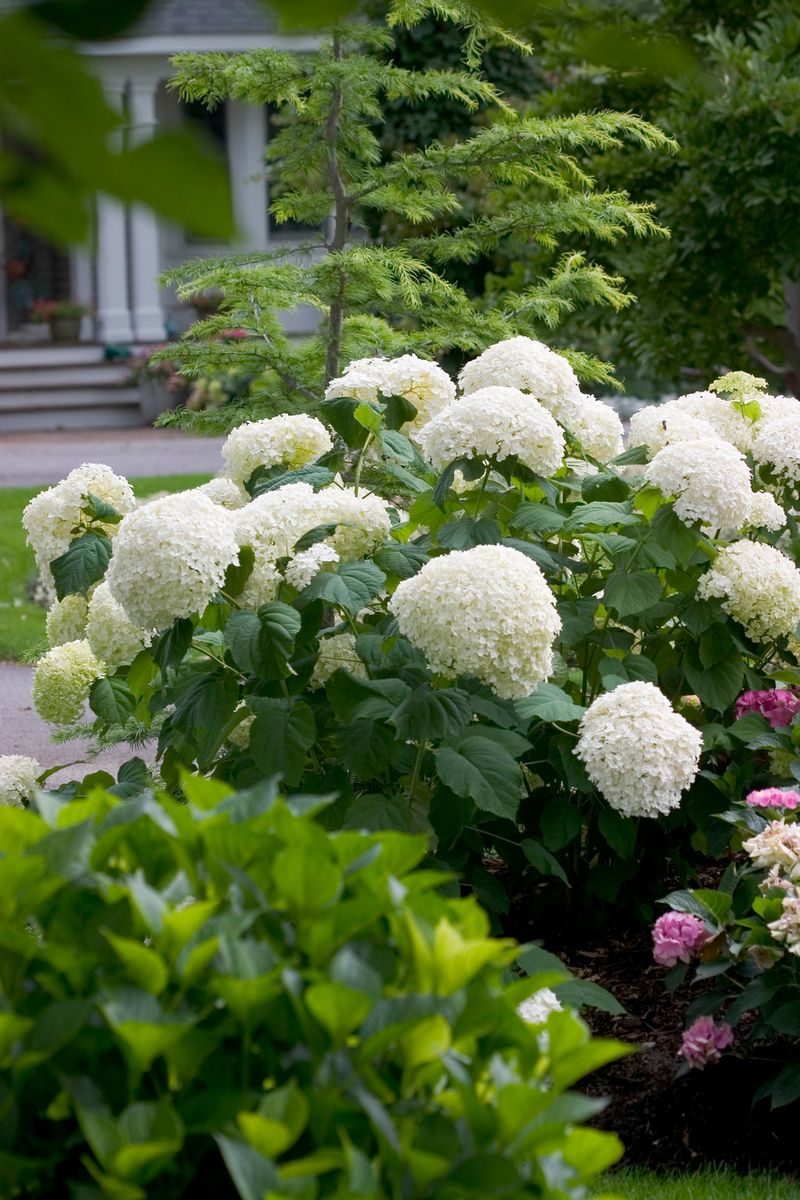
Gardeners who have struggled with floppy Annabelle stems will appreciate what Incrediball brings to the Ohio garden.
Bred as an improved version of Annabelle, this smooth hydrangea variety produces flower heads that are noticeably larger, yet the stems are significantly sturdier, meaning those blooms stay upright even after Ohio’s summer rain showers roll through.
Spring pruning is key to getting the most out of Incrediball. Once new buds start to swell in early spring, Ohio gardeners should cut stems back to roughly 12 to 24 inches above the ground.
This level of pruning removes old woody growth and pushes the plant to direct its energy into fresh, vigorous shoots.
Those new shoots develop into the strong stems that carry Incrediball’s famously large blooms without drooping or bending under their own weight.
Incrediball performs well across most of Ohio, handling both the cold winters in the northern part of the state and the warmer summers in the southern counties.
Full sun to partial shade suits this variety nicely, and consistent moisture during the growing season helps the blooms reach their full potential.
Your Ohio Garden Changes Every Week. Your Plan Should Too.
Gardening in Ohio changes quickly throughout the season. Every Friday you’ll receive a simple weekly plan showing exactly what to plant, prune, fertilize, harvest, and protect so you never miss the right timing.
Giving each plant about 5 feet of space ensures good airflow and reduces competition for nutrients. Ohio gardeners who commit to annual spring pruning often find Incrediball to be one of the most rewarding and low-maintenance shrubs in the yard.
3. Limelight Delivers Reliable Blooms With Spring Pruning
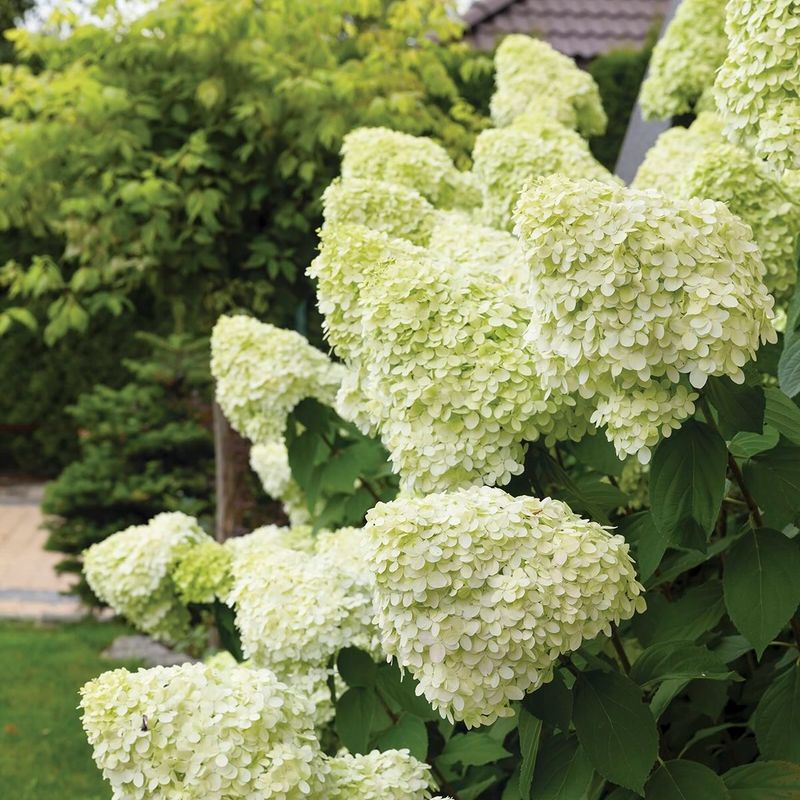
Few hydrangeas turn heads quite like Limelight, with its cone-shaped flower clusters that open in a soft lime green before gradually shifting to creamy white and then blushing pink as the season progresses.
As a panicle hydrangea, Limelight blooms on new wood each year, making it an outstanding candidate for spring pruning in Ohio gardens.
Ohio’s late spring growth window is ideal for Limelight. Gardeners typically prune this variety in early spring, cutting stems back by about one-third to one-half of their total height.
This approach encourages the plant to push out fresh, strong shoots that will carry the season’s blooms.
Pruning too aggressively – cutting all the way to the ground – can sometimes reduce bloom size or delay flowering, so a moderate cutback tends to produce the best results with Limelight.
Limelight grows quite tall, often reaching 6 to 8 feet in Ohio gardens when given enough sun and space. Full sun exposure generally produces the most abundant blooms, though the plant handles partial shade reasonably well.
Spacing plants 6 to 8 feet apart gives them room to develop their naturally upright, vase-shaped form.
Because Limelight is a panicle hydrangea, it also handles Ohio’s variable spring temperatures with ease, bouncing back from late cold snaps better than many other hydrangea types.
Consistent spring pruning keeps the plant looking neat and producing reliably season after season.
4. Little Lime Stays Compact With Consistent Flowering
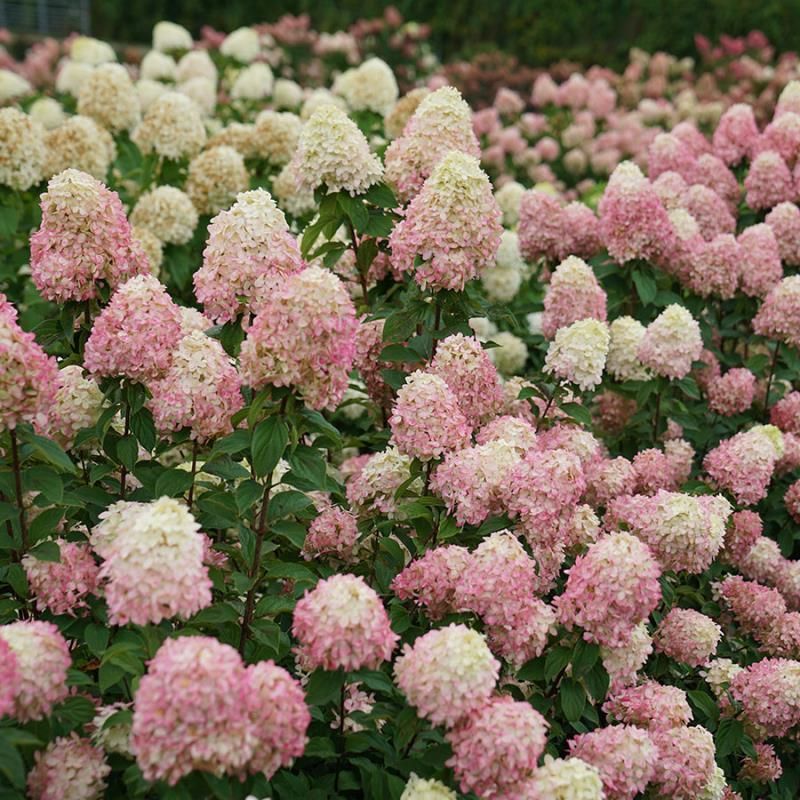
Not every Ohio yard has room for a towering 8-foot shrub, and that is exactly where Little Lime earns its place.
As a compact version of the beloved Limelight hydrangea, Little Lime typically tops out at just 3 to 5 feet tall, making it a natural fit for smaller yards, border plantings, and even large containers on Ohio patios and decks.
Like its larger cousin, Little Lime blooms on new wood, so spring pruning is not only safe but genuinely beneficial.
Ohio gardeners should prune Little Lime in early spring, cutting stems back by about one-third.
This consistent pruning habit keeps the plant tidy and compact while encouraging a fresh flush of vigorous new shoots that will develop into the season’s flower buds. Skipping annual pruning can cause the plant to become a bit leggy and uneven over time.
Little Lime’s smaller scale does not mean smaller impact.
The lime-green blooms that gradually shift to creamy white and soft pink are just as striking as those on full-sized panicle hydrangeas, and the plant’s manageable size makes it easier to maintain throughout Ohio’s growing season.
It handles Ohio winters quite well and appreciates at least 4 to 6 hours of sun each day for the best flowering results.
Spacing plants about 3 to 4 feet apart allows for good air circulation and helps each shrub develop its naturally rounded, attractive shape.
5. Bobo Keeps A Small Shape With Heavy Blooming
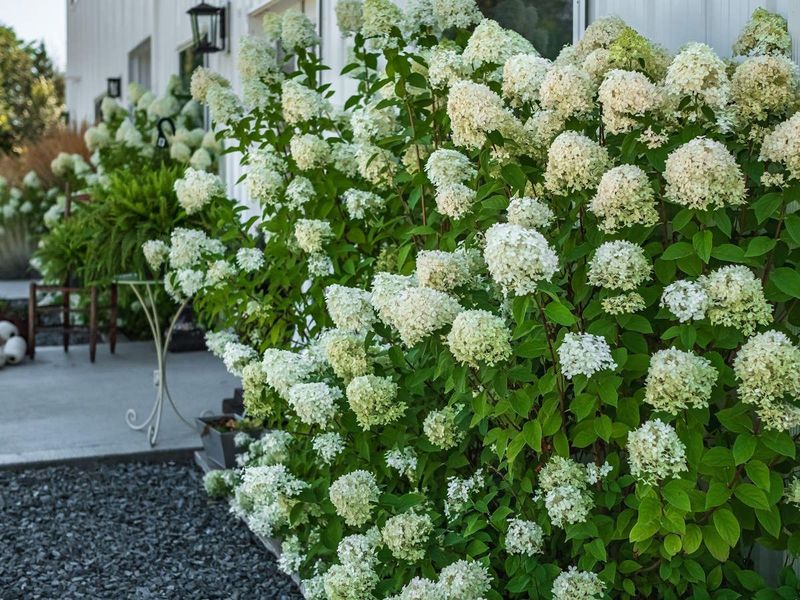
Among the shorter panicle hydrangeas available to Ohio gardeners, Bobo stands out for producing an almost ridiculous number of blooms relative to its small stature.
Typically growing just 2.5 to 3 feet tall, this compact variety has a naturally low, spreading habit that makes it useful for edging, foundation plantings, and front-yard beds where a smaller, well-behaved shrub fits better than a larger specimen.
Bobo blooms on new wood, so Ohio gardeners can prune it in early spring without any risk of sacrificing the season’s flowers.
A light to moderate cutback – trimming stems back by about one-third – encourages fresh, compact growth and helps the plant maintain its tidy, mounded shape.
Because Bobo naturally stays low, heavy pruning is rarely needed, but a consistent annual trim keeps the framework clean and supports better bloom production.
One of Bobo’s most appealing qualities for Ohio gardeners is how early it begins to bloom.
Flowers typically appear in mid to late summer, and the white blooms age to a soft pink-red as cooler fall temperatures arrive, extending the plant’s ornamental interest well into autumn.
Full sun brings out the best flowering, though Bobo tolerates light afternoon shade in Ohio’s warmer inland areas.
Planting Bobo about 2.5 to 3 feet apart creates a dense, floriferous hedge effect that looks especially impressive when the shrubs are in full bloom.
6. Peegee Grandiflora Grows Strong With Spring Pruning
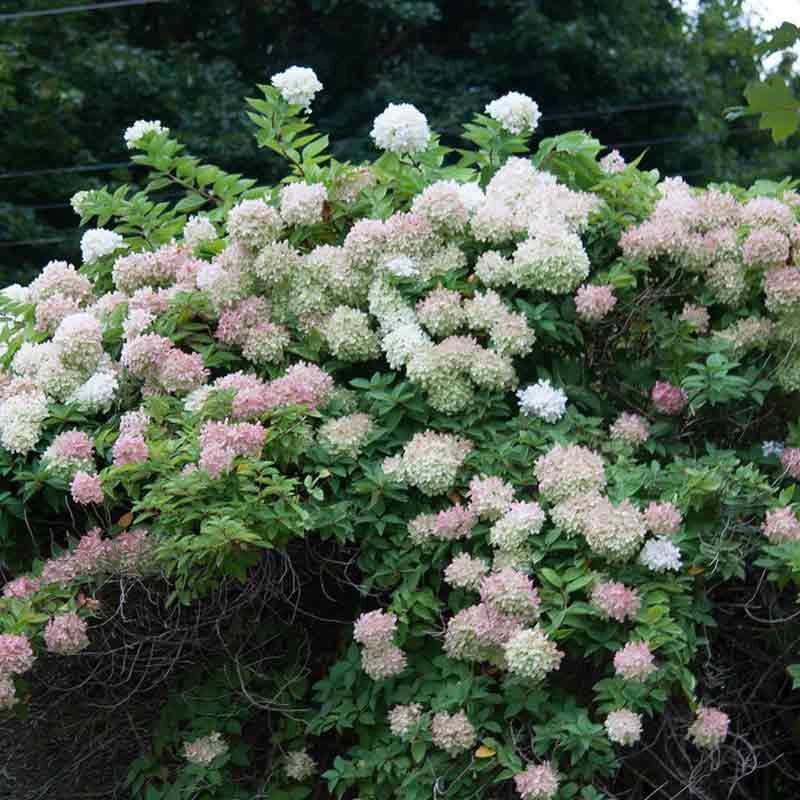
There is something quietly impressive about a well-pruned PeeGee Grandiflora hydrangea growing in an Ohio yard.
One of the oldest cultivated hydrangea varieties in North America, PeeGee – short for its botanical designation Hydrangea paniculata Grandiflora – has been gracing American gardens for well over a century.
And it remains a standout choice for many Ohio gardeners who want a large, dramatic specimen shrub or a small flowering tree in their gardens.
PeeGee Grandiflora blooms on new wood, which means spring pruning directly shapes how well the plant performs each season.
Ohio gardeners typically prune this variety in early spring, removing about one-third of the previous season’s growth and thinning out crowded or crossing stems.
This selective approach encourages strong new shoots to develop and helps the plant channel its energy into producing the large, cone-shaped flower clusters that PeeGee is known for.
Left unpruned, PeeGee can grow quite large – sometimes reaching 15 to 20 feet or even more – but regular spring pruning keeps the plant at a manageable size while actually improving bloom quality.
Many Ohio gardeners train PeeGee into a single-trunk tree form, which creates an elegant focal point in the landscape.
Full sun to light partial shade suits this variety well across Ohio’s diverse growing regions. The blooms open white in summer and gradually age to a warm pinkish-tan by fall, providing months of ornamental interest from one well-maintained plant.