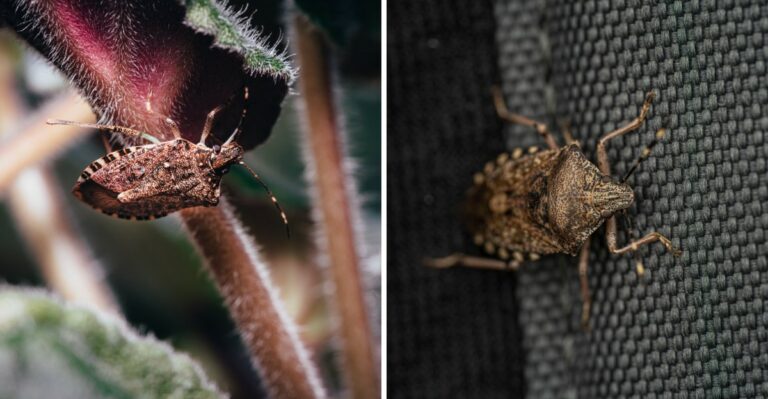
If You Found This Bug In New Jersey, Your Plants Might Be In Danger
Nobody warned the grapevines. One season they were thriving, heavy with fruit, the kind of backyard success story you post photos of.
The next, something had changed. Leaves wilting for no reason, sticky gunk coating the patio furniture, a strange black mold creeping up the trunk.
The culprit was small enough to overlook and pretty enough to admire. That combination is exactly what makes it one of New Jersey’s most frustrating invasive pests. Originally from Asia, this insect arrived in the United States about a decade ago and has been spreading aggressively ever since.
New Jersey sits right in the middle of its expansion zone, and the damage to gardens, farms, and local businesses is very real. It feds on over seventy plant species, weakens trees over multiple seasons, and spreads in ways most people never expect.
Once you know what to look for, you will never walk past one without noticing.
Why This Pretty Little Bug Is New Jersey’s Nightmare
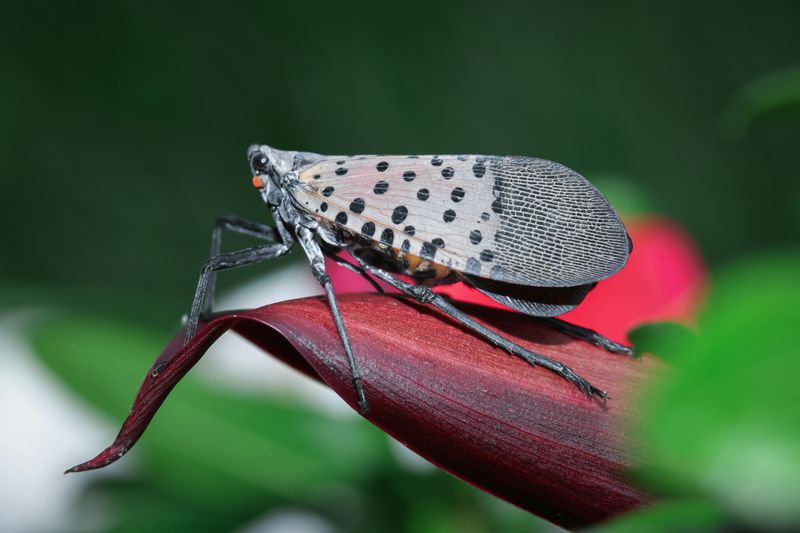
Looks can be deceiving, and the spotted lanternfly is proof of that. With its pale gray forewings dotted in black and a flash of red underneath, it almost looks like something you would find in a nature calendar.
But this insect, officially known as Lycorma delicatula, is one of the most destructive invasive species to hit the eastern United States in decades.
Originally from China, India, and Vietnam, it was first detected in Pennsylvania back in 2014.
It crossed into New Jersey not long after, and the population has exploded since then.
Unlike many pests that target just one or two plant types, the spotted lanternfly feeds on more than 70 different species, making it a broad and relentless threat.
What makes it especially frustrating is the way it feeds.
It pierces plant stems and sucks out the sap, weakening the plant from the inside.
That sticky, sugary waste it leaves behind, called honeydew, coats leaves and branches and encourages a black mold to grow.
Over time, affected plants struggle to photosynthesize and slowly lose their ability to thrive.
For New Jersey gardeners and farmers, that is not a small problem.
How To Spot It Before It Spots Your Garden
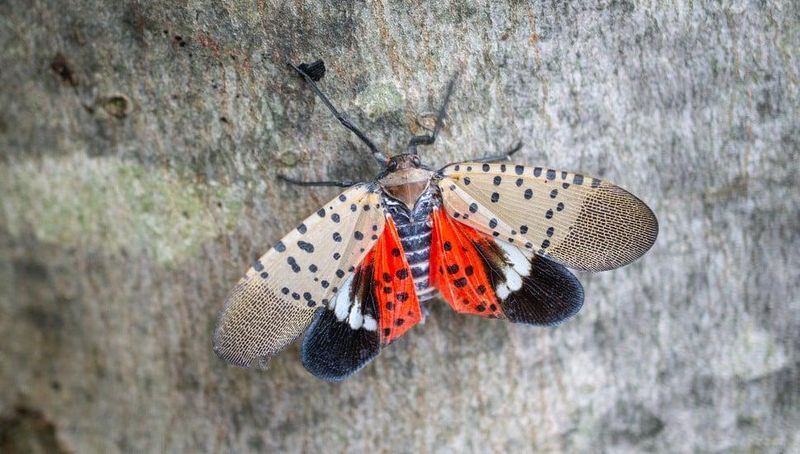
Catching this pest early is the single most powerful thing you can do for your yard. Adults are roughly an inch long and hold their wings flat against their body when resting, which makes them look almost like a gray moth at first glance.
Flip those wings open, though, and you will see that bold red underneath, which is a dead giveaway.
Nymphs are even easier to overlook.
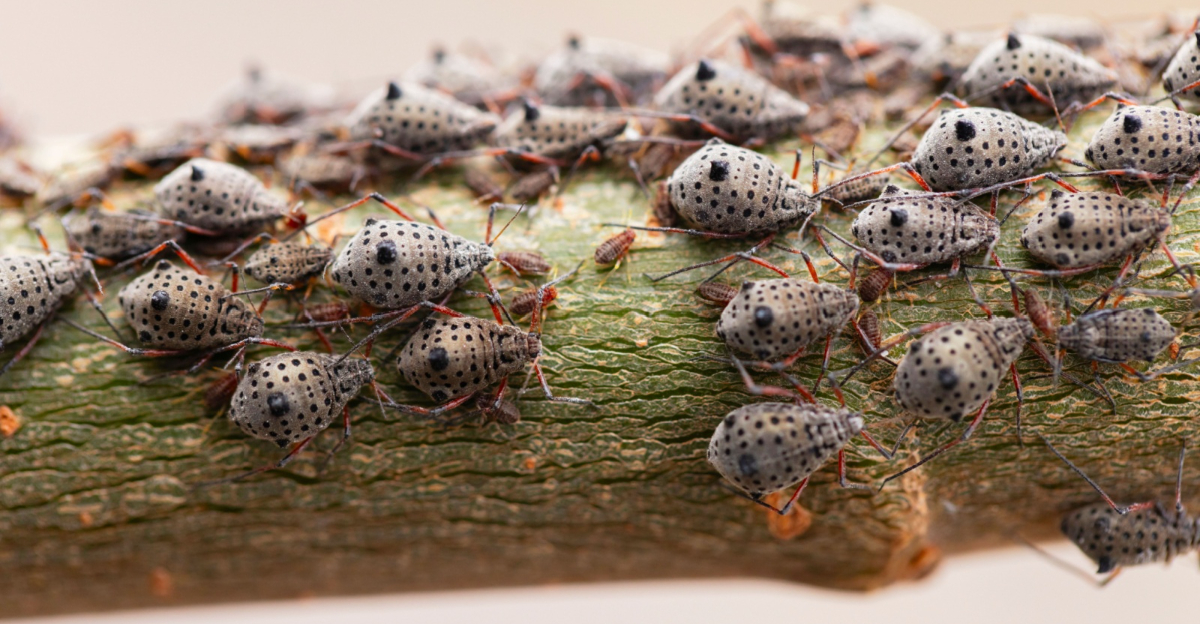
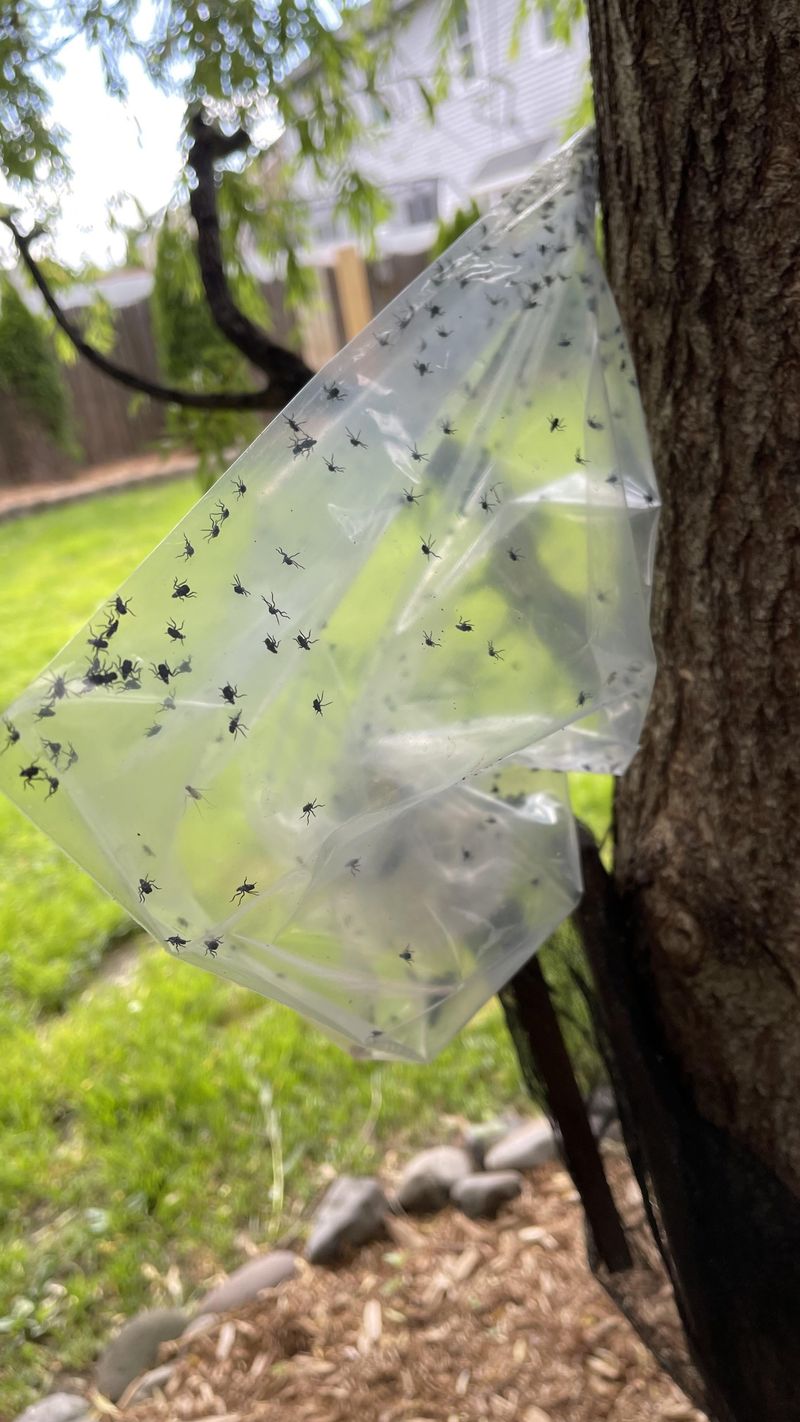
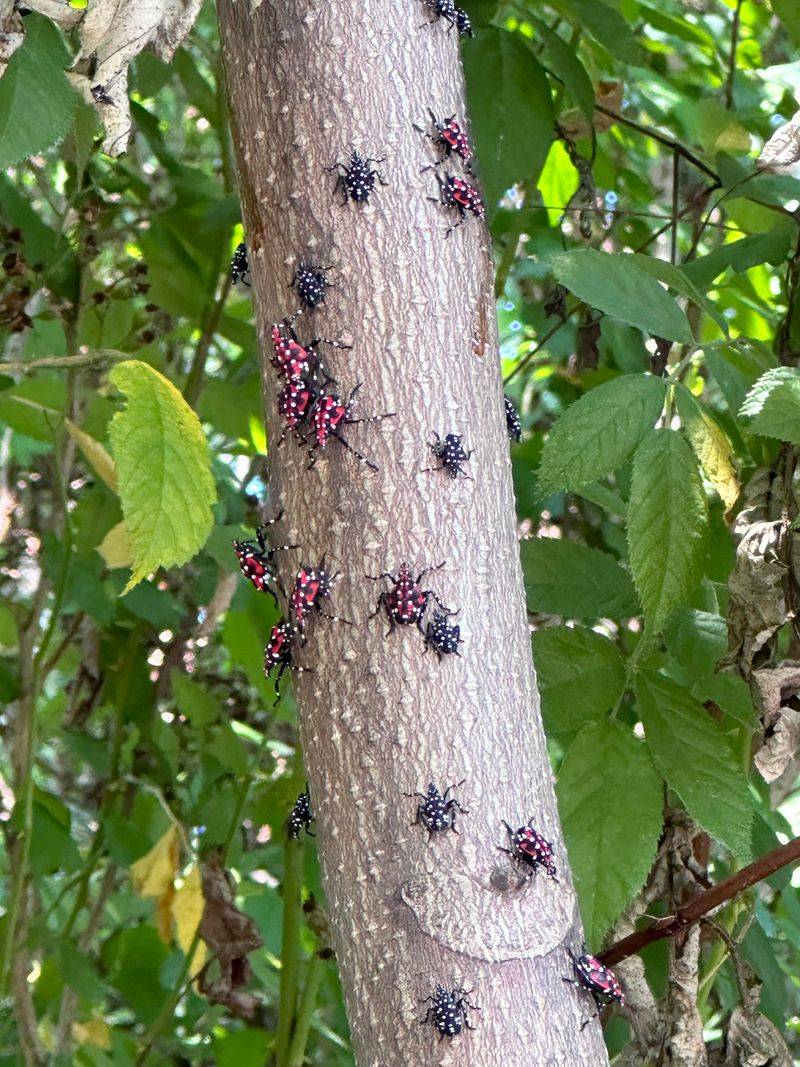
Early-stage nymphs are tiny, black, and spotted with white dots, almost like a ladybug that lost its color.
As they mature through the summer, they develop red patches before eventually growing into adults by late July or August. Egg masses are where things get sneaky.
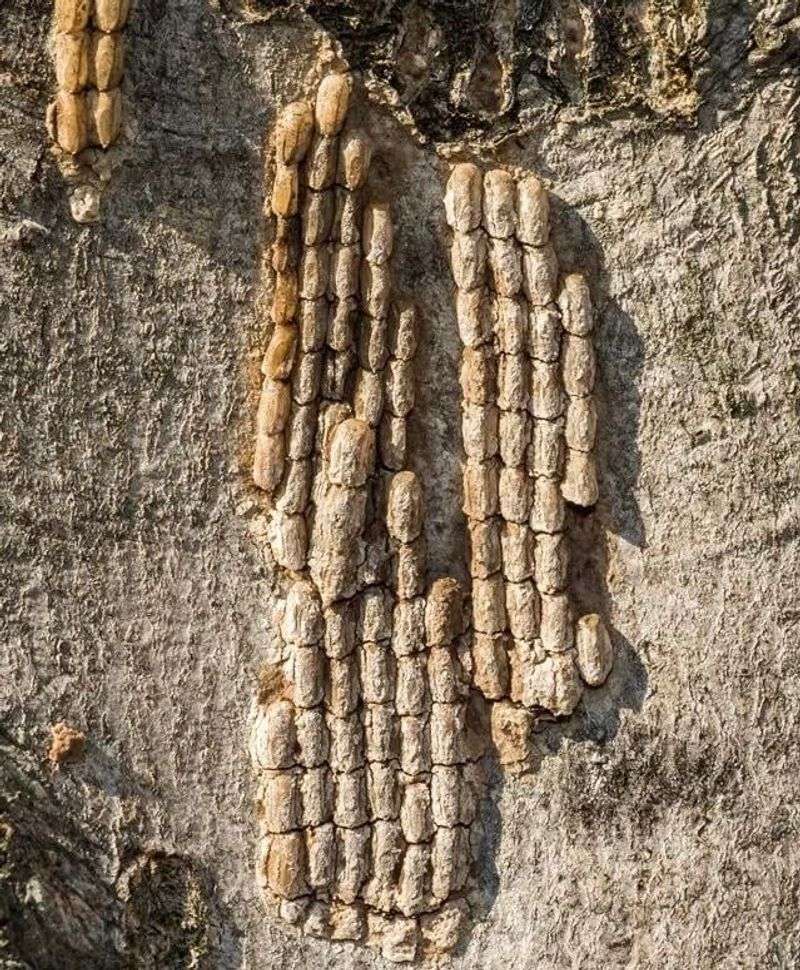
Females lay flat, mud-colored patches of eggs on almost any smooth surface, including tree bark, fence posts, lawn furniture, and even car bumpers.
Your Illinois Garden Changes Every Week. Your Plan Should Too.
Gardening in Illinois changes quickly throughout the season. Every Friday you’ll receive a simple weekly plan showing exactly what to plant, prune, fertilize, harvest, and protect so you never miss the right timing.
Each mass contains 30 to 50 eggs and blends in so well that most people walk right past them without a second look.
Checking your yard regularly, especially on the bark of trees like maples, willows, and the invasive tree of heaven, gives you the best shot at catching an infestation before it spreads through your entire property.
This Bug Has Been Found In Every Single New Jersey County
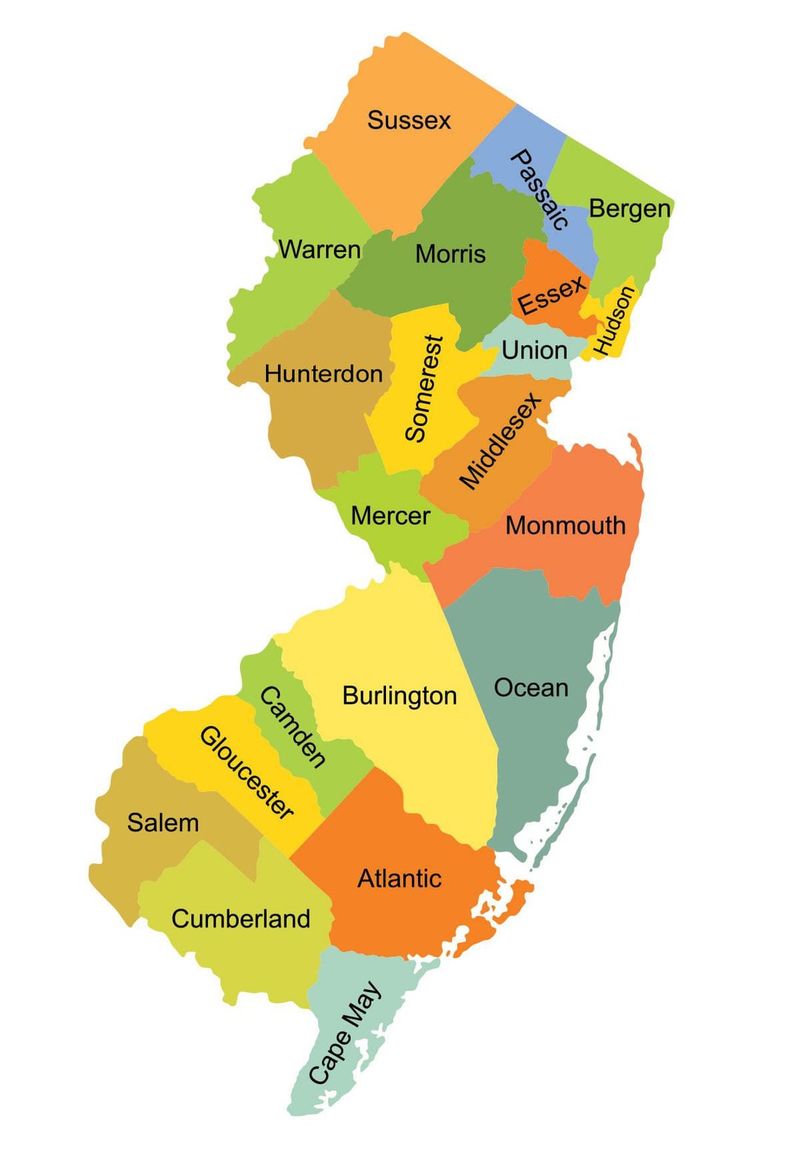
Since first appearing in the state back in 2018, the spotted lanternfly has been confirmed in every single county across New Jersey.
There is no safe zone, no untouched corner, from the northern highlands all the way down through the southern coastal plain.
The reach of this insect is total, and it did not happen by accident. Highways, rail lines, and shipping routes have all played a role in moving it from one area to another.
People unknowingly transport egg masses on outdoor gear, firewood, and vehicles. Without realizing it, they give the bug a shortcut into neighborhoods it would never reach on its own.
If you are a New Jersey resident, the odds that this pest is somewhere in your neighborhood are genuinely high.
Staying alert is no longer just good advice, it is necessary. The New Jersey Department of Agriculture actively tracks sightings and updates its maps regularly.
Their website is the most reliable place to see exactly where activity has been recorded most recently.
One Bug, Thousands Of Dollars In Damage
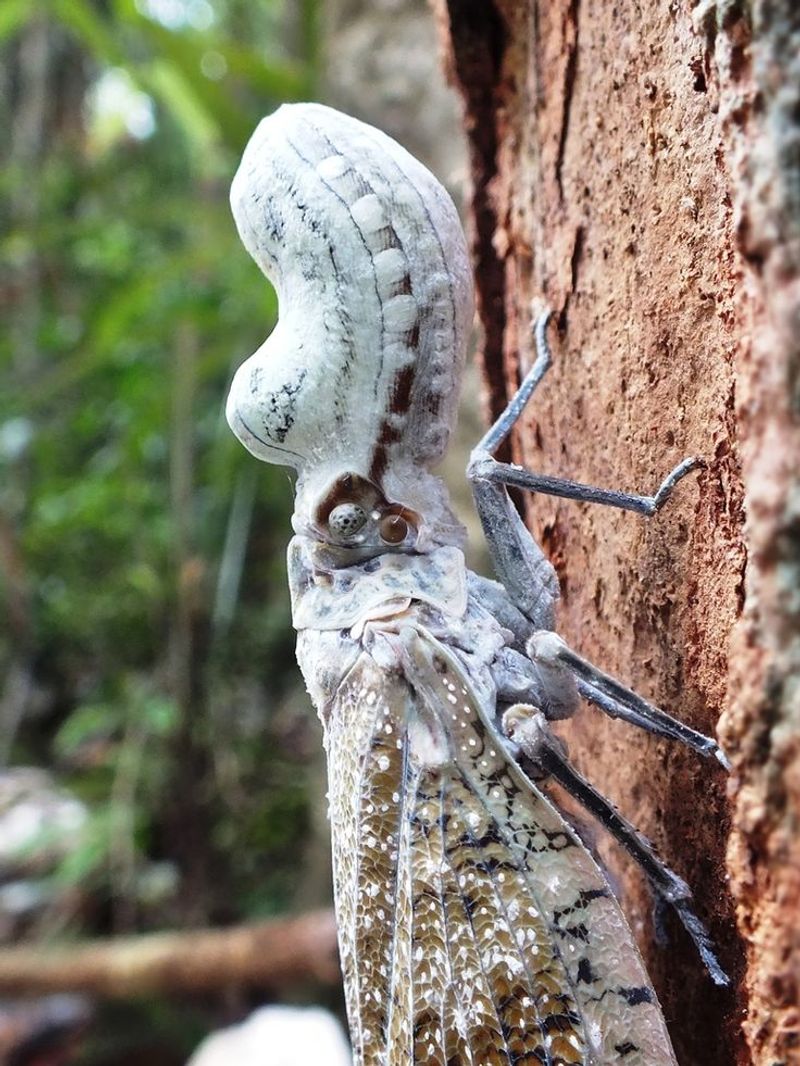
Local farmers were among the first to feel the financial hit, and the numbers are staggering.
Researchers at Penn State University estimated that spotted lanternfly could cost the mid-Atlantic region over 300 million dollars annually if left unchecked.
And New Jersey’s farms, vineyards, nurseries, and landscaping businesses face similar types of risk.
Fruit farms and orchards have been hit especially hard.
Grape vines are one of the spotted lanternfly’s favorite targets, and a heavy outbreak can reduce a plant’s ability to store energy for the following growing season.
For small family-owned orchards and farms, even one bad season can mean serious financial strain.
Backyard gardeners are not immune either.
Apple trees, peach trees, hops, and ornamental maples have all shown significant stress after repeated feeding pressure from large populations.
The honeydew waste attracts wasps and other insects, turning a once-pleasant patio into an uncomfortable outdoor space.
That black sooty mold that follows can stain decks, outdoor furniture, and even the siding on your home.
Nurseries, orchards, landscapers, and farm trail tourism all feel the financial pressure when this pest moves in.
The impact stretches well beyond any single backyard or garden.
Your Car Might Already Be Carrying It Home
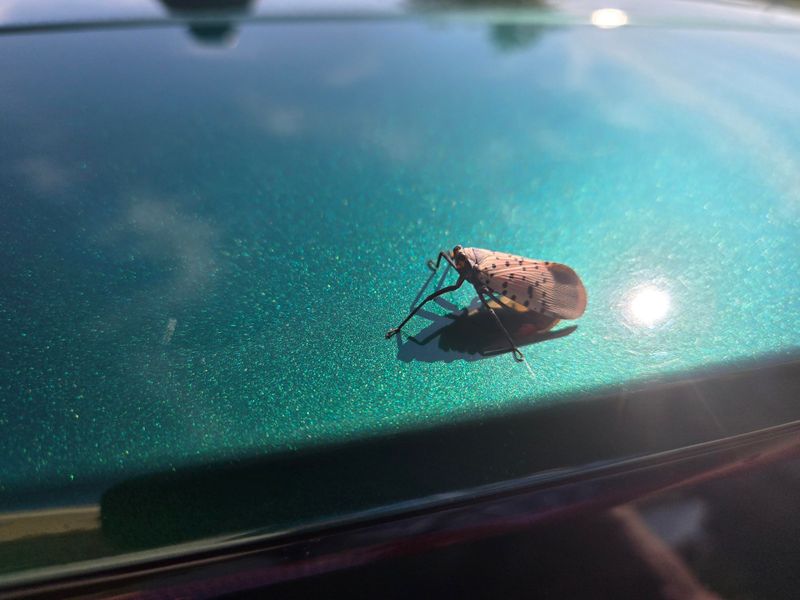
Your daily commute might be doing more damage than you think.
Spotted lanternfly egg masses have been found on cars parked near infested wooded areas, rest stops along major highways, and even in shopping center parking lots.
The eggs are nearly impossible to spot unless you know exactly what you are looking for.
Female lanternflies lay their eggs on virtually any hard surface.
Car bumpers, wheel wells, roof racks, and trailer hitches are all fair game.
Once those eggs are on your vehicle, every trip you take potentially carries them into a new neighborhood, a new county, or even a new state.
New Jersey has a quarantine order in place that requires anyone moving items out of quarantine zones to inspect them first.
This applies to vehicles, outdoor equipment, nursery plants, and firewood.
Ignoring this is not just bad for the environment, it can also come with legal consequences.
Before getting into your car after parking near wooded or heavily populated areas, take 60 seconds to walk around and check the exterior.
Scrape off any egg masses you find using a stiff card or plastic scraper.
Drop them into a sealed bag filled with soapy water, and toss it in the trash.
That one small habit can stop a new outbreak before it ever starts.
The Plants In Your Yard That Are Already At Risk
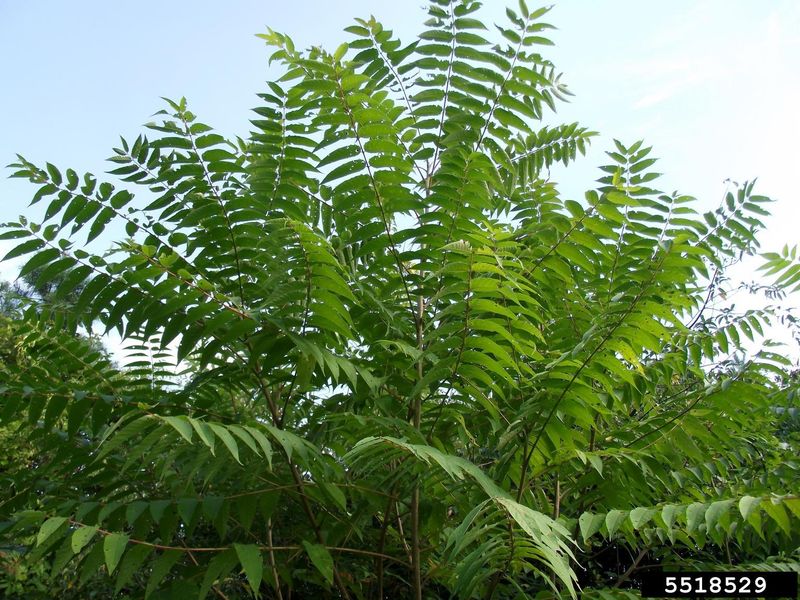
Spotted lanternflies are not picky eaters, and that is exactly what makes them so dangerous to a typical backyard.
They have been documented feeding on more than 70 plant species, and many of the most common trees and garden plants in New Jersey yards are squarely on their menu.
Tree of heaven, an invasive species itself, is their absolute favorite host.
But when tree of heaven is not available, they move right on to grapevines, apple trees, peach trees, cherry trees, hops, blueberries, and ornamental maples without hesitation.
Even plants like roses, black walnut, and river birch have shown feeding damage in heavily infested areas.
The damage pattern is worth recognizing.
You might notice weeping or oozing wounds on tree trunks, wilting leaves despite adequate water, or a sticky coating on surfaces beneath an affected plant.
That stickiness is the honeydew, and it signals active feeding above. Late summer and fall tend to bring the heaviest feeding pressure, as adult lanternflies bulk up before laying eggs.
Plants that were already stressed from drought or poor soil conditions are particularly vulnerable and may show symptoms faster than healthy specimens.
Knowing which plants in your yard are most at risk helps you focus your monitoring efforts where they matter most.
How To Protect Your Yard Before It’s Too Late
Acting before an infestation gets out of hand is far easier than managing one that has already taken hold.
Several proven strategies can reduce spotted lanternfly pressure in your yard without requiring professional help or expensive equipment.
Circle traps and sticky bands placed around tree trunks intercept nymphs as they climb upward to feed.
These are especially effective in spring and early summer when younger nymphs are active.
Just make sure to check the bands regularly since birds and other small animals can accidentally get stuck, which is something you want to avoid.
Removing tree of heaven from your property is one of the highest-impact steps you can take.
Since it is the preferred host plant, eliminating it reduces the attractiveness of your yard as a habitat and feeding ground.
This does require some persistence since tree of heaven resprouts aggressively after cutting.
In severe cases, targeted insecticides labeled for spotted lanternfly use are available at garden centers.
Products containing dinotefuran or bifenthrin have shown effectiveness when applied correctly.
Always follow label instructions carefully and avoid spraying during peak pollinator hours to protect bees and beneficial insects.
Combining physical traps with targeted treatment gives you the strongest defense against a population that is already present on your property.
Found One? Here’s Exactly What To Do Next
Spotting a spotted lanternfly in your yard can feel like a nightmare. But you have more power in this situation than you might expect!
The most important first step is to report the sighting to the New Jersey Department of Agriculture through their online reporting tool or by calling their pest hotline.
Your report genuinely helps officials track the spread and respond faster in newly affected areas.
Before you report, snap a clear photo if you safely can.
A good image helps experts confirm the identification and rules out lookalikes like the native moth species that sometimes get confused with lanternfly adults.
Note the location, the date, and what the insect was doing or resting on.
If you find egg masses, scrape them off using a plastic card or stiff brush.
Drop the scraped material directly into a sealed bag filled with soapy water, then toss the bag in the trash.
Do not leave scraped egg masses on the ground since they can still hatch if conditions are right.
Sharing what you know with neighbors, local gardening groups, and community social media pages multiplies your impact significantly.
One informed household is helpful.
But neighbors who share information and stay alert together create a far stronger line of defense.
That kind of community effort protects the plants you have worked hard to grow.
Staying Alert This Season Could Save Your Garden
Gardening in New Jersey right now means adding one more item to your seasonal checklist, and it is not a small one.
Spotted lanternfly populations tend to peak in late summer and early fall.
That happens to be the same window when most backyard plants are working their hardest and have the most to lose.
Staying observant during your regular watering and pruning routines costs nothing but a few extra minutes.
Most people walk right past the early warning signs without a second thought. A quick scan of leaf undersides, tree trunks, and any sticky residue on surfaces below your plants is all it takes to catch them. .
Spotting those clues early puts you weeks ahead of the problem.
Community awareness can help officials track new sightings and slow accidental spread.
When neighbors share sightings, coordinate removal efforts, and report to authorities together, the response time from pest management professionals improves dramatically.
Your garden represents time, money, and genuine care, and it deserves a defense strategy that matches that investment.
The spotted lanternfly is a serious and growing challenge across New Jersey, but it is not unbeatable.
Armed with the right knowledge and a little seasonal vigilance, you can protect the plants you love.
That effort also helps slow one of the most damaging invasive insects this region has faced in recent memory.