12 Indoor Plants Perfect For Bonsai In Texas Homes
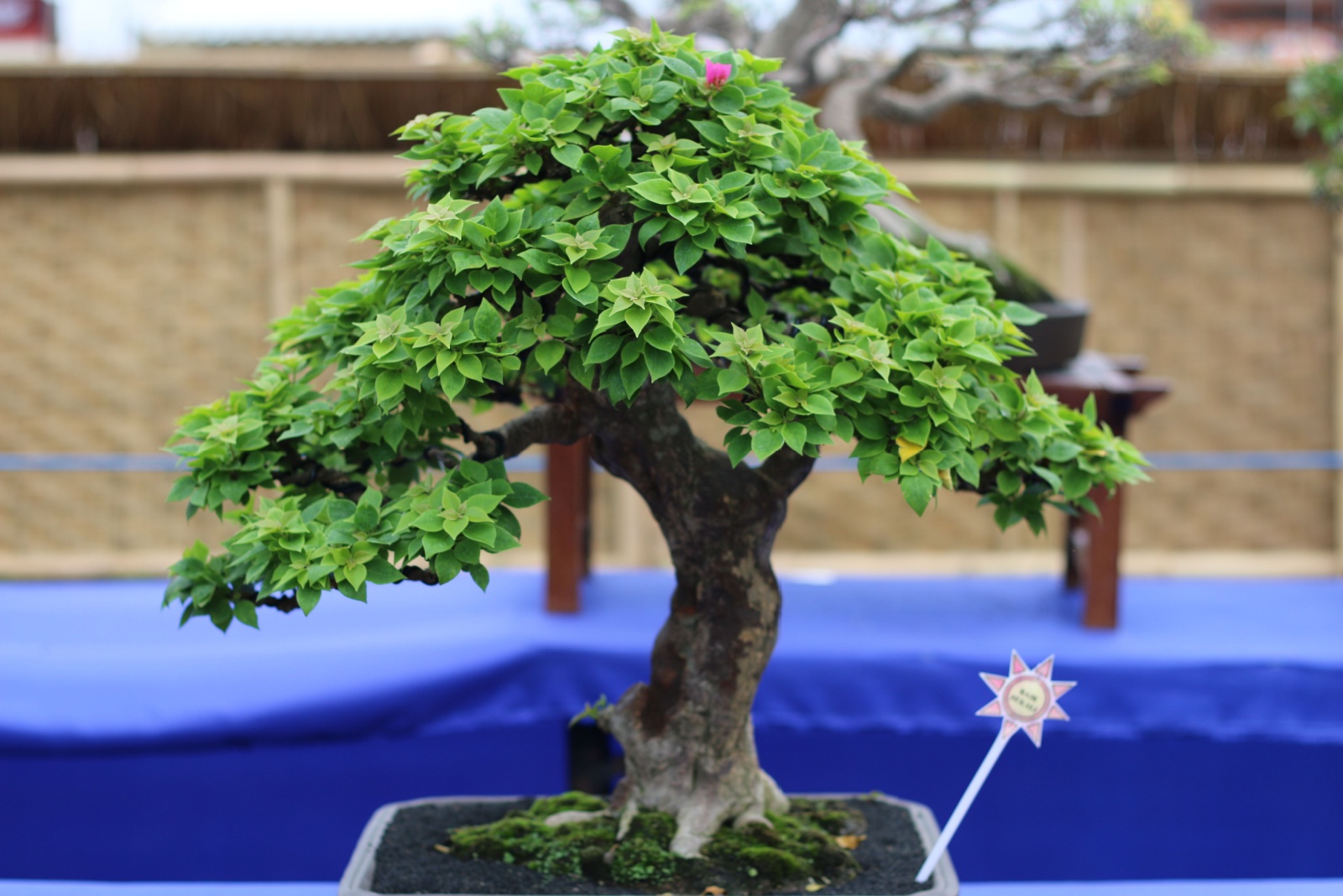
Growing bonsai trees indoors can transform your Texas home into a peaceful sanctuary where nature meets art in the most beautiful way.
Texas weather can be unpredictable outside, but inside your home you have complete control over the environment for these miniature masterpieces to flourish.
Bonsai cultivation teaches patience and mindfulness while adding stunning visual interest to any room, making it a rewarding hobby for all ages.
Choosing the right plants adapted to indoor Texas conditions ensures your bonsai journey starts successfully and continues thriving for years to come.
1. Ficus Retusa
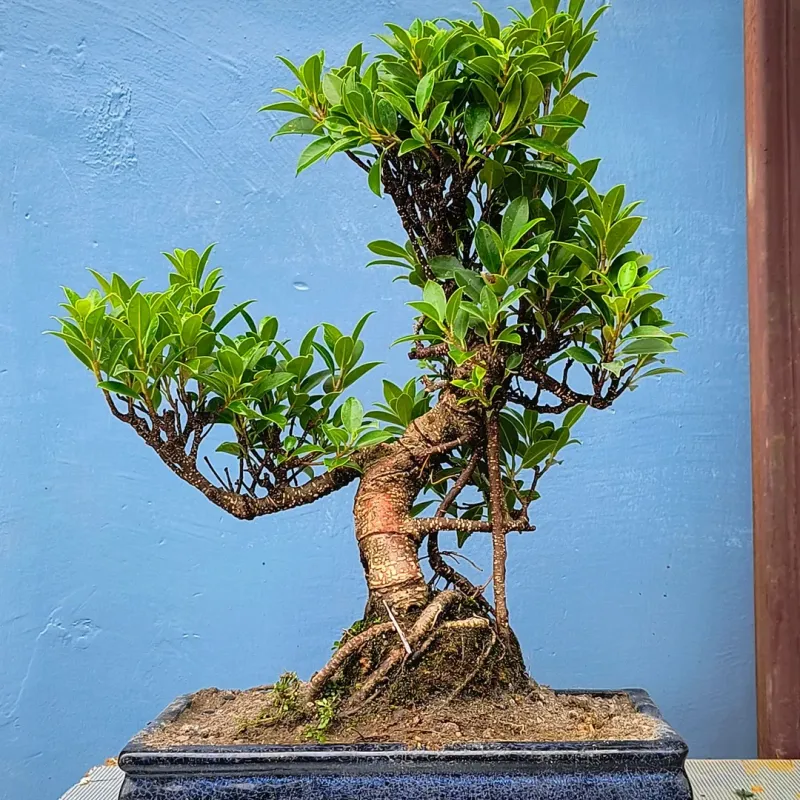
Ficus Retusa stands out as one of the most forgiving bonsai choices for beginners who want guaranteed success right from the start.
This tropical beauty adapts wonderfully to indoor environments across Texas, tolerating occasional watering mistakes that would harm more sensitive species.
Its glossy, dark green leaves create a lush canopy that responds beautifully to pruning and shaping throughout the growing season.
The aerial roots that develop over time add dramatic character, creating that ancient tree appearance bonsai enthusiasts cherish so deeply.
Temperature fluctuations common in Texas homes rarely bother this resilient plant, making it ideal for rooms with varying climate control.
Bright, indirect sunlight near a south-facing window provides perfect conditions without risking leaf burn during intense summer months.
Regular misting helps recreate the humidity this tropical native prefers, though it tolerates drier air better than most alternatives.
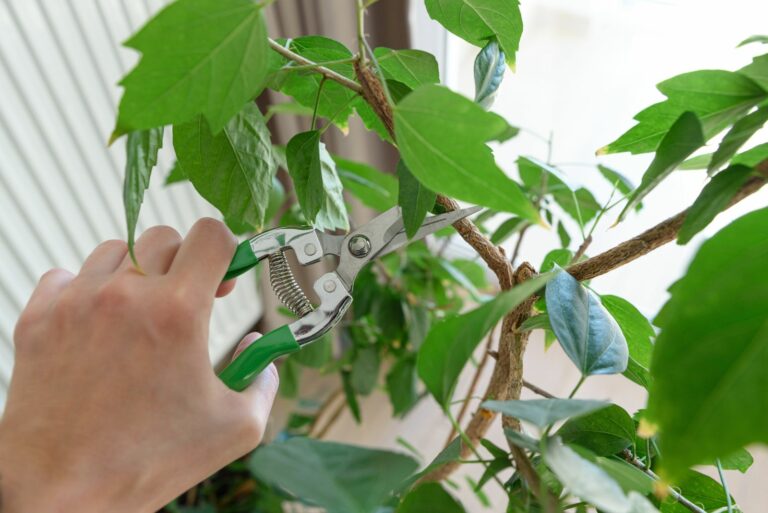
Pruning encourages dense foliage growth and helps maintain your desired shape, whether formal upright or cascading style appeals more.
Root pruning every two years keeps the plant healthy and proportional to its container size.
2. Chinese Elm
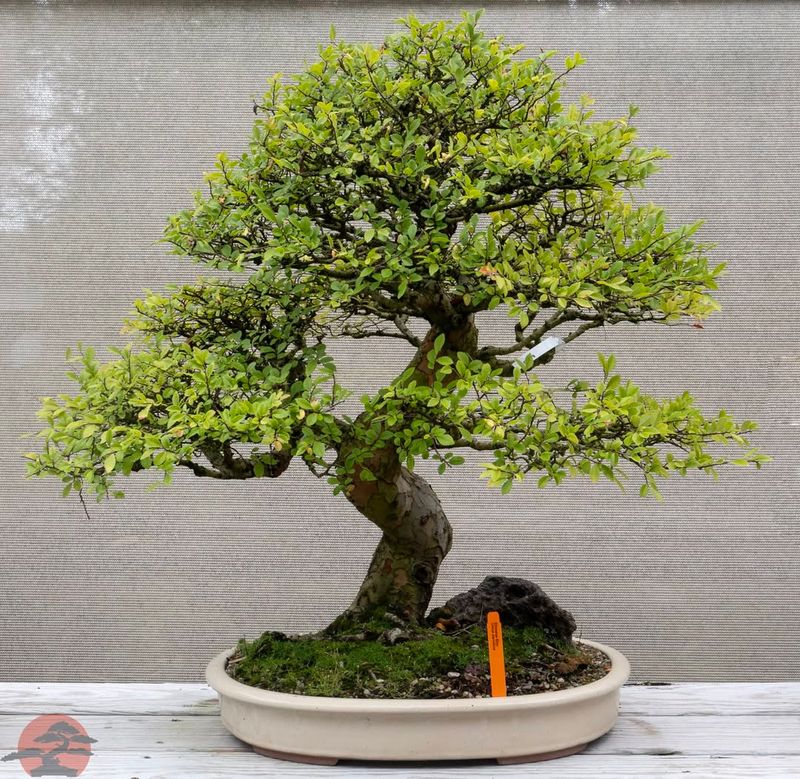
Few bonsai specimens match the Chinese Elm’s incredible versatility, thriving equally well indoors or outdoors depending on your living situation.
Tiny serrated leaves create delicate texture that looks stunning when the branching structure has been carefully developed over multiple growing seasons.
This species tolerates the dry indoor air common in air-conditioned Texas homes far better than many tropical alternatives require.
Fast growth means you’ll see visible results from your training efforts relatively quickly, providing satisfying feedback for your artistic efforts.
The bark develops beautiful mottled patterns as the tree matures, adding visual interest even during winter when deciduous varieties lose foliage.
Consistent watering keeps this plant happy, though it forgives brief dry periods better than constant overwatering that causes root problems.
Bright light conditions help maintain compact growth and prevent the leggy appearance that develops in darker corners of your home.
Wire training shapes branches effectively when applied during active growth periods, creating elegant curves and directional changes in the design.
Leaf pruning in summer encourages smaller foliage that looks more proportional to the miniature tree size.
3. Jade Plant
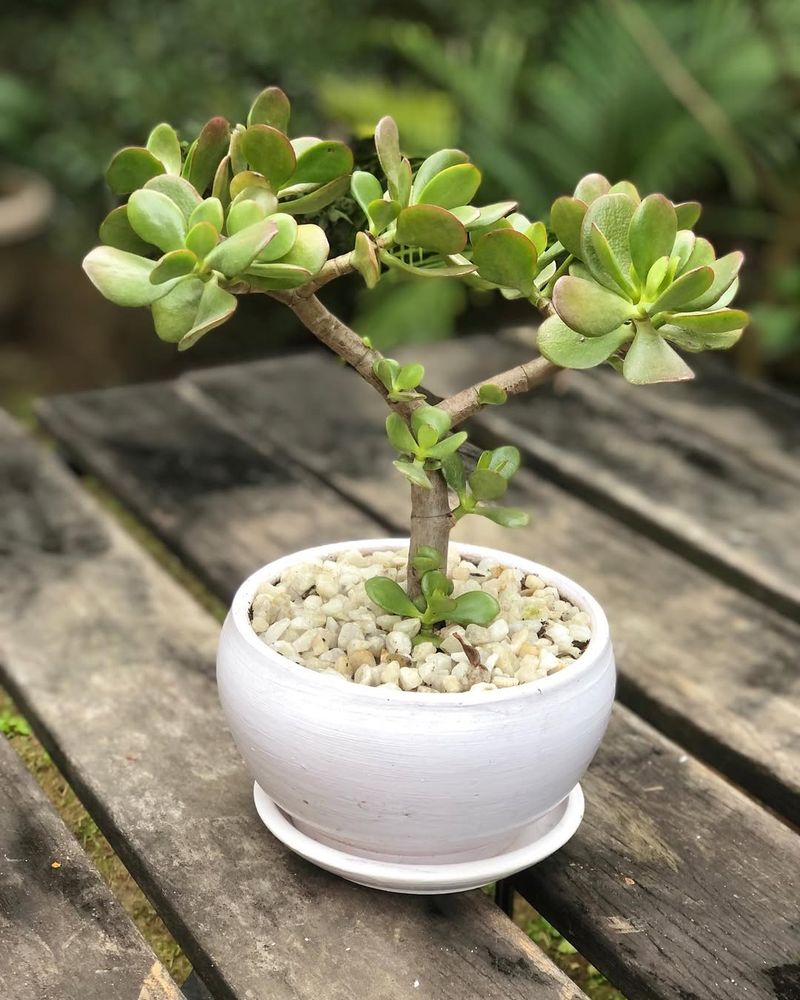
Succulent enthusiasts and bonsai lovers find common ground in the charming Jade Plant, which combines both hobbies into one delightful package.
Thick, fleshy leaves store water efficiently, making this plant exceptionally forgiving if you occasionally forget watering duties during busy weeks.
The trunk develops a wonderfully gnarled, ancient appearance much faster than traditional woody species, creating impressive visual impact in shorter timeframes.
Texas homes with abundant sunshine provide ideal conditions, as this sun-lover thrives in bright windows where other plants might struggle.
Minimal watering requirements during cooler months make winter care incredibly simple, requiring attention perhaps once every two weeks maximum.
The sculptural quality of mature specimens creates living art that complements modern and traditional interior design styles with equal effectiveness.
Small pink or white flowers occasionally appear on healthy plants, adding unexpected delicate beauty to the otherwise bold, architectural form.
Heavy pruning stimulates branching and creates the dense canopy structure that makes this plant look like a miniature ancient tree.
Well-draining soil prevents root rot, the primary threat to this otherwise nearly indestructible indoor bonsai candidate for Texas homes.
4. Fukien Tea
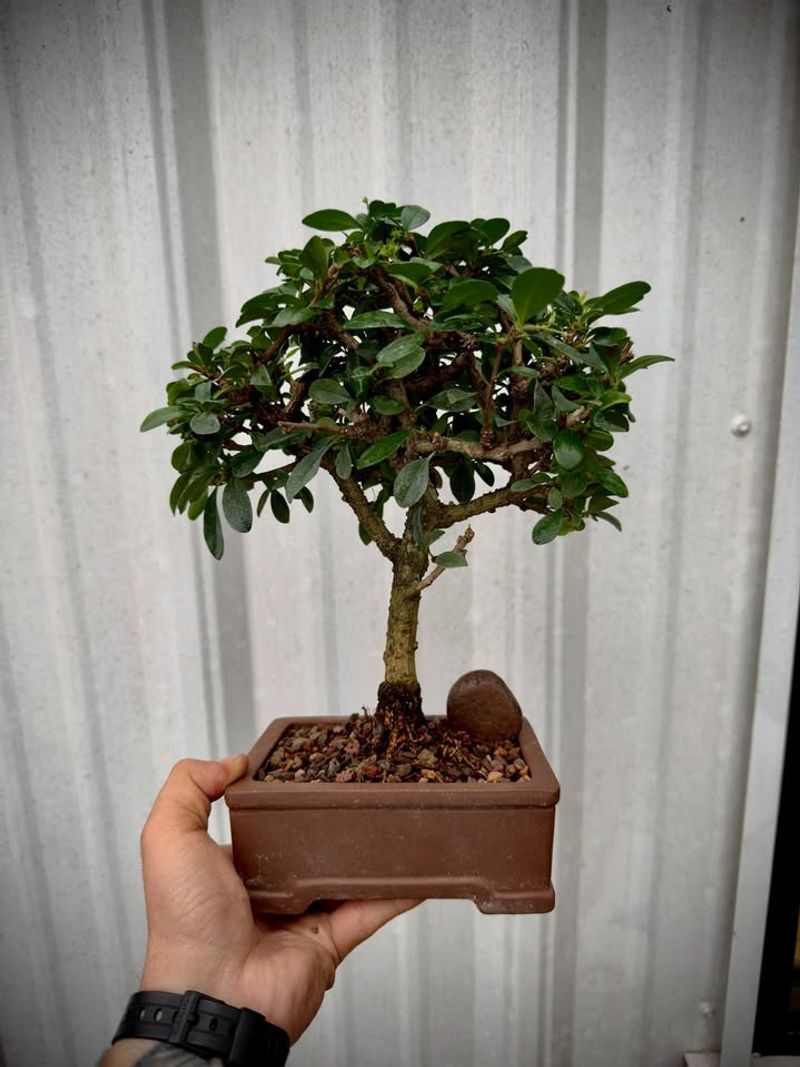
Delicate white flowers bloom sporadically throughout the year on Fukien Tea bonsai, creating moments of unexpected beauty that surprise and delight.
Small, dark green leaves with slightly rough texture create fine-scale foliage that looks perfectly proportioned even on compact specimens.
This tropical plant appreciates the warmth of heated Texas homes during winter, never requiring the cold dormancy period some species need.
Consistent care routines produce the best results, as this plant prefers stable conditions rather than dramatic environmental changes throughout seasons.
Bright, filtered light near eastern windows provides gentle morning sun without the harsh intensity of western afternoon exposure in summer.
The bark develops attractive light brown coloring and interesting texture as trunks mature, adding another layer of visual interest.
Regular fertilizing during growing months supports continuous growth and flower production, though lighter feeding than heavy-feeding species require works best.
Pruning after flowering cycles maintains shape while encouraging new growth that will produce future blooms for your ongoing enjoyment.
Higher humidity levels help this plant thrive, making bathroom or kitchen placement ideal if those spaces receive adequate natural light.
5. Brazilian Rain Tree
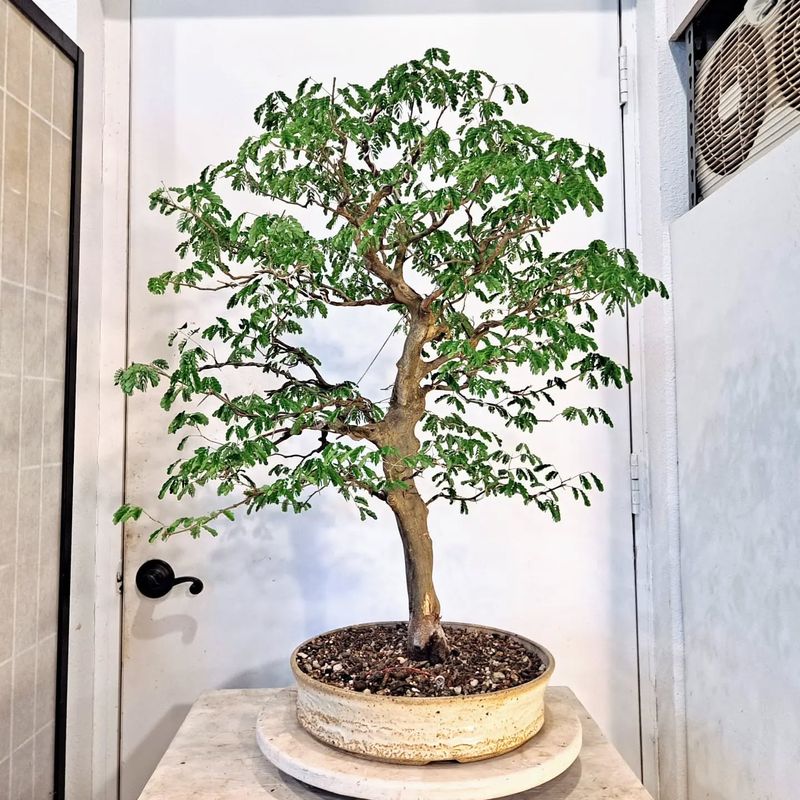
Watching the leaves fold closed each evening creates a fascinating daily ritual that makes the Brazilian Rain Tree feel almost magical.
Compound leaves create feathery texture that moves gracefully with air circulation, adding dynamic movement to your indoor plant collection’s otherwise static nature.
Small white puffball flowers appear periodically, followed by interesting seed pods that add seasonal variety to the plant’s appearance throughout years.
This tropical species loves the warmth Texas homes provide year-round, never complaining about summer heat that stresses cold-preferring plant varieties.
Bright light requirements mean placing this bonsai near your sunniest windows ensures healthy, compact growth rather than stretching toward light.
The responsive nature of the leaves provides immediate feedback about the plant’s happiness, closing during stress and opening wide when thriving.
Moderate watering keeps the soil consistently moist without becoming waterlogged, which damages the delicate root system over extended periods.
Branch structure develops beautifully with minimal intervention, though selective pruning enhances the natural grace this species displays so effortlessly.
The reddish-brown bark adds warm color tones that complement the soft green foliage, creating pleasing contrast in your overall design.
6. Dwarf Schefflera
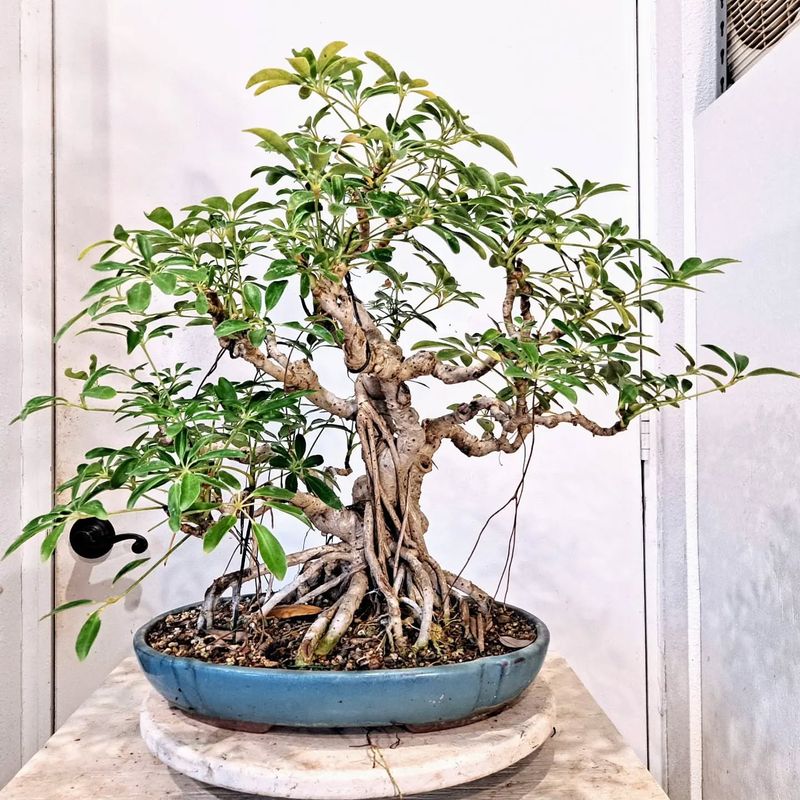
Umbrella-shaped leaf clusters give Dwarf Schefflera its common name and create instantly recognizable silhouettes that look fantastic in any room.
Tolerance for lower light conditions makes this species perfect for Texas homes where not every room receives abundant direct sunlight daily.
The trunk can be braided or twisted when young, creating unique sculptural forms that develop permanent character as wood hardens.
Fast growth provides quick satisfaction for impatient gardeners who want to see visible progress from their training and pruning efforts.
Aerial roots sometimes develop in humid conditions, adding the ancient tree appearance that makes bonsai specimens look like miniature versions of nature.
This plant bounces back from pruning mistakes quickly, making it forgiving for beginners still learning proper techniques and timing considerations.
Consistent moisture without waterlogging keeps roots healthy, though brief dry periods rarely cause permanent damage to established specimens.
The glossy leaves naturally repel dust better than fuzzy-leaved varieties, requiring less frequent cleaning to maintain their attractive appearance.
Multiple trunks can be planted together in one pot, creating forest-style compositions that suggest entire groves in miniature scale.
7. Desert Rose
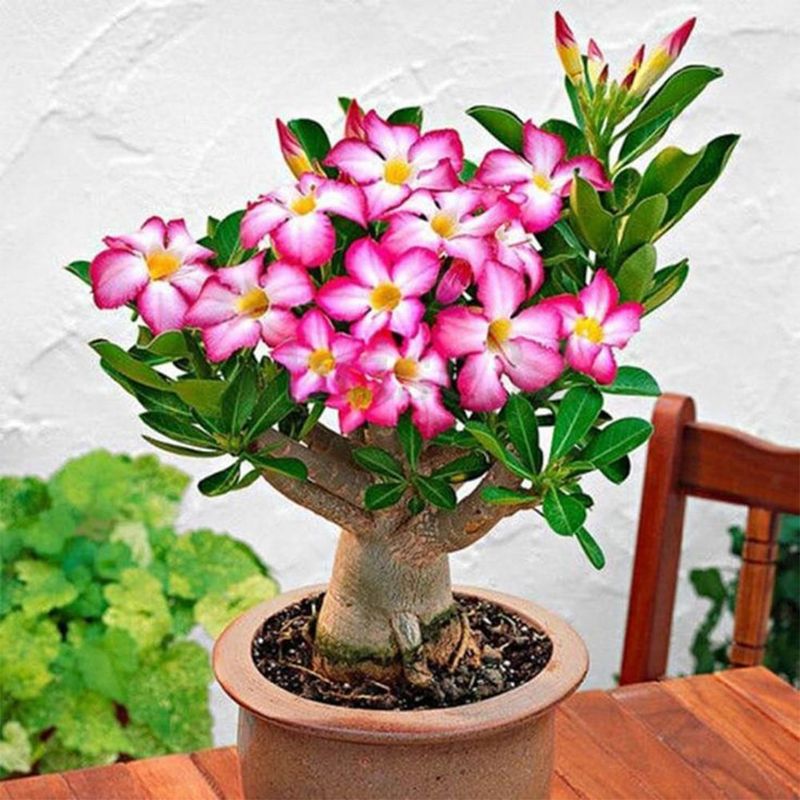
Spectacular trumpet-shaped blooms in shades of pink, red, or white make Desert Rose one of the most visually dramatic bonsai choices.
The swollen trunk base called a caudex creates instant visual impact, giving even young plants the appearance of ancient specimens.
This succulent adapts perfectly to Texas conditions, loving heat and tolerating the dry indoor air that challenges many tropical alternatives.
Minimal watering during cooler months makes winter care incredibly simple, as the plant enters semi-dormancy and requires little attention.
Bright, direct sunlight that would scorch sensitive plants provides exactly what Desert Rose needs for healthy growth and flowering.
The combination of dramatic flowers and sculptural trunk creates year-round interest, beautiful even when not currently blooming.
Well-draining soil prevents the root rot that poses the primary threat to this otherwise remarkably tough plant.
Pruning controls size and encourages branching, creating the full canopy appearance that makes specimens look like miniature trees.
The exotic appearance brings tropical vacation vibes to your Texas home, creating conversation pieces guests admire.
8. Serissa Japonica
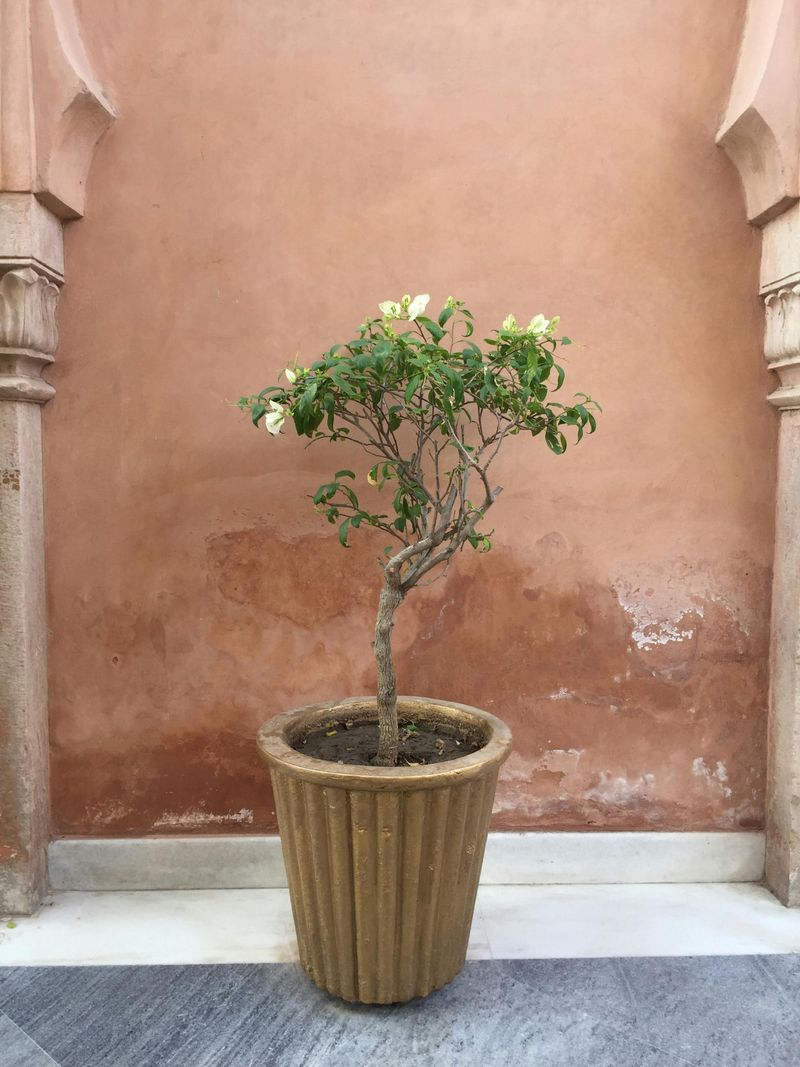
Tiny leaves and delicate white flowers earn Serissa the charming nickname Tree of a Thousand Stars when blooms cover branches.
The fine-textured foliage creates convincing miniature tree proportions even on relatively young specimens with limited trunk development so far.
This plant communicates clearly when unhappy by dropping leaves, teaching attentive owners to recognize and respond to its specific care needs.
Consistent conditions produce the best results, as Serissa dislikes dramatic changes in watering schedules, light exposure, or temperature fluctuations throughout seasons.
Bright, indirect light near windows provides ideal conditions, giving enough intensity without the harsh direct sun that causes leaf stress.
The bark develops attractive gray coloring and interesting texture relatively quickly compared to slower-developing species that take decades for character.
Higher humidity helps prevent the leaf drop this plant uses to express displeasure, making regular misting beneficial during dry periods.
Pruning after bloom cycles maintains compact shape while encouraging the dense branching structure that makes mature specimens look truly impressive.
Root pruning every couple years keeps the plant healthy and appropriately sized for its container, preventing the root-bound condition that stresses plants.
9. Dwarf Jade
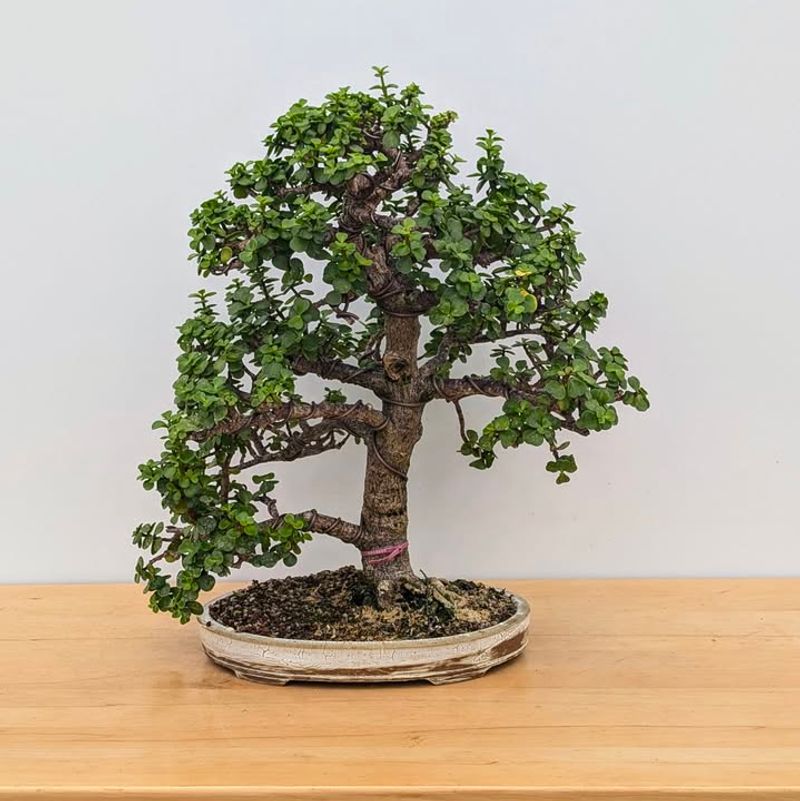
Smaller leaves than standard Jade Plants make Dwarf Jade look more proportional and refined on compact bonsai specimens you’re developing.
The succulent nature means forgiving care requirements that work perfectly for busy people who can’t maintain strict daily watering schedules.
Trunks develop wonderfully aged appearance surprisingly quickly, creating the illusion of ancient trees in just a few dedicated growing seasons.
Bright light requirements match perfectly with sunny Texas homes where large windows flood interior spaces with natural illumination throughout daytime hours.
The compact growth habit means less frequent pruning compared to faster-growing species that require constant attention to maintain desired shapes.
Reddish tinges develop on leaf edges when plants receive adequate bright light, adding beautiful color variation to the otherwise green foliage.
Minimal fertilizer needs make feeding simple, requiring only occasional applications during active growth periods rather than constant nutritional supplementation.
The architectural form looks stunning in modern minimalist settings or traditional spaces, adapting visually to various interior design aesthetics effortlessly.
Propagation from cuttings succeeds easily, allowing you to create multiple bonsai from one parent plant or share starts with friends.
10. Bougainvillea
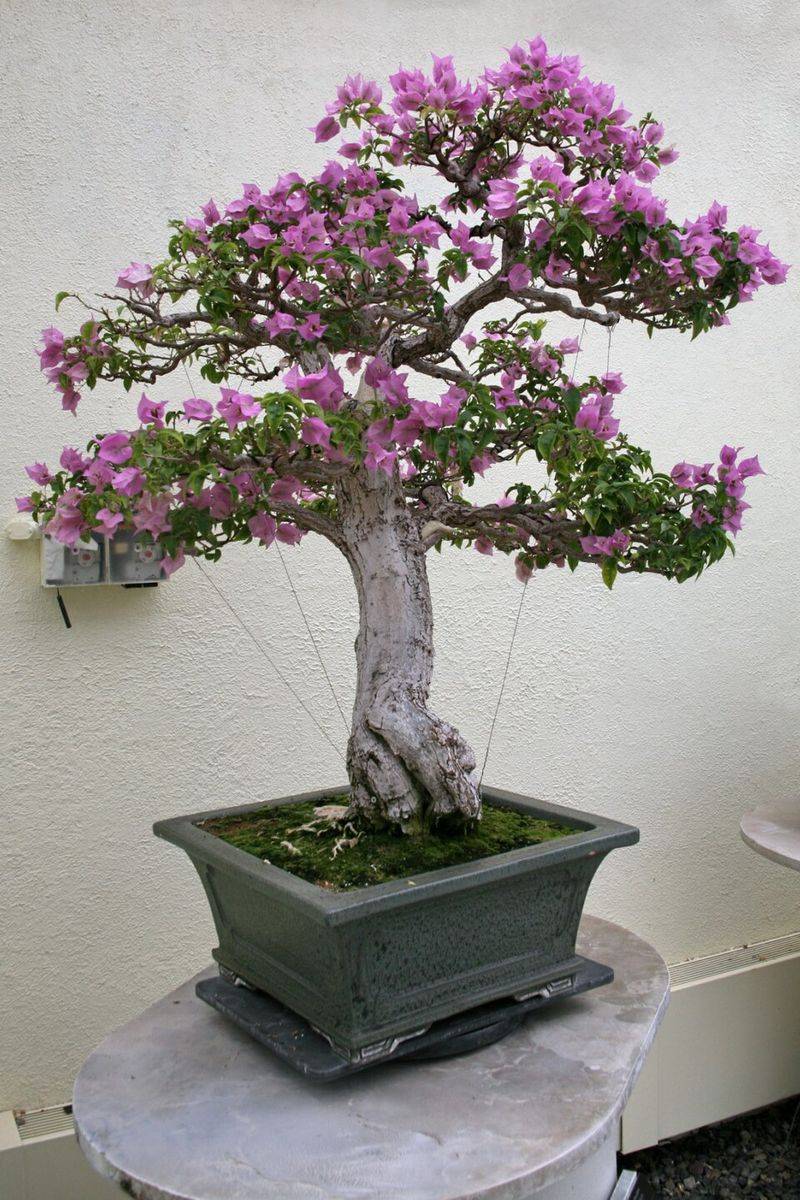
Vibrant papery bracts in electric pink, orange, red, or purple create stunning color displays that few other bonsai species can match.
This sun-loving plant thrives in the bright conditions Texas homes can provide, especially near south-facing windows or sunrooms with abundant exposure.
The dramatic color comes from modified leaves called bracts rather than true flowers, lasting much longer than typical blooms would.
Strong growth requires regular pruning to maintain bonsai proportions, but this also means you’ll see quick results from your training efforts.
The trunk develops interesting twisted character naturally, enhanced by selective pruning and wire training during appropriate growth phases throughout seasons.
Thorns on branches add authentic tree-like character, though they require careful handling during maintenance and styling work on specimens.
Bright light intensity directly correlates with bract color vibrancy, so the sunniest possible location produces the most spectacular visual displays.
Moderate watering during active growth transitions to reduced watering in cooler months when the plant rests and requires less frequent attention.
The tropical appearance brings vacation-like ambiance to your Texas home, creating focal points that draw the eye and spark conversations consistently.
11. Natal Plum
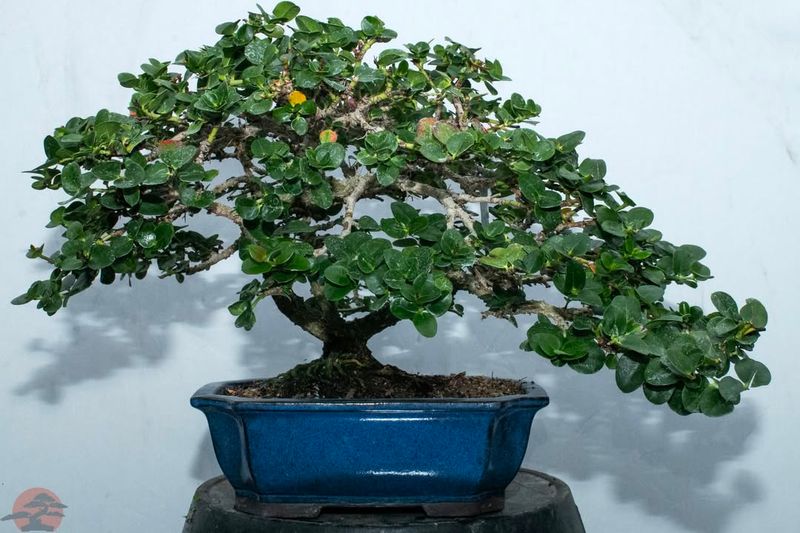
Fragrant white flowers and edible red fruits make Natal Plum a multi-sensory bonsai experience that engages more than just visual appreciation.
Glossy, dark green leaves create lush foliage that looks healthy and vibrant year-round in the stable indoor conditions Texas homes provide.
The fruits develop after flowering, adding unexpected color and interest that most traditional bonsai species never provide to their owners.
This plant tolerates pruning exceptionally well, bouncing back quickly from aggressive shaping that would set back more sensitive species for months.
Bright light encourages both flowering and fruiting, making sunny window placement essential for experiencing the full potential this species offers.
The compact growth habit means less frequent intervention compared to vigorous growers that constantly push beyond their designated boundaries in containers.
Moderate watering requirements fall between drought-tolerant succulents and water-loving tropical species, making care schedules relatively straightforward and manageable for beginners.
The trunk develops attractive bark texture as it matures, adding visual interest even when the plant isn’t currently flowering or fruiting.
The sweet fragrance from blooms fills nearby rooms, creating pleasant aromatic experiences that most bonsai specimens cannot provide to their caretakers.
12. Portulacaria Afra
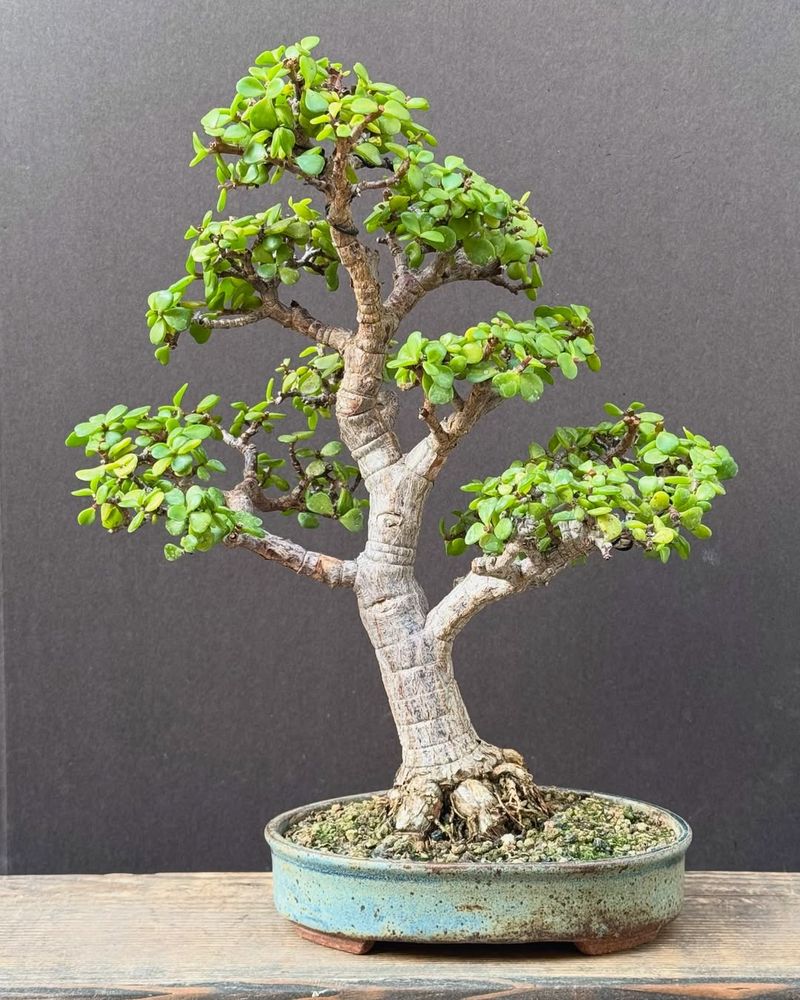
Commonly called Elephant Bush, this succulent creates convincing miniature tree illusions with remarkably little effort from even novice bonsai practitioners.
Small, round leaves on reddish stems create fine texture that looks perfectly scaled on compact specimens you’re training and developing.
The succulent nature means exceptional drought tolerance, forgiving occasional watering lapses that would severely stress non-succulent species in similar conditions.
Fast growth provides quick satisfaction, allowing you to see visible results from pruning and training efforts within single growing seasons.
Bright light keeps growth compact and prevents the leggy stretching that develops when this sun-lover receives insufficient illumination daily.
The plant propagates incredibly easily from cuttings, allowing you to experiment with different styles or share starts with fellow enthusiasts.
Variegated varieties with cream and green leaves add extra visual interest, creating specimens that look ornamental even without traditional flowering displays.
Minimal fertilizer requirements make feeding simple, requiring only occasional applications rather than the constant nutritional supplementation some species demand.
The informal upright style suits this plant naturally, though creative training can achieve various traditional bonsai forms with patient effort over time.