7 “It” Plants Every Florida Gardener Is Choosing For A No-Fuss Yard In 2026
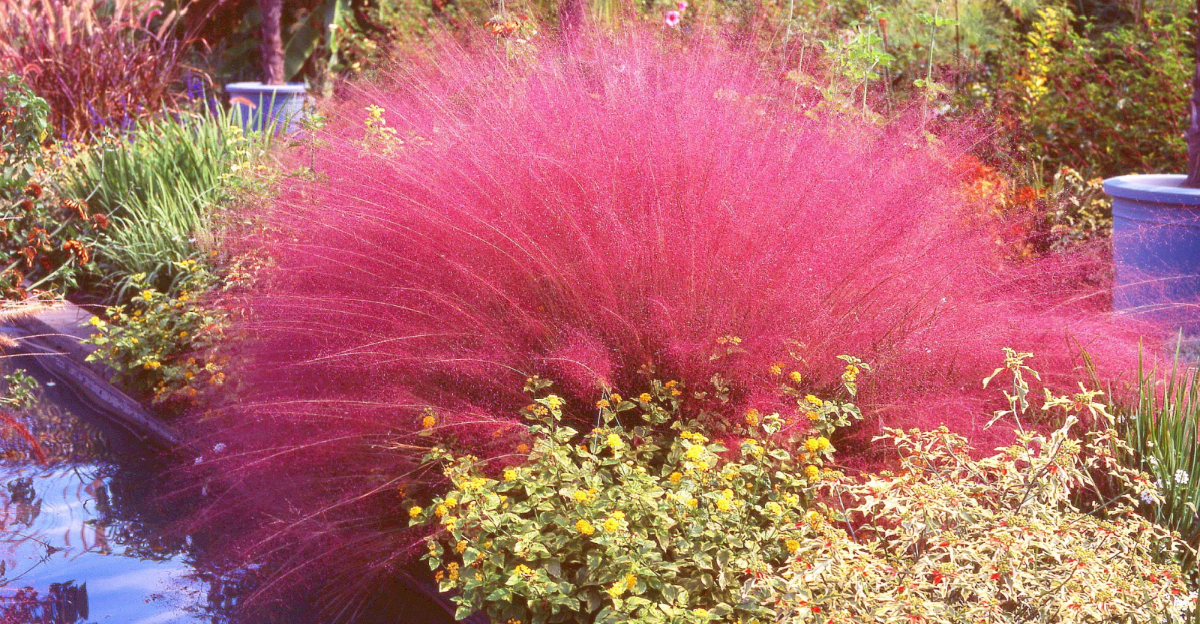
Florida yards shift fast in 2026, and smart gardeners chase beauty without hassle. Heat, salt, sudden rain, and sandy soil push weak plants out, yet a fresh wave of tough stars rises.
Landscapes glow with bold color, lush texture, and year round life while care stays simple and water bills stay low. Homeowners want curb appeal that survives storms, sun, and busy schedules, so they choose proven winners that thrive on neglect.
From vibrant bloomers to sculptural greens, this new class of favorites turns plain spaces into tropical showcases with almost no effort.
Social feeds buzz with before and after photos, neighbors stop to ask plant names, and local nurseries struggle to keep stock.
One smart switch can refresh an entire yard, boost value, and cut weekend chores. Meet the breakout choices set to dominate Florida gardens this year.
1. Coontie Thrives With Almost No Care
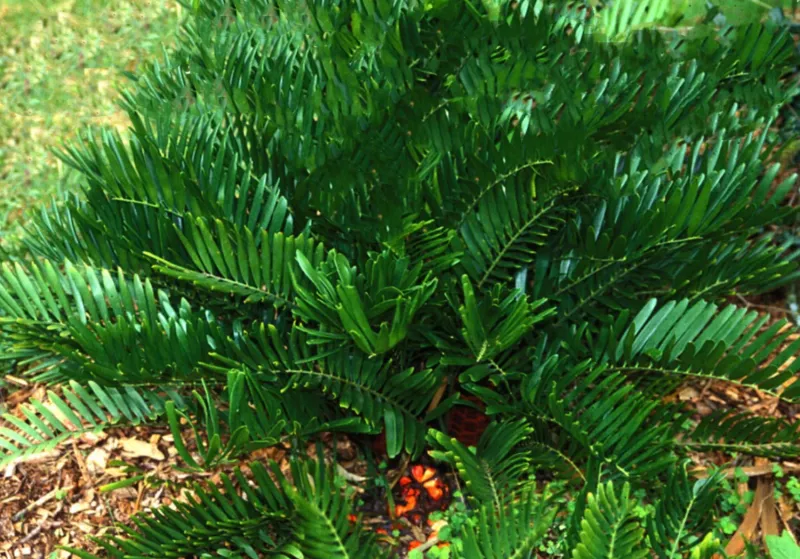
Gardeners who want a plant that practically takes care of itself keep coming back to coontie, Florida’s only native cycad. This ancient-looking beauty has been growing here longer than any of us, which means it already knows how to handle everything our climate throws at it.
Those glossy, feather-like fronds stay green year-round without demanding weekly attention or special soil amendments.
Coontie tolerates partial shade under oak canopies and performs best in filtered sun or light shade. Once established, it is highly drought tolerant and often requires little supplemental irrigation.
University of Florida IFAS Extension consistently recommends coontie in native plant guides because it supports the rare Atala butterfly while resisting nearly every common pest and disease.
Plant coontie two to three feet apart in well-draining sandy soil, and you’ll barely need to touch it again. It grows slowly to about two feet tall and three feet wide, forming neat clumps that never need shearing or shaping.
No fertilizer schedule, no complicated care routine, just a tough Florida native that looks polished without any fuss. Homeowners from Jacksonville to Miami are using it as foundation plantings, border edgings, and even container specimens because it delivers consistent beauty with almost zero maintenance.
2. Muhly Grass Turns Heads Every Fall
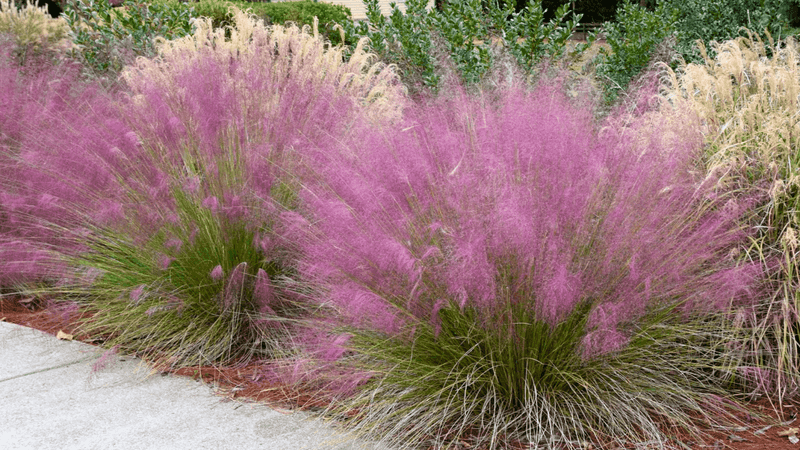
Nothing announces fall in Florida quite like muhly grass exploding into clouds of pink that seem to float above the landscape. While northern states get colorful leaves, we get these stunning plumes that glow in the afternoon sun from September through November.
Landscape designers have made muhly grass their secret weapon for adding seasonal drama without creating extra work.
This Florida native thrives in our sandy soils and laughs at drought once its roots settle in. Muhly grass needs virtually no irrigation after the first growing season, making it ideal for spots where you’d rather not drag hoses.
It grows in neat, fountain-like clumps about three feet tall and wide, staying tidy without constant trimming or edging.
University of Florida research shows muhly grass performs best in full sun with excellent drainage, which describes most Florida yards perfectly. Plant clumps three to four feet apart for a mass effect that really showcases those pink blooms.
It remains semi-evergreen in Central and South Florida, though it may brown slightly after frost in North Florida. In late winter, cut it back to a few inches before new growth starts.
That’s the entire maintenance schedule. Homeowners who install muhly grass along driveways, in parking strips, or as border plantings get maximum visual impact with minimal effort, which is exactly what 2026 gardening is all about.
3. Saw Palmetto Handles Heat And Drought Easily
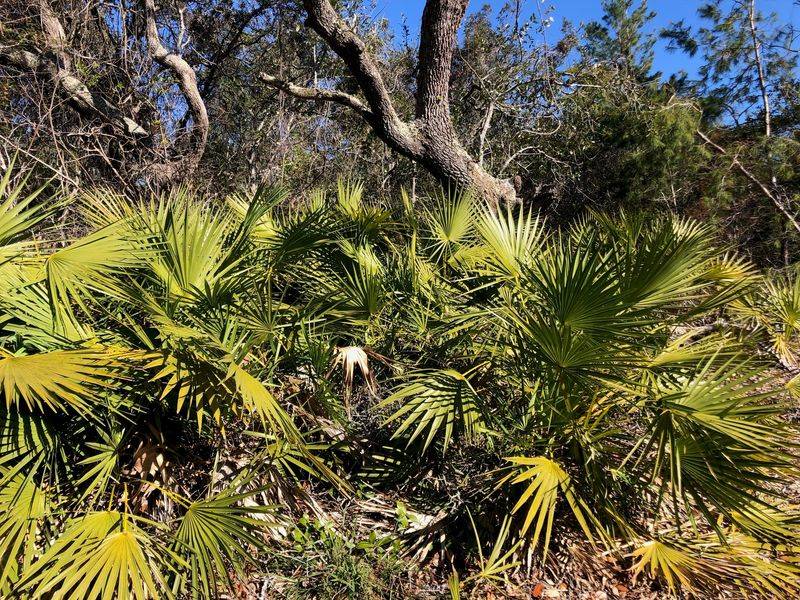
Few plants embody Florida toughness quite like saw palmetto, the scrappy native that survives hurricanes, wildfires, and months without rain. Those fan-shaped fronds might look delicate, but they’re built to handle whatever nature delivers.
Gardeners who want genuine resilience without babying their plants are rediscovering this Florida icon.
Saw palmetto grows naturally from the Panhandle to the Keys, which tells you everything about its adaptability. It tolerates full sun, partial shade, wet soils, dry soils, and coastal salt spray without missing a beat.
Once established, it needs zero supplemental watering even during our driest springs. University of Florida IFAS Extension promotes saw palmetto as a cornerstone of Florida-Friendly landscapes because it provides critical habitat for native wildlife while requiring almost no resources.
This palm typically stays low and spreading, growing three to six feet tall and wide, though it can be pruned to maintain a smaller footprint. Plant saw palmetto as a foundation shrub, use it for erosion control on slopes, or mass it as a groundcover that nothing else can match for durability.
It produces fragrant white flowers in spring followed by dark berries that feed birds and small mammals. The maintenance requirement?
Basically none. Just let it grow and watch it thrive year after year, looking better than most plants that demand ten times the attention.
4. Firebush Hummingbirds Absolutely Love
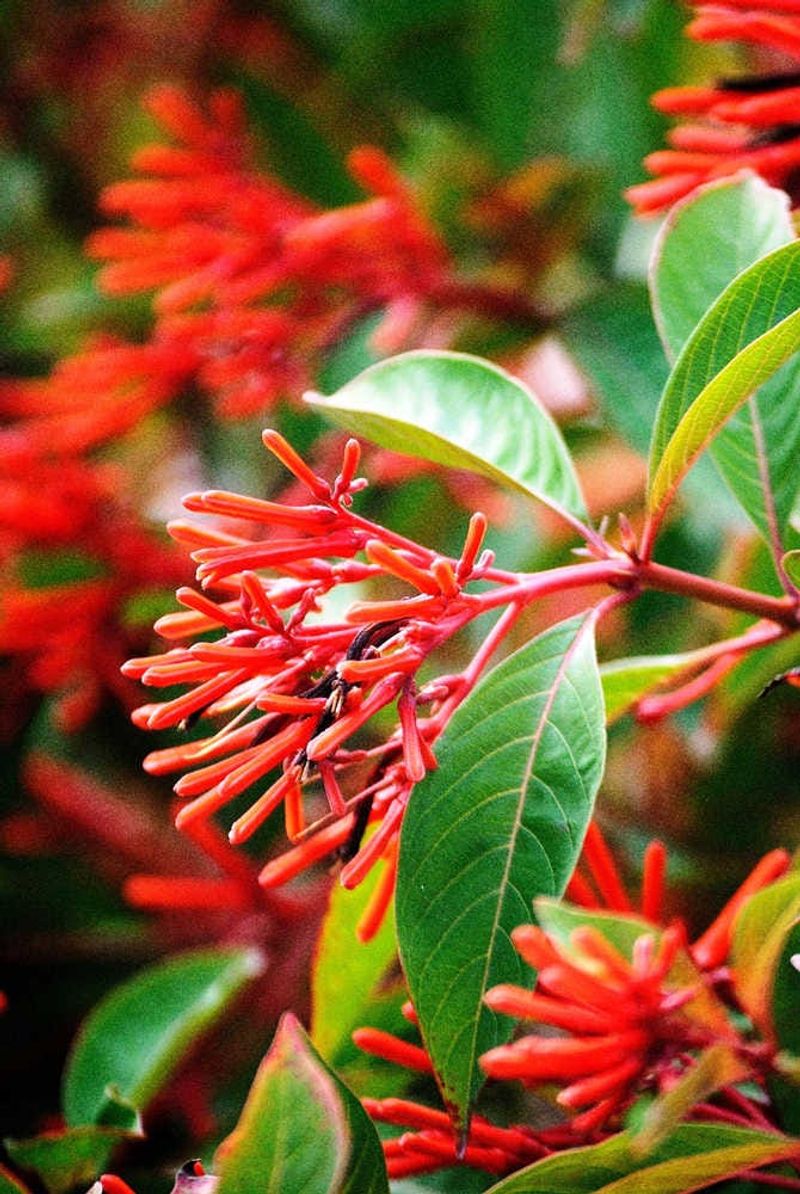
Watch a firebush for five minutes during summer and you’ll understand why it’s become essential in Florida yards. Hummingbirds, butterflies, and native bees visit constantly, drawn to those tubular orange-red flowers that bloom nonstop from spring through fall.
Gardeners who want wildlife action without complicated care routines are planting firebush everywhere.
This Florida native handles our brutal summer heat better than almost any flowering shrub, actually blooming harder when temperatures soar into the nineties. Firebush tolerates sandy soils, occasional flooding, and drought conditions once established, making it remarkably forgiving for beginners.
University of Florida Extension recommends it specifically for pollinator gardens and Florida-Friendly landscapes because it delivers ecological benefits while staying low-maintenance.
Firebush grows quickly to six feet tall and wide in South Florida, though it stays smaller in Central and North Florida where occasional freezes knock it back. Don’t worry when cold snaps cause some foliage loss, because firebush rebounds vigorously from the roots once warm weather returns.
Plant it in full to partial sun with decent drainage, and you’ll get continuous flowers with minimal intervention. Water it occasionally during establishment, then let nature take over.
No fertilizer schedule needed, no pest problems to manage, just reliable color and constant pollinator activity. That combination of beauty and toughness explains why firebush sales keep climbing across Florida.
5. Simpson’s Stopper Stays Neat Year Round
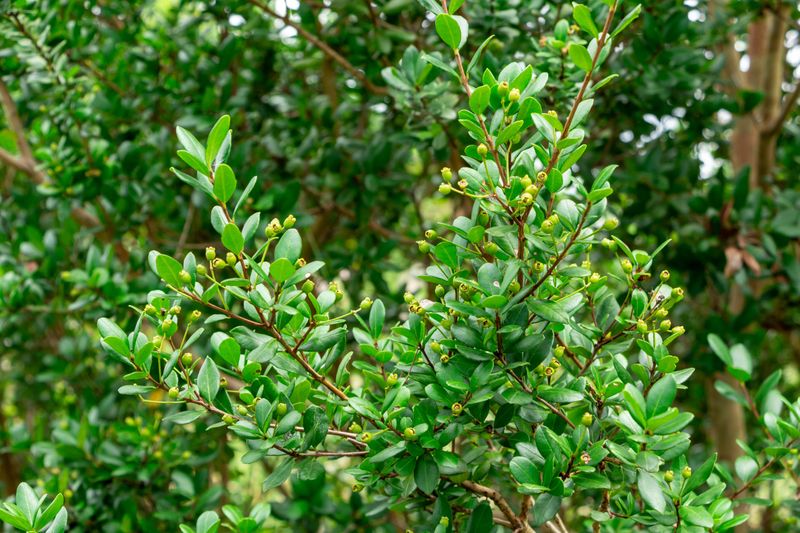
Homeowners tired of constant hedge trimming and messy shrubs are turning to Simpson’s stopper for its naturally tidy growth and year-round good looks. This Florida native evergreen maintains a dense, compact form without the weekly shearing that other hedge plants demand.
Those small, glossy leaves stay attractive through every season, and the plant never looks ragged or overgrown.
Simpson’s stopper adapts to full sun or partial shade and tolerates a wide range of soil conditions across Florida. It handles our summer heat and humidity without developing the fungal problems that plague non-native shrubs.
University of Florida IFAS Extension lists Simpson’s stopper as an excellent choice for formal hedges, privacy screens, and foundation plantings because it delivers structure and reliability with minimal inputs.
This native shrub typically grows six to fifteen feet tall depending on variety and pruning, making it versatile for different landscape needs. Plant Simpson’s stopper three to four feet apart for hedges, or give single specimens more room to develop their natural rounded form.
It produces fragrant white flowers in spring followed by orange-red berries that birds devour. The maintenance routine involves occasional shaping if you want a formal look, but even without pruning, Simpson’s stopper maintains a naturally neat appearance.
Water it during establishment, then let rainfall handle irrigation. No fertilizer required, no pest spraying needed, just consistent evergreen beauty that makes your yard look polished with almost zero effort on your part.
6. Blanket Flower Blooms Through Heat And Drought
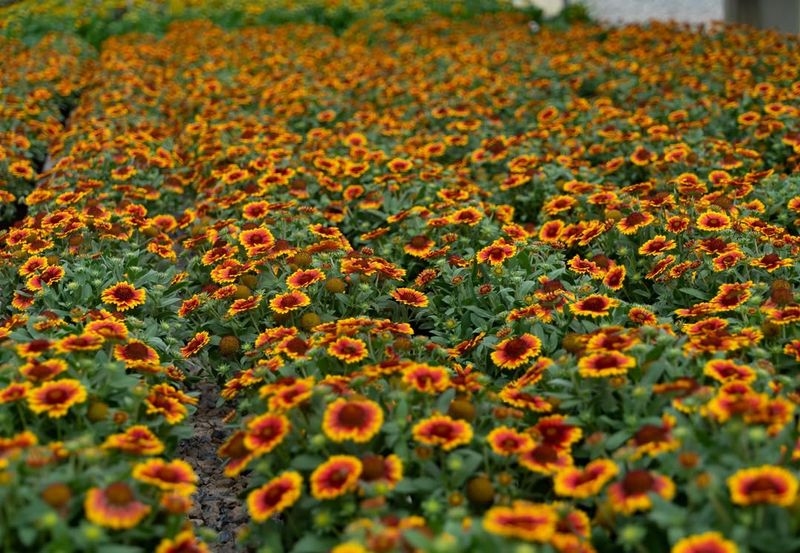
Most flowering perennials sulk during Florida summers, but blanket flower keeps pumping out cheerful red and yellow blooms even when temperatures hit triple digits. Those daisy-like flowers appear nonstop from spring through fall, providing reliable color when other plants have given up.
Gardeners who want continuous blooms without constant deadheading and fertilizing are making blanket flower a staple.
This Florida native thrives in our sandy soils and actually prefers the lean, well-drained conditions that many landscapes offer naturally. Blanket flower needs full sun and excellent drainage but tolerates drought, salt spray, and neglect better than most flowering plants.
UF IFAS guidance notes show that native Florida ecotypes of blanket flower outperform cultivated varieties in heat tolerance and longevity, making them the smart choice for our climate.
Plant blanket flower in masses for maximum impact, spacing plants twelve to eighteen inches apart in areas that receive at least six hours of direct sun. Once established, it needs almost no supplemental watering and actually performs poorly with excessive irrigation or fertilization.
The plants grow about twelve to eighteen inches tall, forming loose clumps that spread gradually. Occasional grooming to remove spent flowers extends the bloom period, but blanket flower continues flowering even without deadheading.
No pest problems, no disease issues, no complicated care schedule. Just vibrant, long-lasting color that handles Florida conditions better than most garden center annuals while coming back year after year.
7. Blue Daze Flowers With Hardly Any Effort
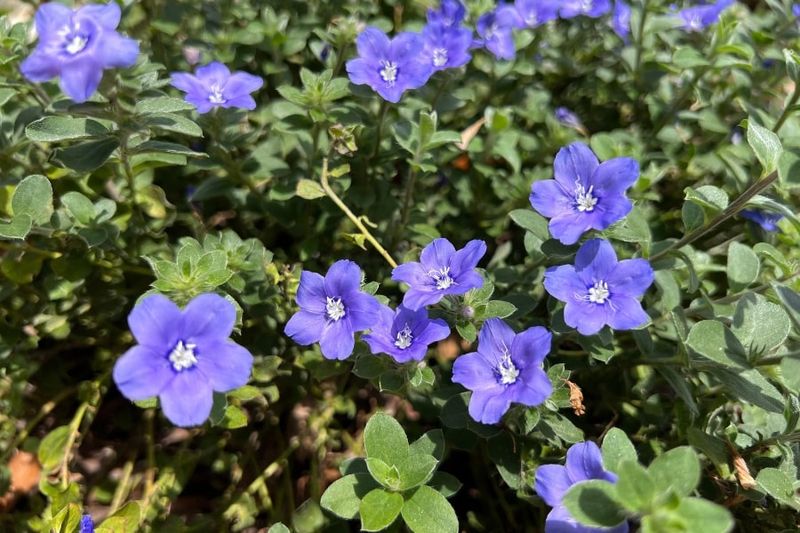
Those sky-blue flowers opening fresh each morning have made blue daze a favorite for Florida gardeners who want color without constant maintenance. This low-growing groundcover spreads into neat mounds that stay under twelve inches tall, creating living carpets of silver-green foliage topped with cheerful blue blooms.
Landscape designers use blue daze to soften hardscapes and fill spaces where grass struggles.
Blue daze handles Florida heat remarkably well, continuing to flower through our toughest summer months when many annuals look exhausted. It tolerates sandy soils, occasional drought, and full sun exposure without demanding weekly attention.
Once established, blue daze needs minimal watering and no fertilizer to maintain steady growth and flowering. It is often used in low-water Florida landscapes due to its heat and drought tolerance. because it delivers big visual impact with modest resource requirements.
Plant blue daze in full sun with good drainage, spacing plants eighteen to twenty-four inches apart for groundcover effect. It works beautifully in containers, as border edgings, or cascading over retaining walls where its trailing habit shows off those abundant flowers.
Blue daze naturally stays compact without requiring regular pruning or shaping. Water it during establishment, then reduce irrigation to occasional deep soaking during extended dry periods.
That’s the entire care routine. No pest problems, no disease concerns, just reliable blue flowers and tidy growth that makes your Florida landscape look intentional and well-maintained with almost no effort required from you.