7 Low-Maintenance Climbing Plants Perfect For Texas Gardens
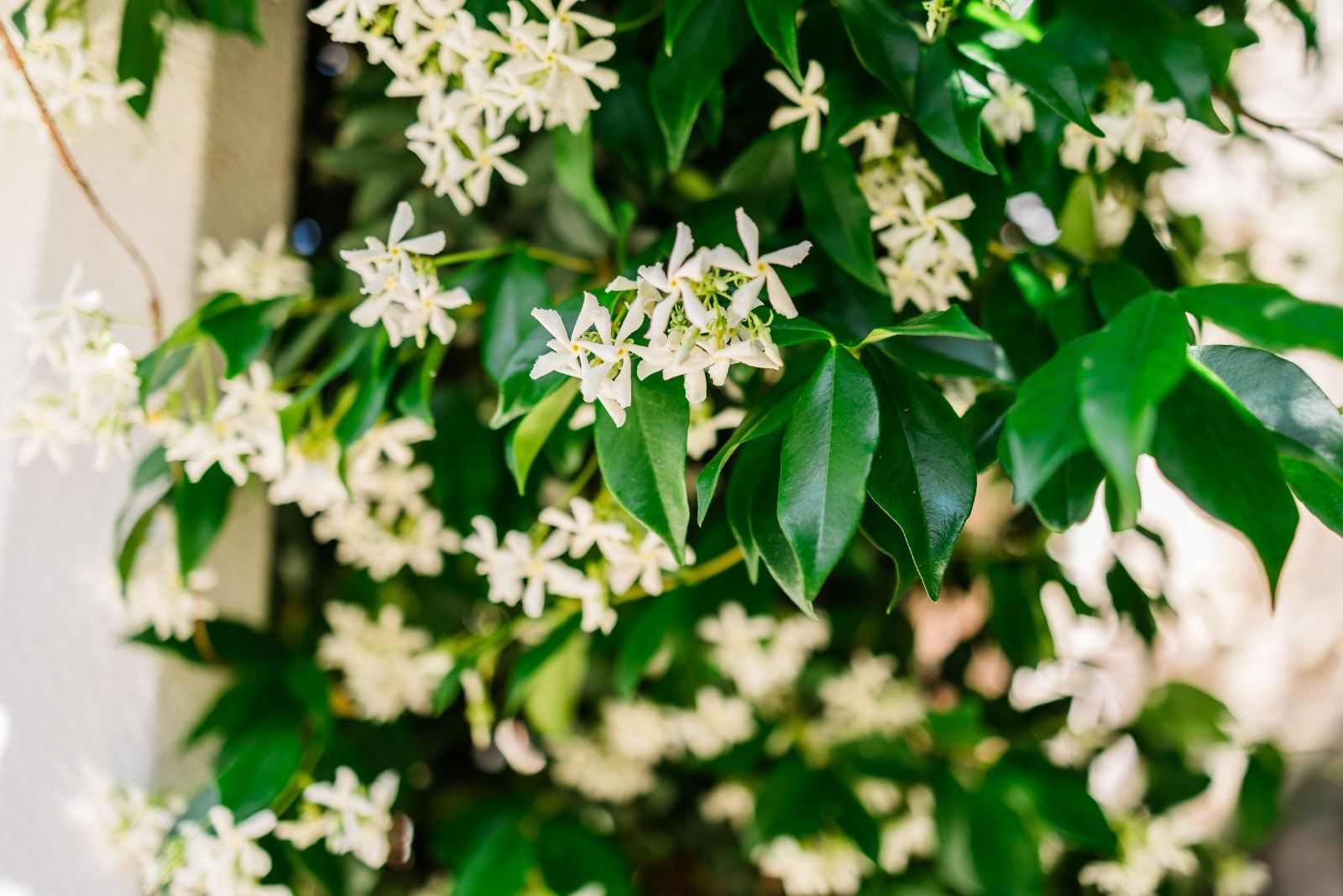
Not every gardener has time to fuss over plants that need constant care. In Texas, where the sun can be intense and the growing season stretches for months, many people look for plants that can thrive without a lot of attention.
Climbing plants are a great option, especially when you want to add height, greenery, and color to your yard without filling every inch of ground space.
These plants have a natural talent for turning ordinary structures into something special. Give them a fence, trellis, or arbor, and they will happily climb their way upward, creating a living wall of foliage or flowers.
Some varieties even attract butterflies and hummingbirds, bringing more life into the garden.
The best part is that many climbing plants handle Texas heat surprisingly well. Once established, they grow steadily with minimal effort.
With the right choices, you can enjoy a lush, vibrant garden feature that looks impressive without demanding much of your time.
1. Star Jasmine (Trachelospermum Jasminoides)
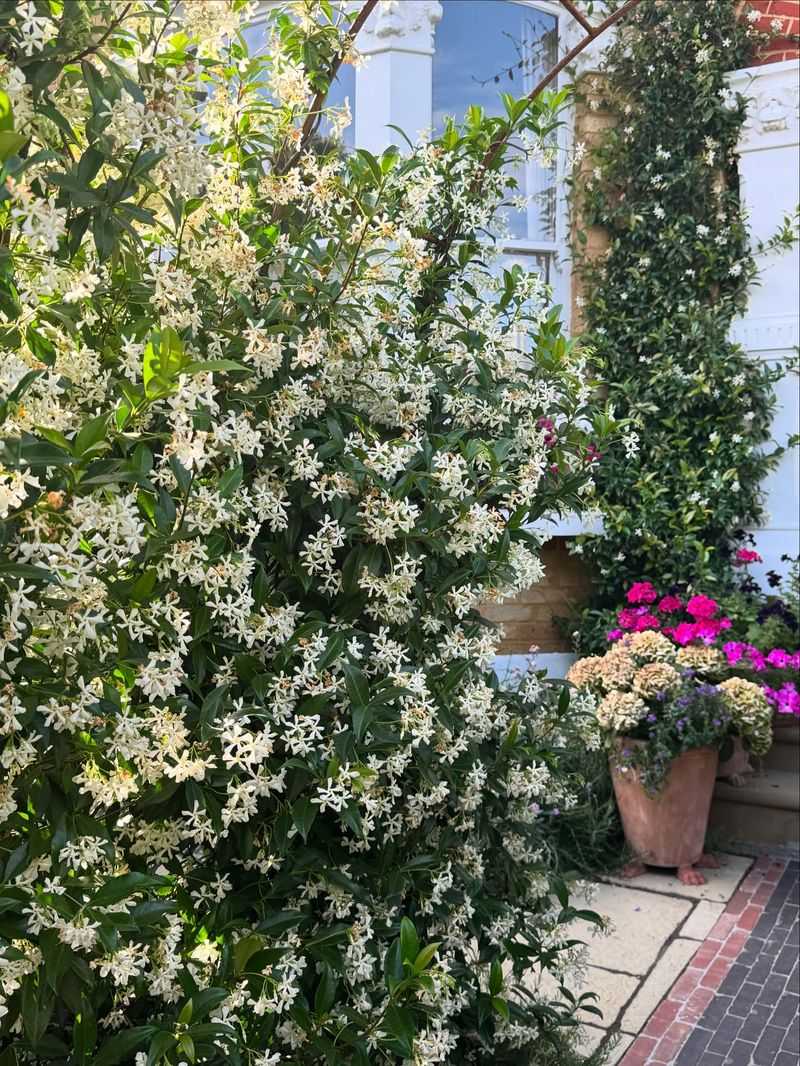
Walk past a blooming Star Jasmine on a warm Texas evening and you will immediately understand why it is one of the most popular vines in the state.
The small white star-shaped flowers release a sweet, rich fragrance that fills the air and turns a simple backyard into something special. It is the kind of scent that makes you stop whatever you are doing and just breathe.
Star Jasmine is an evergreen vine, meaning it keeps its glossy dark green leaves all year long. Even when it is not blooming, it looks polished and attractive on a trellis, fence, or arbor.
That year-round good appearance is one of the reasons Texas homeowners plant it so often along entryways and outdoor living spaces.
Blooming season runs from late spring into early summer in most Texas locations, and a mature plant in full flower is covered in hundreds of tiny blooms. It grows well in full sun or partial shade, making it flexible enough to work in many different garden spots.
In hotter inland areas of Texas, a bit of afternoon shade actually helps the plant look its best through the summer.
Once established, Star Jasmine is quite drought tolerant and needs only occasional watering during long dry stretches. It grows at a moderate pace, which means it fills in nicely without becoming overwhelming or aggressive.
Light trimming after blooming keeps the shape neat and encourages fuller growth. For a fragrant, beautiful, and easy-care climber that performs reliably in Texas gardens, Star Jasmine is a top-tier choice.
2. Crossvine (Bignonia Capreolata)
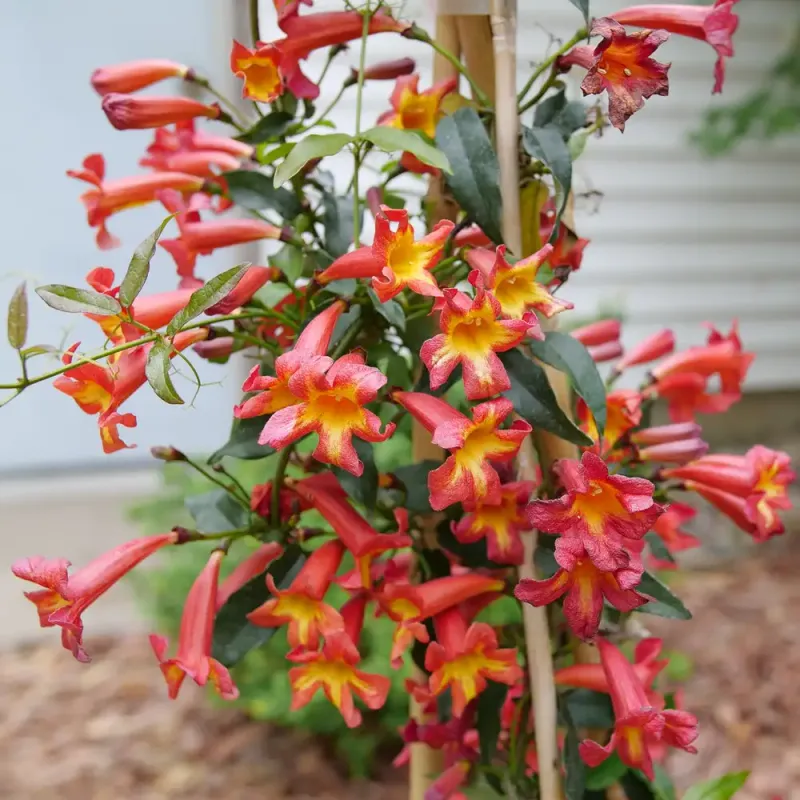
If you want a vine that hits the ground running, Crossvine is one of the best choices for Texas gardens.
This tough native climber can grow up to 50 feet long, making it perfect for covering fences, arbors, and pergolas fast. It attaches itself using sticky little tendrils, so it needs no help finding its way up a structure.
In spring, Crossvine bursts into a show of bright orange-red trumpet-shaped flowers that hummingbirds absolutely love. The blooms are bold and eye-catching, adding real color to the garden when many other plants are just waking up.
Some varieties even have a faint chocolate scent, which is a fun bonus for gardeners who get close enough to notice.
One of the best things about Crossvine in Texas is how well it handles heat and drought. Once it gets established, it rarely needs extra watering and can survive on rainfall alone in most parts of the state.
That makes it an ideal choice for busy homeowners who want beauty without a lot of effort.
Crossvine is semi-evergreen, meaning it holds onto most of its leaves through mild Texas winters. In colder northern parts of the state, it may drop some leaves, but it bounces back strong in spring.
Plant it in full sun to partial shade, give it something sturdy to climb, and enjoy years of low-maintenance color in your Texas landscape.
3. Coral Honeysuckle (Lonicera Sempervirens)
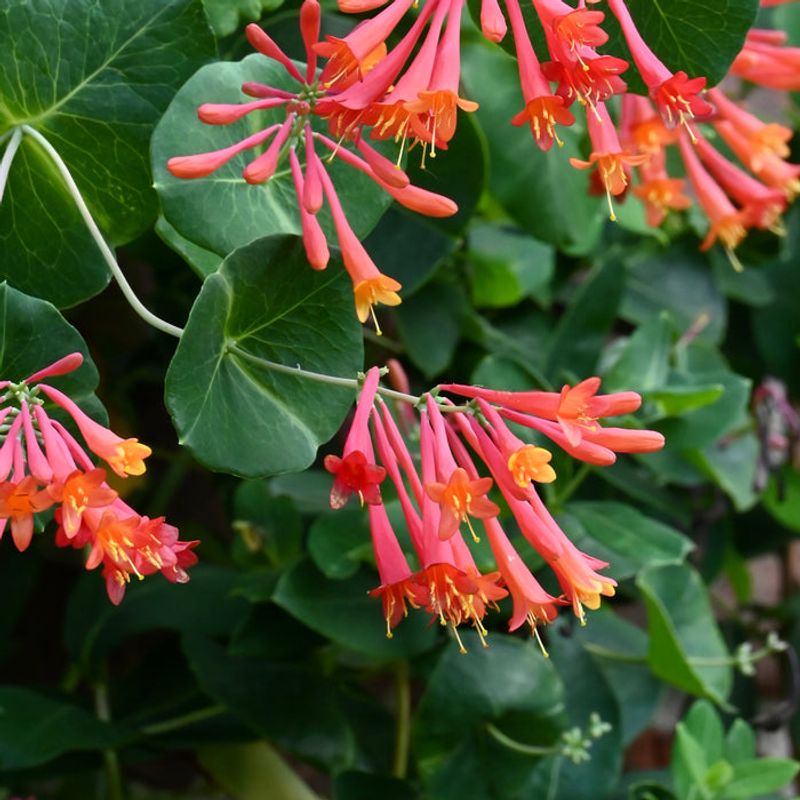
Not all honeysuckles are created equal, and Coral Honeysuckle proves that point beautifully. Unlike the invasive Japanese honeysuckle that can take over a yard, this native vine plays well with others and stays manageable.
It is a well-behaved climber that is a favorite among Texas gardeners who want color without chaos.
The flowers are stunning red tubes with golden yellow interiors, and they bloom from spring all the way through fall in many Texas locations. Hummingbirds are wild about these blooms and will visit your garden regularly once this vine gets growing.
Butterflies and native bees also appreciate the nectar, making it a great plant for supporting local wildlife.
Coral Honeysuckle is naturally disease resistant, which is a huge plus in humid parts of East Texas where fungal problems can be a headache.
It grows well in full sun or partial shade, so it works in a variety of garden spots. Give it a trellis, fence, or mailbox post and watch it climb with almost no help from you.
Watering needs are minimal once the plant is established, and it handles the dry stretches that Texas summers are known for. Pruning is optional, though a light trim after the main bloom season helps keep the shape tidy.
Coral Honeysuckle is truly one of those plants that rewards you with beauty while asking for very little in return, making it a standout choice for low-maintenance Texas landscapes.
4. Carolina Jessamine (Gelsemium Sempervirens)
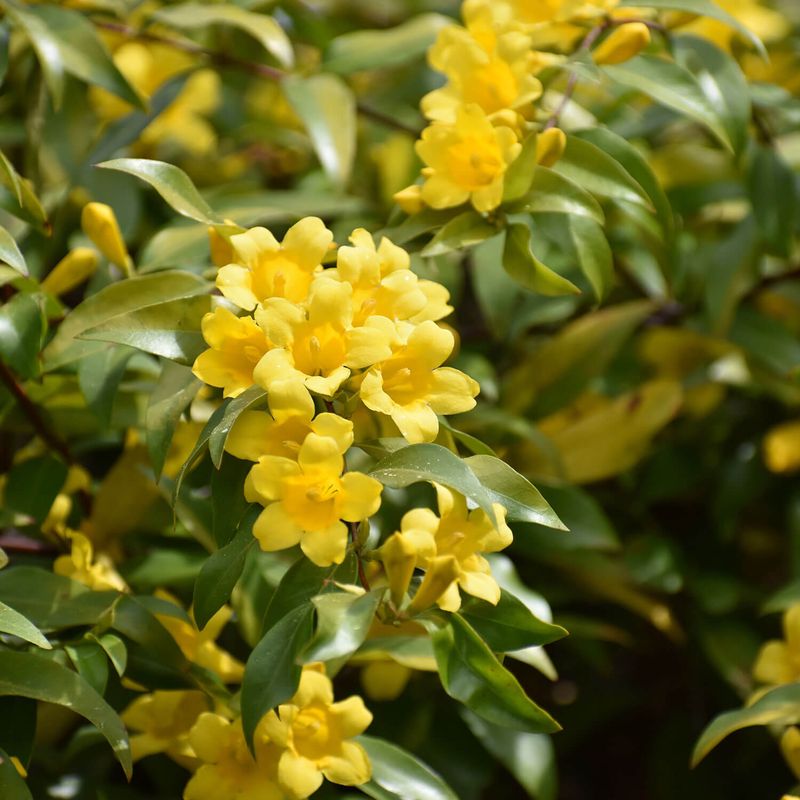
There is something magical about stepping outside in late winter and finding a vine already covered in cheerful yellow blooms. Carolina Jessamine does exactly that, often flowering in February or March when most of the garden is still bare.
It is one of the earliest bloomers in the Texas garden calendar, and that alone makes it worth planting.
The flowers are small, trumpet-shaped, and carry a light sweet fragrance that drifts through the yard on warm days. The evergreen foliage stays glossy and green all year long, so the vine looks attractive even when it is not blooming.
That combination of year-round good looks and early-season flowers makes it a true garden workhorse.
Carolina Jessamine grows well in full sun or partial shade, which gives it a lot of flexibility in the garden. It climbs by twining its stems around supports, so a trellis, fence, or arbor works perfectly.
In Texas, it handles both the intense summer heat in places like San Antonio and the milder winters along the Gulf Coast without missing a beat.
Once established, this vine is quite drought tolerant and needs very little fertilizer or fuss. Pruning right after flowering helps keep the plant full and tidy, but it is not required.
One thing to keep in mind is that all parts of the plant are toxic if eaten, so it is a good idea to keep pets and small children away from it. Overall, Carolina Jessamine is a reliable, gorgeous, and easy-care vine for Texas gardens.
5. Passionflower (Passiflora Incarnata)
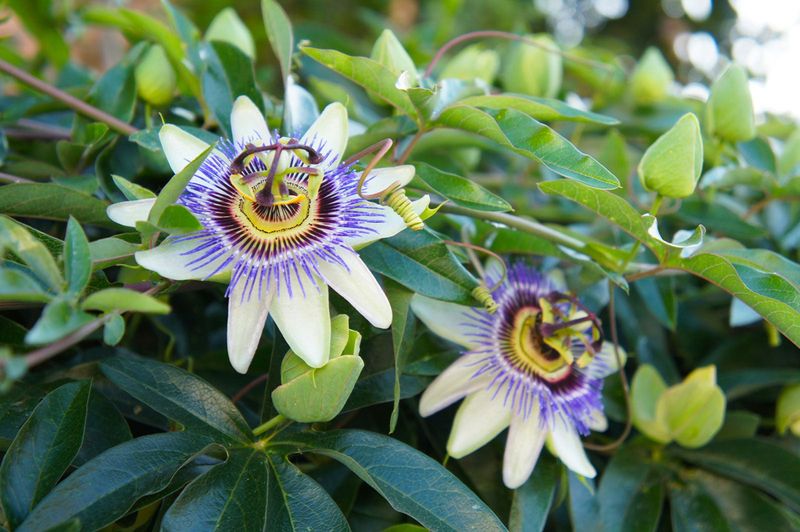
Few flowering vines in Texas can match the sheer wow factor of Passionflower. The blooms look like something from a tropical rainforest, with layered purple and white petals and a wild, fringed center that seems almost too detailed to be real.
People often stop and stare when they see one for the first time. Despite its exotic appearance, Passionflower is actually a tough native vine that thrives across most of Texas.
It loves full sun and handles poor, rocky soil without complaint, which makes it perfect for spots where other plants struggle.
The vine spreads quickly in warm weather, easily covering a fence or trellis over a single growing season.
Beyond its beauty, Passionflower is a powerhouse for wildlife. It is the only host plant for Gulf Fritillary butterfly caterpillars, meaning it plays a critical role in supporting local butterfly populations.
Bees and other pollinators also flock to the flowers, making your garden a busy and lively place all summer long.
After flowering, the vine produces small green fruits that ripen to yellow-orange. These edible fruits, sometimes called maypops, have a sweet tropical flavor and can be eaten fresh or used in jellies.
Passionflower dies back to the ground in winter in most Texas locations but returns reliably from the roots each spring. It needs almost no care beyond occasional watering during dry spells, making it one of the most rewarding vines you can grow in a Texas garden.
6. Virginia Creeper (Parthenocissus Quinquefolia)
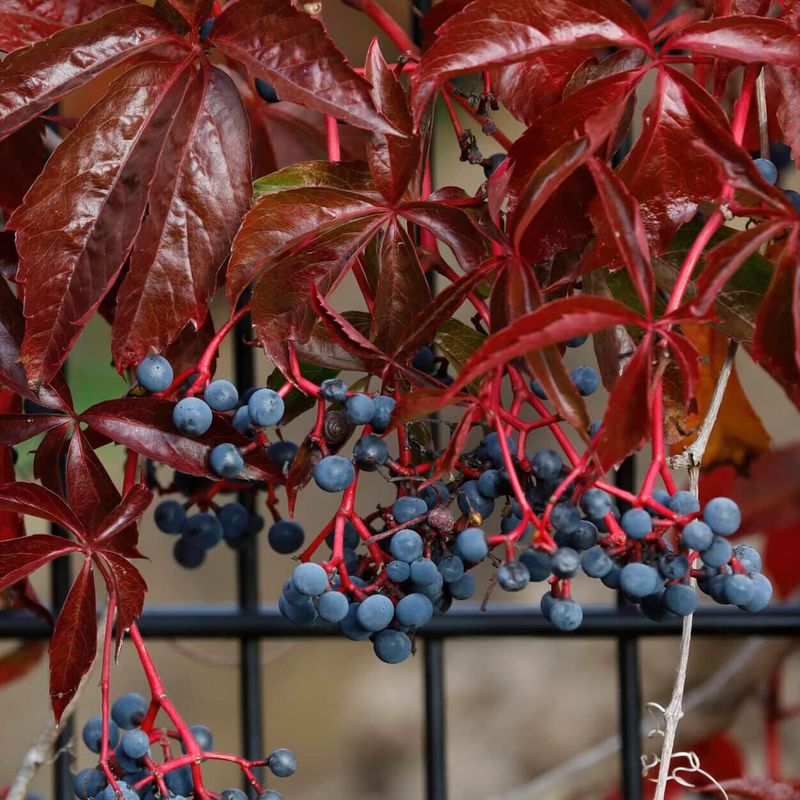
Want to add some dramatic fall color to your Texas yard? Virginia Creeper delivers one of the most spectacular autumn shows of any climbing plant.
The large five-lobed leaves turn a blazing crimson red in fall, turning ordinary fences and walls into stunning garden features. It is the kind of color that makes neighbors slow down as they drive past.
Virginia Creeper is incredibly tough and adaptable, which makes it a natural fit for Texas conditions. It handles intense summer heat, drought, poor soil, and even deep shade without much trouble.
You can grow it in full sun or in spots that get very little light, and it will find a way to thrive either way.
The vine climbs using small adhesive pads that grip onto almost any surface, including brick, stone, wood, and metal. That means it can cover a wall or fence without needing any additional support structures.
Just be aware that removing it from painted surfaces can sometimes leave marks, so choose your planting location thoughtfully.
Small dark berries appear in late summer and fall, and birds love them. This makes Virginia Creeper a great choice for gardeners who want to support local wildlife in Texas.
The vine grows fast, sometimes several feet in a single season, so it can fill in large spaces quickly. Light pruning once a year keeps it looking neat, but otherwise it is a truly hands-off plant that rewards patient gardeners with beautiful seasonal color year after year.
7. Trumpet Vine (Campsis Radicans)
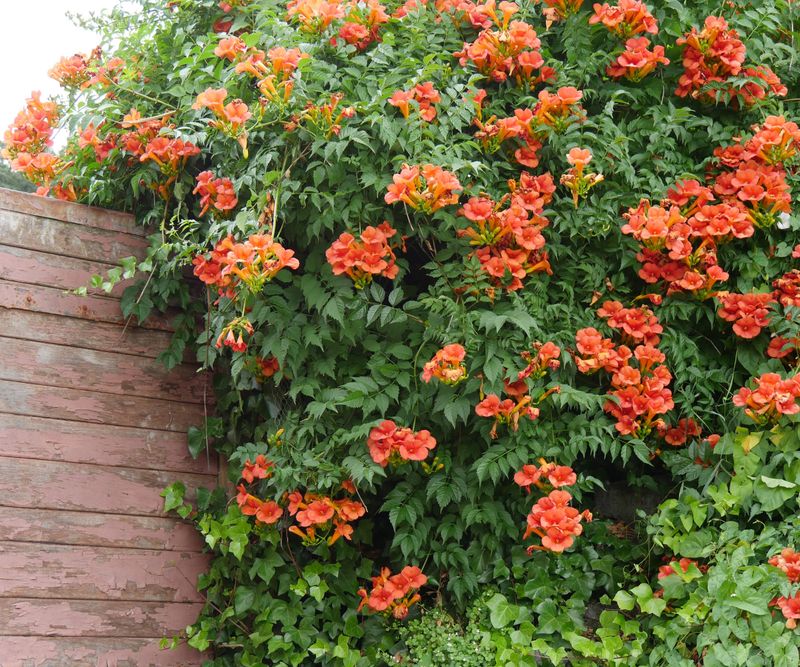
If toughness had a plant form, it would be Trumpet Vine. This powerhouse climber is practically unstoppable once it gets going, and that makes it one of the most reliable vines in any Texas garden.
It thrives in the intense heat of cities like Houston, Austin, and Dallas, laughing off temperatures that would wilt lesser plants.
The flowers are large, showy orange or red trumpets that bloom heavily in summer, which is exactly when color is hardest to come by in a hot Texas garden.
Hummingbirds are drawn to these blooms like magnets, and a mature Trumpet Vine in full flower is a genuinely exciting sight.
The plant can grow 30 to 40 feet long, so it is excellent for covering large structures like pergolas, fences, and old tree stumps.
Trumpet Vine does best in full sun and handles drought like a champion. It spreads through underground runners, so it is smart to plant it somewhere with a bit of room or in a spot where you can manage the edges.
Occasional pruning keeps it from getting too large, but even without trimming it remains attractive and vigorous.
One fun fact about Trumpet Vine is that it was used in traditional herbal remedies by some Native American tribes, though it is not recommended for any medicinal use today.
For Texas gardeners looking for a bold, heat-loving, low-maintenance climber that brings wildlife to the yard, Trumpet Vine is a hard-to-beat option that delivers season after season.