8 Low-Maintenance Perennials That Thrive On Neglect In Texas
Not every great-looking garden needs constant attention, and in Texas, that is very good news. Between the heat, dry spells, and all the other things competing for your time, it makes sense to want plants that can hold their own without turning into a full-time project.
That is exactly why low-maintenance perennials are such a smart choice. Once they are established, some of them keep coming back year after year with very little fuss, even when you forget to water, skip a round of grooming, or leave them alone longer than planned.
That kind of toughness goes a long way in a Texas yard. These are the plants that keep showing up through hot afternoons, patchy rain, and long stretches of neglect without acting dramatic about it.
They still bring color, texture, and life to garden beds, but they do it in a way that feels easy instead of demanding.
For busy homeowners, beginner gardeners, or anyone tired of high-maintenance plants that need nonstop care, this is where things start to get a lot more appealing. Some perennials do not just survive with less attention. They seem to thrive on it.
1. Blackfoot Daisy (Melampodium Leucanthum)
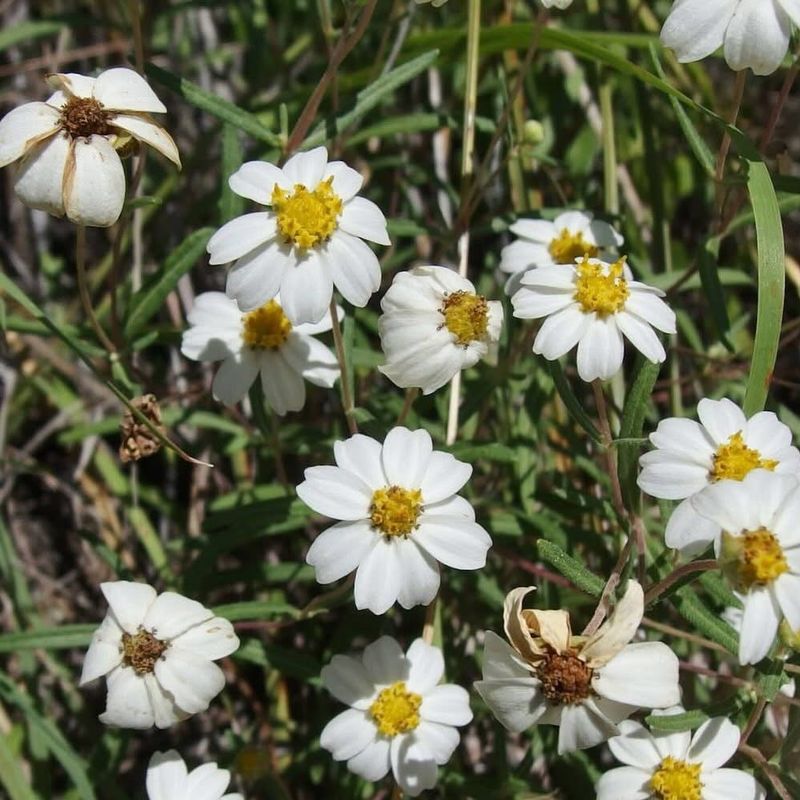
Picture a cheerful little plant covered in bright white flowers with sunny yellow centers, blooming away in the middle of a Texas summer without a single complaint. That’s the Blackfoot Daisy for you.
This tough native perennial is one of the most reliable bloomers you’ll find in the Lone Star State.
Blackfoot Daisy forms tidy, rounded mounds that grow about 12 inches tall and wide. It thrives in full sun and actually prefers poor, rocky, well-drained soil.
Rich garden soil can cause it to get floppy and bloom less. So if your yard has dry, rocky ground that other plants hate, this daisy will feel right at home.
One of its best qualities is that it blooms almost nonstop from early spring through the first frost. You don’t need to deadhead it constantly or give it extra fertilizer.
It handles heat like a champ and only needs watering during extreme droughts once it’s established.
Native Texas gardeners have long appreciated this plant because it attracts butterflies and bees without demanding anything in return. It looks beautiful in rock gardens, along pathways, or tucked into sunny borders.
Plant it in a spot with good drainage, water it a few times while it settles in, and then let it do its thing. It won’t let you down.
2. Autumn Sage (Salvia Greggii)
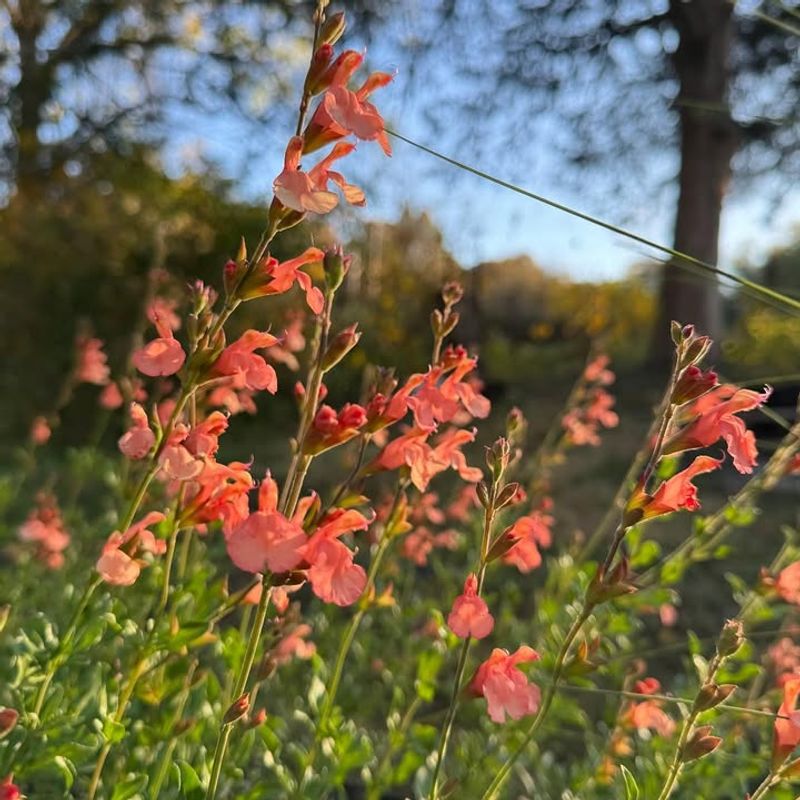
Hummingbirds go absolutely wild for Autumn Sage, and once you see it in full bloom, you’ll understand why. This woody little shrub bursts into color with bright red, pink, coral, or white flowers and keeps going from spring all the way through fall.
It’s one of those plants that makes your garden look like you put in way more effort than you actually did.
Autumn Sage grows about two feet tall and wide, making it a great choice for borders, slopes, or sunny spots in your yard. It handles heat, drought, and poor soils with ease.
Once established, it needs very little water, which is a huge win during those long, dry Texas summers when you’d rather be relaxing than dragging out the hose.
Trimming it back lightly after each big bloom cycle helps keep it tidy and encourages more flowers. But even if you forget to prune, it will still come back strong the following season. That’s the beauty of this plant.
Beyond hummingbirds, Autumn Sage also attracts butterflies and native bees, making it a wonderful addition to any pollinator garden in Texas.
It’s cold-hardy in most parts of the state and comes back reliably every year. If you want maximum color with minimum effort, Autumn Sage belongs in your yard.
3. Purple Coneflower (Echinacea Purpurea)
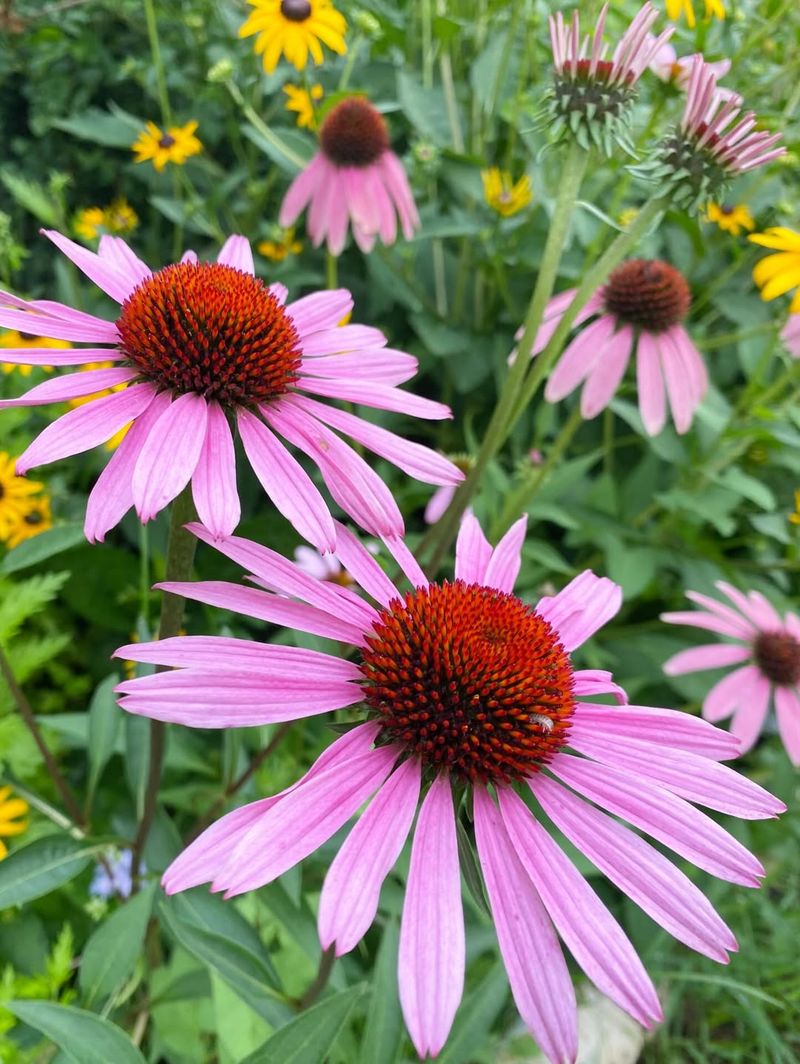
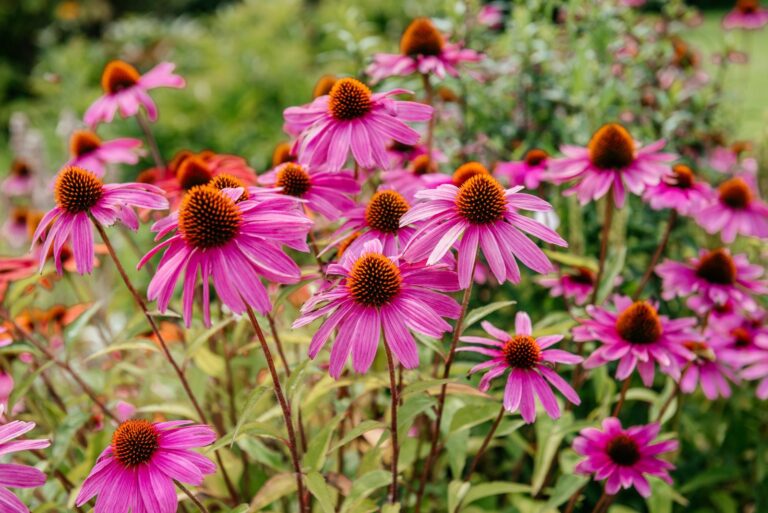
Few plants look as striking in a Texas garden as the Purple Coneflower. Its bold purple petals sweep back from a spiky, burnt-orange center cone, creating a look that’s both wild and elegant.
Native to the central and eastern parts of North America, it adapts beautifully to Texas conditions.
Did you know that Purple Coneflower has been used in herbal medicine for centuries? Native American tribes used it long before it became a garden favorite.
Today, it’s beloved by gardeners across Texas for its toughness and long blooming season, which runs from early summer well into fall.
Once established, Purple Coneflower handles drought surprisingly well. It prefers full sun but tolerates a bit of afternoon shade, which can actually be helpful during the most brutal summers.
It grows two to four feet tall and spreads gradually over the years, filling in bare spots with almost no help from you.
Goldfinches love to snack on the seed heads in late fall, so consider leaving the spent blooms standing through winter. It adds visual interest to your garden and feeds wildlife at the same time.
Purple Coneflower plays well with other native plants, looks stunning in mass plantings, and comes back faithfully every spring in gardens across the state.
4. Mexican Bush Sage (Salvia Leucantha)
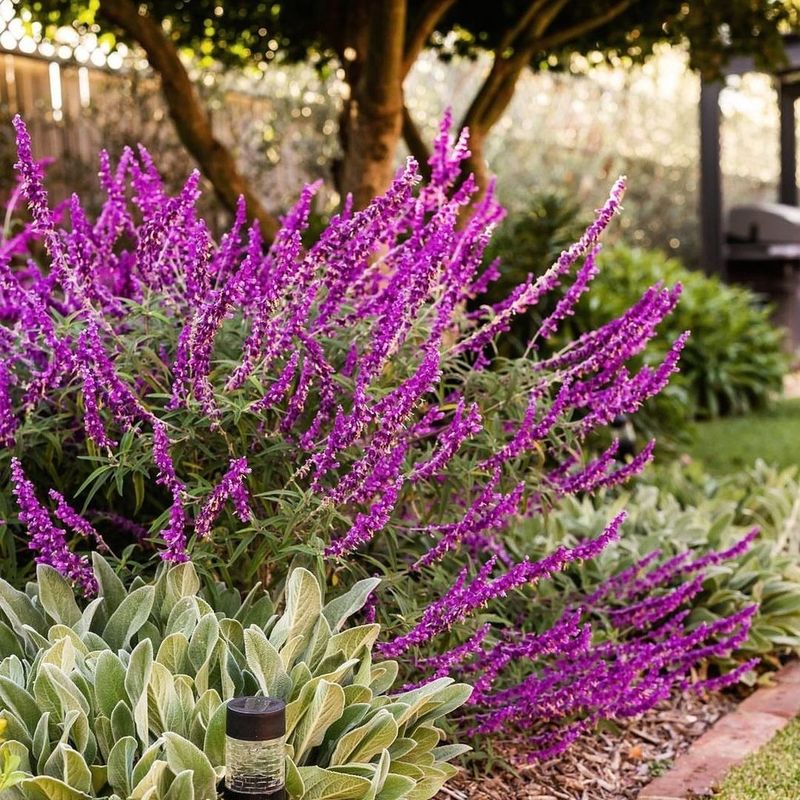
When the rest of your garden starts looking tired in late summer, Mexican Bush Sage is just getting started.
This showstopper perennial sends up tall, arching stems covered in soft, velvety purple flower spikes that look almost too beautiful to be real. It’s the kind of plant that makes neighbors slow down and take a second look.
Mexican Bush Sage can grow three to four feet tall and just as wide, so give it some space to spread out. It loves full sun and handles heat and dry conditions without breaking a sweat.
Once it’s settled into your garden, you can pretty much ignore it and it will reward you with spectacular blooms from late summer all the way through the first freeze.
Hummingbirds and butterflies are drawn to those fuzzy purple flower spikes like magnets. If you want to turn your Texas yard into a pollinator paradise, this plant earns its spot every single time.
It’s also deer-resistant, which is a major bonus for gardeners in areas where deer browse through regularly.
Cut it back hard in late winter to encourage fresh, full growth in spring. Other than that one annual task, Mexican Bush Sage asks for almost nothing.
It’s a fantastic choice for low-water landscaping projects throughout Texas and brings serious late-season drama to any garden bed.
5. Coreopsis (Coreopsis Spp.)
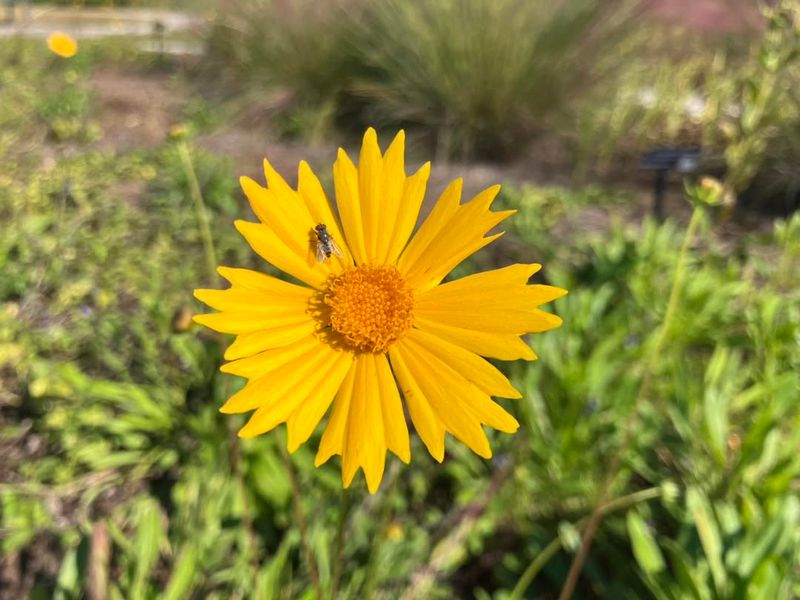
Sunshine in plant form is the best way to describe Coreopsis. Those cheerful, golden-yellow flowers bloom in thick clusters from late spring through fall, and they don’t need much encouragement to keep going.
Texas gardeners have relied on this tough little perennial for decades, and for very good reason.
Coreopsis thrives in poor soil and full sun, two conditions that are extremely common across Texas. It actually struggles more in rich, heavily watered soil than in dry, lean ground.
So if you have a hot, sunny spot where nothing else seems to want to grow, Coreopsis is your answer. It grows one to two feet tall and forms spreading clumps over time.
Butterflies absolutely love Coreopsis, and it serves as a great food source for native bees throughout the blooming season.
Deadheading spent flowers encourages even more blooms, but the plant will keep flowering even if you skip that step. It’s genuinely one of the most forgiving perennials available to Texas gardeners.
Several native species of Coreopsis are found naturally growing across Texas, which means they’re perfectly adapted to local weather patterns. Lance-leaf Coreopsis is a popular native variety worth seeking out.
Mass plantings of Coreopsis along roadsides and in meadow gardens create a breathtaking sea of yellow that celebrates the true spirit of a summer landscape.
6. Yarrow (Achillea Millefolium)
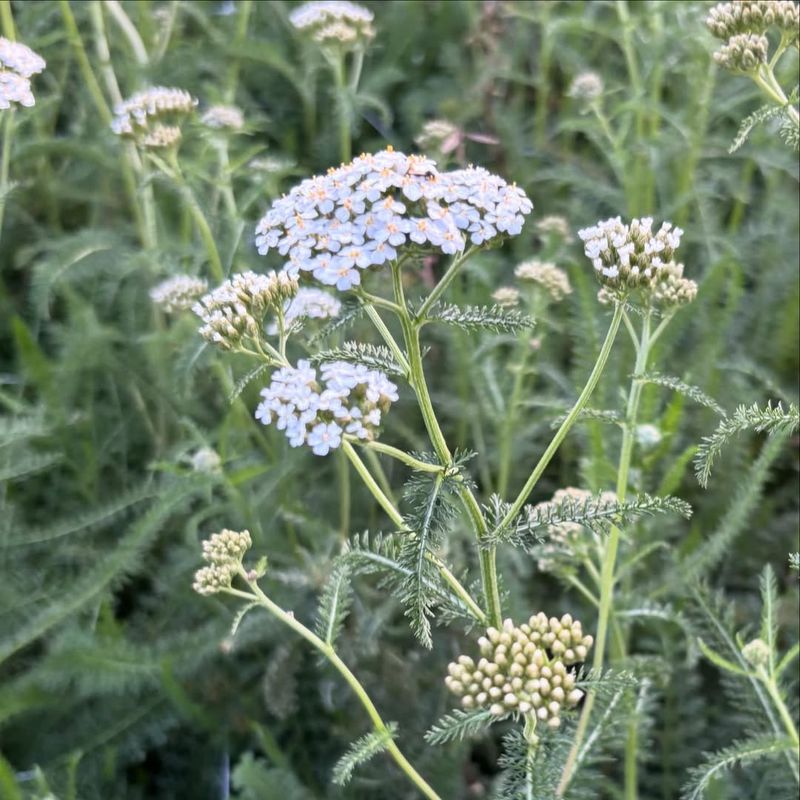
Yarrow has been growing wild across Texas roadsides and meadows for ages, and there’s a good reason it survives out there with zero human help. This incredibly tough perennial laughs at drought, poor soil, and scorching heat.
It’s one of those plants that seems almost impossible to mess up, even for brand-new gardeners.
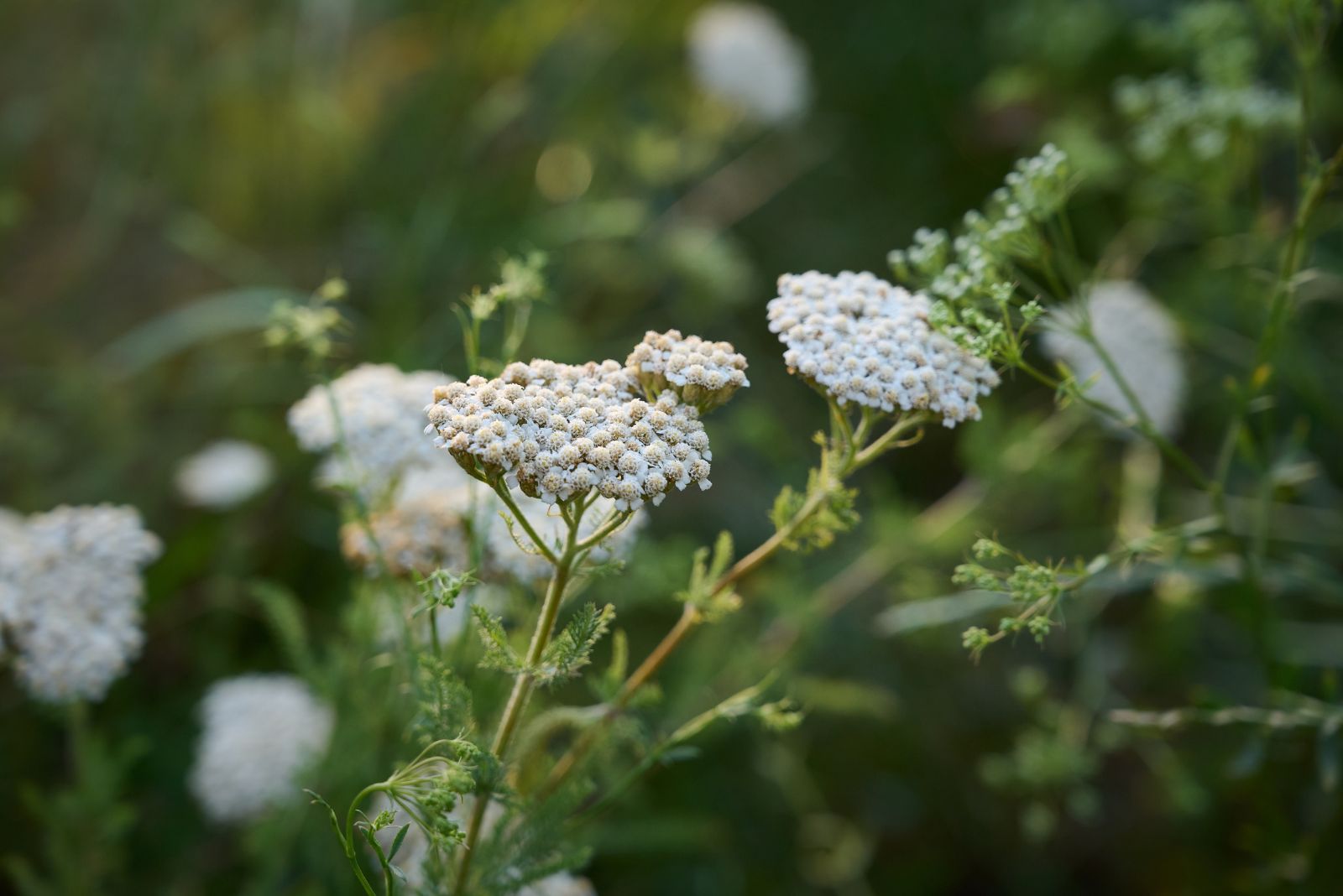
The flat-topped flower clusters come in white, yellow, pink, and red, depending on the variety you choose. They bloom from late spring through summer and attract a wide range of pollinators, including native bees, butterflies, and beneficial wasps that help control garden pests naturally.
The ferny, aromatic foliage smells pleasant when brushed and stays attractive even when the plant isn’t blooming.
Yarrow spreads by underground runners, which means it will gradually fill in empty spaces in your garden over time.
Some gardeners love this quality, while others prefer to divide clumps every few years to keep it contained. Either way, it’s easy to manage and never needs much water once it’s rooted in Texas soil.
Fun fact: Yarrow has been used medicinally for thousands of years, dating back to ancient Greece. Legend says the warrior Achilles used it to treat wounds on the battlefield, which is how it got its scientific name.
Today, Texas gardeners use it to add tough, long-lasting color to low-water landscapes with almost no maintenance required at all.
7. Red Yucca (Hesperaloe Parviflora)
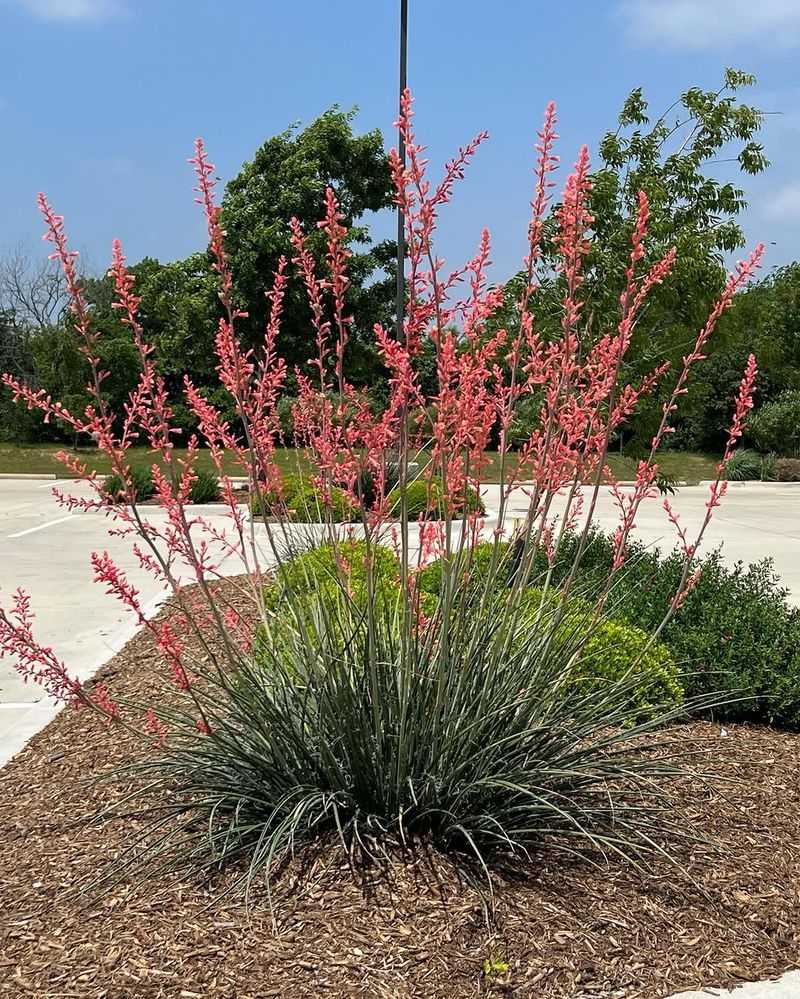
Don’t let the name fool you. Red Yucca isn’t actually a true yucca at all.
It belongs to a different plant family, but it shares the same love of heat, drought, and neglect that makes yuccas so popular in Texas landscapes. And honestly, it might be even more beautiful than its name suggests.
Red Yucca forms graceful clumps of long, arching, grass-like leaves that stay attractive year-round. In late spring and summer, it sends up tall, slender flower spikes loaded with tubular coral-pink to red blooms.
Those flowers are absolutely irresistible to hummingbirds, who visit them repeatedly throughout the blooming season. It’s basically a hummingbird feeder that never needs to be refilled.
This plant thrives in extreme heat and survives on very little rainfall once it’s established. It grows well in rocky, sandy, or clay soils, making it adaptable to a wide range of Texas growing conditions.
Full sun is best, but it tolerates partial shade without much fuss. Red Yucca is a fantastic choice for xeriscaping projects across Texas because it looks architectural and polished without requiring regular irrigation or fertilizing.
It pairs beautifully with ornamental grasses, agaves, and other native plants. Plant it in a well-drained spot, water it a handful of times during its first summer, and then step back and enjoy the show for years to come.
8. Texas Lantana
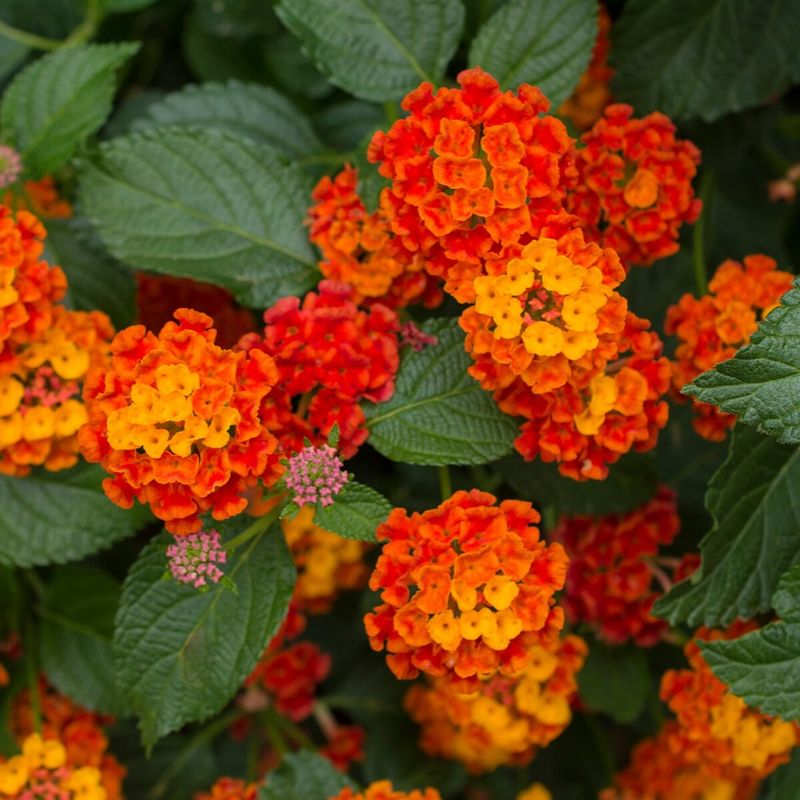
If there’s one plant that could win a prize for being nearly impossible to discourage in Texas, it’s native Lantana.
This heat-loving perennial blooms nonstop from late spring through the first hard freeze, covering itself in clusters of tiny orange, yellow, and red flowers without asking for anything in return. It’s the definition of tough love in plant form.
Lantana urticoides is the native Texas species, and choosing this variety over non-native types is important. Native Lantana is better adapted to local conditions, supports native wildlife more effectively, and won’t become invasive the way some introduced varieties can.
It grows three to five feet tall and wide, filling garden beds with bold color and a slightly spicy fragrance.
Butterflies swarm Lantana like it’s the best buffet in town. Monarchs, swallowtails, and sulfurs all stop by regularly throughout the season.
The berries that follow the flowers are also eaten by mockingbirds and other Texas songbirds, making this plant a full-service wildlife habitat.
Lantana handles full sun, rocky soil, clay soil, and prolonged dry spells with remarkable ease. It does well across most of Texas, from the Panhandle to the Gulf Coast.
Cut it back in late winter to encourage vigorous new growth in spring. After that, just water it occasionally during the hottest stretches and watch it put on a show that lasts all season long.