Many Texas Gardeners Regret Planting These Trendy Perennials
It is easy to see how certain perennials end up in so many Texas carts. They are all over social media, packed into nursery displays, and usually shown at the exact moment they look their absolute best.
Then a season passes, the weather turns rough, and that exciting new plant starts feeling like a mistake that keeps asking for more water, more trimming, or more patience than expected.
Texas has a way of exposing weak choices fast. Heat, drought, hard soil, sudden cold snaps, and long stretches of intense sun can turn a trendy favorite into a frustrating yard problem. What looks great in photos does not always hold up in real life.
That is why this topic hits home for so many gardeners. Some plants fade from the spotlight quickly, and others become high-maintenance in a hurry. The ones on this list tend to disappoint in very specific ways.
1. Mexican Petunia That Spreads Faster Than Expected
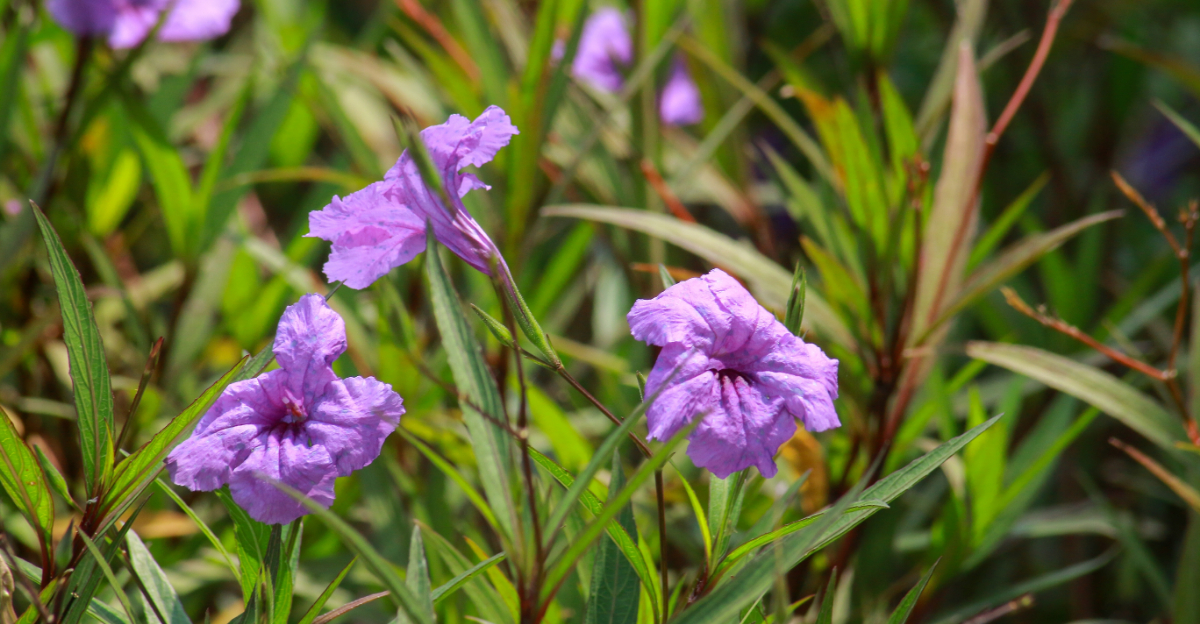
Walk through almost any Texas neighborhood and you will likely spot Mexican Petunia growing in someone’s yard, often spilling well beyond where it was originally planted.
With its bright purple, trumpet-shaped blooms and ability to thrive in the brutal Texas heat, it is easy to understand why so many gardeners were drawn to it in the first place. The problem, however, runs much deeper than its cheerful appearance suggests.
Mexican Petunia, known scientifically as Ruellia simplex, spreads through both underground rhizomes and seed pods that pop open and fling seeds several feet away.
Once it gets established in a garden bed, removing it becomes an exhausting chore that can take multiple growing seasons.
Texas gardeners who planted just a small cluster have reported finding it popping up throughout their entire yard within just a couple of years.
The plant is so aggressive that it has been listed as a Category I invasive species in Florida, and Texas experts have raised similar concerns about its behavior in local ecosystems.
It can crowd out native plants that pollinators and local wildlife depend on, upsetting the natural balance of a garden. Pulling it by hand often leaves root fragments behind that quickly regrow.
If you love the look of those purple blooms, there are better choices for Texas landscapes. Native alternatives like prairie verbena or mealy blue sage offer similar color without the invasive tendencies.
Swapping out Mexican Petunia for a well-behaved native plant can actually bring more butterflies and bees to your yard while saving you hours of frustrating weeding. Texas gardeners who have made the switch rarely look back.
2. Yellow Flag Iris That Turns Into A Problem
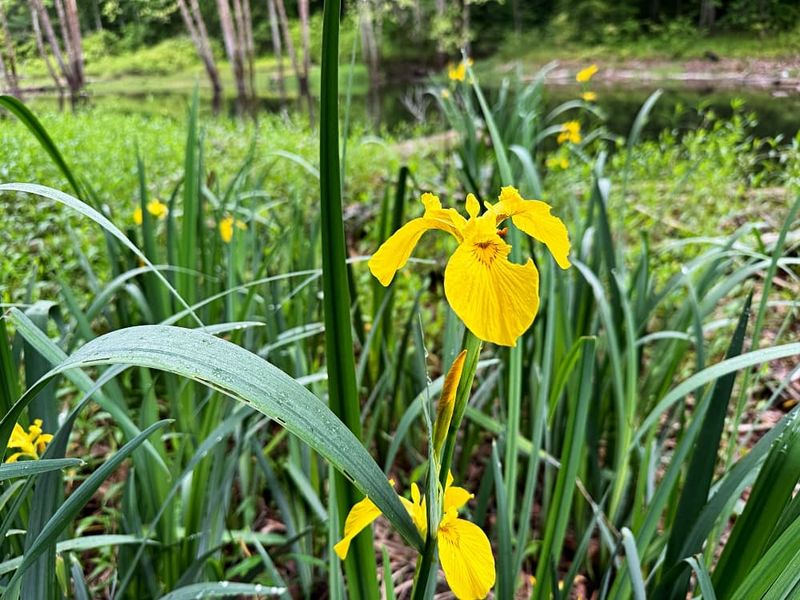
Few plants look as elegant as Yellow Flag Iris standing tall along the edge of a garden pond, its golden blooms catching the afternoon light. Many Texas gardeners added it to water features and low-lying areas specifically because of that stunning visual effect.
What they did not always realize was that this eye-catching plant was quietly preparing to take over far more space than anyone intended.
Your Texas Garden Changes Every Week. Your Plan Should Too.
Gardening in Texas changes quickly throughout the season. Every Friday you’ll receive a simple weekly plan showing exactly what to plant, prune, fertilize, harvest, and protect so you never miss the right timing.
Yellow Flag Iris, or Iris pseudacorus, is native to Europe and has a well-documented history of spreading aggressively into wetlands and waterways.
In Texas, where many properties border creeks, drainage ditches, or natural ponds, this plant can escape cultivation and establish itself in wild areas surprisingly fast.
Once it reaches a natural waterway, it forms dense colonies that push out native aquatic vegetation and reduce habitat for fish and other wildlife.
The seeds float easily on water, which means a single plant can spread its offspring to locations far from your original garden. The thick rhizomes are also extremely tough to remove once they become established in muddy, wet soil.
Many Texas gardeners have spent entire weekends digging out clumps only to watch new growth return within weeks.
Fortunately, there are native iris species that offer similar beauty without the ecological baggage. Native Louisiana irises and many Louisiana iris cultivars thrive in Texas conditions and come in a gorgeous range of colors from deep purple to soft white.
They support native pollinators and stay much better behaved within a garden’s boundaries. Making the switch is one of the smartest moves a Texas water gardener can make.
3. Rose Glorybower That Does Not Stay Put
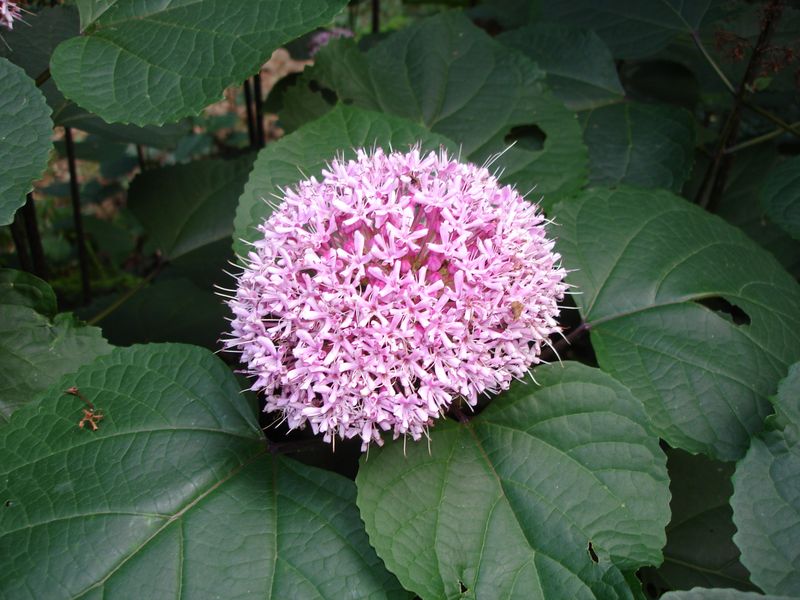
When Rose Glorybower first shows up at a plant sale, it is almost impossible to resist. The clusters of pink and white flowers are genuinely beautiful, and the sweet fragrance can stop you in your tracks.
Texas gardeners who brought this plant home were often thrilled with how quickly it established itself and began blooming. The trouble is that “quickly” is an understatement when it comes to how fast this plant can grow and spread.
Rose Glorybower, or Clerodendrum bungei, spreads aggressively through underground suckers that can pop up several feet away from the original plant.
Before long, what started as a single shrub can become a sprawling thicket that takes over a garden bed, a fence line, and even part of a neighbor’s yard.
The plant thrives in the warm, humid conditions found across much of Texas, which only encourages its already ambitious growth habits.
Removing it is genuinely difficult work. Cutting it back to the ground encourages even more vigorous suckering from the roots, and the root system can run surprisingly deep.
Texas gardeners who have tried to clear it report spending multiple seasons battling regrowth before the plant finally gives up. Every small root fragment left behind has the potential to start a whole new plant.
For gardeners who love showy plants, native Texas options like Turk’s cap or fall obedient plant offer lovely blooms with far more manageable growth habits. Both support local pollinators and require much less intervention to keep in check.
Choosing plants that work with Texas’s natural ecosystem rather than against it always leads to a more enjoyable and sustainable garden in the long run.
4. Vinca Major That Quickly Takes Over
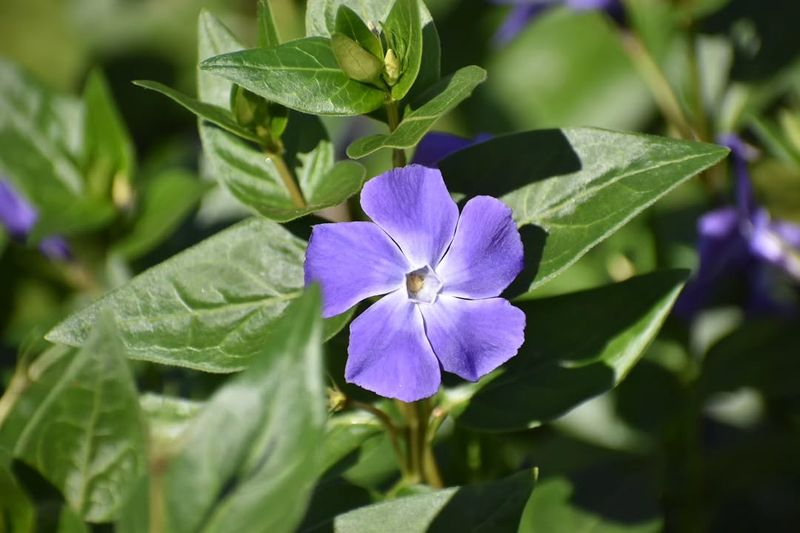
Also known as bigleaf periwinkle, Vinca Major has been a reliable ground cover choice for Texas gardeners for decades.
Its glossy green leaves stay attractive year-round, and those cheerful periwinkle-blue flowers in spring make it look like a dream solution for shady spots under trees or along slopes.
Nurseries across Texas have sold it by the flat, and it is easy to see why so many gardeners trusted it to fill in bare areas quickly.
The problem is that Vinca Major does not stay where you put it. It spreads through long trailing stems that root wherever they touch the ground, creating dense mats that can smother native wildflowers and seedlings.
In Texas, where natural areas and gardens often blend together, this plant has a habit of escaping cultivation and establishing itself in creek banks, woodland edges, and other wild spaces where it does not belong.
Once established, Vinca Major is remarkably tough to remove. The rooting stems create an interlocking mat that resists pulling, and any small piece left behind will simply root again.
Texas gardeners who planted it along a shaded slope have found it creeping down into natural drainage areas and spreading far beyond the original planting site within just a few seasons.
Native ground cover alternatives like frogfruit or inland sea oats are far better choices for Texas landscapes. Both handle shade well, support native insects and birds, and stay within reasonable bounds without constant intervention.
Frogfruit in particular is a host plant for several butterfly species, which means your garden actually becomes a more vibrant and lively place when you make the swap.
Texas gardeners who have replaced Vinca Major with native options consistently report happier, healthier garden beds.
5. Chinese Silvergrass That Brings Long Term Trouble
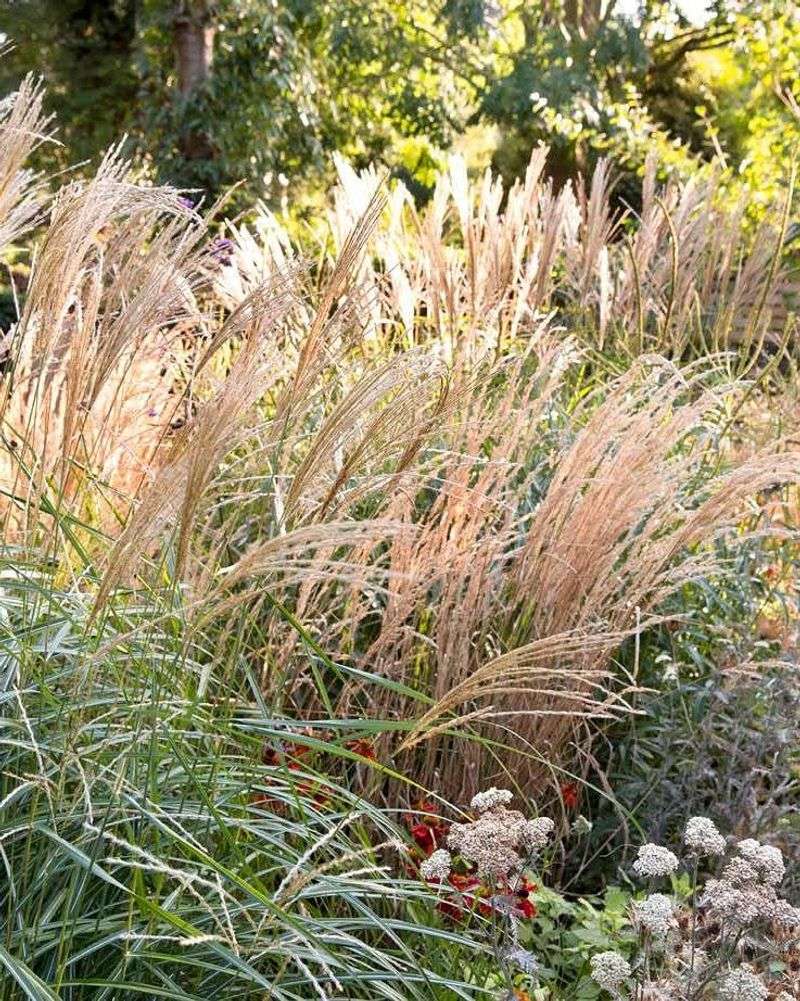
Tall, feathery, and undeniably dramatic, Chinese Silvergrass became a staple of modern landscape design across the country, and Texas was no exception.
Garden centers promoted it as a low-maintenance ornamental grass that added movement and texture to the landscape.
Homeowners loved how it formed impressive clumps and produced showy plumes in late summer and fall. For a while, it seemed like the perfect plant for busy Texas gardeners who wanted big impact with minimal effort.
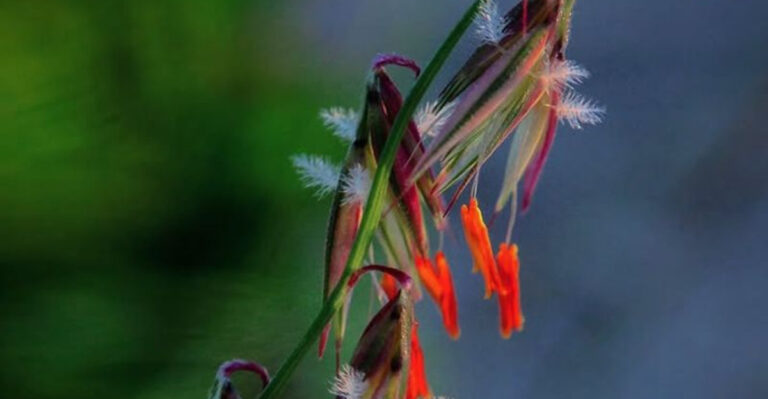
Chinese Silvergrass, or Miscanthus sinensis, turned out to have a serious downside. It produces enormous quantities of feathery seeds that travel easily on the wind, allowing it to spread well beyond garden boundaries into roadsides, natural areas, and open fields.
In parts of Texas, it has been documented naturalizing in areas where it crowds out native grasses that local wildlife depends on for food and shelter.
Beyond its invasive tendencies, Chinese Silvergrass also poses a fire risk in Texas’s dry seasons. The tall, dried stems and foliage can accumulate and become highly flammable, which is a genuine concern in regions of the state that experience drought and wildfire conditions.
Several Texas counties have flagged it as a plant that homeowners should avoid planting near natural areas or wildland-urban interfaces.
Native bunch grasses like Gulf muhly or little bluestem offer a much smarter choice for Texas gardeners who love ornamental grasses. Gulf muhly puts on a breathtaking show of pink and purple haze in the fall, while little bluestem turns a stunning copper-red color as temperatures drop.
Both are naturally adapted to Texas conditions, require almost no supplemental watering once established, and provide excellent habitat for birds and native insects throughout the year.
6. Brazilian Vervain That Pops Up Everywhere
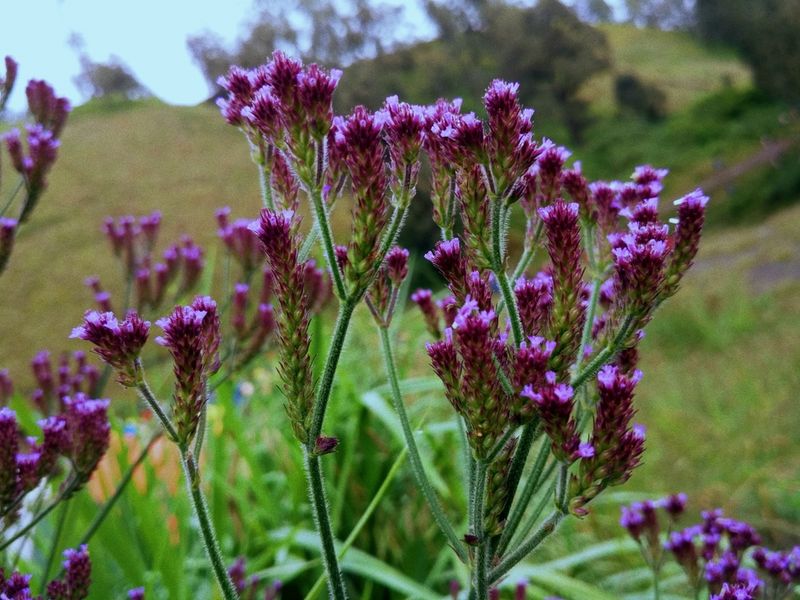
With its wild, airy charm, Brazilian vervain appeals to gardeners who enjoy cottage-style or naturalistic planting designs. Its tall, wiry stems topped with clusters of tiny purple flowers look effortlessly beautiful, and it blooms for an impressively long season in Texas’s warm climate.
Butterflies and other pollinators genuinely love it, which made it an easy sell at native plant sales and garden centers throughout the state.
Here is the catch: Brazilian Vervain, or Verbena brasiliensis, is not actually native to Texas or even to North America.
It hails from South America and has demonstrated a strong ability to self-seed prolifically and spread into disturbed areas, roadsides, and open fields beyond the garden.
In some parts of Texas, it has already established itself in natural areas where it competes with native plants that local ecosystems actually need.
The plant reseeds so generously that keeping it contained requires consistent deadheading before the seeds mature and drop.
Many Texas gardeners who planted it with the best intentions found themselves overwhelmed by seedlings appearing in every corner of the yard, in cracks in the patio, and even in neighboring properties.
What started as a charming addition to a pollinator garden quickly became a management challenge.
If supporting pollinators is your goal, there are outstanding native Texas options that do the job beautifully without the invasive risk. Plateau goldeneye, prairie verbena, and Texas lantana are all magnets for butterflies and bees while staying true to the local ecosystem.
These plants evolved alongside Texas’s native pollinators, which means they provide exactly the right kind of nectar and habitat that local species need to thrive throughout the growing season.
7. English Ivy That Becomes Hard To Control
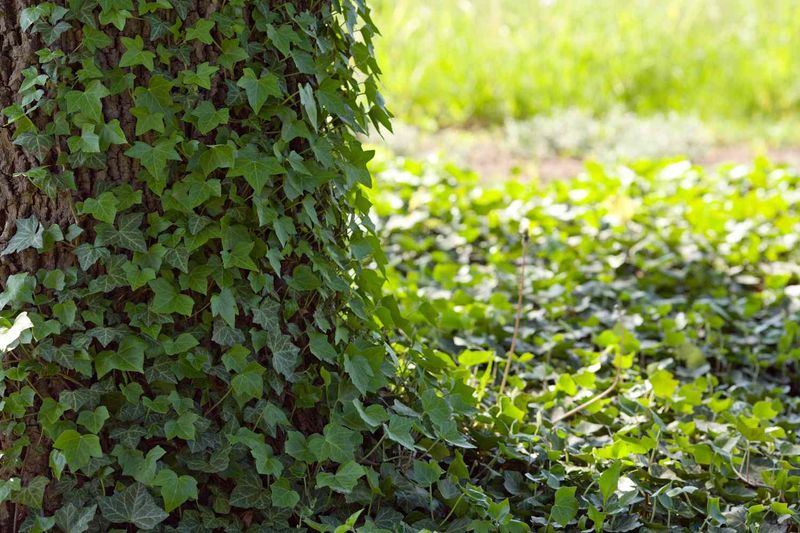
With one of the longest track records in American gardens, English ivy has stood the test of time as a reliable ornamental plant.
It looks polished, stays green all year, and handles deep shade better than almost anything else, which made it a natural choice for gardeners trying to fill in dark spots under large trees.
Across Texas, it became a popular solution for slopes, tree bases, and shaded beds where other plants struggled to survive. The appeal was completely understandable.
Over time, however, Texas gardeners began noticing that English Ivy was not content to stay put. It climbs trees aggressively, adding enormous weight to branches and creating what arborists call “ivy deserts” on trunks where the bark cannot breathe properly.
Trees weakened by heavy ivy growth become more vulnerable to storm damage and disease. In Texas, where severe thunderstorms are a regular fact of life, this is a serious safety concern for homeowners.
On the ground, English Ivy forms such a dense, impenetrable mat that almost nothing else can grow through it. Native wildflowers, seedlings, and ground-level plants are completely shut out, which reduces biodiversity and eliminates food sources for native insects and birds.
In wooded areas of East Texas in particular, escaped English Ivy has been documented spreading into natural forests and causing measurable ecological harm.
Texas gardeners looking for a well-behaved, shade-tolerant ground cover have much better options available. Native plants like wild ginger, inland sea oats, or horseherb handle deep shade gracefully and support the local food web instead of disrupting it.
Horseherb in particular is a Texas native that forms a soft, low carpet under trees while providing habitat for native bees. Replacing English Ivy with plants like these is one of the most impactful improvements a Texas gardener can make.