Michigan Perennials That Look Stunning In June When Everything Else Is Just Getting Started
June is a transitional month in Michigan gardens. Spring bloomers are wrapping up and true summer plants have not yet hit their stride, leaving a gap that catches a lot of gardeners off guard.
The yards that look consistently impressive through this in-between period are planted with perennials that peak specifically in June, filling the garden with color and structure at exactly the moment when most beds are between acts.
These are not compromise plants chosen simply to fill a gap. Several of them are genuinely spectacular in June, producing their best display during the weeks when neighboring yards look like they are still warming up.
Michigan’s climate suits this group well, and once established they return each year ready to carry the garden through one of its most visually vulnerable stretches.
1. Peonies
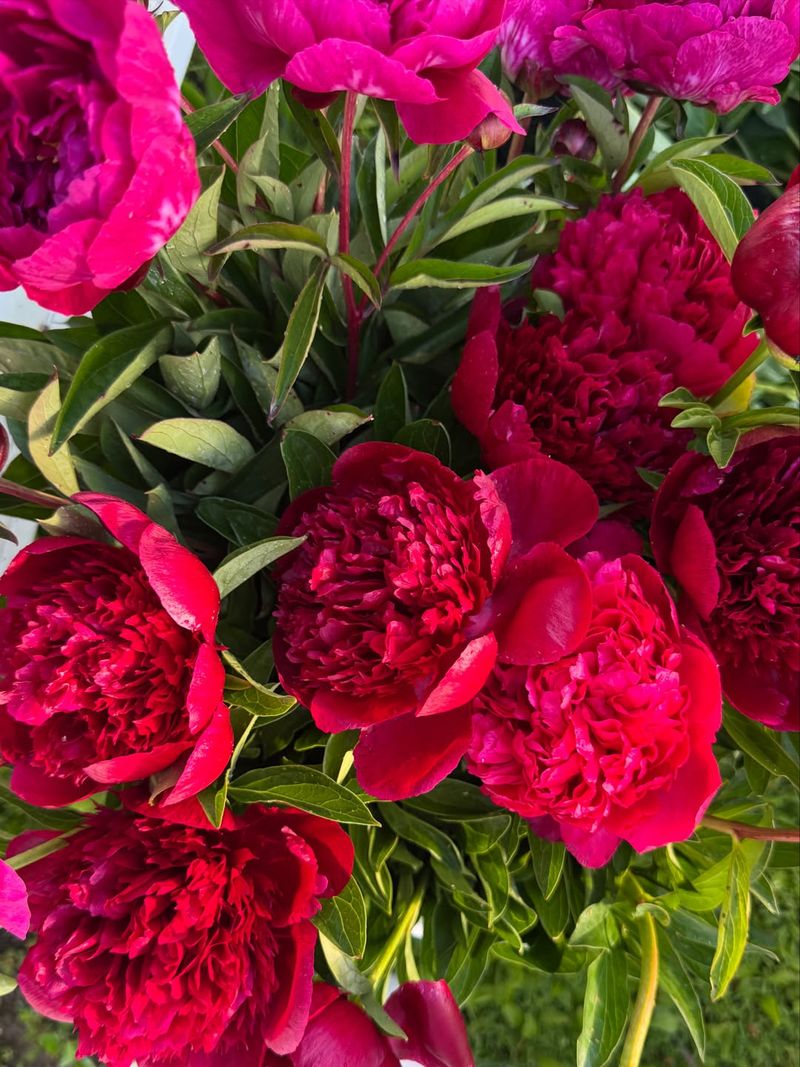
Few plants in the garden world carry the same kind of wow factor as a peony in full bloom. Paeonia lactiflora, the classic garden peony, produces enormous, fragrant flowers in shades of pink, white, red, and coral that can stop anyone in their tracks.
In Michigan, June is prime peony season, and a well-established plant can put on a show that lasts for weeks.
Peonies thrive in full sun, needing at least six hours of direct light each day to bloom their best. Planting depth is critical because the eyes, or buds, should sit no more than one to two inches below the soil surface.
Plant them too deep and they may never flower. Good airflow around the plant also helps prevent fungal issues during Michigan’s humid spring weather.
Before heavy rain arrives, it is smart to stake your peonies since those big blooms can weigh down the stems quickly. Wire ring supports placed early in the season work beautifully and stay hidden as foliage grows up through them.
After the flowers fade, resist the urge to cut the plant back right away. The foliage keeps working hard through summer, storing energy in the roots for next year’s blooms.
Peonies are cold-hardy well into USDA Zone 3, making them perfectly suited for Michigan winters without any extra protection needed.
2. Siberian Iris
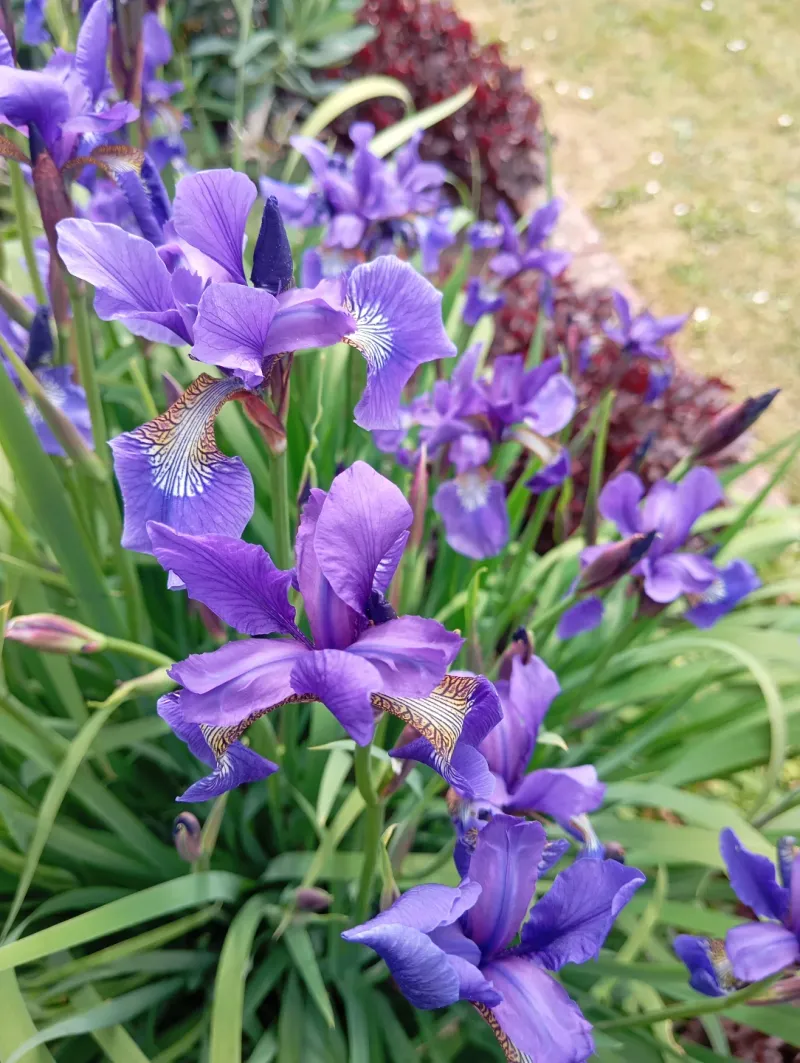
There is something almost architectural about Siberian Iris that sets it apart from every other perennial in the June garden. Iris sibirica grows in tight, upright clumps with slender, grass-like leaves that look tidy and elegant even when the plant is not in bloom.
When those deep blue, purple, or white flowers open in early June, the whole border takes on a refined, almost painterly quality.
Unlike bearded iris, Siberian Iris handles Michigan’s clay-heavy soils with ease, which is a huge advantage for gardeners who struggle with poor drainage. It performs best in full sun but tolerates part sun without losing much of its flowering power.
Consistent moisture during the growing season keeps the plant looking lush, though established clumps become surprisingly resilient once their root systems settle in.
Maintenance on Siberian Iris is refreshingly simple. You do not need to divide it every few years like bearded iris, and it rarely has serious pest or disease problems.
Your Michigan Garden Changes Every Week. Your Plan Should Too.
Gardening in Michigan changes quickly throughout the season. Every Friday you’ll receive a simple weekly plan showing exactly what to plant, prune, fertilize, harvest, and protect so you never miss the right timing.
Clumps can actually improve with age, getting more floriferous over time rather than declining. After bloom, the upright foliage stays attractive through summer and into fall, giving you structure in the border long after the flowers are gone.
For Michigan gardeners who want elegance without constant fussing, Siberian Iris delivers season after season with very little effort required from you.
3. Baptisia
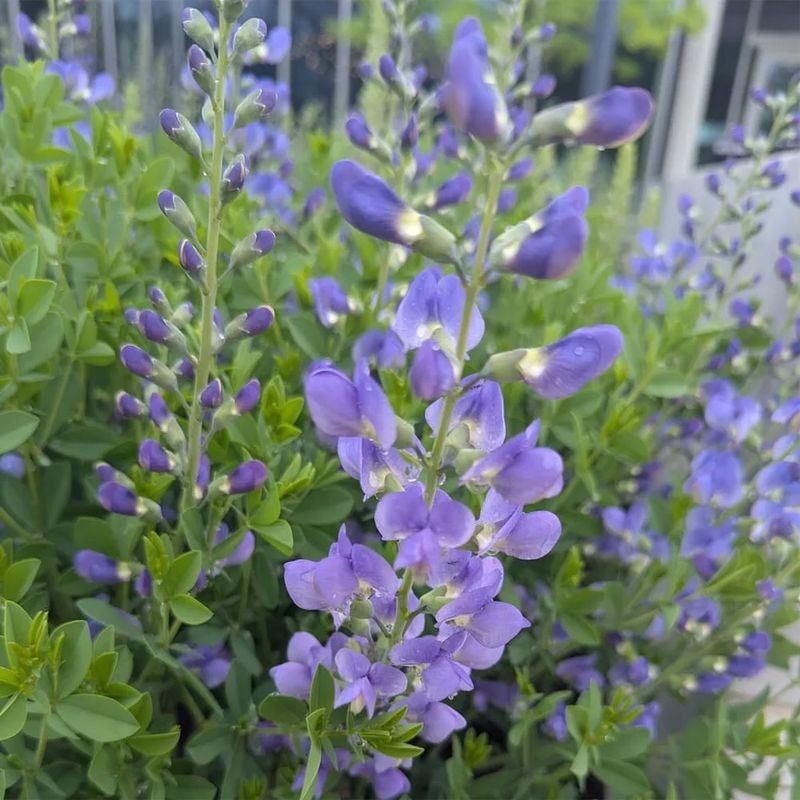
Baptisia australis is the kind of plant that makes experienced gardeners smile knowingly when someone asks what it is.
Often called false blue indigo, this native North American perennial grows into a bold, shrub-like mound that commands serious attention in the June garden.
Those upright spikes of deep blue-purple, pea-shaped flowers are unlike anything else blooming at the same time.
One of Baptisia’s most impressive qualities is its deep root system, which anchors it firmly and allows it to access moisture far below the soil surface. Once established, it handles drought stretches that would stress lesser plants without skipping a beat.
Full sun is the sweet spot for the best bloom production, though it can manage in light shade with slightly fewer flowers. Well-drained soil suits it well, but it is not particularly fussy about soil fertility.
Here is something important to know before you plant: Baptisia takes a few years to hit its stride. The first season or two can feel underwhelming as the roots establish themselves, but by year three or four, the plant transforms into something spectacular.
Do not move it once it is settled because those deep roots really dislike disturbance.
After the flowers finish, attractive inflated seed pods develop and rattle in the breeze through fall, adding yet another season of interest. Patience with Baptisia pays off enormously over time.
4. Catmint
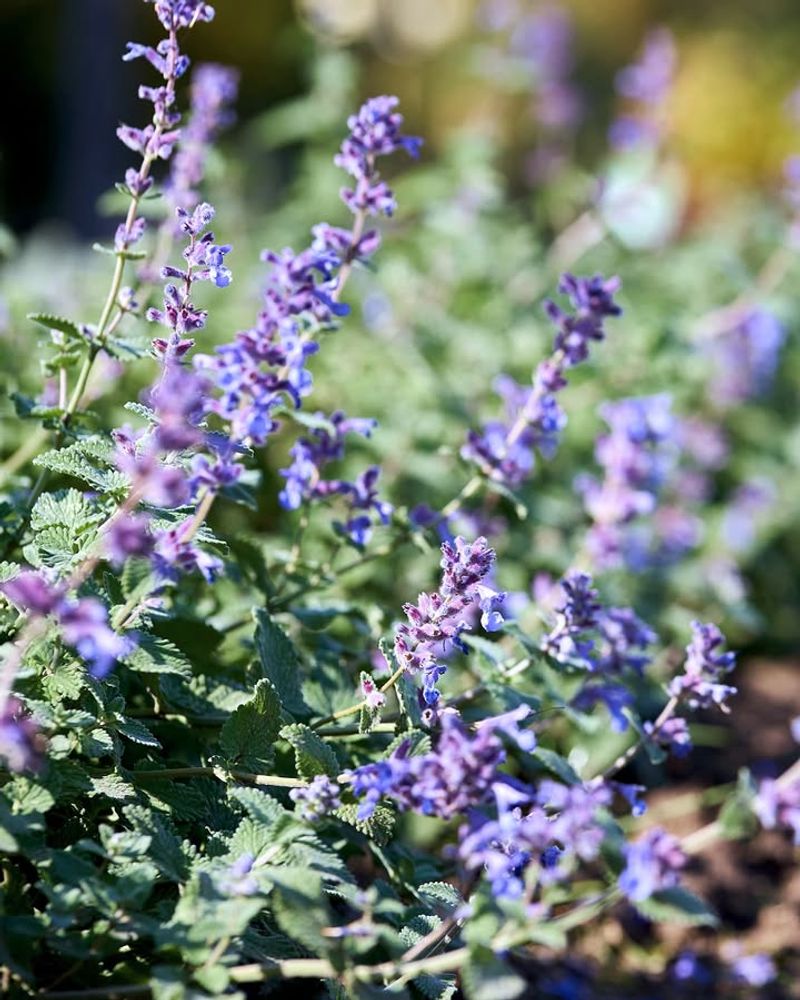
Walk past a patch of catmint in June and you will instantly understand why so many Michigan gardeners are obsessed with it.
Nepeta x faassenii produces a frothy, cloud-like display of lavender-blue flowers over soft, gray-green aromatic foliage that spills beautifully along borders and walkway edges.
The whole plant has a relaxed, cottage-garden charm that pairs naturally with almost anything growing nearby.
Catmint loves full sun and well-drained soil, and once it settles in, it handles dry spells remarkably well. Michigan summers can swing from wet to dry quickly, and catmint rolls with those changes without much complaint.
Bees and butterflies flock to the flowers, making it one of the most pollinator-friendly choices you can plant in a June garden. The fragrance of the foliage is a bonus that carries pleasantly on warm afternoons.
After the first big flush of bloom fades in late June or early July, give the plant a firm trim, cutting it back by about one-third to one-half. This simple step encourages a fresh round of growth and often triggers a second bloom wave later in summer.
Catmint works especially well along the front of a mixed border or lining a stone path where its soft mounding habit softens hard edges beautifully.
For low-effort, high-reward June color, very few perennials can match what catmint brings to a Michigan garden consistently year after year.
5. Salvia
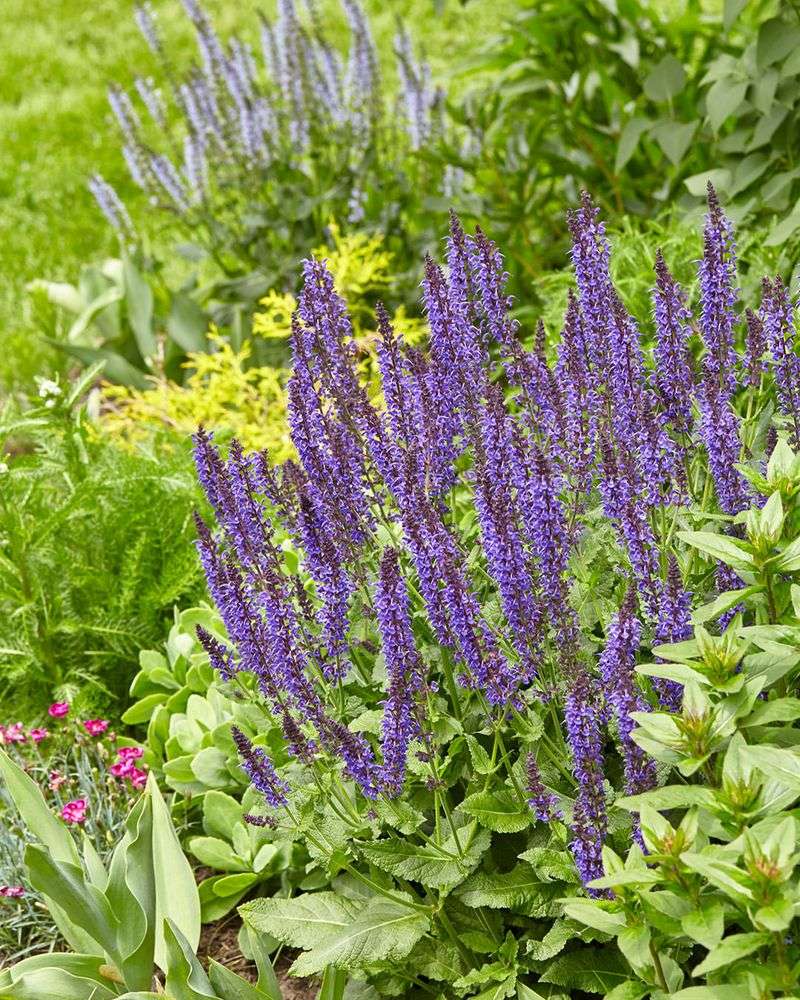
Bold, upright, and absolutely buzzing with pollinators, perennial salvia is one of those June garden plants that earns its spot every single year.
Salvia nemorosa produces tight, vertical spikes of purple, violet, blue, pink, or white flowers that rise cleanly above the foliage and create strong visual lines in a mixed border.
The color is intense in a way that photographs beautifully and looks even better in person.
Full sun is non-negotiable for the best performance since shady conditions stretch the stems and reduce flower production noticeably. Well-drained soil matters too, especially during Michigan’s sometimes wet spring and early summer periods.
Soggy roots are the one condition salvia really struggles with, so raised beds or sloped borders work particularly well. Bees, hummingbirds, and butterflies visit the flowers constantly, making the plant as lively as it is beautiful.
When the first flush of flowers starts to look tired, trim the spent spikes back to the basal foliage. This straightforward step often rewards you with a second or even third round of blooms before frost arrives in fall.
During humid Michigan summers, good airflow around the plant helps keep foliage clean and healthy. Salvia nemorosa is also notably resistant to deer browsing, which is a real bonus in areas where deer pressure is high.
Varieties like Caradonna and May Night are particularly reliable performers in Michigan gardens and widely available at local nurseries.
6. Foxglove Beardtongue
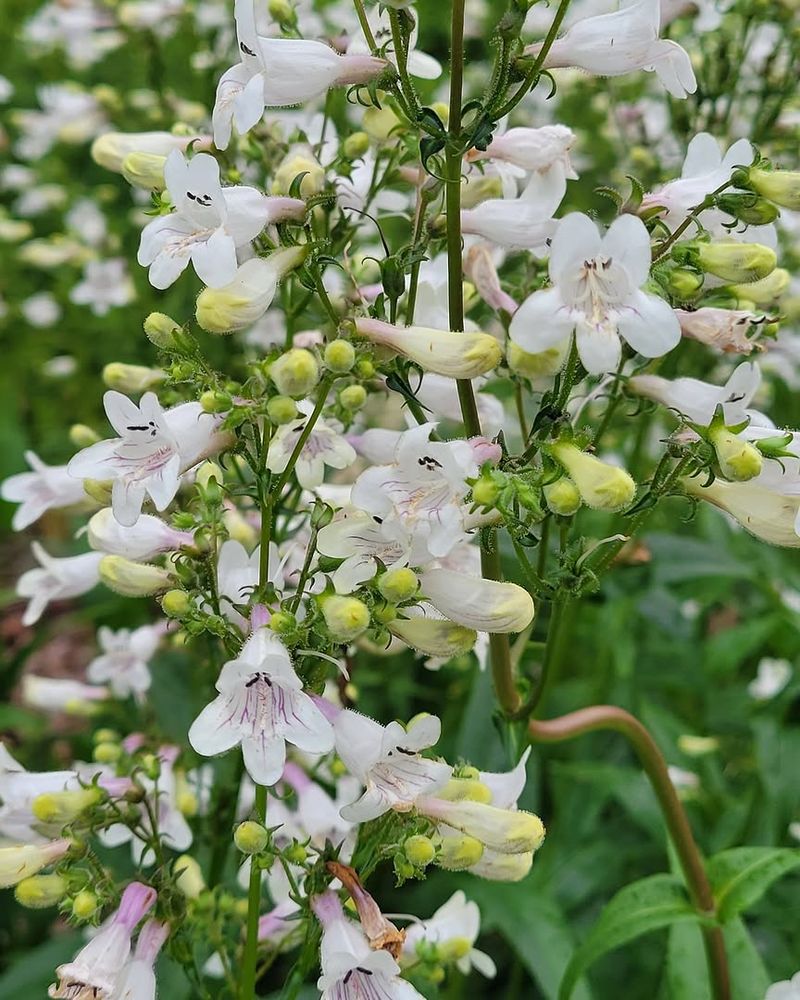
Not every gardener knows about Foxglove Beardtongue yet, but that is changing fast as more Michigan gardeners discover what a gem this native perennial really is.
Penstemon digitalis grows tall and upright, producing clusters of white, tubular, bell-shaped flowers in June that are absolutely irresistible to bumblebees and other native pollinators.
There is a quiet elegance to this plant that feels perfectly at home in both formal borders and casual native plantings.
One of the best things about this perennial is how unfussy it is about soil. Average, even slightly poor, well-drained soil suits it fine, and it does not need fertilizing to look good.
Full sun to part sun works well, giving Michigan gardeners flexibility about where to place it in the yard. It handles the state’s cold winters without any special care, reliably returning each spring with fresh, attractive burgundy-tinged basal foliage.
Foxglove Beardtongue also supports wildlife in meaningful ways beyond just providing nectar.
The seed heads that form after flowering offer food for small birds through late summer and fall, so there is real value in leaving them standing rather than cutting everything back immediately.
In a native plant border, it pairs naturally with Baptisia, Siberian Iris, and coneflowers for a layered, habitat-rich planting.
If you have been looking for a native Michigan perennial that blooms beautifully in June without demanding much attention, Penstemon digitalis belongs at the top of your planting list.
7. Allium
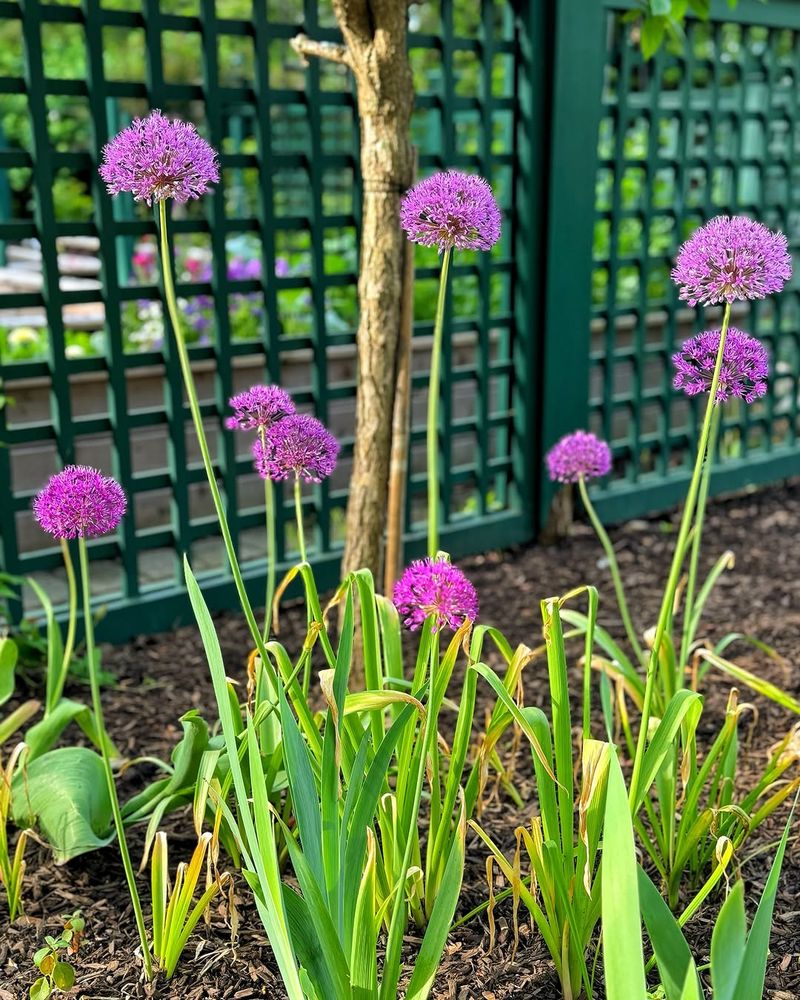
Picture a garden bed dotted with perfectly round, purple flower globes floating on tall, slender stems like something out of a botanical dream. That is exactly what ornamental alliums bring to Michigan gardens in June, and the effect is genuinely dramatic.
Allium giganteum produces globe-shaped flower heads that can reach four to five inches across, while Allium aflatunense offers slightly smaller but equally striking blooms on stems that reach two to three feet tall.
These bulbs go in the ground in fall, planted in full sun with good drainage to prevent rot over winter. Once spring arrives, the strap-like foliage emerges first, followed by those magnificent flower stalks in late May and June.
Alliums are naturally resistant to deer and most garden pests, which makes them especially practical in Michigan landscapes where deer browsing is a constant challenge. Pollinators, particularly bees, visit the flowers enthusiastically.
One honest thing to plan around is the foliage, which starts to yellow and fade right around peak bloom time.
Planting alliums behind or between bushy perennials like catmint, salvia, or coreopsis helps disguise the declining leaves while the flowers still look spectacular above them.
After bloom, the dried seed heads hold their structure beautifully and add interesting texture well into summer. Alliums are one of the easiest ways to add a truly unforgettable vertical element to your June Michigan garden with minimal ongoing effort required.
8. Lady’s Mantle
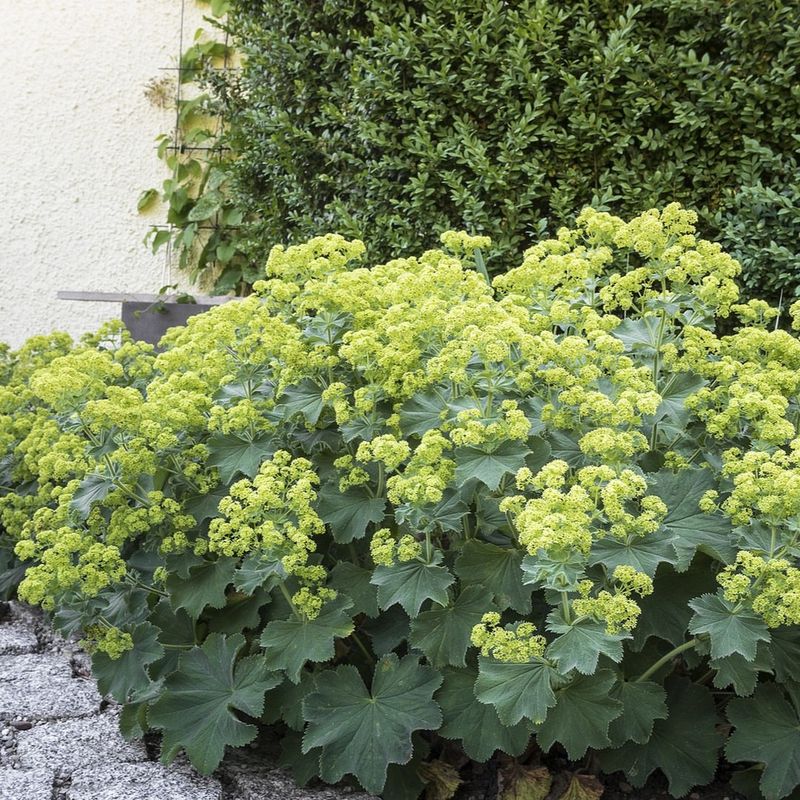
After a morning rain, Lady’s Mantle becomes one of the most quietly magical plants in the entire garden. Alchemilla mollis collects water droplets in its soft, scalloped leaves in a way that looks almost like scattered pearls, and that alone makes it worth growing.
Add the frothy, chartreuse-yellow flower clusters that appear in June, and you have a plant that brightens shaded corners in a way few others can match.
Part sun to part shade suits Lady’s Mantle perfectly, making it a smart choice for spots under trees or along the north side of a house where many sun-loving perennials would struggle.
It appreciates consistent moisture and does particularly well in Michigan’s naturally humid spring conditions.
The leaves stay attractive and lush through much of the season, giving you reliable ground-level texture long after the flowers finish.
Along border edges and pathways, Lady’s Mantle is simply unmatched. Its low, mounding habit softens hard edges beautifully, and the chartreuse color bridges gaps between bolder flower colors with effortless grace.
After the blooms begin to fade in midsummer, a light trim refreshes the foliage and keeps the plant looking tidy. It can self-seed gently in favorable spots, filling in gaps over time without becoming invasive.
For Michigan gardeners working with challenging shade conditions, Alchemilla mollis is one of the most reliable and rewarding choices available for June garden interest.
9. Coreopsis
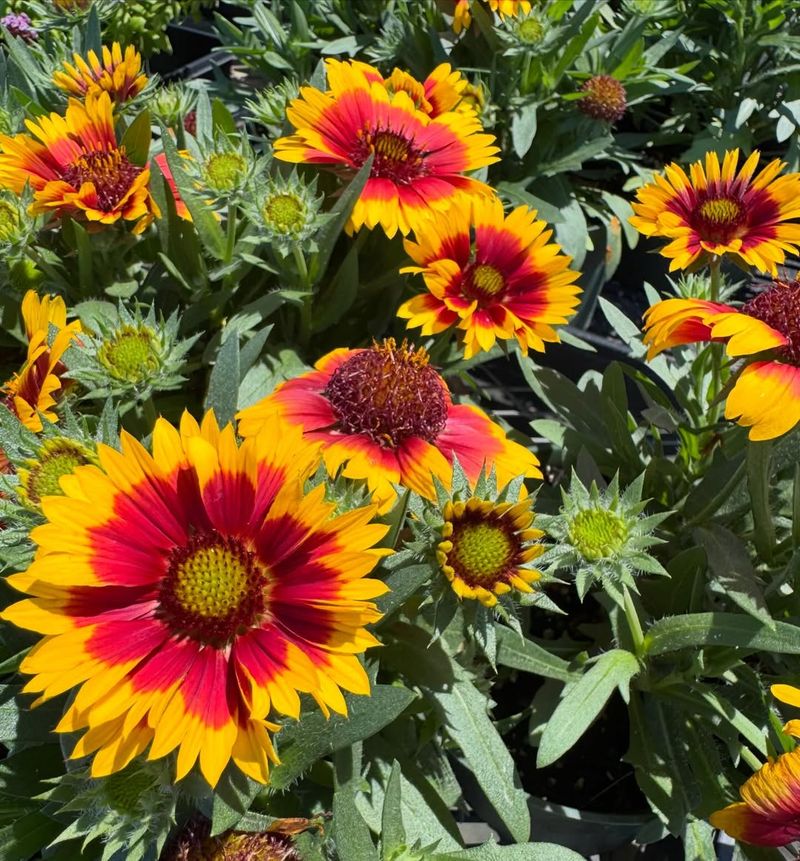
Bright, cheerful, and practically glowing in the June sunshine, coreopsis brings pure summer energy to Michigan gardens earlier than most people expect.
Coreopsis lanceolata, commonly called lanceleaf coreopsis, opens its golden-yellow, daisy-like flowers in late May and June, well ahead of many other summer bloomers.
Coreopsis verticillata, the threadleaf type, follows closely with a finer, more delicate texture and an equally generous flower display.
Both types thrive in full sun and well-drained soil, and they handle drought stretches with impressive ease once their roots establish over the first season. Heavy clay or consistently wet soil is the main thing to avoid since waterlogged conditions stress the plant over time.
Bees and butterflies are frequent visitors to coreopsis flowers, adding lively pollinator activity to the garden throughout the bloom season.
Deadheading spent flowers regularly encourages coreopsis to keep blooming for weeks longer than it would otherwise. Trimming back the whole plant by about one-third after the main flush of bloom can also trigger a fresh round of flowering later in summer.
Moonbeam, a popular verticillata variety, produces soft pale-yellow flowers that blend beautifully with purple salvias and blue catmint in a mixed border.
Coreopsis rewards consistent but simple care with one of the longest and brightest bloom seasons of any summer perennial available.