Move Pumpkins Off Georgia Lawns Before November To Prevent Grass Damage
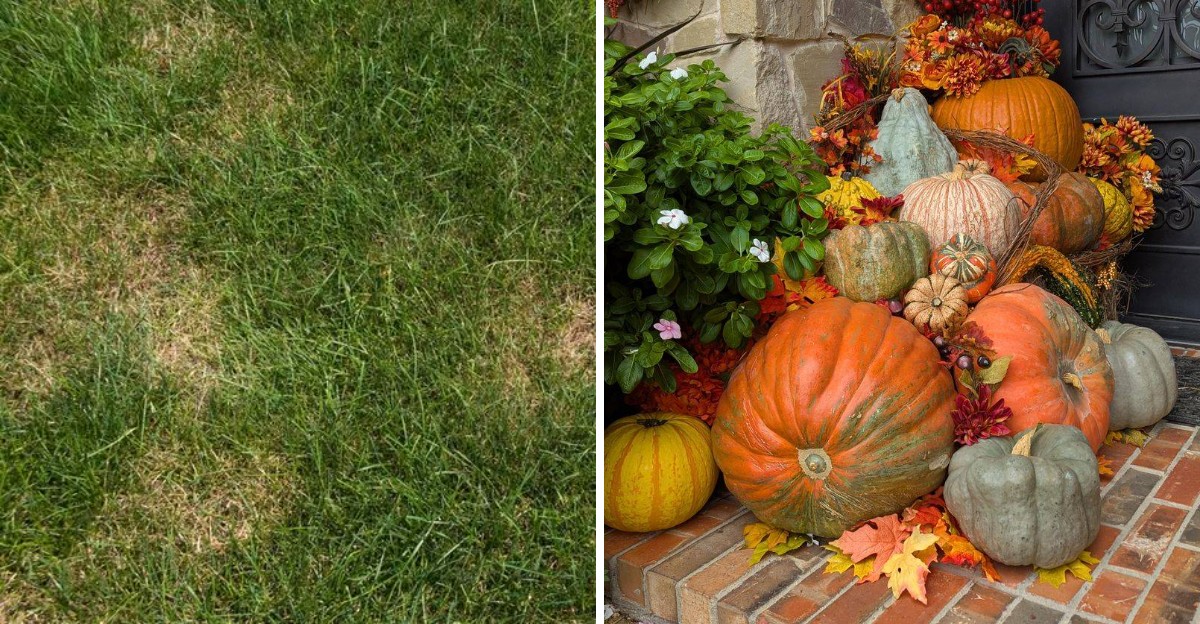
That Halloween pumpkin sitting on your lawn may leave more than a temporary decoration behind. Grass trapped underneath gets little sunlight, and the longer the pumpkin stays, the greater the chance of a noticeable patch.
A few days usually won’t cause serious trouble, but leaving heavy decorations in one place for weeks is another story.
Late October is a good time to check the grass beneath pumpkins and other displays.
Georgia lawns may still have green grass heading into November, especially where warm-season turf hasn’t fully entered dormancy. A pumpkin resting directly on the blades can flatten them and hold moisture against the surface.
Move decorations onto a porch or another hard surface before they sit too long.
If the grass underneath looks yellow or pressed down, give it some time to recover.
1. Sitting Pumpkins Block Sunlight From The Grass Underneath
Lift a pumpkin after two or three weeks, and you will likely find a pale circle staring back at you. Grass blades need light to make food, and a solid pumpkin shuts that process down in its footprint.
Without sunlight, the leaves stop producing chlorophyll and start turning yellow or almost white.
Gardeners sometimes call this etiolation, though most of us just call it a sad-looking patch. Size matters here, since a big carving pumpkin covers far more turf than a small decorative gourd.
How long the pumpkin sits also makes a real difference.
A few days in one spot usually causes little trouble for healthy grass. After a couple of weeks, though, the damage tends to show, and it may take a while to green back up.
Weather and grass type change the outcome too. A sunny, mild October in Georgia gives growing grass a better shot at bouncing back once the cover is gone.
One easy trick is to shift your pumpkins a foot or two every few days. That spreads the shade around so no single spot carries the full load.
Even so, rotating is only a stopgap if the display stays out for most of the fall.
Getting the pumpkins off the grass completely before November is the cleaner fix, especially once cooler days slow how fast turf can repair itself.
2. Trapped Moisture Beneath The Fruit Invites Mold And Rot
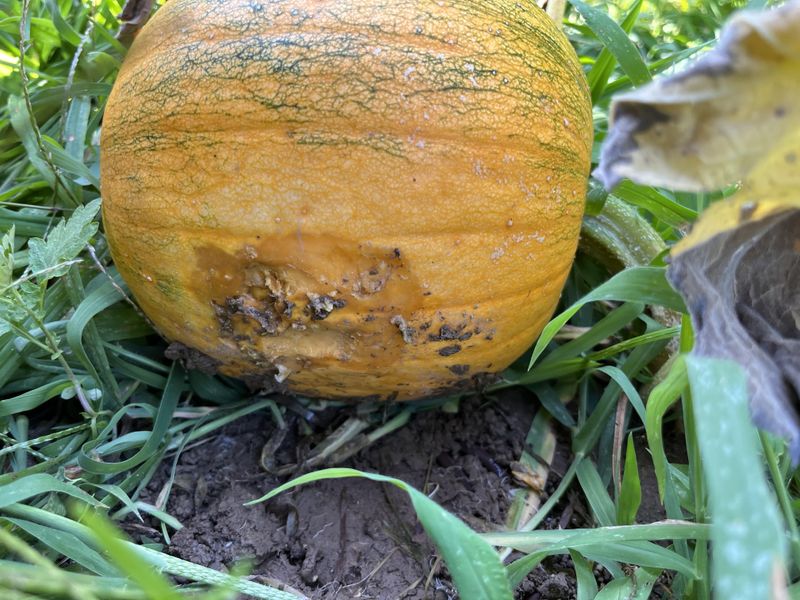
Damp grass and a heavy pumpkin make a messy pair. Morning dew, rain, and sprinkler water all collect under the fruit, where sun and wind cannot dry them out.
That steady wetness gives fungi a comfortable place to grow on both the pumpkin and the turf.
Humid fall weather is common across much of Georgia, so this problem can build faster than people expect. Warm, wet spells in October are especially good at speeding things along.
Once the bottom of a pumpkin softens, it starts leaking juice into the thatch and soil.
You might notice a slimy feel, a sour smell, or fuzzy white or gray growth along the base. Any of these signs mean the pumpkin is breaking down and the grass below is sitting in a soggy mess.
Not every wet patch turns into a lawn disease, and many spots recover once they dry.
Still, constant moisture and rotting plant material can raise the odds of fungal trouble in turf. Removing the source is usually the simplest way to let the area air out.
Check the underside of your pumpkins once a week by tipping them gently.
If you see soft spots, move that pumpkin right away. A dry, firm pumpkin can last longer on a hard surface, and your grass will thank you for the break.
3. Actively Growing Fescue Suffers Quickly Under Heavy Shade
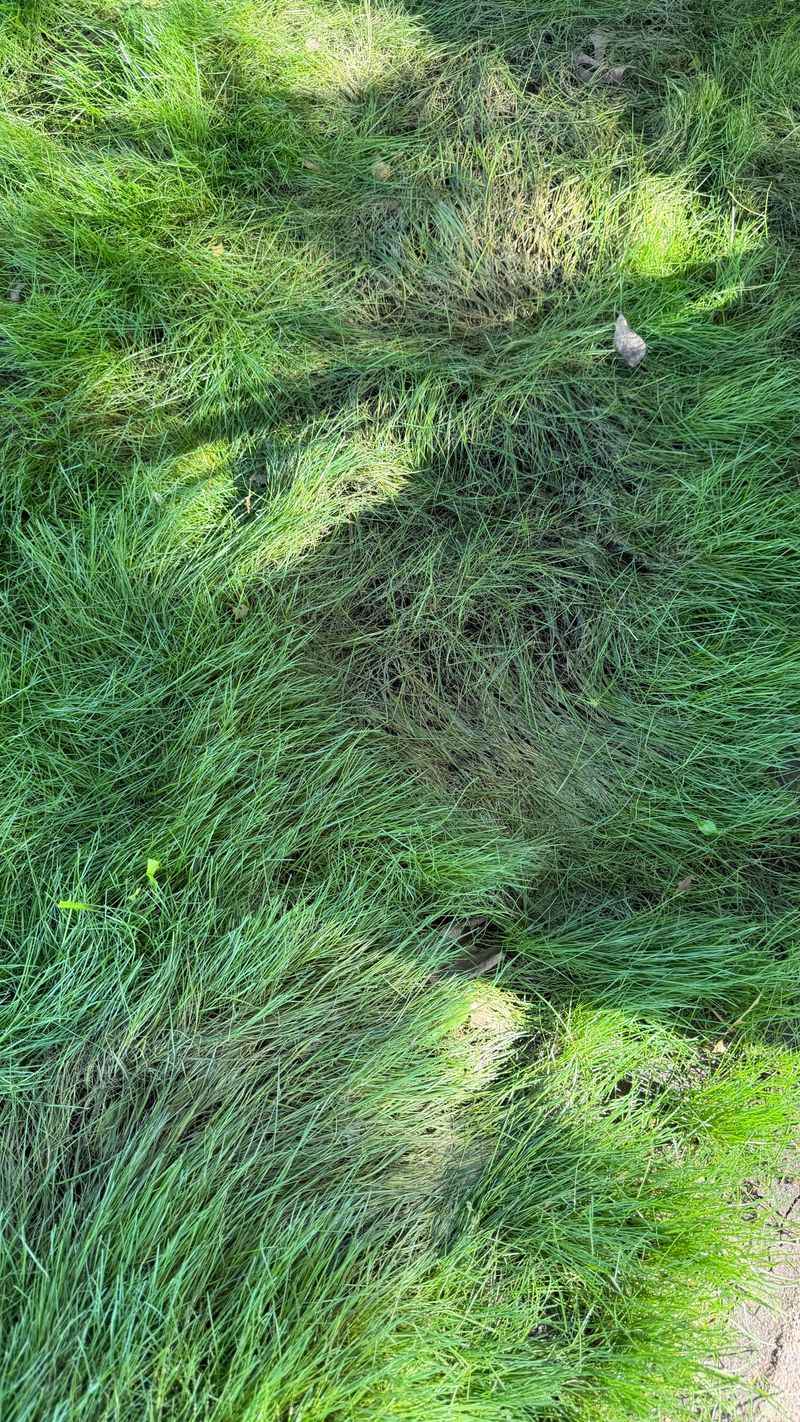
Fall is prime time for tall fescue. In north Georgia, where fescue is a popular lawn choice, cooler weather pushes this grass into a strong growing season.
That is good news for most of the yard, but it also means fescue is hungry for light right now.
Cool-season grasses do a lot of their root building and leaf growth in autumn. Blocking the sun during this stretch takes away energy the grass would normally store for winter and spring.
Here is where fescue owners need to pay attention.
Homeowners often overseed or fertilize fescue in early fall, based on guidance from UGA Extension. Setting a pumpkin on fresh seedlings can smother tender young grass before it gets established.
Thin or newly seeded areas are the most at risk.
Established, thick fescue may handle a short stay better, though a long one can still leave a weak spot. Results depend on how healthy the lawn was to begin with, along with soil and weather.
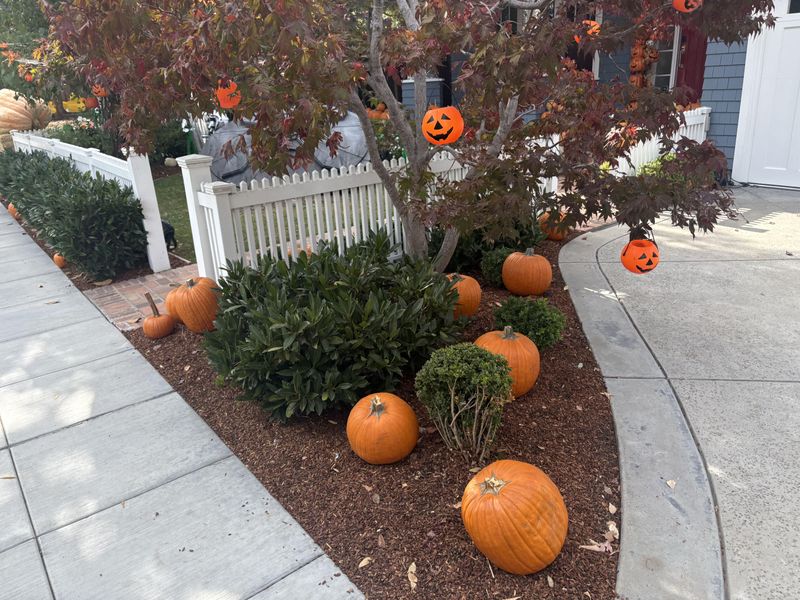
A smart move is to keep pumpkins away from any area you seeded this season. Pick a mulched bed, a sidewalk edge, or the driveway instead.
Already have a pale patch? Light raking and normal fall care often help fescue fill back in while temperatures are still mild.
4. Dormant Warm-Season Turf May Not Recover Until Spring
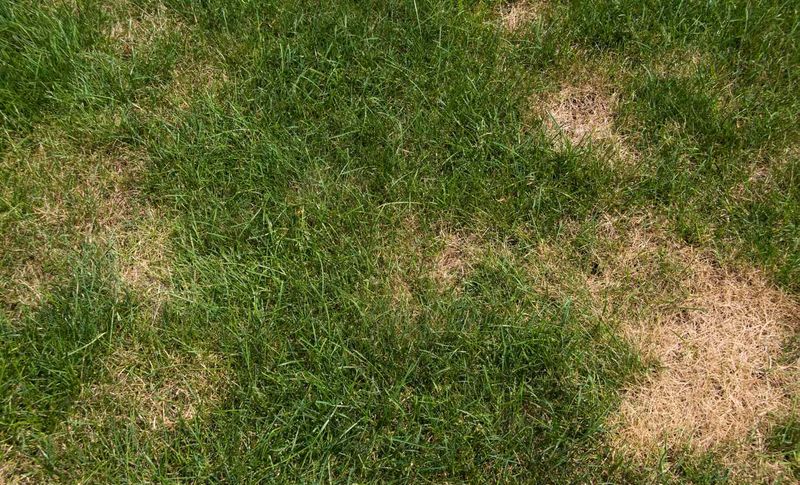
Bermuda, zoysia, centipede, and St. Augustine play by different rules. These warm-season grasses slow down as fall cools off and usually go dormant after frost.
Dormant grass turns tan and stops growing, so it has little ability to heal itself.
That timing is the real catch. A patch damaged in late October may simply stay thin or bare until the grass greens up again in spring.
Across central and south Georgia, warm-season lawns are the norm, and many homeowners never notice the damage until April or May.
By then, a bare circle may have become an open invitation for winter weeds. Annual bluegrass and other cool-season weeds are quick to move into weak spots with little competition.
Recovery time varies quite a bit.
Bermuda spreads aggressively and often fills small gaps once warm weather returns. Centipede and St. Augustine can be slower, depending on soil, shade, and how much stress the turf faced.
Moving pumpkins before dormancy sets in gives the grass a few more weeks of light while it still has some activity.
Should a spot look rough in spring, wait for steady green growth before deciding if plugs or sod are needed. Often, a little patience and normal summer care are enough.
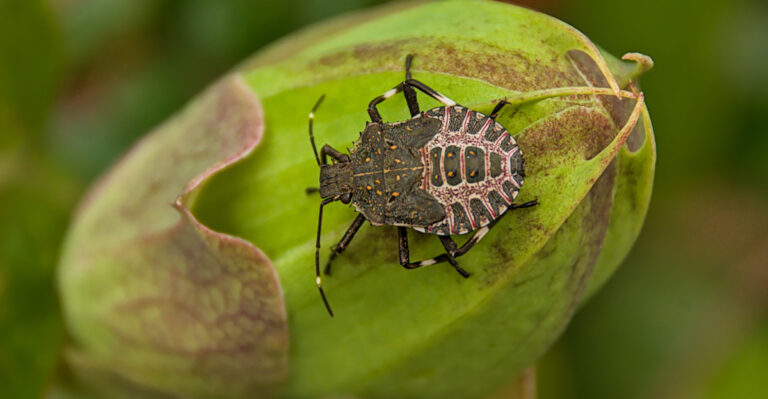
5. Softening Pumpkins Can Attract Squirrels And Fruit Flies
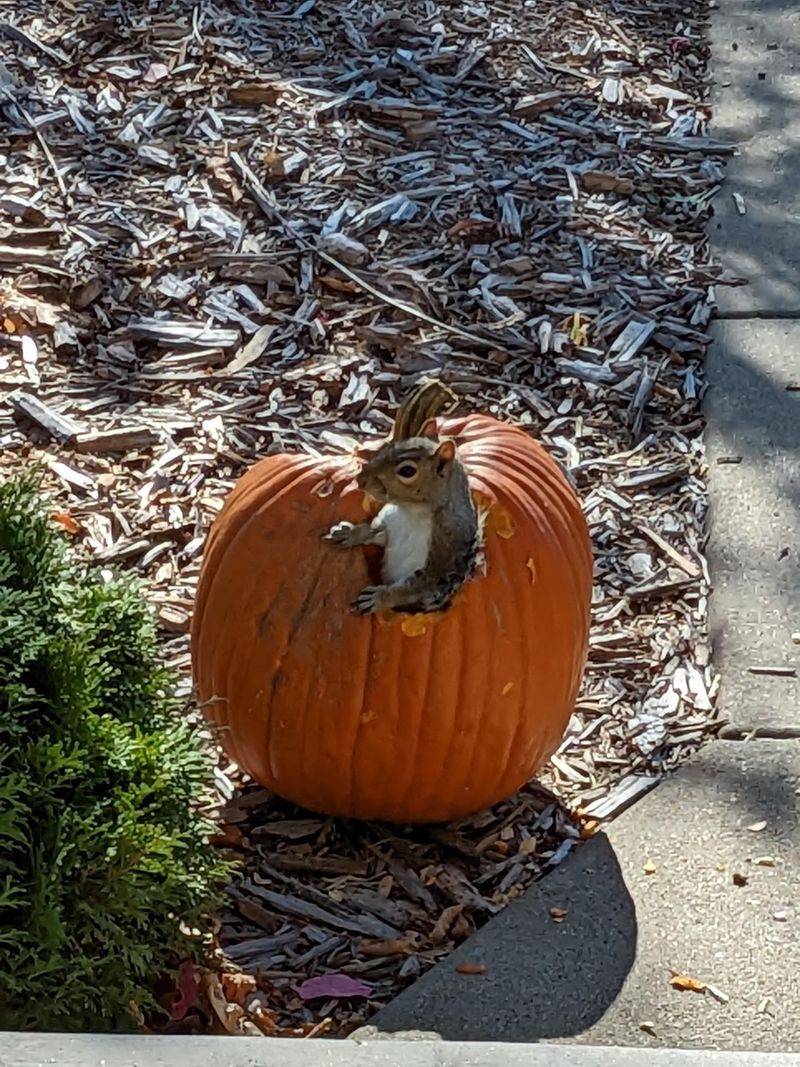
Squirrels see your porch display as a free buffet. Gray squirrels are common in Georgia neighborhoods, and they will happily chew pumpkins, especially carved ones with exposed flesh and seeds.
Once they start, the pumpkin often breaks down even faster.
Fruit flies come next. They are drawn to fermenting fruit, and a soft, leaking pumpkin gives off the sweet smell they love.
A few flies outdoors is not a big deal for most people.
Problems grow when a messy pumpkin sits near your front door, where flies may drift inside. Gnats and other small insects can also gather around rotting spots.
Other visitors are possible too, depending on where you live. Raccoons, opossums, and deer sometimes snack on pumpkins, though how often this happens varies a lot from yard to yard.
Chewed scraps scattered across the grass add to the lawn issues you already have.
Bits of pumpkin can cover more turf, hold moisture, and draw even more animal traffic to the same area. Cleaning up early keeps things tidy.
Uncarved pumpkins usually hold up longer than carved ones. Keeping them dry and checking for soft spots helps you catch trouble early.
When a pumpkin starts to sag or leak, take it off the lawn and move it to compost.
6. Pavers Or Porch Steps Make Safer Display Spots
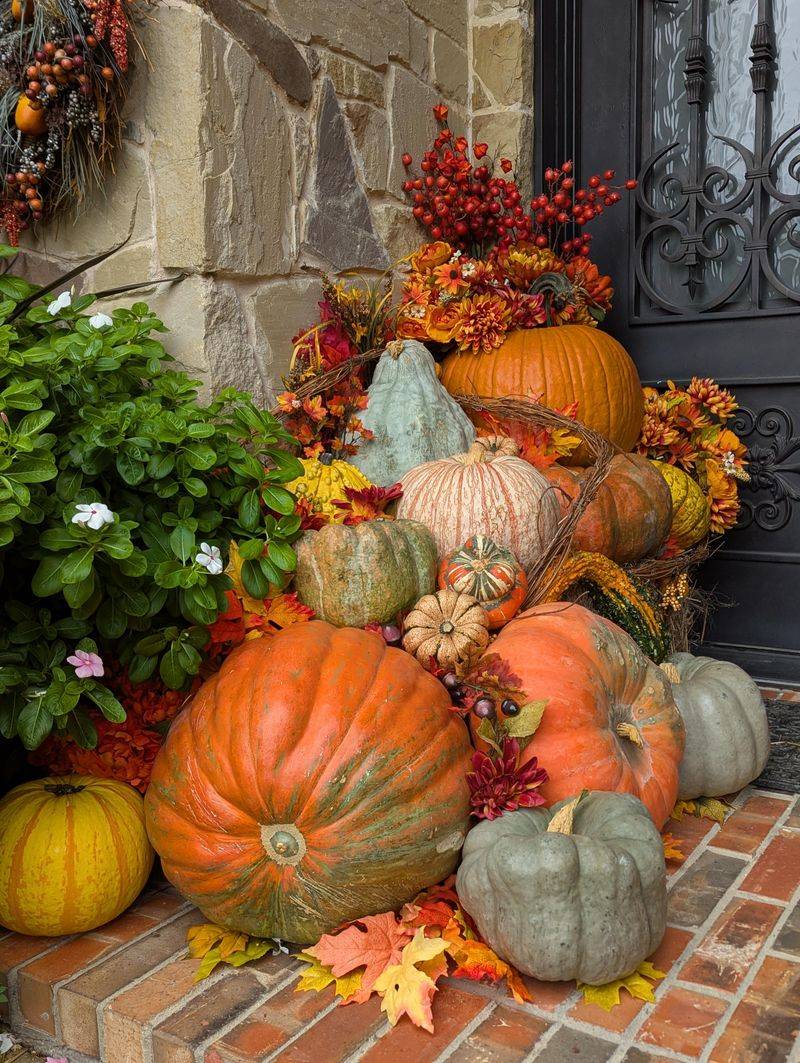
Hard surfaces solve most of the trouble in one move. Porch steps, brick pavers, patios, and stone walkways have no grass to shade out and dry faster after rain.
Your display stays just as cheerful, and the lawn gets left alone.
Steps also lift pumpkins to eye level, so they look better from the street. Mixing in potted mums, straw bales, or gourds can fill out the scene without touching turf.
One caution applies to light-colored concrete and some pavers.
A rotting pumpkin can leave a stain on porous surfaces. Setting each one on a plastic saucer, a piece of cardboard, or a small wooden board helps catch drips and makes cleanup easier.
Safety matters on steps too.
Keep a clear path for walking, especially for trick-or-treaters on Halloween night. Push pumpkins to the sides rather than the middle of each step.
Not every Georgia home has a big porch, and that is fine. Mulched flower beds, gravel areas, and driveway edges all work well as alternatives.
Raised options like a wooden crate or an old bench can also hold a nice cluster.
Wherever you set them, airflow underneath helps pumpkins last. A little gap or a slatted surface lets moisture escape so the fruit stays firm longer.
7. Smashed Pumpkins Break Down Quickly In The Compost Pile
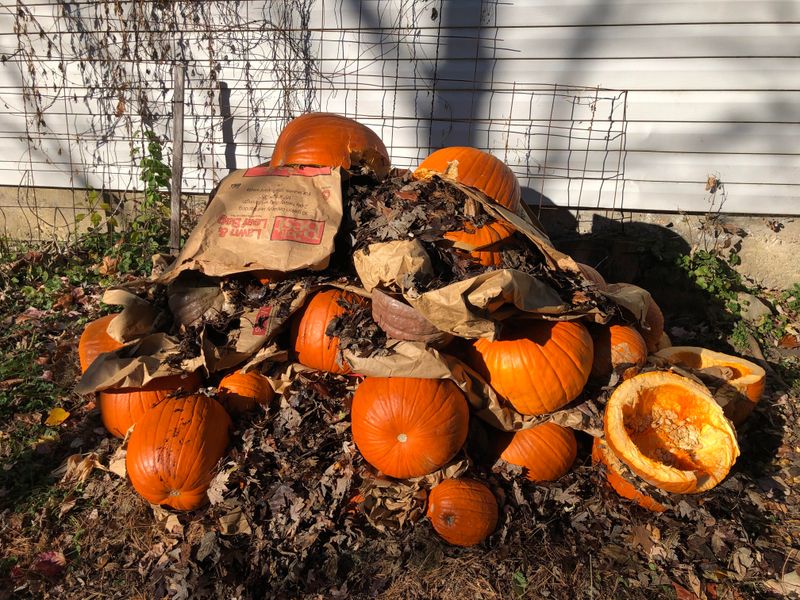
Old pumpkins do not belong in the trash. Pumpkins are mostly water and soft plant tissue, which makes them a solid addition to a backyard compost pile.
Breaking them into smaller pieces first helps a lot.
Smashing a pumpkin opens up more surface area for microbes to work on. Kids usually enjoy this part, and a few gentle drops onto a tarp do the trick.
Remove candles, wax, paint, glitter, and any plastic decorations before composting. Painted pumpkins are best kept out, since some finishes may not break down safely.
Balance is the key to a healthy pile.
Pumpkin pieces count as green material, so mix them with brown items like fallen leaves, which are easy to find in Georgia yards during November. That mix helps prevent a soggy, smelly heap.
Seeds may sprout next year if the pile does not get hot enough. Scooping them out first, or roasting them for a snack, can save you from surprise pumpkin vines.
How fast everything breaks down depends on pile size, moisture, and temperature.
Cooler winter weather slows composting, so pieces may take longer than they would in summer. Turning the pile now and then keeps things moving.
No compost bin? Some towns offer fall yard waste pickup, so check with your local service for options.