10 Must Know Tips For Watering Fruit Trees In Texas For Stronger Growth Year Round
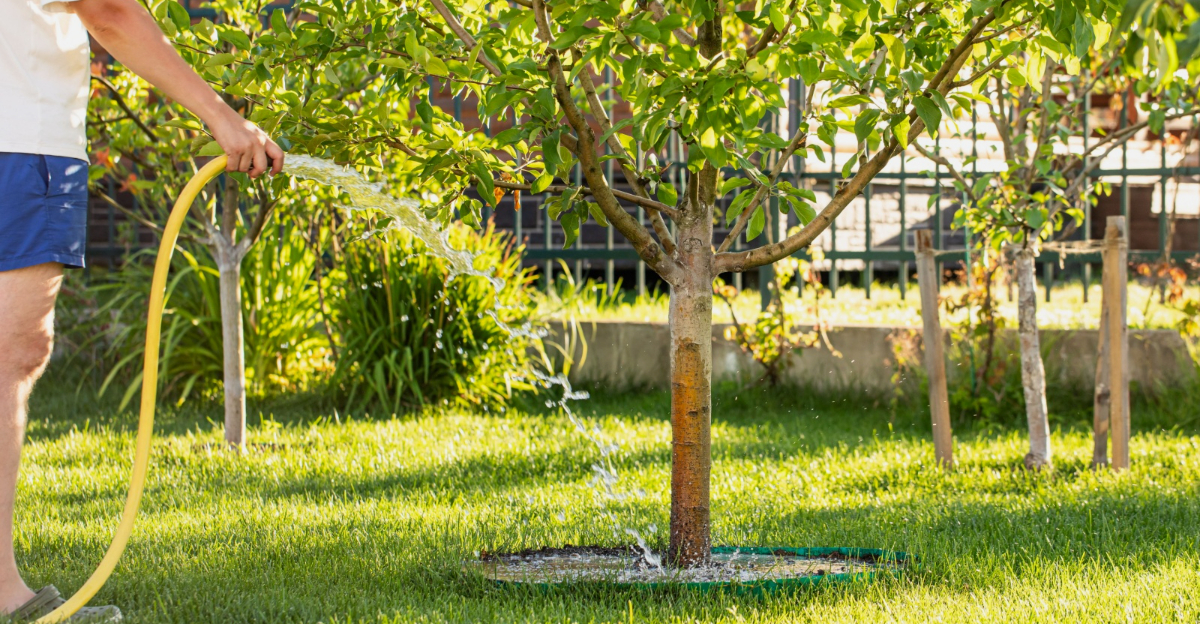
Growing fruit trees in Texas comes with its own rhythm, and water plays a bigger role than many expect.
Long stretches of heat, uneven rainfall, and shifting soil types across Texas can make it tricky to keep trees consistently hydrated.
What works in sandy East Texas may fall short in North Texas clay or the rocky Hill Country.
Many gardeners find themselves overwatering during cooler periods, then struggling to keep up once temperatures climb.
With a few thoughtful adjustments, it becomes much easier to support steady growth, stronger roots, and more reliable harvests across the changing Texas seasons.
1. Water Deeply Instead Of Frequently
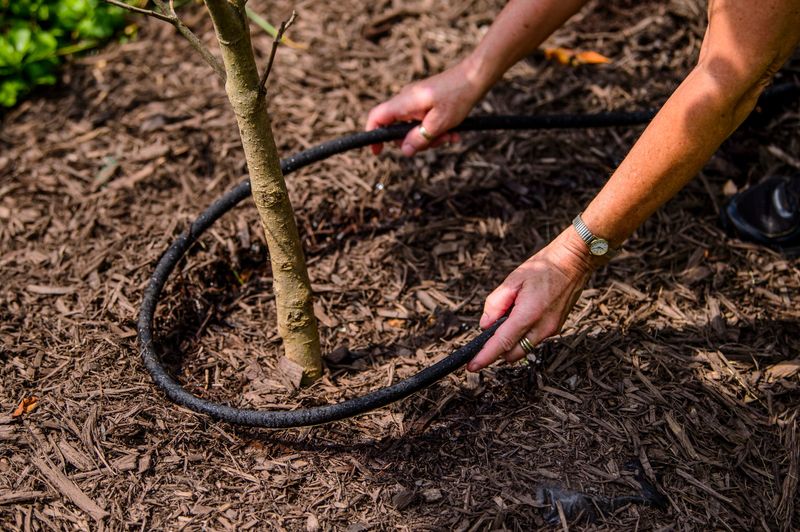
Shallow, frequent watering is one of the most common mistakes Texas gardeners make with their fruit trees.
When water only reaches the top few inches of soil, roots have no reason to grow downward, leaving trees vulnerable during dry spells and summer heat waves.
Deep watering encourages roots to follow moisture down into the soil profile, where temperatures stay cooler and water lingers longer. Aim to water slowly enough that moisture soaks down at least 18 to 24 inches below the surface.
Soaker hoses and drip irrigation work well for this because they release water gradually, giving the soil time to absorb it rather than letting it run off.
In Texas, where summer droughts can stretch for weeks, trees with deeper root systems tend to handle stress far better than those with shallow roots.
Watering deeply once or twice a week during hot months is generally more effective than light daily watering.
Letting the soil dry slightly between sessions also helps roots spread outward and downward in search of moisture, which builds a stronger, more resilient root system over time.
2. Adjust Watering Based On Tree Age
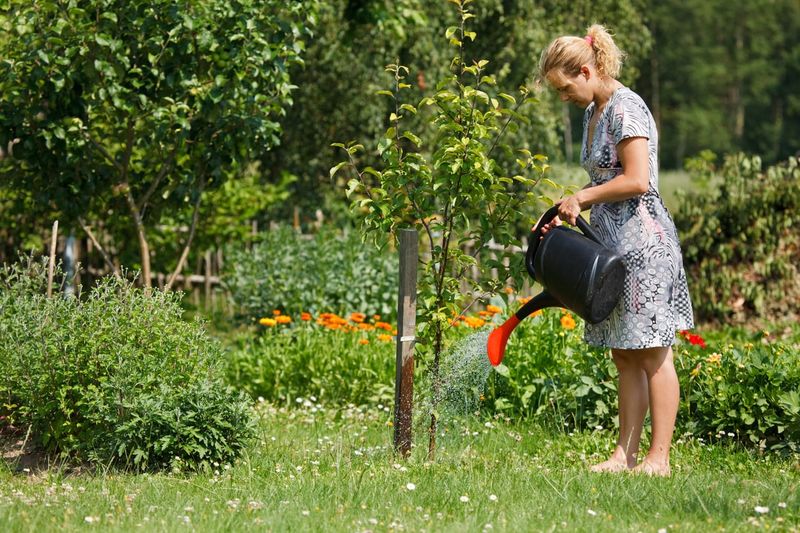
A newly planted peach or plum tree in Texas has very different water needs compared to one that has been growing in your yard for five years.
Young trees have small, undeveloped root systems that cannot reach moisture far from the planting hole, making them especially sensitive during their first two growing seasons.
For newly planted trees, watering two to three times per week during warm months is reasonable, especially if rainfall has been sparse. Keep the water focused on the root ball area and just beyond it, since that is where the roots are actively growing.
As the tree matures and roots spread wider, you can gradually reduce watering frequency.
Established trees in Texas typically need watering once every one to three weeks during the growing season, depending on heat and rainfall.
Checking the soil before watering helps you avoid overwatering, which can be just as harmful as underwatering.
Older trees with deep, established roots are more drought-tolerant, but they still benefit from supplemental irrigation during extended dry periods.
Adjusting your schedule as your tree grows is one of the simplest ways to support healthy development year after year.
3. Focus Water At The Drip Line
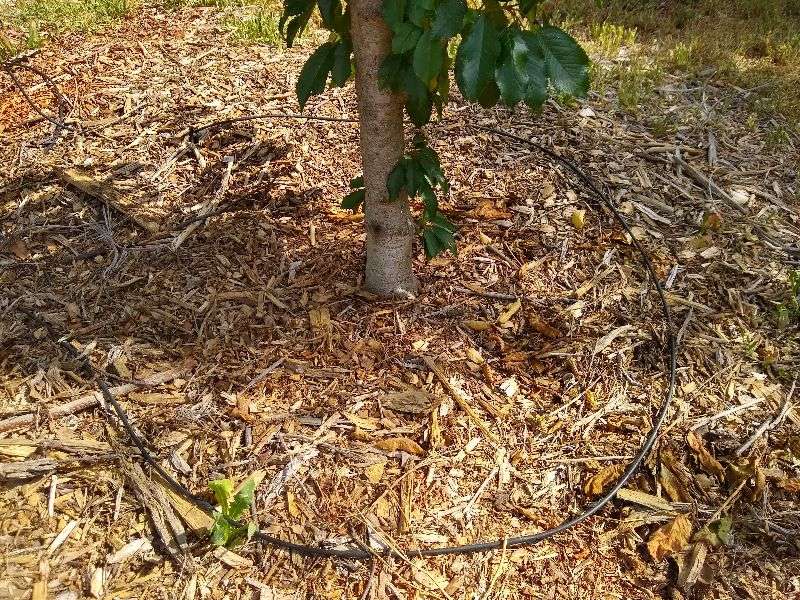
Most people instinctively water right at the base of a tree trunk, but that is actually one of the least effective spots to apply water.
The roots that absorb the most moisture and nutrients are located near the outer edges of the tree’s canopy, in an area called the drip line.
The drip line is roughly where rainwater would naturally drip off the outermost leaves and fall to the ground. Roots in this zone are fine, fibrous, and highly active, making them the primary absorbers of water and nutrients.
Concentrating irrigation in this area gives your tree the most benefit from every gallon you apply.
In Texas, where water conservation matters during dry summers, targeting the drip line helps you use water more efficiently.
As your tree grows and the canopy expands, move your irrigation emitters or soaker hose outward to stay aligned with the drip line.
A simple way to visualize this is to look straight up at the edge of the canopy and follow that line down to the ground.
Watering in a ring around the tree at that distance, rather than flooding the base, supports much stronger root development and overall tree health.
4. Water Early In The Morning
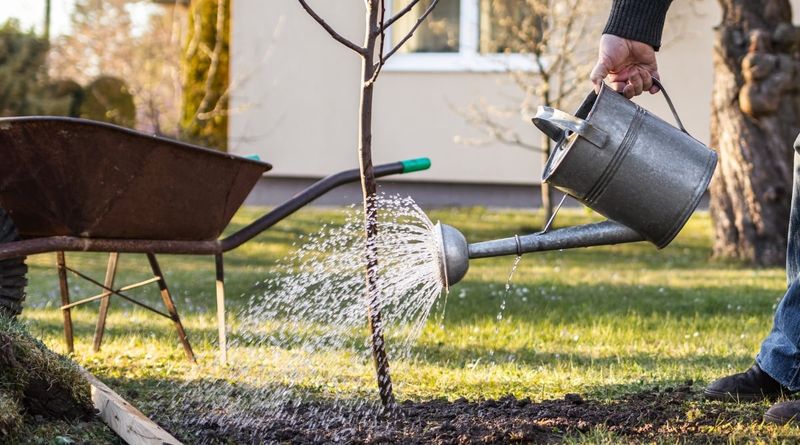
Timing your watering sessions can have a bigger impact on water efficiency than most Texas gardeners realize.
When you water during the heat of the day, a significant portion of that moisture evaporates before it ever reaches the root zone, especially during Texas summers when temperatures can climb well above 95 degrees.
Early morning watering, ideally between 5 a.m. and 9 a.m., gives water time to soak into the soil before the sun intensifies.
The cooler temperatures reduce evaporation, and the soil can absorb moisture more effectively when it has not yet been baked by afternoon heat.
Leaves that get wet during morning watering also have time to dry out before evening, which helps reduce the risk of fungal issues.
Evening watering is sometimes suggested as an alternative, but leaving foliage wet overnight in humid parts of Texas can encourage disease development.
Morning watering strikes a better balance, keeping moisture where it belongs – in the soil and around the roots.
Setting up a simple timer on your drip or soaker system makes morning watering easy even on busy days. Over time, this one adjustment can noticeably improve how well your fruit trees handle the Texas heat.
5. Increase Watering During Extreme Heat

When Texas temperatures push past 100 degrees for days on end, even well-established fruit trees begin to show signs of heat stress. Leaves may curl slightly, growth slows, and the tree diverts energy away from fruit development just to stay stable.
Recognizing when to increase your watering frequency can help prevent this kind of stress from setting in.
During extreme heat events, the soil dries out much faster than during mild weather, sometimes within just a day or two.
Checking soil moisture more frequently during these periods – rather than sticking to a fixed schedule – gives you a more accurate read on what your trees actually need.
A simple screwdriver test works well: push it six to eight inches into the soil near the drip line, and if it meets resistance or the soil feels dry, it is time to water.
Adding an extra watering session per week during heat waves, rather than doubling the amount given in a single session, tends to be more effective.
Pairing extra watering with a fresh layer of mulch during hot stretches helps the soil hold onto moisture longer between sessions.
Across Texas, summer heat intensity varies by region, so gardeners in West Texas or the Rio Grande Valley may need to adjust more aggressively than those in cooler northern areas.
6. Reduce Watering In Winter Dormancy
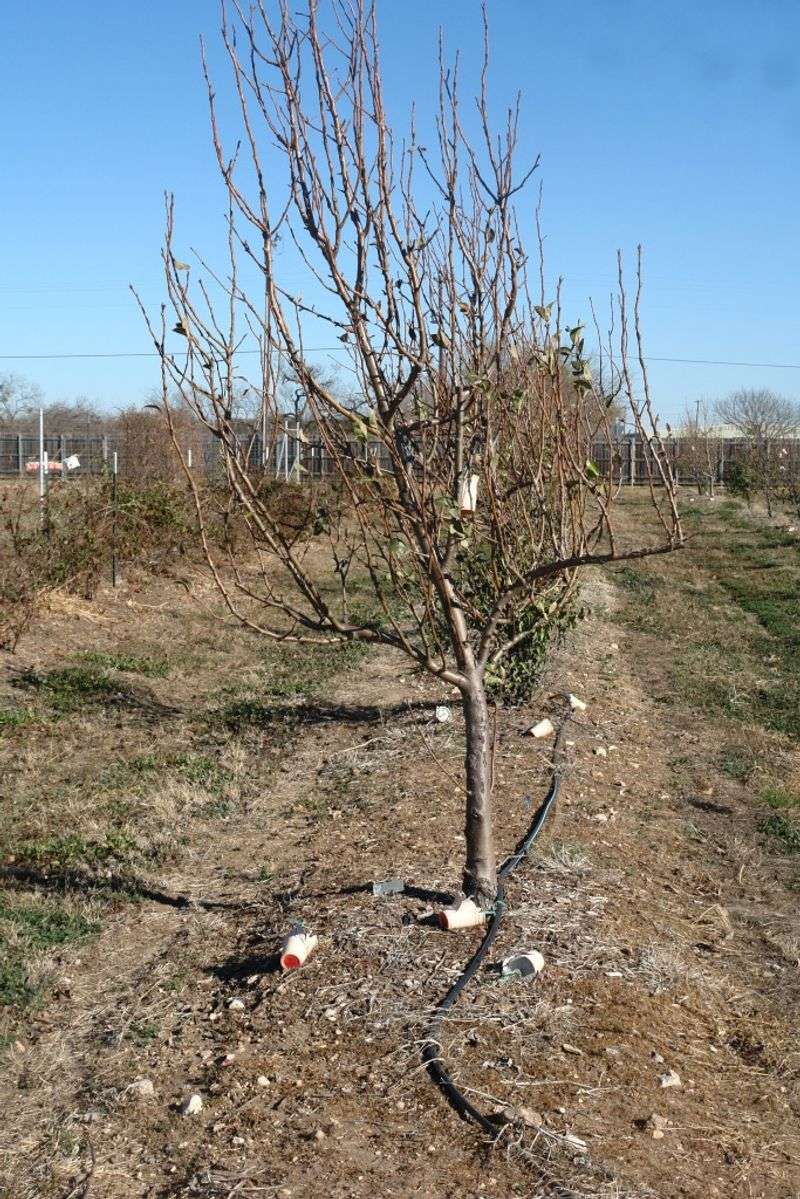
Once the temperatures drop and your fruit trees shed their leaves in late fall, their water needs change considerably.
During dormancy, trees slow down their metabolic activity, which means they are not actively growing or producing fruit and therefore require far less moisture than they do during the growing season.
Overwatering during winter is a common mistake, particularly for Texas gardeners who are used to irrigating heavily through summer. Excess moisture in cold soil can lead to root problems and may weaken the tree heading into spring.
Cutting back watering to once every three to four weeks during winter months is often sufficient, depending on how much natural rainfall your area receives.
In parts of Texas that experience mild winters with occasional warm spells, trees may not go fully dormant.
In those cases, light supplemental watering every two to three weeks may still be appropriate if rain has been scarce.
The key is to monitor the weather and adjust accordingly rather than following a rigid schedule. Letting the soil guide your decisions during winter keeps roots healthy without creating waterlogged conditions.
A light watering just before a hard freeze can also help insulate roots from temperature extremes, which is worth keeping in mind across the colder regions of Texas.
7. Check Soil Moisture Before Watering
Watering on a fixed calendar schedule sounds organized, but it often leads to overwatering during rainy stretches and underwatering during dry spells.
Checking actual soil moisture before you water gives you a much more accurate picture of what your tree needs on any given day.
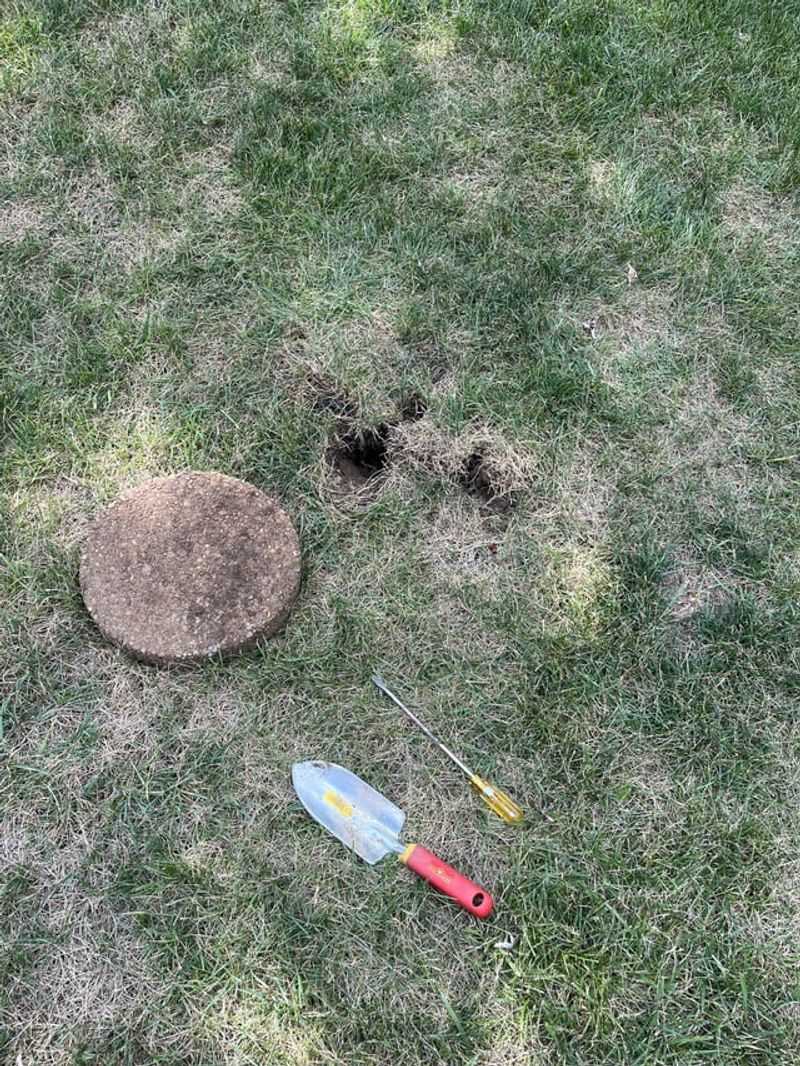
One of the simplest methods is the screwdriver test. Push a long screwdriver or a wooden dowel into the soil near the drip line.
If it slides in easily to about six or eight inches, the soil likely has enough moisture. If it meets resistance or the soil crumbles and feels dry, watering is needed.
Soil moisture meters are another useful option and can be found at most garden supply stores across Texas.
Different parts of Texas have soils that dry out at very different rates.
Sandy soils in East Texas drain quickly and may need more frequent checks, while the heavy clay soils of Central Texas hold moisture longer but can become waterlogged if watered too often.
Building a habit of checking before watering, rather than watering by the clock, helps you respond to actual conditions rather than assumed ones.
Over time, this practice can lead to healthier root systems and more consistent fruit production throughout the growing season.
8. Use Mulch To Retain Soil Moisture
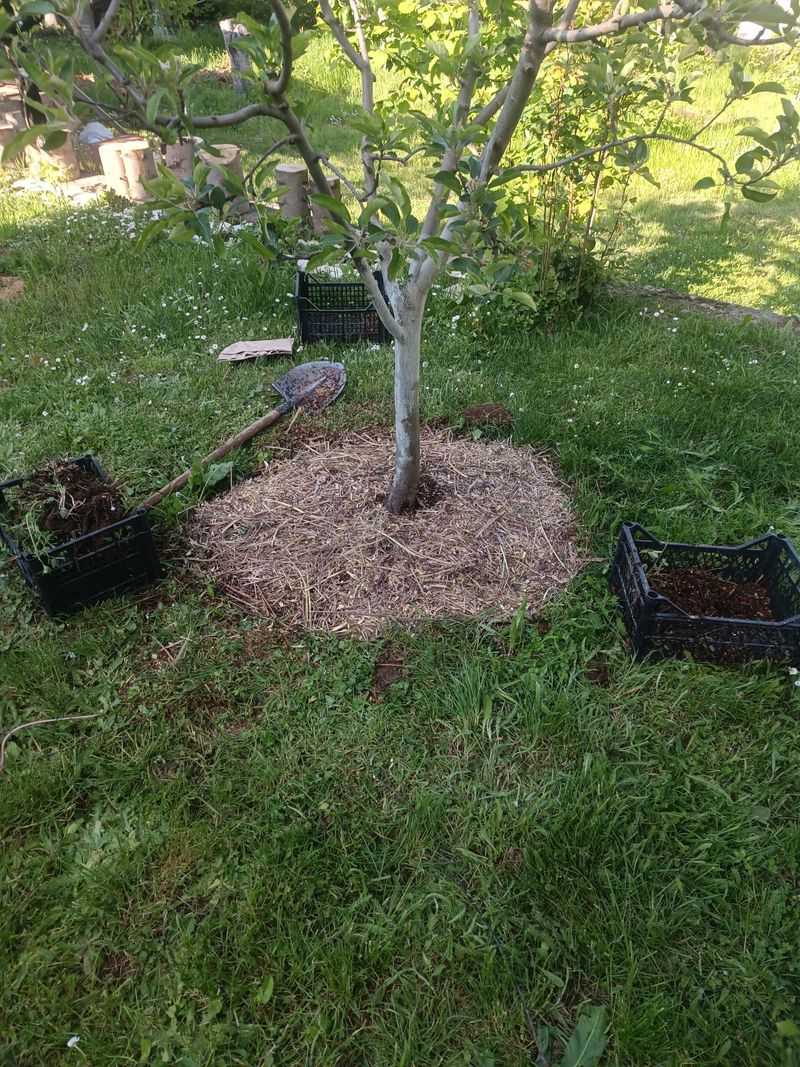
One of the most practical tools available to Texas fruit tree growers costs very little and takes only a few minutes to apply.
A two to four inch layer of organic mulch spread around the base of a fruit tree can dramatically reduce how quickly soil moisture evaporates, especially during the scorching Texas summer months.
Wood chips, shredded bark, and straw are all commonly used mulch materials that work well around fruit trees.
Spread the mulch outward from just a few inches away from the trunk all the way to the drip line, creating a wide ring that covers the root zone.
Keeping mulch a few inches away from the trunk itself helps prevent moisture from sitting against the bark, which can cause problems over time.
Beyond moisture retention, mulch also moderates soil temperature, keeping roots cooler on hot days and slightly warmer during cold nights in Texas winters.
As organic mulch breaks down, it gradually improves soil structure and adds nutrients, which benefits tree health in the long run.
Refreshing the mulch layer each spring or after it thins out ensures you are getting the full benefit throughout the year. In Texas, where summer heat can parch the soil surprisingly fast, mulch is one of the easiest upgrades a fruit tree grower can make.
9. Avoid Watering The Trunk Directly
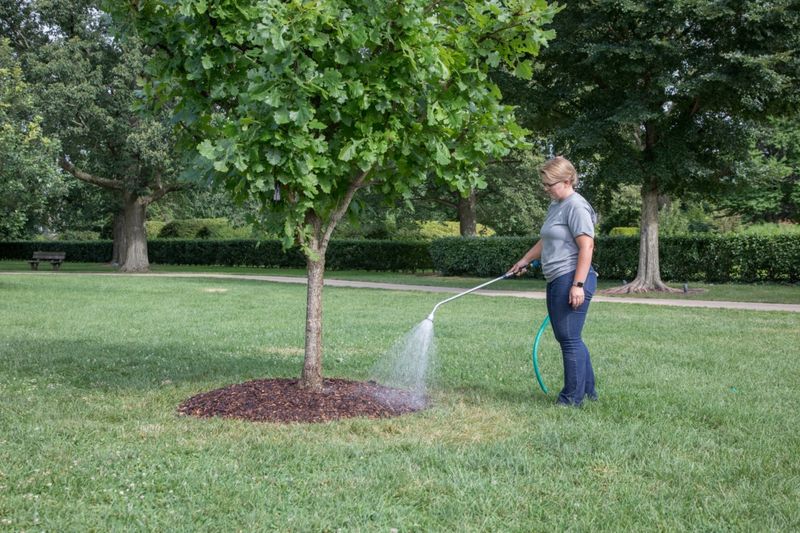
Keeping water away from the trunk of a fruit tree might seem like a small detail, but it can have a real impact on long-term tree health.
The bark near the base of a tree is not designed to stay wet, and consistent moisture against the trunk creates conditions where fungal issues and bark decay can develop over time.
In Texas, where summer humidity varies widely by region, wet trunk conditions can be particularly problematic in the eastern and coastal parts of the state.
Even in drier areas, repeatedly soaking the trunk base can gradually weaken the tree at its most critical structural point.
When setting up drip emitters or soaker hoses, make sure they are positioned at least 12 inches away from the trunk and directed outward toward the active root zone.
The same principle applies when hand-watering. Resist the urge to flood the base of the tree and instead focus the water further out where the feeder roots are located.
If you use a sprinkler system, check that the spray pattern is not regularly hitting the lower trunk.
A simple adjustment to your emitter placement or hose positioning can protect the tree from unnecessary moisture stress at the base.
Healthy bark means a stronger tree overall, which matters a great deal in the demanding Texas climate.
10. Adjust For Soil Type Across Texas
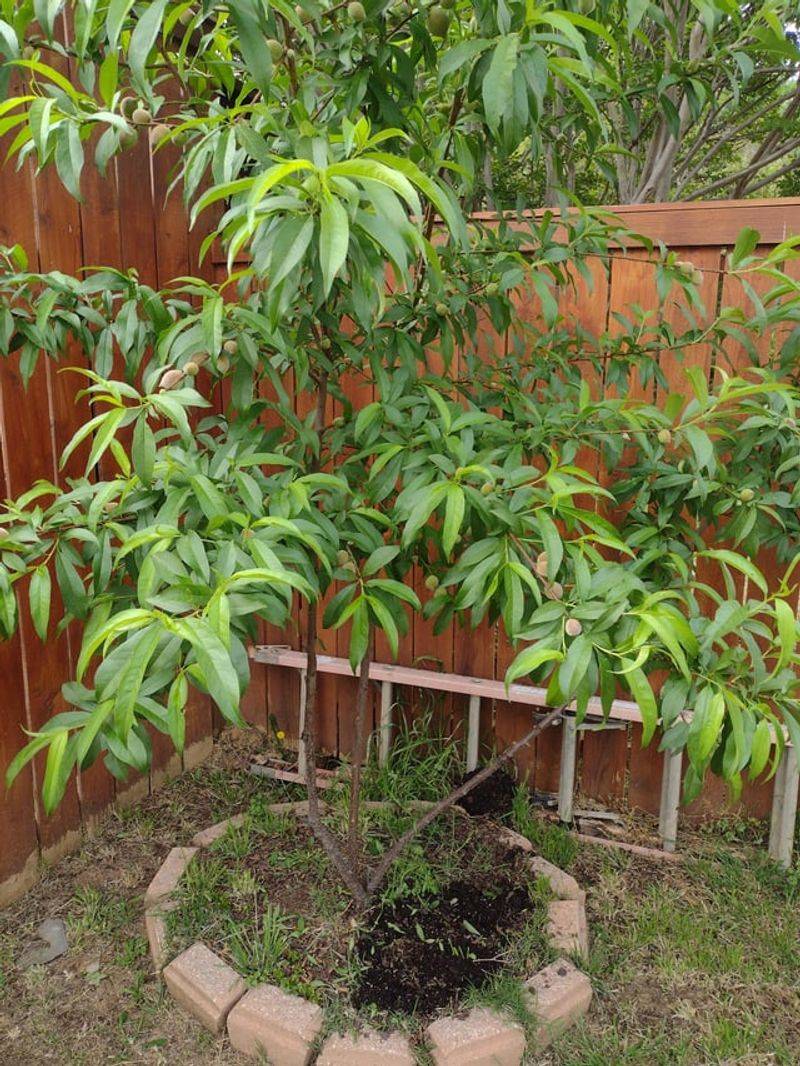
Texas is one of the most geographically diverse states in the country, and its soils reflect that variety in dramatic ways.
From the sandy loam of East Texas to the thick black clay of the Blackland Prairie and the shallow, rocky soils of the Hill Country, water behaves very differently depending on where your fruit trees are growing.
Sandy soils drain quickly, which means water moves through the root zone fast and trees may need more frequent irrigation to stay adequately hydrated.
Clay soils, on the other hand, hold water much longer and can become waterlogged if watered too often or too heavily.
In clay-heavy areas, watering less frequently but deeply tends to work better, and improving drainage through organic matter can help roots breathe between sessions.
Rocky or caliche soils common in parts of Central and West Texas present a different challenge, as water often pools above a dense layer before slowly percolating down.
Gardeners in these areas may benefit from slow, extended watering sessions that allow the soil to absorb moisture gradually.
Understanding your specific soil type is one of the most valuable steps any Texas fruit tree grower can take, since it informs not just how often to water but how much water is actually reaching the roots with each session.