8 Native Florida Shrubs To Plant Instead Of Azaleas In Full Sun Yards
Every spring, those bright azalea blooms steal the show for a few weeks, then suddenly the spotlight fades. Many Florida homeowners have been there, watching once-stunning shrubs turn into something that struggles under strong sun and rising heat.
It can feel like you are putting in effort for a short-lived reward that barely carries into summer.
That is why more gardeners are starting to rethink what belongs in a full sun yard. Native shrubs are built for Florida’s climate, not just to survive it but to look good doing it through long seasons.
They handle intense sun, sandy soil, and long dry stretches without constant attention or extra care.
Once you see how these natives perform through the toughest months, it changes how you look at your entire landscape and what you expect from it next.
1. Firebush Bursting With Long-Lasting Color
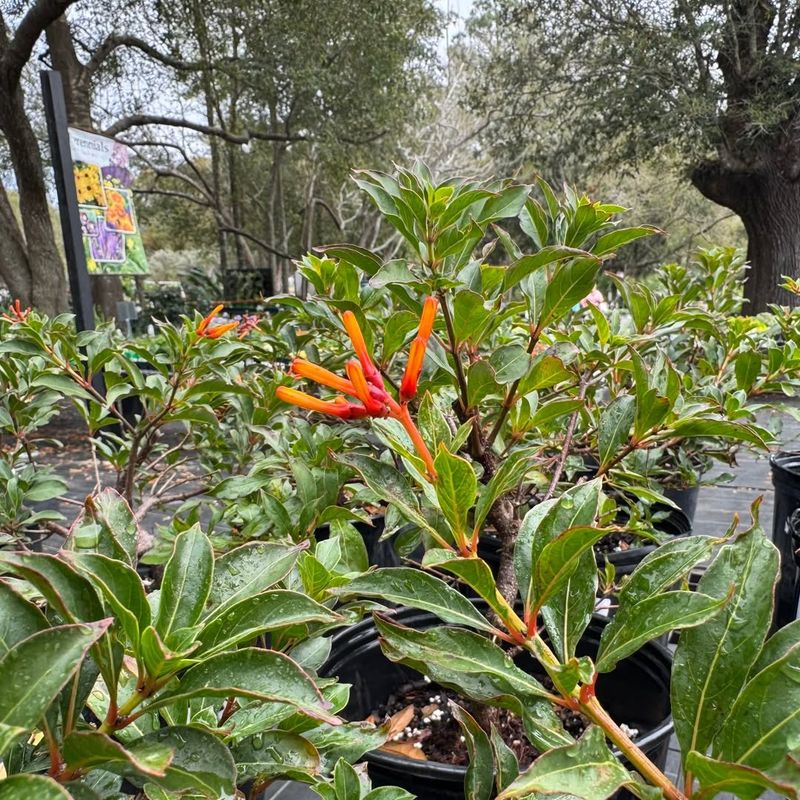
With its clusters of brilliant orange-red tubular flowers that bloom from spring all the way through fall, this Florida native is practically impossible to ignore. Hummingbirds, butterflies, and bees flock to it constantly, turning your yard into a buzzing, fluttering wildlife sanctuary.
Firebush thrives in full sun and is incredibly drought-tolerant once it gets established in your landscape. It grows quickly, often reaching six to ten feet tall, so it works beautifully as a privacy hedge or a bold focal point in larger yards.
In South Florida, it tends to stay evergreen year-round, while in North and Central Florida it may fade back slightly in winter before bouncing back with fresh growth in spring.
Planting Firebush is straightforward even for beginner gardeners. It does well in sandy Florida soils without needing much fertilizer or special care.
A little mulch around the base helps retain moisture during the driest months. Pruning is optional, but trimming it back in late winter encourages bushier, more compact growth and even more flowers when warm weather returns.
If you have been struggling to find a low-maintenance shrub that delivers serious color and wildlife value in a sun-drenched Florida yard, Firebush might just be your new favorite plant. It checks every box: tough, beautiful, and deeply beneficial to the local ecosystem around your home.
2. American Beautyberry Covered In Bright Purple Berries
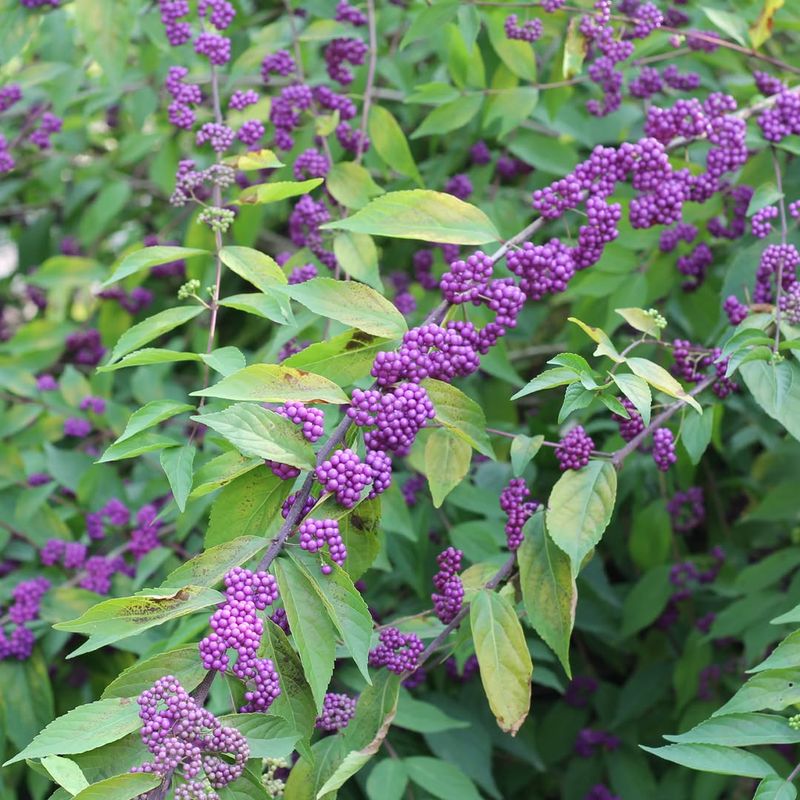
There is nothing quite like the moment in late summer when American Beautyberry reveals its secret. The arching branches suddenly erupt in tight clusters of the most electric, jewel-bright purple berries you have ever seen growing in a Florida yard.
It genuinely looks like someone decorated the plant overnight.
American Beautyberry is a native Florida shrub that handles full sun remarkably well, especially when it has decent soil moisture. It grows in a loose, graceful arch that reaches about four to eight feet tall and wide, making it a great choice for naturalistic garden designs.
The berries ripen from late summer into fall and are an important food source for mockingbirds, robins, cardinals, and dozens of other bird species that call Florida home.
Growing American Beautyberry from a young nursery plant is easy. It prefers well-drained soil but adapts to the sandy conditions found across much of Florida without complaint.
Cutting the shrub back hard in late winter, down to about a foot from the ground, encourages strong new growth and the best berry production for the following season. Some gardeners in Florida also use crushed Beautyberry leaves as a natural insect repellent, which is a fun bonus.
If you want a plant that offers dramatic seasonal interest, serious wildlife value, and almost no fuss in your full sun Florida landscape, American Beautyberry is an outstanding choice worth planting this season.
3. Saw Palmetto Bringing Tough, Low-Maintenance Texture
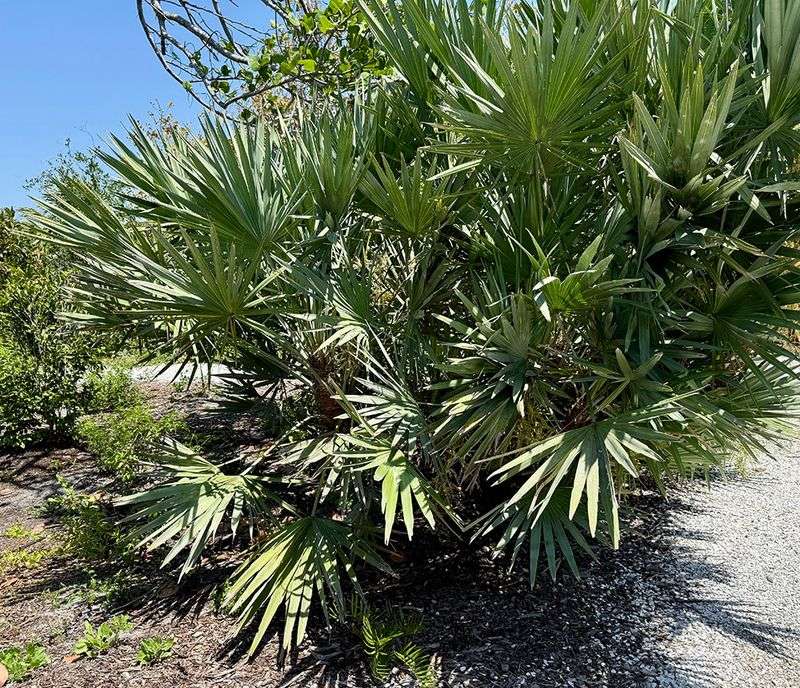
Saw Palmetto is about as Florida as it gets. This iconic native shrub has been part of the Florida landscape for thousands of years, and it shows no signs of slowing down.
Its stiff, fan-shaped fronds create a bold, tropical texture that instantly gives any yard a sense of place and authenticity.
One of the toughest plants you will find growing naturally across the state, Saw Palmetto handles full sun, drought, salty air, and poor sandy soil without breaking a sweat. Once established, it barely needs any watering or attention at all.
Coastal Florida homeowners especially love it because it shrugs off salt spray that would damage most other shrubs. It grows slowly, which means less pruning and maintenance over time, and its low, spreading form makes it ideal for ground cover or accent planting in larger open spaces.
Beyond its good looks, Saw Palmetto is a powerhouse for Florida wildlife. Its small white flowers attract pollinators in spring, and the dark berries that follow feed black bears, deer, and a wide range of bird species.
The dense clumping fronds also provide excellent shelter for small animals and ground-nesting birds. Did you know Saw Palmetto berries have also been used in herbal medicine for centuries?
It is one of those plants that gives back in so many ways. For anyone wanting a truly no-fuss, deeply native shrub in their sunny Florida yard, Saw Palmetto is an absolute must-have addition to your landscape plan.
4. Coral Bean Showing Off Bold Red Spring Blooms
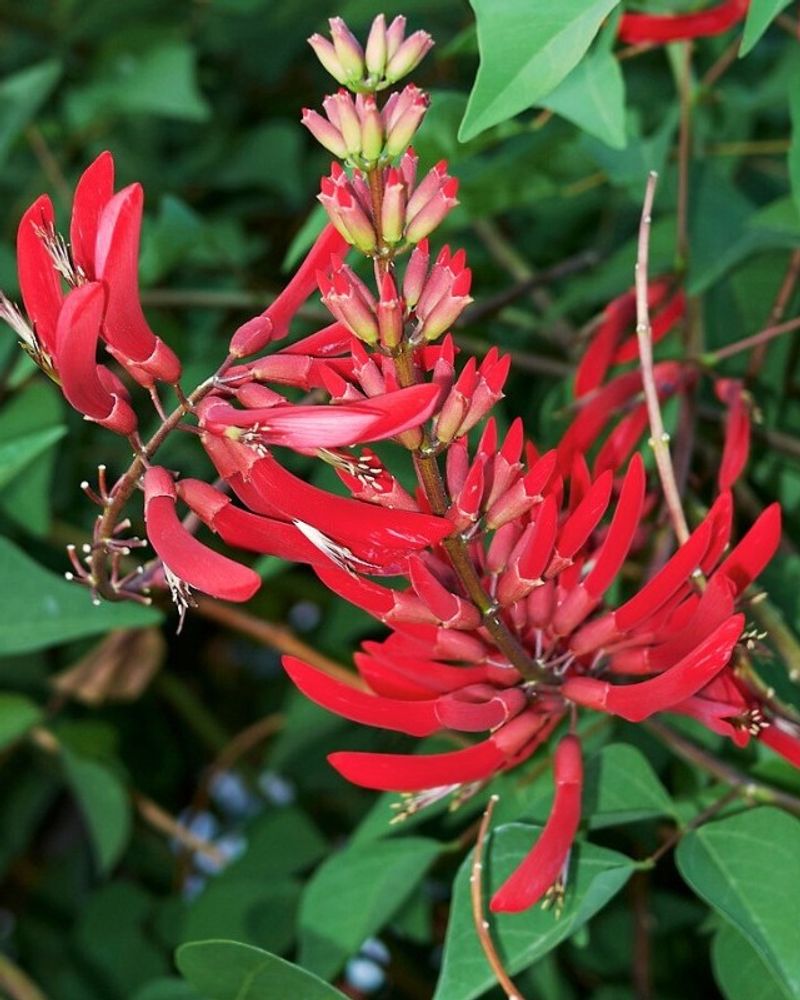
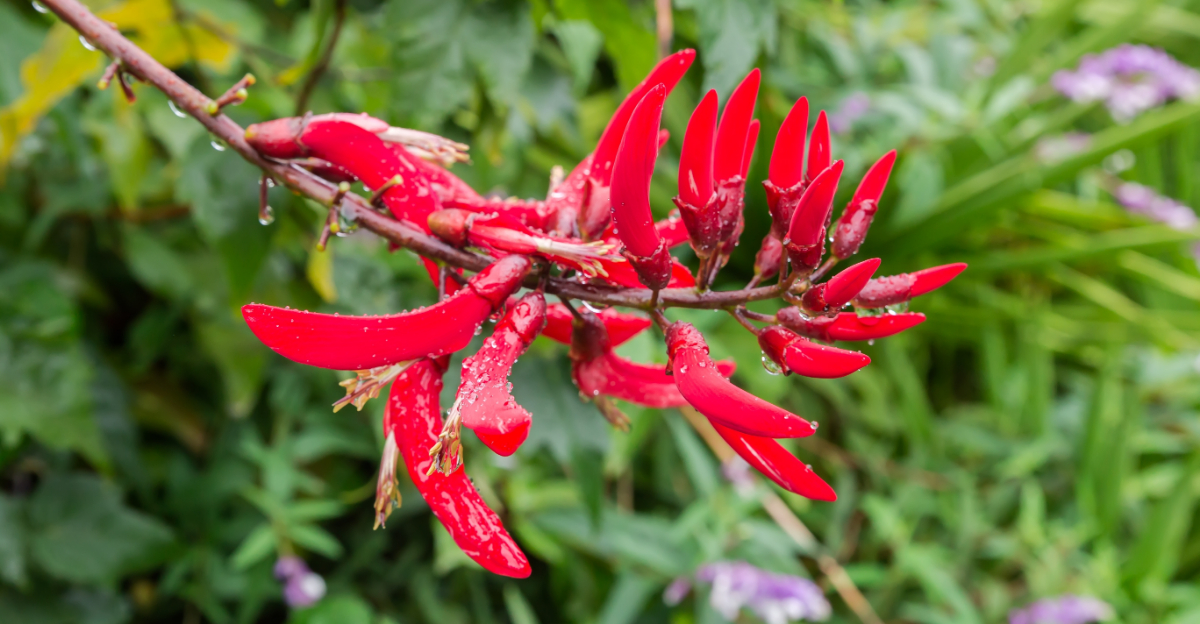
Bold, dramatic, and a little wild-looking, Coral Bean is the kind of shrub that makes people stop their cars to ask what it is. Every spring, it sends up striking spikes of brilliant scarlet tubular flowers before the leaves even fully emerge, creating a fiery display that is almost surreal against a clear blue Florida sky.
Coral Bean thrives in full sun and grows naturally across much of Florida, from the Panhandle all the way down to the peninsula. It handles sandy, dry soils with ease and is remarkably drought-tolerant once established.
The plant typically grows four to eight feet tall, though in warmer parts of South Florida it can get even larger. In North and Central Florida, the top growth may be damaged by frost, but the roots are tough and the plant reliably returns with fresh growth when temperatures warm back up.
Hummingbirds absolutely adore Coral Bean flowers, making it one of the best plants you can add to a Florida wildlife garden. After flowering, the plant produces pods filled with bright red seeds that are eye-catching but should be kept away from children and pets since they are not safe to eat.
Despite that one caution, Coral Bean is a spectacular, low-maintenance native that asks for very little while delivering enormous visual impact. If your yard needs a bold, show-stopping shrub that supports Florida wildlife and handles the heat with ease, Coral Bean deserves a prime spot in your garden.
5. Necklace Pod Thriving In Coastal Sun And Sand
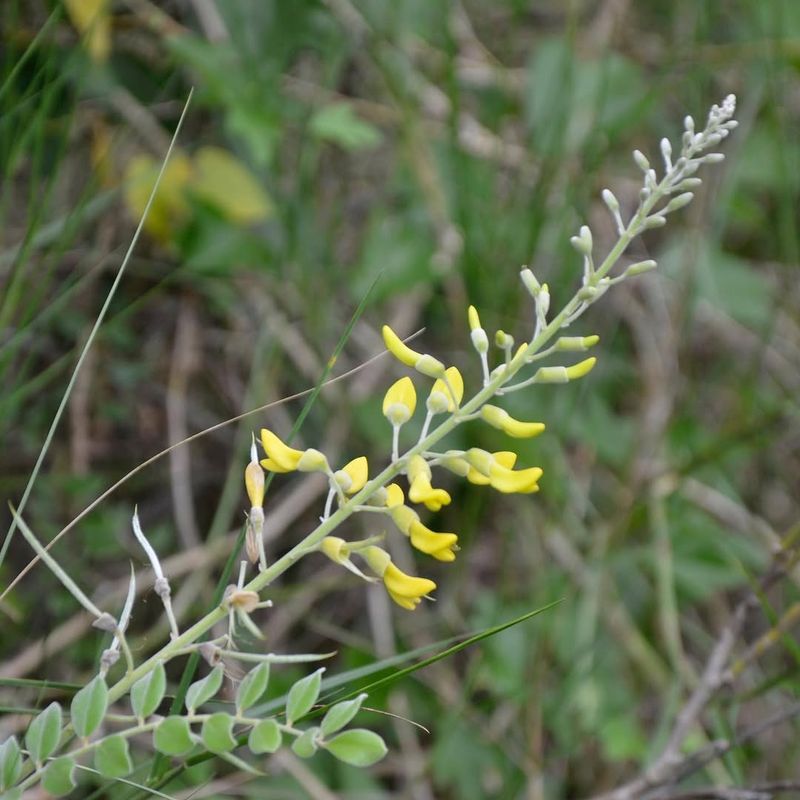
Sunny, cheerful, and surprisingly tough, Necklace Pod is a coastal Florida native that brings a tropical flair to full sun landscapes. Its long, upright spikes of bright yellow flowers bloom repeatedly throughout the warm months, and the silvery-green foliage gives the plant a soft, almost velvety appearance that stands out beautifully in the landscape.
Necklace Pod gets its common name from the distinctive seed pods it produces after flowering. The pods are pinched between each seed, creating a bumpy, necklace-like shape that is quite fun to look at up close.
It grows naturally along Florida beaches, dunes, and coastal hammocks, which tells you a lot about just how tough it is. Full sun, sandy soil, salt spray, and occasional drought are all conditions this shrub handles without complaint, making it a fantastic option for Florida homeowners near the coast.
Butterflies love Necklace Pod, and it serves as a larval host plant for the Ceraunus Blue butterfly, which is a meaningful contribution to Florida’s native pollinator community. The shrub typically reaches four to eight feet in height and spreads at a similar width, so it works nicely as a naturalistic hedge or a loose, informal border planting.
It needs very little fertilizer and does best when left to grow in its natural form rather than being heavily pruned. For coastal and inland Florida gardeners alike who want a reliable, wildlife-friendly shrub with year-round visual interest, Necklace Pod is a wonderful and underused choice.
6. Fiddlewood Filling Spaces With Fragrant White Flowers
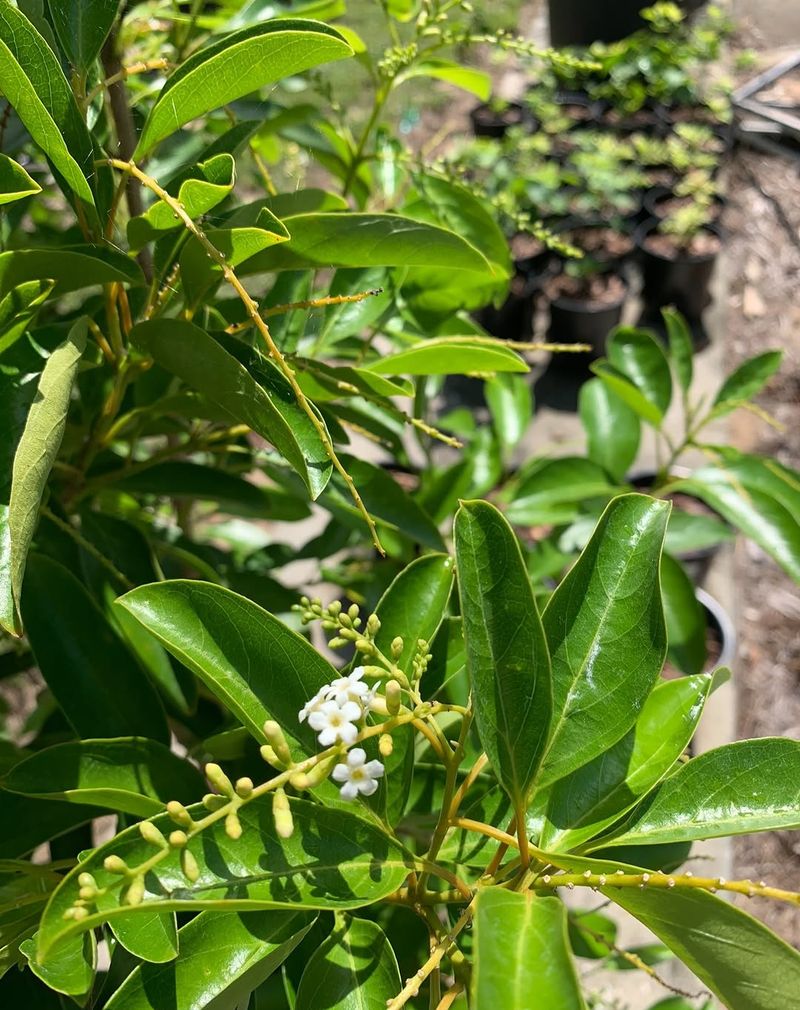
Walk past a blooming Fiddlewood on a warm Florida evening and you will understand immediately why gardeners fall in love with it. The long, drooping clusters of small white flowers release a sweet, honey-like fragrance that carries on the breeze and fills the surrounding area with one of the most pleasant scents in any Florida garden.
Fiddlewood is a Florida native that thrives in full sun and grows naturally in coastal hammocks, pinelands, and disturbed areas throughout Central and South Florida. It typically reaches ten to twenty feet tall at maturity, so it works well as a large screening shrub or small tree depending on how you prune and train it.
The glossy, oval leaves are attractive year-round, and the flowers are followed by small orange to black berries that birds find irresistible.
One of the things that makes Fiddlewood so valuable in a Florida landscape is how much wildlife it supports. Butterflies use the flowers as a nectar source, and the berries attract a wide variety of fruit-eating birds including warblers, catbirds, and thrushes during migration season.
It tolerates salt air reasonably well, which makes it a solid choice for yards in coastal areas of Florida. Established plants are moderately drought-tolerant and need little supplemental watering once their roots are settled in.
If you want a large, fragrant, wildlife-friendly native shrub that earns its place in a sunny Florida yard, Fiddlewood is absolutely worth a closer look at your local native plant nursery.
7. Walter’s Viburnum Creating A Dense, Native Green Screen
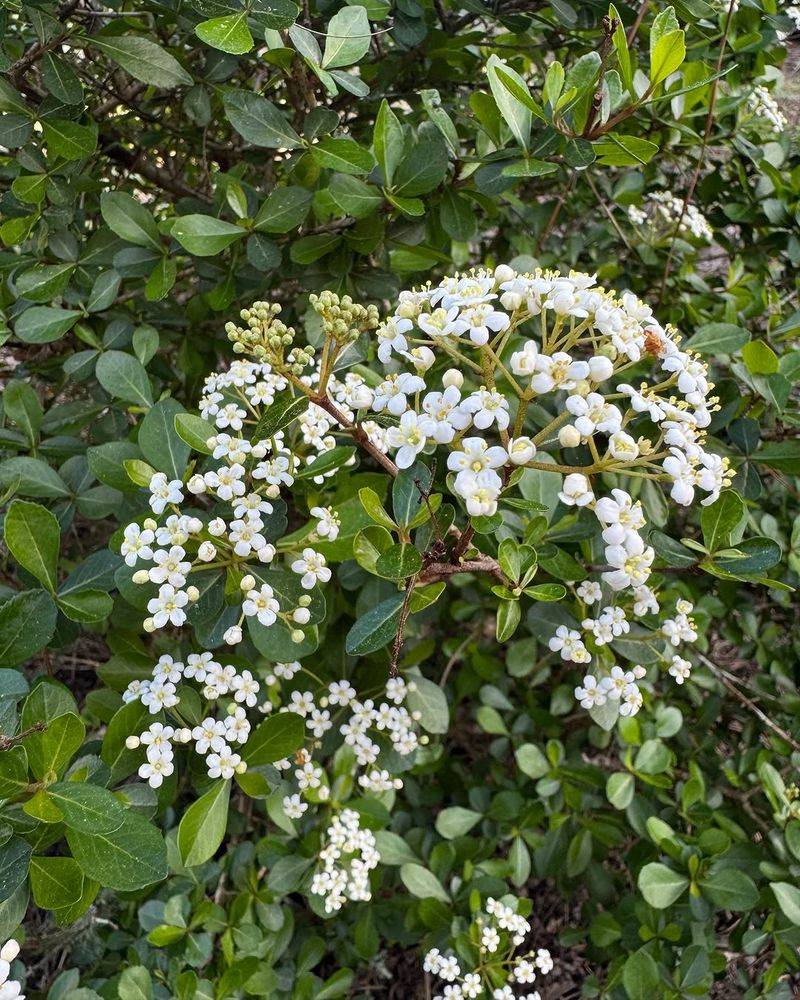
If you have ever driven through rural Florida in late winter or early spring and noticed a shrub absolutely smothered in tiny white flowers along the roadside, there is a good chance you were looking at Walter’s Viburnum. It is one of those plants that puts on a breathtaking floral display all at once, transforming the entire shrub into a cloud of white blooms seemingly overnight.
Walter’s Viburnum is a Florida native that adapts beautifully to full sun locations across North and Central Florida. It is naturally found growing along stream banks and forest edges throughout the state, but it performs just as well in cultivated landscapes with decent soil and regular moisture during establishment.
Once rooted in, it becomes quite drought-tolerant and low-maintenance. The small, dark green leaves are semi-evergreen to evergreen depending on your location in Florida, giving the plant year-round presence in the garden.
From a wildlife standpoint, Walter’s Viburnum is a real winner. The spring flowers attract bees and butterflies in large numbers, and the small dark berries that follow in summer and fall are eaten by birds including cedar waxwings and mockingbirds.
It can be grown as a dense hedge, a specimen shrub, or even a small multi-trunk tree if you selectively prune the lower branches. For Florida gardeners who loved the soft, cottage-garden feel of azaleas and want something equally charming but far better suited to their sunny landscape, Walter’s Viburnum is a natural and rewarding replacement.
8. Florida Privet Loaded With Pollinator-Friendly Blooms
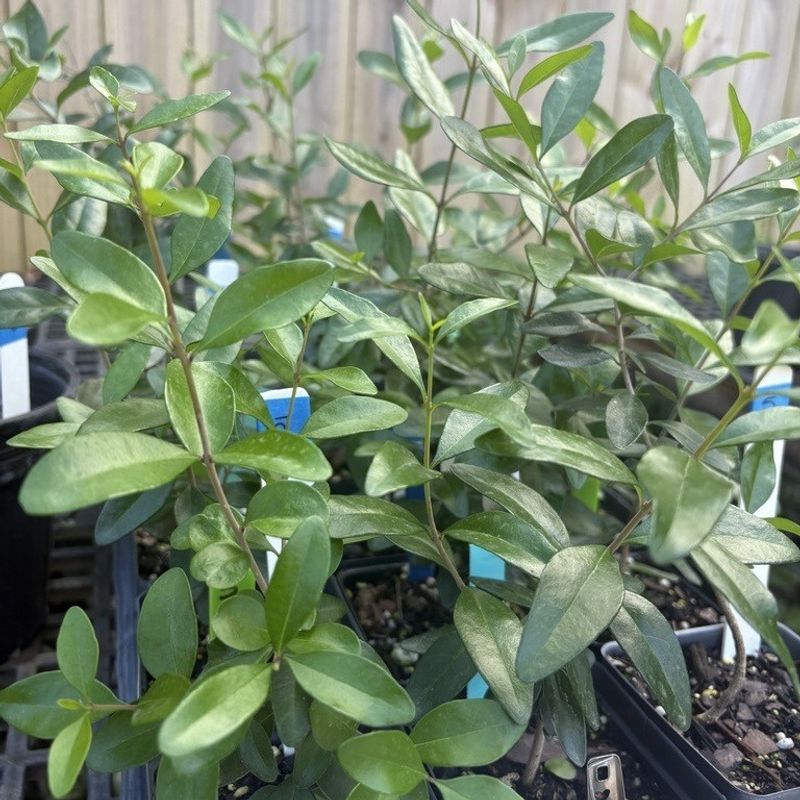
Underrated and overlooked by many homeowners, Florida Privet is quietly one of the most versatile native shrubs you can grow in a sunny Florida landscape. It lacks the flashy flower clusters of some other natives, but what it offers instead is dense, reliable, evergreen structure that works beautifully as a formal or informal hedge, a privacy screen, or a wildlife corridor planting.
Florida Privet grows naturally throughout the state, from coastal dunes and scrub habitats to the edges of hammocks and disturbed areas. It thrives in full sun and handles drought, salt spray, and poor sandy soils without missing a beat.
That toughness makes it an excellent choice for Florida homeowners who want a low-maintenance boundary planting that does not require constant watering or fertilizing to stay looking good through the long, hot Florida summer.
The small, dark berries Florida Privet produces in late winter and spring are an important early-season food source for migratory and resident birds alike. Warblers, vireos, and other small songbirds rely heavily on these berries during migration, which makes this shrub a meaningful addition to any Florida wildlife garden.
The plant responds well to pruning and can be kept as a tidy formal hedge or allowed to grow into a loose, naturalistic form reaching six to ten feet tall. For anyone who wants a tough-as-nails Florida native that quietly does its job, supports wildlife, and looks good doing it, Florida Privet is a plant that absolutely deserves more attention and appreciation from local gardeners.