7 Native Georgia Plants To Grow Instead Of Chinese Privet Along Fence Lines
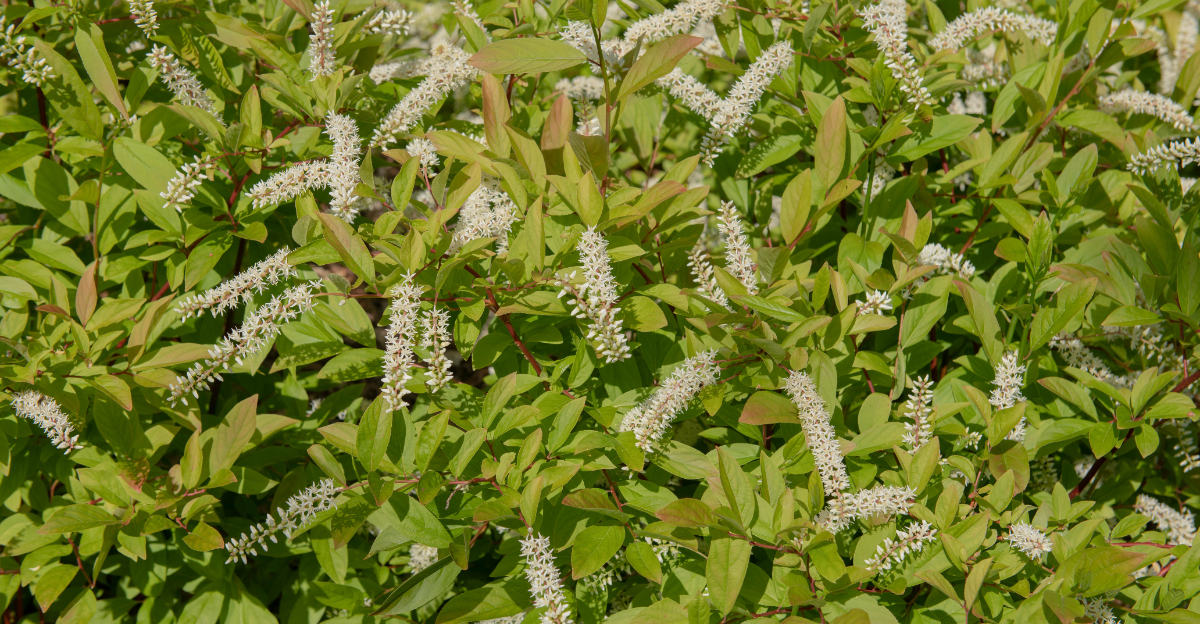
Fence lines in Georgia often end up filled with whatever grows fast, and Chinese privet has taken over more spaces than most people realize.
It may look dense at first, but it spreads aggressively, crowds out other plants, and creates more work over time. Many yards reach a point where that thick wall starts feeling like a problem instead of a solution.
Better options exist that handle Georgia conditions without taking over. Native plants bring structure, coverage, and seasonal interest while supporting local wildlife at the same time.
They grow in a way that feels more balanced and easier to manage along property edges. Switching out privet does not have to feel overwhelming.
Thoughtful plant choices can reshape a fence line into something that looks full, stays under control, and fits naturally with the surrounding landscape.
1. American Beautyberry Creates Dense Growth And Supports Wildlife
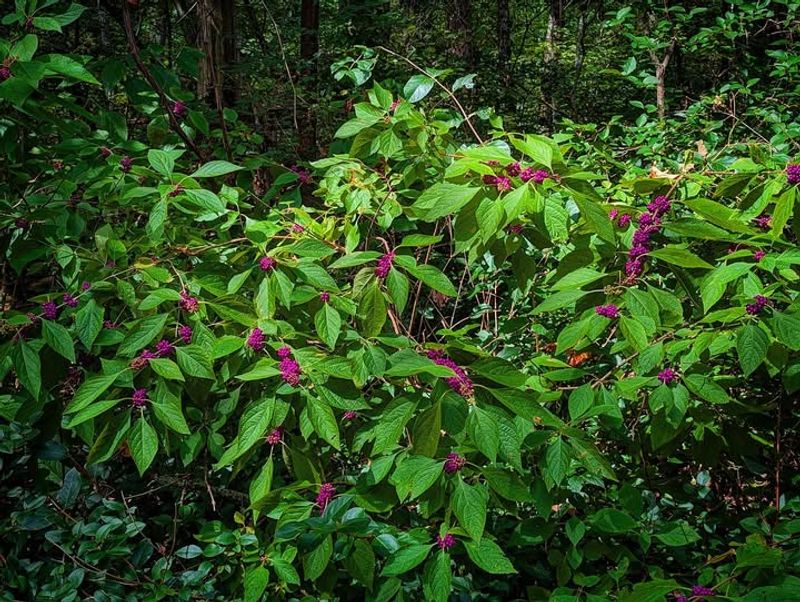
Nothing stops a person in their tracks quite like a beautyberry loaded with bright purple clusters in late summer.
American Beautyberry, known scientifically as Callicarpa americana, is a native shrub that earns its place along any Georgia fence line with very little effort on your part.
It grows quickly, reaching six to eight feet tall and wide under decent conditions. The arching branches fill in space naturally, creating a soft but dense screen that works well along wooden or chain-link fences.
In spring and summer, the foliage is lush and full. By late summer into fall, those vivid purple berry clusters appear and become a major food source for mockingbirds, robins, and other native birds.
Beautyberry handles Georgia’s clay soils reasonably well and tolerates both partial shade and full sun, though it tends to produce more berries with at least four to six hours of direct light.
It can handle moderate drought once established, but consistent moisture in the first growing season helps it settle in.
Cutting it back hard in late winter encourages vigorous new growth and better berry production the following year.
Space plants about five to six feet apart if planting along a fence so they can fill in without overcrowding. Mulch lightly to hold moisture, but keep it a few inches away from the base to prevent rot and keep stems healthy.
For heavier berry production, plant more than one shrub to improve pollination and increase fruit set across the fence line.
Thin out a few older stems each year to keep growth vigorous and prevent the center from getting too dense.
2. Virginia Sweetspire Forms A Thick Hedge And Handles Clay Soil
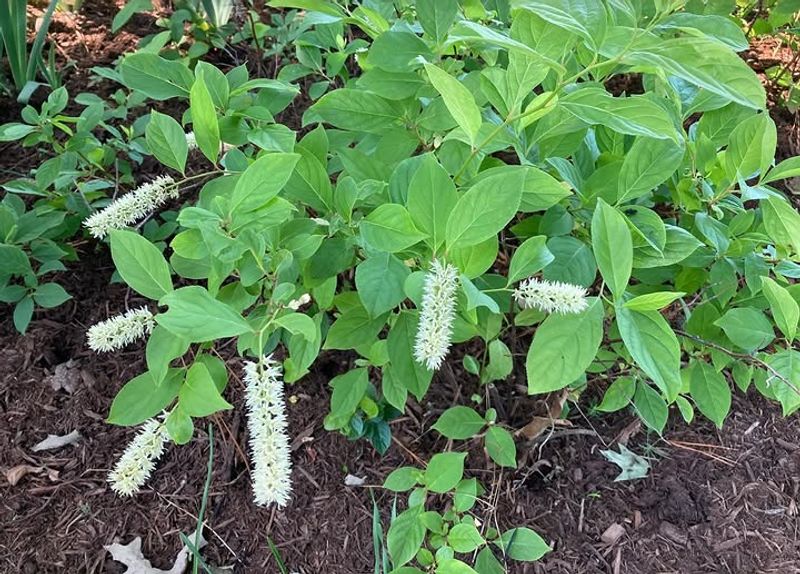
Clay soil stops a lot of plants cold, but Virginia Sweetspire barely notices it. Itea virginica is one of the most adaptable native shrubs you can plant in Georgia, and it earns serious respect from gardeners who have struggled with heavy, compacted soils along fence lines.
It grows three to five feet tall and spreads slowly by suckering, which means over a few seasons it fills in gaps naturally without you having to replant. That spreading habit is exactly what you want when replacing a dense invasive like privet.
Your Georgia Garden Changes Every Week. Your Plan Should Too.
Gardening in Georgia changes quickly throughout the season. Every Friday you’ll receive a simple weekly plan showing exactly what to plant, prune, fertilize, harvest, and protect so you never miss the right timing.
White, fragrant flower spikes appear in early summer and attract pollinators reliably.
Come fall, the foliage turns deep red to burgundy, and it often holds color well into late autumn across much of Georgia. That seasonal interest makes it a strong choice even in visible front-yard fence lines.
Virginia Sweetspire also handles wet spots better than most shrubs, so if your fence line runs along a low area that collects water after rain, this plant can manage where others struggle. Plant it in full sun to partial shade and expect moderate growth in the first year, with stronger establishment by year two.
Prune lightly right after flowering if shaping is needed, since next year’s blooms form on older wood. Keep soil consistently moist during the first season to help roots establish, especially in compacted clay areas.
Apply a layer of compost each spring to gradually improve clay structure and support steady growth. Allow suckers to fill in where coverage is needed, or thin them out to control spread in tighter spaces.
3. Yaupon Holly Handles Pruning And Creates A Strong Privacy Screen
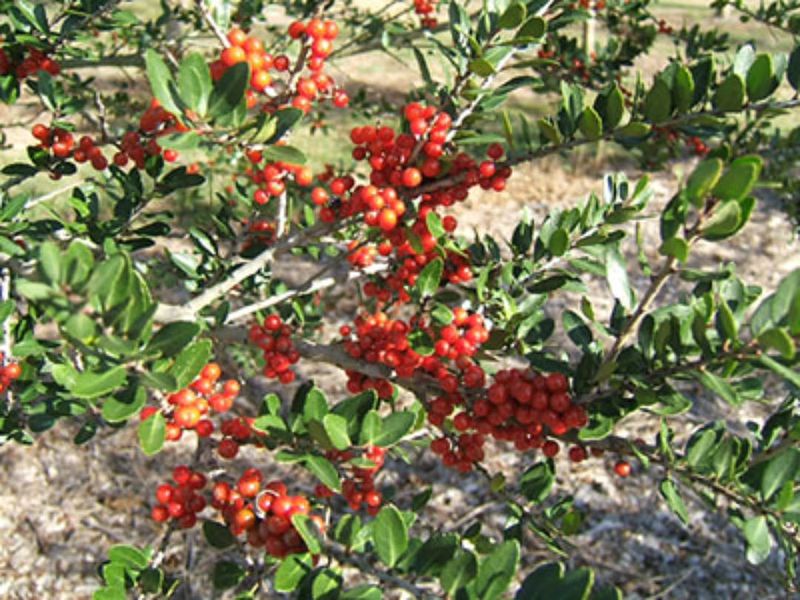
Want a plant that takes shearing like a champ and still looks sharp? Yaupon Holly is your answer.
Ilex vomitoria is one of the toughest native shrubs growing naturally across coastal and central Georgia, and it handles hard pruning without complaint.
Left unpruned, it can reach fifteen feet or taller, but most gardeners keep it trimmed to a manageable six to ten feet for fence line use. It responds well to shaping, making it a reliable choice when you want a formal or semi-formal screen.
Female plants produce small red berries that birds love, especially cedar waxwings and American robins during winter months.
Yaupon Holly tolerates a wide range of soil types, including sandy soils along the Georgia coast and heavier clay soils found further inland. It handles both drought and occasional flooding better than almost any other native in the state, which makes it unusually forgiving in unpredictable weather years.
Full sun brings the best berry production and densest growth, though partial shade is workable. If you want a low-maintenance, long-lived privacy screen that supports wildlife without becoming invasive, yaupon is one of the most dependable choices available to Georgia gardeners.
Choose female plants if berries are the goal, but remember they need a nearby male for pollination to produce fruit.
Water regularly during the first growing season, then ease back once established since yaupon handles dry spells well.
Space plants about four to six feet apart for a dense screen that fills in without heavy pruning. Lightly trim once or twice a year to maintain shape, since frequent shearing can reduce flowering and berry production.
4. Oakleaf Hydrangea Fills Space And Thrives In Partial Shade
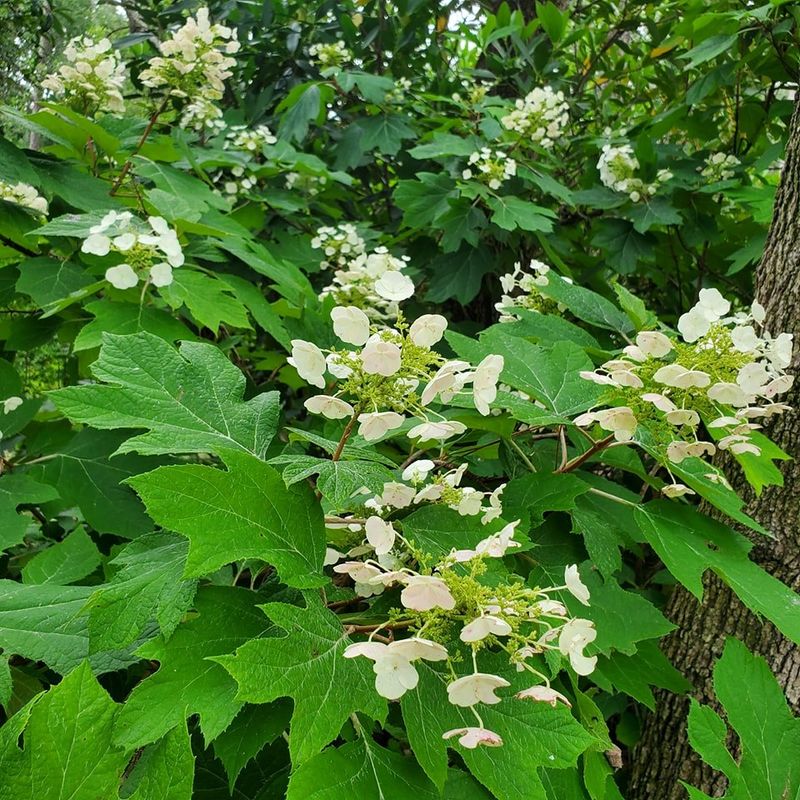
Shaded fence lines are tricky. Most screening plants want full sun, and you end up with thin, leggy growth that barely blocks anything.
Oakleaf Hydrangea, Hydrangea quercifolia, was practically built for those shadier spots that other shrubs abandon.
Native to Georgia and much of the Southeast, it grows six to eight feet tall and equally wide, filling in fence lines with bold, textured foliage that looks good from spring through fall. Large white cone-shaped flower clusters appear in early summer and slowly fade to a parchment color through the season.
The deeply lobed leaves turn shades of orange, burgundy, and bronze in autumn before dropping.
Even in winter, oakleaf hydrangea holds interest with peeling cinnamon-colored bark that adds texture to an otherwise bare fence line. It prefers well-drained soil with consistent moisture and does best in morning sun with afternoon shade, which is a common condition in Georgia yards with mature tree canopy.
Clay soil can work if drainage is reasonable. Established plants handle dry spells fairly well, though young plants need regular watering in their first two summers.
Avoid heavy pruning in fall or winter since flower buds form on old wood and trimming at the wrong time removes next season’s blooms.
Space plants about five to six feet apart so they can fill in naturally without crowding and still allow airflow.
Add a layer of organic mulch to help retain moisture, but keep it pulled back from the base to protect stems from excess dampness.
Fertilize lightly in early spring with a balanced, slow-release feed to support steady growth without forcing weak stems.
5. Wax Myrtle Grows Fast And Works Well For Informal Screens
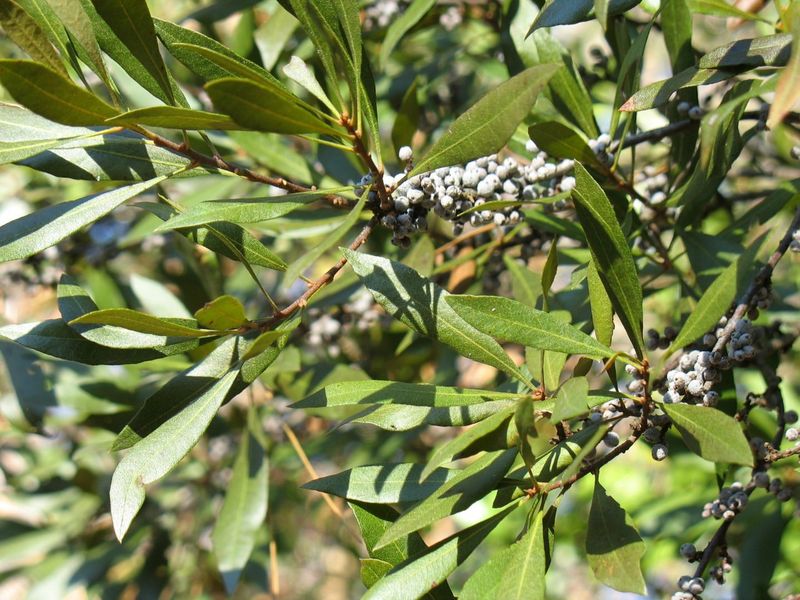
Speed matters when you have a bare fence line and neighbors looking in. Wax Myrtle, Morella cerifera, grows fast enough that you will notice real progress within a single growing season, which puts it ahead of most other native screening options in Georgia.
It can reach ten to fifteen feet tall if left alone, and it stays evergreen through most Georgia winters, giving you year-round coverage that a lot of deciduous shrubs simply cannot provide. The aromatic foliage has a pleasant, slightly spicy scent when brushed, and the small waxy berries that form on female plants are a major food source for yellow-rumped warblers and tree swallows during winter migration.
Wax Myrtle adapts to a wide range of conditions across Georgia, from wet, poorly drained soils to drier sandy sites. It handles salt spray well, which makes it especially useful along coastal Georgia fence lines.
Full sun produces the thickest growth, but it manages in partial shade with somewhat looser form. It does sucker at the base over time, which helps fill gaps but may need occasional management in tight spaces.
Prune lightly to shape rather than cutting hard, as heavy pruning can temporarily open up the screen you worked to build.
Give plants about six to eight feet of spacing along the fence so they can grow together into a solid screen without competing too hard.
Water consistently during the first year to push faster establishment, then reduce once roots are established since wax myrtle becomes very drought-tolerant.
6. Sweetbay Magnolia Adds Height And Handles Moist Soil Conditions
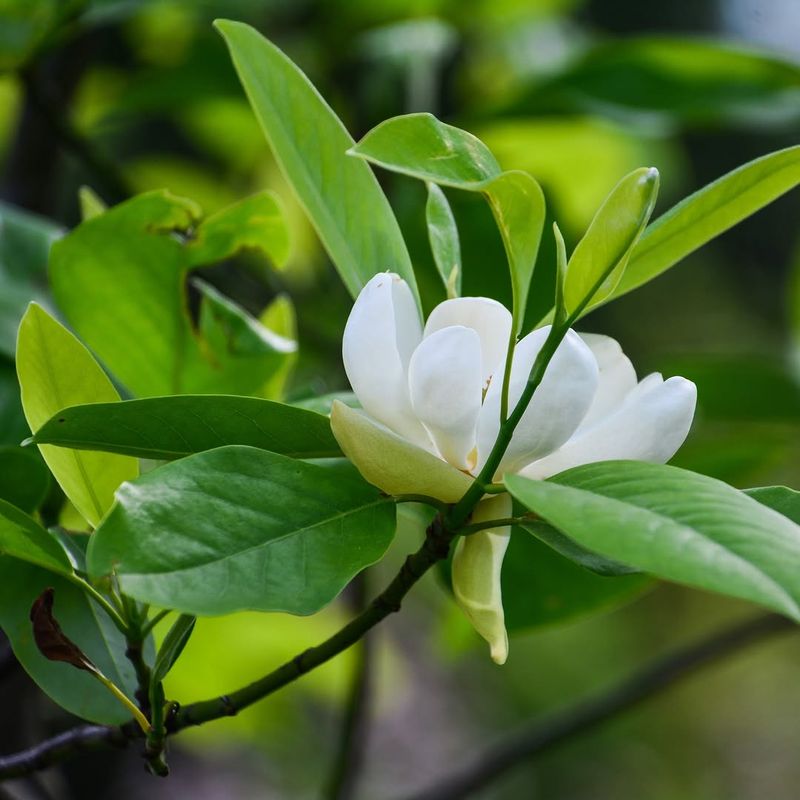
Most magnolias want well-drained soil, but Sweetbay Magnolia breaks that rule in the best way possible. Magnolia virginiana thrives in low, wet areas where standing water after rain is common, which makes it a genuinely useful plant for those soggy fence line stretches that other shrubs avoid.
It grows as a large multi-stemmed shrub or small tree, typically reaching ten to twenty feet in Georgia depending on conditions and how much you prune it. Creamy white, lemon-scented flowers appear from late spring through summer, attracting beetles and other pollinators.
The glossy green leaves with silvery undersides catch light beautifully, and in milder parts of Georgia the plant holds much of its foliage through winter.
Along fence lines, Sweetbay works best where you want height and presence rather than a clipped formal hedge. It creates a naturalistic, layered look that pairs well with lower shrubs planted in front.
Birds use the dense branching structure for nesting, and the red seeds that follow flowering attract multiple songbird species in late summer. It prefers full sun to partial shade and responds well to mulching around the root zone, which helps retain moisture and keeps the soil temperature steady through Georgia’s hot summers.
Allow plenty of space when planting, since sweetbay spreads over time and can crowd nearby plants if placed too close.
Prune selectively in late winter to shape the structure, but avoid heavy cutting that can reduce flowering the following season.
Keep soil consistently moist during the first year to help roots establish, especially in areas that dry out between rains.
7. Arrowwood Viburnum Forms A Dense Barrier And Supports Wildlife
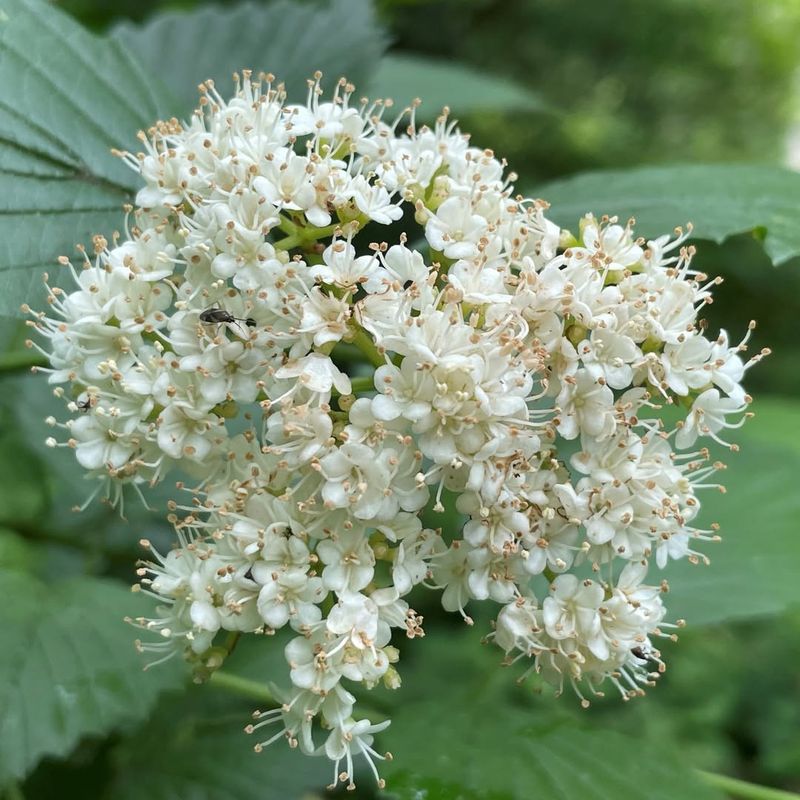
Few native shrubs pull double duty as well as Arrowwood Viburnum. Viburnum dentatum grows dense enough to serve as a genuine physical barrier along a fence line while simultaneously feeding more wildlife species than most homeowners expect from a single plant.
Flat-topped white flower clusters bloom in late spring and attract native bees, butterflies, and hoverflies in numbers that can be genuinely impressive on a warm afternoon.
By late summer, those flowers become clusters of small blue-black berries that over thirty bird species have been documented eating across the Eastern United States, including Georgia.
Songbirds, thrushes, and woodpeckers all visit regularly once the fruit ripens.
Arrowwood reaches six to ten feet tall and wide, forming a multi-stemmed clump that thickens over time. It handles clay soil, occasional wet conditions, and moderate drought once established, covering a wide range of Georgia soil types without much fuss.
Fall foliage turns shades of red, orange, and yellow, adding seasonal color before leaves drop. It grows well in full sun or partial shade, making it flexible enough for fence lines with mixed light exposure.
Plant multiple shrubs three to five feet apart for a continuous screen that fills in solidly within two to three growing seasons.
Prune after flowering if needed to shape the plant, since cutting earlier can remove developing blooms. For best berry production, plant more than one shrub to improve pollination and increase fruit set.