Native Ohio Plants To Grow Instead Of Boxwood Near Your Foundation
Drive down almost any Ohio street and you’ll count the same shrub a hundred times. Round. Green. Clipped within an inch of its life.
Many people never really chose it. It simply appeared in every landscape plan for about forty years running.
Then February arrives. Brown patches. Thin spots. Salt spray from the road and soggy soil at the worst possible moment.
Something better could be growing in that bed.
Ohio has options plenty of homeowners never hear about at the garden center. Plants that hold structure near the house, then go on to do considerably more than stand there looking obedient.
A few carry bright berries straight through January. One releases a spicy scent when you brush past it. Another turns colors in October that stop conversations on the front walk.
The real appeal? Most of them ask for far less of your Saturday than the shrub they replace.
So which plants can take a foundation bed, an Ohio winter, and reflected heat bouncing off brick without protest?
Seven answers are waiting below, and one of them isn’t a single plant at all.
1. Choose Inkberry Holly For A Boxwood-Like Shape
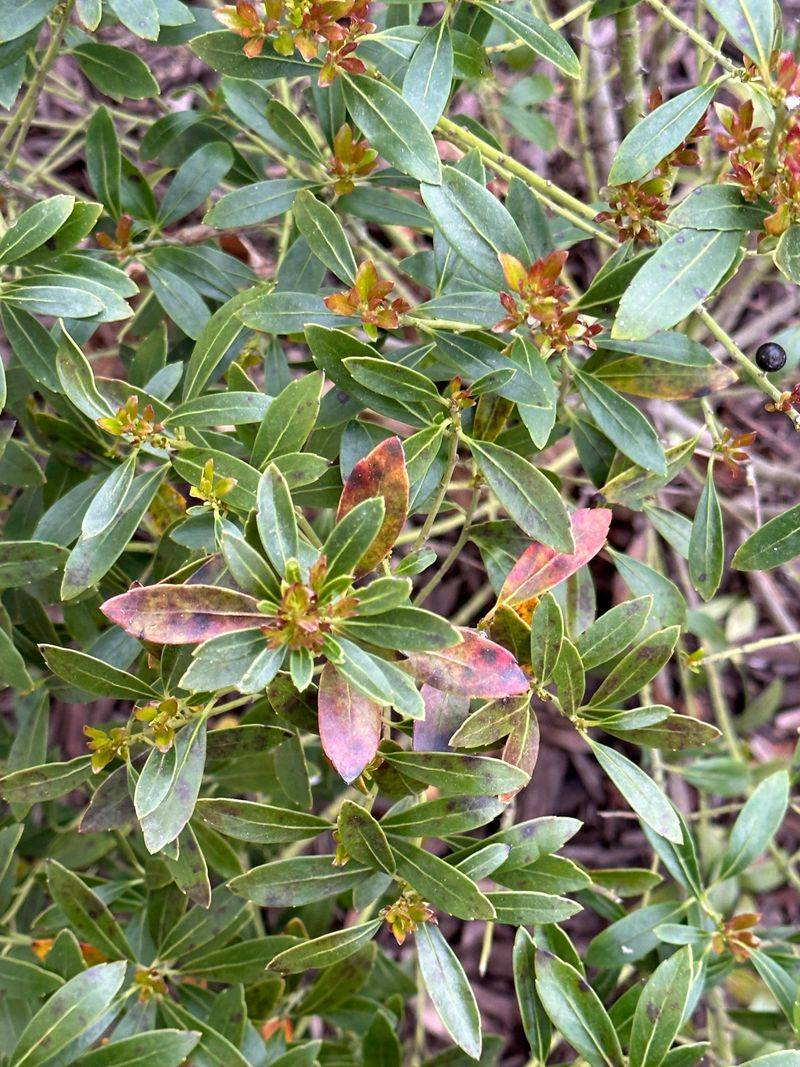
Boxwood keeps its reputation right up until winter burn, salt splash, or odd thinning starts testing your patience.
Inkberry holly offers a similar rounded, evergreen shape while belonging to this region. It tends to handle Ohio weather with noticeably less drama.
Dwarf forms deserve your attention first. Selections like Shamrock and Gem Box stay useful near entryways, corners, and shorter foundation beds where tidy form still counts.
Here’s where most people go wrong. Inkberry gets sheared into a green meatball every month, when the plant would rather be left alone.
Most varieties spread wider than they first appear. Set them about three to five feet from the wall, and check the mature width on the label before digging.
That spacing pays off in several ways. Airflow improves, siding stays protected, and there’s room for mulch, hose work, and your knees during weeding.
Light pruning suits it best. Remove a few older stems in early spring and let the plant hold its natural mounded form.
Moist, slightly acidic soil keeps inkberry happiest. Established plants handle normal dry spells better than many gardeners expect.
Beds baking in reflected sun off brick need a little help early on. Work in compost and water through the first seasons.
Once settled, inkberry delivers that polished look without behaving like the fussiest resident on the block. Holly that plays well with neighbors, imagine that.
2. Add Winterberry Holly For Seasonal Interest
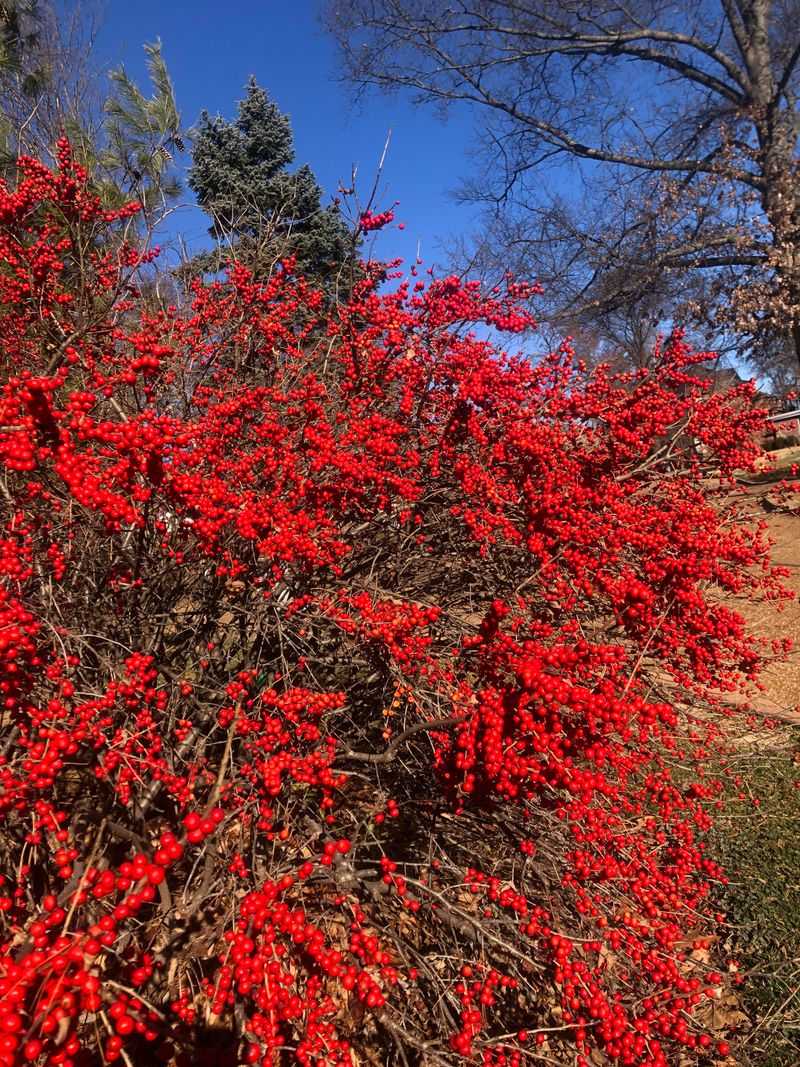
Some shrubs whisper. Winterberry shows up like holiday lights in a snowstorm.
This Ohio native holly drops its leaves in fall, then holds bright red berries while most yards look half asleep. Boxwood cannot compete on that particular front.
One detail saves considerable frustration later. Berries form on female plants, and they need a male pollinator nearby to produce fruit.
A single male can support several females. Ask the nursery about tags before anything goes in the cart.
Your Ohio Garden Changes Every Week. Your Plan Should Too.
Gardening in Ohio changes quickly throughout the season. Every Friday you’ll receive a simple weekly plan showing exactly what to plant, prune, fertilize, harvest, and protect so you never miss the right timing.
Placement makes the difference between nice and spectacular. Put shrubs where winter sun hits the fruit, and keep them back from walkways since branches spread wider than a clipped hedge over time.
Wildlife value comes as a genuine bonus. Birds use the berries during cold months, and the flowers support pollinators earlier in the season.
Damp spots suit winterberry well. Native plant groups often suggest it for rain gardens, which makes it handy near downspouts or foundation beds that stay wet after spring rain.
Loose, layered plantings show it off better than a tight row under every window. Mulch the root zone and water well while roots establish.
Constant pruning works against you here, since it removes the wood that carries next season’s berries.
This works like the lively cousin of boxwood. Less formal, more useful, and much better company in January.
3. Plant Virginia Sweetspire For Low Maintenance Color
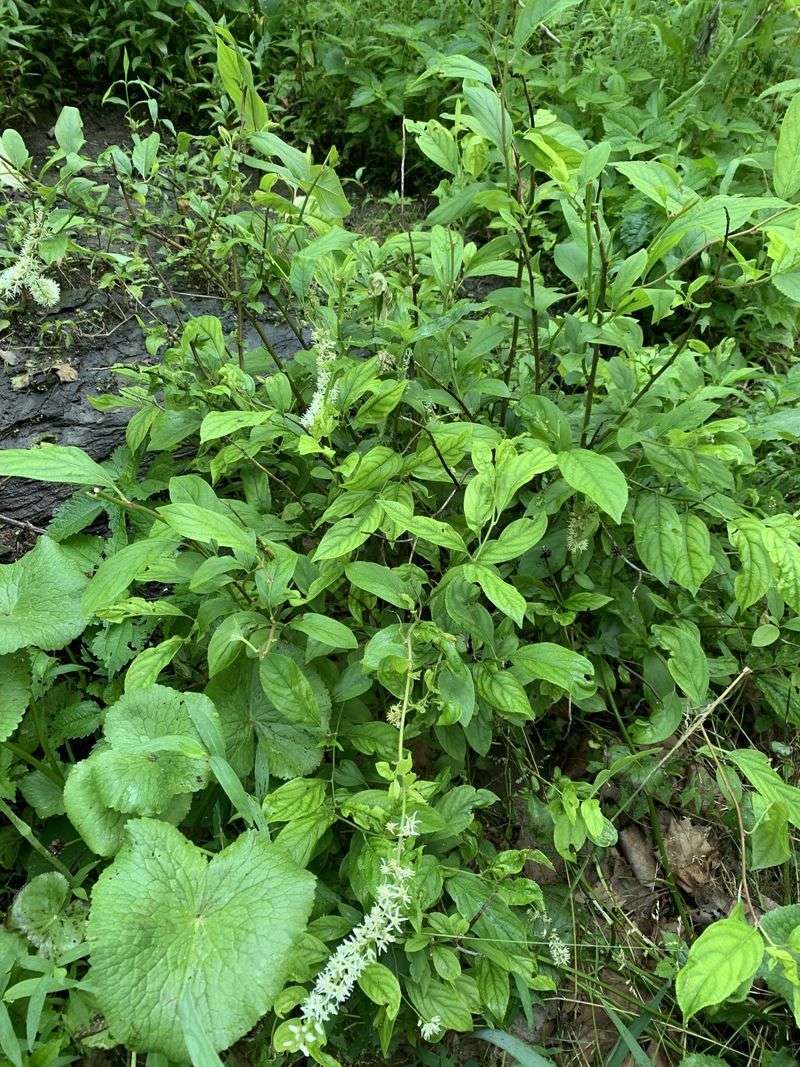
Some shrubs earn their space without begging for attention. Virginia sweetspire belongs firmly in that group.
Spring brings arching stems topped with fragrant white flower spikes. Fall shifts the leaves into rich red and burgundy tones that hold for weeks.
That long season of interest gives a foundation bed real personality. A row of tight green balls simply cannot match it.
Adaptability explains much of its popularity in Ohio. Sweetspire enjoys moist soil, and established plants handle average conditions better than most people anticipate.
Try it near a low area, beside a downspout bed, or along a shaded wall. Those are exactly the places where boxwood tends to sulk and leave you guessing.
Spacing deserves thought because sweetspire spreads gently by suckers, especially in soil it likes. A three to five foot buffer from the wall usually works, depending on the variety.
Let it form a natural drift instead of a strict shape. Mulch keeps roots cool through sticky Ohio summers.
Maintenance stays refreshingly simple. Remove stray stems after flowering, water during dry stretches in the first years, and skip heavy shearing entirely.
Color, pollinator value, and a softer look around the house all arrive in one package. Sweetspire respects boundaries, which is more than can be said for a shrub that wants a trim every weekend.
4. Use Ninebark For Tough Foundation Coverage
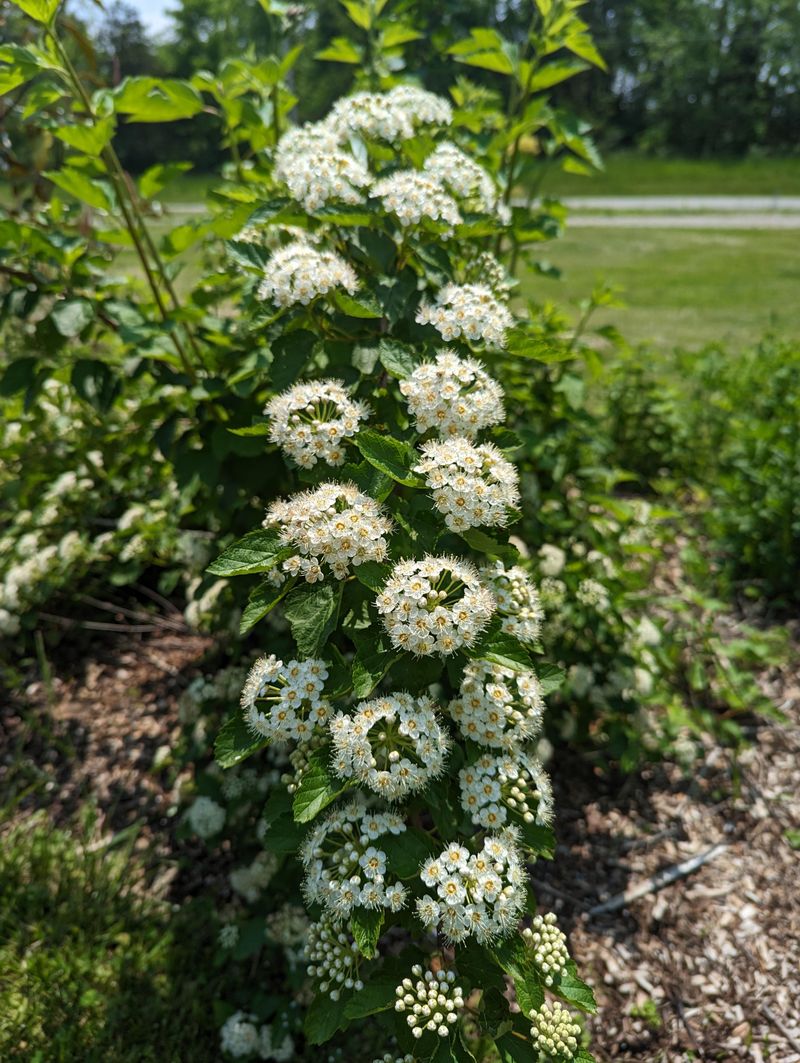
Ninebark has the kind of sturdy attitude that lets a gardener relax.
Heat, cold, clay, and the general ups and downs of Ohio yards rarely faze it. Fancy treatment is not part of the deal.
White or pinkish flower clusters brighten late spring. Peeling bark then carries the interest through winter, so the bed still has something to say after leaves drop.
Size is the one thing to watch. Older varieties can grow large, which sounds exciting until a window disappears and the hose bib vanishes with it.
Smaller selections solve that neatly. Otherwise, thin a few stems every couple of years rather than topping the whole shrub.
That approach protects the natural vase shape and keeps flowering intact. Blunt haircuts are something shrubs rarely seem to forgive.
Native across much of eastern North America, ninebark supports more life than a clipped evergreen hedge. Pollinators visit the blooms, birds use the cover, and dense branching offers shelter across the seasons.
Give it a spot where the bark and leaf color show, not mashed flat against brick. A mulch ring helps roots settle in.
A row of boxwood reads like buttoned up office wear. Ninebark is more of a good field jacket, tough and better looking with a bit of character.
Nine layers of bark, zero complaints. Fair trade.
5. Grow Oakleaf Hydrangea For Four Season Beauty
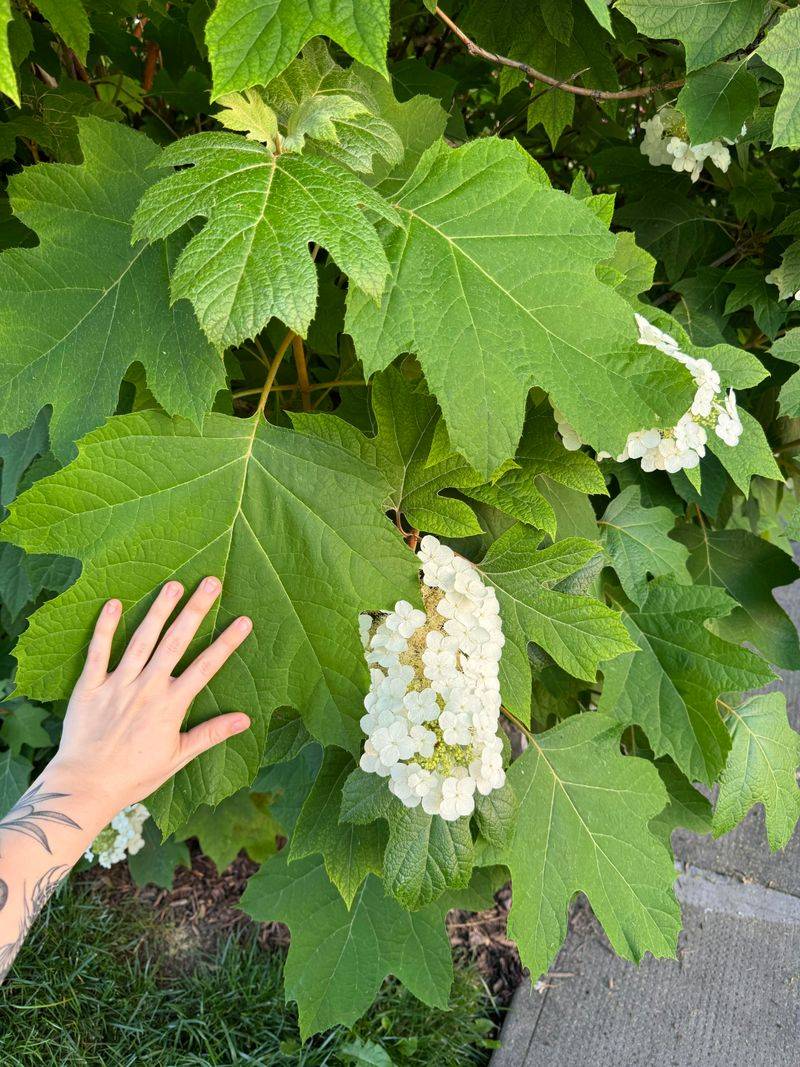
Big cone shaped flowers light up early summer, and bold leaves fill out the growing season with real substance.
Fall does the heavy lifting though. Deep red and purple tones arrive and tend to stop porch visitors mid sentence.
Even bare, the plant holds attention. Cinnamon colored bark carries the display through winter months.
One honest note on origin. Oakleaf hydrangea comes from the southeastern United States, so it is not an Ohio native, though it performs well in Ohio landscapes and supports pollinators.
Placement protects the leaves. A sheltered spot with morning sun or bright shade shields foliage from reflected heat off walls and drives.
Space matters more than people plan for. Mature plants spread wider than expected, so a bed sitting four to six feet from the wall usually serves best.
That distance also allows air movement and room to appreciate the arching habit. Cramming this shrub against siding wastes its best quality.
Soil should stay evenly moist, and mulch handles most of that work. Prune lightly after flowering, only when shaping is truly needed.
The return on all this is generous. Flowers, bold texture, cover for small creatures, and bark that actually matters in February.
Around a porch or along a shaded foundation, it builds a layered look no ruler and hedge trimmer combination can produce.
6. Add Dwarf Fothergilla For Native Texture
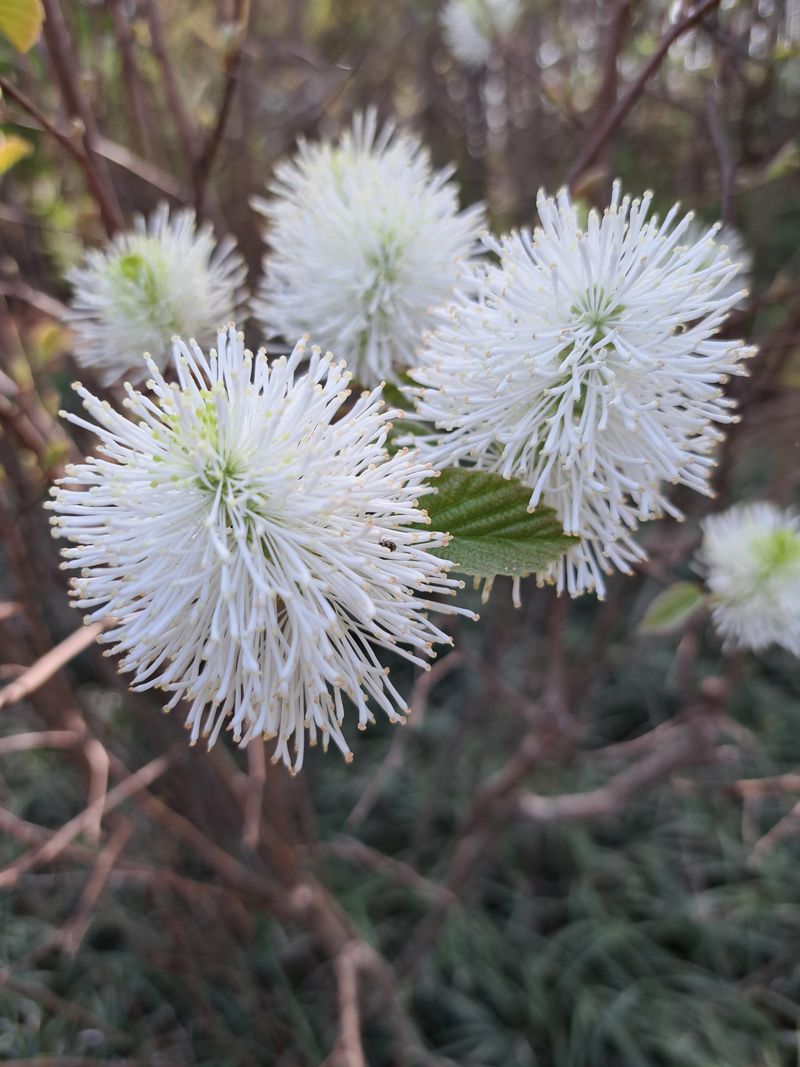
Dwarf fothergilla arrives modest in size and loaded with charm.
Early spring brings bottlebrush shaped white flowers before the leaves fully open. The fragrance has a habit of stopping people on the walkway.
Later in the year, blue green foliage shifts into orange, red, and gold. That autumn encore gives a foundation bed a proper finale.
Compact growth is the practical selling point. Most selections reach roughly three to five feet tall and wide, though labels vary enough to warrant a careful read.
Space from the wall still helps, even with a smaller shrub. Plants pressed flat against siding lose airflow on one entire side.
Acidic, well drained soil brings out the best performance. Mulch keeps roots cooler through Ohio summer heat.
Sun or light shade both work. Fall color often runs stronger in brighter light, provided the soil does not dry out hard.
Pruning needs stay minimal, which is a relief for anyone with a full chore list already.
Near steps, under windows, or beside a small porch, fothergilla adds texture without demanding constant attention. Pollinators show up for the spring flowers, and the hedge trimmers stay in the garage.
Small shrub, big personality, and a name that sounds like a character from a novel. Not the worst combination for a front bed.
7. Plant Spicebush For Wildlife Friendly Landscaping
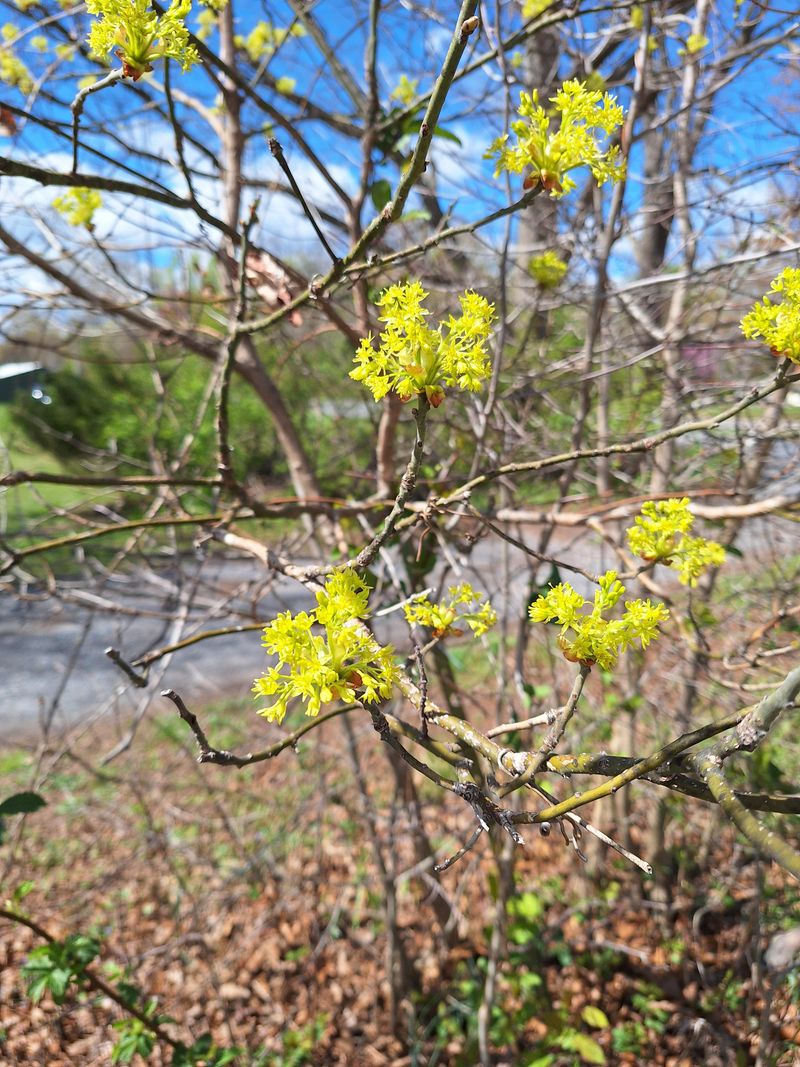
A front yard can feel stiff when every shrub stands in a clipped line.
Spicebush loosens that mood. Soft yellow spring flowers, bright green leaves, and a relaxed shape look right at home in Ohio.
Crush a leaf between your fingers for the reason behind the name. That spicy fragrance is memorable enough to become a habit every time you walk past.
Wildlife gardeners rank it highly for solid reasons. It serves as a host plant for spicebush swallowtail butterflies, offers berries on female plants when a male grows nearby, and provides cover for birds.
That ecological value goes well beyond what a clipped evergreen contributes. Structure alone makes for a fairly quiet front yard.
Size needs honest consideration before planting. Spicebush can reach six to twelve feet tall and wide, so larger foundation corners, side yards, or layered beds farther out suit it better.
Squeezing it under a small window rarely ends well. Few shrubs enjoy living folded against brick.
Part shade with moist, rich soil suits it beautifully. Established plants manage ordinary garden conditions without much fuss.
Mulch conserves moisture, and light pruning handles awkward stems.
For a foundation planting that feels welcoming and alive, spicebush delivers warmth, motion, and butterflies. Anyone who says shrubs cannot be interesting has clearly never sniffed one.
8. Bush Honeysuckle For The Awkward Spots
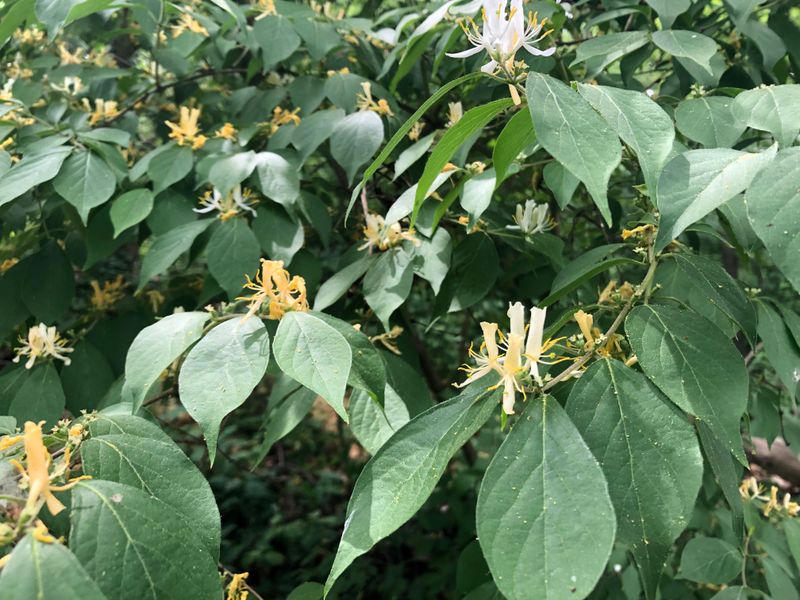
Almost every foundation has one problem area. Dry shade under an eave, a strip of poor soil, a slope that sheds water before roots get any.
Bush honeysuckle takes those places seriously. Diervilla lonicera is a low native shrub that spreads by suckers and holds ground where fussier plants sulk.
Nothing about it screams for attention, and that is exactly the appeal. Small yellow tubular flowers open through early summer, and pollinators find them reliably.
Height stays manageable near the house. Most plants settle around two to four feet tall with a similar spread, which keeps windows clear without any trimming.
Fall brings a quiet color shift into red and bronze tones. Some selections carry burgundy new growth through the season as a bonus.
Adaptability is the real selling point. It tolerates dry soil, part shade, poor ground, and slopes that give other shrubs trouble.
That suckering habit needs a plan though. Give it a defined bed or an edge to work against, and it fills space instead of wandering into the lawn.
Full sun to part shade both work fine. Mulch after planting, water through the first season, and the plant largely takes over from there.
Pruning stays optional. Cut it back hard in early spring if it gets shaggy, and it returns without complaint.
Despite the name, this is not the invasive bush honeysuckle overtaking Ohio woodlands. Same nickname, completely different plant, and far better manners.