Native Ohio Shrubs That Outperform Arborvitae In Foundation Plantings
Arborvitae is everywhere in Ohio foundation plantings. Drive through any suburb and you will spot them lined up like soldiers along every third house on the block.
Gardeners reach for them out of habit, nurseries stock them by the thousands, and landscapers default to them because they are familiar. But arborvitae comes with a long list of problems that homeowners deal with quietly for years.
Bagworm infestations that show up like clockwork. Browning from deer pressure.
Varieties that outgrow their space and crowd windows within a decade. Meanwhile, a solid lineup of native Ohio shrubs sits largely overlooked at better nurseries.
These plants offer cleaner growth habits, genuine wildlife value, and far better long-term performance in foundation beds. No pest battles, no deer magnets, no shrubs that swallow your front porch by year eight.
Ohio natives are ready to do this job better. They just need a fair shot.
1. Inkberry Holly Adds Native Evergreen Structure Near The House
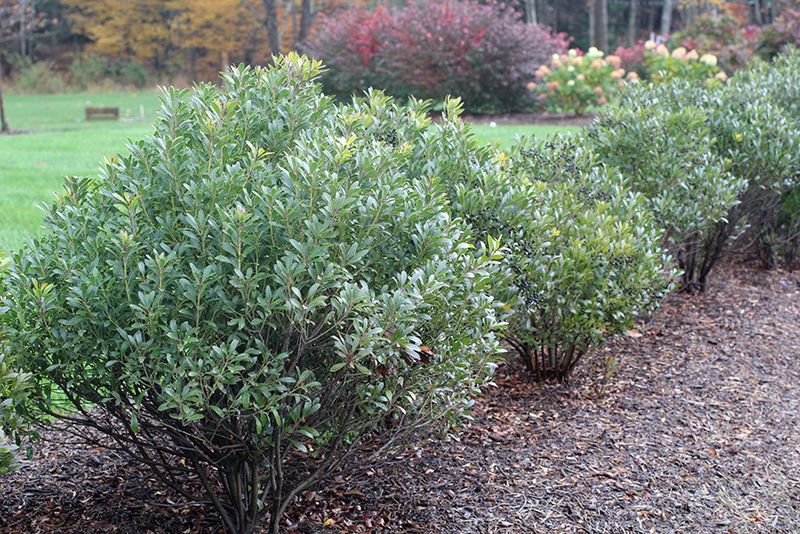
If year-round green structure matters most to you, inkberry holly is the native shrub to put at the top of your list. Ilex glabra is a true broadleaf evergreen, native across much of the eastern United States including this state.
It can anchor a foundation bed with steady green color through every season. That alone puts it ahead of many deciduous native options when winter presence is a priority.
Compact cultivars like ‘Shamrock’ or ‘Gem Box’ stay tighter and more manageable than the straight species, which can spread by suckers and reach six feet or more.
For a foundation bed, always choose a named compact cultivar and give each plant enough room to grow without crowding the siding or blocking windows.
Spacing from the house matters as much as spacing between plants.
Inkberry prefers acidic, moist but well-drained soil. It can handle periodic wet conditions better than arborvitae, making it a strong pick for low spots or beds near downspouts.
However, it may struggle in high-pH soil, dry compacted clay, or sites with poor drainage year-round. Check your soil pH before planting, and amend if needed.
Female plants produce small black berries that birds appreciate through fall and into winter.
2. Dwarf Fothergilla Brings Spring Flowers And Fall Color
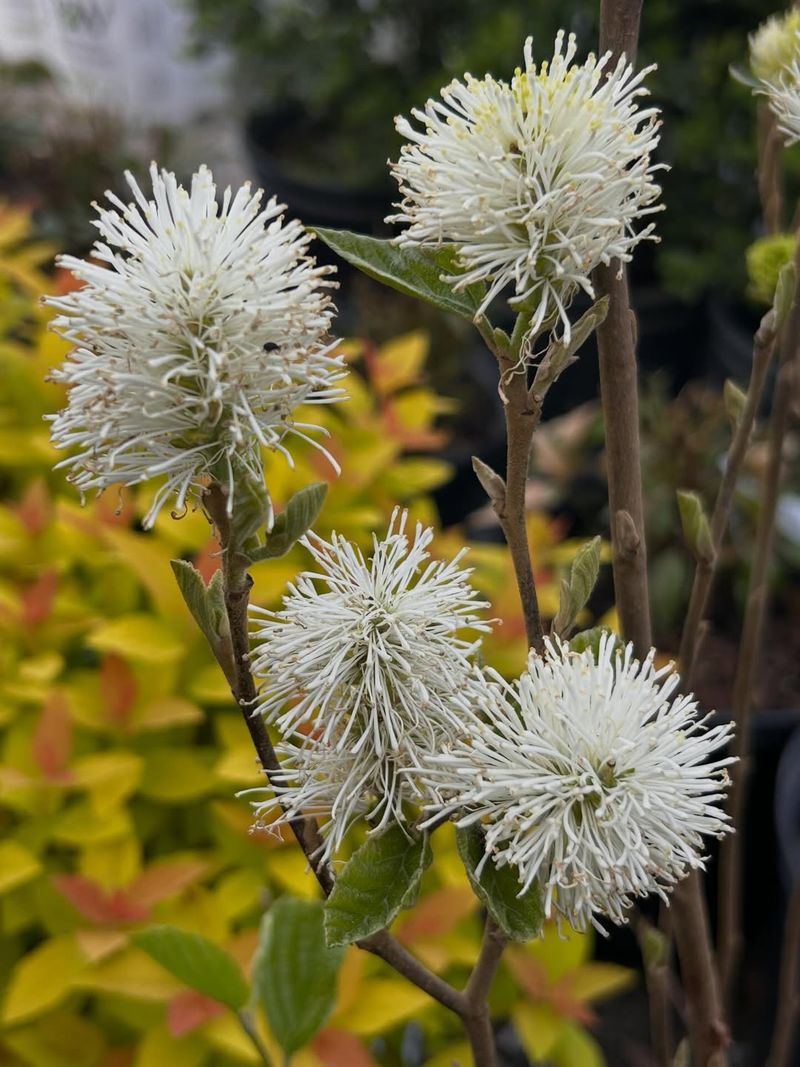
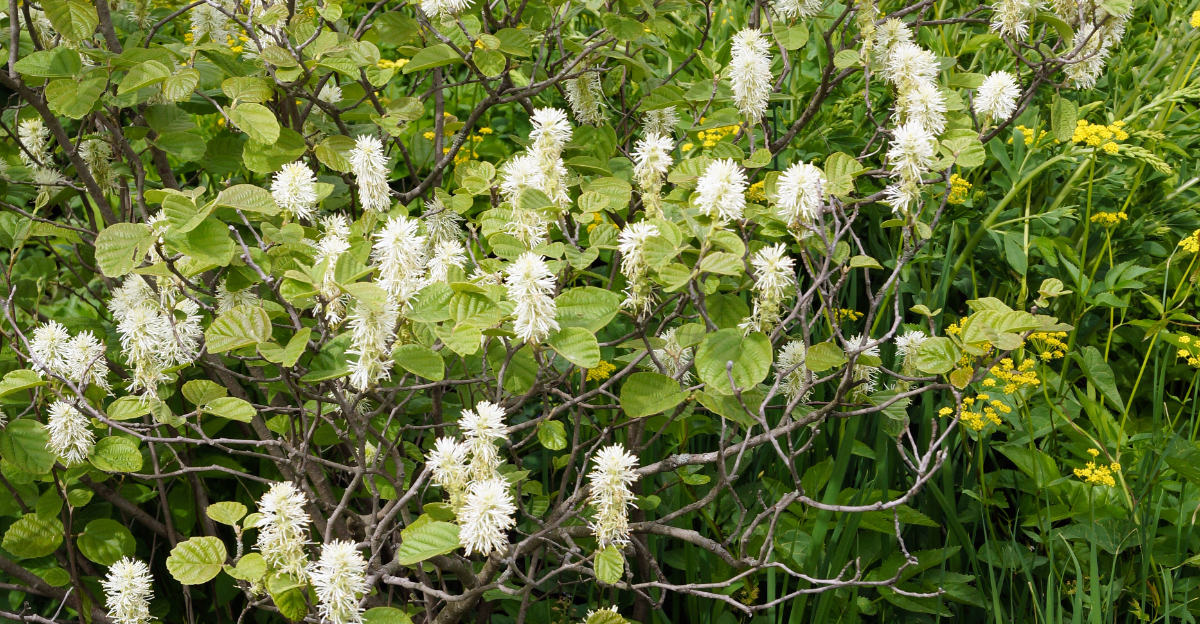
Few native shrubs can match the seasonal show that dwarf fothergilla puts on from early spring straight through to late fall. Before the leaves even fully open, the plant pushes out fluffy white bottlebrush-shaped flowers that smell faintly of honey.
Pollinators find them quickly, and the display can last several weeks depending on temperatures during our growing season.
Fothergilla gardenii, the dwarf species, typically stays in the two to three foot range, though some cultivars like ‘Blue Shadow’ can reach four feet or more. Always confirm the mature size of the specific cultivar before buying.
For most foundation beds, the smaller forms work best, especially under windows or along the front edge of a layered planting.
Fall color is genuinely spectacular on this shrub. Leaves turn orange, red, yellow, and sometimes purple all at once on the same plant, giving it a painted look that very few foundation shrubs can match.
Your Ohio Garden Changes Every Week. Your Plan Should Too.
Gardening in Ohio changes quickly throughout the season. Every Friday you’ll receive a simple weekly plan showing exactly what to plant, prune, fertilize, harvest, and protect so you never miss the right timing.
Dwarf fothergilla prefers acidic, well-drained soil with steady moisture and performs well in full sun to part shade. It will not replace arborvitae’s winter wall.
But from March through November, it earns its spot in any foundation bed that values seasonal interest over evergreen structure.
3. New Jersey Tea Fits Sunny Foundations Without Getting Huge
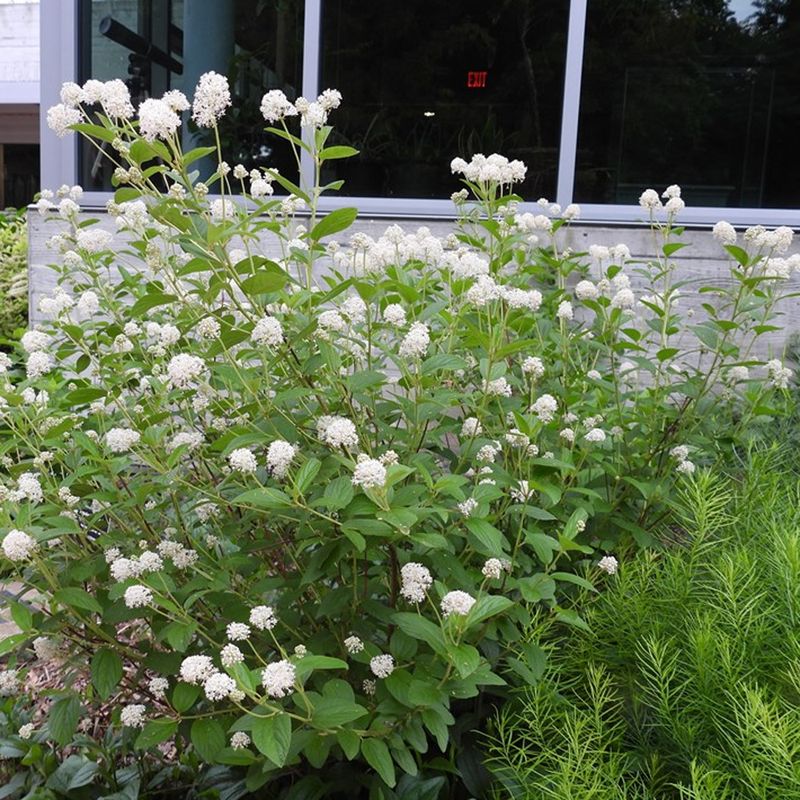
Compact size and big pollinator value are two things New Jersey tea delivers that many foundation shrubs simply do not. Ceanothus americanus typically grows two to three feet tall and about as wide.
That makes it one of the more manageable Ohio native shrubs for front beds, entry areas, or sunny foundation spots where you do not want a shrub swallowing the whole planting bed.
The white flower clusters appear in late spring to early summer and draw in bumblebees, small native bees, and butterflies with real enthusiasm.
If you have ever wanted a foundation shrub that doubles as a pollinator magnet during the summer months, this one earns that role.
It does it without demanding extra water or rich soil. It actually thrives in lean, well-drained, even somewhat dry conditions once established.
That makes it a practical pick for sunny south- or west-facing foundation beds that tend to dry out quickly.
New Jersey tea is deciduous, so it will not provide winter screening or year-round green structure. Plan for that honestly when designing the bed.
It works best as part of a layered planting rather than a solo screen. Deer pressure can be a concern in some areas, so check local reports before committing.
Root disturbance after establishment should be avoided since the plant develops a deep taproot over time.
4. Sweetspire Handles Moist Spots Better Than Arborvitae
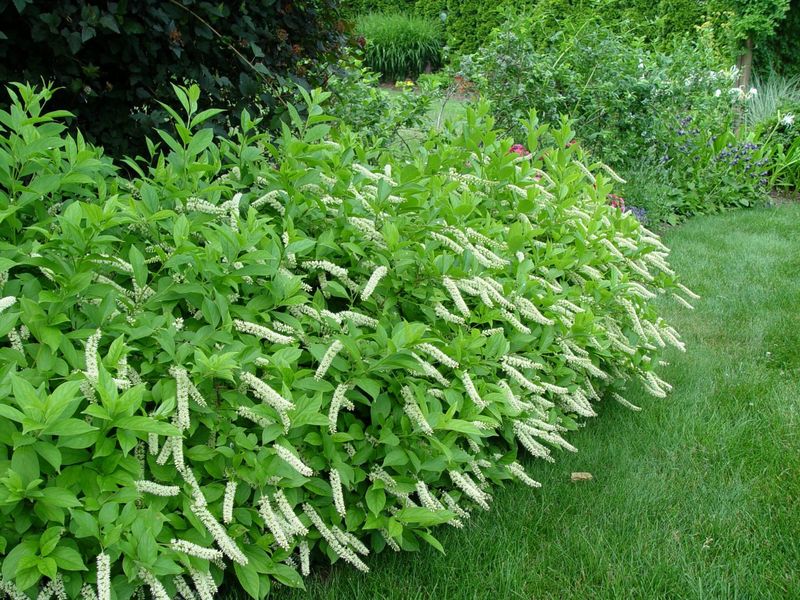
Virginia sweetspire is the shrub to consider when you have a foundation area that stays consistently moist. It also suits spots that drain slowly after rain or sit near a downspout that never quite dries out.
Arborvitae struggles in those conditions over time. But Itea virginica handles steady soil moisture far better than most foundation shrubs and still delivers a respectable seasonal show.
The fragrant white flower spikes appear in early to midsummer and arch outward in a graceful way that looks less stiff than many traditional foundation plants. Pollinators visit the blooms reliably.
After flowering, the foliage stays glossy and attractive through summer before shifting to brilliant red and orange fall color that can rival fothergilla in intensity. Some leaves may even hold into early winter in sheltered spots.
Sweetspire can spread slowly by suckers, forming a loose colony over several years. In a tight foundation bed, that habit can become a management issue.
Compact cultivars like ‘Little Henry’ stay smaller and spread less aggressively than the straight species, making them a smarter choice for beds near siding or walkways.
Give plants room to breathe, water regularly until established, and check spacing against the mature width before planting.
Full sun to part shade suits it well in most parts of the state.
5. Ninebark Adds Tough Structure With Flowers And Bark Texture
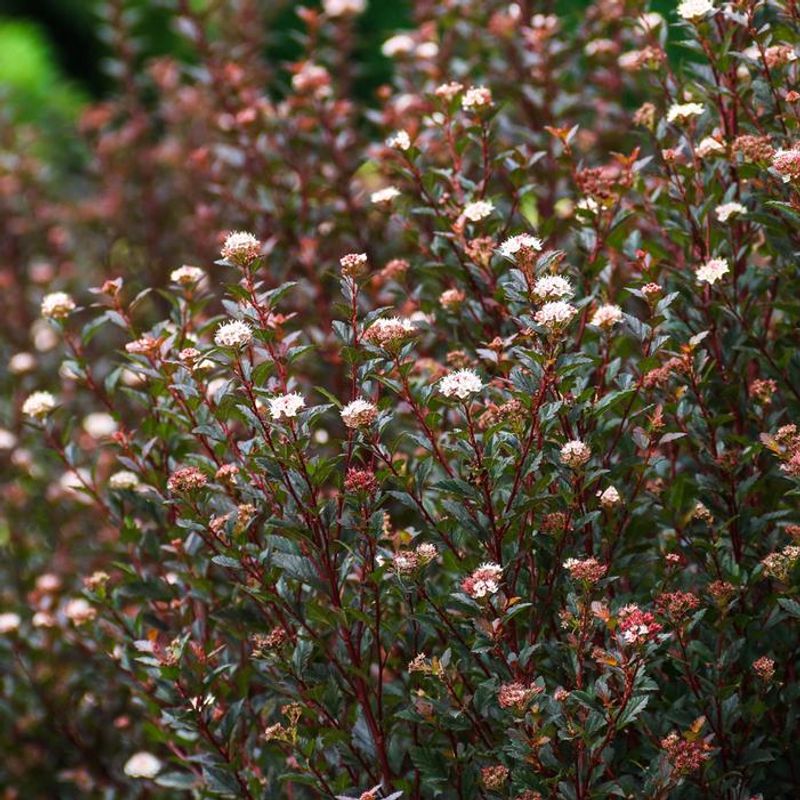
Peeling, layered bark that reveals cinnamon and tan tones underneath is not something most foundation shrubs offer.
Ninebark delivers that year-round texture along with white or pale pink flower clusters in late spring and persistent reddish seed capsules through summer and fall.
Physocarpus opulifolius is a durable native shrub that earns its place in larger foundation beds where character and presence matter.
The honest caveat is mature size. Full-size ninebark can reach eight to ten feet tall and wide, which is far too large for most foundation beds near a standard house.
Compact cultivars are the only practical choice for planting near siding, windows, or walkways. Look for forms like ‘Tiny Wine’ or ‘Little Devil,’ which stay in the three to four foot range and still carry the same flower and bark interest as larger types.
Ninebark tolerates a wider range of soil conditions than many native shrubs, including clay soil, varying moisture levels, and even some drought once established.
That adaptability is a real advantage in foundation beds where soil quality is often poor from construction.
It does not mimic arborvitae’s evergreen look, and gardeners should plan the bed with that in mind. Pair it with lower evergreen groundcovers or perennials if winter structure is still a goal.
6. Chokeberry Delivers Berries, Fall Color, And Wildlife Value
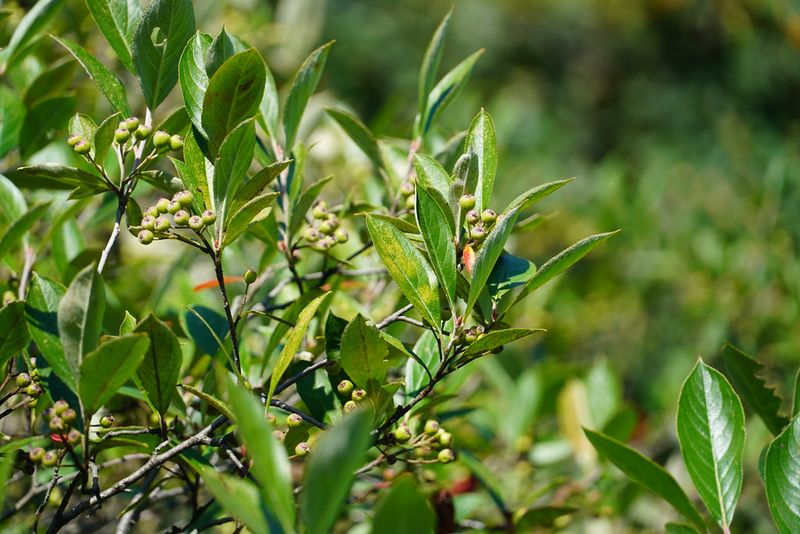
Black chokeberry, Aronia melanocarpa, and red chokeberry, Aronia arbutifolia, are two native shrubs that punch well above their weight. They deliver strong seasonal interest and wildlife value.
Spring brings small white flowers that pollinators visit eagerly. By late summer and fall, the plants are loaded with dark berries or bright red berries depending on the species.
The foliage also shifts to deep red and purple tones that rival many ornamental shrubs.
Birds find the fruit valuable, especially later in the season when other food sources become scarce. The berries are quite astringent for fresh eating straight off the plant, but they are used in juices, jams, and health products.
Wildlife value alone makes chokeberry a strong competitor to arborvitae in any foundation bed where ecological function matters alongside appearance.
Suckering is a real consideration with both species. Plants can spread slowly to form colonies, which may be welcome in a naturalistic planting but problematic in a tight foundation bed.
Compact cultivars like ‘Morton’ (Iroquois Beauty) stay smaller and sucker less than the straight species. Give plants enough room, and check drainage since both species prefer moist but not waterlogged conditions.
Also confirm which species or cultivar you are buying before leaving the nursery.
7. Spicebush Works Better Along Shady Foundation Edges
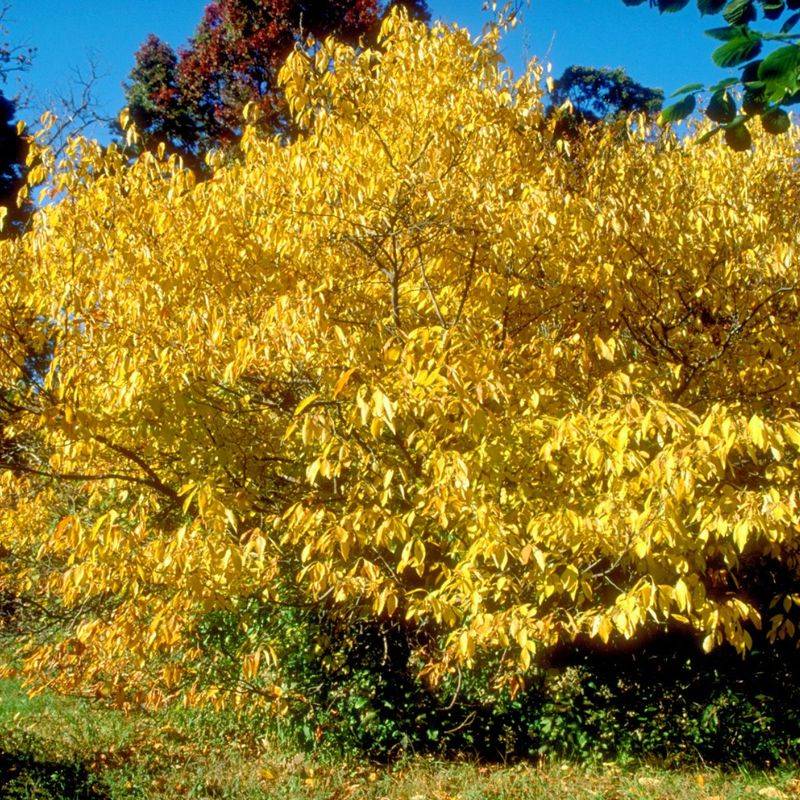
Early spring in a shaded foundation bed can feel pretty bare, but spicebush changes that fast. Lindera benzoin pushes out clusters of tiny yellow flowers along bare branches in late winter to very early spring.
It often blooms weeks before most other shrubs show any signs of life. That early bloom is a real gift to early pollinators and to gardeners who are tired of staring at dormant sticks.
Spicebush is a natural fit for part shade, morning sun with afternoon shade, or woodland-edge foundation beds where arborvitae would struggle to hold its color and density.
The aromatic foliage is attractive through summer, and female plants produce glossy red berries in fall that birds consume quickly.
A male plant needs to be nearby for berry production, so plan to plant at least one of each if fruit is a goal.
Spicebush swallowtail butterfly caterpillars use spicebush as a host plant, which adds real ecological value to any shaded foundation planting.
Mature size ranges from six to twelve feet depending on site and conditions, so give plants adequate room and do not crowd them against the house.
It is deciduous and will not function as a clipped evergreen substitute. Prune lightly if needed, but let the natural arching form develop for the best results.
8. Dwarf Viburnum Gives Foundation Beds Flowers And Fruit
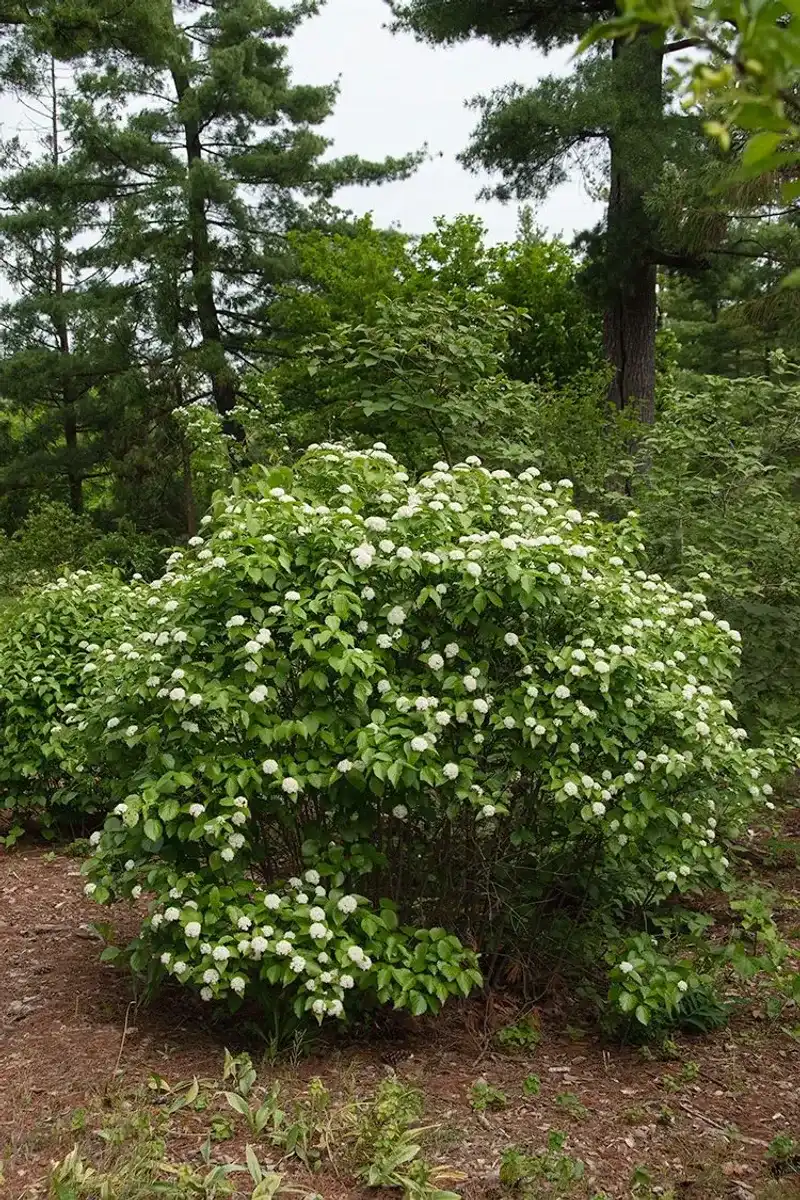
Among native shrubs that offer a true four-season presence in a foundation bed, viburnums are hard to beat. Spring brings flat-topped or rounded white flower clusters that pollinators visit in good numbers.
By late summer and fall, those flowers have turned into clusters of berries ranging from blue-black to red depending on the species, and birds move in quickly once the fruit ripens.
Arrowwood viburnum, Viburnum dentatum, is one of the most adaptable native viburnums for foundation use in this state. It tolerates a range of soil conditions, handles part shade reasonably well, and offers reliable fall color.
Compact cultivars like ‘Blue Muffin’ stay in the four to five foot range, which is far more manageable near a house than the full-size form that can reach ten feet or more.
One important shopping note: not every viburnum sold at garden centers is native to this region. Always confirm native status and check the botanical name before buying.
Many viburnums also fruit more reliably when a compatible plant is nearby for cross-pollination. For the best berry display, consider planting two different cultivars of the same species.
Water new plants consistently through the first growing season, and check mature size carefully against your available bed space before you plant.