Native Plants For Western North Carolina Mountain Gardens That Feed Early Pollinators
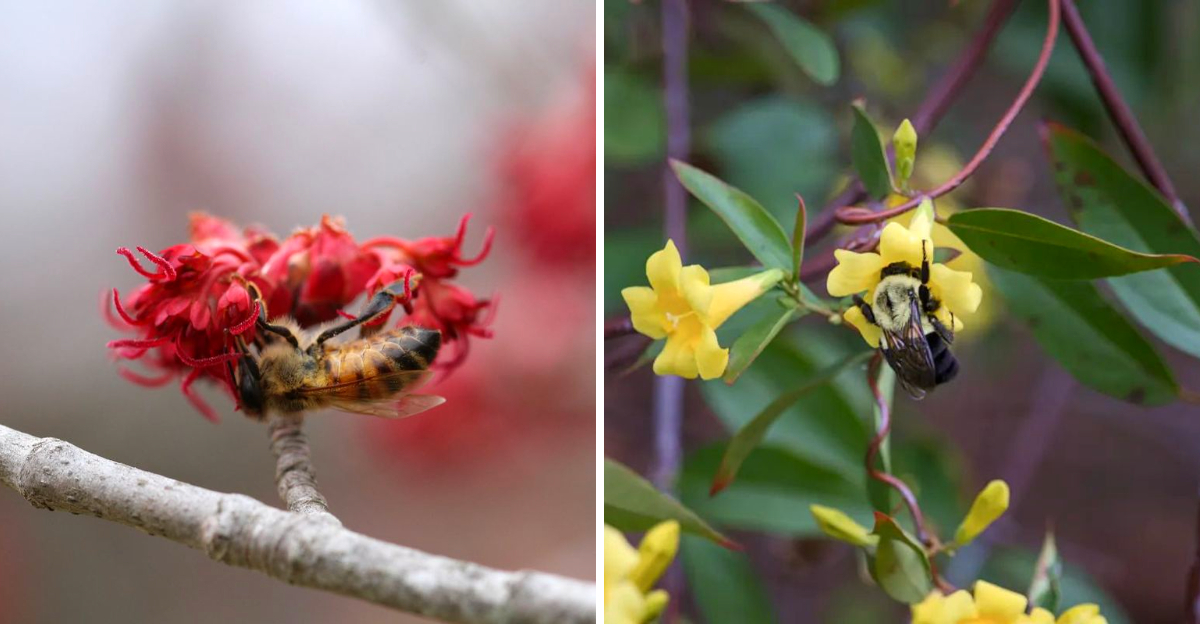
While the rest of the South is already awash in color, spring in the Western North Carolina mountains likes to take its sweet time.
Up here, those crisp April mornings create a “hunger gap” for our local pollinators.
For native bees and butterflies waking up in the high country, finding a reliable meal can be a real challenge when the landscape is still shaking off the frost.
By tucking native, early-blooming species into your mountain garden, you’re providing a vital energy boost right when it’s needed most.
Choosing plants built for our unique elevation and soil is a beautiful, practical way to support the delicate mountain ecosystem as it slowly comes back to life.
1. Red Maple Provides Early Pollen And Nectar
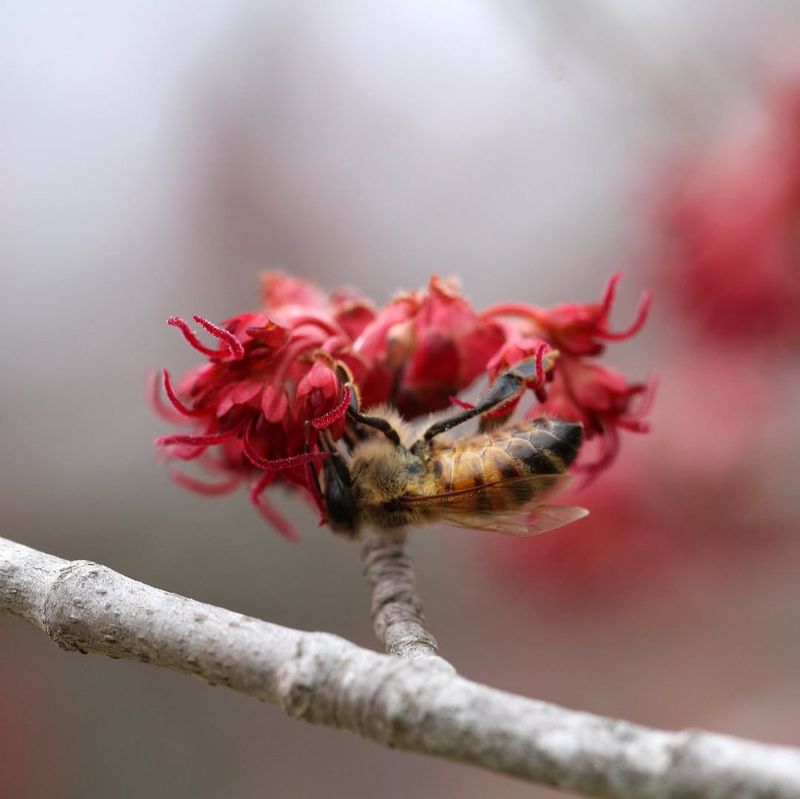
Before most mountain gardens show any sign of spring, red maple trees are already delivering one of the season’s first food sources for pollinators.
In Western North Carolina, red maple often begins flowering while nighttime temperatures are still dropping near freezing, making it a genuinely remarkable early bloomer for high-elevation landscapes.
The clusters of small red flowers may not look dramatic from a distance, but up close they are packed with pollen and nectar that native bees, including queen bumblebees just emerging from winter, actively seek out.
Red maple grows across a wide range of conditions found throughout the Western North Carolina mountains, tolerating both moist bottomlands and drier slopes.
It reaches a mature height of 40 to 60 feet in most landscapes, so it works best as a canopy tree rather than a shrub border planting.
Gardeners with larger properties or wooded edges will find it fits naturally into the existing mountain forest structure.
Because red maple leafs out quickly after flowering, it also provides early season shade that supports understory plants. The tree’s adaptability to the region’s acidic, often clay-heavy soils makes establishment relatively straightforward.
Planting young trees in fall gives roots time to settle before the following spring bloom cycle.
For pollinators in Western North Carolina, few native trees offer as early or as reliable a food source as red maple does each year.
2. Serviceberry Brings Early Blooms And Wildlife Value
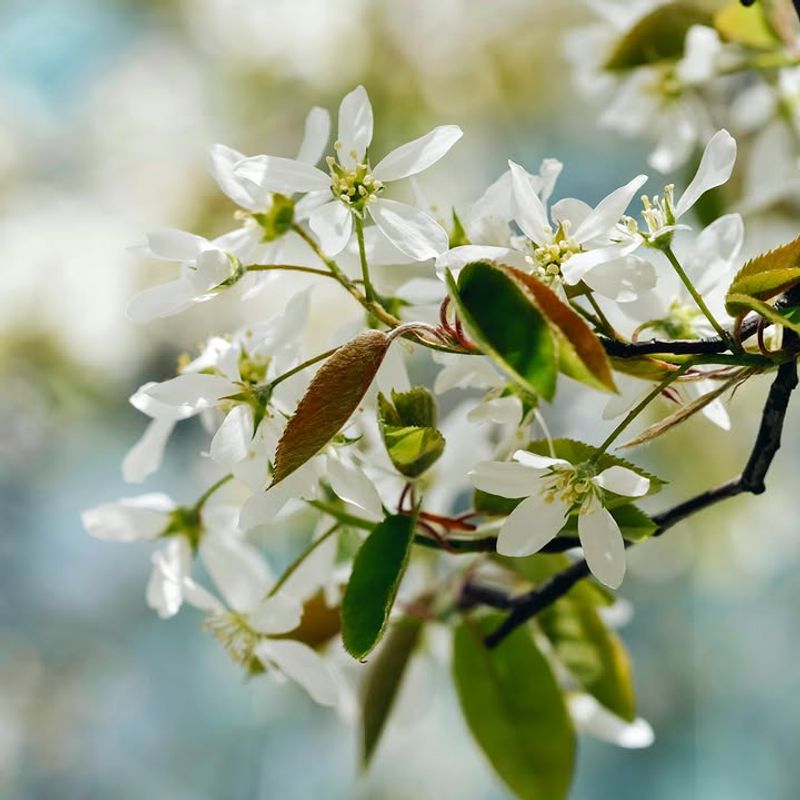
Cool, misty mornings in the Western North Carolina highlands are often the backdrop for one of the most quietly beautiful early spring events a gardener can witness: serviceberry coming into bloom.
Also known as Juneberry or shadbush, this native shrub or small tree produces clusters of white, five-petaled flowers that open just as the forest begins to wake up.
The timing is well-suited to mountain spring conditions, where bloom windows can be narrow and unpredictable.
For early pollinators, serviceberry is a meaningful resource. Native bees, including mason bees and small sweat bees, visit the flowers for both nectar and pollen at a time when few other sources are available in Western North Carolina mountain gardens.
The plant’s bloom period typically arrives before most other flowering natives, giving it an important ecological role in the early season food web.
Your North Carolina Garden Changes Every Week. Your Plan Should Too.
Gardening in North Carolina changes quickly throughout the season. Every Friday you’ll receive a simple weekly plan showing exactly what to plant, prune, fertilize, harvest, and protect so you never miss the right timing.
Serviceberry adapts well to the well-drained, slightly acidic soils common across many mountain slopes and woodland edges in this region.
It grows in full sun to partial shade, which makes it flexible enough to fit into a variety of garden settings, from open borders to the shadier edges of wooded yards.
After flowering, it produces small, sweet fruits that attract birds throughout early summer, extending its wildlife value well beyond the spring bloom season.
Planting a few specimens together tends to improve fruit production and creates a more visible floral display for pollinators.
3. Eastern Redbud Adds Bright Color In Early Spring
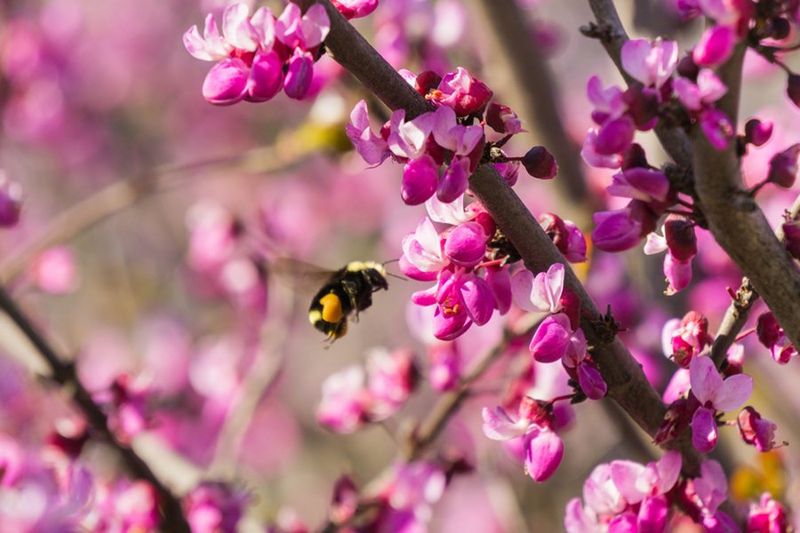
Few sights in a Western North Carolina spring garden are as immediately striking as an eastern redbud covered in its vivid magenta-pink blooms.
The flowers appear directly on the branches and trunk before the leaves emerge, creating a saturated burst of color that stands out sharply against the still-bare mountain forest.
At elevations common to Western North Carolina, redbud typically blooms in mid to late April, which places it right in the window when early pollinators are actively searching for food.
Native bees, including bumblebees and mining bees, are frequent visitors to redbud flowers, collecting both nectar and pollen. The flowers are pea-shaped, a structure that accommodates the feeding behavior of many native bee species particularly well.
Because redbud blooms before its foliage develops, pollinators can access the flowers with minimal obstruction, making foraging more efficient during the critical early season period.
Eastern redbud grows as a small to medium understory tree, typically reaching 20 to 30 feet, which makes it manageable in a range of garden sizes.
It performs well in the slightly acidic, loamy soils found across many Western North Carolina mountain valleys and lower slopes.
Partial shade to full sun both suit this tree, though it tends to flower most abundantly with at least several hours of direct sunlight each day.
Planting it near a garden edge or along a woodland border allows it to fill a naturalistic niche while providing excellent early season pollinator support.
4. Flowering Dogwood Supports Pollinators With Spring Blooms
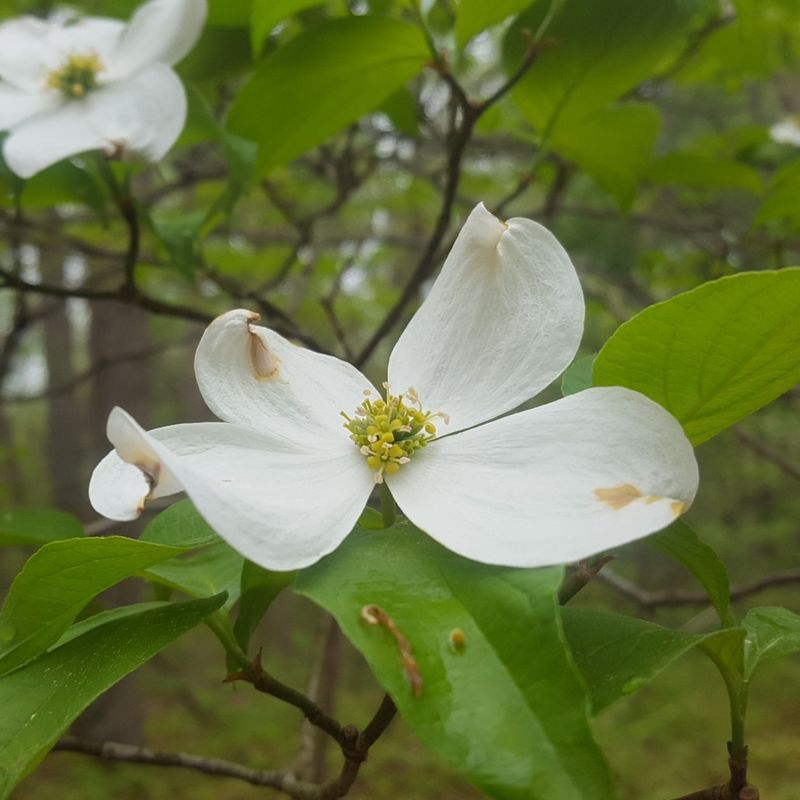
Along the wooded slopes and forest edges of Western North Carolina, flowering dogwood is one of the most recognizable signs that spring has genuinely arrived.
The large white bracts that most people think of as petals are actually modified leaves surrounding a cluster of small, true flowers at the center.
Those central flowers are what attract early pollinators, offering nectar and pollen to native bees, small butterflies, and other beneficial insects during a period when food sources in mountain gardens are still limited.
Flowering dogwood blooms in mid-spring, typically from April into early May depending on elevation and microclimate.
In Western North Carolina, gardens at higher elevations may see blooms a week or two later than those in lower mountain valleys, which extends the overall window this plant contributes to the regional pollinator food supply.
That staggered timing is one of the reasons native dogwood fits so naturally into a layered mountain garden design.
Growing best in partial shade with moist, well-drained, acidic soil, flowering dogwood thrives in conditions that mirror its native woodland habitat.
Placing it beneath a taller canopy tree or along the shaded edge of a structure can help it establish more comfortably in Western North Carolina gardens.
It reaches 15 to 30 feet at maturity and offers additional wildlife value through its bright red fall berries, which many bird species rely on before winter.
Its seasonal contributions span well beyond the spring bloom window, making it a well-rounded native addition to any mountain garden.
5. Carolina Jessamine Offers Early Nectar For Bees
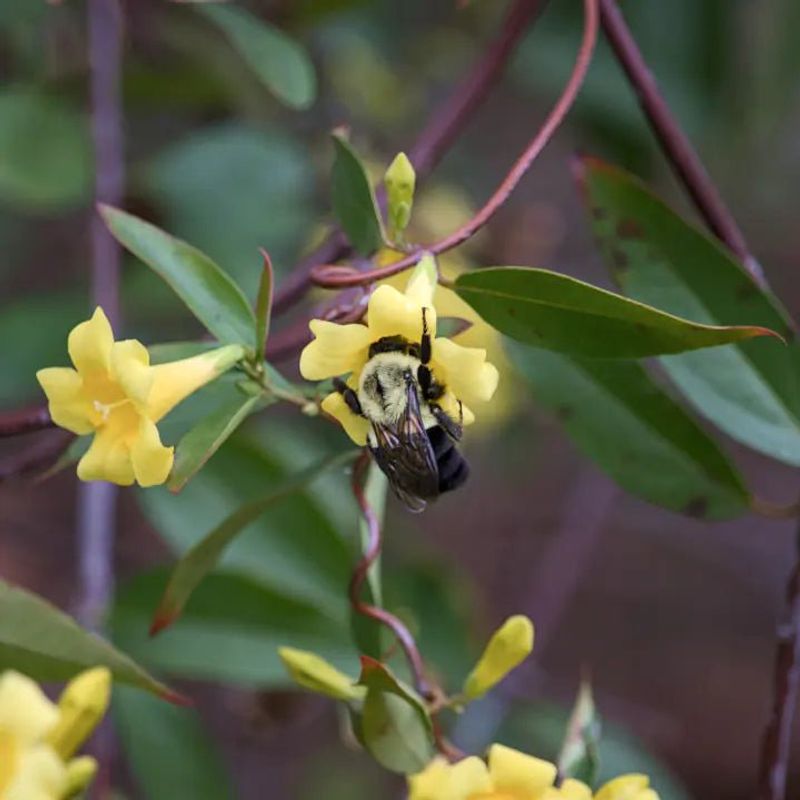
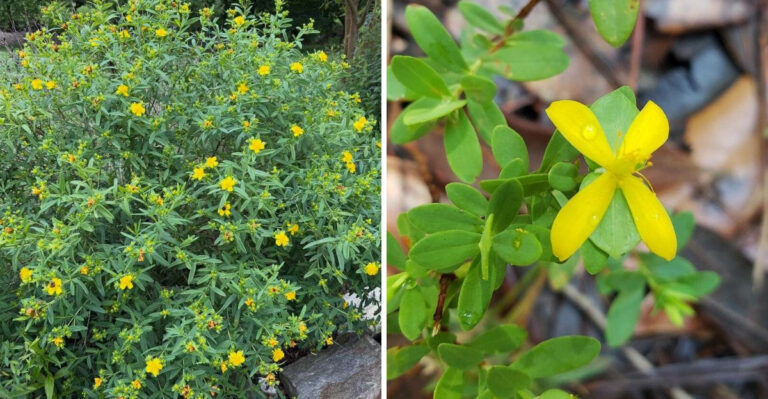
Bright yellow and sweetly fragrant, Carolina jessamine is one of the earliest native vines to bloom in Western North Carolina gardens, often flowering while the surrounding landscape still carries the muted tones of late winter.
The tubular yellow flowers are particularly well-suited to long-tongued native bees that can reach the nectar inside, and on warm late-winter or early spring days, the vine can become a surprisingly busy feeding station for early-emerging pollinators searching across the mountain landscape for food.
Carolina jessamine climbs readily over fences, trellises, and shrub borders, making it a versatile structural plant for mountain gardens of various sizes.
It grows vigorously in full sun to partial shade and handles the well-drained, slightly acidic soils common throughout Western North Carolina fairly well.
Gardeners often use it to cover unsightly structures or create a natural screen along garden edges while simultaneously supporting local wildlife.
One important note for households with children or pets: all parts of Carolina jessamine contain alkaloids that can be harmful if ingested, so thoughtful placement matters.
Despite that consideration, it remains a widely valued native plant in the region for its early bloom timing, evergreen foliage, and genuine nectar value for pollinators.
The vine’s ability to bloom even during mild late-winter spells means it can extend the pollinator feeding season in Western North Carolina beyond what most gardeners expect from their earliest-blooming natives.
Pruning lightly after flowering helps maintain a tidy shape without reducing next season’s bloom potential.
6. Virginia Bluebells Create A Soft Spring Display
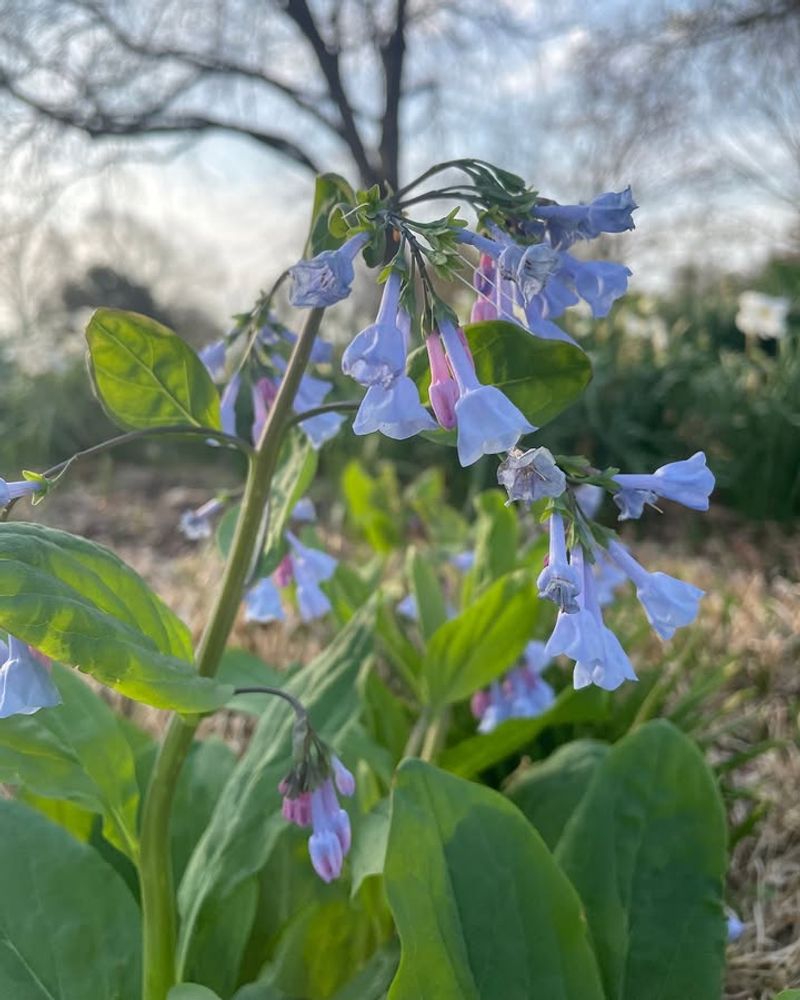
Walking along a shaded streambank in Western North Carolina in early spring and encountering a mass of Virginia bluebells in bloom is one of those moments that reminds gardeners why native plants are worth every bit of effort.
The flowers open as soft pink buds and gradually shift to a clear, sky-blue as they mature, creating a two-toned display that feels effortlessly elegant in a naturalistic garden setting.
Bumblebee queens and long-tongued native bees are the primary pollinators drawn to these nodding, tubular blooms.
Virginia bluebells thrive in moist, humus-rich soils along stream edges, floodplain margins, and shaded garden beds where moisture stays consistent through the spring season.
In Western North Carolina’s mountain valleys, where cool, shaded hollows retain moisture well into late spring, these conditions are easy to find or create.
The plant blooms for several weeks in early to mid-spring before going dormant by early summer, which means gardeners need to plan for neighboring plants that will fill the space once the foliage fades.
Pairing Virginia bluebells with ferns, wild ginger, or other shade-tolerant natives that emerge as the bluebells fade creates a smooth visual transition through the season.
Because the plants spread gradually by seed over time, a small planting can develop into a generous drift within a few years.
For Western North Carolina mountain gardens with shaded, moist areas, Virginia bluebells offer a combination of spring beauty and genuine early pollinator value that is hard to match with any non-native alternative.
7. Wild Columbine Attracts Early Pollinators With Nodding Blooms
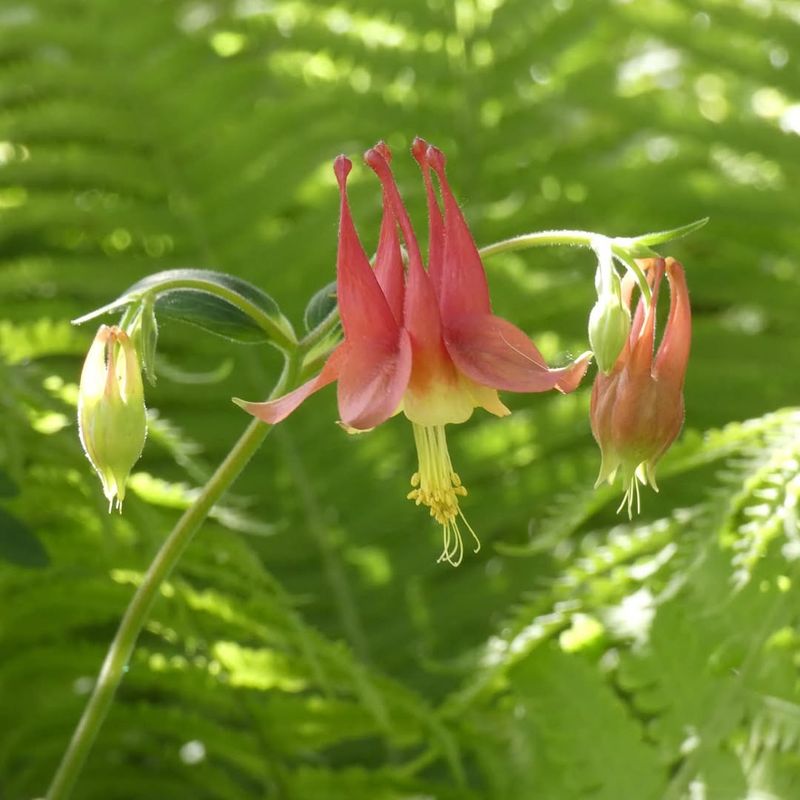
Rocky outcroppings and woodland edges throughout Western North Carolina are natural homes for wild columbine, a native perennial whose nodding red and yellow flowers are among the most distinctive shapes in any spring garden.
The long, backward-pointing spurs on each flower hold nectar deep inside, a structure that suits long-tongued pollinators particularly well.
Early-season hummingbirds are strong visitors, but native bumblebees with sufficiently long tongues also manage to access the nectar, making wild columbine a multi-pollinator resource during the spring season.
Wild columbine blooms from mid to late spring in Western North Carolina, with exact timing varying by elevation and sun exposure.
Plants growing on south-facing slopes or in sunnier spots tend to bloom a bit earlier than those tucked into shadier, north-facing hollows.
That variability actually extends the effective bloom window across a mountain garden, giving pollinators a longer period of access to the flowers.
Growing best in well-drained, rocky or sandy soil with partial shade to full sun, wild columbine fits naturally into the kinds of lean, somewhat dry conditions found on many Western North Carolina hillsides and forest margins.
It self-seeds freely once established, spreading gradually into nearby areas and filling gaps between larger native shrubs or perennials.
Gardeners who leave spent flower stems standing through late spring give the plant the best chance to reseed successfully.
Its relatively compact size, usually 1 to 3 feet tall, makes it suitable for a wide range of garden scales from small borders to larger naturalistic plantings.
8. Foamflower Covers Shady Areas With Spring Flowers
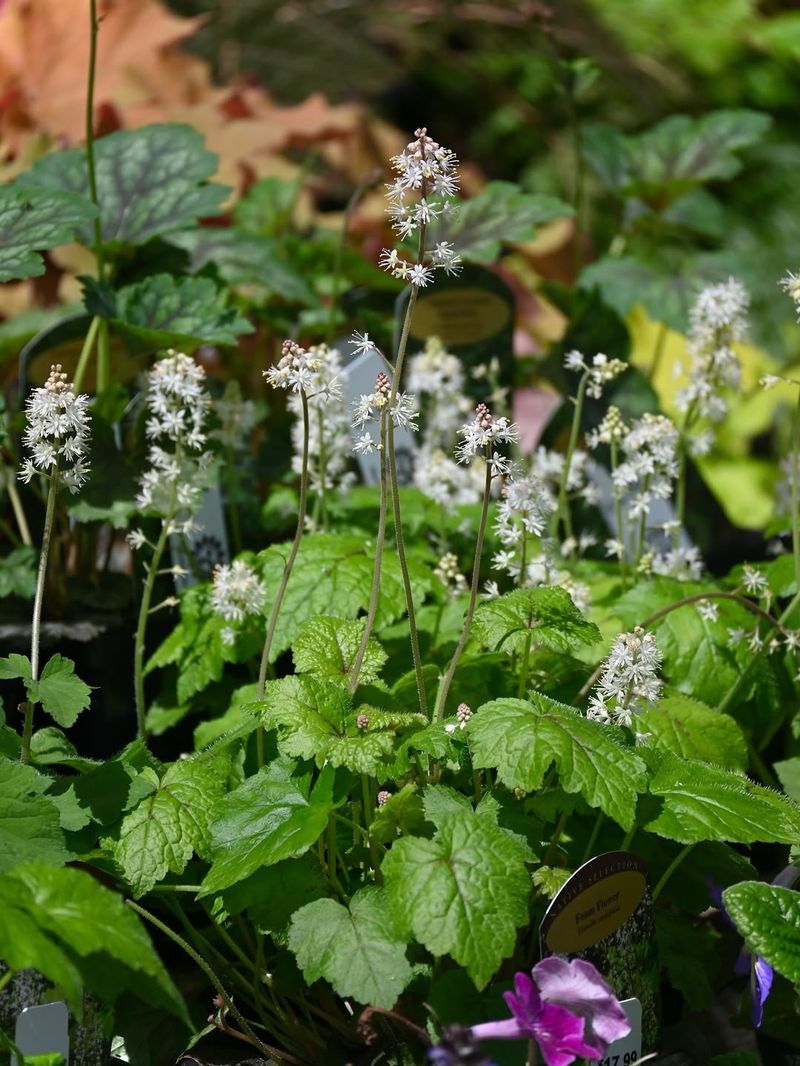
Shaded corners of a Western North Carolina mountain garden can be tricky to fill with plants that genuinely support wildlife, but foamflower handles that challenge with quiet confidence.
Native to moist, shaded woodlands throughout the Appalachian region, foamflower produces airy spikes of small white to pale pink flowers in mid-spring that attract a range of small native bees, including sweat bees and small carpenter bees, that often get overlooked in pollinator gardening conversations focused on larger species.
Foamflower spreads by stolons, forming a low, dense groundcover that stays attractive even after the bloom period ends.
The scalloped, maple-like leaves hold their color through much of the season and can develop attractive reddish markings in some varieties.
In Western North Carolina gardens, foamflower pairs naturally with trillium, wild ginger, and ferns beneath deciduous canopy trees, creating a layered understory planting that mirrors the structure of native mountain woodlands.
Moist, humus-rich, acidic soil suits foamflower well, and Western North Carolina’s mountain valleys and shaded slopes often provide those conditions with minimal amendment needed.
Established plants are reasonably drought-tolerant once their root systems develop, though consistent spring moisture encourages the most robust flowering.
Gardeners looking to support early pollinators in areas where sun is limited will find foamflower one of the most reliable and ecologically meaningful choices available for the region.
Its spreading habit means a small initial planting can grow into a meaningful groundcover over several seasons.