9 Native Plants That Handle Georgia Heat And Humidity With Ease
Georgia gardens look amazing in spring, but summer quickly changes the game. Once the real heat settles in and the humidity starts hanging in the air day and night, many plants that looked great a few weeks earlier begin to struggle.
Leaves droop, growth slows down, and keeping everything alive suddenly feels like a full-time job.
One of the easiest ways to avoid that frustration is choosing plants that are naturally used to Georgia’s climate.
Native species grow in these conditions without constant attention, handling hot afternoons, heavy air, and long stretches of summer weather much better than many non-native plants.
Instead of fighting the climate, planting species that already belong here makes gardening far less stressful. The right native plants keep growing, keep looking good, and continue performing even when Georgia’s heat and humidity are at their worst.
1. Purple Coneflower Thrives In Hot Humid Summers
Purple coneflower is one of those plants that actually looks better when the summer gets brutal.
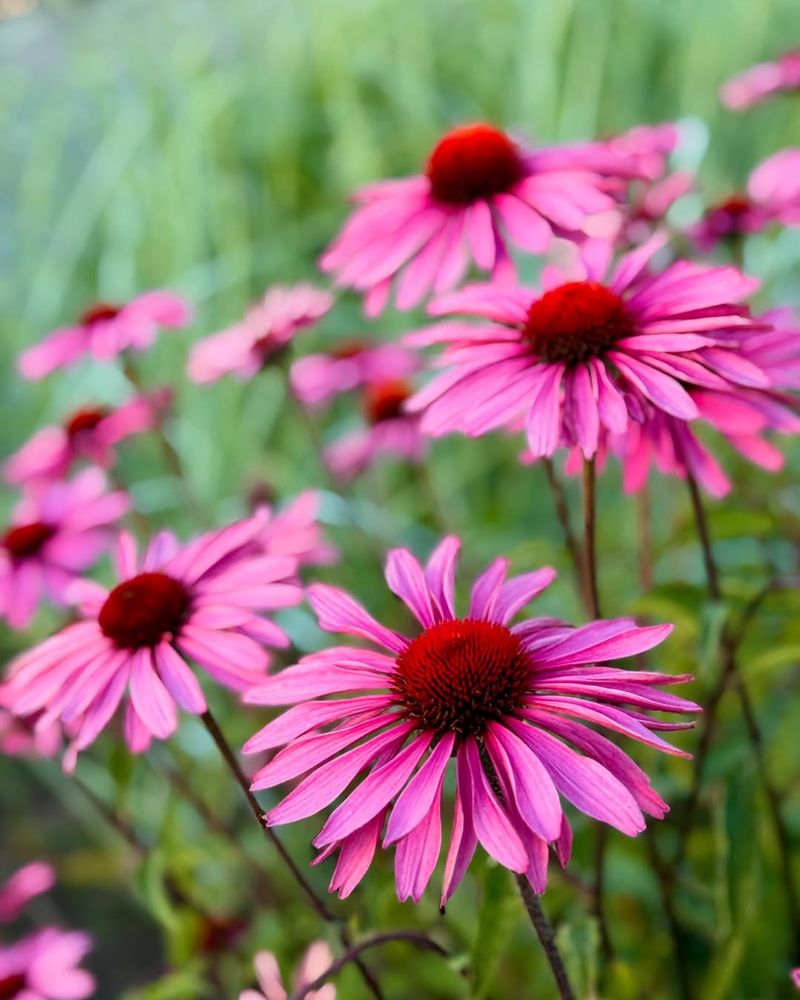
While other flowers wilt and fade under Georgia’s relentless July sun, Echinacea purpurea stands tall with those bold purple-pink petals fanned out around a spiky orange-brown center.
It is a showstopper, plain and simple.
Plant it in full sun and give it decent drainage. Sandy or clay-heavy Georgia soil both work fine as long as water is not pooling around the roots.
Coneflower is not picky about soil richness either, so skip the heavy fertilizing. Too much nitrogen just pushes leafy growth instead of flowers.
Pollinators absolutely swarm coneflowers during peak bloom, which usually runs from June through August in Georgia. Bees, butterflies, and even goldfinches come for the seeds once the petals drop.
Resist the urge to deadhead every spent bloom. Leaving the seed heads standing feeds wildlife through fall and winter.
Clumps spread gradually over a few seasons, so you will eventually have more plants to divide and share. Start with three or five plants grouped together for the most visual impact.
Purple coneflower earns its spot in any Georgia garden every single year.
2. Black Eyed Susan Blooms Reliably In Tough Conditions
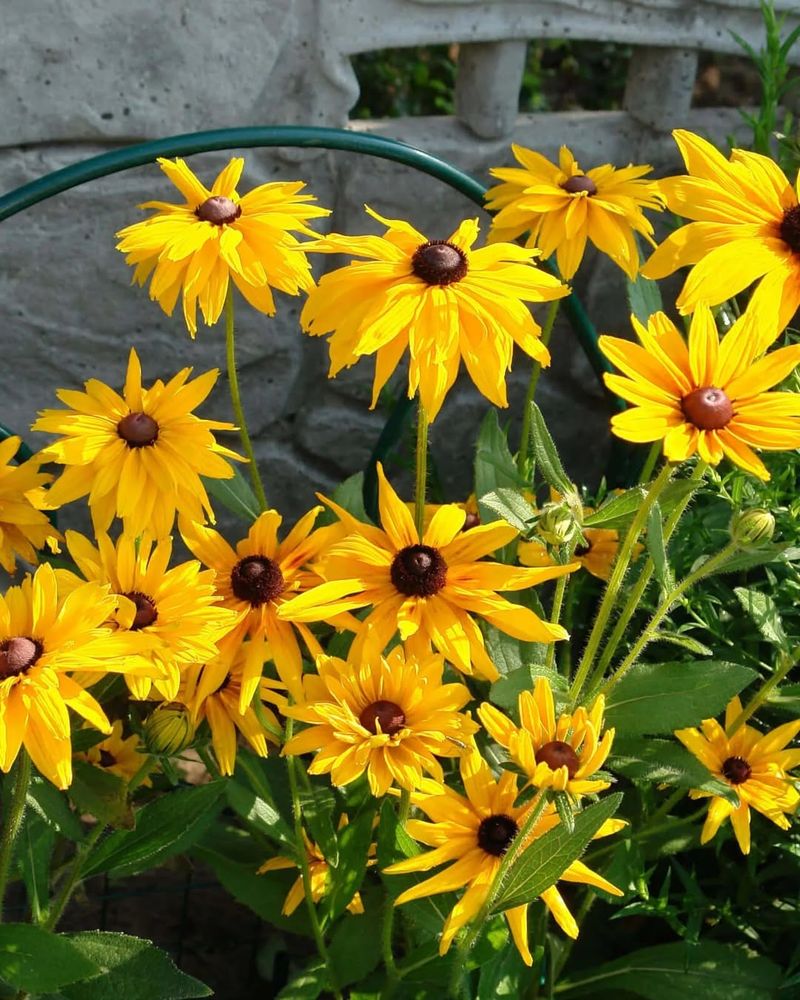
Few flowers are as cheerful and dependable as Black-Eyed Susan.
Rudbeckia hirta pushes out those bright yellow daisy-like blooms right when summer heat peaks, which is exactly when you need color most in a Georgia garden.
Hot, dry stretches that stress other plants barely slow it down.
Full sun is where Black-Eyed Susan performs best. Give it six or more hours of direct light and it rewards you with wave after wave of blooms from late spring well into fall.
Even during August heat that turns pavement soft, these flowers keep going without skipping a beat.
Soil quality is not a major concern here. Black-Eyed Susan handles poor, rocky, or clay-heavy ground without complaint.
Established clumps rarely need supplemental watering in Georgia once the roots are settled. Overwatering is actually more of a risk than drought with this plant.
Pollinators love the open, accessible flower structure. Bees, skippers, and small butterflies visit constantly during bloom season.
Seed heads left standing through winter also attract songbirds. Black-Eyed Susan self-seeds moderately, so expect new plants to pop up nearby each spring.
It is one of the most reliable bloomers across the entire state of Georgia.
3. Bee Balm Attracts Pollinators And Handles Summer Heat
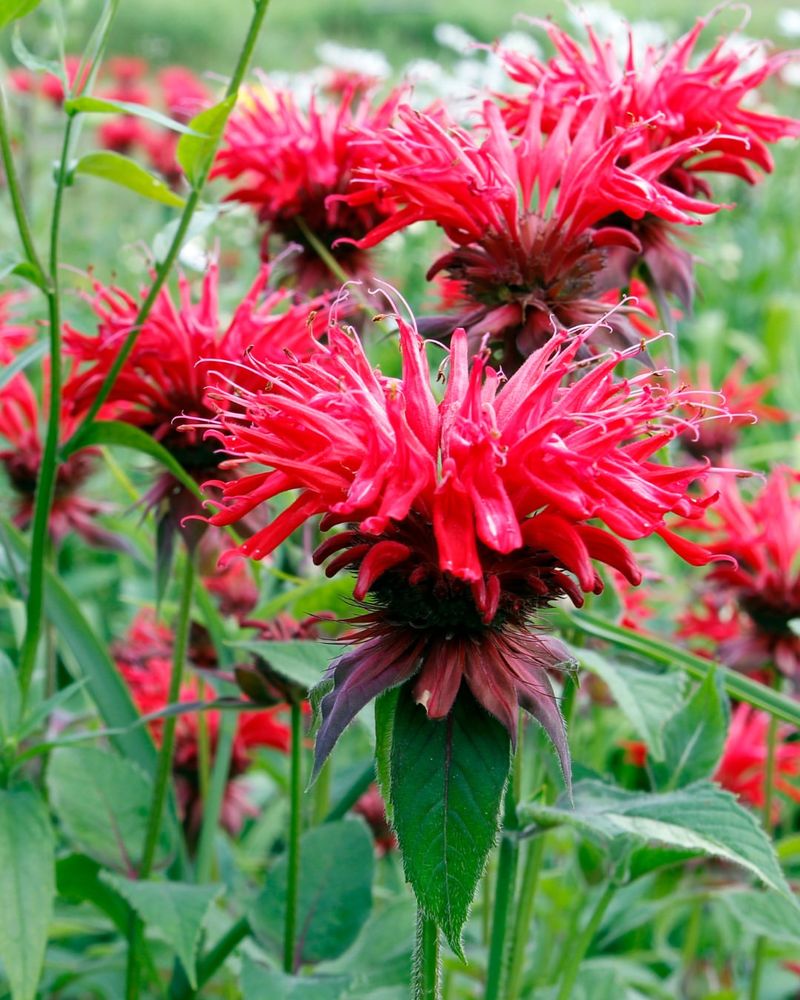
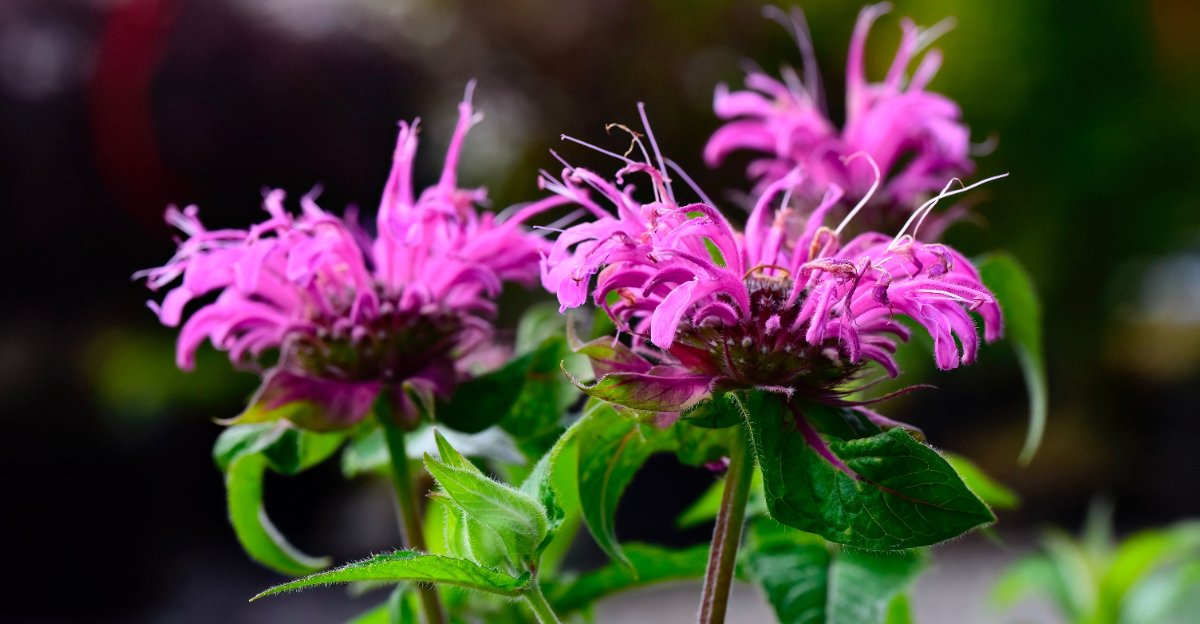
Walk past a patch of Bee Balm in full bloom and you will hear it before you see it. Monarda’s shaggy, firework-shaped flowers hum with bee activity from the moment they open.
Hummingbirds dart between blooms too, making a single planting feel like a wildlife show happening right in your backyard.
Georgia’s humidity can trigger powdery mildew on Bee Balm if air circulation is poor. Spacing plants about eighteen inches apart and avoiding crowded spots helps significantly.
Native Monarda varieties tend to handle Georgia’s wet summers better than many hybrid cultivars, so stick with species types when possible.
Bloom time runs roughly June through August depending on your location in Georgia. The flowers come in red, pink, and lavender shades, all equally attractive to pollinators.
Cutting spent flower stalks back by half after the first flush of blooms often encourages a second round of flowering before fall arrives.
Rich, slightly moist soil suits Bee Balm well. It spreads underground via rhizomes, so clumps can get wide over time.
Dividing plants every two or three years keeps growth in check and improves overall plant health. Once you have it in your garden, Bee Balm tends to become a permanent fixture you would not want to be without.
4. Oakleaf Hydrangea Thrives In Warm Humid Gardens
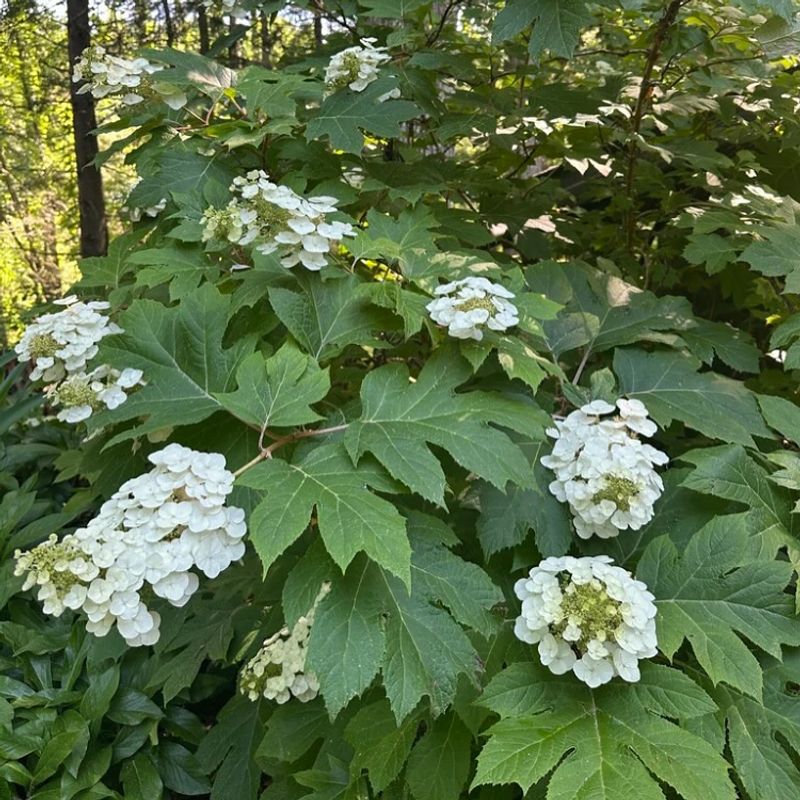
Oakleaf Hydrangea is one of those plants that earns its place in the garden across every single season. Spring brings enormous cone-shaped white flower clusters.
Summer keeps the blooms coming while the bold, deeply lobed leaves provide structure. Fall turns those leaves into a fiery mix of red, orange, and burgundy that rivals any tree in the yard.
Unlike many hydrangeas that struggle in Georgia’s heat, Oakleaf Hydrangea was born for it. Hydrangea quercifolia is native to the Southeast, meaning it understands Georgia’s combination of hot summers, occasional drought, and heavy summer rain.
Plant it in partial shade for best results, though it tolerates more sun than most people expect.
Soil should be well-drained but does not need to be particularly rich. Oakleaf Hydrangea handles the heavy clay soils found across much of Georgia as long as you amend the planting hole with organic matter to improve drainage.
Mulching around the base helps retain moisture during dry stretches.
Mature shrubs can reach eight feet tall and equally wide, so give this plant room to spread naturally. Pruning is rarely needed beyond removing old wood after flowering.
Birds use the dense branching for shelter during winter. Oakleaf Hydrangea is genuinely one of Georgia’s finest native shrubs.
5. Coral Honeysuckle Climbs Easily In Southern Heat
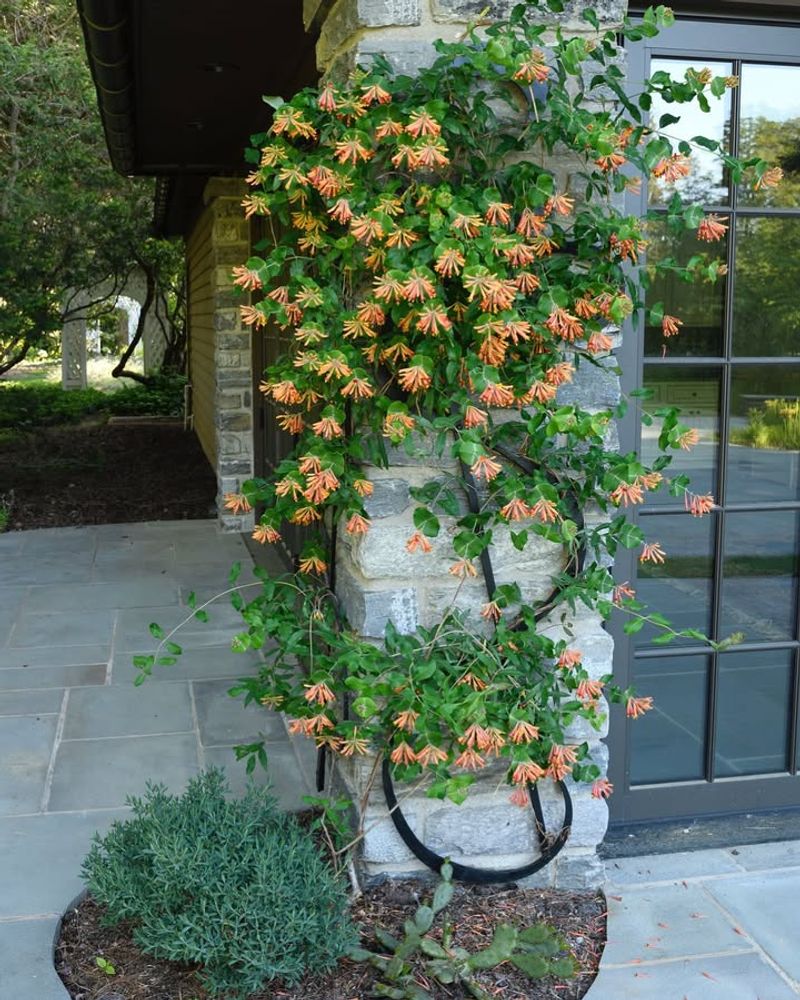
Hummingbirds in Georgia practically map their migration routes around Coral Honeysuckle.
Lonicera sempervirens produces those iconic tubular red-orange flowers that hummingbirds cannot resist, and the plant blooms heavily enough to keep them coming back from spring through fall.
Few vines deliver that kind of wildlife value so consistently.
Unlike the invasive Japanese honeysuckle that spreads aggressively across Georgia roadsides, Coral Honeysuckle behaves itself. It climbs by twining and stays manageable on a trellis, fence, or arbor without smothering everything around it.
That alone makes it a far better choice for home landscapes across the state.
Full sun to partial shade both work well. In Georgia’s intense summer heat, afternoon shade can actually extend bloom time and keep the foliage looking fresh longer.
Water regularly during the first season to help roots establish, then back off. Established vines handle Georgia drought stretches without much fuss.
Butterflies visit the flowers regularly, and birds eat the small red berries that follow blooming. Coral Honeysuckle is semi-evergreen in warmer parts of Georgia, meaning it holds leaves through mild winters and greens up fast after cold snaps.
Plant it where you can watch it from a window and enjoy the hummingbird activity up close all summer long.
6. Butterfly Weed Tolerates Heat And Drier Soil
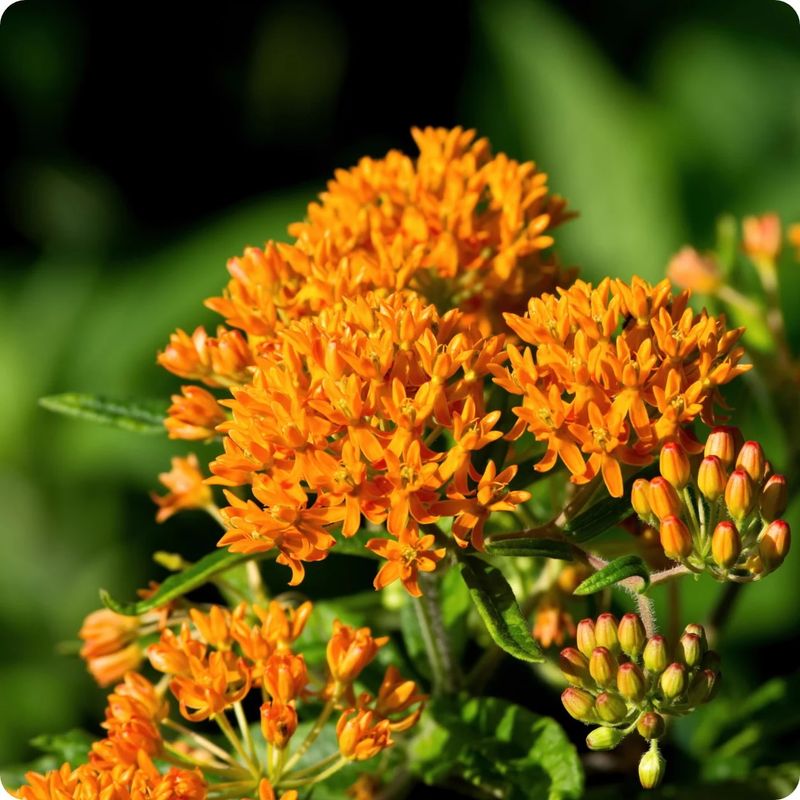
Bright orange flowers on a plant that thrives in poor, dry soil sounds almost too good to be true. Butterfly Weed, or Asclepias tuberosa, pulls it off effortlessly.
Plant it in a hot, sunny spot with fast-draining soil and it will reward you with vivid orange blooms that practically glow in Georgia’s summer light.
Monarch butterflies depend on milkweed species for reproduction, and Butterfly Weed is one of the best. Adult monarchs feed on the nectar while females lay eggs on the leaves.
Watching caterpillars munch through the foliage feels like a fair trade for the blooms you get in return.
Sandy or gravelly soil is ideal, but Butterfly Weed adapts to Georgia’s clay as long as drainage is good. Wet feet are the one condition it genuinely struggles with.
Raised beds or slopes work particularly well in areas where clay holds water after heavy rains. Avoid transplanting once rooted since the taproot goes deep and does not appreciate being disturbed.
Blooms appear from late May through August in most Georgia gardens. Seed pods form after flowering and split open dramatically, releasing silky white seeds that drift on the wind.
Letting pods develop and open naturally spreads new plants around the yard without any effort on your part. Butterfly Weed is as self-sufficient as a garden plant gets.
7. Goldenrod Produces Late Season Color In Hot Weather
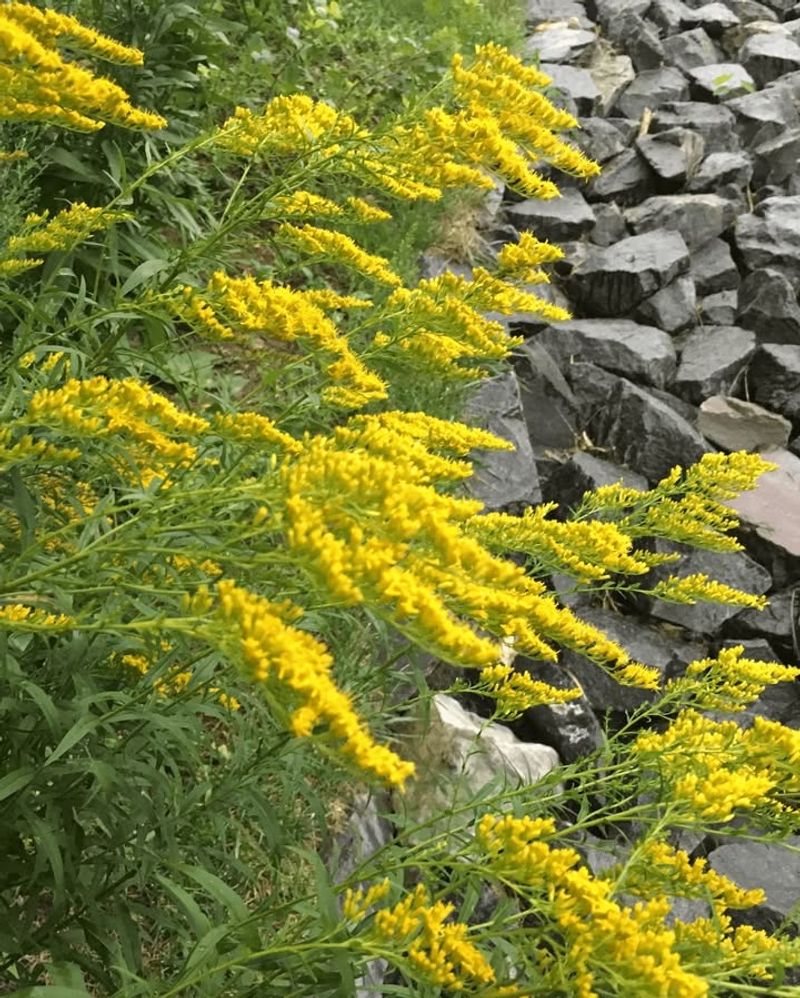
Goldenrod gets blamed unfairly for hay fever every fall, but the real culprit is ragweed, which blooms at the same time. Solidago is actually pollinator-friendly, with pollen too heavy and sticky to become airborne.
Bees and butterflies do the work of moving it around, which is exactly the kind of garden dynamic you want to encourage in Georgia.
Late summer into fall is when Goldenrod earns its spotlight. Most other flowering plants have finished by August in Georgia, but Goldenrod hits peak bloom right when the garden needs color most.
Those arching plumes of bright yellow light up borders, meadow patches, and roadsides alike.
Full sun and average to poor soil are the ideal conditions. Rich, amended beds can actually cause Goldenrod to flop and sprawl rather than stand upright.
Skip the fertilizer and let it grow lean. Established plants spread gradually through rhizomes, forming dense colonies that crowd out weeds naturally over time.
Georgia has several native Goldenrod species, and all perform well in the regional climate.
Solidago rugosa, Solidago odora, and Solidago nemoralis each offer slightly different heights and bloom times, making it easy to extend the season with a mix of species.
Plant Goldenrod at the back of a border where its late-season color fills the gap other plants leave behind.
8. Joe Pye Weed Grows Strong In Humid Conditions
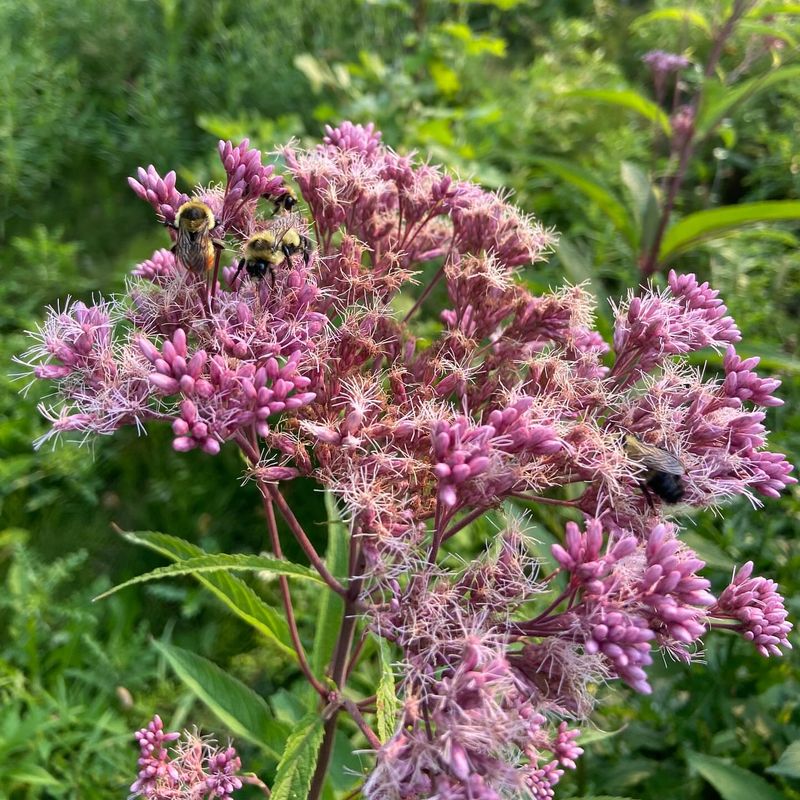
Seven feet tall, covered in dusty pink flower clusters, and absolutely swarming with butterflies by late July. Joe Pye Weed does not blend into the background.
Eutrochium fistulosum commands attention at the back of a border or along a woodland edge in Georgia, and it earns every inch of that space.
Moist soil is where Joe Pye Weed performs best. Rain gardens, low-lying areas, and spots near downspouts or drainage channels suit it well.
Georgia’s summer thunderstorms deliver the kind of heavy, fast rain that leaves soil saturated for hours, and Joe Pye Weed handles those conditions without complaint.
Swallowtail butterflies seem to have a particular preference for the blooms. During peak flowering in August and September, large swallowtails, monarchs, and various skipper species all visit regularly.
Planting Joe Pye Weed near other late-season bloomers like Goldenrod creates a pollinator buffet that stays active well into fall.
Cutting stems back by one-third in early June delays flowering slightly and produces shorter, sturdier plants less likely to need staking. Without that trim, expect tall stems that may lean or flop in exposed spots around Georgia.
Either way, the plant is worth the minimal management it requires. Joe Pye Weed is a true standout in humid Southern gardens.
9. Pink Muhly Grass Handles Heat And Humidity With Ease
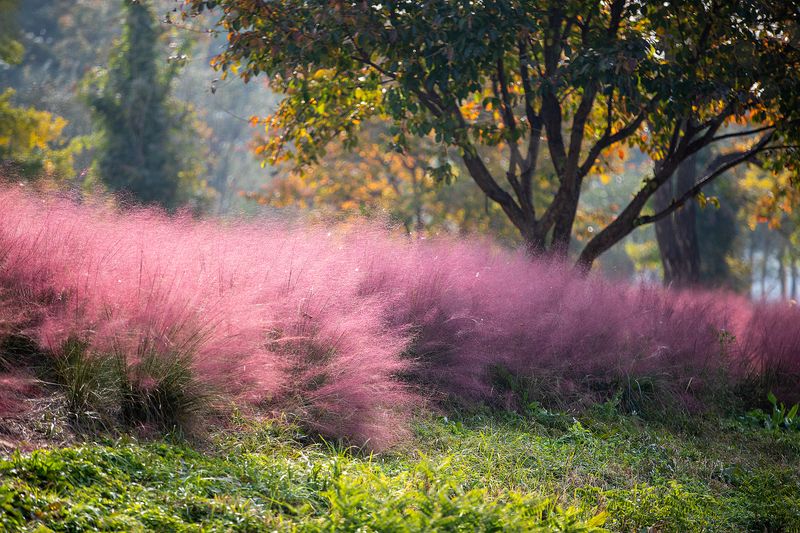
Nothing in a Georgia garden stops people in their tracks quite like Pink Muhly Grass in full fall bloom. Muhlenbergia capillaris erupts into a cloud of rosy pink plumes each October that looks almost unreal.
Summer is when this grass quietly does its work, building up dense, fine-textured clumps of deep green foliage. Heat does not faze it.
Humidity does not faze it. Drought stretches that turn other ornamental grasses brown barely register.
Pink Muhly just keeps growing, saving the real show for fall when everything else is winding down.
Full sun is non-negotiable for good bloom production. Plants grown in too much shade produce thin, sparse plumes rather than the full, billowing effect that makes this grass famous across Georgia landscapes.
Well-drained soil is also important since clumps tend to rot out in consistently wet spots.
No deadheading, no dividing for years, and no special fertilizing. Cut clumps back to about four inches in late winter before new growth begins, and that is essentially all the maintenance required.
Pink Muhly Grass works beautifully along driveways, in mass plantings, or as a single specimen where fall color is needed. Georgia gardeners who plant it once rarely go without it again.