7 Native Texas Trees That Won’t Outgrow Your Front Yard Too Fast
A front yard tree can do a lot of heavy lifting. It adds shade, boosts curb appeal, and gives the whole house a more settled, welcoming look.
The problem is that many trees start out looking small and manageable, then a few years later they are crowding the driveway, brushing the roof, or taking over more space than anyone expected.
In Texas, where growing conditions can be tough but certain trees still shoot up fast, that becomes a very real concern.
That is why smaller native trees deserve more attention. They bring the beauty and resilience Texas homeowners want, but without turning into oversized problems down the road.
Since they are native, they are already adapted to local heat, soil, and weather swings, which usually means they settle in more naturally and need less extra help.
If you want a tree that gives your front yard character without creating future headaches, choosing the right native one from the start makes all the difference. A good fit now can save you a lot of pruning, stress, and regret later.
1. Texas Redbud
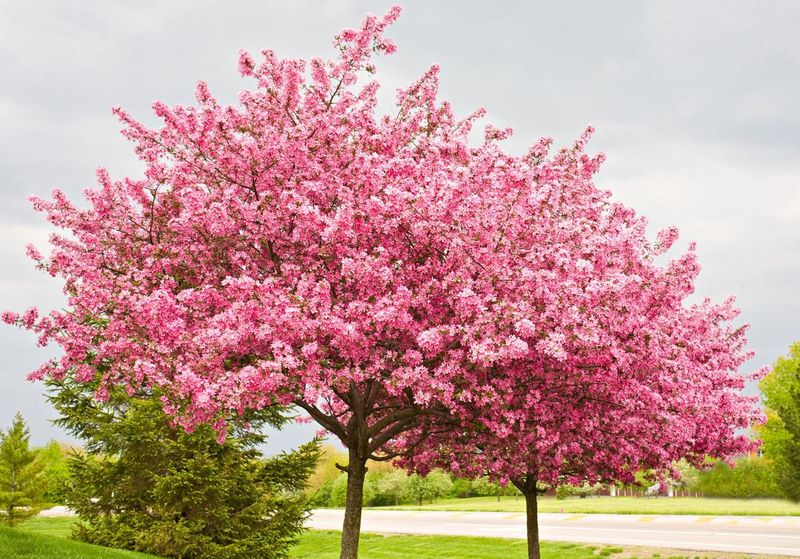
Every spring in Texas, the Texas Redbud puts on a show that stops people in their tracks. Before a single leaf appears, the branches burst into a sea of bright pink and purple blossoms.
It is one of the most eye-catching trees you can plant in a front yard, and it does not need much space to make a big impression.
Growing between 15 and 25 feet tall, the Texas Redbud stays compact enough for smaller yards without looking out of place. Its growth rate is moderate, so you will not wake up one morning shocked by how big it has gotten.
After the flowers fade, heart-shaped leaves take over and eventually turn a warm yellow in fall, giving you color in two seasons.
Texas Redbud is a variety specifically adapted to the tough conditions found across Central and North Texas. It handles heat, drought, and rocky soil much better than other redbud varieties.
Once established, it rarely needs extra watering, which is a huge bonus for Texas homeowners trying to keep water bills reasonable.
This tree works beautifully as a focal point in a small front yard. Plant it near a walkway or close to the house where its spring blooms can really be admired up close.
Birds and pollinators love it too, so you get a little extra wildlife action as a bonus. For a tree that earns its spot every single spring, the Texas Redbud is hard to beat.
2. Mexican Plum
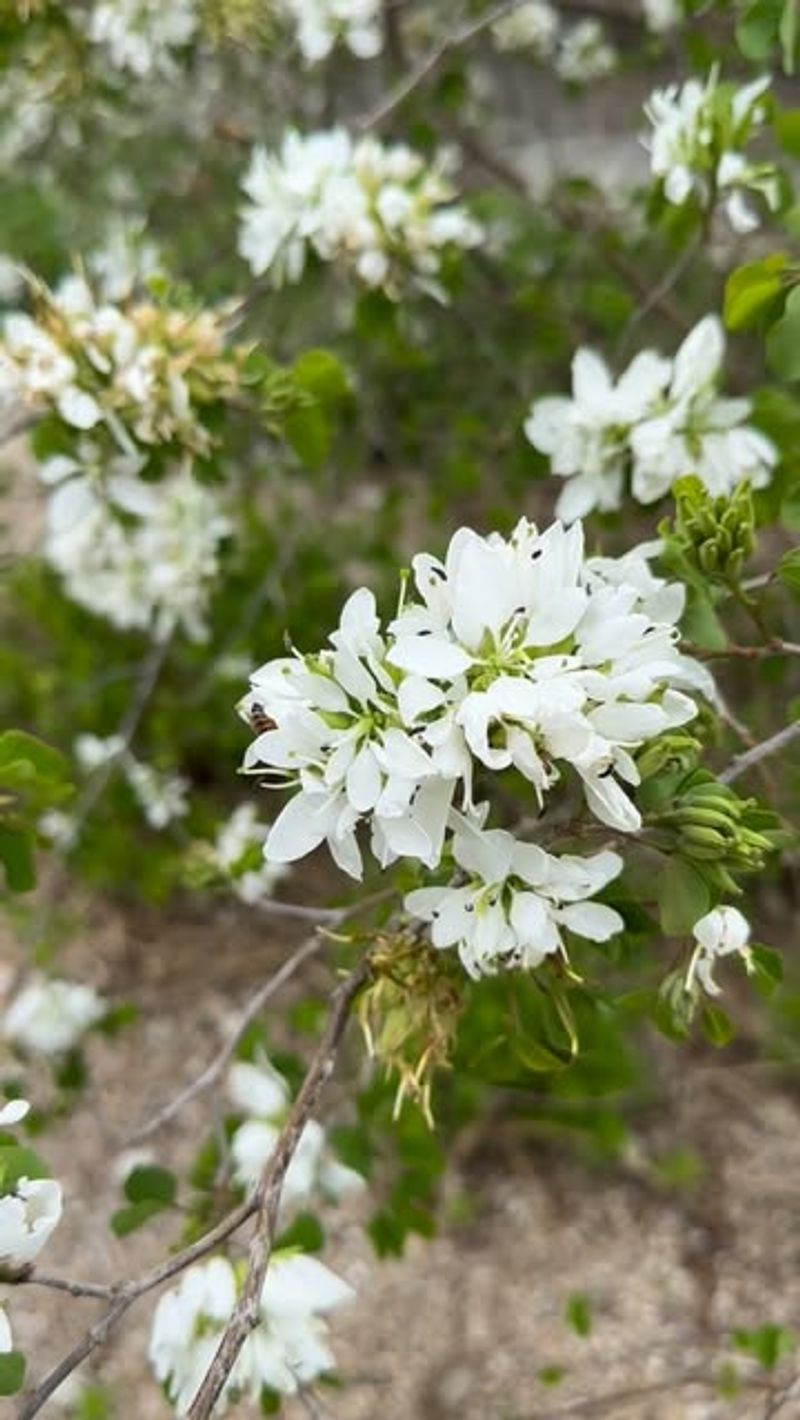
Long before most trees even think about waking up from winter, the Mexican Plum is already covered in fragrant white flowers. It blooms in late winter to early spring, sometimes as early as February in parts of Texas.
That sweet scent drifting through your yard on a cool morning is something neighbors will notice and ask about.
Naturally staying between 15 and 25 feet tall, the Mexican Plum is a tree that knows its own size. It does not need constant pruning to stay manageable, which saves you time and effort.
Its bark is another standout feature, with a peeling, grayish texture that looks interesting even in winter when the leaves are gone.
Small, tart plums appear in late summer, and while they are not the sweetest fruit for people, birds and other wildlife absolutely love them. Planting a Mexican Plum in your Texas front yard basically sets up a little wildlife buffet each year.
That natural connection to local ecosystems is part of what makes native trees so valuable. Mexican Plum thrives across a wide range of Texas conditions, from East Texas woodlands to the drier soils of Central Texas. It handles clay and rocky soil without much complaint.
Because it is naturally compact and multi-seasonal in its appeal, it works especially well in yards where you want something that earns its spot through all four seasons without ever getting out of hand. It is a genuinely underrated gem for Texas landscapes.
3. Desert Willow
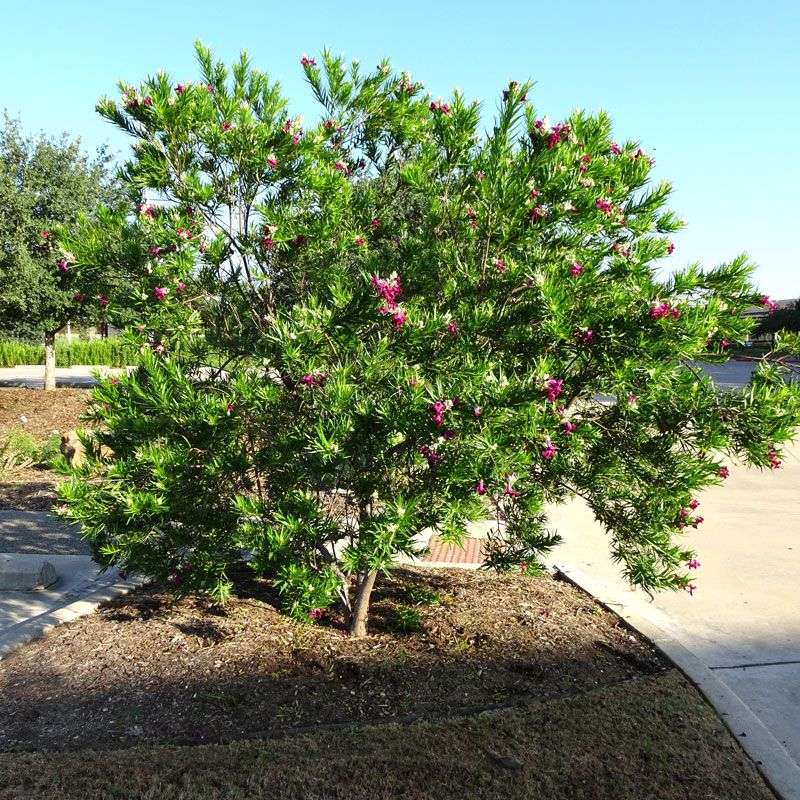
If your front yard gets blasted by full Texas sun and bakes dry all summer, the Desert Willow might just be your new best friend. This tree was practically designed for tough, hot, and dry conditions.
Despite its name, it is not actually related to true willows at all, but those long, slender leaves do give it a flowing, graceful look.
From late spring all the way through fall, Desert Willow produces stunning trumpet-shaped flowers in shades of pink, purple, lavender, and white. Few native Texas trees bloom for that long a stretch, making this one a real standout for color.
Hummingbirds are absolutely drawn to those flowers, so expect some exciting visitors throughout the warm months.
Reaching between 15 and 25 feet tall, Desert Willow stays light and airy rather than dense and heavy. Its canopy lets filtered sunlight through, which is nice if you still want some light reaching your front porch or lawn.
Growth is moderate, so it fills in nicely over time without becoming a problem. Across West Texas, Central Texas, and South Texas, Desert Willow is a proven performer in landscapes where water is limited.
It needs very little irrigation once established, and it actually prefers well-drained, even sandy or rocky soil.
Overwatering is more of a concern than drought for this tree. For a sunny front yard that needs color, life, and personality without constant maintenance, Desert Willow delivers season after season with almost effortless style.
4. Texas Mountain Laurel
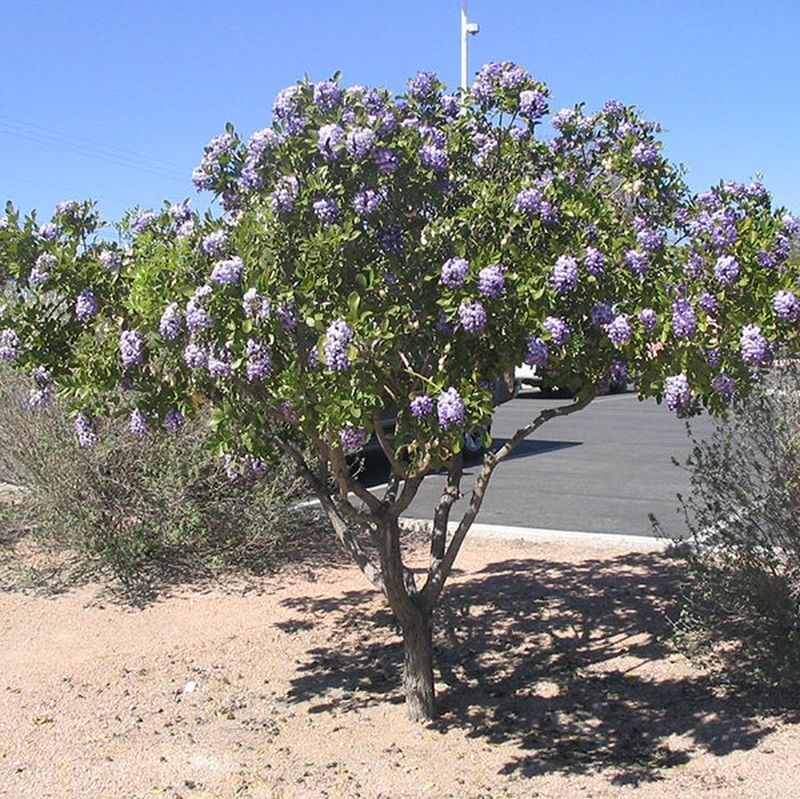
Walk past a Texas Mountain Laurel in bloom and you will immediately stop and sniff the air. The clusters of purple flowers smell exactly like grape candy, and that scent can carry surprisingly far on a warm Texas breeze.
It is one of those trees that people always want to know the name of because it smells so good and looks so striking.
One of the best things about Texas Mountain Laurel is how slowly it grows. Reaching only 10 to 20 feet tall over many years, it stays beautifully manageable in smaller front yards.
That slow growth means you are not constantly trimming it back or worrying about it crowding other plants. Patience pays off with this tree because it just gets more impressive with age.
As an evergreen, Texas Mountain Laurel keeps its dark, glossy green leaves all year long. That means even in the middle of a gray January in Texas, your front yard still has structure and color. It provides a clean, polished look that works well in formal and casual landscapes alike.
Found naturally across Central and South Texas, this tree is extremely well suited to the thin, rocky, alkaline soils that frustrate so many other plants. Once established, it is remarkably drought-tolerant and requires very little supplemental water.
It is also deer-resistant, which is a serious bonus for Texas homeowners in suburban areas where deer browsing can be a real problem. For year-round beauty with minimal fuss, Texas Mountain Laurel is a top-tier choice.
5. Eve’s Necklace
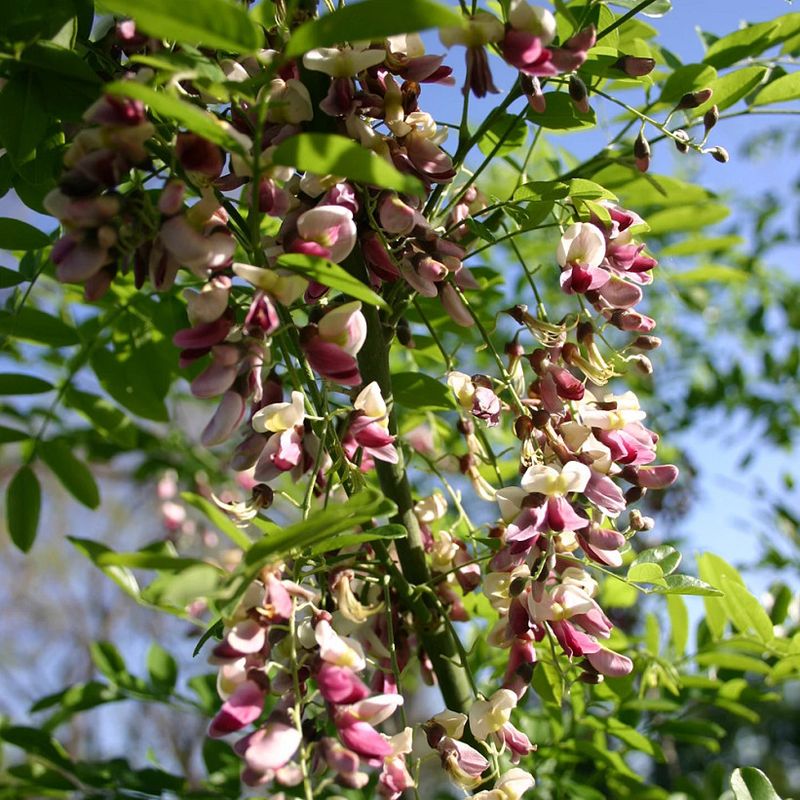
Not many people have heard of Eve’s Necklace, and that is honestly a shame because it is one of the most charming native trees Texas has to offer.
The name comes from its seed pods, which look like strings of dark beads strung together, almost like a piece of jewelry hanging from the branches. That unique feature alone makes it a real conversation starter in any front yard.
In spring, Eve’s Necklace produces hanging clusters of soft pink flowers that look somewhat like wisteria. They are not as flashy as some other blooming trees, but they have a quiet, elegant beauty that fits well in a variety of landscape styles.
After the flowers come those distinctive seed pods, which add ornamental interest well into fall and winter.
Growing between 15 and 30 feet tall at a moderate pace, Eve’s Necklace fits comfortably in medium-sized front yards across Texas. It does not race to the sky, and its canopy stays relatively open and graceful rather than dense and overpowering.
That open structure makes it a good choice when you want shade without blocking all the light from your home.
Naturally found in Central and North Texas, this tree handles the region’s clay soils, heat, and periodic drought without much trouble. It is not commonly sold at big box stores, so you may need to seek it out at a native plant nursery.
That rarity actually makes it more special, since your front yard will have something most neighbors have never seen before. It is a hidden treasure of Texas native trees.
6. Possumhaw Holly (Ilex Decidua)
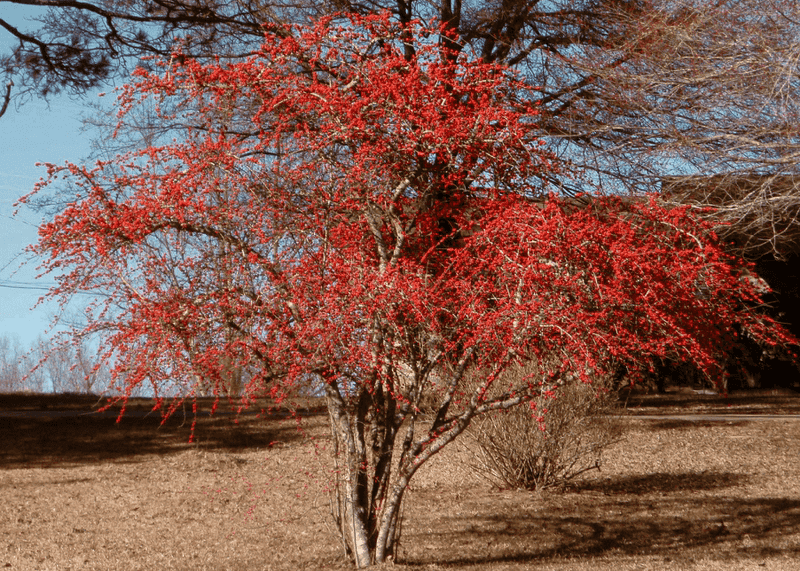
Most trees are at their best in spring or summer, but Possumhaw Holly saves its greatest performance for the coldest months of the year.
After its leaves drop in fall, the branches become absolutely loaded with bright red and orange berries that glow like little lights against the gray winter sky.
In a Texas front yard, it creates a burst of color at a time when almost nothing else is blooming or fruiting.
Possumhaw Holly can be grown as a large shrub or pruned into a small tree form, typically reaching between 15 and 30 feet tall when given the right conditions.
Because it responds well to pruning, you have real control over its size and shape. That flexibility is a big advantage for front yards where space and appearance both matter.
Birds go absolutely wild for those winter berries. Cedar waxwings, robins, and mockingbirds flock to Possumhaw Holly when berries are ripe, turning your front yard into a lively scene even on cold days.
For anyone who enjoys watching wildlife from inside a warm house, this tree is endlessly entertaining during winter months across Texas.
Adapting well to a wide range of Texas soils, including clay-heavy and poorly drained spots, Possumhaw Holly is a tough and reliable native. It grows in both sun and partial shade, giving it more flexibility than many other trees.
For seasonal color, wildlife value, and manageable size, it checks every box a Texas homeowner could want from a front yard tree. Plant one and your winters will never look dull again.
7. Anacua
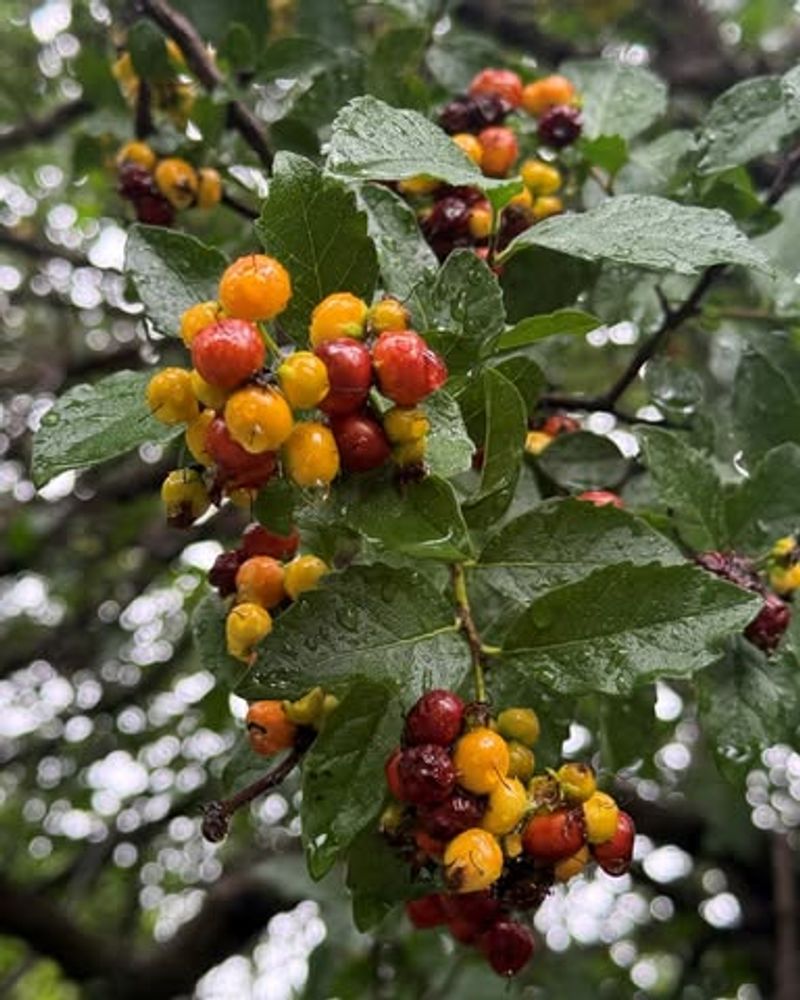
Down in South Texas, Anacua is the kind of tree that locals grow up with and city transplants quickly fall in love with.
Sometimes called Sandpaper Tree because of its rough, textured leaves, Anacua has a rugged, no-nonsense personality that matches the tough landscape of South and Central Texas perfectly. It is not the flashiest tree on this list, but it is one of the most dependable.
Anacua grows between 20 and 30 feet tall at a slow to moderate pace, which means it takes its time reaching full size without ever feeling like it is running away from you. That measured growth is exactly what a front yard needs.
You get a real, substantial shade tree eventually, but it does not happen so fast that you lose control of your space.
In spring, Anacua covers itself in clusters of small white flowers with a pleasant, honey-like fragrance. Small orange and yellow fruits follow later in the season, and birds love them.
The canopy is dense enough to provide genuine shade, which is a serious quality-of-life upgrade for any Texas home during the brutal summer months.
Because Anacua is native to the warmer parts of Texas, it is best suited for South Texas and the southern edges of Central Texas where freezes are mild or infrequent. It handles heat, humidity, and drought with ease once established.
If you live in the right part of Texas and want a shade tree that grows responsibly and rewards you with flowers, fruit, and wildlife, Anacua deserves a serious spot on your planting list.