North Carolina Native Plants With Longer-Lasting Color Than Crape Myrtle
Crape myrtles have been stealing the summer spotlight in North Carolina for years, and honestly, they know how to put on a show. Big blooms, bold color, and that classic neighborhood charm make them hard to miss.
Still, plenty of North Carolina gardeners have started asking for more. Not more drama, exactly, though gardens can be a little dramatic.
More staying power. That is where native shrubs and small trees get interesting.
A plant does not need to bloom nonstop to keep a yard looking lively. Some bring flowers in summer, then follow up with berries, fiery fall leaves, handsome bark, or evergreen foliage that keeps showing up long after the bloom party ends.
That kind of layered beauty can make a landscape feel richer and a lot more thoughtful. North Carolina has some standout native options that do exactly that.
Once you notice them, crape myrtle may start feeling like just one chapter of the story.
1. Coastal Sweet-Pepperbush Brings Late Color
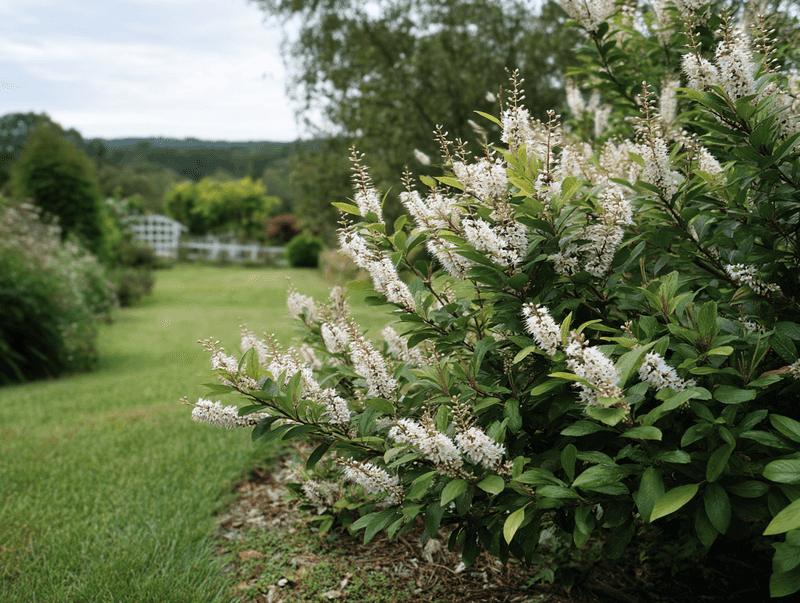
Most summer-blooming shrubs are wrapping up their show by late July, but coastal sweet-pepperbush is just getting started.
Known botanically as Clethra alnifolia, this native shrub blooms from mid-summer into early fall, giving North Carolina gardens a burst of fragrant white or pale pink flower spikes right when many other plants are looking tired.
The bloom period can stretch across six to eight weeks depending on conditions, which already puts it well ahead of what a single crape myrtle flush offers in terms of late-season interest.
Beyond the flowers, coastal sweet-pepperbush earns its place through fall foliage that turns shades of yellow to golden-orange in autumn. After the leaves drop, the upright seed capsules add subtle winter texture to the shrub border.
North Carolina gardeners working with wet or poorly drained sites will find this plant especially practical, since it tolerates boggy conditions that would stress many other ornamentals.
Coastal sweet-pepperbush grows well in part shade to full sun, which makes it flexible for woodland edges, rain gardens, and foundation plantings. It spreads gradually by suckers, forming a colony that can fill in a naturalistic border over several seasons.
Compact cultivars like Hummingbird are well-suited for smaller North Carolina yards where space is limited.
The fragrance of the flowers is genuinely pleasant and draws pollinators reliably, so placing this shrub near a patio or outdoor seating area adds an extra layer of enjoyment during those late summer weeks when the blooms are at their peak.
2. Mountain Sweet Pepperbush Adds Seasonal Beauty
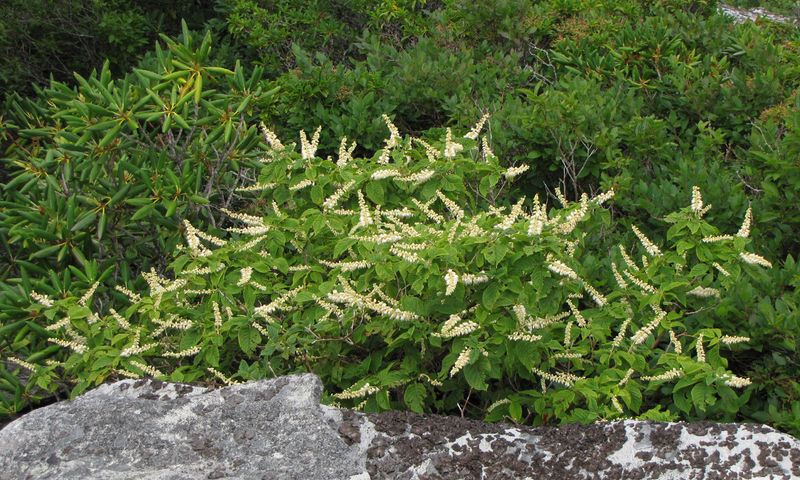
Up in the higher elevations of North Carolina, a close relative of coastal sweet-pepperbush makes its home in cool, moist woodland settings.
Clethra acuminata, commonly called mountain sweet pepperbush or cinnamon clethra, brings a slightly different but equally rewarding ornamental package to the landscape.
The white flower racemes appear in mid to late summer and carry a light fragrance that attracts bees and butterflies during a stretch of the season when native bloom options can feel limited in mountain gardens.
What truly sets this plant apart is its bark. As the shrub matures, the outer bark peels away in thin strips to reveal a warm cinnamon-brown surface underneath, creating four-season interest that goes well beyond what any single bloom period can offer.
Your North Carolina Garden Changes Every Week. Your Plan Should Too.
Gardening in North Carolina changes quickly throughout the season. Every Friday you’ll receive a simple weekly plan showing exactly what to plant, prune, fertilize, harvest, and protect so you never miss the right timing.
Even in winter, when the flowers and foliage are long gone, the exfoliating bark catches light and adds real texture to a shrub border or woodland edge planting in North Carolina landscapes.
Mountain sweet pepperbush grows best in part shade with consistent moisture and well-drained, acidic soil, which mirrors the conditions found naturally across western North Carolina.
It tends to be a larger shrub than its coastal cousin, eventually reaching eight to twelve feet in some settings, so giving it room to develop pays off over time.
Fall foliage adds another layer of interest, with leaves turning yellow before dropping. For North Carolina gardeners in the mountains who want a shrub that earns attention across multiple seasons, this native is a genuinely strong choice that rewards patience.
3. Mountain Laurel Offers More Than Spring Bloom
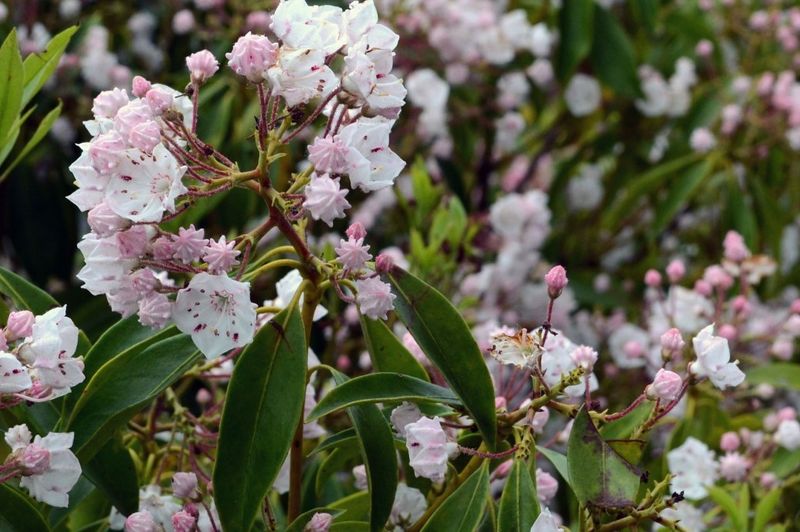
Few native shrubs stop people in their tracks quite like mountain laurel in full bloom.
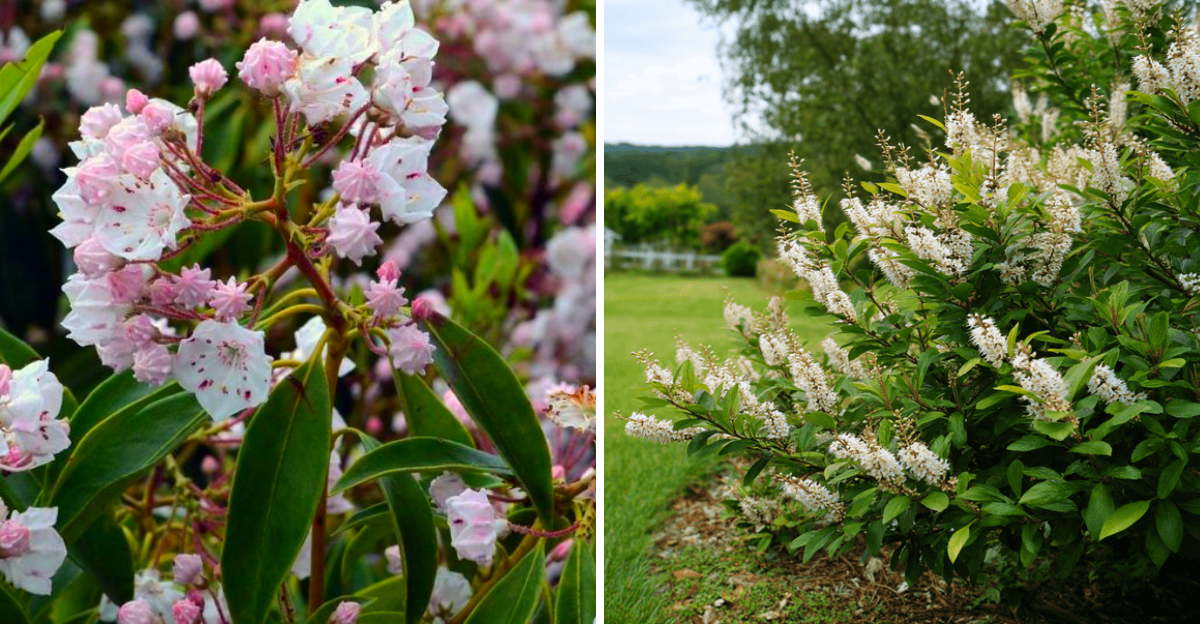
Kalmia latifolia produces intricate clusters of cup-shaped flowers in shades of white, pink, and deep rose, usually peaking from late April into June across much of North Carolina.
The flowers alone would be enough to earn it a spot in any landscape, but mountain laurel keeps giving long after the blooms have faded, which is where it separates itself from many single-season ornamentals.
The evergreen foliage is the real long-game feature here. Deep, glossy green leaves hold their color through summer heat, fall, and winter, giving the shrub a polished, structured presence in the landscape year-round.
In North Carolina gardens where winter interest can feel sparse, that consistent evergreen backdrop is genuinely valuable.
The foliage also provides excellent screening and structure in woodland gardens, shrub borders, and naturalistic slope plantings where crape myrtles would not perform as reliably.
Mountain laurel grows best in part shade with well-drained, acidic, and organically rich soil, conditions that occur naturally across the Piedmont and mountain regions of North Carolina.
It can be slow to establish, so patience during the first couple of seasons is worthwhile.
Once settled in, it is a long-lived shrub that can become a landscape anchor for decades. Cultivars vary in flower color and mature size, giving gardeners options for different spaces.
Placing it where afternoon shade protects the foliage tends to produce the best results in North Carolina’s warmer inland areas.
4. Blackgum Keeps Color Going Longer
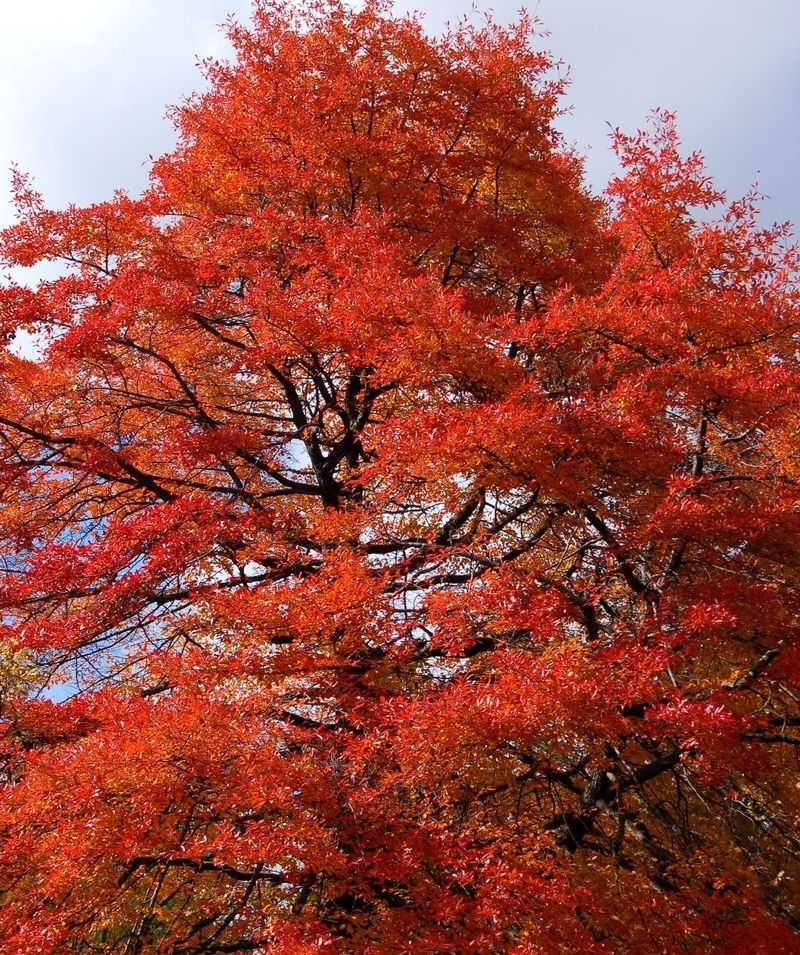
When fall color conversations come up in North Carolina, blackgum deserves to be near the top of the list.
Nyssa sylvatica, also called black tupelo, is a native tree that can ignite in shades of scarlet, orange, and deep burgundy before almost any other tree in the landscape has started to turn.
That early, vivid fall color display is one of the most reliable seasonal features a North Carolina gardener can plan around, and it tends to be impressive even in years when fall weather does not cooperate fully for other species.
Beyond the fall foliage, blackgum offers small, dark blue-black berries that ripen in late summer and early fall. The fruit is an important food source for birds, including thrushes, woodpeckers, and warblers moving through North Carolina during fall migration.
Watching wildlife visit the tree adds a layer of seasonal interest that extends well past the foliage peak.
The berries are typically consumed quickly, so the display window can be short, but it adds real life to the yard during a transitional time of year.
Blackgum grows across a wide range of North Carolina conditions, from moist bottomlands to drier upland sites, though it tends to perform best with consistent moisture.
It adapts to full sun or part shade and works well as a shade tree, specimen planting, or naturalistic addition to a woodland edge.
The horizontal branching pattern gives the tree an attractive silhouette even in winter. For North Carolina gardeners wanting a native small to medium tree with layered seasonal color, blackgum is a genuinely rewarding long-term investment.
5. Sparkleberry Adds Lasting Native Interest
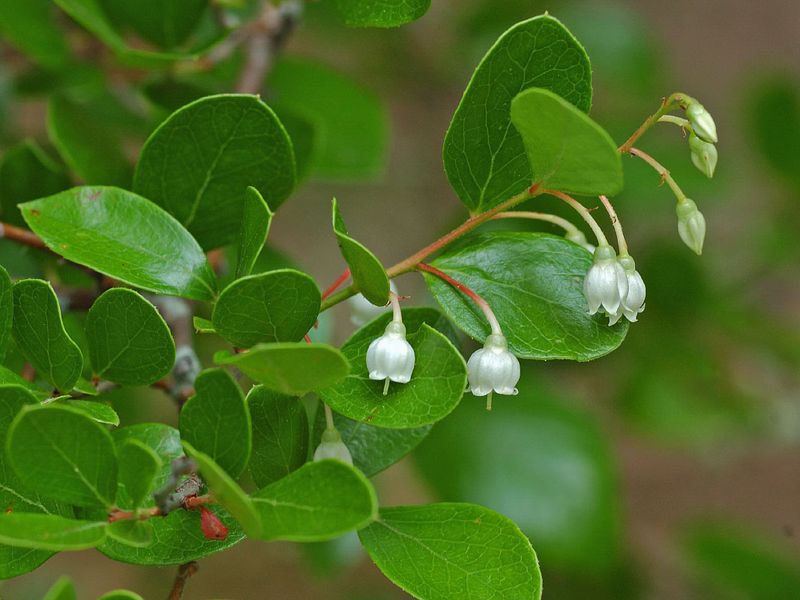
There is something quietly remarkable about a native shrub that delivers ornamental interest across nearly every season, and sparkleberry manages to do exactly that.
Vaccinium arboreum, sometimes called farkleberry, is the largest native blueberry relative in North Carolina and grows as a large multi-stemmed shrub or small tree that earns attention from spring through winter.
Small white bell-shaped flowers appear in spring and draw pollinators reliably, setting the seasonal interest in motion before summer has even arrived.
By late summer and into fall, sparkleberry produces small, shiny black berries that persist on the plant well into winter in many cases.
The berries are not particularly appealing to people but are valuable to birds and other wildlife, which means the plant keeps drawing activity to the yard long after the flowers are gone.
Fall foliage can bring red to burgundy tones depending on the season and site, adding another visual shift before the leaves drop.
In winter, the gnarled, peeling bark of older specimens becomes a genuine ornamental feature that holds up in the bare landscape.
Sparkleberry is well-suited to dry, acidic, and sandy soils, which makes it a practical choice for North Carolina Piedmont and Coastal Plain landscapes where other shrubs may struggle with poor drainage or drought stress.
It grows in full sun to part shade and works well in naturalistic plantings, woodland edges, and native shrub borders.
The plant’s layered seasonal interest, from spring flowers to winter bark, gives it a longer ornamental presence than most single-season shrubs, making it a smart addition to any North Carolina native landscape design.
6. Buttonbush Extends The Color Season
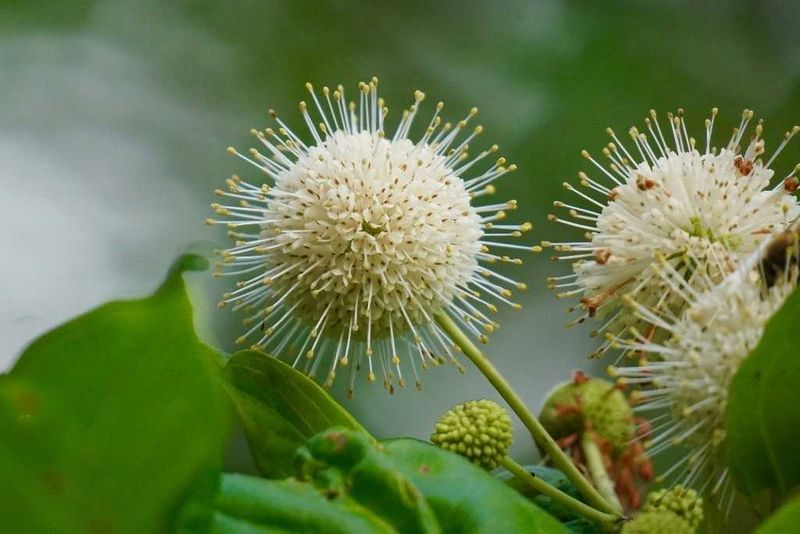
Wet spots in the yard can feel like a landscaping problem, but buttonbush turns that challenge into an opportunity.
Cephalanthus occidentalis is a native North Carolina shrub that genuinely thrives in moist to wet soils, making it one of the best choices for rain gardens, pond edges, stream banks, and low-lying areas that stay soggy after rain.
While many ornamental shrubs struggle in standing water, buttonbush holds its own and rewards the difficult site with a surprisingly showy summer display.
The flowers are the centerpiece of buttonbush’s season.
Round, creamy-white flower heads covered in tiny protruding stamens appear from late June through August, giving the shrub a distinctive, almost otherworldly look that tends to stop people mid-stride.
The bloom period overlaps with and extends beyond the typical crape myrtle season, and the flowers draw an impressive variety of pollinators including bees, butterflies, and hummingbirds.
After flowering, the round seed heads persist through fall and into winter, adding textural interest and providing food for waterfowl and songbirds that visit North Carolina landscapes.
Buttonbush grows in full sun to part shade and can reach six to twelve feet in height depending on conditions, so it works best where there is room for it to develop naturally.
Pruning in late winter or early spring can help manage size if needed.
Fall foliage occasionally shows yellow tones before dropping, rounding out a seasonal sequence that runs from summer flowers through winter seed heads.
For North Carolina gardeners working with wet or flood-prone areas, buttonbush offers a native solution with genuine multi-season ornamental value that is hard to replicate with non-native alternatives.