8 Ornamental Climbers That Grow Beautifully In Containers In Georgia
Warm days settle in across Georgia, and containers start pulling more attention as patios, porches, and small garden corners come back to life.
Empty pots never stay empty for long once the season picks up, yet not every plant delivers that full, layered look people expect. Some stay sparse, others stretch without much impact, and the result never quite feels finished.
Climbers change that faster than almost anything else. Give them a place to rise, and suddenly there is height, movement, and a sense of structure that plain containers just cannot match.
Even a simple setup starts to feel more put together once vines begin to take hold.
Georgia conditions actually give many of these plants a strong advantage, especially with the mix of warmth and humidity that supports steady growth.
Choosing the right climbers makes all the difference between containers that fade out and ones that stay eye catching well into the season.
1. Clematis Stays Compact And Flowers Well In Large Containers
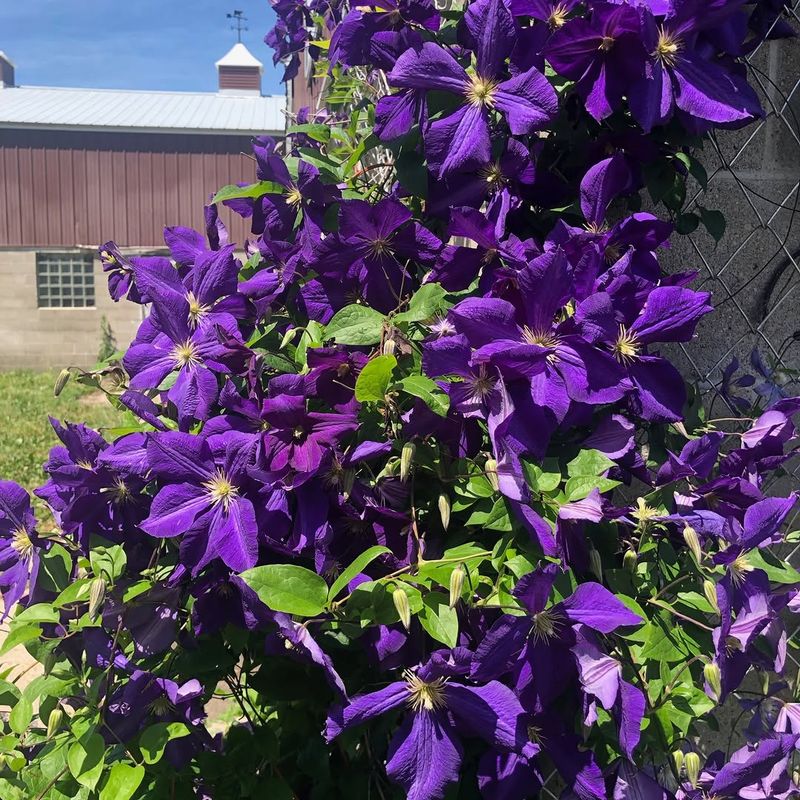
Not every clematis needs a sprawling fence to shine. Compact varieties like ‘Arabella’ or ‘Pixie’ are genuinely well-suited to large containers, and Georgia gardeners in zones 7 and 8 have had solid results growing them on patios and porches with the right setup.
Use a pot that holds at least 15 gallons and fill it with a well-draining mix. Clematis roots prefer to stay cool, so placing the pot where the base stays shaded while the top gets full sun works better than full exposure all day.
In Georgia summers, afternoon shade can actually help the plant hold its blooms longer.
A simple trellis or bamboo frame gives the stems something to grab onto right away. Clematis climbs by wrapping its leaf stalks around supports, so thin structures work well.
Water consistently but never let the pot sit in standing water, especially during Georgia’s humid stretch from June through August.
Fertilize monthly with a balanced slow-release granule during the growing season. Avoid heavy nitrogen, which pushes leaves over flowers.
Pruning group matters a lot here, so check your variety before cutting back in late winter. Most compact types fall into Group 2 or Group 3, which determines how aggressively you can trim without losing next season’s blooms.
Regular monitoring helps catch stress early, especially during peak heat when container plants dry out faster than expected.
2. Mandevilla Thrives In Georgia Heat And Climbs Easily In Pots
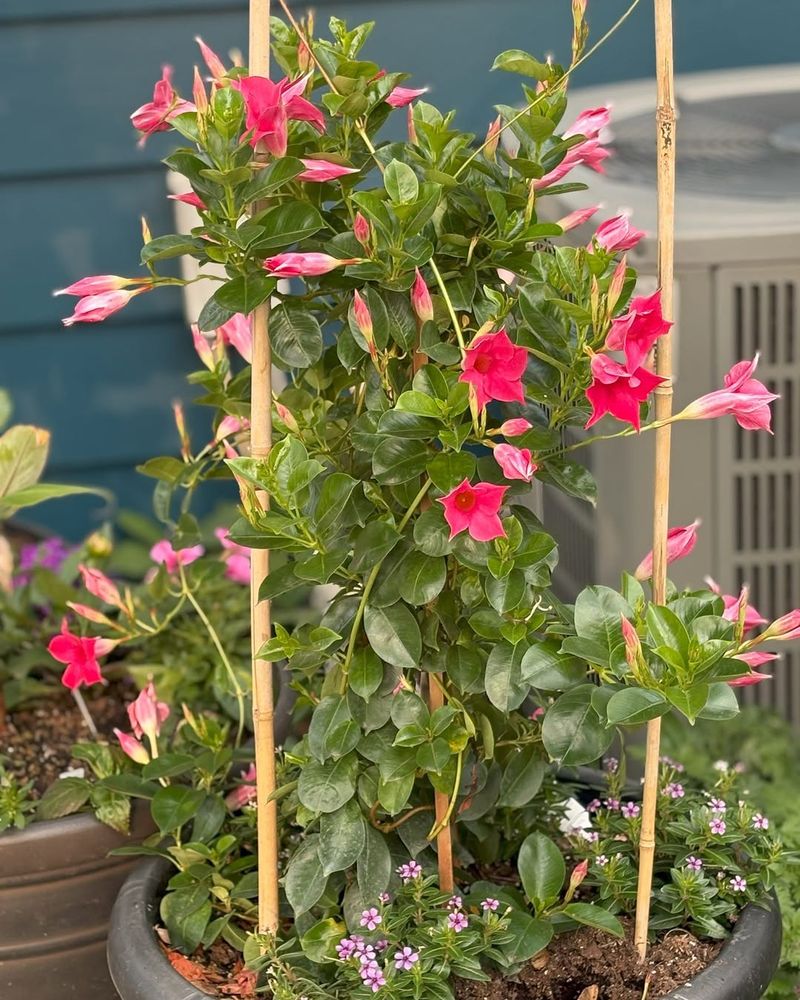
Mandevilla was practically made for Georgia summers. This tropical climber loves the kind of heat that wilts other plants, and it keeps pushing out those bold, trumpet-shaped blooms in pink, red, or white from late spring all the way into fall without much fuss.
Growing mandevilla in a container actually gives you a real advantage in Georgia. You can move it indoors when temperatures start dropping below 50 degrees Fahrenheit in late autumn, which keeps the plant going year after year instead of treating it as a single-season annual.
A 12 to 14-inch pot works fine for most varieties, though larger pots encourage more vigorous growth.
Your Georgia Garden Changes Every Week. Your Plan Should Too.
Gardening in Georgia changes quickly throughout the season. Every Friday you’ll receive a simple weekly plan showing exactly what to plant, prune, fertilize, harvest, and protect so you never miss the right timing.
Full sun is where mandevilla performs best. Place your container in a spot that gets at least six hours of direct light daily.
Along Georgia’s coast or in the Atlanta metro area, south-facing patios tend to give the most consistent sun exposure throughout the season.
Water deeply but allow the top inch of soil to dry before watering again. Overwatering is the most common mistake container growers make with this plant.
Feed with a high-phosphorus fertilizer every two to three weeks during the blooming period. A sturdy trellis or obelisk inside the pot keeps the vines tidy and upright without much maintenance.
3. Black Eyed Susan Vine Grows Fast And Handles Summer Conditions
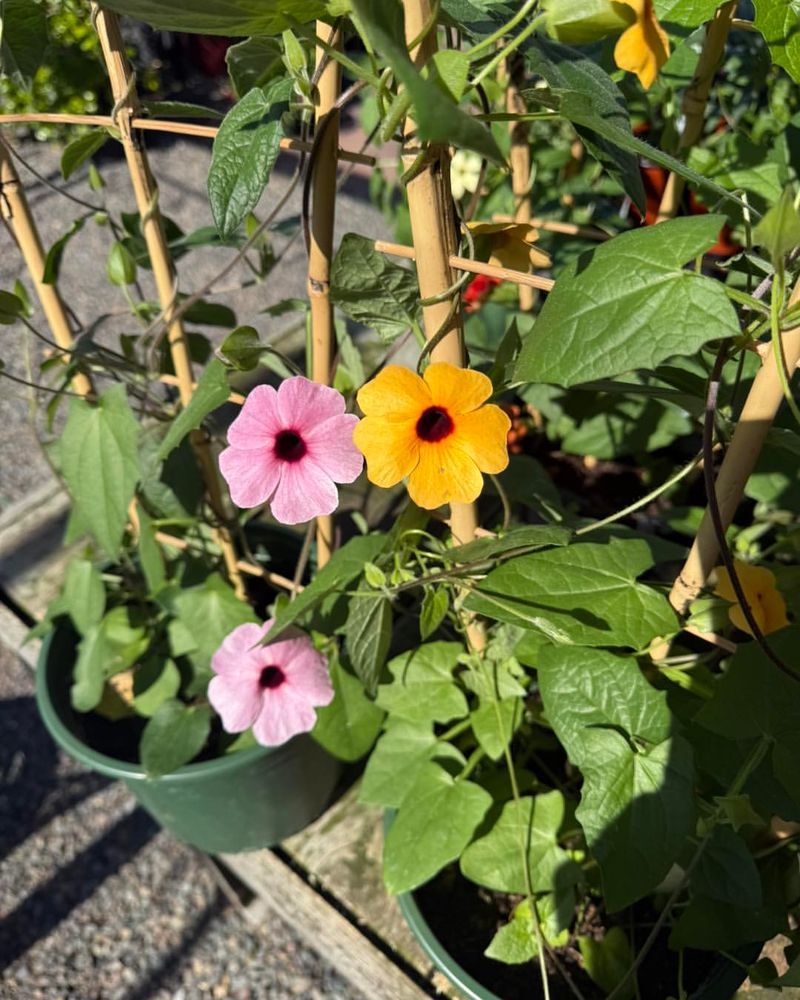
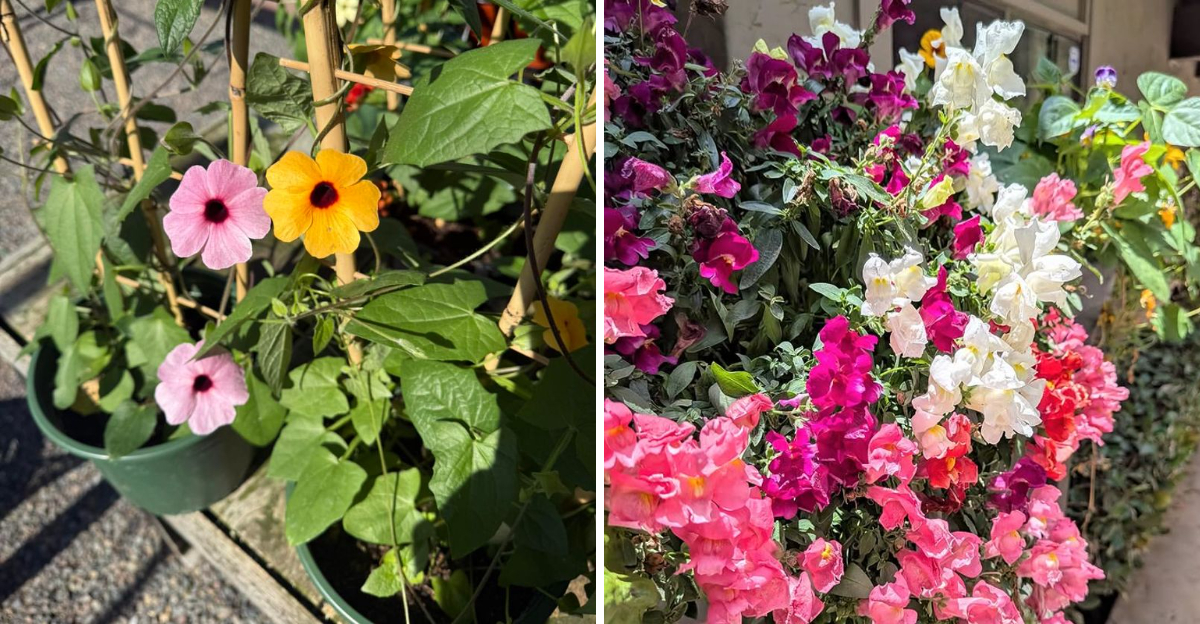
Few vines move as fast as Black-Eyed Susan vine once Georgia’s summer heat kicks in. Thunbergia alata goes from seedling to full coverage in a matter of weeks, which makes it one of the most satisfying container climbers for gardeners who want quick results without waiting half the season.
Start seeds indoors about six weeks before your last frost date, or buy transplants from a local nursery in late spring. Once nighttime temperatures stay above 55 degrees, the plant takes off.
Georgia’s warm nights from May through September give this vine almost ideal conditions to grow aggressively.
Hanging baskets and window boxes suit it just as well as upright trellises. The vines trail and climb depending on what support is available, so you get some flexibility in how you display it.
A mix of orange, yellow, and white varieties in one large container creates a colorful display that holds up well through Georgia’s humid summers.
Keep the soil consistently moist but not soggy. Containers dry out faster in Georgia’s summer heat, so checking moisture every day during July and August is worth the effort.
Deadheading spent flowers encourages more blooms, though the plant tends to rebloom on its own even without regular deadheading. Pinch back long stems occasionally to keep growth full and bushy rather than leggy.
4. Climbing Snapdragon Fits Small Containers And Blooms Quickly
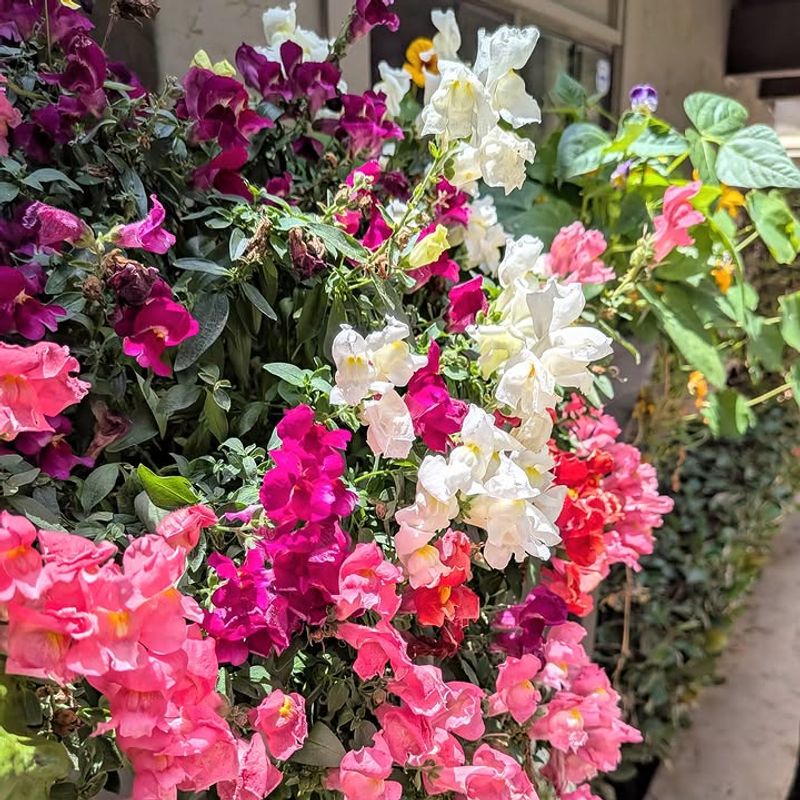
Climbing snapdragon, known botanically as Asarina or Maurandya, is the kind of plant that surprises people. It looks delicate and almost fragile with its soft, tubular flowers and slender stems, but it handles Georgia’s spring and early summer heat better than most people expect for such a lightweight vine.
One of its biggest advantages is container size. Unlike many climbers that demand large, heavy pots, climbing snapdragon performs well in containers as small as eight to ten inches in diameter.
That makes it a practical option for balconies, apartment patios, or any spot in Georgia where space is genuinely limited.
Seeds germinate quickly indoors under warmth and light, usually sprouting within ten to fourteen days. Transplant seedlings outdoors after the last frost, which in most of Georgia falls between late March and mid-April depending on your zone.
Once established, the vine climbs using twining stems and produces flowers steadily through late spring and early summer.
In Georgia, climbing snapdragon tends to slow down during the peak of summer heat in July and August. Placing containers in a spot that gets morning sun and afternoon shade can extend the blooming period noticeably.
Deadhead regularly, water when the top inch of soil feels dry, and feed lightly with a balanced liquid fertilizer every two weeks to keep the flowers coming strong through the season.
5. Coral Honeysuckle Native Vine That Adapts Well To Containers
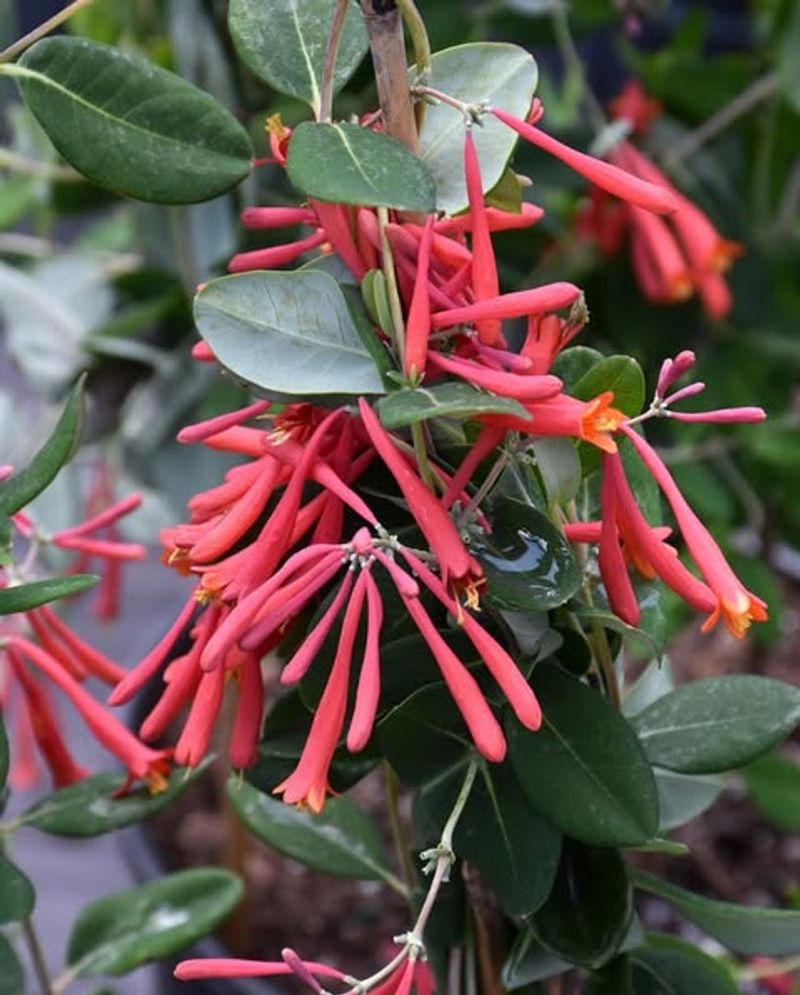
Coral honeysuckle earns serious respect among Georgia native plant enthusiasts, and for good reason.
Unlike its invasive cousin Japanese honeysuckle, Lonicera sempervirens is a well-behaved, native vine that plays nicely in containers without trying to take over everything around it.
Hummingbirds absolutely love those narrow, tubular red and orange flowers, which bloom from spring through early summer and often rebloom in fall.
Growing coral honeysuckle in a container on a Georgia porch or deck puts the flowers right at eye level, which makes watching hummingbirds visit even more rewarding.
Choose a pot with a minimum diameter of 14 inches and fill it with a well-draining, slightly acidic mix. This vine is native to Georgia and much of the Southeast, so it adapts well to local soil conditions and humidity levels without needing a lot of amendment or special care.
Water regularly during the first growing season while the root system establishes itself in the container. Once established, coral honeysuckle handles short dry spells reasonably well, though consistent moisture produces better blooms.
Avoid overwatering, as the roots are susceptible to rot in poorly drained containers. Prune lightly after the main bloom flush to encourage a second round of flowers in autumn.
A sturdy trellis or wire frame keeps growth manageable and attractive throughout the season.
6. Carolina Jessamine Early Bloomer That Grows Neatly In Pots
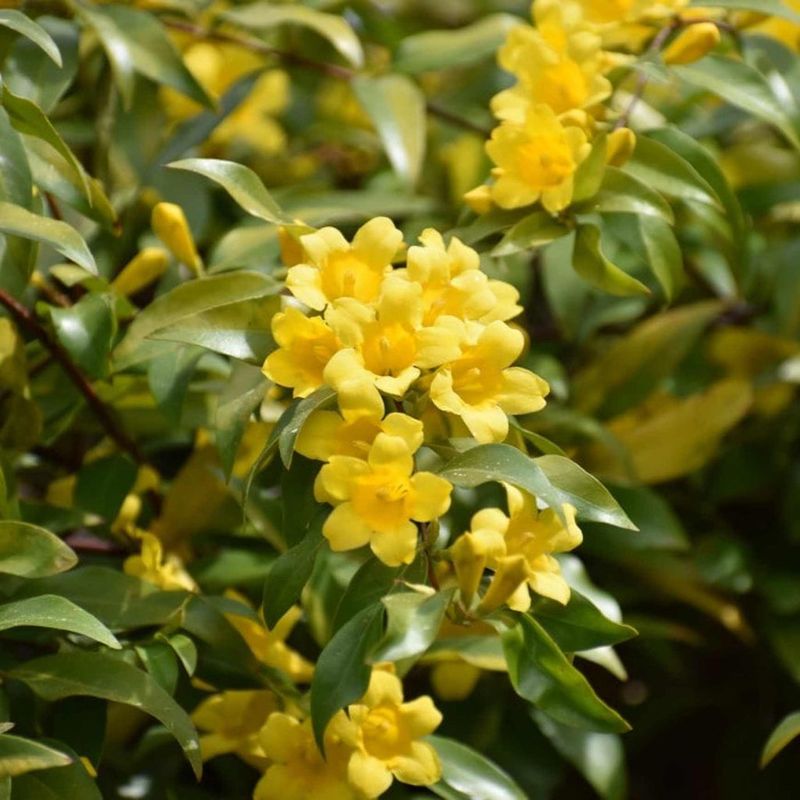
Carolina jessamine is the vine that announces spring has arrived in Georgia. Those clusters of bright yellow, fragrant flowers appear as early as February in warmer parts of the state, often before most other plants have even started showing new growth.
Getting that early color on a porch or patio in a container is genuinely satisfying after a grey winter.
Gelsemium sempervirens is the state flower of South Carolina and grows wild throughout Georgia, which tells you a lot about how well it tolerates the region’s climate. In containers, it stays more manageable than it does in the ground, where it can spread aggressively.
A large pot with good drainage keeps the root system contained and the growth tidy.
Full sun to partial shade suits Carolina jessamine well. On a Georgia porch with a few hours of filtered light, it blooms reliably and holds its glossy, evergreen foliage year-round.
That evergreen quality is a bonus during winter months when most other container plants look bare and tired.
Water regularly during the growing season and reduce frequency in winter. Feed with a slow-release fertilizer in early spring just before the bloom period begins.
Prune after flowering to shape the vine and encourage denser growth. All parts of this plant are toxic if ingested, so place containers away from areas where children or pets spend unsupervised time.
7. Canary Creeper Lightweight Vine That Stays Easy To Control
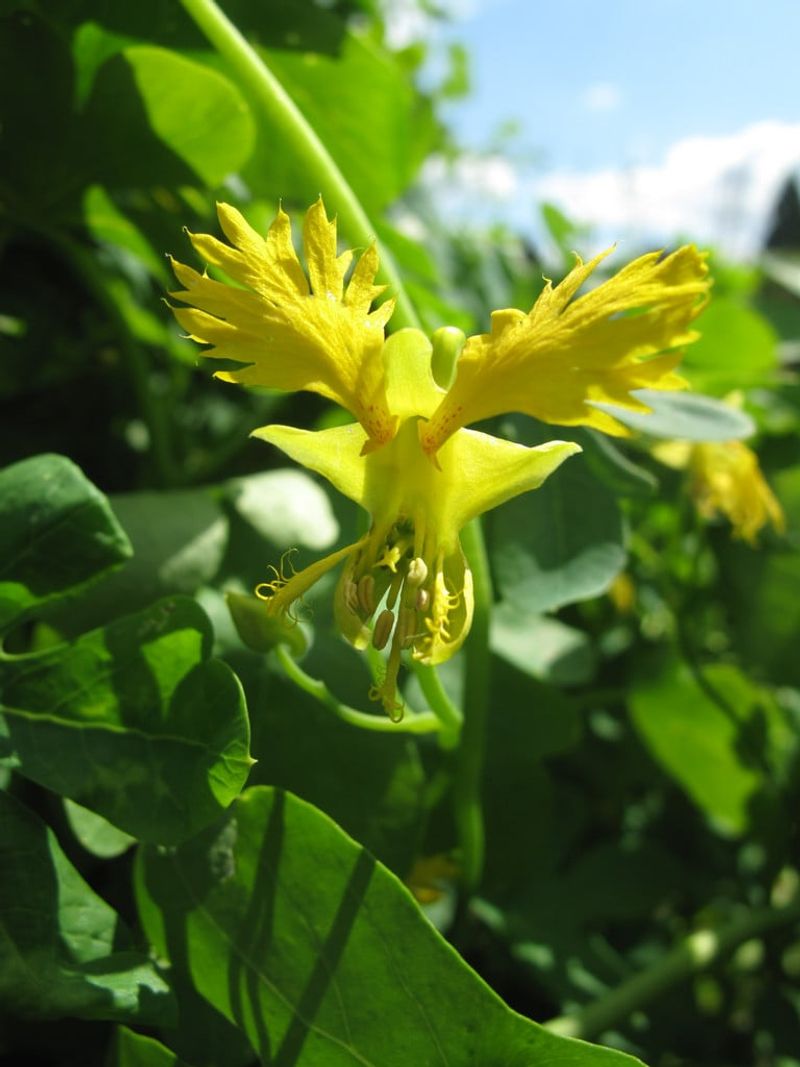
Canary creeper, or Tropaeolum peregrinum, brings something genuinely different to a container garden. Those fringed, canary-yellow flowers look almost like tiny exotic birds perched among the foliage, and the blue-green, lobed leaves add texture that most other vines simply do not offer.
What makes this vine especially useful in Georgia is its manageable growth habit. Canary creeper climbs by twining and reaches about six to eight feet under good conditions, but it never becomes the aggressive, space-consuming monster that some ornamental climbers turn into.
A medium-sized container with a simple wire frame is all it really needs to look great.
Plant it in spring after frost risk has passed, which in most of Georgia means mid-March through early April. Canary creeper prefers cooler conditions and actually performs best during Georgia’s spring and fall seasons.
Once summer heat peaks in July, growth can slow or the plant may look stressed, so partial afternoon shade helps during the hottest months.
Well-draining soil and consistent watering keep it healthy throughout the season. Avoid heavy feeding, as too much fertilizer pushes leafy growth at the expense of flowers.
A light application of balanced fertilizer once a month is usually enough. Collect seeds at the end of the season if you want to replant next year, since canary creeper is easy to grow from seed and germinates reliably with minimal effort.
8. Hyacinth Bean Vine Fast Grower With Strong Summer Performance
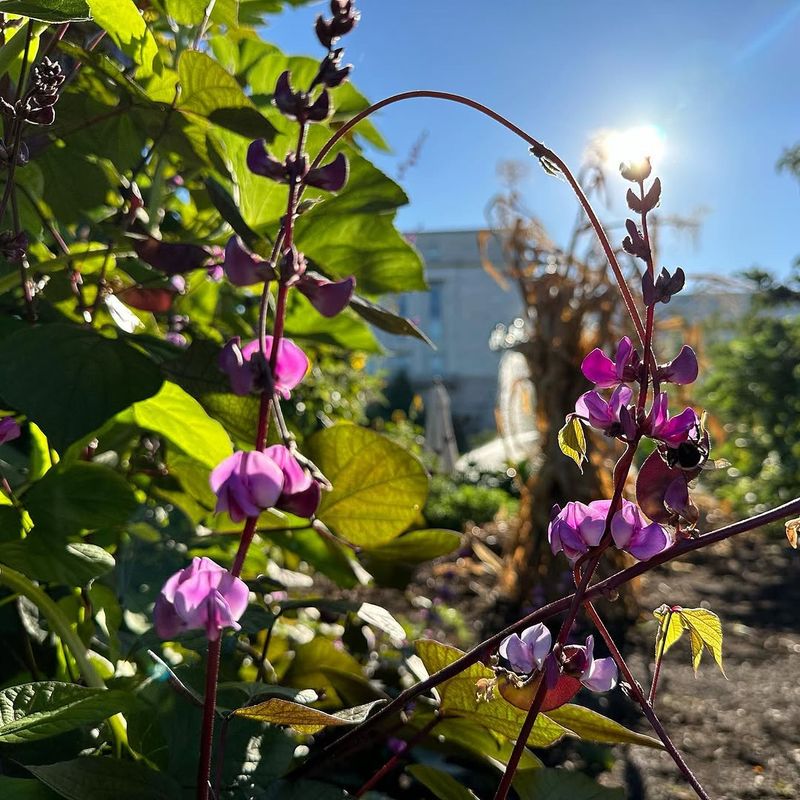
Hyacinth bean vine is one of those plants that delivers more than you bargained for in the best possible way. Lablab purpureus grows fast, blooms heavily, and then follows up with those striking, glossy purple seed pods that look almost artificial they are so vivid.
Georgia summers give this vine exactly the long, hot season it craves.
Start seeds directly in a large container after the last frost date, or begin them indoors two to three weeks early for a head start.
Once established, hyacinth bean vine grows vigorously, sometimes adding several feet of growth per week during Georgia’s hottest months.
A sturdy trellis anchored securely in a heavy pot is essential because the vine gets substantial and can topple a lightweight setup.
Choose a container with at least a 15-gallon capacity and fill it with rich, well-draining potting mix. Water deeply two to three times per week during peak summer heat, and check containers more frequently during Georgia’s dry spells in late July and August.
The vine will signal stress with drooping leaves fairly quickly when it needs water.
Feed monthly with a balanced fertilizer to support the heavy growth and continuous bloom cycle. The purple flowers attract pollinators steadily through the season, and the decorative seed pods can be left on the vine for visual interest well into fall.
Note that the seeds are toxic if consumed raw, so keep this in mind when placing containers in family spaces.