These 10 Plants Actually Thrive In Poor North Carolina Soil
Not every yard in North Carolina comes with rich, fertile soil ready for planting. A lot of homeowners are working with compacted clay, sandy patches that drain too fast, or ground that has been stripped and graded during construction, leaving behind something that barely qualifies as topsoil.
Trying to force traditional garden plants into those conditions usually leads to frustration, stunted growth, and a lot of wasted effort amending soil that never quite gets where it needs to be.
The smarter move is choosing plants that are genuinely built for tough soil, ones that do not just tolerate poor conditions but actually perform well in them.
North Carolina has a wide range of native and adapted plants that fit that description, and they bring real color, texture, and interest to spaces where other plants give up.
Whether you are working with a challenging slope, a dry sandy lot, or heavy clay that holds water, these ten plants are worth knowing about before you spend another season fighting your own soil.
1. Eastern Red Cedar (Juniperus virginiana)
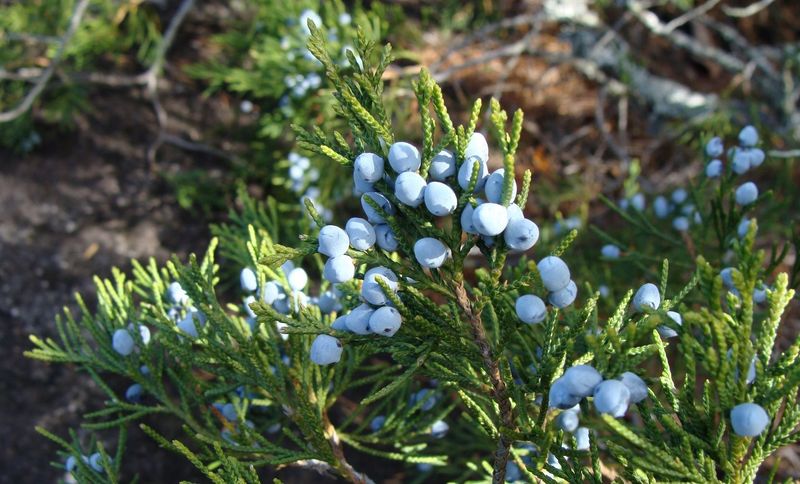
Rocky slopes, compacted clay, and nutrient-stripped fields are no match for the eastern red cedar.
This tough native tree grows all across North Carolina, from the Mountains to the Coastal Plain, without needing a single bag of fertilizer or a drop of supplemental water once it gets settled in. It is one of the most resilient trees you can plant in the state.
What makes it so impressive is that it actually prefers lean, difficult ground. Rich soil can cause it to grow too fast and become structurally weak, so planting it in poor North Carolina soil is genuinely the right move.
The blue-green foliage stays attractive year-round, and the small blue berries it produces in winter feed native birds like cedar waxwings.
Eastern red cedar also plays an important role in the local ecosystem, providing dense cover for nesting birds and acting as a windbreak in open landscapes. It handles drought, compaction, and thin rocky soil better than almost any other tree in the region.
If you have a difficult slope or a bare eroded area, this is the tree to plant. No amendments needed, no special care required, just a strong native tree doing exactly what it evolved to do in North Carolina conditions.
2. Beautyberry (Callicarpa americana)
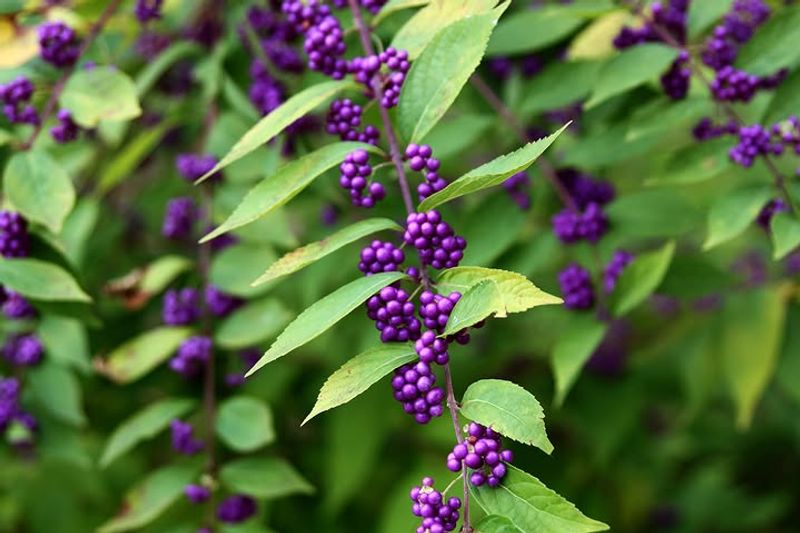
Few shrubs in North Carolina put on a fall show quite like beautyberry. The clusters of vivid, almost electric purple berries that line every stem in autumn are genuinely hard to believe until you see them in person.
And the best part? This plant earns that spectacular display while growing in poor clay and sandy soils across the Piedmont and Coastal Plain without any extra help.
Beautyberry is native to North Carolina and has adapted to grow in the kind of soil that most gardeners would want to amend before planting anything. Skip the fertilizer and the soil conditioner here.
Adding too many nutrients can actually push it toward excessive leafy growth at the expense of those gorgeous berries that make it worth growing in the first place.
Your North Carolina Garden Changes Every Week. Your Plan Should Too.
Gardening in North Carolina changes quickly throughout the season. Every Friday you’ll receive a simple weekly plan showing exactly what to plant, prune, fertilize, harvest, and protect so you never miss the right timing.
Birds absolutely love the berries, and they tend to strip the branches clean by late winter, which makes beautyberry a genuinely valuable wildlife plant. It grows best in partial shade to full sun and handles summer drought in the Piedmont without complaint.
Cutting it back hard in late winter keeps it tidy and encourages the best berry production. If your yard has challenging soil and you want something that looks stunning in fall, beautyberry is one of the most rewarding native shrubs you can add to a North Carolina garden.
3. Virginia Pine (Pinus virginiana)
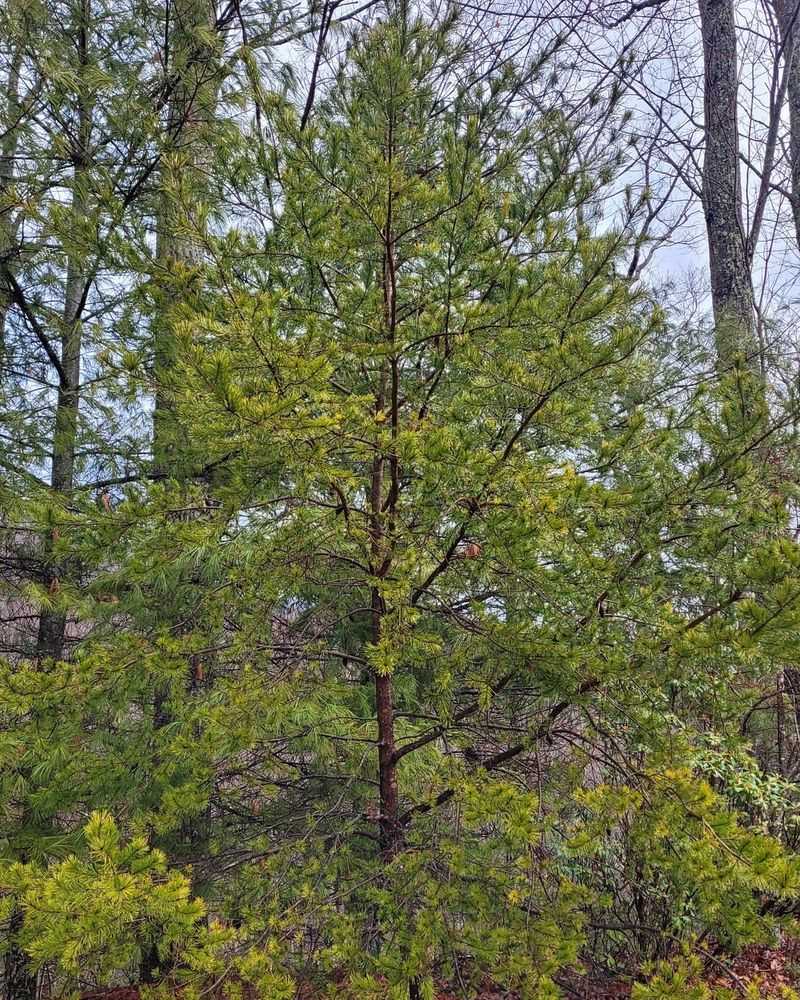
Virginia pine has a reputation for growing where nothing else will. Drive along almost any highway through the NC Piedmont or Mountains and you will spot it clinging to eroded road cuts and dry compacted banks, looking perfectly at ease where other plants would struggle.
It is a true pioneer species, meaning it is one of the first trees to move into the most degraded and nutrient-poor ground in the state.
This native pine does not need amended soil, and it definitely does not need a carefully prepared planting bed.
Its roots are built to push through compacted clay and rocky ground, and it establishes quickly even in spots where the topsoil has been completely stripped away.
For homeowners dealing with erosion on a slope or a bare patch of terrible soil, Virginia pine is one of the most practical solutions available in North Carolina.
Once it gets going, it provides real structure to a landscape, offering year-round greenery, wind protection, and habitat for birds and small wildlife. It stays relatively modest in size compared to other pines, which makes it manageable in residential settings.
The twisted, irregular form it develops over time gives it a rugged, natural character that fits perfectly into a naturalistic planting. Tough soil is not a problem for this tree. It was literally built for it.
4. Switchgrass (Panicum virgatum)
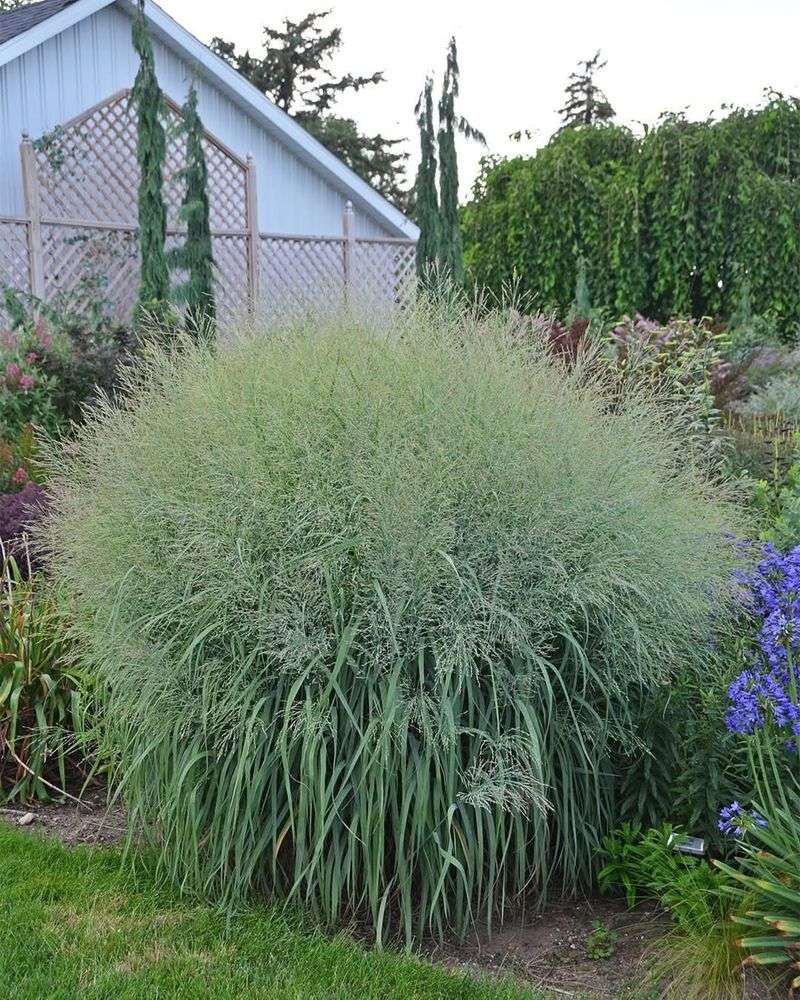
Switchgrass might be the most adaptable native plant growing in North Carolina right now. It handles poor clay, sandy soil, and even spots that flood seasonally, all without fertilizer or irrigation once established.
The airy seed heads that appear in late summer catch the light beautifully, and the plant holds its structure well into winter, giving the garden real visual interest long after most other plants have faded.
One of the reasons switchgrass works so well in difficult North Carolina soil is that it evolved here. It is native across the entire state, from the Coastal Plain to the Piedmont, and its root system goes deep, which helps it find water and nutrients even in lean ground.
That same deep root system also makes it excellent for erosion control on slopes and embankments.
Native birds and insects rely on switchgrass throughout the growing season and into winter. Sparrows and finches feed on the seeds, and the dense clumps provide valuable shelter for small wildlife.
In the garden, it pairs beautifully with flowering natives like coneflowers and black-eyed Susans, creating a layered, naturalistic look that is low maintenance and high impact.
Cut it back to about six inches in late winter before new growth emerges, and it will come back strong every single year. North Carolina gardeners with challenging soil should absolutely have this grass in their yard.
5. Winged Sumac (Rhus copallinum)
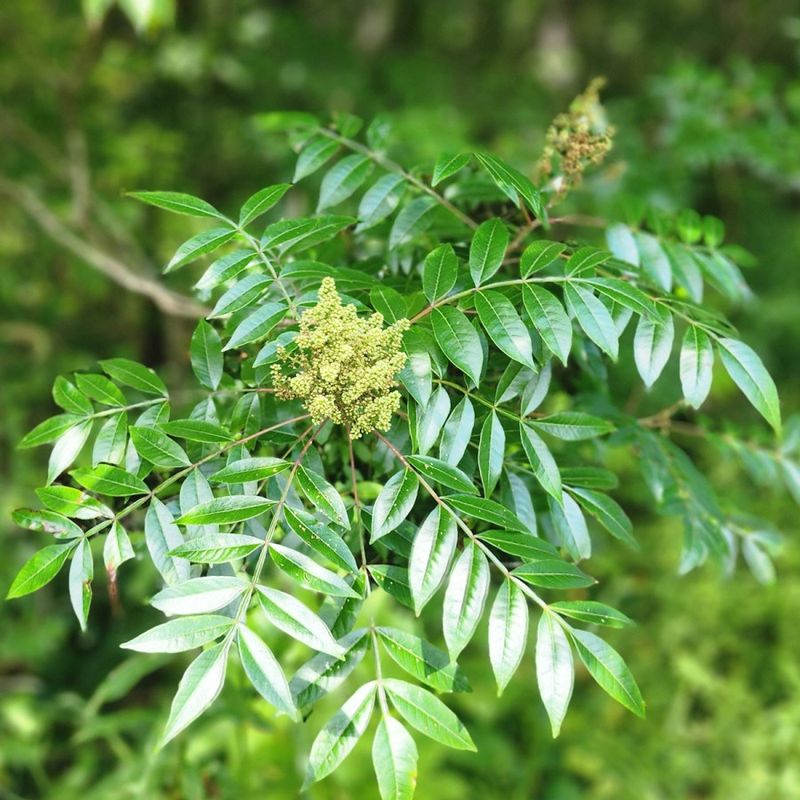
When fall color is the goal and the soil is terrible, winged sumac steps up in a big way. Native to North Carolina, this tough shrub turns a blazing, saturated red in autumn that rivals nearly anything else growing in the state.
It thrives on dry slopes, roadsides, and disturbed ground throughout the Piedmont and Coastal Plain, asking for nothing in return except a sunny spot with room to spread.
Winged sumac gets its name from the distinctive winged ridges that run along the stems between each leaf, which is a fun detail that makes it easy to identify even before the fall color arrives.
The clusters of small red berries it produces in late summer persist through winter and provide a reliable food source for native birds during the coldest months of the year in North Carolina.
It spreads by root sprouts, which means it can gradually form a colony over time. That spreading habit makes it excellent for stabilizing bare slopes and preventing erosion, but it is worth giving it space where it has room to grow freely.
In a naturalistic planting or along a property edge, it looks spectacular and requires almost no care whatsoever. Poor, dry, rocky soil is exactly what winged sumac prefers, so stop trying to improve the soil and just let this native shrub do its thing.
6. Little Bluestem (Schizachyrium scoparium)
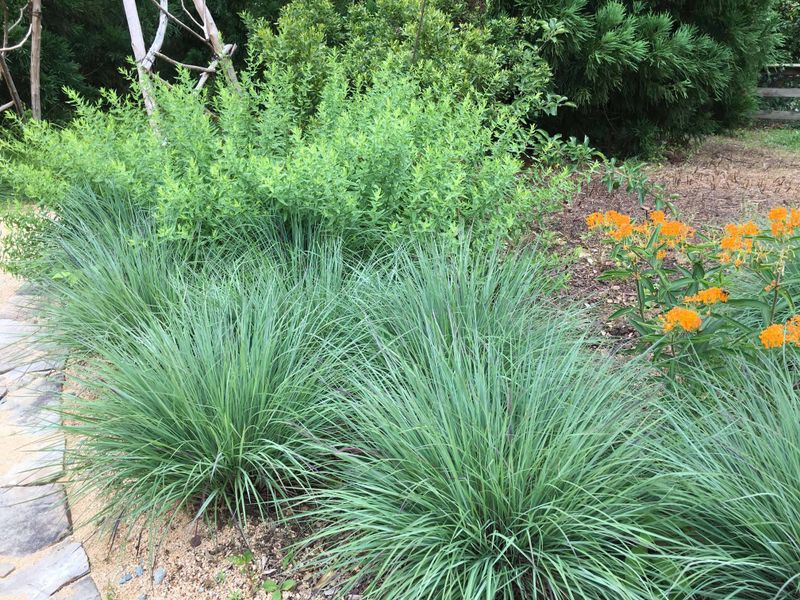
Here is something that surprises a lot of gardeners: little bluestem actually performs worse in rich, amended soil.
This native North Carolina grass evolved in lean, dry conditions, and when you put it in overly fertile ground, it flops over and loses the upright structure that makes it so attractive.
The Piedmont and Coastal Plain soils that frustrate so many gardeners are precisely where little bluestem looks its absolute best.
Through summer, the fine blue-green foliage has a soft, airy texture that moves beautifully in a breeze. Then in fall, it transforms into warm shades of copper, bronze, and russet that glow in low autumn light.
Those colors persist well into winter, giving the garden structure and warmth during the quietest months of the year. The fluffy white seed heads that appear alongside the fall color are equally beautiful and attract birds that feed on them through the colder season.
Little bluestem is also a host plant for several native skipper butterfly species, which makes it genuinely valuable beyond just its good looks. Plant it in full sun in the poorest, driest soil you have in your North Carolina yard, and do not add compost or fertilizer to the planting hole.
Sandy or clay soil with no amendments is exactly what it wants. Once established, it needs almost no attention and rewards you with one of the most beautiful fall displays a native grass can offer.
7. Yucca (Yucca filamentosa)
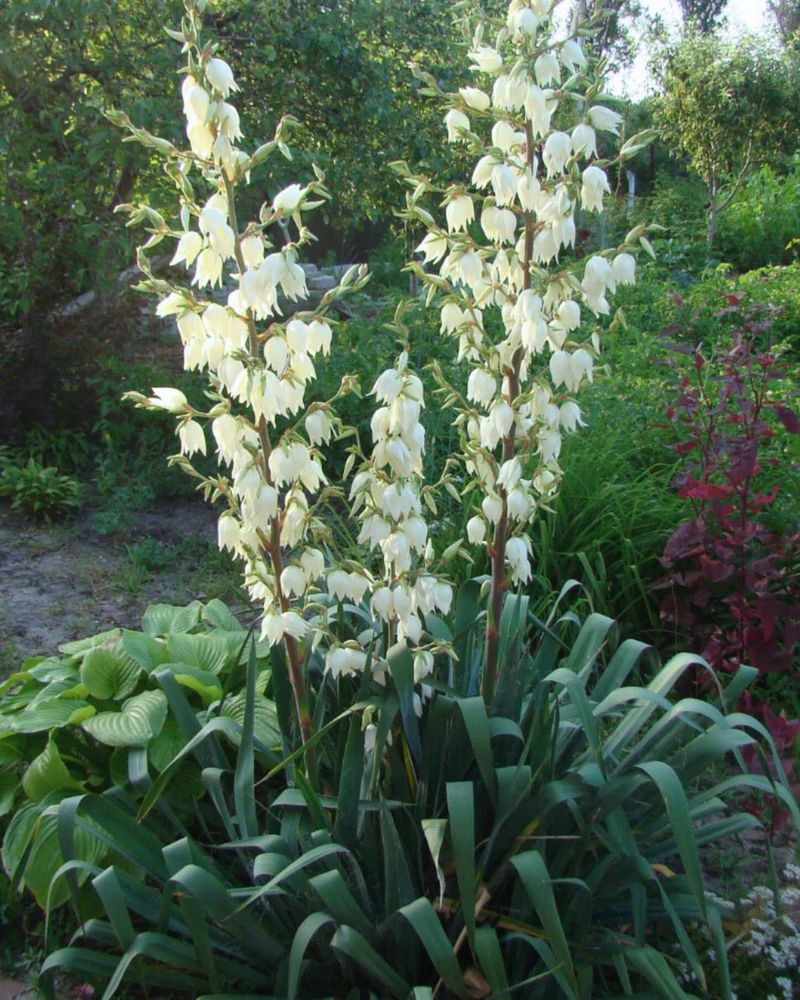
Few plants make a statement quite like yucca in full bloom. Native to North Carolina’s Coastal Plain, this bold evergreen produces dramatic flower spikes that shoot up to six feet tall in June and July, covered in creamy white bell-shaped flowers that are honestly stunning against a blue summer sky.
All of that performance happens in the sandiest, poorest, and driest soil in the state, with zero supplemental watering or fertilizing.
Adam’s needle yucca is extremely well adapted to the harsh conditions of the NC Coastal Plain, where sandy soils drain quickly and hold almost no nutrients. Put it in rich, moist soil and it will actually struggle, developing root problems that undermine the whole plant.
Lean, dry, gritty ground is where it thrives, which makes it a perfect fit for the areas of a North Carolina yard that seem impossible to plant.
The stiff, sword-shaped leaves have curly white fibers along their edges, which is one of the features that makes this species easy to identify. It forms tidy rosettes that spread slowly over time, eventually producing offsets that can be separated and replanted.
Yucca also has a fascinating relationship with the yucca moth, which is its only natural pollinator in North America. Planting it supports that ecological connection while giving your garden one of the most dramatic flowering plants a North Carolina landscape can offer.
8. Inkberry (Ilex glabra)
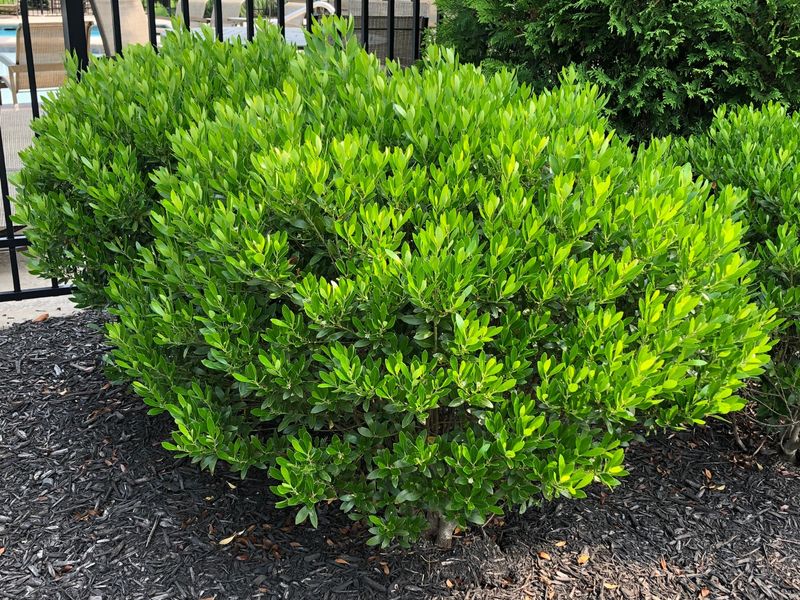
Inkberry solves a problem that stumps a lot of North Carolina gardeners: what to plant in poorly drained, sandy, acidic soil where most shrubs refuse to perform.
Native to the Coastal Plain and parts of the Piedmont, this broadleaf evergreen handles low fertility, wet feet, and moderate drought without complaint, which is a rare combination of tolerances in a single plant.
The fact that it stays green through winter makes it even more valuable. The small, glossy black berries that appear in fall and persist through winter are a favorite food source for native birds, including bluebirds, hermit thrushes, and brown thrashers.
Planting inkberry in a North Carolina yard is a direct investment in local wildlife, especially during the months when food sources become scarce and birds need reliable nutrition the most.
It tends to form colonies by sending up suckers from the roots, which gives it a natural, thicket-like character over time.
Inkberry grows best in full sun to partial shade and reaches about five to eight feet tall at maturity, though compact cultivars are available if space is limited. The native straight species is the best choice for wildlife value, however, since it produces the most berries.
No fertilizer, no soil amendment, and no irrigation are needed once it establishes in your yard. For wet, acidic, low-fertility spots in North Carolina that feel like a planting challenge, inkberry is genuinely one of the smartest choices you can make.
9. Eastern Baccharis (Baccharis halimifolia)
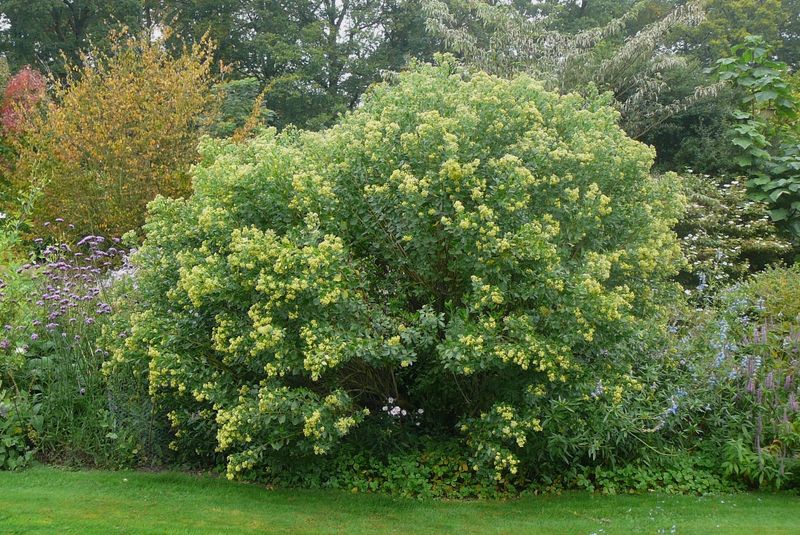
When the fluffy white seed heads of eastern baccharis appear in fall, they look almost like the shrub is covered in soft snow.
Also called groundsel bush, this native North Carolina plant is one of the toughest shrubs growing in the Coastal Plain, tolerating some of the poorest, saltiest, and most nutrient-depleted soils the state has to offer.
It grows in conditions that would make most ornamental shrubs fail within a single season. What makes baccharis especially useful is its flexibility.
It performs in dry, poor upland soils and in wet, disturbed areas near the coast, which means it bridges two very different challenging environments that are common throughout eastern North Carolina.
Salt spray, brackish conditions, and compacted ground near coastal developments are all situations where this shrub holds its own without any supplemental care or soil improvement.
The showy seed display is produced by female plants and can be absolutely spectacular on a calm fall morning when the light catches all that silvery fluff at once.
Baccharis is also a valuable late-season nectar source for native bees and butterflies before they head into winter dormancy.
It grows quickly, reaching six to twelve feet tall, and works well as a screening plant or a naturalistic hedge along property edges.
For North Carolina gardeners dealing with tough coastal conditions or simply terrible soil, eastern baccharis earns its place in the landscape every single year.
10. Longleaf Pine (Pinus palustris)
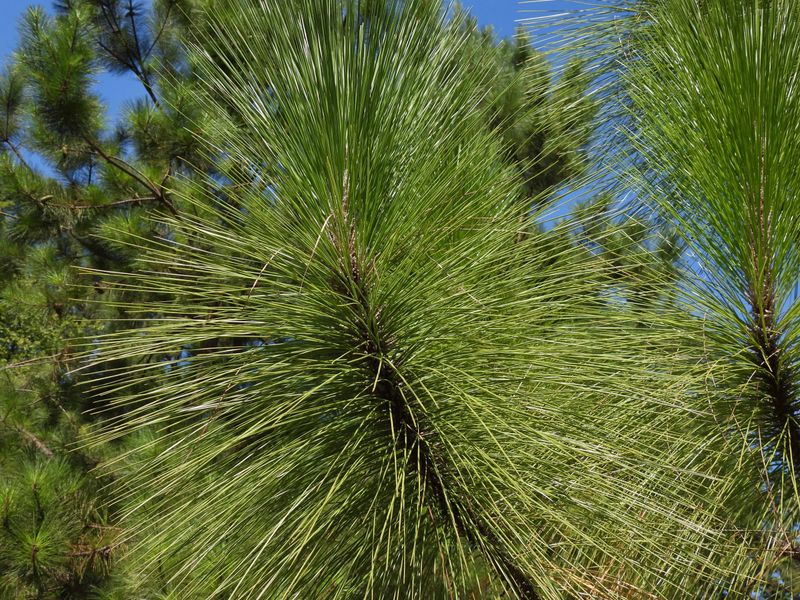
Longleaf pine is one of the most ecologically important trees in North America, and it happens to be perfectly suited to the nutrient-poor, sandy soils of North Carolina’s Sandhills and Coastal Plain.
Where other pines might struggle in thin, infertile ground, longleaf pine actually evolved to depend on those conditions.
Rich, amended soil is not what this tree wants, and the lean sandy ground that frustrates so many gardeners is precisely where it performs best.
Young longleaf pines spend their first few years in what looks like a grass stage, putting nearly all their energy into developing a deep, powerful taproot rather than growing tall.
That taproot is what makes them so remarkably drought tolerant once they get past the early establishment phase.
Patience is required with this tree, but the payoff is a long-lived, structurally impressive native that connects your yard to one of the most biodiverse ecosystems in North America.
The needles on longleaf pine are some of the longest of any pine species in the eastern United States, reaching up to eighteen inches, which gives the tree a dramatic, almost tropical appearance.
It provides critical habitat for the endangered red-cockaded woodpecker and supports hundreds of other native species throughout its range in North Carolina.
Planting longleaf pine in the Sandhills or Coastal Plain is not just good gardening. It is an act of ecological restoration that reconnects the landscape to its deep natural history.